The Top 5 ATP Doubles Teams of All Time: A Look at the Best Pairings in Tennis History
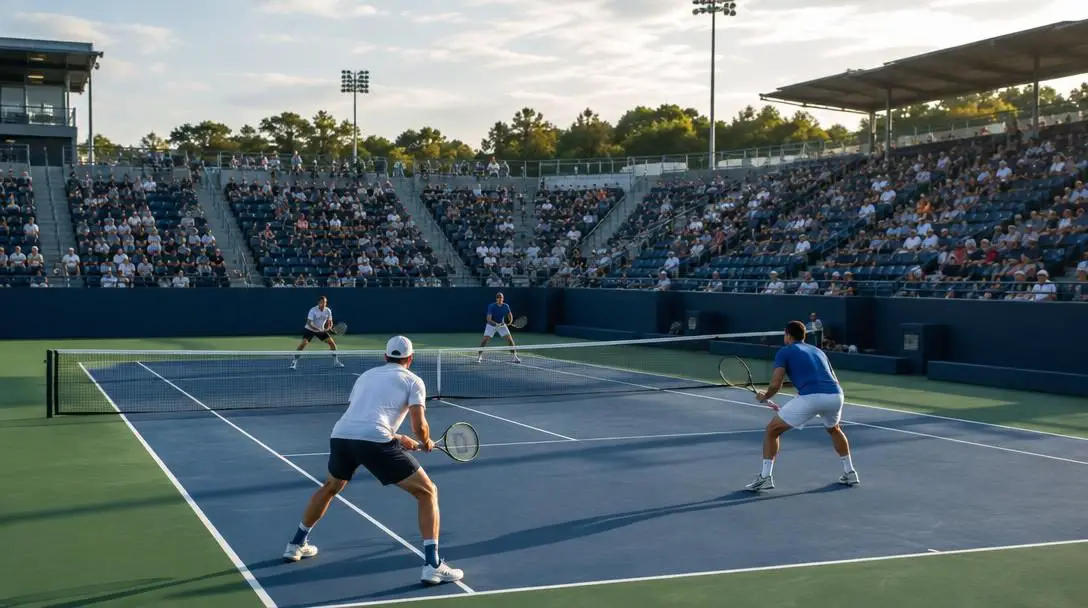
While casual tennis discussions routinely gravitate toward the glitz and solitary drama of the singles tour, professional doubles has long stood as an equally demanding pillar of the sport. Operating at breathtaking speeds, doubles requires instinctive reflex volleys, pinpoint service location, acute spatial awareness, and an intimate synchrony between two athletes sharing the same side of the net. Raw athletic endurance takes a back seat to court geometry and split-second tactical problem-solving.
Historically, the doubles circuit has provided an extraordinary arena for athletes who refine their complementary skills into masterclasses of teamwork. Many legendary doubles competitors begin their careers navigating mid-tier singles fields before realizing their full potential alongside a compatible partner. Over the decades, a handful of tandems have dominated the ATP Tour, turning doubles into a high-art form and establishing historical benchmarks that may stand for generations.
Key takeaways
- Bob and Mike Bryan reign as the most accomplished doubles team in tennis history with 119 shared ATP titles and 16 Grand Slam trophies.
- Todd Woodbridge and Mark Woodforde, known as "The Woodies," captured 61 titles together, including six Wimbledon championships.
- Specialized doubles greatness often relies on complementary skill sets, clear pre-point communication, and instinctive court positioning rather than individual singles dominance.
- Long-term doubles success demands honest communication and mutual accountability to survive high-pressure moments on tour.
At a glance: The all-time greatest ATP doubles pairings
The upper echelon of men's doubles features historic duos who amassed dozens of tour titles through long-term loyalty and synchronized play. The table below outlines how these five legendary partnerships compare across their shared professional accomplishments.
| Doubles Partnership | Nationality | ATP Team Titles | Grand Slam Titles | Notable Milestone |
|---|---|---|---|---|
| Bob Bryan and Mike Bryan | United States | 119 | 16 | 438 weeks at world No. 1; held all 4 Grand Slams in a calendar year |
| Todd Woodbridge and Mark Woodforde | Australia | 61 | 11 | Six Wimbledon titles; inducted into Australian Tennis Hall of Fame |
| Emilio Sanchez and Sergio Casal | Spain | 44 | 2 | Ranks third all-time in team titles; established premier youth academy |
| Daniel Nestor and Mark Knowles | Canada / Bahamas | 40 | 3 | Cross-national pairing; both ascended to world No. 1 in doubles |
| Paul Haarhuis and Jacco Eltingh | Netherlands | 39 | 6 | Won both the Australian Open and US Open in 1994; four-time major finalists |
Doubles transforms professional tennis into a dynamic chess match where individual brilliance is useless without cohesive partnership.
The Top 5 ATP doubles teams in tennis history
Every era of professional men's tennis has witnessed standout partnerships, but five specific pairings redefined tactical execution, teamwork, and championship longevity on the ATP Tour.
Paul Haarhuis and Jacco Eltingh
- Country: Netherlands
- ATP Team Titles: 39
- Grand Slam Titles: 6
- Major Highlights: Two Australian Opens, two French Opens, one US Open
Hailing from the Netherlands, Paul Haarhuis and Jacco Eltingh proved how a deep mutual understanding could turn solid individual players into an unstoppable collective unit. In singles competition, both had posted modest records: Haarhuis maintained a career singles winning percentage slightly above .500, while Eltingh finished his career below that threshold. However, when sharing the court, their instincts and movement aligned seamlessly.
Over their historic run together, Haarhuis and Eltingh collected 39 tour titles, highlighted by six Grand Slam championships. Their breakthrough at the majors occurred at the 1994 Australian Open, followed quickly by a championship victory at the US Open later that same season. Their major collection eventually encompassed two Australian Open titles and two French Open titles. Their longevity was rooted in an environment of total candor. As Eltingh once reflected, their familiarity made it easy to tell each other the plain truth on court, allowing Haarhuis to offer direct tactical critiques without bruising egos.
Daniel Nestor and Mark Knowles
- Country: Canada (Nestor) and Bahamas (Knowles)
- ATP Team Titles: 40
- Grand Slam Titles: 3
- Major Highlights: 2002 Australian Open, 2004 US Open, 2007 French Open
While many of history's premier doubles pairings originated within the same national development system, Daniel Nestor and Mark Knowles shattered that convention. Pairing Canadian stoicism with Bahamian flair, Nestor and Knowles overcame differing backgrounds to forge an elite international partnership. Neither player broke into the top 50 of the world singles rankings during their careers, yet both climbed all the way to the world number one ranking on the doubles circuit.
Nestor proved to be an enduring force across the sport, ultimately winning 91 doubles titles alongside 11 different partners throughout his long career. Even so, his finest heights were achieved in tandem with Knowles. Together, they secured 40 tour trophies and three Grand Slam crowns, breaking through at the 2002 Australian Open before adding the 2004 US Open and the 2007 French Open to their resume. Their familiarity was tested in unique circumstances: in 1997, the regular doubles partners squared off on opposite sides of the net in a singles tour match, with Nestor prevailing in four competitive sets.
Emilio Sanchez and Sergio Casal
- Country: Spain
- ATP Team Titles: 44
- Grand Slam Titles: 2
- Major Highlights: 1988 US Open, 1990 French Open
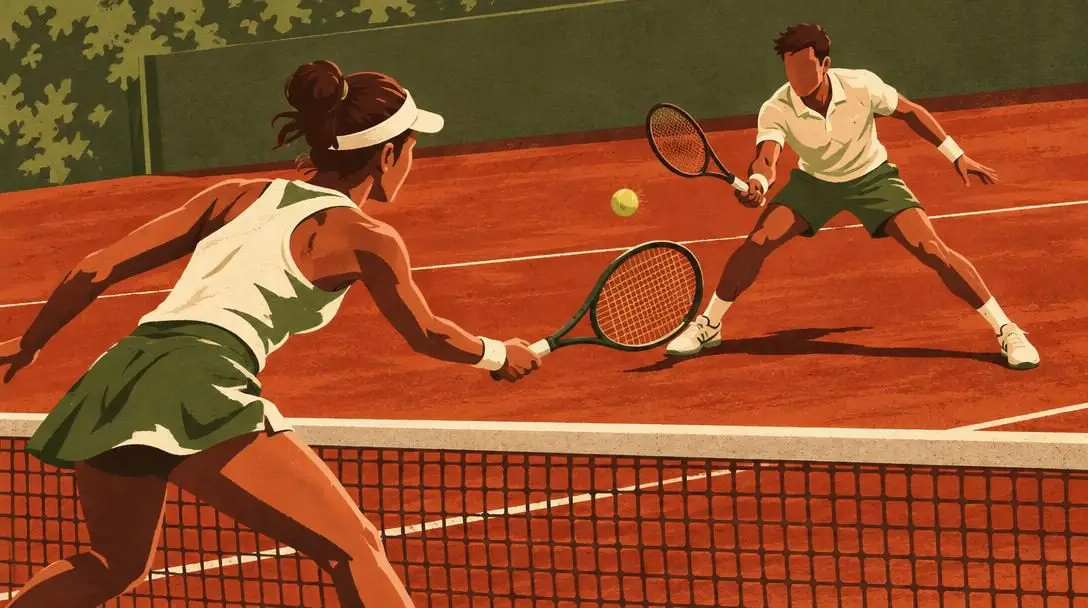
The Spanish duo of Emilio Sanchez and Sergio Casal brought trademark clay-court tenacity and tactical discipline to the doubles court. Across their partnership, Sanchez and Casal amassed 44 titles as a unit, placing them third on the all-time list for men's doubles teams. Sanchez in particular exhibited remarkable versatility, winning six additional doubles crowns alongside other partners while also climbing to world number seven in the ATP singles rankings.
Although their total tournament haul was massive, their Grand Slam victories together were limited to two titles: the 1988 US Open and the 1990 French Open. After hanging up their rackets, the tandem transferred their competitive principles into player development, founding a renowned tennis academy responsible for shaping elite professionals. Sanchez highlighted their foundational philosophy by stressing that victory is forged away from tournament crowds, noting that champions like Rafael Nadal spend 90 percent of their time training and only 10 percent competing in tournaments.
Todd Woodbridge and Mark Woodforde
- Country: Australia
- ATP Team Titles: 61
- Grand Slam Titles: 11
- Major Highlights: Six Wimbledon titles; 2010 Australian Tennis Hall of Fame inductees
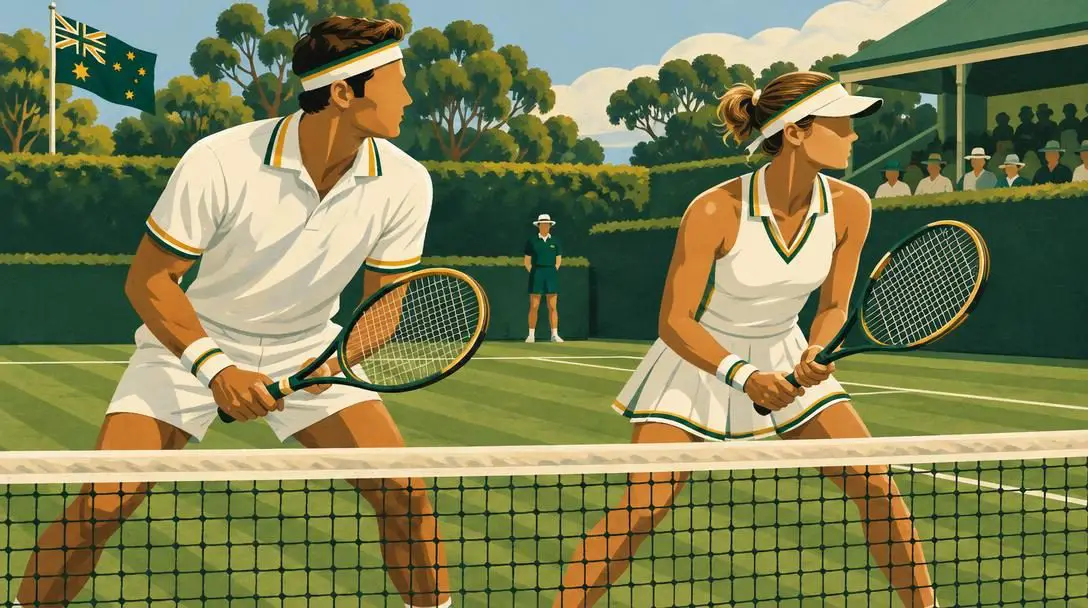
Affectionately dubbed "The Woodies," Australians Todd Woodbridge and Mark Woodforde became international sports icons throughout their dominant run in the 1990s. Armed with synchronized footwork, crisp volleying, and lightning-quick court coverage, the pair ruled the ATP Tour. Over their shared career, they racked up 61 ATP doubles titles, an astounding total that featured 11 Grand Slam championships.
Their specialty was the slick grass of London, where they captured six Wimbledon titles to establish themselves as one of the finest grass-court teams ever assembled. In recognition of their monumental achievements, the pair was inducted into the Australian Tennis Hall of Fame in 2010 and honored with commemorative bronze statues at Melbourne Park. Despite their extraordinary on-court chemistry, their post-career personal connection drifted over time. Woodforde has acknowledged that as Woodbridge pursued his own post-tennis brand, the duo spoke infrequently and rarely teamed up for exhibition or legends events.
Mike Bryan and Bob Bryan

- Country: United States
- ATP Team Titles: 119
- Grand Slam Titles: 16
- Major Highlights: 438 weeks at world No. 1; calendar-year Grand Slam winners
Standing comfortably at the pinnacle of men's doubles history are American identical twins Mike Bryan and Bob Bryan. Born in 1978, the brothers turned lifelong familiarity and telepathic court awareness into the most dominant doubles dynasty tennis has ever seen. While family connections surface periodically in professional sports, no other sibling pairing has ever approached the staggering statistical milestones compiled by the Bryans.
The twins spent an unmatched 438 weeks ranked as the world's number one doubles team. Together, they collected 119 ATP titles—nearly 60 more tournament victories than The Woodies in second place. Their trophy case contains 16 Grand Slam titles, anchored by six victories at the Australian Open. Securing an untouchable place in tennis lore, the Bryan brothers also became the only doubles team in the history of the sport to hold all four Grand Slam trophies in a single calendar year.
How doubles partnerships work: dynamics and synergies
Operating an elite doubles team demands a level of operational harmony that cannot be replicated by simply pairing two gifted singles athletes. Successful doubles partnerships are engineered around core principles of court geometry, spatial discipline, and mutual psychological trust.
- Complementary skill profiles: The most lethal partnerships pair distinct physical assets. A big-serving partner who hits heavy overheads complements a lightning-fast net specialist who excels at reflex volleys and low returns. Left-right combinations, like the Bryans, naturally eliminate defensive weaknesses in the center of the court.
- Constant communication: Singles is played in solitude, but doubles requires continuous tactical coordination. Elite teams decide on serving trajectories, net-poaching traps, and lob-coverage assignments prior to every serve and return.
- Shared accountability: An unforced error in singles harms only the individual. In doubles, mistakes directly impact a partner. Legendary teams like Haarhuis and Eltingh thrived because neither player resented constructive critique or allowed frustration to escalate into blame.
- Synchronized court positioning: Great doubles pairs move across the court as if joined by a tether. When one player is pulled wide to retrieve an acute angle, the partner shifts toward the center service line to close the gap. Moving forward and retreating in unison denies opponents the angles needed to strike clean winners.
Practical steps for building a successful tennis partnership
Recreational and tournament-level players can implement the operational habits of top ATP duos to turn casual partnerships into disciplined, winning teams on the court.
- Select a partner with complementary attributes: Rather than playing exclusively with close friends, seek out a teammate whose strengths offset your flaws. If your baseline groundstrokes are steady but your net game is timid, partner with an aggressive net rusher.
- Establish a structured pre-point routine: Take two seconds before each point to communicate your tactical intentions. Simple hand signals or brief verbal confirmations ensure that the server and net player never guess about court assignments.
- Assign clear court responsibilities: Agree in advance on how to handle ambiguous situations. Designate who takes overhead lobs hit over the net player's head, who covers balls hit down the center service stripe, and when to switch sides during live points.
- Drill doubles-specific scenarios together: Spending practice sessions trading crosscourt singles baseline rallies does not prepare a doubles team for competition. Dedicate practice time to rapid volley-to-volley exchanges, poaching patterns, and handling high-pressure dipping returns.
- Maintain intentional positive body language: Reinforce your partnership through physical cues after every point, regardless of the outcome. High-fives, quick encouraging words, and standing close together between points project confidence to opponents and prevent emotional slumps.
Common mistakes to avoid in doubles play
Singles players frequently carry tactical habits into doubles that undermine their team's effectiveness. Avoiding these widespread mistakes will immediately raise the competitive ceiling of any partnership.
- Treating the baseline like a safe haven: Lingering behind the baseline in doubles turns the match into a war of attrition. The fundamental objective of doubles is moving forward to seize command of the net and finish points at downward angles.
- Ball-watching from the net: Net players often make the critical error of turning their heads to watch their partner hit the ball from the backcourt. Net players should keep their focus locked onto the opposing net player and striker to anticipate angles and read body language.
- Neglecting the middle of the court: Indecision down the middle yields countless unforced errors and untouched winners. The center of the court represents the highest-percentage target for an opposing team and must be protected aggressively.
- Committing to poaches without conviction: Poaching requires rapid, decisive movement. Moving hesitantly into the center leaves alleys undefended and renders the net player vulnerable to easy passing shots.
- Allowing on-court irritation to show: Audible sighs, negative body language, and silence after missed shots quickly destroy team morale. Once a partner feels judged, their stroke mechanics grow tentative and errors multiply.
What to consider next for your doubles game
Elevating your doubles performance requires an intentional, long-range commitment to team development. Consider incorporating the following strategic adjustments into your tournament calendar:
- Analyze recorded match footage: Setting up a camera directly behind the court uncovers structural errors in positioning, poor split-step timing, and vacated alleys that go unnoticed during live play.
- Upgrade second-serve reliability: Floating second serves with low clearance are mercilessly punished by modern doubles returners. Develop reliable kicking or heavy slicing second serves that clear the net comfortably and give your net partner time to react.
- Commit to a single partner for an entire season: Historic teams achieved their greatness because instinctive trust is earned over hundreds of games. Avoid rotating partners every weekend and commit to competing through both triumphs and slumps alongside one person.
- Study archival tape of the masters: Spend time watching old match footage of the Bryan brothers and The Woodies. Watch how their net players anticipate movement before the ball is even struck, using pressure and anticipation to dictate the flow of the rally.
Frequently asked questions
Which doubles team has won the most ATP titles together?
Bob and Mike Bryan hold the all-time record with 119 ATP doubles titles won as a team, outdistancing their closest rivals, Todd Woodbridge and Mark Woodforde, by nearly 60 tournament victories.
Who are the most successful Australian doubles players in history?
Todd Woodbridge and Mark Woodforde, known as "The Woodies," are the most decorated Australian team, collecting 61 ATP titles and 11 Grand Slam championships, including six titles at Wimbledon.
Did any of these top doubles players achieve high singles rankings?
Yes. While many doubles specialists had modest singles careers, Spain's Emilio Sanchez reached world number seven in singles competition while also capturing 44 doubles titles with Sergio Casal.
Did Daniel Nestor and Mark Knowles ever compete against each other?
Yes. Despite their long-standing partnership that yielded 40 ATP titles and three Grand Slam victories, Nestor and Knowles faced each other in a tour-level singles match in 1997, where Nestor won in four sets.
Why are left-handed and right-handed pairings so popular in doubles?
A left-right tandem, like Bob and Mike Bryan, creates ideal court geometry. It allows both athletes to play their forehands down the center of the court to defend against aggressive returns while expanding the angles available on wide serves.
The bottom line
Professional doubles represents tennis at its most collaborative and dynamic. The legendary teams that sit atop the ATP record books—from the tactical discipline of Haarhuis and Eltingh to the historic dominance of the Bryan brothers—prove that true doubles mastery transcends solo athleticism. By prioritizing clear communication, complementary attributes, and instinctive court movement, these iconic pairings cemented legacies that continue to define the standards of teamwork in modern sport.