Top 5 Animals Who Predicted Football Results
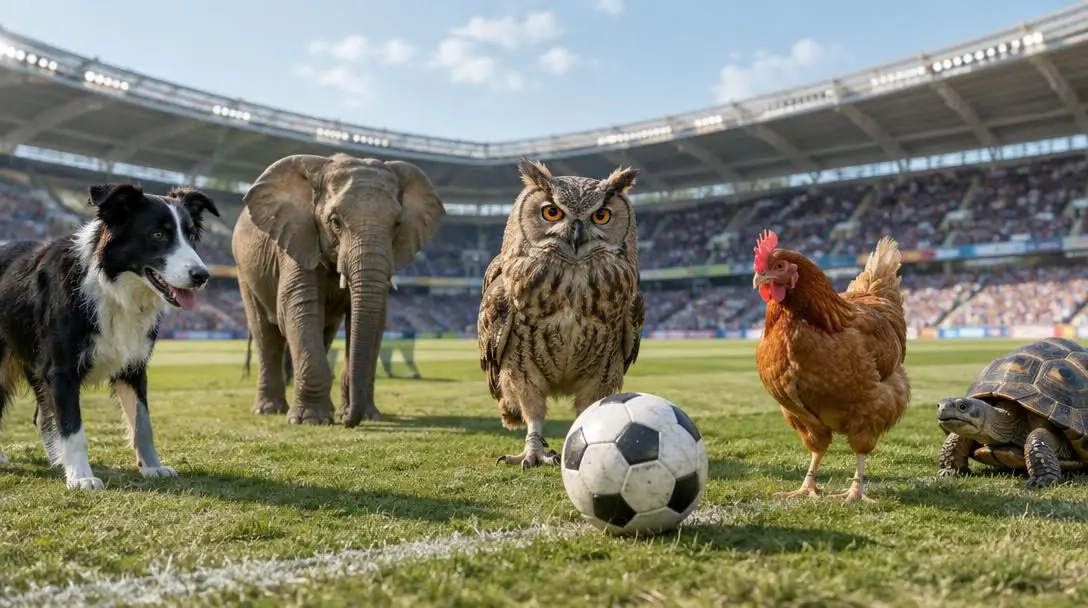
When major international football tournaments take center stage, spectators across the globe find themselves swept up in discussions, debates, and forecasts. From seasoned sports journalists to casual viewers who have never followed a regular league season, nearly everyone feels compelled to offer an opinion on which nation will emerge victorious. Because human perspectives are often clouded by personal allegiance, patriotic pride, or shifting tactical debates, turning the decision over to unbiased creatures has become a beloved tradition. Over the past several tournament cycles, animal psychics and match forecasters have transformed into global media sensations.
Spanning marine life, domestic companions, and vast savannah mammals, non-human forecasters provide lighthearted theater alongside high-stakes athletic drama. Driven by instinct, appetite, or sheer physical play, these five animal oracles captured international headlines by forecasting the outcomes of some of football's most competitive fixtures.
Key takeaways
- Paul the Octopus established the modern animal oracle phenomenon by achieving an 85.7 percent lifetime accuracy rate across European and global tournaments.
- Forecasting setups vary widely by species, incorporating food-marked transparent boxes, multi-zone tanks for draws, and physical goals for animals to kick balls into.
- While some animal forecasters enjoyed sustained international celebrity and safe retirement, others faced abrupt and unfortunate fates once tournament interest waned.
- Animal selections stem from environmental cues and random physical interactions rather than genuine sporting knowledge or predictive powers.
At a glance: Five legendary football forecasters
Major sporting tournaments have seen a diverse array of species called upon to predict match outcomes. The table below outlines how each famous creature operated, where they lived, and their standout prognosticating achievements.
| Forecaster | Species | Location / Facility | Key Tournaments | Notable Record |
|---|---|---|---|---|
| Paul | Octopus | Sea Life Centre (Weymouth, England) | UEFA Euro 2008, 2010 World Cup | 85.7% overall career accuracy rate |
| Rabiot | Giant octopus | Obira, Hokkaido, Japan | 2018 World Cup | 3 out of 3 correct group-stage picks |
| Achilles | Domestic cat | Russia | 2017 Confederations Cup, 2018 World Cup, Euro 2020 | Correctly predicted all 4 Russian matches in 2018 |
| Nelly | Elephant | Serengeti Park (Germany) | Matches spanning 2006 to 2012 | 30 correct predictions out of first 33 attempts |
| Predictaroo | Kangaroo | Australia Zoo (Australia) | 2014 World Cup | Amassed a massive global fan following |
Animal picks emerged as an antidote to tactical analysis, offering fun, unscripted moments that captivated both serious fans and casual observers.
The five most famous animal football forecasters
Each of the world's most famous animal forecasters brought their own distinct charm, environment, and method of selection to the international sporting stage. Here is how these five remarkable creatures earned their global reputations.
Paul the Octopus

- Hatch Date: January 26, 2008
- Location: Sea Life Centre in Weymouth, England
- Career Accuracy: 85.7 percent
- Signature Pick: Spain defeating the Netherlands in the 2010 World Cup final
Paul the Octopus remains the gold standard against which all other sports-predicting animals are measured. After hatching in early 2008 at the Sea Life Centre in Weymouth, England, Paul quickly distinguished himself from his peers. Keepers observed an unusual degree of curiosity and problem-solving intelligence, noting that he frequently swam up to the glass to study visitors and maintain eye contact with passersby.
Recognizing his heightened responsiveness, his handlers devised a forecasting game ahead of UEFA Euro 2008. For his debut prediction, Paul was presented with two food boxes and accurately picked Germany to defeat Poland in the group stage. He went on to predict six German matches during that tournament, achieving four correct forecasts. Paul's fame reached fever pitch during the 2010 World Cup, where he went a perfect seven-for-seven on Germany's fixtures before accurately picking Spain to triumph over the Netherlands in the final. By concluding his career with an overall success rate of 85.7 percent, Paul became a permanent fixture of modern sporting folklore.
Rabiot the Octopus

- Species: Giant octopus
- Origin: Obira, Hokkaido, Japan
- Handler: Kimio Abe
- Tournament: 2018 World Cup
Following in the footsteps of Paul, another cephalopod captured international attention when a giant octopus named Rabiot emerged from the waters of Obira in Hokkaido, Japan. Captured by local fisher Kimio Abe, Rabiot was quickly enlisted to forecast Japan's fortunes at the 2018 World Cup.
Rabiot began his forecasting run by correctly choosing Japan to beat Colombia in their opening match. Given the possibility of group-stage ties, Rabiot was provided with a three-way testing setup, allowing him to forecast a draw against Senegal and an eventual defeat to Poland. Against steep statistical odds, the giant octopus was proven right on all three occasions. Unfortunately, Rabiot's predictive prowess could not save him from commercial realities. Seeking to capitalize on his catch, Kimio Abe decided to cut up Rabiot and sell him as food before the knockout stages began, bringing a sudden and grim end to the cephalopod's fleeting tournament stardom.
Achilles the Cat

- Distinguishing Traits: White coat, congenital deafness
- Origin: Russia
- Tournament Role: Official animal oracle of the 2018 World Cup
- Key Competitions: 2017 Confederations Cup, 2018 World Cup, Euro 2020
While the 2018 World Cup witnessed numerous animals offering forecasts, Achilles the Cat stood head and shoulders above the competition as the official animal oracle of the tournament. Residing in Russia, the white feline possessed congenital deafness, an attribute handlers believed helped him focus on his choices without being startled by media cameras or noisy crowds.
Achilles gained preliminary experience during the 2017 FIFA Confederations Cup, where he successfully predicted the outcome of three out of four fixtures. When the World Cup arrived on Russian soil the following summer, Achilles delivered an immaculate run for the host nation. He kicked off by correctly projecting Russia's decisive opening victory against Saudi Arabia, eventually nailing all four Russian matches he was tasked with evaluating. His consistent performances ensured his predictive career continued well beyond 2018, leading to additional forecasts during Euro 2020.
Nelly the Elephant
- Home: Serengeti Park in Germany
- Prediction Style: Kicking a football into designated goals
- Prime Performance: 30 correct predictions out of 33 fixtures
- Career Span: Active from 2006 to 2012
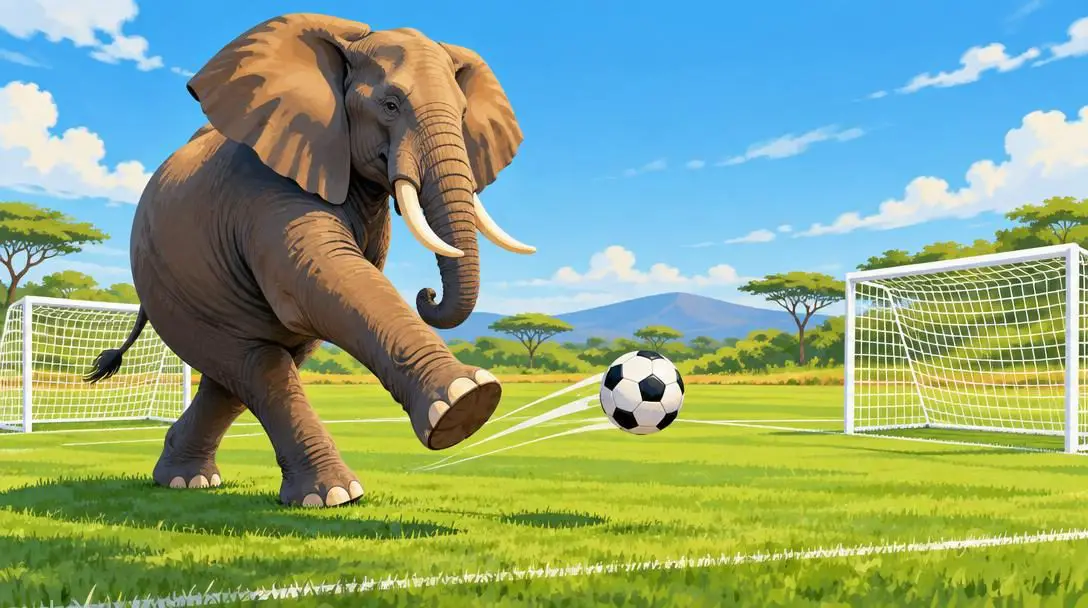
Most animal oracles participate through feeding rituals, but Nelly the Elephant carved out a unique place in sports history by physically playing the game. Kept at Serengeti Park in Germany, Nelly's prognostications involved two full-sized soccer goals erected before her, each adorned with the national flag of a competing team. Rather than choosing between food bowls, the pachyderm booted a regulation soccer ball directly into the net of the nation she expected to win.
Nelly's athletic approach proved astonishingly successful over a multi-year period. Between 2006 and 2012, she generated a remarkable record by getting 30 out of her first 33 predictions right. Her extended hot streak drew global fascination, prompting bettors around the world to track her physical kicks before wagering on major fixtures, solidifying her status as football's most athletic animal prognosticator.
Predictaroo (Flopsy)

- True Identity: Flopsy
- Species: Kangaroo
- Location: Australia Zoo
- Breakout Year: 2014 World Cup
Capitalizing on natural agility and powerful athletic traits, a kangaroo named Flopsy stepped onto the global stage under the moniker Predictaroo. Stationed at the world-renowned Australia Zoo, Predictaroo rose to prominence during the 2014 World Cup as international interest in animal oracles continued to expand.
Predictaroo's duties eventually stretched across a diverse variety of high-profile sporting events, including domestic and international football matches. Although her raw percentage accuracy trailed the extraordinary highs achieved by Paul or Nelly, her boundless energy and charismatic appearances won over fans worldwide. Backed by the institutional reach of the Australia Zoo, Predictaroo established one of the largest, most dedicated public followings of any animal forecaster in modern sports history.
Mechanics behind animal match predictions
Because non-human species lack comprehension of tournament brackets, player substitutions, and athletic competition, handlers must design environments that turn instinctive animal behaviors into unambiguous sports picks. Over the years, four primary forecasting methodologies have emerged.
- Food-based dual selection: The standard approach involves two identical transparent boxes or bowls, each labeled with a competing nation's flag and filled with identical food treats. The animal is released into the staging area, and whichever bowl it opens or feeds from first is deemed the official prediction. This system served as the primary methodology for Paul the Octopus and Achilles the Cat.
- Direct physical interaction: Instead of relying on hunger, some setups engage an animal's play instincts. Handlers position two full-sized goal nets displaying opposing flags, and the animal—such as Nelly the Elephant at Serengeti Park—kicks a real football into the goal representing its chosen victor.
- Environmental movement and drift: In spacious enclosures or deep water tanks, handlers monitor natural traversal patterns. Placing colored items or team banners at opposite ends of an enclosure allows keepers to record which side an animal approaches, walks toward, or settles beside first.
- Multi-zone setups for draws: Tournaments with group stages require a mechanism to register drawn matches. During Rabiot's predictions in Hokkaido, handlers arranged three separate zones or baskets, giving the giant octopus the opportunity to choose a victory, a defeat, or a split result for Japan.
How to set up a match prediction for your household pet
Staging a home prediction with a domestic pet can add lighthearted amusement to any major matchday. Following an orderly testing procedure ensures the outcome remains fair, readable, and comfortable for the animal involved.
- Select a familiar and safe reward: Gather identical food treats or favorite toys that your pet regularly enjoys. Never introduce unfamiliar or rich foods solely for the forecast, as novel items may disrupt digestion or cause unwanted hesitation.
- Prepare two identical stations: Procure two feeding bowls, cardboard boxes, or feeding mats that share the exact same dimensions, shape, texture, and baseline color. Place an identical quantity of treat or matching toy in each receptacle to prevent scent or volume bias.
- Affix the team identifiers: Securely tape a small printed flag, colored ribbon, or team badge to the front face of each station. Fasten these markers flush to the surface to prevent the pet from chewing, ingesting, or choking on paper edges.
- Position the targets evenly: Set the two stations along a flat floor at equal distances from a predetermined release point. Ensure room lighting, direct sunlight, drafts, and surrounding foot traffic are balanced so neither station has an environmental edge.
- Release the pet from a neutral position: Bring your pet to the release marker, facing directly between the two containers. Release the animal smoothly without pointing, nudging, speaking names, or leaning toward either station.
- Record the very first choice: Establish the rule that the container your pet sniffs, nudges, or eats from first serves as the official pick. Never reset the trial or run multiple attempts simply because the animal picked against your personal club or national team.
Common pitfalls in interpreting animal predictions
While tracking animal psychics adds a humorous dimension to major sporting spectacles, observers frequently misunderstand the underlying nature of these events. Avoiding these common mistakes helps keep the phenomenon in proper perspective.
- Assuming genuine precognition: Long winning runs—such as Nelly picking 30 of 33 correct results or Paul hitting on 85.7 percent of his lifetime choices—often lead spectators to believe the animals possess supernatural abilities. In truth, these choices represent random probability, sensory attractions, or conditioned responses.
- Ignoring sensory and environmental bias: Animals perceive the world through refined sensory channels. An octopus may gravitate toward high-contrast flag patterns, a cat might naturally wander toward a bowl warmed by sunlight, and many animals favor turning toward their dominant side. Unless handlers regularly swap container positions, environmental bias often dictates the result.
- Wagering real money on animal selections: Because public interest intensifies during extended winning streaks, spectators routinely make the costly mistake of placing financial bets based on animal picks. As demonstrated across past tournaments, hot streaks inevitably regress to the mean without warning.
- Overlooking animal welfare in pursuit of publicity: High viral demand can lead to situations where animal well-being is compromised. The fate of Rabiot, who was harvested and sold for meat despite his immaculate 2018 World Cup forecasting record, stands as an extreme example of how human exploitation can overshadow animal safety.
Frequently asked questions
How many matches did Paul the Octopus correctly predict overall?
Throughout his forecasting career, Paul the Octopus achieved a remarkable lifetime accuracy rate of 85.7 percent. This included predicting four out of six German matches correctly at UEFA Euro 2008, all seven German fixtures at the 2010 World Cup, and accurately forecasting Spain's victory over the Netherlands in the 2010 final.
Why did Achilles the Cat make such an effective tournament oracle?
Achilles the Cat possessed congenital deafness, an attribute that allowed him to remain calm and focused during selection events without being distracted or frightened by noisy crowds, media cameras, and flashing lights. Additionally, his location in Russia provided natural logistical proximity for the 2017 Confederations Cup and 2018 World Cup.
What happened to Rabiot the Octopus after the 2018 World Cup group stage?
Despite correctly forecasting all three of Japan's group-stage fixtures—including a win over Colombia, a draw with Senegal, and a loss to Poland—Rabiot did not survive past the group stage. The fisher who captured him, Kimio Abe, chose to cut up the octopus and sell him as food at the local market.
How did Nelly the Elephant make her football forecasts?
Unlike most animal oracles who selected between two bowls of food, Nelly the Elephant utilized an athletic approach. Residing at Serengeti Park in Germany, Nelly faced two regulation soccer nets labeled with opposing team flags and booted a real football directly into the goal of the team she forecasted to win.
Can animal match predictions be used as reliable betting advice?
No, animal predictions should never be used as the basis for financial wagering. Even celebrated forecasters with historic streaks, such as Nelly the Elephant and Paul the Octopus, operated through random chance, physical training, and environmental stimuli rather than genuine athletic insight or foreknowledge.
The bottom line on animal football oracles
The rise of animal football oracles highlights the universal desire for fun, lighthearted narratives amidst the high-pressure environment of world-class athletics. From the meticulous aquarium exhibits of Weymouth to the expansive wildlife runs of Serengeti Park and Australia Zoo, creatures like Paul, Rabiot, Achilles, Nelly, and Predictaroo have provided fans with unforgettable moments of tournament excitement. While their choices are ultimately guided by hunger, training, and chance rather than tactical comprehension, these four-legged, eight-armed, and trunk-waving prognosticators remind sports fans everywhere not to take match forecasts too seriously.