Uncovering the Greatest Matches in WTA Tennis History
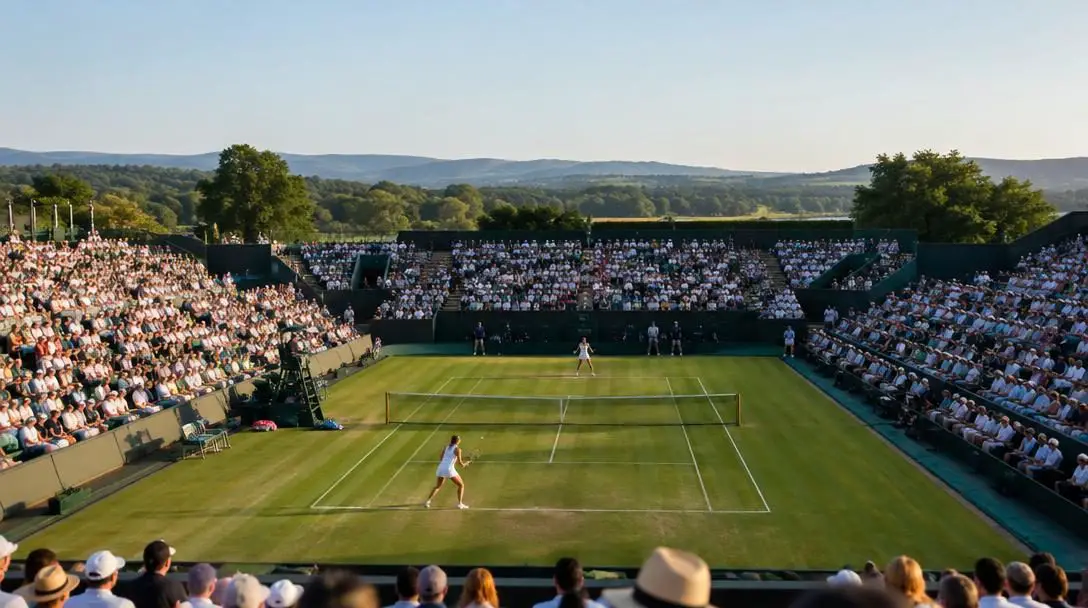
In premier professional tennis, early rounds often witness top-seeded athletes overpowering lower-ranked opponents in rapid, straight-set routines. However, as the bracket thins toward the semifinals and finals, the concentration of athletic ability, strategic discipline, and psychological resilience reaches an extraordinary peak. When two world-class competitors operating at their absolute physical ceilings collide, standard tactical formulas give way to grueling, unpredictable wars of attrition.
Over the decades, the Women's Tennis Association (WTA) has hosted historic encounters that continue to captivate audiences worldwide. Staged across varying court surfaces—from the red clay of Roland Garros to the grass lawns of Wimbledon and the plexicushion hard courts of Melbourne—these matches pushed human endurance to its ultimate perimeter. Five specific clashes stand out as defining masterclasses in endurance, emotional depth, and high-stakes drama.
Key takeaways
- The longest women's Grand Slam match on record unfolded over 4 hours and 44 minutes between Francesca Schiavone and Svetlana Kuznetsova at the 2011 Australian Open.
- Iconic encounters across clay, grass, and hard courts demonstrated how court surfaces dictate strategic pacing, ball bounce, and rally duration.
- Historic advantage final sets forced competitors to win by two clear games, creating extended scorelines before standardized modern tiebreaker rules were implemented.
- Dominating an opening set never guarantees victory, as mental fortitude and tactical recalibration routinely fuel dramatic comebacks at the elite level.
Five iconic battles that defined women's tennis history
Spanning multiple eras and playing environments, these five encounters represent the highest level of competitive execution and sheer will ever recorded in women's professional sports. Each match showcased how elite athletes respond when conventional margins disappear and victory demands hours of unrelenting physical output.
| Matchup | Tournament & Round | Surface | Final Scoreline | Key Significance |
|---|---|---|---|---|
| Kuznetsova vs. Schiavone | 2011 Australian Open, 4th Round | Hard court | 6-4, 1-6, 16-14 | Longest women's Grand Slam match in history (4h 44m) |
| Williams vs. Davenport | 2005 Wimbledon, Final | Grass court | 4-6, 7-6, 9-7 | Nearly three-hour clash featuring multiple saved championship points |
| Evert vs. Navratilova | 1985 French Open, Final | Clay court | 6-3, 6-7, 7-5 | Climactic clash between world number one and two on Parisian clay |
| Seles vs. Graf | 1992 French Open, Final | Clay court | 6-2, 3-6, 10-8 | Grueling baseline showdown between the era's dominant top seeds |
| Sharapova vs. Williams | 2005 Australian Open, Semifinal | Hard court | 2-6, 7-5, 8-6 | Dramatic turnaround with three saved break points in the final set |
Svetlana Kuznetsova vs. Francesca Schiavone (2011 Australian Open)
- Tournament round: Fourth round
- Total duration: 4 hours and 44 minutes
- Final score: 6-4, 1-6, 16-14
- Tournament seeds: Francesca Schiavone (6), Svetlana Kuznetsova (23)
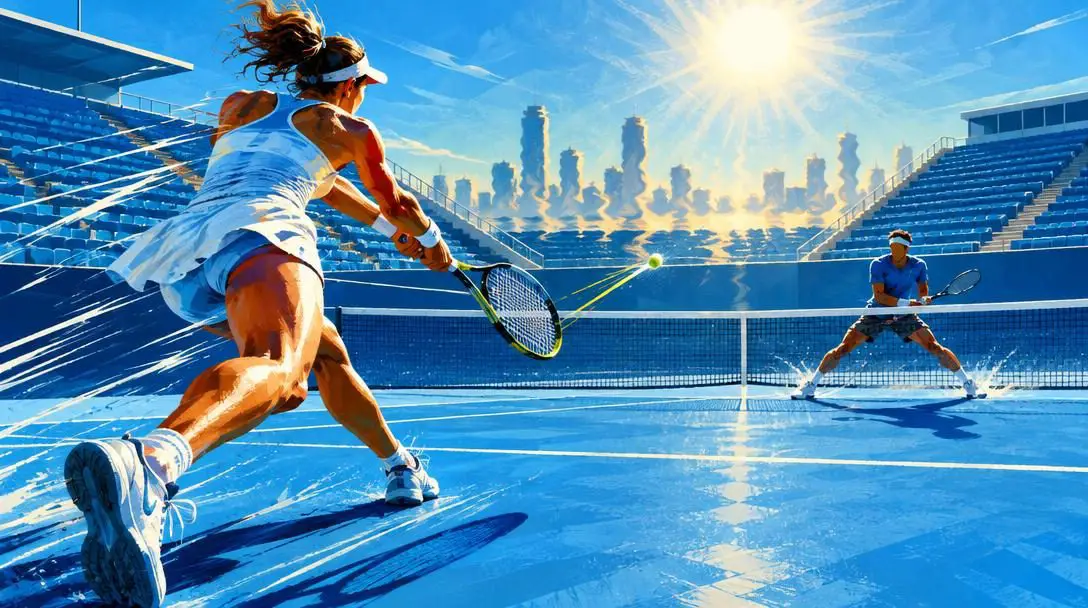
The fourth round of the 2011 Australian Open brought together two athletes arriving from entirely different competitive paths. Russian 23rd seed Svetlana Kuznetsova had eased through her opening three matches without conceding a single set. By contrast, Italy's Francesca Schiavone, seeded sixth, had already endured three grueling encounters just to secure her place in the fourth round. What unfolded next established an unprecedented benchmark for endurance in women's tennis history.
Schiavone claimed the first set 6-4 by maneuvering her opponent across the court, but Kuznetsova answered with overwhelming baseline power to take the second set 6-1 in decisive fashion. The third set transformed into an epic test of stamina where neither competitor would yield. As the games mounted, both athletes pushed through visible physical distress, contesting long rallies under punishing conditions. Schiavone finally broke the stalemate to take the deciding set 16-14, completing the longest women's singles match in Grand Slam history at 4 hours and 44 minutes. Although visibly depleted, Schiavone demonstrated her competitive grit in the following quarterfinal by taking the first set against Caroline Wozniacki before ultimately succumbing in three sets.
Venus Williams vs. Lindsay Davenport (2005 Wimbledon)
- Tournament round: Final
- Total duration: Nearly 3 hours
- Final score: 4-6, 7-6, 9-7
- Tournament seeds: Lindsay Davenport (1), Venus Williams (14)
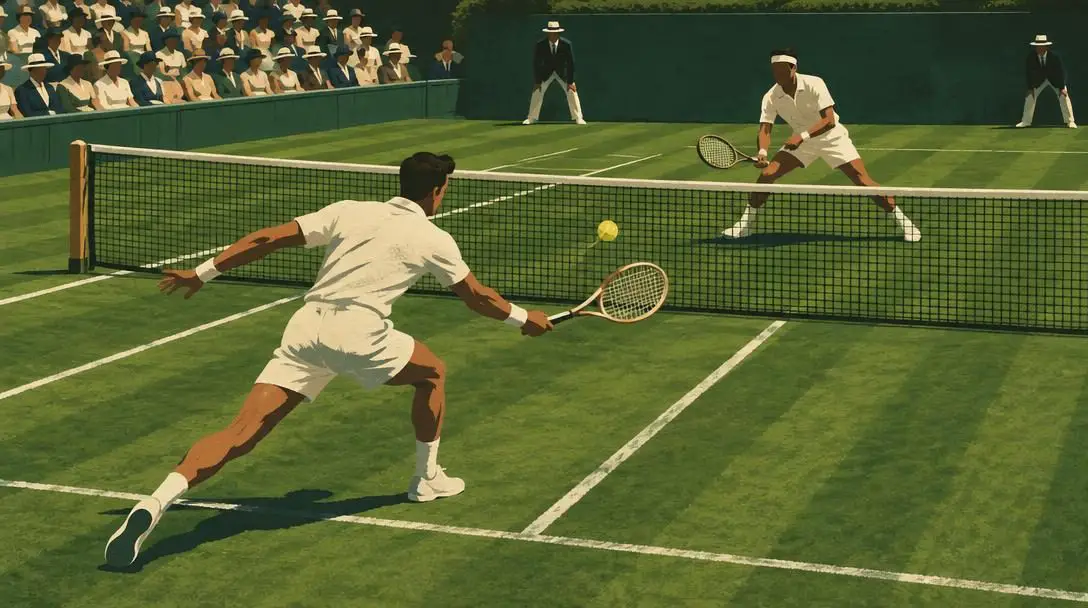
The 2005 Wimbledon championship match pitted two premier American champions against one another on the pristine grass courts of London. Lindsay Davenport arrived at the final as the world number one, having survived two tight three-set encounters along the way while maintaining overall command of her draw. Venus Williams entered seeded 14th but had swept through every opponent in straight sets, displaying vintage athleticism and penetrating groundstrokes.
Davenport struck first, relying on her renowned ball-striking depth to lock down the opening set 6-4. Facing defeat, Williams dug deep in the second set, trading explosive baseline blows until forcing a high-stakes tiebreaker, which she claimed to equalize the contest. The concluding set stretched into a classic grass-court showdown lasting nearly three hours. Davenport pushed Williams to the brink of defeat on several occasions, but Williams countered with exceptional serving and defensive recovery under extreme pressure. Williams outlasted Davenport to take the final set 9-7, completing one of the most resilient title runs in the tournament's modern history.
Chris Evert vs. Martina Navratilova (1985 French Open)
- Tournament round: Final
- Surface: Clay
- Final score: 6-3, 6-7, 7-5
- Rivalry context: Both entered without dropping a single set
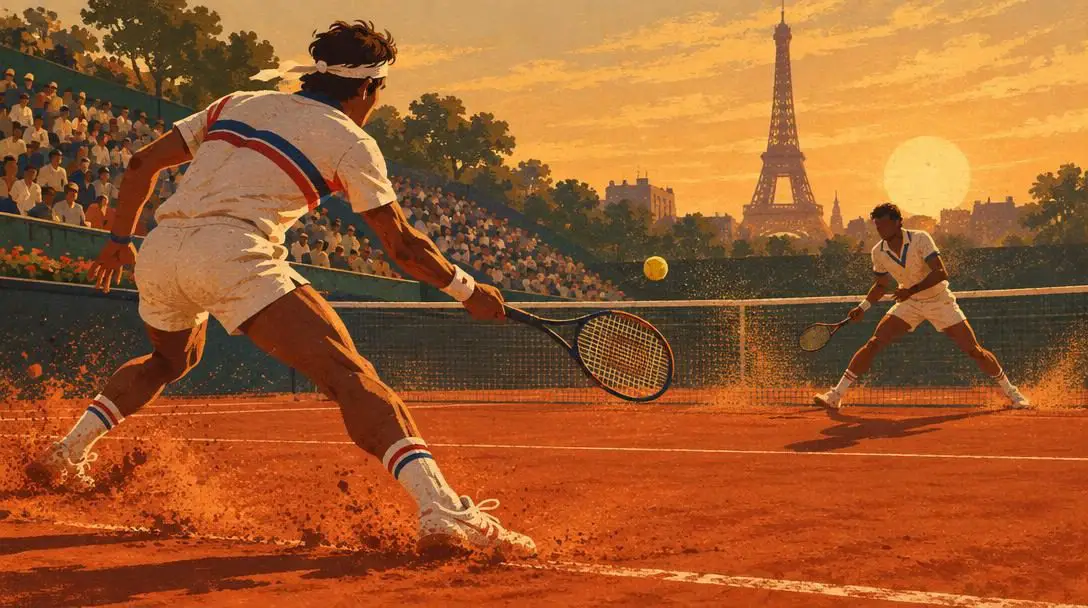
The historic rivalry between Chris Evert and Martina Navratilova stands as one of the most storied chapters in all of professional sports. Throughout their legendary careers, the two icons continuously occupied the top two spots in the global rankings, pushing each other to evolve technically and mentally. The 1985 French Open final represented a peak convergence of their conflicting styles: Evert's unflappable baseline accuracy against Navratilova's aggressive, attacking net play.
Both champions arrived in the final in devastating form, neither having dropped a single set during the entire fortnight. Evert seized the initial advantage on the slow Parisian clay, capturing the opening set 6-3. Navratilova responded with relentless offensive pressure, battling through an exhaustive tiebreaker to claim the second set 7-6. The deciding set evolved into a tactical chess match where every point required intense physical effort. Evert ultimately gained the decisive breakthrough to capture the set 7-5. After the concluding point, the two champions embraced warmly at the net, with Navratilova summarizing their dynamic by stating, "We brought out the best in each other."
Monica Seles vs. Steffi Graf (1992 French Open)
- Tournament round: Final
- Surface: Clay
- Final score: 6-2, 3-6, 10-8
- Ranking positions: Seles (World No. 1), Graf (World No. 2)
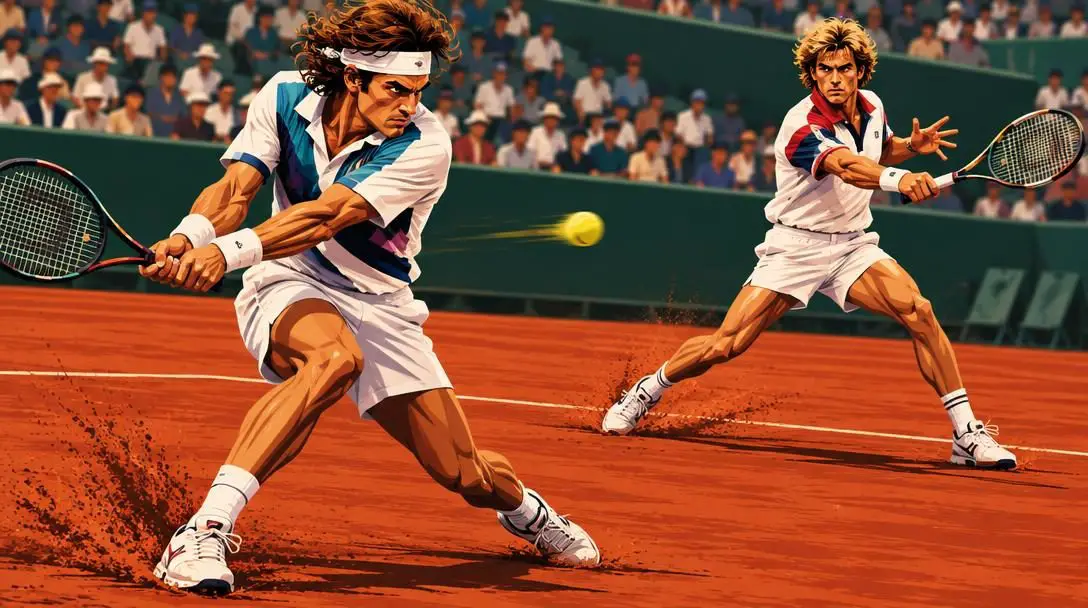
By 1992, Monica Seles and Steffi Graf occupied the top two spots in the world rankings and maintained an iron grip on the sport. Both athletes had to showcase exceptional grit just to reach the final at Roland Garros, as each was pushed through exhausting three-set semifinal clashes. When they met on Court Central, the stakes could not have been higher, with both champions competing at the very peak of their abilities.
Seles took the upper hand immediately, using her trademark aggressive two-handed hitting on both wings to overpower Graf 6-2 in the first set. Graf regrouped with her devastating inside-out forehand, answering back to take the second set 6-3. The third set evolved into an extraordinary battle of wills where neither player surrendered ground. Game after game slipped by without a decisive concession until an exhausted Seles pushed through to seize the final set 10-8. Seles later noted that "it couldn't have been a better final," describing the triumph as the single most emotional match she had ever contested.
Maria Sharapova vs. Serena Williams (2005 Australian Open)
- Tournament round: Semifinal
- Venue: Melbourne Park (Hard court)
- Final score: 2-6, 7-5, 8-6
- Tournament seeds: Maria Sharapova (4), Serena Williams (7)
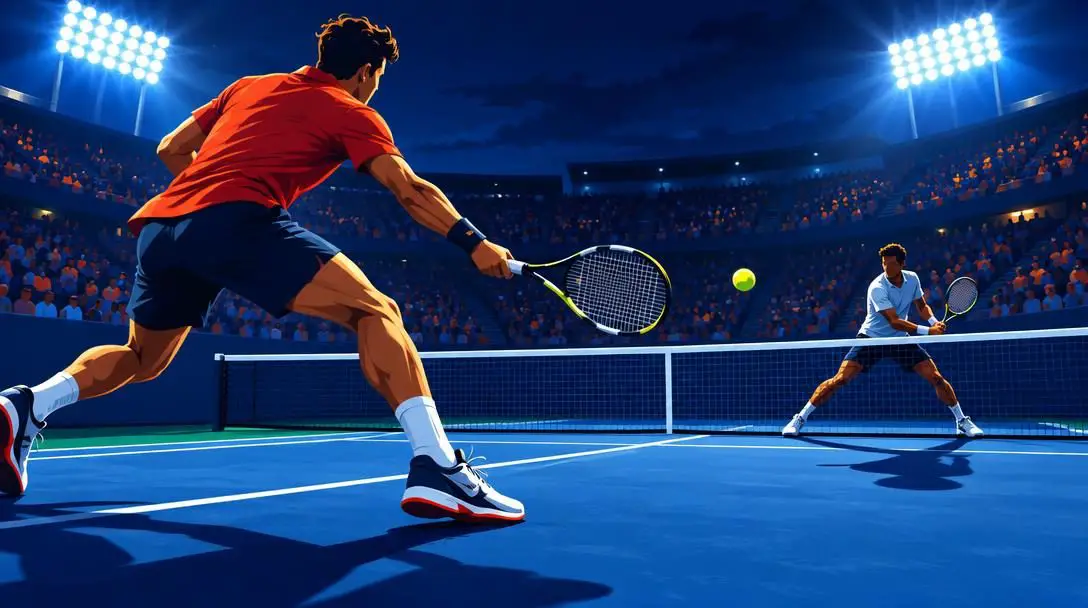
While most historic clashes unfold in tournament finals, the 2005 Australian Open semifinal between Maria Sharapova and Serena Williams generated the electricity of a championship decider. Williams entered the match having soundly eliminated second-ranked Amelie Mauresmo 6-2, 6-2. Sharapova, meanwhile, had reached the semifinal after surviving an intense, energy-sapping battle against Svetlana Kuznetsova.
Sharapova opened with pinpoint precision and relentless power, quickly dismantling Williams' rhythm to win the first set 6-2. In the second set, Williams faced a perilous 5-4 deficit, teetering on the edge of elimination before summoning a vintage counterattack. She swept three consecutive games to claim the set 7-5 and level the match. The final set turned into a fierce slugfest between two elite champions. Williams demonstrated remarkable composure by saving three crucial break points, refusing to let Sharapova break clear. Williams eventually secured the break she needed to seal the final set 8-6. Riding the momentum of that dramatic semifinal escape, Williams advanced to the final, where she defeated world number one Lindsay Davenport to claim the Australian Open crown.
When two athletes operating at the peak of physical conditioning face one another, standard scorelines give way to prolonged battles that push human endurance to its absolute limits.
Scoring mechanics, break points, and court surfaces
To fully appreciate the tactical magnitude of these legendary battles, spectators must understand the structural framework of professional women's tennis and how environmental factors influence athlete performance.
Grand Slam and WTA competitions follow a best-of-three-sets format. To win a set, a player must secure at least six games with a minimum margin of two games (such as 6-4). If a set reaches a 6-6 deadlock, a standard tiebreaker is played to seven points, requiring a two-point margin to conclude. Historically, Grand Slam tournaments did not utilize final-set tiebreakers; competitors were forced to continue play until one athlete secured a two-game advantage. This rule created monumental outliers such as Schiavone's 16-14 triumph over Kuznetsova and Seles' 10-8 marathon against Graf.
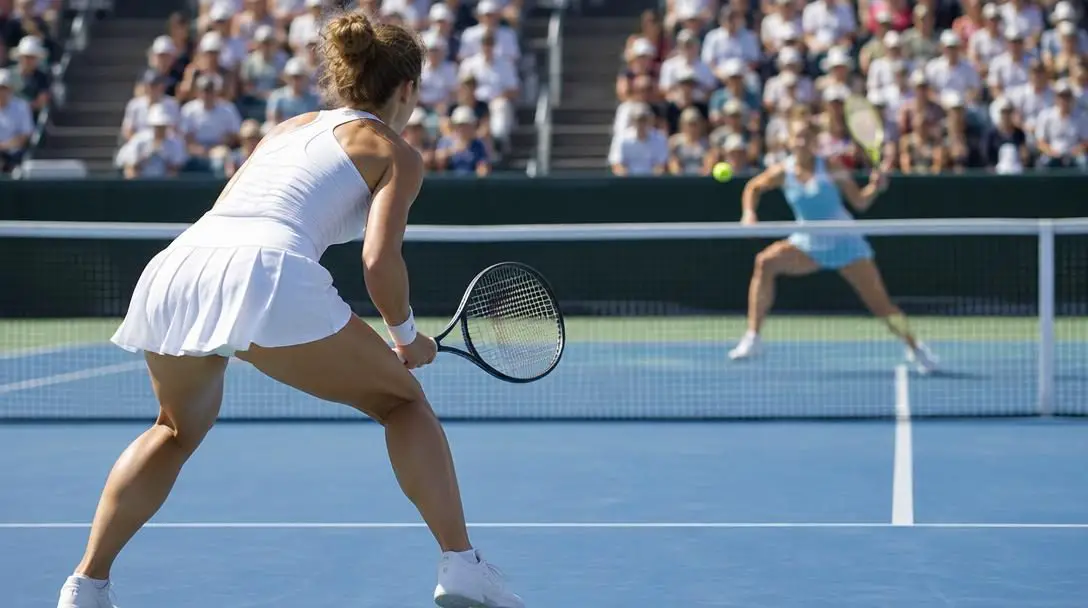
The physical court surface alters every rally by dictating the velocity and trajectory of the ball:
- Clay courts: Slower surfaces that generate high friction, producing slower ball speed and higher bounces. This environment rewards baseline endurance, footwork slides, and tactical patience, as highlighted in the battles featuring Evert, Navratilova, Seles, and Graf.
- Grass courts: Rapid surfaces with minimal friction that cause the ball to skid and stay low. This favors quick reaction times, aggressive first strikes, and explosive forward movement, perfectly illustrated by the high-velocity baseline exchanges between Williams and Davenport at Wimbledon.
- Hard courts: Medium-to-fast surfaces offering uniform, predictable bounce heights. Hard courts test both explosive power and pure cardiovascular endurance, as demonstrated in Melbourne by Williams, Sharapova, Schiavone, and Kuznetsova.
How to analyze and appreciate classic matches
When reviewing recordings of classic WTA encounters or watching high-stakes modern tournaments, adopting a systematic analytical approach reveals layers of strategy that casual viewers frequently overlook.
- Identify momentum reversals: Look closely at the exact juncture where a match swings. Note how Serena Williams shifted her court positioning when trailing 5-4 in the second set against Sharapova to completely disrupt her opponent's rhythm.
- Track return positioning: Observe where the returning player plants their feet on first versus second serves. Elite competitors often creep inside the baseline under pressure to punish second serves, while retreating deeper to defend against first-serve bombs.
- Balance unforced errors with winners: High-caliber tennis is rarely just about hitting outright winners. Track how consistently players construct points, observing whether an extended scoreline stems from clean defensive discipline or erratic shot selection.
- Assess physical and emotional management: During prolonged battles—such as the four-hour, 44-minute clash between Schiavone and Kuznetsova—observe how players behave during changeovers. Take note of breath recovery, footwork adjustments, and emotional composure between points.
Frequent mistakes spectators and analysts make
Analyzing elite tennis matches requires looking beyond basic statistics. Spectators and media commentators routinely fall victim to common analytical misconceptions:
- Equating marathon scorelines with superior quality: A match does not need to extend to double digits in the deciding set to be high caliber. Prolonged scorelines can occasionally reflect fatigue, erratic serving, or passive baseline rallying rather than exceptional shot-making.
- Ignoring the toll of prior rounds: Evaluating a single match in a vacuum ignores the cumulative physical fatigue of tournament play. Schiavone's historic survival against Kuznetsova directly undermined her physical reserves in the following round, contributing to her three-set exit against Wozniacki.
- Assuming an opening-set rout guarantees the match: In multiple legendary showdowns—including Williams against Sharapova and Williams against Davenport—the eventual loser dominated the opening set. Elite competitors routinely recalibrate their tactics after dropping the first set.
- Confusing mental strength with an absence of emotion: Mental resilience does not require stoicism. Monica Seles characterized her 1992 French Open win over Steffi Graf as the most emotional match of her life, proving that intense feeling and clinical execution can coexist.
The modern legacy of historic clashes
These classic encounters did not merely settle tournament titles; they fundamentally shaped the landscape of modern professional tennis. The sheer physical toll extracted by advantage sets—epitomized by the Schiavone-Kuznetsova marathon—led tennis governing bodies to reexamine match formats. To safeguard player health and preserve competitive recovery for subsequent rounds, all Grand Slam tournaments eventually adopted standardized final-set tiebreaker rules.
Furthermore, the legendary battles between Chris Evert and Martina Navratilova established the commercial and athletic blueprint for modern women's sports. By demonstrating that fierce on-court competition could elevate both participants and captivate global audiences, their rivalry laid the foundation for subsequent generational superstars like Seles, Graf, and the Williams sisters. Today's tour benefits directly from the tactical breakthroughs, training standards, and public visibility forged during those unforgettable afternoons.
Frequently asked questions
What is the longest women's Grand Slam match in tennis history?
The longest women's Grand Slam match on record took place in the fourth round of the 2011 Australian Open. Francesca Schiavone defeated Svetlana Kuznetsova 6-4, 1-6, 16-14 in an extraordinary battle that lasted 4 hours and 44 minutes.
Why did classic Grand Slam final sets have such high game scores?
Traditional Grand Slam tournament rules did not include a standard tiebreaker in the deciding final set. Competitors were required to play continuous games until one athlete achieved a two-game advantage, leading to extended scorelines like 16-14, 10-8, or 9-7.
Did Serena Williams win the 2005 Australian Open after her epic semifinal against Maria Sharapova?
Yes. After surviving three break points in the third set to defeat Sharapova 2-6, 7-5, 8-6 in the semifinal, Serena Williams advanced to the final, where she defeated world number one Lindsay Davenport to win the title.
How many times did Chris Evert and Martina Navratilova drop sets before their 1985 French Open final?
Neither player dropped a single set on their way to the 1985 final at Roland Garros. Both arrived in peak form, resulting in a three-set battle where Evert won 6-3, 6-7, 7-5.
How does court surface affect match length and player tactics?
Clay courts create high friction, slowing the ball down and producing higher bounces that reward stamina and long baseline rallies. Grass courts produce fast, low skids that favor aggressive, attacking play. Hard courts provide a middle ground of speed and true bounce that tests physical endurance.
The bottom line
The greatest matches in WTA history reveal that championship tennis is ultimately decided by the narrowest of psychological margins. When tactical plans break down under the weight of physical fatigue, the outcome hinges on which competitor can maintain technical discipline, manage late-set pressure, and summon reserves of stamina when elimination looms.
From Paris and London to Melbourne, these historic duels set the standard for what is possible on a tennis court. As modern equipment, athletic training, and tournament structures continue to evolve, the legacy of these legendary clashes remains the definitive benchmark against which all future championship showdowns are measured.