Wasted Genius: 5 Footballers Whose Careers Didn’t Match High Expectations

Every generation of football supporters witnesses the arrival of teenage prodigies heralded as the future masters of the sport. Powered by modern scouting networks, prestigious academy structures, and immediate media visibility, exceptional adolescents are thrust into public awareness long before they establish themselves within the senior professional game. Early technical dominance, natural flair, and physical presence often convince supporters and analysts that decades of elite trophies and individual accolades will inevitably follow.
Yet the transition from an exceptional academy talent to a reliable, world-class professional is notoriously fraught with structural hurdles. While a minority of prospects transition seamlessly to the summit of European football, many trajectories diverge wildly from their initial projections. Severe physical injuries, sudden tactical shifts, fierce internal competition, and turbulent off-pitch circumstances can disrupt development, reminding observers that raw skill alone does not guarantee a celebrated footballing legacy.
Key takeaways
- Elite natural ability requires sustained physical health, psychological stability, and tactical flexibility to produce a lasting top-flight legacy.
- Recurring bodily injuries can cut short the careers of generational playmakers long before they reach their projected prime.
- Off-pitch instability and disciplinary obstacles frequently disrupt high-ceiling talents from cementing their potential across multiple domestic leagues.
- A footballer can achieve a decorated career laden with major trophies while still facing public debate over whether they met their absolute sporting ceiling.
Profiles in unfulfilled potential and altered trajectories
The gap between initial athletic projections and eventual career realization reveals the delicate ecosystem of elite senior football. While some footballers endure agonizing physical breakdowns, others encounter stylistic pigeonholing or off-field complications that prevent them from cementing a legendary status. The following five players exemplify the varied ways a career path can deviate from early public expectations.
| Player | Formative Club | Key Senior Destinations | Primary Trajectory Factor |
|---|---|---|---|
| Joe Cole | West Ham United | Chelsea, Liverpool, Lille | Struggled to sustain initial transformative momentum |
| Jack Wilshere | Arsenal | Arsenal, West Ham United | Persistent, chronic injury setbacks |
| Ravel Morrison | Manchester United | West Ham United, Lazio, Atlas | Off-pitch issues and developmental interruptions |
| Robbie Savage | Manchester United youth setup | Leicester City, Blackburn Rovers, Derby County | Combative reputation overshadowing technical competence |
| Gary Cahill | Aston Villa | Burnley (loan), Chelsea | Perceived gap between trophy count and global elite status |
Joe Cole

- Breakthrough club: West Ham United
- Individual honor: Young Player of the Year (2003)
- Subsequent destinations: Chelsea, Liverpool (loan), Lille (loan)
- Milestone return: West Ham United (2013)
Few young prospects in English football history generated the level of excitement that surrounded Joe Cole during his formative years. Coming through the celebrated youth system at West Ham United, Cole captivated supporters with an instinctive, expressive style of ball manipulation that felt distinctly continental. His ability to wriggle out of tight midfield spaces and orchestrate attacking moves earned him universal praise, culminating in his selection as the Young Player of the Year in 2003.
A high-profile transfer to Chelsea placed Cole in an ultra-competitive environment packed with international stars. While he contributed to trophy-winning campaigns and produced moments of undeniable brilliance, his career did not yield the transformative, world-beating dominance that critics had once forecasted. In search of regular playing time and rhythm, Cole spent time on loan at Liverpool and embraced an overseas stint in France with Lille. A sentimental return to West Ham United in 2013 provided nostalgic glimpses of his technical artistry, yet his later career never recaptured the boundless upward trajectory that had defined his emergence.
Jack Wilshere
- Senior debut: Arsenal (age 16)
- Core attributes: Low center of gravity, creative vision, tempo control
- Primary career obstacle: Recurrent physical injuries
- Career conclusion: Premature retirement around age 30
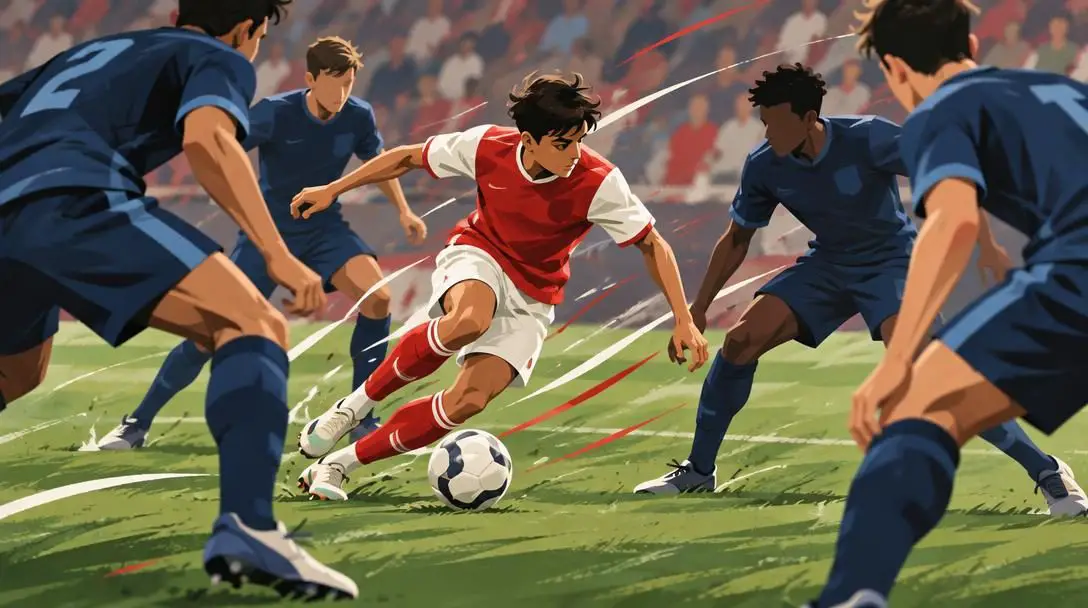
When Jack Wilshere made his senior Arsenal debut at just sixteen years of age, he was immediately recognized as a generational midfield talent. Gifted with an exceptional low center of gravity, sharp vision, and extraordinary poise under pressure, Wilshere demonstrated a rare ability to dominate midfields against elite continental opposition. Observers widely believed he would serve as the midfield cornerstone for both Arsenal and the England national team for more than a decade.
However, Wilshere’s forward momentum was continually derailed by cruel, recurring physical setbacks. Chronic ankle and lower-body injuries repeatedly interrupted his playing calendar, depriving him of the vital match fitness required to sustain his high-intensity style. Despite numerous grueling rehabilitation periods, he found it increasingly difficult to rediscover his peak physical conditioning. By the time he reached thirty years of age, Wilshere’s playing career had drawn to an early close, leaving the football community with a poignant sense of unfulfilled promise.

Talent is merely an initial starting point, requiring an alignment of physical health, tactical discipline, and mental stability to endure over a decade.
Ravel Morrison

- Academy origin: Manchester United
- Historical comparison: George Best
- Key clubs: West Ham United, Lazio, Atlas
- Primary disruption: Off-field complications and behavioral hurdles
Within the prestigious Manchester United youth ranks, Ravel Morrison was regarded by coaches and peers as perhaps the most naturally gifted prospect of his generation. His innate first touch, spatial awareness, and extraordinary technical audacity drew comparisons to legendary figures such as George Best. On the training pitch, Morrison demonstrated an intuitive mastery of the ball that routinely outshone other future international stars.
Yet Morrison was unable to translate this generational gift into a stable, elite career. Recurring off-field difficulties, disciplinary complications, and private distractions undermined his concentration, preventing him from establishing roots at any single club. His senior journey turned nomadic, featuring stints across diverse leagues with West Ham United in England, Lazio in Italy, and Atlas in Mexico. Despite brief flashes of his staggering raw ability, Morrison never established the sustained continuity required to match the immense expectations of his youth.
Robbie Savage

- International team: Wales
- Primary clubs: Leicester City, Blackburn Rovers, Derby County
- On-pitch role: Combative defensive midfielder
- Defining reputation: Aggressive, confrontational playing style
The playing career of Robbie Savage provides an instructive contrast to traditional narratives of unfulfilled prodigies. Savage spent his career operating as a deeply polarizing figure across the English top flight. Known for an abrasive, uncompromising approach in the center of the pitch, he regularly found himself at the epicenter of heated altercations with opponents, earning a reputation as a relentless irritant.
However, this combative persona often obscured Savage's genuine technical competence and tactical intelligence. He built an admirable, enduring career at the highest domestic level, becoming a pivotal figure for respected sides such as Leicester City, Blackburn Rovers, and Derby County, while also earning caps for Wales. Savage demonstrated that while public perception may focus on controversy and aggression, durability and competitive focus can sustain a prosperous career in top-level football.
Gary Cahill

- Formative pathway: Aston Villa, Burnley (loan)
- High-profile move: Chelsea (2012)
- Key achievements: Multiple major domestic and European trophies
- Perception paradox: Highly decorated despite excluded from global elite tier
The trajectory of Gary Cahill represents a unique case study in athletic expectations versus objective accomplishments. Developing initially at Aston Villa and gaining crucial senior experience through a loan spell with Burnley, Cahill established a reputation as an athletic, dependable center-back. His consistent defensive performances earned him a high-profile transfer to Chelsea in 2012, placing him in an environment where silverware was non-negotiable.
At Chelsea, Cahill became an essential anchor of the squad's back line, serving as a regular starter through multiple championship runs and lifting virtually every major club honor available. Despite his extensive trophy haul, critics and supporters frequently debated his ultimate standing, rarely including him among the absolute upper echelon of global defenders. Cahill achieved far more than the vast majority of his peers, yet the impossible expectations placed on modern defenders meant his legacy was often analyzed through the lens of what he supposedly lacked.

The mechanics of senior player development
The vast chasm between exceptional teenage promise and sustained top-tier success is shaped by specific physical, psychological, and institutional factors. Understanding how these elements interact explains why promising young careers often diverge from their initial projections.
- Physical resilience and structural durability: Modern football demands that players endure punishing schedules featuring dozens of high-intensity fixtures each year. When an athlete experiences structural injuries early in their senior career, the cumulative loss of match hours and training development stunts their athletic conditioning and tactical growth.
- Tactical integration and selflessness: Creative attackers often enjoy total freedom at youth levels. In senior football, managers enforce rigid defensive duties, specific pressing triggers, and structured positioning. Talented prospects who cannot adapt their natural flair to these collective demands are frequently dropped in favor of more disciplined options.
- Psychological adaptation and resilience: Moving from an academy setting to an elite senior dressing room involves managing intense media scrutiny, fierce squad competition, and immense public expectation. Mental fortitude is vital to navigate the inevitable dips in form without losing professional focus.
- Institutional stability and club trajectory: A young player's progression depends heavily on the continuity of their club environment. Frequent managerial turnover, abrupt changes in playing philosophy, and erratic transfer strategies can quickly marginalize a developing talent through no fault of their own.
How to protect and sustain athletic potential
Guiding an elite prospect through the turbulent transition to senior football requires meticulous planning from athletes, coaches, and advisory teams. Implementing structured developmental guidelines helps protect raw ability from premature burnout.
- Manage physical loads gradually: Ensure young athletes are not subjected to senior match volume before their musculoskeletal frames have fully matured, preventing chronic wear and tear.
- Prioritize meaningful competitive minutes: Target moves to clubs where regular first-team starts are attainable, avoiding extended periods of stagnation on the substitutes' bench of elite teams.
- Build a stable off-pitch support network: Establish a trusted circle of advisors, family, and mentors to help young athletes manage sudden wealth, media exposure, and private distractions.
- Expand tactical and positional versatility: Encourage creative players to learn secondary positions and defensive assignments, making them indispensable across various tactical setups.
- Cultivate proactive psychological coping habits: Provide sports psychology resources to help players manage public criticism, fear of failure, and the emotional toll of long-term injury rehabilitation.
Mistakes that derail promising football careers
Analyzing football history reveals several recurring missteps that regularly prevent gifted athletes from reaching their sporting ceiling:
- Securing a premature mega-club transfer: Joining a global giant before accumulating sufficient senior experience often results in frustrating loan cycles and stunted development.
- Disregarding defensive and structural responsibilities: Relying solely on natural technical gifts while failing to track back or press will alienate modern senior managers.
- Allowing external distractions to interfere with training: Letting celebrity status, active social media controversies, or off-field lifestyle choices compromise daily training standards.
- Rushing back from complex physical injuries: Cutting rehabilitation programs short to return to match action, which risks creating irreversible long-term bodily damage.
- Resisting managerial feedback and tactical adaptation: Assuming that adolescent praise eliminates the need to refine weaknesses, improve weaker-foot ability, or adapt to new systems.
Frequently asked questions
Why did Joe Cole's career slow down after leaving West Ham United?
Although Joe Cole earned the Young Player of the Year award in 2003 and won major trophies after joining Chelsea, he struggled to produce the sustained, transformative impact anticipated by early critics. Later spells with Liverpool, Lille, and an emotional return to West Ham United in 2013 showed flashes of his technical brilliance, but his career never regained its initial breakout momentum.
What caused Jack Wilshere to retire around age thirty?
Jack Wilshere suffered from chronic, recurring injuries that began early in his senior career at Arsenal. These physical setbacks prevented him from maintaining consistent match fitness and recapturing his peak conditioning, eventually forcing his playing career to conclude prematurely around the age of thirty.
Which teams did Ravel Morrison represent during his senior career?
After progressing through Manchester United's academy, Ravel Morrison experienced a nomadic senior career due to off-field disruptions. His various destinations included English club West Ham United, Italian side Lazio, and Mexican outfit Atlas, among others.
Was Robbie Savage considered a failed prospect?
No. While Robbie Savage was frequently viewed as a controversial and aggressive midfielder whose confrontations overshadowed his skill, he enjoyed a durable and successful career. He represented Wales at the international level and served as a regular contributor for Premier League clubs like Leicester City, Blackburn Rovers, and Derby County.
Why is Gary Cahill included in debates about unfulfilled expectations?
Despite winning numerous domestic and European trophies as a regular starter for Chelsea after joining from Aston Villa via a loan at Burnley, Gary Cahill was rarely ranked among the absolute global elite of defenders. His inclusion highlights how lofty public expectations can alter the perception of a remarkably decorated career.
The bottom line
Evaluating the career trajectories of professional footballers requires looking beyond crude distinctions between complete success and utter failure. As demonstrated by players like Gary Cahill, an athlete can collect an enviable collection of winner's medals while still facing scrutiny over whether their technical ceiling matched early media hype. Conversely, figures like Robbie Savage prove that embracing an unpopular, combative role can provide the competitive platform for a long, resilient senior career.
Above all, the stories of Jack Wilshere, Joe Cole, and Ravel Morrison serve as a sobering reminder of football's fragility. Whether through devastating bodily breakdowns, the difficulty of sustaining peak form across changing managerial regimes, or the turbulence of off-field distractions, raw footballing genius remains exceptionally vulnerable. When watching the next generation of teenage wonderkids burst onto the scene, supporters must remember that natural talent is only the opening chapter in a complex, unpredictable journey.