What Can Worms Teach Us About Sleep?

The next time you curl up in bed for a night of restorative rest, you might not imagine that the microscopic worms wriggling through garden soil share your physiological need for slumber. Sleep is an essential biological process found throughout the animal kingdom, yet the precise cellular triggers and molecular mechanisms that govern when and why organisms feel drowsy have challenged biologists and medical researchers for generations. Without understanding the primary switches that signal sleepiness in individual nerve cells, unraveling complex human sleep disorders remains a daunting task.
To decode these fundamental neural principles, scientists at Japan's University of Tsukuba looked to an extraordinarily simple creature. By examining how specific nerve cells respond to prolonged wakefulness in a tiny nematode worm, their research team uncovered a biochemical mechanism that controls the drive to sleep. The study provides a fresh framework for understanding the biological debt of being awake and points toward new avenues for addressing sleep health in humans.
Key takeaways
- Researchers at the University of Tsukuba uncovered how cellular sleep pressure builds up and discharges in the nervous system using microscopic nematode worms.
- Prolonged wakefulness causes a marked accumulation of calcium ions within a specific central nerve cell known as the ALA neuron.
- Following a period of sleep, calcium ion concentrations drop back down, confirming that sleep acts as a biochemical reset for homeostatic balance.
- Because the genetic and cellular pathways in these worms have direct counterparts in human biology, the discovery offers critical insights into human sleep regulation.
The Evolutionary Foundations of Sleep Homeostasis
Across virtually all species possessing a central nervous system, rest is governed by homeostatic regulation. In the simplest terms, the longer an animal remains awake, the greater its biological need for subsequent sleep becomes. This internal counter keeps track of waking hours, gradually increasing drowsiness until the organism enters a quiescent state. Despite how intuitive this rhythm feels, scientists have spent decades trying to identify the exact physical meter that registers the passage of wakeful time within individual neurons.
In humans, sleep homeostasis works alongside circadian rhythms to ensure the brain receives regular downtime to consolidate memories, clear waste, and replenish cellular energy stores. However, the human brain contains billions of neurons and trillions of synaptic connections, making it virtually impossible to isolate the primary biochemical trigger of homeostatic sleep pressure in a living human subject. To bypass this staggering complexity, neurobiologists study simpler organisms that exhibit identical homeostatic rest behaviors using vastly smaller neural networks.
Key Subjects in the Tsukuba Sleep Discovery
The landmark study conducted in Japan brought together an established research institution and one of molecular biology's most celebrated model organisms to answer foundational questions about rest.
University of Tsukuba

- Location: Tsukuba, Ibaraki Prefecture, Japan
- Research lead: Professor Yu Hayashi
- Study publication: iScience (May 2022 issue)
- Focus area: Cellular mechanisms of homeostatic sleep regulation
The University of Tsukuba has long stood at the forefront of neuroscience and sleep research in Asia. Under the direction of Professor Yu Hayashi, the university's research team published their findings in a paper titled “Lessons on how to sleep: What we can learn from worms.” Their objective was to look past the dense neuroanatomy of mammals and isolate the cellular machinery responsible for homeostatic sleep control in its most elemental biological state.
Caenorhabditis elegans
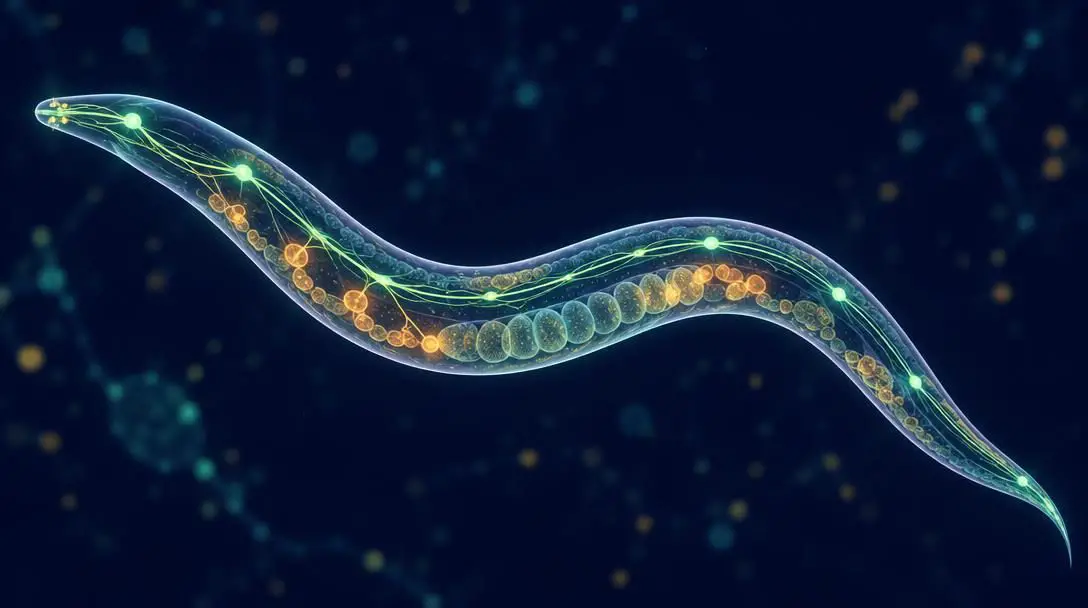
- Organism type: Microscopic nematode worm
- Laboratory history: Mainstay of laboratory research since the 1960s
- Anatomy: Transparent body with a fully mapped nervous system
- Genetic profile: Shares numerous functional gene counterparts with humans
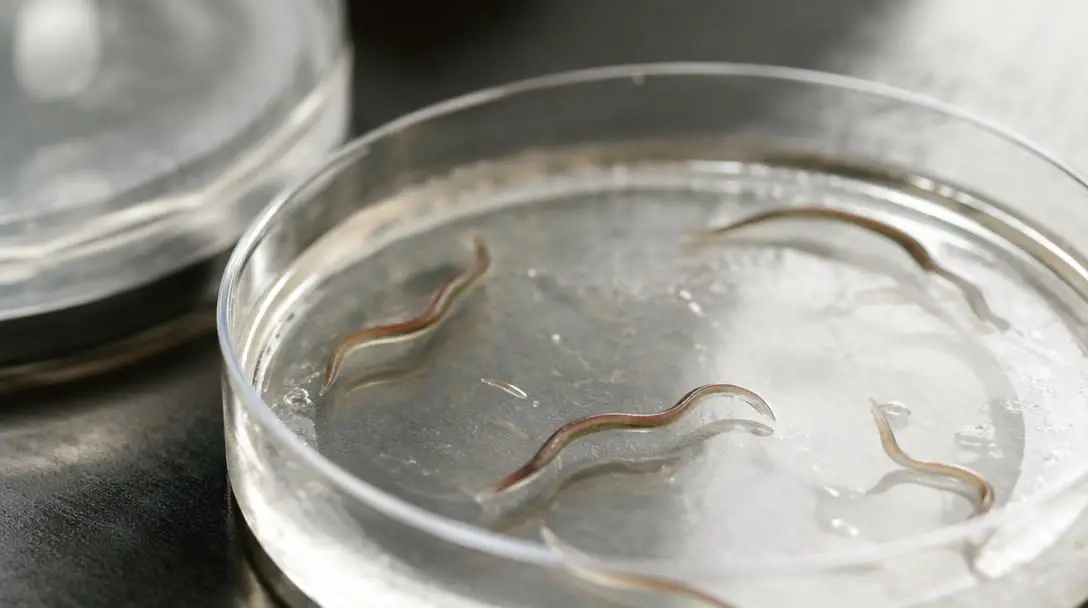
The nematode worm known as Caenorhabditis elegans is one of science's most valuable model organisms. Introduced to laboratory genetics in the 1960s, this microscopic creature offers distinct research advantages. Its entire nervous system is completely mapped, allowing scientists to track every single nerve cell and synaptic link. Because the worm is optically transparent, researchers can witness internal physiological shifts and chemical movements in real time without surgical procedures. Furthermore, C. elegans is easy to breed in large quantities in Petri dishes and shares essential genetic pathways with human beings, making its cellular behaviors directly relevant to human health.
Inside the Breakthrough: The ALA Neuron and Calcium Ion Flux
Hypothesizing that homeostatic sleep regulation hinges on specific command neurons, Professor Hayashi's team zeroed in on a single central nerve cell in C. elegans called the ALA neuron. In the nematode, this neuron plays a commanding role in triggering behavioral quiescence, the invertebrate equivalent of sleep.
By tracking the chemical activity inside the ALA neuron during varying states of wakefulness and rest, the researchers made a striking discovery involving intracellular calcium ions. When the worms were kept awake for extended stretches, calcium ions gradually accumulated in high concentrations within the ALA neuron. The longer the worms stayed active, the higher the cellular calcium level climbed, effectively acting as a chemical sleepiness counter.
The more an organism stays awake, the more rest it ultimately requires to rebalance its central nervous system.
Once the worms were permitted to enter their quiescent sleep state, this chemical imbalance corrected itself. The concentration of calcium ions steadily fell, leaving the ALA neuron with substantially fewer calcium ions upon waking. This rise and fall proved a direct correlation between the worm's homeostatic sleep drive and the concentration of calcium ions inside its primary regulatory neuron.
Because humans possess functionally similar nerve cells and homologous chemical signaling triggers in our own central nervous systems, this calcium flux mechanism reveals how cellular wear and sustained wakefulness translate into irresistible drowsiness across different branches of the animal kingdom.
At a Glance: How the ALA Neuron Reflects Sleep Debt
The research team demonstrated that cellular activity changes predictably as the nematode moves from active wakefulness to high sleep debt and eventual recovery.
| Behavioral State | Wakefulness Duration | ALA Calcium Ion Level | Homeostatic Sleep Drive | Observed Physiological Outcome |
|---|---|---|---|---|
| Standard Wakefulness | Normal waking baseline | Moderate / Low | Low | Active foraging and exploratory movement |
| Prolonged Wakefulness | Extended waking hours | High / Concentrated | Elevated | Chemical buildup of sleep pressure and cellular fatigue |
| Quiescent Sleep State | Active rest phase | Steadily declining | Discharging | Cessation of movement, reduced responsiveness, cellular reset |
| Post-Rest Baseline | Fully rested after sleep | Substantially depleted | Reset to zero | Full restoration of waking behaviors and chemical balance |
Steps to Support Your Natural Homeostatic Sleep Drive
While neurobiologists continue mapping the minute ion channels that govern sleep pressure, everyday sleepers can optimize their rest by supporting their own biological homeostatic drive. Aligning daily habits with your internal sleep counter promotes steady calcium rebalancing each night.

- Set an unvarying wake-up time: Rising at the exact same hour every morning starts your homeostatic sleep clock at a consistent point, ensuring that natural cellular pressure peaks right when you plan to sleep.
- Accumulate sufficient daytime wakefulness: Because sleep is homeostatically regulated, your nervous system requires an adequate period of continuous, active daytime hours to build the chemical drive needed for deep rest.
- Restrict late-day interruptions to sleep debt: Avoid taking long naps during the late afternoon or evening, as dozing off prematurely discharges accumulated sleep pressure and disrupts nighttime onset.
- Prepare a quiet, dark environment for the cellular reset: When your homeostatic pressure peaks, transition into a cool, pitch-black, and silent room to allow your nervous system to execute its restorative cycles without sensory interruptions.
- Allow complete recovery after sleep deprivation: If you experience extended periods of wakefulness, prioritize extended recovery rest rather than forcing your body to run on high cellular sleep debt.
Common Mistakes That Sabotage Sleep Homeostasis
Many chronic sleep difficulties stem from misunderstandings about how the body generates drowsiness. Attempting to override evolutionary biology often causes persistent insomnia and daytime fatigue.
- Fighting off natural drowsiness: When your nervous system signals that calcium ions and homeostatic pressure have peaked, continuing to work or look at screens overrides your internal cues and strains the nervous system.
- Going to bed without enough prior wakefulness: Retiring extraordinarily early in hopes of catching up on sleep rarely works if your body has not spent enough continuous waking hours building homeostatic pressure.
- Relying on excessive daytime naps: Long, sporadic daytime naps release built-up sleep pressure at the wrong biological hours, leaving your central nervous system unprimed for nighttime rest.
- Treating rest as an optional luxury: Attempting to permanently reduce sleep duration ignores the biological reality that prolonged wakefulness inevitably requires compensatory sleep to clear cellular fatigue.
- Assuming human sleep is entirely psychological: Overlooking the physiological, evolutionary nature of rest leads people to rely on sheer willpower instead of building healthy, consistent physical routines.
From Invertebrates to Mammals: The Next Research Frontier
The findings from Professor Yu Hayashi and the University of Tsukuba team represent a foundational breakthrough rather than the final chapter in sleep research. While the results cleanly demonstrate a direct connection between calcium ion levels in the ALA neuron and sleep homeostasis in nematodes, the findings will need to be confirmed and broadened through further scientific inquiry.
The natural next phase involves transitioning from invertebrate models to mammalian studies, typically focusing on mice and other small rodents. Mammals possess complex, multi-layered brain architectures that include specialized sleep-regulating centers such as the hypothalamus and brainstem. Tracking calcium ion movement across these mammalian sleep switches will show whether the exact same ionic reset observed in C. elegans governs mammalian sleep architecture.
If these mechanisms hold true in mammalian brains, pharmacological researchers may be able to develop targeted therapeutics for debilitating sleep disorders. Instead of relying on broad sedatives that artificially depress the central nervous system, future treatments could directly modulate the ion channels responsible for measuring and discharging homeostatic sleep pressure.
Frequently asked questions
Why do scientists study microscopic worms to learn about human sleep?
Researchers study Caenorhabditis elegans because its nervous system contains only a few hundred mapped neurons and its body is transparent, allowing clear observation of cellular events. Despite its anatomical simplicity, the worm shares numerous functional gene counterparts with humans, making its basic biological mechanisms applicable to human neurobiology.
What is the role of the ALA neuron in the nematode worm?
The ALA neuron is a key nerve cell in the worm's central nervous system that regulates sleep-like behavioral quiescence. The University of Tsukuba study identified it as the primary site where homeostatic sleep pressure accumulates and resets.
How do calcium ions affect the drive to sleep?
During prolonged wakefulness, calcium ions build up in high concentrations inside the ALA neuron. This chemical accumulation correlates directly with the sensation of sleepiness. Once the organism sleeps, the calcium concentration drops significantly, resetting the cell's baseline state.
What does homeostatic sleep regulation mean?
Homeostatic sleep regulation describes an internal balancing mechanism where the demand for sleep increases predictably the longer an organism stays awake. When adequate sleep is achieved, that accumulated biological debt is cleared.
What comes next for this line of sleep research?
Scientists plan to expand this research by studying small mammals like mice to verify whether calcium ion dynamics operate identically within larger, more complex brain structures. This work could eventually lead to targeted medical treatments for human sleep disturbances.
The Bottom Line
The humble garden nematode may seem light-years removed from human experience, but its transparent body and compact nervous system have illuminated one of our most fundamental biological functions. By demonstrating that prolonged wakefulness causes calcium ions to collect inside the ALA neuron and that sleep flushes this accumulation away, the University of Tsukuba team has uncovered an essential biological switch for rest.
As science continues to translate these molecular insights from invertebrates to mammals, the research serves as an important reminder: sleep is not an arbitrary habit or a dispensable luxury. It is a strictly regulated cellular imperative encoded into the most ancient branches of animal life, essential for clearing our daily biological debt and restoring balance to the nervous system.