Fast Food Restaurant Ice is Often Dirtier Than Toilet Water
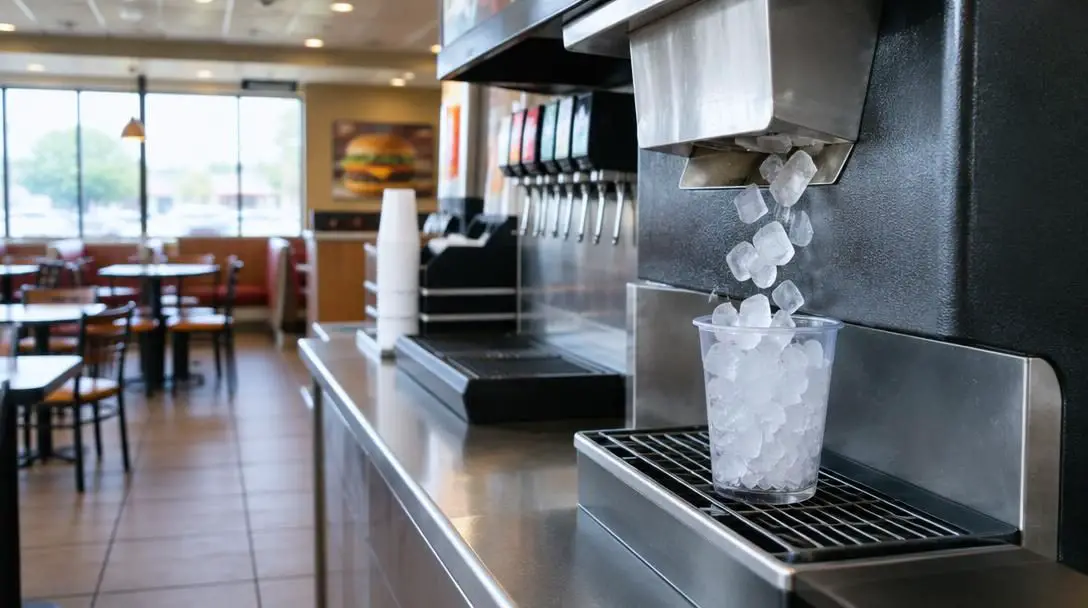
Few sensory experiences are as immediately satisfying on a hot day as an ice-cold fountain beverage filled to the brim with crushed or cubed ice. Most patrons instinctively assume that because ice is frozen solid, it is naturally clean, sterile, and free from dangerous microbial life.
Yet a continuous trail of laboratory research, municipal health inspections, and scientific investigations reveals a much more unsettling reality. The ice cubes floating in commercial beverage cups frequently harbor microscopic pathogens and environmental bacteria, including coliform, enterococci, and Escherichia coli (E. coli). This widespread sanitation breakdown is not restricted to neglected roadside diners; industry giants such as McDonald's, Starbucks, Burger King, and KFC have all faced scrutiny over the hygiene of their ice machines across domestic and international markets.
Key takeaways
- Scientific investigations show commercial ice frequently carries higher bacterial counts than restaurant toilet water due to disparate cleaning frequencies.
- Freezing temperatures do not sterilize water, allowing organisms such as E. coli, Salmonella, and mold to remain viable until the ice melts.
- Poor hand hygiene and neglected machine maintenance are the two primary drivers of microbial buildup in ice dispensers.
- Health inspection reports routinely cite dirty ice machines and microbial slime inside dispenser tubing as frequent sanitation violations.
- Consumers can protect themselves by checking municipal health department inspection scores and visually inspecting ice for cloudiness, odors, or discoloration.
Scientific investigations into commercial ice quality
Consumer assumptions regarding commercial ice hygiene were decisively challenged when scientific testing revealed the degree of microbial life flourishing inside food service dispensing equipment. A series of systematic tests across various cities and countries documented consistent hygiene failures in environments that consumers assumed were sterile.
Tampa, Florida

- Year: 2006
- Lead investigator: Jasmine Roberts
- Key finding: 70% of ice samples dirtier than restaurant toilet water
- Tested locations: Local fast-food establishments
National attention turned toward ice sanitation when Jasmine Roberts, a twelve-year-old middle school student in Tampa, developed a science fair project to deter her friends from chewing on restaurant ice. Roberts collected ice samples from regional fast-food establishments and compared their bacterial counts against toilet water collected from the exact same restaurants. Laboratory analysis demonstrated that approximately 70% of the time, the ice contained more bacteria than the toilet water. While commercial restroom toilets were subjected to routine, aggressive chemical sanitation, ice bins and dispenser mechanisms were rarely deep-cleaned, allowing environmental microorganisms to flourish without disruption.
Indianapolis, Indiana

- Year: 2008
- Venue type: Commercial bars
- Sample size: 25 establishments
- Key finding: 13 of 25 ice samples contaminated with coliform
Investigative testing expanded into nightlife and adult dining settings in 2008 when researchers in Indianapolis gathered ice samples from 25 area bars. More than half of the facilities—13 out of 25—tested positive for coliform bacteria. Because coliform serves as a primary sanitary indicator for food and water quality, its presence confirmed that beverage-handling environments throughout the city suffered from chronic lapses in clean handling and equipment sanitization.
Roanoke, Virginia

- Year: 2010
- Sample size: 90 beverage samples from 30 fountain machines
- Coliform rate: 48% of sampled drinks
- Critical finding: 11% contained antibiotic-resistant E. coli
A 2010 study in Roanoke investigated fountain drink dispensing mechanics by testing 90 samples collected across 30 distinct machines. Coliform bacteria were detected in 48% of the beverages, while 11% of the samples tested positive for antibiotic-resistant E. coli. Researchers traced the contamination directly to microbial colonies that had anchored themselves inside the flexible plastic tubing used to route water and syrup through the soda fountain mechanisms.
United Kingdom

- Year: 2011
- Scope: 88 commercial establishments
- Contamination rate: 30% of samples
- Key pathogens: E. coli and enterococci
Proving that sanitary neglect is an international problem, a comprehensive 2011 study across the United Kingdom evaluated ice supplies drawn from 88 commercial venues. Laboratory testing confirmed that 30% of the facilities dispensed ice containing E. coli and enterococci. The presence of these organisms demonstrated that multinational fast-food chains and independent food outlets worldwide struggle with identical systemic hygiene failures regarding their beverage hardware.
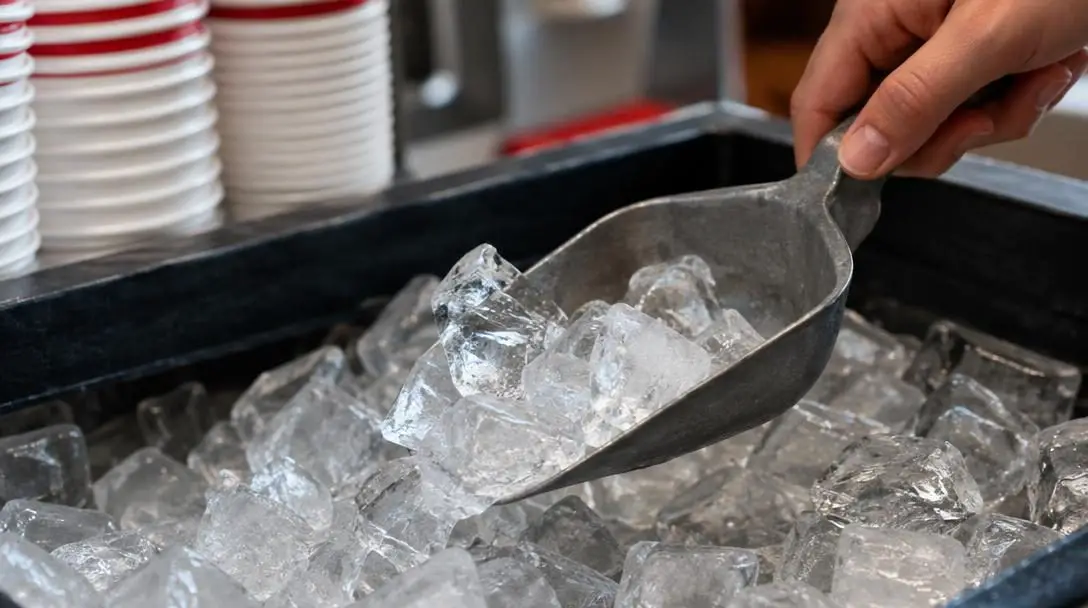
Standard restaurant toilets receive routine, aggressive chemical scrubbing, while the dark interiors of ice machines are often neglected for months at a time.
At a glance: Commercial beverage testing data
The consistent appearance of indicator bacteria across different geographic regions underscores how systemic ice dispenser contamination is throughout the food service industry.
| Location & Year | Facility Type | Key Bacterial Strains Identified | Primary Contamination Rate |
|---|---|---|---|
| Tampa, FL (2006) | Fast-food restaurants | General environmental bacteria | 70% dirtier than toilet water |
| Indianapolis, IN (2008) | Local bars | Coliform bacteria | 52% (13 of 25 venues) |
| Roanoke, VA (2010) | Self-serve soda fountains | Coliform, antibiotic-resistant E. coli | 48% coliform, 11% E. coli |
| United Kingdom (2011) | Commercial establishments | E. coli, enterococci | 30% of sampled facilities |
The mechanics of contamination inside commercial machines
To understand how ice becomes a biological hazard, it is necessary to examine how commercial ice makers and soda fountains function. These appliances are complex networks of water filtration lines, metal freezing plates, storage compartments, and plastic distribution tubes. Bacteria and fungi enter and thrive within these systems through two primary pathways.
The first vector is poor hand hygiene among restaurant workers and self-serve customers. Ice scoops, hopper lids, and dispensing levers are touched continuously throughout a shift. When workers or patrons handle money, cash registers, wiping rags, raw ingredients, or personal phones and then access the ice compartment without washing their hands, pathogens transfer instantly to the surfaces. If an employee uses an unwashed cup or bare hand to scoop ice, or drops a contaminated scoop handle directly into the ice pile, bacteria rapidly colonize the supply.
The second major vector is infrequent cleaning and maintenance. While bathroom surfaces are routinely scrubbed and bleached multiple times each day, ice machines are frequently hidden from plain view in backrooms or under counters. As a result, they may sit for months without a deep clean. The dark, damp, and moisture-rich environment within the machine is an ideal habitat for biological colonization. Without aggressive, regular maintenance, machines develop internal accumulations of mold, viruses, Salmonella, and E. coli. Furthermore, the flexible plastic tubing running from the water supply line through the machine creates a continuous microbial slime layer, known as a biofilm, that breaks off into consumer cups with every dispense.
Local regulatory agencies observe this breakdown constantly. Health inspectors across the country regularly cite fast-food restaurants for equipment maintenance failures. In Charlotte, North Carolina, a local investigative reporter tracking municipal restaurant health scores noted that one of the single most frequent violations on public inspection reports is simply "dirty ice machines."
Common mistakes diners make regarding restaurant ice
A collection of persistent misconceptions keeps consumers from recognizing the sanitary risks associated with commercial ice supplies. These erroneous assumptions undermine personal health decisions:
- Assuming cold temperatures kill germs: Freezing temperatures merely halt bacterial replication rather than neutralizing the organisms. Pathogens like E. coli, coliform, and Salmonella enter dormancy in frozen water and resume active growth once the cube melts in a warm beverage or within the human digestive system.
- Trusting corporate brand names blindly: Consumers frequently believe that multinational fast-food corporations or high-end coffee chains enforce foolproof hygiene standards across every location. However, sanitation depends entirely on daily management and individual employee adherence at the local level.
- Focusing on the scoop while ignoring the dispenser nozzle: Many self-serve patrons avoid touching the communal scoop but press their cups directly against fountain levers. Dispenser nozzles and internal syrup distribution spouts gather sticky residues that provide a rich food source for mold and bacterial colonies if not disassembled daily.
- Ignoring the condition of customer restrooms: While the Tampa investigation showed that chemically sanitized toilets often contain fewer microbes than ice, a visibly dirty customer restroom indicates systemic management failures. If a restaurant fails to maintain its public spaces, internal appliances like ice machines are almost certainly neglected.
Practical steps to evaluate your drink and protect yourself
Because microbial pathogens are invisible under ordinary conditions, diners cannot detect moderate levels of bacterial contamination by eye alone. However, serious sanitation failures leave discernible physical warnings. Consumers can systematically evaluate their drinks using the following inspection steps:
- Examine the cube clarity: High-grade commercial ice is typically crystal clear. If your ice appears deeply cloudy, milky, or contains trapped sediments, the machine's filtration system or internal components may be compromised.
- Look for biological specks: Scan the ice cubes for flecks or visible streaks of pink, brown, or black matter. These discolorations are classic indicators of mature mold, yeast, or bacterial colonies flaking off internal dispensing baffles.
- Test the surface texture: Sanitary ice melts smoothly into liquid water. If an ice cube feels unusually slick, greasy, or coated in a discernible slimy film when touched, discard the beverage immediately.
- Check for off-putting aromas: Smell your drink before consuming it. Ice should remain entirely odorless; any sour, musty, or stagnant odor indicates heavy microbial or fungal growth inside the storage hopper.
- Switch to safer alternatives when cleanliness is uncertain: If an establishment presents questionable hygiene markers, request your beverage without ice, choose factory-sealed bottled or canned drinks, or consume iced beverages prepared exclusively at home.
Broader implications for commercial kitchen hygiene
The prevalence of contaminated ice serves as an important indicator for overall food safety standards within an eatery. Under standard public health guidelines, ice is legally classified as food. Consequently, commercial ice makers are food-contact surfaces that demand the same cleaning protocols as meat slicers, prep tables, and cookware.
When an establishment demonstrates persistent failures in ice machine sanitation, it raises pressing questions about back-of-house procedures. If a facility neglects an appliance that directly dispenses items into customer cups, other food handling protocols may also be compromised. Improper cold storage temperatures, cross-contamination between raw and cooked goods, and inadequate employee handwashing frequently accompany poor equipment maintenance. Reviewing published public health inspection reports provides a window into these systemic operational issues before you decide where to spend your money.
Frequently asked questions
Does the alcohol in a mixed drink kill bacteria in contaminated ice?
Standard mixed drinks and cocktails do not have a sufficiently high alcohol concentration or contact time to reliably sanitize contaminated ice. The 2008 study in Indianapolis demonstrated that ice sampled from commercial bars carried significant loads of coliform bacteria, proving that bar ice is just as vulnerable to contamination as fast-food dispensers.
Why was fast-food ice found to be dirtier than toilet water?
Commercial restaurant toilets are cleaned and disinfected multiple times each day using harsh chemical sanitizers such as bleach. In contrast, ice machines and soda dispensers are frequently overlooked for weeks or months, creating dark, moisture-rich environments where bacteria, mold, and biofilms can multiply undisturbed.
What specific illnesses can contaminated restaurant ice cause?
Contaminated ice can introduce pathogens such as E. coli, Salmonella, enterococci, and norovirus into your digestive tract. Consuming these organisms can cause symptoms of foodborne illness, including stomach cramps, nausea, vomiting, and diarrhea.
What causes pink or black slimy residue inside ice dispensers?
Pink and black residues are typically colonies of airborne mold, yeast, or bacteria (such as Serratia marcescens) that thrive in damp, dark environments. When ice machines and soda dispenser nozzles are not stripped and sanitized on a daily schedule, these organisms coat internal parts and drop directly into customer cups.
How can I find out if a local restaurant has dirty ice machine citations?
Most municipal and county health departments publish routine restaurant inspection reports online. By searching your local government's environmental health database for an eatery's name, you can review specific violations, including citations for moldy ice machines or improper equipment maintenance.
The bottom line
The assumption that ice is inherently safe simply because it is frozen ignores the basic mechanics of foodborne pathogens and commercial equipment. Ice machines require continuous, diligent cleaning, proper filtration maintenance, and strict employee hand hygiene to prevent the rapid growth of bacterial biofilms and mold colonies. By staying vigilant, paying attention to sensory warning signs, and consulting local health inspection reports, consumers can make informed choices and protect their digestive health when dining out.