5 ATP Records Likely To Never Be Broken
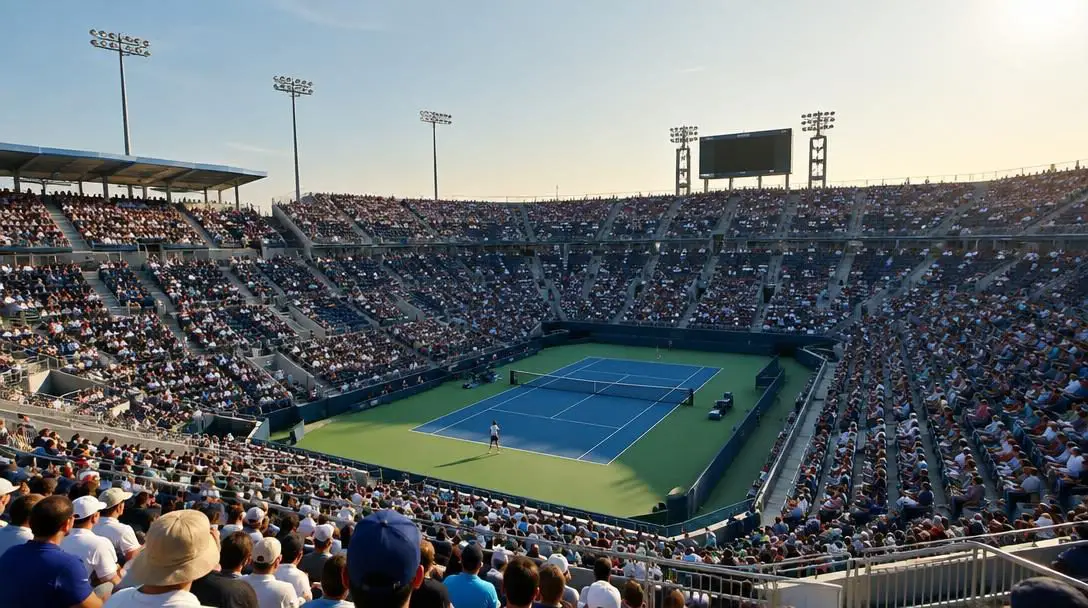
Since the introduction of an objective ranking system in 1973, the Association of Tennis Professionals has provided a mathematical standard to determine the world's leading men's tennis player. By replacing regional opinions and subjective committee evaluations with a rolling points tally, the ATP Tour established a clear hierarchy where competitors earn their status tournament by tournament. Reaching the world number-one ranking represents the highest individual milestone in professional tennis, yet holding that position over extended periods demands extraordinary physical resilience and mental determination.
Across five decades of tour history, distinct eras of dominance, intense personal rivalries, and dramatic ascents have produced statistical records that push the boundaries of athletic achievement. Given the modern depth of field and the unrelenting physical demands of the professional circuit, several of these historical benchmarks appear virtually untouchable. Examining these achievements highlights the sustained excellence required to reach the pinnacle of men's professional tennis.
Key takeaways
- Roger Federer holds the record for both the longest consecutive stay at world number one and the greatest calendar span between his first and last reigns.
- The volatile 1983 ATP season saw the world number-one ranking change hands ten times among Jimmy Connors, John McEnroe, and Ivan Lendl.
- Novak Djokovic holds the ultimate benchmark for the most aggregate weeks spent at the top of the ATP rankings.
- Chile's Marcelo Rios remains the only player in tour history to achieve the world number-one ranking and conclude his career without winning a Grand Slam singles tournament.
At a glance: Five historic ATP milestones
The following table outlines the key figures, record holders, and context behind five of the most durable ranking records established since the creation of the ATP ranking system.
| Record description | Record holder(s) | Key statistic | Era established |
|---|---|---|---|
| Consecutive weeks at world No. 1 | Roger Federer | 237 straight weeks | 2004–2008 |
| Most No. 1 changes in a single calendar year | Jimmy Connors, John McEnroe, Ivan Lendl | 10 ranking changes | 1983 |
| Most total aggregate weeks at world No. 1 | Novak Djokovic | All-time career record | 2011–2020s |
| Longest span between first and last No. 1 ranking | Roger Federer | 14 years, 142 days | 2004–2018 |
| Reaching No. 1 without a Grand Slam title | Marcelo Rios | 0 major titles won across career | 1998 (retired 2004) |
Five ATP records likely to stand the test of time
Each of these five milestones reflects exceptional circumstances within professional tennis, ranging from unmatched personal consistency to chaotic parity at the top of the sport.
Consecutive weeks at No. 1: Roger Federer
Roger Federer established an unprecedented era of supremacy by spending 237 consecutive weeks at the top of the ATP rankings. His historic run began in February 2004, when he claimed the number-one spot from Andy Roddick following a title run at the Australian Open. Federer defended his position without interruption for more than four and a half years, turning away all challengers until Rafael Nadal surpassed him in August 2008.
To put this achievement into perspective, Federer's run eclipsed the long-standing benchmark set by Jimmy Connors, who recorded 160 consecutive weeks at the summit during the 1970s. Maintaining the top ranking for 237 straight weeks requires an athlete to avoid serious injuries, endure zero prolonged slumps, and continually defend deep runs across every tournament tier without stumble.
Most No. 1 players in a single year: The 1983 season
While contemporary tennis fans are accustomed to top players maintaining multi-month holds on the top ranking, the 1983 campaign witnessed unprecedented ranking volatility. Across those twelve months, the world number-one ranking changed hands a record ten times. Jimmy Connors opened the year at the summit, only to surrender the position to John McEnroe in January.
Throughout 1983, Connors and McEnroe traded the spot back and forth repeatedly, with certain stints lasting only a single week. McEnroe managed the longest single tenure of that season at 17 weeks. The rivalry expanded when Ivan Lendl emerged as a third title claimant, securing distinct reigns of six and 11 weeks. The modern ranking system rewards deep consistency, making a ten-change shuffle across a single calendar year virtually impossible to replicate.

Total weeks at No. 1: Novak Djokovic
Holding the world number-one ranking across multiple eras represents the ultimate test of career endurance. Roger Federer completed his storied career with 310 total weeks at number one, a sum heavily bolstered by his continuous 237-week run. However, the all-time aggregate benchmark belongs to Novak Djokovic, who built a commanding lead at the summit across numerous dominant stretches.
The gap Djokovic established over his peers highlights the permanence of this record. For a retired icon like Federer to catch him, he would have to re-enter professional competition and maintain the top spot for well over a year. Meanwhile, fellow legend Rafael Nadal would require roughly four additional full calendar years at world number one to challenge Djokovic's total. With modern fields increasingly balanced, building such an enormous aggregate total remains an extraordinary hurdle for future generations.
Time between first and last No. 1 rankings: Roger Federer
Because elite men's tennis demands explosive movement, intense travel, and grueling physical recovery, the peak competitive window for most athletes closes near age 30. Longevity at the absolute highest level is exceptionally rare. In the history of the ATP computer rankings, only three players have managed to space their first and final stints at number one by more than a decade: Roger Federer, Rafael Nadal, and Novak Djokovic.
Federer stands at the head of this exclusive trio, recording a span of 14 years and 142 days between his first ascent and his final tenure. He initially secured the world number-one ranking in February 2004 and held the position for the last time in June 2018. Bookending world number-one rankings across nearly a decade and a half requires an athlete to adapt their playing style, recover from career-threatening setbacks, and overcome multiple generations of younger competitors.
Bookending the world number-one ranking across more than fourteen years demands continuous athletic reinvention against successive generations of younger contenders.
Reaching No. 1 without ever winning a Grand Slam: Marcelo Rios
Tournament victories at major events provide the largest allotment of ranking points, making it standard for any top-ranked player to collect Grand Slam hardware. While Ivan Lendl ascended to world number one in 1983 prior to capturing his first major title, he rectified that absence by winning the French Open the following season in 1984. That sequence left Chile's Marcelo Rios with a singular distinction in ATP history.
Rios climbed to the summit of the rankings in early 1998 after reaching the final of the Australian Open alongside strong performances across regular tour events. However, he never captured a Grand Slam title before retiring from professional competition in 2004. As a result, Rios remains the only man in tour history to achieve the world number-one ranking and conclude his entire career without a single Grand Slam singles trophy.
Mechanics of the ATP rolling ranking system
To appreciate why these five milestones are so difficult to challenge, one must understand how the ATP ranking system functions. Introduced in 1973, the ranking structure operates on an objective, merit-based calculation that tallies a competitor's performance across professional tournaments over a rolling 52-week calendar.

Players earn points based on how deep they advance through tournament draws, with the largest point allocations awarded at the four Grand Slam tournaments: the Australian Open, Roland Garros, Wimbledon, and the US Open. Significant points are also awarded across regular ATP Tour events. Because the system continuously moves forward, points earned at an event drop off after one year, meaning players must defend or replace their point totals annually.
This rolling framework creates severe penalties for inconsistency. If a leading player misses time with an injury, experiences an unexpected early-round upset, or takes an extended sabbatical, their point total drops rapidly, opening an opportunity for rivals to overtake them. Maintaining the number-one position over consecutive seasons demands uninterrupted physical health and elite results week after week.
How to track and analyze historic ATP milestones
Following historical ranking records and tracking modern players as they pursue milestones requires a methodical analytical approach. Use this structured process to evaluate historical records accurately.
- Consult the official ATP historical archives to review weekly ranking tables dating back to the system's inception in 1973.
- Distinguish clearly between consecutive streaks and aggregate totals to prevent confusing separate records.
- Chart records according to their specific competitive eras, comparing periods of volatility against stretches of multi-year dominance.
- Monitor major tournament draws and results to calculate how points earned or dropped influence the top ranking.
- Calculate the exact calendar span between a player's first ascent to the top spot and their final ranking appearance to gauge career longevity.
Common misconceptions when evaluating tennis feats
When studying historical records and ranking achievements, tennis enthusiasts and analysts often make recurring assumptions that skew their understanding of the game.
- Confusing consecutive streaks with total aggregate weeks: Observers frequently conflate Roger Federer's 237 consecutive weeks with his overall career mark of 310 weeks. Novak Djokovic owns the aggregate record, whereas Federer holds the unbroken continuous streak.
- Assuming a Grand Slam title is required to reach number one: While major titles offer the biggest point rewards, reaching the top spot does not require a prior Grand Slam victory. Ivan Lendl reached number one in 1983 prior to his 1984 breakthrough, and Marcelo Rios reached the summit in 1998 without ever winning a Grand Slam singles title.
- Underestimating physical toll past age 30: Many assume modern athletic care makes long-term dominance routine, yet only Roger Federer, Rafael Nadal, and Novak Djokovic have bookended their number-one reigns across more than a decade.
Factors shaping the future of men's tennis records
As modern competitors attempt to etch their names into tennis history, several structural factors influence whether any of these historic marks will ever be surpassed:
- The statistical cliff: Matching historical streaks measured in hundreds of consecutive weeks requires a level of unbroken dominance that few athletes can sustain against modern field depth.
- Rivalry dynamics: When multiple elite players compete simultaneously—as seen during the 1983 rivalry between Connors, McEnroe, and Lendl—frequent ranking turnover makes long consecutive runs nearly impossible.
- Longevity demands: Replicating Roger Federer's 14-year span between his first and final number-one rankings demands unmatched injury management and sustained high-level performance well into a player's late thirties.
- The major title prerequisite: Because modern ranking point distributions heavily weight Grand Slam events, it is increasingly difficult for any competitor to mirror Marcelo Rios by securing the top spot without also collecting a major trophy.
Frequently asked questions
Who holds the record for the most consecutive weeks at world number one?
Roger Federer holds the record with 237 consecutive weeks at number one. He took the top spot in February 2004 from Andy Roddick after winning the Australian Open and maintained his position until Rafael Nadal overtook him in August 2008.
How many times did the world number-one ranking change in 1983?
The world number-one ranking changed hands ten times during the 1983 season. Jimmy Connors, John McEnroe, and Ivan Lendl traded the position back and forth throughout the year, with McEnroe posting the longest individual stretch at 17 weeks.
Who has spent the most total aggregate weeks at world number one?
Novak Djokovic holds the all-time record for total aggregate weeks at the summit of the ATP rankings, leading previous record-holders Roger Federer (310 total weeks) and Rafael Nadal by a significant margin.
Did Marcelo Rios ever win a Grand Slam singles tournament?
No. Marcelo Rios reached the final of the Australian Open in 1998, which elevated him to world number one, but he retired in 2004 without ever winning a Grand Slam singles championship.
Which players have held the number-one ranking across a span of more than ten years?
Only three players in ATP Tour history have achieved world number-one rankings separated by more than a decade: Roger Federer, Rafael Nadal, and Novak Djokovic. Federer holds the record span at 14 years and 142 days.
The bottom line
The statistical milestones established on the ATP Tour since 1973 represent the absolute outer limits of professional consistency, stamina, and competitive excellence. Whether examining Roger Federer's four-and-a-half-year reign, the chaotic ten-swap season of 1983, Novak Djokovic's career aggregate total, or Marcelo Rios's unique Grand Slam-less tenure, these five records provide an enduring standard of greatness that may remain unbroken for generations.