Greatest Players in Griz Football History
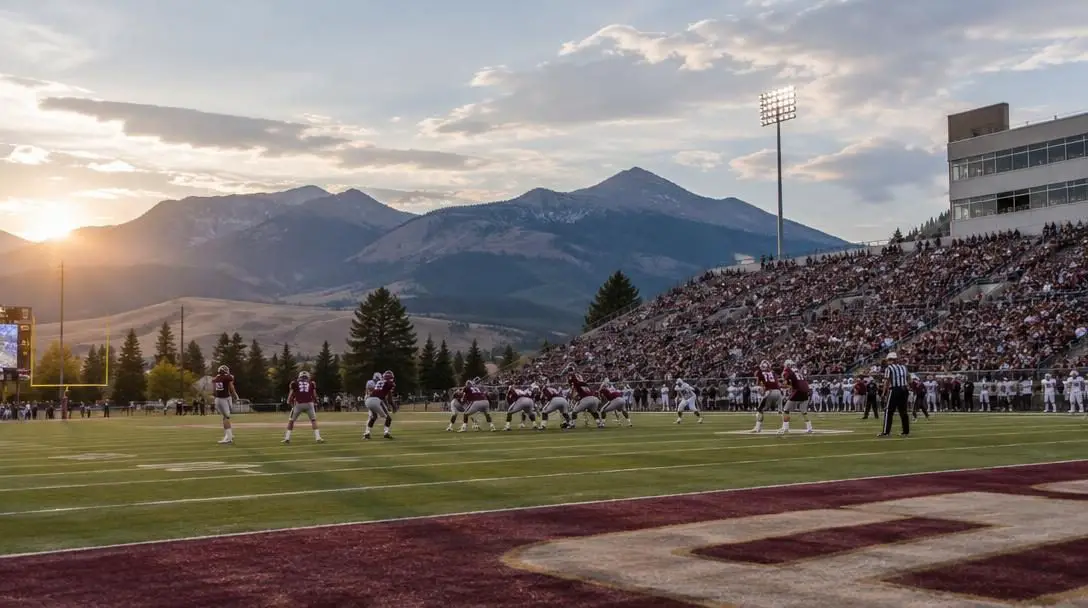
The University of Montana Grizzlies have cultivated one of the most storied and passionate traditions in collegiate athletics. Founded in 1897, the football program in Missoula has spent well over a century establishing a standard of sustained excellence within the Big Sky Conference and the NCAA Football Championship Subdivision (FCS), anchored by physical defense, disciplined front-line play, and innovative offensive execution.
Across decades of competition and two national championships, hundreds of student-athletes have worn the maroon and silver. However, a select tier of performers elevated the program to national prominence through conference accolades, individual national trophies, and lengthy professional careers that left an indelible mark on football history.
Key takeaways
- Quarterback Dave Dickenson stands as the consensus greatest player in program history, having secured a national championship and the Walter Payton Award.
- Defensive icons Tim Hauck, Kroy Biermann, and Dante Olson established national reputations by winning top conference and FCS defensive player honors.
- Undrafted status does not limit professional longevity, as proven by Kirk Scrafford and Tim Hauck carving out decade-long NFL careers.
- A rigorous evaluation of collegiate greatness balances individual statistics, era-adjusted dominance, national awards, and overall team impact.
At a glance: Montana's gridiron icons
Evaluating collegiate legends requires looking across positions, eras, and levels of competition. From dominant offensive linemen to record-breaking tacklers and championship quarterbacks, these five standouts define the highest standard of Montana Grizzlies football.
| Player | Primary Position | Key Collegiate Accolade | Professional Highlights |
|---|---|---|---|
| Dave Dickenson | Quarterback | Walter Payton Award; 3x All-American | CFL standout (Calgary, BC Lions); 4 NFL rosters |
| Kroy Biermann | Defensive End / Linebacker | 2007 Big Sky Defensive MVP | 5th-round NFL pick; 8 seasons with Atlanta Falcons |
| Tim Hauck | Defensive Back | 2x Big Sky Defensive Player of the Year | 10+ NFL seasons; stints with Packers and Eagles |
| Kirk Scrafford | Offensive Tackle | First-Team All-American (1989) | 9 seasons in NFL; started for Bengals, Broncos, 49ers |
| Dante Olson | Linebacker | Buck Buchanan Award (2019) | Philadelphia Eagles practice squad; CFL tenure |
The top five players in Montana Grizzlies history
Selecting the five finest players from a football program with more than 125 years of continuous competition requires weighing peak individual dominance against sustained contribution to team success. These five individuals represent the summit of Griz excellence.
Dave Dickenson
- Position: Quarterback
- Collegiate Accolades: Walter Payton Award winner, 3-time All-American
- Career Statistics: 11,080 passing yards, 96 touchdowns, 26 interceptions
- Championships: NCAA Division I-AA (FCS) National Championship
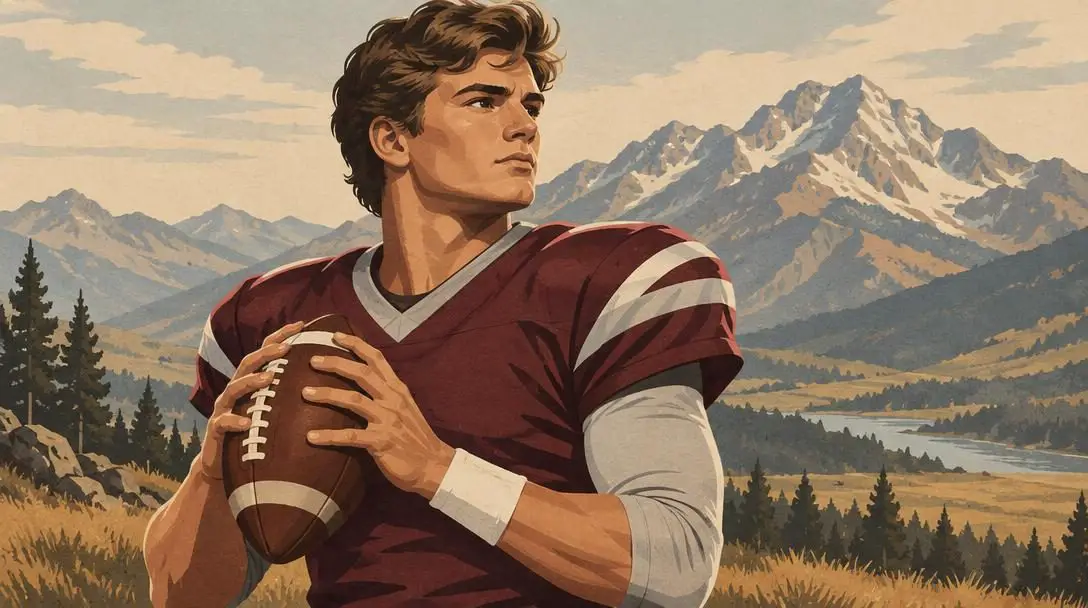
There is virtually no debate surrounding the preeminent figure in Montana football lore. Dave Dickenson did not merely collect individual statistics; he fundamentally reshaped the trajectory of the Montana program and set the competitive standard for the entire Big Sky Conference. Operating with pinpoint precision and remarkable poise in the pocket, Dickenson completed more than two-thirds of his collegiate passes, amassing 11,080 passing yards and 96 touchdowns while yielding only 26 interceptions across his collegiate tenure.
His defining collegiate milestone arrived when he guided the Grizzlies to the 1995 national championship, delivering the program its first national title on the gridiron. For his transcendent play, Dickenson received the Walter Payton Award, recognizing him as the premier offensive player in the division. After rewriting nearly every passing standard in school history, he transitioned to the professional ranks, starring in the Canadian Football League for the Calgary Stampeders and the BC Lions, spending time across four NFL rosters, and eventually launching a successful coaching career with Calgary in 2009.
Dave Dickenson set the benchmark for Big Sky excellence by pairing unmatched throwing accuracy with a national championship run.
Kroy Biermann
- Position: Defensive End
- Hometown: Hardin, Montana
- Collegiate Statistics: 220 total tackles, 32 sacks
- NFL Career: 5th-round draft pick (2008), 8 seasons with Atlanta Falcons
Hailing from Hardin, Montana, Kroy Biermann proved that home-state talent could anchor a championship-caliber defense. Over a relentless four-year career as a starter in Missoula, Biermann developed into an unblockable edge defender. His quick first step, violent hand usage, and relentless pursuit resulted in 220 career tackles and 32 sacks, tormenting offensive coordinators across the Big Sky Conference.
Biermann captured back-to-back All-Big Sky and All-American honors in 2006 and 2007, earning the conference's Defensive MVP crown following a dominant senior season. NFL scouts took notice of his rare combination of burst and functional strength, leading the Atlanta Falcons to select him in the fifth round of the 2008 NFL Draft. Biermann went on to spend eight full seasons in Atlanta, recording 333 tackles, 23.5 sacks, and three defensive touchdowns, before wrapping up his professional playing days following an appearance in camp with the Buffalo Bills in 2016.
Tim Hauck
- Position: Safety / Defensive Back
- Collegiate Accolades: 2-time Big Sky Defensive Player of the Year, 1989 Team MVP
- NFL Tenure: 13 seasons across 7 franchises
- Post-Playing Career: Collegiate and NFL defensive backs coach
Tim Hauck's path to Missoula was unconventional. After beginning his collegiate athletic career at the University of Portland, he transferred to the University of Montana and instantly transformed the secondary. A fierce tackler and instinctive coverage defender, Hauck commanded the defensive backfield with rare intensity. He collected the Big Sky Defensive Player of the Year trophy in back-to-back seasons, garnered consecutive All-American honors, and was voted the Grizzlies' Most Valuable Player in 1989.
Despite his elite college tape, scouts doubted Hauck's physical size, leaving him unselected in the 1990 NFL Draft. Undeterred, he signed with the New England Patriots as a free agent and proceeded to fashion a tenacious professional career that spanned more than a decade. Hauck suited up for seven different NFL franchises, most notably making lasting contributions with the Green Bay Packers and Philadelphia Eagles. Following his retirement as an active player in 2002, Hauck returned to Montana to coach defensive backs before ascending to coaching positions at UNLV, UCLA, and within three separate NFL organizations.
Kirk Scrafford
- Position: Offensive Tackle
- Hometown: Billings, Montana
- Durability Record: 43 consecutive collegiate starts
- NFL Career: 9 seasons (Bengals, Broncos, 49ers)
Dominant offensive line play rarely produces flashy statistics, but Kirk Scrafford's collegiate career stands as a monument to consistency and physical superiority. Arriving in Missoula from Billings at an imposing 6-foot-6, Scrafford developed into the premier blindside protector in the Big Sky. Over four full seasons, he established an iron-man standard by starting 43 consecutive games for the Grizzlies.
Scrafford collected All-Big Sky honors twice, picked up an honorable mention All-American citation in 1988, and earned first-team All-American honors in 1989. Like Hauck, Scrafford was overlooked in the 1990 draft, signing as an undrafted free agent with the Cincinnati Bengals. In a remarkable demonstration of preparation and skill, Scrafford made his first career NFL start in a postseason game. He sustained an exceptional professional career throughout nearly the entirety of the 1990s, blocking for the Bengals, Denver Broncos, and San Francisco 49ers before concluding his NFL run following the 1998 campaign.
Dante Olson
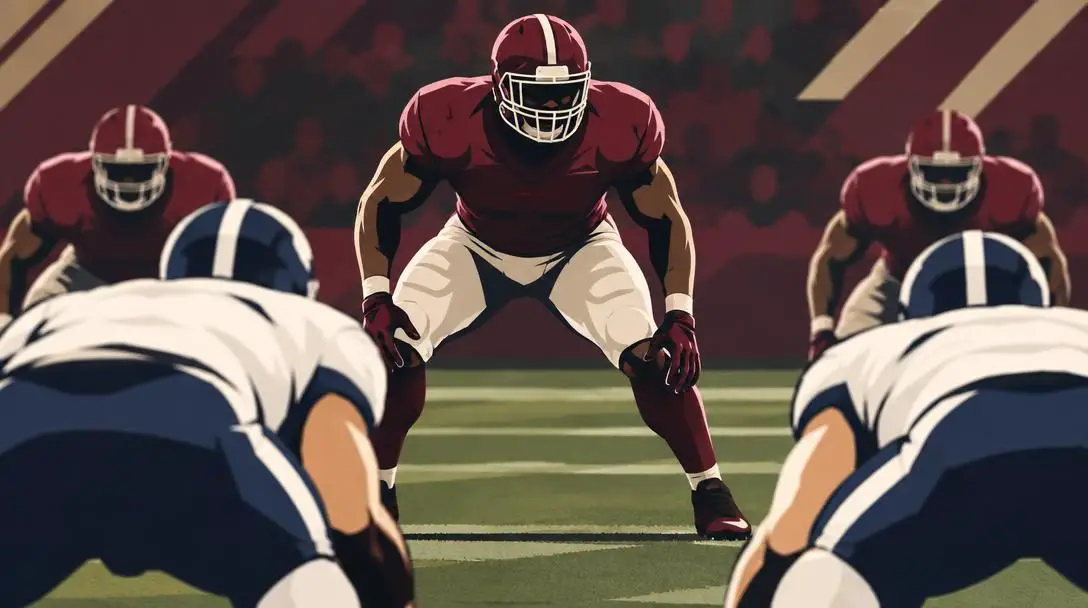
- Position: Linebacker
- Collegiate Accolades: Buck Buchanan Award winner (2019), Big Sky Defensive POY
- School Record: Single-season tackles record
- Post-Collegiate Career: Philadelphia Eagles practice squad, CFL Edmonton Eskimos
Dante Olson's rise to defensive supremacy is a testament to perseverance and tactical development. After redshirting during his first year on campus, Olson carved out a role through disciplined play on special teams, earning Montana's Special Teams Player of the Year honors. When he finally claimed a starting linebacker spot in 2018, Olson unleashed one of the most statistically overwhelming runs in FCS history.
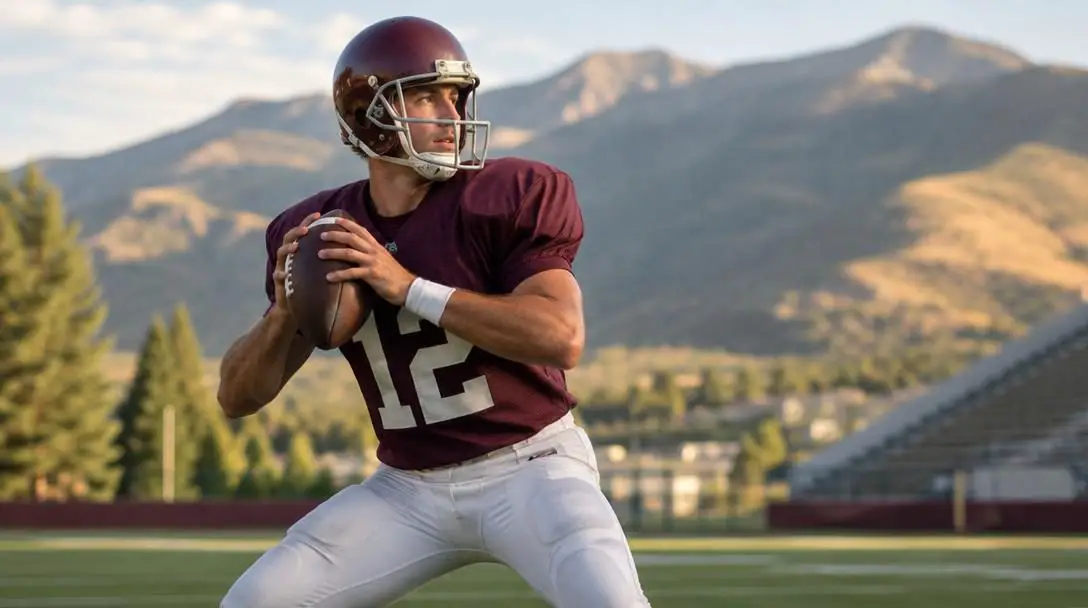
Olson shattered the University of Montana single-season tackle record, took home the Big Sky Conference Defensive Player of the Year award, and collected consensus All-American recognition. As a senior in 2019, he captured the Buck Buchanan Award, presented annually to the premier defensive player in the FCS. Following graduation, Olson went unselected in the 2020 NFL Draft, subsequently signing with the Philadelphia Eagles practice squad and spending time with the Edmonton Eskimos of the Canadian Football League before announcing his retirement from competitive football in 2021.
How historical player evaluation works
Ranking athletes across different eras requires an objective methodology that accounts for variations in team scheme, competition level, and rule changes. When assessing players across more than a century of Griz football history, five critical criteria establish a credible framework:
- Dominance relative to era: Players must be measured against the prevailing schemes and competition of their day. Dave Dickenson's completion percentages and passing efficiency were extraordinary for the mid-1990s, retaining their prestige even in modern spread systems.
- Conference and national recognition: Major awards—such as the Walter Payton Award, Buck Buchanan Award, All-American teams, and Big Sky MVP trophies—provide contemporaneous proof of how an athlete ranked against their direct peers.
- Impact on program success: Individual achievements carry significantly greater weight when they translate directly into conference championships, postseason runs, and national titles.
- Longevity and durability: Iron-man milestones, exemplified by Kirk Scrafford's 43 consecutive starts, showcase the stamina and physical durability required to anchor a team over several seasons.
- Professional longevity: While collegiate rankings focus on campus performance, an athlete's ability to maintain a roster spot in the NFL or CFL validates the high level of talent developed in Missoula.
Practical steps for evaluating college football legacies
Sports historians and passionate fans can utilize a systematic process to evaluate and rank historic athletes from any collegiate program without falling victim to subjective bias.
- Gather comprehensive statistical records: Compile complete statistical lines, examining both raw volume totals (such as total tackles or passing yards) and efficiency benchmarks (like yards per attempt and tackle-to-miss ratios).
- Document major accolades: Verify all documented honors, prioritizing national awards, consensus All-American designations, and conference player-of-the-year selections.
- Review team accomplishments: Assess how the team performed during the player's tenure, noting playoff appearances, conference championships, and national postseason runs.
- Assess positional distribution: Balance the evaluation across all units of the team rather than focusing solely on skill-position stars, ensuring linemen and defensive stoppers receive equal scrutiny.
- Track post-collegiate milestones: Document draft status, professional longevity in the NFL or CFL, and post-playing contributions such as coaching.
Common mistakes in historical player comparisons
When compiling historical rankings, analysts frequently make predictable mistakes that skew their conclusions. Avoiding these analytical pitfalls is essential for preserving historical accuracy:
- Succumbing to recency bias: Modern games are accessible in high-definition video, and modern spread systems inflate passing numbers. Evaluating historic players requires contextualizing their output within their era's rules and pace of play.
- Overlooking undrafted free agents: Assuming that going unselected in the NFL draft diminishes an athlete's collegiate greatness is a serious error. Size biases often deter NFL scouts from small-school standouts, yet players like Tim Hauck and Kirk Scrafford carved out decade-long professional tenures.
- Focusing exclusively on offense: Flashy quarterback and wide receiver statistics often overshadow defensive captains and offensive linemen who controlled the line of scrimmage.
- Ignoring conference context: The competitive depth of the Big Sky Conference changes over time; judging individual seasons requires understanding the quality of opposing teams faced each week.
What to consider next when following Griz history
Understanding the legacy created by Montana's greatest players enriches the experience of watching current and future Grizzlies teams compete. As the program continues its pursuit of Big Sky titles and national championships, observers should monitor several evolving storylines:
- Chasing the record books: Modern defenders and passers continue to challenge the tackle marks established by Dante Olson and the passing thresholds created by Dave Dickenson.
- The Griz coaching tree: Former stars like Tim Hauck and Dave Dickenson transitioned their gridiron acumen into prominent coaching roles, maintaining Montana's tactical influence across North American football.
- The FCS-to-pro pipeline: Monitoring undrafted and late-round Griz players who earn training camp opportunities helps fans spot the next long-term NFL contributor.
- Preservation of archival records: Continuous efforts to document box scores, film reels, and awards dating back to 1897 guarantee that early Montana football legends remain celebrated by future generations.
Frequently asked questions
Who is considered the greatest player in Montana Grizzlies football history?
Quarterback Dave Dickenson is broadly considered the premier player in Montana history. He captured the 1995 Walter Payton Award, led the Grizzlies to an FCS national championship, and set numerous program and Big Sky passing records.
Which Montana Grizzlies players won national FCS individual awards?
Dave Dickenson won the Walter Payton Award as the division's top offensive player, and linebacker Dante Olson won the Buck Buchanan Award as the nation's top defensive player.
Did any of Montana's top historic players play in the NFL despite going undrafted?
Yes. Defensive back Tim Hauck and offensive tackle Kirk Scrafford both entered the NFL as undrafted free agents in 1990 and proceeded to play around a decade each in the league.
How many national championships has the University of Montana football team won?
The University of Montana Grizzlies have captured two national championships in program history while competing at the NCAA Division I FCS level.
Which Montana player had the most productive NFL career after being drafted?
Hardin native Kroy Biermann was selected in the fifth round of the 2008 NFL Draft by the Atlanta Falcons, where he played eight full seasons, recording 333 tackles, 23.5 sacks, and three defensive touchdowns.
The bottom line
The tradition of Montana Grizzlies football was forged through more than a century of gritty, high-standard competition. Athletes like Dave Dickenson, Kroy Biermann, Tim Hauck, Kirk Scrafford, and Dante Olson did not simply accumulate accolades; they set a durable cultural standard in Missoula. Whether breaking national tackling records, anchoring an NFL offensive line, or delivering a national championship, these legends established a standard of excellence that continues to inspire the maroon and silver faithful today.