Greatest Players in Griz Basketball History
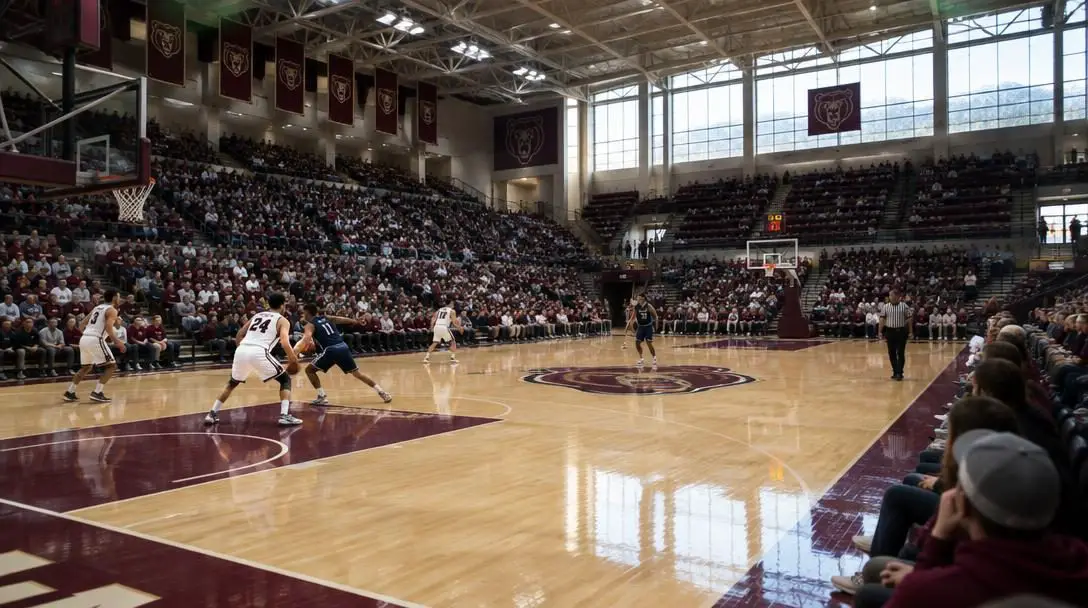
The University of Montana men's basketball program maintains an athletic heritage that stretches across generations. Although it might not always receive consistent national attention, the team has built a proud foundation that dates all the way back to 1901. Competing in the Big Sky Conference, the Montana Grizzlies—often affectionately shortened to the Griz—have established themselves as one of the most reliable and formidable mid-major programs in collegiate basketball history.
Throughout these decades of play, Montana has produced numerous championship seasons, earned bids to national postseason tournaments, and fostered the development of standout athletes who went on to professional careers in the NBA and overseas. The culture within the program has typically relied on tough, disciplined teamwork, exceptional player development, and the ability to maximize talent regardless of whether an athlete arrived straight out of high school or transferred in from a larger athletic conference. Understanding the program's history requires looking closely at the players who defined its greatest eras and left lasting marks in the Montana record books.
Key takeaways
- The Montana Grizzlies men's basketball program traces its proud athletic tradition back to 1901 as a cornerstone of the Big Sky Conference.
- Larry Krystkowiak stands as the program's consensus greatest player after securing three Big Sky Player of the Year awards and leading a distinguished post-college career.
- Michael Ray Richardson made conference history in 1978 as the fourth overall pick in the NBA Draft before becoming a four-time NBA All-Star.
- High-profile Pac-12 transfers like Martin Breunig and Ahmaad Rorie revitalized modern eras of Griz basketball and powered back-to-back NCAA Tournament runs.
At a glance: Montana's greatest basketball players
Evaluating the program's rich history reveals a blend of elite perimeter playmakers, dominant interior forces, and high-impact transfers who redefined Griz basketball. The table below summarizes the key milestones, accolades, and professional achievements of the top five players in school history.
| Player | Position / Height | Montana Era | Key Collegiate Accolades | Professional / Post-College Highlight |
|---|---|---|---|---|
| Sayeed Pridgett | Guard | 2016–2020 | Two-time All-Big Sky selection; 4th all-time scorer | Professional career overseas |
| Martin Breunig | Forward | 2014–2016 | Two-time All-Big Sky selection; 2015 regular season co-champion | NIT and CBI postseason appearances |
| Ahmaad Rorie | Guard | 2016–2019 | Three-time All-Big Sky selection; Big Sky Tournament MVP | Led Griz to back-to-back NCAA Tournament appearances |
| Michael Ray Richardson | Guard (6'5") | 1974–1978 | Three-time All-Big Sky selection; 17.1 career PPG | 4th overall pick in 1978 NBA Draft; 4-time NBA All-Star |
| Larry Krystkowiak | Forward (6'9") | 1982–1986 | Three-time Big Sky Player of the Year; 2-time All-Tournament Team | Drafted by Chicago Bulls; NBA and collegiate head coach |
The five greatest players in Griz basketball history
Selecting the top athletes in a program with well over a century of history is a significant task, but five individuals stand out for their historic production, leadership, conference honors, and post-collegiate impact. Below are the five greatest players in Griz basketball history based on their accomplishments in Missoula and beyond.
5. Sayeed Pridgett
- Collegiate tenure: 2016–2020
- Prep background: El Cerrito High School (Oakland, California)
- Career milestone: 4th all-time leading scorer in Montana history
- Conference honors: Two-time All-Big Sky selection
Sayeed Pridgett arrived at the University of Montana in 2016 after completing his prep career at El Cerrito High School in Oakland, California. Upon stepping onto campus, he earned immediate opportunities on the court, starting several games as a true freshman. However, it was during his junior year that his role shifted dramatically; with a substantial increase in playing time, Pridgett catapulted into being recognized as one of the elite players across the entire Big Sky Conference.
During his junior season, Pridgett demonstrated his offensive capabilities by averaging 15.1 points per game. He elevated his performance even further during a standout senior campaign, posting averages of 19.8 points, 7.2 rebounds, and 3.9 assists per contest. Over his college career, he was recognized as a two-time All-Big Sky selection. When his tenure in a Grizzlies uniform came to an end, Pridgett finished as the fourth all-time leading scorer in school history, cementing his reputation as an all-around playmaker and one of the program's most consistent modern scorers.
4. Martin Breunig
- Collegiate tenure: 2014–2016 (Sat out 2013–14 transfer season)
- Previous school: University of Washington (Pac-12)
- Key statistics: 17.8 PPG, 8.2 RPG, 1.7 APG at Montana
- Team achievements: 2015 Big Sky regular season co-championship; NIT and CBI bids
Martin Breunig took an unconventional path to becoming a Montana great. He began his collegiate career competing in the Pac-12 Conference for the University of Washington Huskies. In his two seasons in Seattle, Breunig struggled to find consistent opportunities, failing to start a single game and averaging just 1.2 points per contest. Seeking a clearer path to a starting lineup, Breunig made the decision to transfer to Montana, which required him to sit out the entire 2013-14 season to satisfy transfer rules.
Once eligible, Breunig made an immediate and powerful impact across his two remaining years of eligibility. He became a force in the paint, averaging 17.8 points, 8.2 rebounds, and 1.7 assists per game. Breunig was named to the All-Big Sky Team in both seasons he suited up for the Griz. With Breunig anchoring the frontcourt, Montana earned postseason appearances in both the National Invitation Tournament (NIT) and the College Basketball Invitational (CBI), while also capturing a share of the Big Sky regular season title in 2015. While his teams never broke through to the NCAA Tournament, his dominance on both ends of the floor made him an unforgettable part of Griz history.

3. Ahmaad Rorie
- Collegiate tenure: 2016–2019
- Previous school: University of Oregon (Pac-12)
- Conference honors: Three-time All-Big Sky selection; Big Sky Tournament MVP
- Postseason achievements: Back-to-back Big Sky Tournament titles; 2 NCAA Tournament appearances
In a trajectory similar to that of Martin Breunig, Ahmaad Rorie joined the Montana program after starting his college career in the Pac-12. Rorie spent his freshman season with the Oregon Ducks, where he functioned primarily as a role player. Recognizing his potential for a larger role, he transferred to Missoula and sat out a redshirt transfer season before taking the court for the Griz.
When he became eligible, Rorie stepped into a central leadership role and served as a full-time starter for three straight seasons. His contributions were recognized conference-wide, earning an All-Big Sky Team selection in all three years of his Montana career. In addition to regular season accolades, Rorie secured a Big Sky Tournament Most Valuable Player (MVP) Award. During his final two seasons, he guided Montana to back-to-back Big Sky Tournament championships, securing consecutive trips to the NCAA Tournament. In both of those national tournament appearances, the Griz were tasked with facing off against a highly ranked Michigan squad in the first round, and although they fell short in both matchups, Rorie's leadership established one of the program's most successful modern eras.
2. Michael Ray Richardson
- Collegiate tenure: 1974–1978
- Height: 6 feet 5 inches
- Draft status: 4th overall pick, 1978 NBA Draft (New York Knicks)
- Professional honors: Four-time NBA All-Star; 9 NBA seasons; 10 years coaching
Standing as a dynamic 6-foot-5 guard, Michael Ray Richardson arrived at the University of Montana in 1974. Following a solid freshman campaign, Richardson broke into the starting lineup as a sophomore and instantly turned heads by averaging 18.2 points per game. From that point forward, his game continued to ascend, establishing him as one of the most dominant guards in the history of mid-major college basketball.
Richardson was honored as a three-time All-Big Sky Team selection during his college career. When his time at Montana concluded, he held impressive career averages of 17.1 points and 6.3 rebounds per game. In the 1978 NBA Draft, Richardson made Big Sky Conference history when he was selected fourth overall by the New York Knicks, representing the highest draft selection the conference had ever seen. In the professional ranks, he became a four-time NBA All-Star and spent nine seasons in the NBA before playing more than a decade overseas, eventually concluding his active playing career in 2002. Following his retirement from the court, Richardson spent ten years in coaching.
1. Larry Krystkowiak

- Collegiate tenure: 1982–1986
- Height: 6 feet 9 inches
- Senior season statistics: 22.2 PPG, 11.4 RPG
- Major honors: Three-time Big Sky Player of the Year; Chicago Bulls draft pick (1986)
When discussing all-time legends in University of Montana basketball history, forward Larry Krystkowiak stands undisputed at the top of the list. Measuring 6 feet 9 inches tall, Krystkowiak spent four memorable seasons in Missoula, earning a spot in the starting lineup during his sophomore season and developing into a historically dominant interior player.
Krystkowiak's collegiate resume is filled with unmatched honors, including winning the Big Sky Player of the Year Award three times and earning selection to the All-Big Sky Tournament Team twice. By his senior campaign, he was celebrated not just within the conference, but as one of the finest players in all of college basketball, putting up exceptional averages of 22.2 points and 11.4 rebounds per contest. He was drafted by the Chicago Bulls in 1986 and went on to enjoy an NBA career that spanned more than a decade. Following his playing days, Krystkowiak embarked on a coaching career, returning to his alma mater as an assistant before being elevated to head coach of the Grizzlies. He later served as head coach for both the NBA's Milwaukee Bucks and the University of Utah.
Winning three consecutive Big Sky Player of the Year awards cemented Larry Krystkowiak as the standard by which all Montana basketball excellence is measured.
How college basketball evaluations work
Evaluating and ranking the greatest players in the history of a college basketball program involves analyzing multiple layers of individual performance, team accomplishments, and long-term legacy. Because the sport has changed dramatically across eras, analysts and historians rely on consistent benchmarks to determine who belongs among the program's elite.
- Individual statistical production: Scoring averages, rebounding numbers, assists, and overall efficiency serve as primary indicators of on-court dominance during an athlete's college years.
- Conference honors: Regular season awards—such as All-Big Sky selections and Player of the Year honors—demonstrate sustained excellence against peer competition over an entire season.
- Postseason success: Conference tournament victories, tournament MVP honors, and appearances in national postseason tournaments like the NCAA Tournament, NIT, or CBI reflect a player's ability to win when stakes are highest.
- Professional longevity and draft status: Selections in the NBA Draft and long-term professional careers in the NBA or international leagues indicate an athlete's physical tools and overall skill ceiling.
- Impact on program culture: Long-term ties, including returning to mentor the program or taking on coaching responsibilities, often deepen an athlete's standing in school lore.
Practical steps for mid-major programs to develop elite talent
The success stories of players like Pridgett, Breunig, Rorie, Richardson, and Krystkowiak highlight how programs outside the traditional power conferences can recruit, develop, and maximize top-tier basketball talent. Modern programs seeking similar results typically follow specific strategic steps.
- Target under-recruited high school talent: Scouting regional areas and identifying high school prospects with strong developmental upsides allows programs to secure multi-year contributors early in their development.
- Capitalize on the transfer market: Welcoming high-major transfers seeking starting roles or increased court time can provide immediate veteran leadership, as seen with transfers from the Pac-12 like Breunig and Rorie.
- Implement rigorous player development: Offering specialized skill training, conditioning, and nutrition ensures that players consistently expand their game between their freshman and senior campaigns.
- Emphasize conference dominance: Constructing game plans tailored to winning regular season conference titles and tournament games establishes a winning environment that attracts future top-level talent.
- Maintain alumni connections: Involving former greats in program culture, mentorship, and coaching roles inspires current student-athletes and preserves institutional memory.
Common mistakes when comparing players across eras
Debating all-time rosters often leads to heated discussions among fans and analysts. However, comparing players who played decades apart can be misleading if certain context is ignored. Avoiding common analytical missteps ensures fair evaluations.
- Ignoring differences in playing styles: The tempo, offensive schemes, and tactical approaches of 1970s or 1980s basketball differ significantly from modern offensive sets and spacing.
- Overlooking transfer realities: Assuming that transfer players care less about school history than four-year recruits overlooks the significant contributions of athletes who led programs to tournament berths.
- Focusing exclusively on scoring: Judging players only by point totals ignores critical contributions like rebounding, perimeter defense, playmaking, and floor leadership.
- Relying solely on NCAA Tournament runs: Missing the NCAA Tournament due to single-elimination conference tournament upsets should not completely erase the value of an otherwise stellar multi-year career.
- Discounting post-college trajectory: Forgetting how players fared after leaving college overlooks valuable proof of their baseline talent and athletic adaptability.
What to consider next in Griz basketball history
As college basketball continues to evolve with shifting transfer dynamics, expanded eligibility rules, and new postseason opportunities, fans and historians must look ahead to how future Montana Grizzlies will challenge the historical record books. Evaluating the modern game and future historical rankings involves tracking several ongoing developments.
Future discussions will naturally focus on whether new high-scoring guards or physical forwards can crack the school's top scoring lists, compete for Big Sky Player of the Year honors, or hear their names called on NBA Draft night. Moreover, tracking how former players continue to give back to the program—through coaching, leadership, and public support—remains a core component of preserving Montana's rich basketball tradition that started over a century ago in 1901.
Frequently asked questions
Who is considered the greatest basketball player in Montana Grizzlies history?
Larry Krystkowiak is widely regarded as the greatest player in Griz history. He won the Big Sky Player of the Year Award three times, led the team with senior averages of 22.2 points and 11.4 rebounds per game, was drafted by the Chicago Bulls, and later served as head coach for the program.
Who is the highest NBA draft pick to come out of the University of Montana?
Michael Ray Richardson holds the record as the highest draft pick in both Montana and Big Sky Conference history. He was selected fourth overall by the New York Knicks in the 1978 NBA Draft and went on to become a four-time NBA All-Star.
How did transfer players shape modern Montana basketball success?
Both Martin Breunig and Ahmaad Rorie transferred to Montana from Pac-12 programs (Washington and Oregon, respectively). Breunig anchored the frontcourt during NIT and CBI postseason runs, while Rorie served as a three-time All-Big Sky starter and led the Griz to consecutive Big Sky Tournament titles and NCAA Tournament appearances.
Where does Sayeed Pridgett rank among Montana's all-time scorers?
Sayeed Pridgett finished his collegiate career in 2020 as the fourth all-time leading scorer in Montana school history, boosted by a standout senior season in which he averaged 19.8 points, 7.2 rebounds, and 3.9 assists per game.
Which teams did Montana face in their consecutive NCAA Tournament appearances with Ahmaad Rorie?
During Ahmaad Rorie's final two seasons, the Grizzlies captured back-to-back Big Sky Tournament championships and advanced to the NCAA Tournament, where they were matched against a highly ranked Michigan Wolverines team in the first round in both appearances.
The bottom line
From the hardcourt pioneers of the early 20th century to the modern athletes cutting down the nets in Reno and Boise, the University of Montana has established a standard of excellence that punches far above its mid-major weight class. The legacy of Griz basketball is written through relentless interior scorers like Larry Krystkowiak and Martin Breunig, transcendent athletes like Michael Ray Richardson, and resilient backcourt leaders like Ahmaad Rorie and Sayeed Pridgett.
As the collegiate landscape transforms with shifting transfer rules and altered postseason pathways, Montana's foundational blueprint—rooted in talent development, conference dominance, and unyielding team discipline—ensures that the next century of Grizzlies basketball will remain just as proud and competitive as the first.