5 Best Attractions Along Route 66
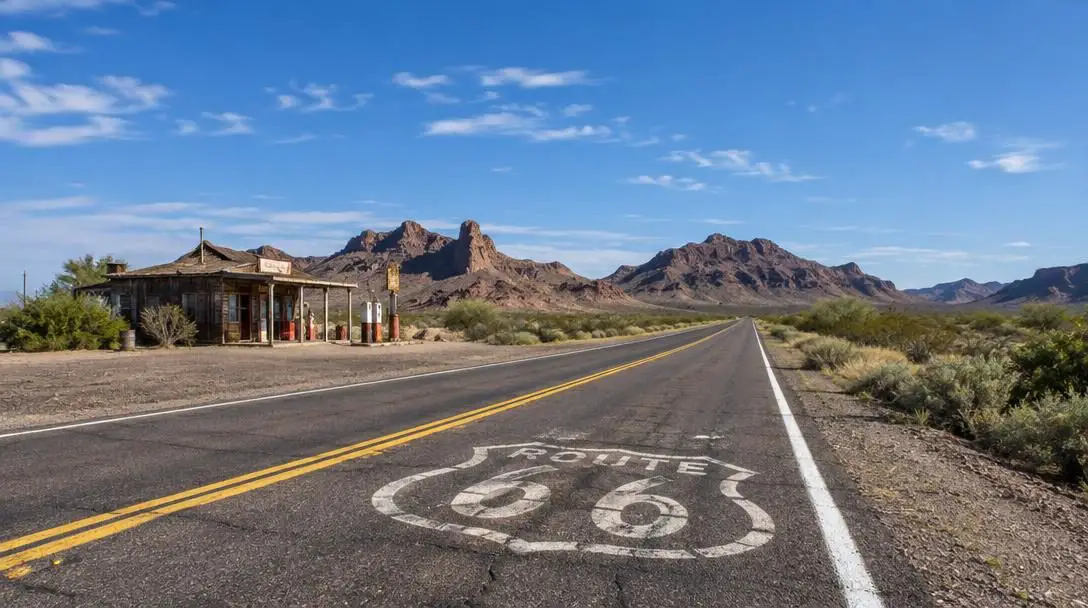
Route 66 remains one of the most celebrated highways in the United States, representing an enduring symbol of twentieth-century American travel, freedom, and roadside ingenuity. Stretching across a massive 2,448-mile corridor from the metropolitan bustle of Chicago, Illinois, to the coastal shores of Santa Monica, California, the roadway earned international acclaim as the Mother Road. During its mid-century heyday, it served as the nation's primary transit artery for motorists heading west, giving rise to an eccentric landscape of independent motels, neon-lit diners, public art installations, and bustling small-town communities.
Although the expansion of the Interstate Highway System eventually bypassed many of the towns and businesses along the path, Route 66 never faded from the cultural imagination. Today, motorists, historians, and road-trippers from around the globe retrace its original alignments to explore historic Americana firsthand. From interactive art projects and retro architecture to coastal amusement piers and preservation towns, the highway offers an unforgettable journey into the roots of modern automobile tourism.
Key takeaways
- Route 66 covers 2,448 miles across eight states, running from the Chicago, Illinois area to the Pacific coast in Santa Monica, California.
- The corridor features diverse cultural landmarks, ranging from the interactive buried cars at Cadillac Ranch to mid-century lodging at the Wigwam Motel.
- Crucial preservation efforts began in Seligman, Arizona, which inspired modern heritage associations and the animated film Cars.
- Navigating the highway today requires following a patchwork of historic alignments, frontage roads, and local main streets rather than a single modern superhighway.
At a glance: Five standout Route 66 landmarks
| Attraction | Location | Attraction type | Key highlight |
|---|---|---|---|
| Cadillac Ranch | Amarillo, Texas | Public art installation | Ten paint-splattered Cadillacs buried nose-first in the ground |
| Wigwam Motel | Rialto, California | Historic lodging | Tipi-shaped guest units listed on the National Register of Historic Places |
| Santa Monica Pier | Santa Monica, California | Coastal amusement landmark | Pacific Park and the official western terminus of Route 66 |
| Seligman | Seligman, Arizona | Historic preservation town | Angel Delgadillo's historic barbershop and Route 66 preservation hub |
| Oklahoma Route 66 Museum | Clinton, Oklahoma | Educational museum | Curated retro exhibits detailing the historical eras of the Mother Road |
Five iconic roadside attractions along Route 66
Whether embarking on an ambitious cross-country expedition or exploring a regional segment of the road, travelers encounter an eclectic mix of natural vistas and vintage roadside spectacles. The following five attractions represent some of the most historic, visually arresting, and culturally significant stops along the entire 2,448-mile route.
Cadillac Ranch
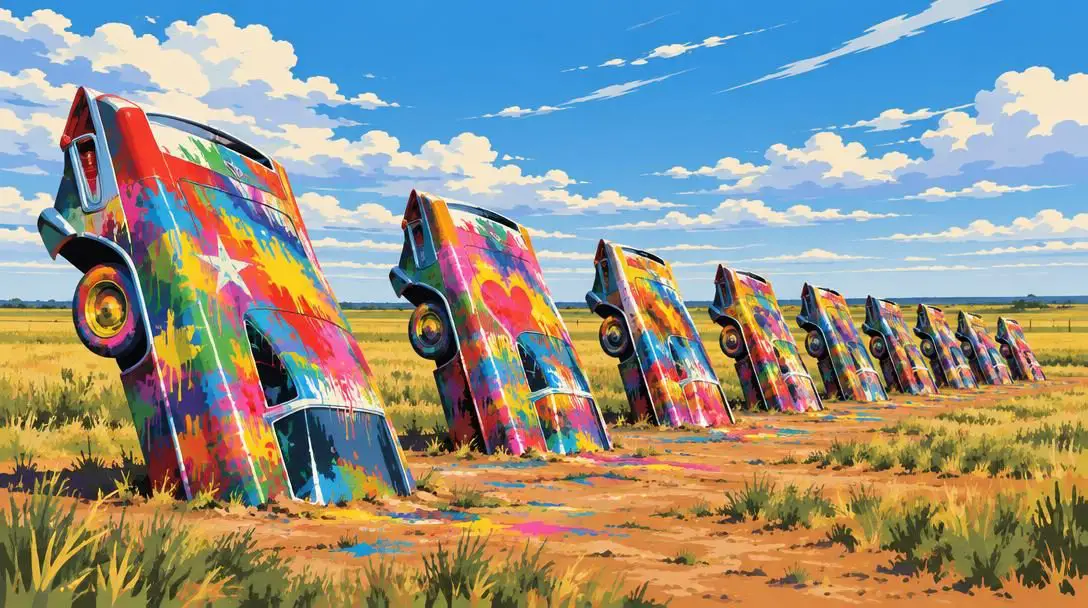
- Location: Amarillo, Texas
- Year created: 1974
- Designers: Ant Farm (Hudson Marquez, Chip Lord, and Doug Michels)
- Feature: Ten buried Cadillacs angled toward the sky
Situated in the open plains outside Amarillo, Texas, Cadillac Ranch stands as one of the world's most recognizable roadside art installations. Conceived in 1974 by the art collective known as Ant Farm—comprising artists Hudson Marquez, Chip Lord, and Doug Michels—the monument features ten vintage Cadillac automobiles buried nose-first into the dirt. The cars are aligned facing west at a specific angle designed to match the slope of the Great Pyramids of Giza in Egypt.
Over the decades, the installation has evolved into a dynamic, communal canvas. Rather than remaining an untouched museum artifact, visitors are encouraged to leave their mark on the vehicles with vibrant spray paint, resulting in thick, ever-shifting coats of bright colors. The site provides an interactive stop directly off the highway, inviting motorists to participate actively in Route 66's roadside heritage.
Wigwam Motel
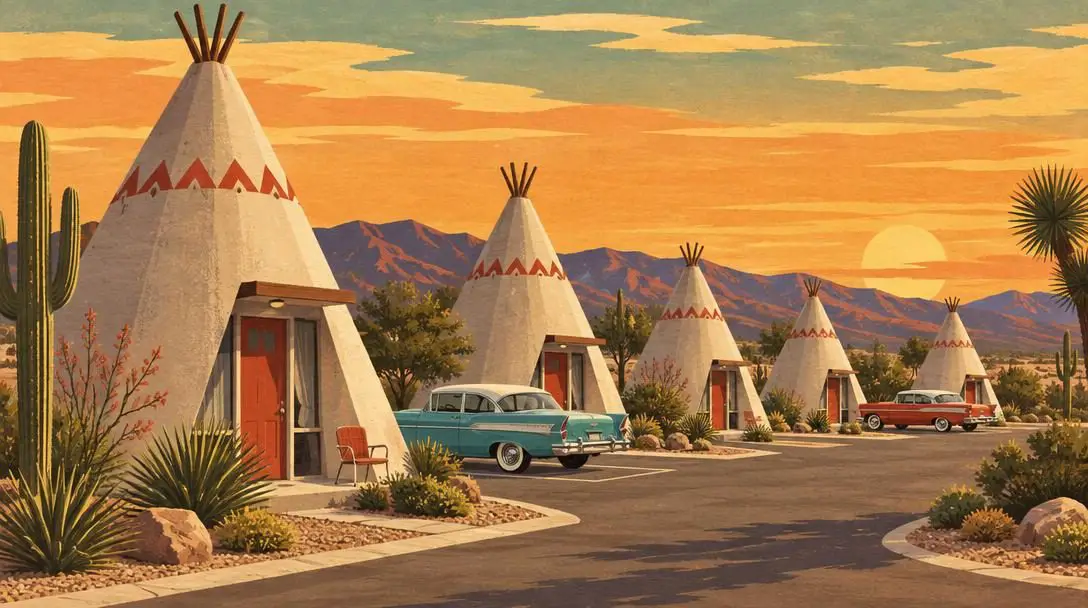
- Location: Rialto, California
- Construction period: 1930s to 1940s
- Historical recognition: National Register of Historic Places (added in 2012)
- Architectural style: Tipi-shaped individual cabins
Few stops capture the whimsical nature of mid-century roadside tourism quite like the Wigwam Motel. Commonly identified with Rialto, California, the motel's physical address sits directly on the boundary line of the community. Constructed during the 1930s and 1940s as part of a distinctive chain of motor courts, the property was designed to catch the eyes of weary motorists seeking overnight lodging along the transcontinental corridor.
The motel's individual guest units were built to resemble tipis—the conical tents historically utilized by indigenous nations of the Great Plains. Though marketed under the name "Wigwam," true traditional wigwams are rounded, dome-shaped structures fabricated primarily of wooden materials. Despite this historical naming quirk, the motor court remains a masterpiece of programmatic roadside architecture. Following extensive renovations in the early 2000s, the motel earned a spot on the National Register of Historic Places in 2012 and continues to operate as an overnight destination.
Santa Monica Pier
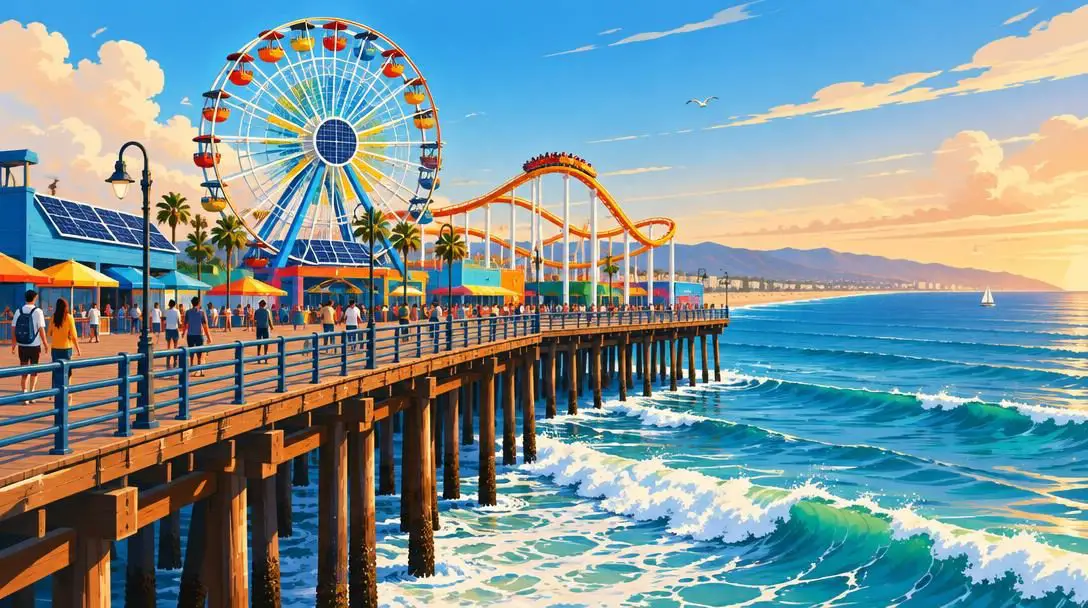
- Location: Santa Monica, California
- Significance: Official western terminus of Route 66
- Key area: Pacific Park amusement park
- Notable features: Solar-powered Ferris wheel, carousel, and aquarium
Marking the grand western finale of the transcontinental trek, the Santa Monica Pier juts out into the Pacific Ocean in Santa Monica, California. For westbound drivers, reaching this vibrant coastal structure represents the culmination of a 2,448-mile odyssey across the American continent. It serves as both an official end-of-the-trail marker and an energetic public gathering space where travelers can celebrate their journey.
The pier is anchored by Pacific Park, an open-air amusement zone featuring an arcade, a historic carousel, a coastal roller coaster, and the world's first solar-powered Ferris wheel, which offers panoramic views of the ocean and the California shoreline. Travelers can also explore the Santa Monica Pier Aquarium, patronize numerous seaside food vendors, or watch local anglers along the boardwalk as they soak in the salty Pacific air.
Reaching the Pacific coastline at the Santa Monica Pier marks the triumphant end of the trail for cross-country travelers who have navigated the full breadth of the American landscape.
Seligman
- Location: Seligman, Arizona
- Notable figure: Angel Delgadillo
- Historic milestone: Birthplace of the Historic Route 66 Association of Arizona
- Pop-culture connection: Inspiration for the town of Radiator Springs in Pixar's Cars
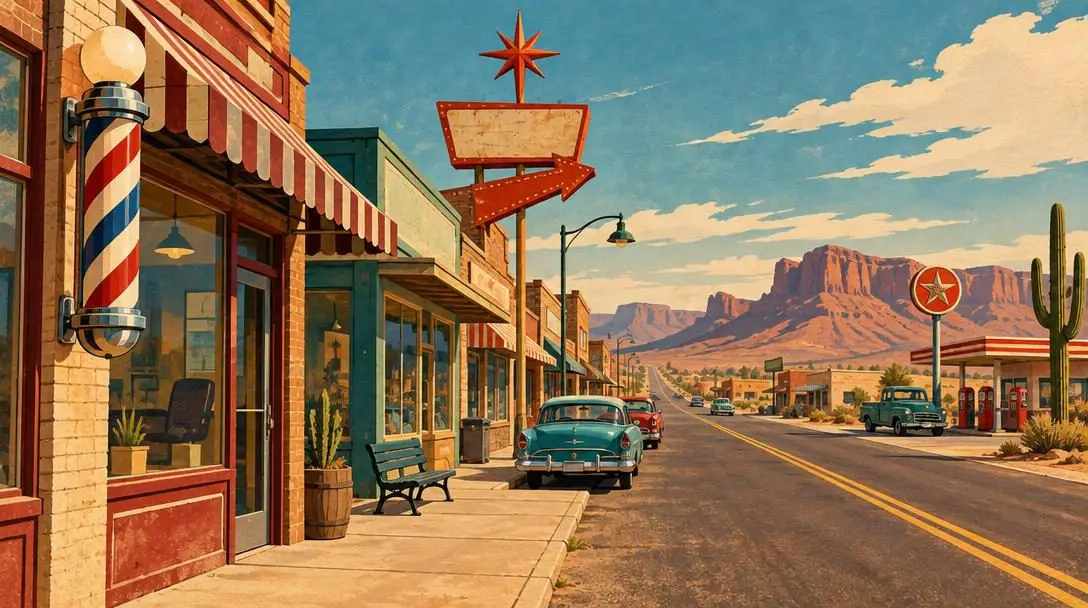
The small Arizona town of Seligman plays an oversized role in the modern preservation movement of Route 66. When new interstate freeways bypassed regional towns, Seligman saw its economic traffic dwindle almost overnight. In response, resident barber Angel Delgadillo established the Historic Route 66 Association of Arizona to protect the memory and physical footprint of the roadway. Seligman became the very first town to join this movement, inspiring neighboring communities across the country to mobilize and establish their own preservation initiatives the following year.
Seligman's rich heritage, nostalgic main street, and Delgadillo's personal accounts later served as the direct creative inspiration for John Lasseter's animated Pixar film Cars. Today, travelers stop in Seligman to admire its well-preserved retro storefronts and visit Delgadillo's historic barbershop, which now operates as a world-famous gift shop and visitor center.
Oklahoma Route 66 Museum
- Location: Clinton, Oklahoma
- Operating schedule: Monday through Saturday, 9:00 am to 5:00 pm
- Admission: Small entry fee required
- Atmosphere: Curated retro aesthetic with chronological historical exhibits
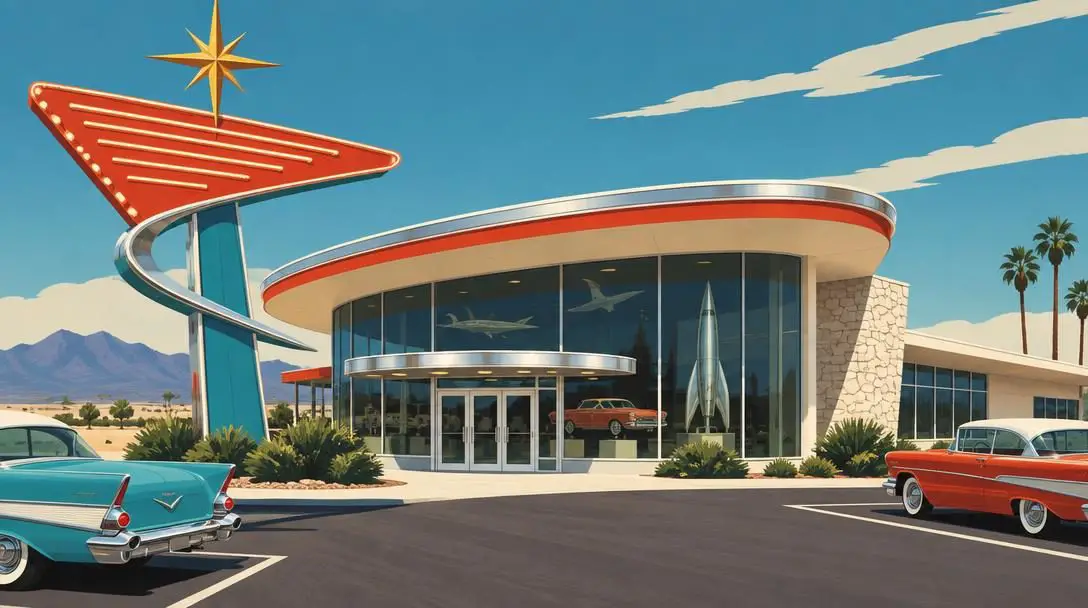
For motorists seeking an educational foundation for their travels, the Oklahoma Route 66 Museum in Clinton, Oklahoma, offers an exceptional historical overview. Operated to commemorate the cultural impact of the Mother Road, the institution welcomes visitors Monday through Saturday between 9:00 am and 5:00 pm for a modest entry fee. The facility's interior is thoughtfully curated with a nostalgic mid-century design, immediately immersing visitors in the golden era of automobile travel.
Inside, guests walk through distinct chronological galleries that chronicle how Route 66 evolved from a dirt-and-gravel trail into an essential pathway during the Dust Bowl and westward migrations, eventually blossoming into the neon-lit playground of the 1950s and 1960s. The exhibits display vintage vehicles, historic audio recordings, roadside memorabilia, and educational signage that illustrate how the corridor shaped the economic and cultural landscape of the United States.
How touring the Mother Road works today
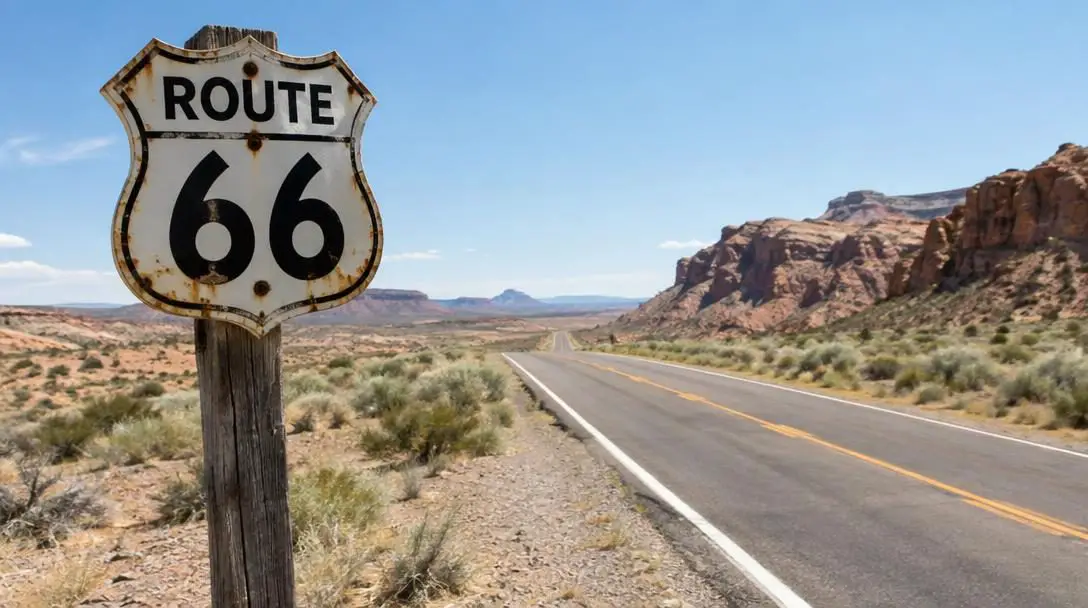
Driving Route 66 differs substantially from taking a trip on a modern interstate freeway. Because the highway was officially decommissioned from the federal highway system, it no longer exists as a singular, unbroken strip of concrete. Instead, modern exploration requires a nuanced understanding of how historical alignments interconnect across states.
Over the decades, government authorities realigned and altered sections of the road to accommodate higher traffic volumes and safer driving curves. As a result, road-trippers today must alternate between original two-lane roadways, historic business routes running straight through downtown main streets, frontage lanes running parallel to modern interstates, and sections where modern highways have replaced the original pavement entirely. Navigating this network demands intentional planning and attentive navigation.
While the overwhelming majority of guidebooks and cultural itineraries map the route traveling westbound from Chicago to Santa Monica, driving eastbound from the Pacific back to the Midwest offers an identical historical experience. Regardless of direction, travelers should anticipate significantly lower average driving speeds than on standard interstates. Exploring small towns, touring roadside installations, and browsing historical museums takes time, making an unhurried, flexible itinerary essential for an authentic experience.
How to plan an itinerary across the 2,448-mile corridor
Successfully executing a journey along Route 66 requires balancing extended stretches behind the wheel with frequent sightseeing breaks, lodging reservations, and vehicle maintenance. Follow these practical steps to design a well-paced trip:
- Identify your priority landmarks: Outline the specific roadside art, historical sites, and museums you consider essential. Pin key destinations like Cadillac Ranch in Texas, the Wigwam Motel in California, and the Oklahoma Route 66 Museum in Clinton on a master map to establish your core travel corridor.
- Verify operating schedules and fees: Cross-reference your planned arrival times with attraction schedules. For example, ensure your itinerary places you in Clinton, Oklahoma, during the museum's open hours (Monday through Saturday, 9:00 am to 5:00 pm), and prepare for minor admission charges.
- Allocate ample time for historic communities: Avoid simply driving through cultural preservation towns like Seligman, Arizona. Schedule dedicated walking time to visit local gift shops, browse historic barbershops, and photograph vintage storefronts without watching the clock.
- Coordinate arrival timing at the western terminus: Driving into Santa Monica involves navigating major California coastal traffic. Time your drive to reach the Santa Monica Pier with sufficient daylight to enjoy Pacific Park's rides, visit the aquarium, and walk along the oceanfront.
- Inspect and prepare your vehicle: Route 66 crosses a vast range of geographic terrains, from the open Midwestern prairies to the arid deserts of Arizona. Service your brakes, inspect your tires, and confirm fluid levels to ensure your car can endure shifting regional climates and long distances.
Common mistakes to avoid when driving Route 66
Because Route 66 follows an unconventional path through major cities, desert landscapes, and small towns, first-time travelers frequently encounter logistical oversights. Avoiding these common mistakes will ensure your journey remains enjoyable and stress-free:
- Treating the drive like a routine interstate trip: Sticking strictly to modern highway speeds causes drivers to bypass the authentic two-lane alignments, vintage neon signs, and original mom-and-pop businesses that define the Mother Road.
- Overlooking geographical borders: Travelers often get turned around when looking for vintage properties due to regional naming conventions. For example, the Wigwam Motel is frequently advertised as being in Rialto, California, but sits right on the municipal border.
- Confusing vintage architectural marketing with accurate history: Many mid-century tourist stops utilized creative architectural themes for visual novelty. The Wigwam Motel's units resemble tipis rather than actual dome-shaped wigwams, reflecting commercial roadside advertising rather than authentic historical architecture.
- Arriving unprepared at rural attractions: Outdoor installations such as Cadillac Ranch sit in open fields exposed to the elements. Travelers visiting during hot summer afternoons or following heavy rains should wear appropriate footwear and dress for Panhandle weather.
- Underestimating time needed at urban piers: The Santa Monica Pier is an expansive entertainment complex. Allocating only a brief stop will leave you without enough time to explore Pacific Park, ride the Ferris wheel, or sample local food concessions.
Frequently asked questions
How long is the entire Route 66 corridor?
Route 66 spans a total distance of 2,448 miles, starting in the Chicago, Illinois area and concluding on the Pacific coast at Santa Monica, California.
Can visitors paint the cars at Cadillac Ranch?
Yes, Cadillac Ranch is an interactive public art installation where travelers and artists are encouraged to add their own spray paint and colorful designs to the ten partially buried Cadillacs.
What role did Seligman, Arizona, play in Route 66 history?
Seligman was the birthplace of the Historic Route 66 Association of Arizona, founded by local barber Angel Delgadillo. The town's preservation drive inspired other communities to protect the highway and served as the creative model for the animated movie Cars.
Are the units at the Wigwam Motel historically accurate to real wigwams?
No, the guest cabins were built in the shape of tipis, which are portable, conical tents. True historical wigwams are dome-shaped architectural dwellings made primarily out of wood.
What are the operating hours for the Oklahoma Route 66 Museum?
The Oklahoma Route 66 Museum in Clinton, Oklahoma, is open Monday through Saturday from 9:00 am to 5:00 pm and requires a small entry fee for admission.
The bottom line
Exploring Route 66 remains one of the premier American road-trip experiences, offering an unmatched look at the evolution of modern transportation, commerce, and pop culture. The highway is far more than a simple transit route between Illinois and California; it is an open-air museum filled with visionary public art, classic mid-century motor courts, and communities dedicated to keeping roadside heritage alive. By budgeting ample time, respecting the pace of vintage alignments, and prioritizing key stops like Cadillac Ranch, the Wigwam Motel, Seligman, and the Santa Monica Pier, travelers can fully immerse themselves in the enduring magic of the Mother Road.