5 Best Celtic Managers in History

Since its founding in 1887, Celtic Football Club has stood as Scotland's premier sporting institution, building an unmatched domestic legacy backed by generations of passionate supporters. Operating in an environment marked by intense local rivalries, relentless fixture schedules, and unyielding media scrutiny, leading the club demands an uncommon blend of tactical vision and psychological endurance. The manager at Celtic must not only secure week-to-week domestic supremacy across league and cup competitions, but also establish competitive credibility on the wider European stage.
Across more than a century of professional competition, only a select group of tacticians have truly defined the club's identity. From long-serving Victorian pioneers who built the foundation of Scottish football to modern leaders who orchestrated record-setting trophy sweeps, certain figures elevated Celtic above all peers. Examining their match records, silverware hauls, and operational influence reveals why these five individuals represent the pinnacle of managerial excellence in Celtic history.
Key takeaways
- Willie Maley established an unbreakable standard of longevity by managing 1,617 matches over a 43-year tenure, securing 16 Scottish League titles.
- Jock Stein delivered unmatched domestic and European prominence across 690 fixtures, winning 10 league titles and eight Scottish Cups while winning over 70 percent of his games.
- Martin O’Neill proved to be Celtic's most efficient modern trophy winner, capturing five pieces of silverware at a rate of one trophy every 40.3 matches with a win rate exceeding 75 percent.
- Gordon Strachan and Neil Lennon maintained sustained modern success, each collecting multiple Scottish League crowns and domestic cups while maintaining win percentages hovering at or near 70 percent.
The five greatest managers in Celtic history
Evaluating managers across distinct eras requires balancing sheer match volume with trophy conversion and tactical consistency. The following five individuals distinguished themselves through exceptional leadership, setting historical benchmarks that continue to shape the expectations placed on every modern Celtic manager.
Neil Lennon

- Tenure: 2010–2014, 2019–2021
- Scottish League titles: 5
- Win percentage: 70% across both stints
- Playing appearances for Celtic: 214
Northern Ireland-born Neil Lennon enjoyed an extensive playing career across multiple clubs, but his deepest connection was forged in Glasgow, where the midfielder made 214 appearances over eight seasons—the most matches he played for any single club. After concluding his on-field career with Wycombe Wanderers in 2008 and taking a year away from the sport, Lennon stepped into the managerial role at Celtic in 2010. His initial four-year spell through 2014 was marked by sharp tactical authority, producing three Scottish League championships and an impressive 70 percent win rate across all competitions.
Following stints managing Bolton Wanderers and Hibernian, Lennon returned to Celtic for a second managerial run from 2019 to 2021. Demonstrating remarkable consistency, his second spell mirrored his first by winning 70 percent of his fixtures and adding two more Scottish League titles to his personal managerial record. His ability to step into high-pressure scenarios across two separate eras cemented his status as one of Celtic's most resilient and reliable leaders.
Gordon Strachan

- Tenure: 2005–2009
- Scottish League titles: 3
- Major domestic cups: 1 Scottish Cup, 2 Scottish League Cups
- Win rate: Nearly two-thirds of all matches
Gordon Strachan completed one of the longest senior playing careers in modern football history, operating as a dynamic midfielder from his beginnings at Dundee in 1974, through a prominent run with Manchester United in the 1980s, until his playing retirement at Coventry City in 1997. Strachan immediately transitioned from player to coach, guiding Coventry from 1996 to 2001 before taking charge at Southampton. He took the managerial helm at Celtic in 2005, initiating a four-year period of sustained domestic superiority.
During his tenure ending in 2009, Strachan guided Celtic to three consecutive Scottish League championships, while winning nearly two-thirds of his total fixtures. Beyond his league dominance, Strachan protected the club's trophy standards in knockout football by securing one Scottish Cup and two Scottish League Cups. His structured, demanding coaching style maintained Celtic's high domestic expectations during a highly competitive chapter in Scottish football.
Martin O’Neill

- Tenure: 2000–2005
- Total matches: 282
- Trophies won: 5
- Trophy efficiency: 1 trophy per 40.3 matches
Before entering dugout leadership, Martin O’Neill spent fourteen years as a senior professional between 1971 and 1985, spending a decade at Nottingham Forest where he recorded 285 appearances. His coaching path developed through Grantham Town in the late 1980s and culminated in national recognition during his spell with Leicester City in the late 1990s. When O’Neill arrived at Celtic in 2000, he instituted a transformative period that redefined the club's competitive mentality in Scotland and on the European continent.
Across his 282 games in charge, O’Neill established a staggering standard of dominance, winning more than three-quarters of all matches he oversaw. His teams claimed five major trophies, needing just 40.3 fixtures per piece of silverware. Following his departure from Celtic in 2005, O’Neill went on to manage Aston Villa and Sunderland before concluding his managerial career with a short return to Nottingham Forest in 2019, leaving behind a Celtic legacy defined by clinical efficiency and relentless attacking drive.
Winning more than three-quarters of his fixtures, Martin O’Neill established a standard of ruthless efficiency that produced a major trophy every 40 matches.
Willie Maley
- Tenure: 1897–1940 (43 years)
- Total matches: 1,617
- Matches won: 1,042
- Scottish League titles: 16
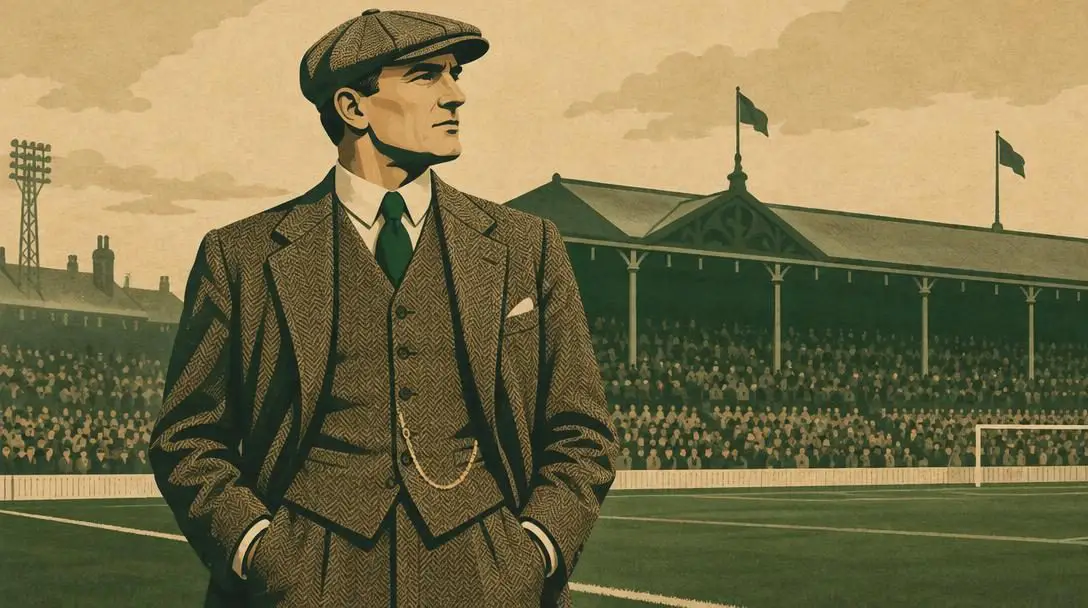
Willie Maley holds a position in football history that will almost certainly never be matched. As an active player, 70 of his 71 senior career appearances occurred in Celtic colors between 1888 and 1897. When he retired from playing, he immediately assumed managerial responsibilities, making Celtic the only club he would ever manage across an extraordinary 43-year tenure running from 1897 until 1940.
Maley oversaw a staggering 1,617 competitive matches, winning 1,042 of them and capturing 16 Scottish League titles. His managerial administration set the competitive culture and sporting standards of Celtic Football Club from its late Victorian origins into the modern professional era. Following his retirement in 1940, Maley lived another 18 years, passing away in 1958 at the age of 89 as the primary architect of Celtic's domestic greatness.
Jock Stein

- Tenure: 1965–1978
- Total matches: 690
- Scottish League titles: 10
- Scottish Cups: 8
Jock Stein's playing days featured eight years with Albion Rovers, a period with Llanelli Town, and a concluding six-year stint at Celtic that ended with his retirement in 1957. After a hiatus from the game, Stein developed his managerial methodology at Dunfermline Athletic during the early 1960s, followed by a brief period leading Hibernian. That success paved the way for his return to Celtic in 1965, initiating the most glorious chapter in the club's history.
Stein led Celtic across 690 competitive fixtures, maintaining a win rate of just over 70 percent across thirteen years. His managerial haul remains iconic: he delivered 10 Scottish League championships and added eight Scottish Cups, elevating Celtic to the summit of European football while dominating the domestic landscape. Stein later managed Leeds United briefly in 1978 and took charge of the Scottish national team before his passing in 1985 at the age of 62.
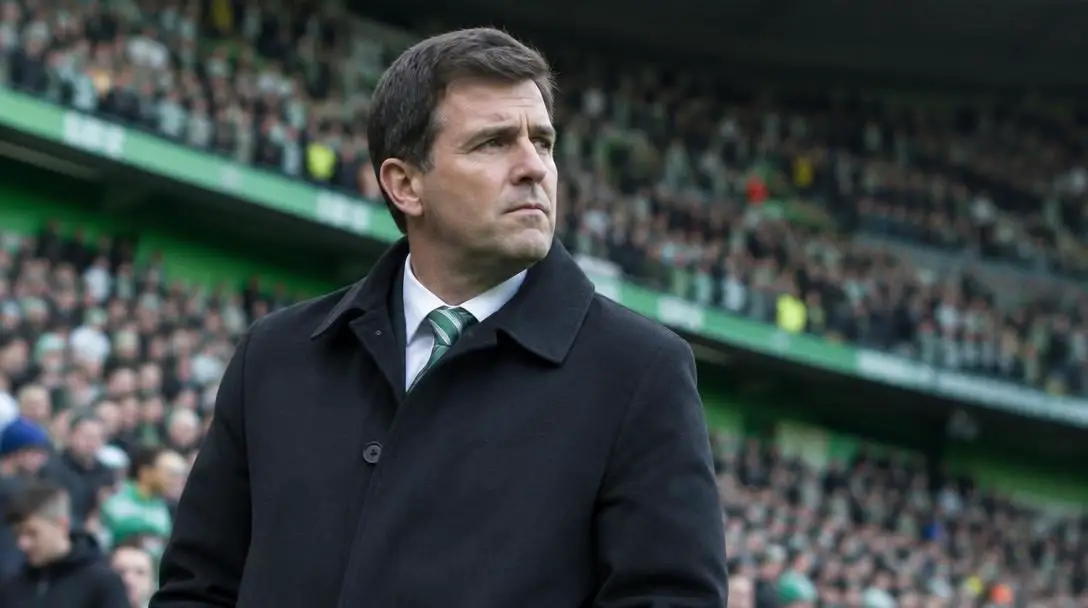
At a glance: comparing Celtic's top five managers
Comparing these five tacticians highlights how leadership styles varied across eras, from the extreme longevity of the early 20th century to the tactical intensity and rapid trophy turnaround of modern football.
| Manager | Tenure Years | Matches Managed | Win Rate | Key Domestic Silverware |
|---|---|---|---|---|
| Neil Lennon | 2010–2014, 2019–2021 | Two distinct spells | 70% | 5 Scottish League titles |
| Gordon Strachan | 2005–2009 | 4 seasons | Nearly 66% | 3 League titles, 1 Scottish Cup, 2 League Cups |
| Martin O’Neill | 2000–2005 | 282 | Over 75% | 5 total titles (40.3 matches per trophy) |
| Willie Maley | 1897–1940 | 1,617 | 64.4% (1,042 wins) | 16 Scottish League titles |
| Jock Stein | 1965–1978 | 690 | Over 70% | 10 Scottish League titles, 8 Scottish Cups |
Core metrics used to evaluate football managers
Analyzing managerial performance requires moving beyond subjective impressions and examining empirical performance indicators. In elite football environments like Glasgow, several quantitative and qualitative measures determine a coach's standing:
- Win percentage: The foundational baseline for any top-tier club. Celtic managers are expected to routinely win seven out of every ten games; managers such as Martin O'Neill surpassed even this lofty threshold by winning over three-quarters of their fixtures.
- Trophy efficiency: Calculating how many fixtures a manager requires to secure silverware reveals whether regular-season dominance translates into tangible honors. O'Neill's metric of 40.3 matches per trophy serves as an analytical gold standard.
- Longevity and fixture volume: Surviving media pressure, dressing room turnover, and tactical counter-strategies over hundreds or thousands of fixtures demonstrates exceptional organizational management, best exemplified by Willie Maley's 1,617 matches.
- Multi-front tournament breadth: Balancing the weekly grind of the Scottish League against the knockout demands of the Scottish Cup, Scottish League Cup, and continental European fixtures proves a manager's squad depth management and tactical versatility.
How to conduct a cross-era managerial evaluation
Comparing managers who worked decades or even a century apart requires a disciplined methodology to ensure fairness. Analysts and football historians can follow this step-by-step framework to evaluate coaching records objectively:
- Compile complete match records: Gather total counts of matches managed, wins, draws, and defeats across all competitive competitions to establish an unvarnished baseline of operational stability.
- Categorize all silverware won: Group honors into domestic league titles, domestic knockout cups (such as the Scottish Cup and Scottish League Cup), and international campaigns to assess competition breadth.
- Calculate analytical ratios: Divide total fixtures by trophies won to find trophy efficiency, and divide victories by total games to calculate the true win percentage across all official fixtures.
- Adjust for era-specific conditions: Account for differences in fixture density, travel conditions, transfer structures, and tournament formats that separated early 20th-century managers from modern coaches.
- Review player-to-manager adaptability: Evaluate how effectively former players—such as midfielders Neil Lennon, Gordon Strachan, Martin O'Neill, and defender Jock Stein—adapted their on-pitch experience into technical leadership.
Mistakes to avoid when assessing managerial legacies
When analyzing historical coaching data, observers frequently commit analytical errors that skew their conclusions. Keeping these common pitfalls in mind helps preserve historical context:
- Ignoring seasonal match frequencies: Early football featured fewer competitive fixtures per calendar year than the modern era. Judging Willie Maley strictly by modern match frequency ignores the reality of leading a club through 43 full calendar years.
- Disregarding domestic cup performance: Focusing exclusively on league titles misses critical aspects of knockout resilience. Capturing eight Scottish Cups under Jock Stein or domestic cup doubles under Gordon Strachan reflects mastery in single-elimination pressure.
- Overlooking separated tenures: Evaluating a manager with multiple stints, like Neil Lennon, requires examining both eras collectively rather than judging their overall legacy on a single high or low period.
- Overvaluing short-term win rates: High win percentages calculated over small sample sizes can be misleading. True managerial greatness demands sustaining an elite win rate over hundreds of matches alongside actual title collection.
Frequently asked questions
Who is Celtic's longest-serving manager of all time?
Willie Maley is Celtic's longest-serving manager, leading the club for 43 consecutive years from 1897 to 1940 across 1,617 competitive matches and winning 16 Scottish League titles.
Which Celtic manager recorded the best trophy efficiency?
Martin O’Neill produced remarkable trophy efficiency between 2000 and 2005, winning five total titles and averaging one piece of silverware every 40.3 competitive matches while winning over 75 percent of his games.
How many Scottish League titles did Jock Stein win with Celtic?
Jock Stein won 10 Scottish League championships during his tenure from 1965 to 1978, which he paired with eight Scottish Cup victories across 690 total fixtures.
Did Neil Lennon win league titles in both of his managerial spells?
Yes. Neil Lennon won three Scottish League titles during his first managerial spell from 2010 to 2014, and added two more league titles during his second spell from 2019 to 2021, maintaining a 70 percent win rate across both tenures.
Which clubs did Gordon Strachan play for before managing Celtic?
Gordon Strachan enjoyed a lengthy playing career as a midfielder, beginning at Dundee in 1974, playing through the 1980s with Manchester United, and finishing his playing career at Coventry City in 1997.
The bottom line
The history of Celtic Football Club has been shaped by leaders capable of meeting intense domestic expectations while setting new standards for Scottish sporting excellence. From Willie Maley's four decades of foundational leadership to Jock Stein's dominant era of 10 league titles and eight Scottish Cups, and modern triumphs under Martin O'Neill, Gordon Strachan, and Neil Lennon, these five managers defined what it means to lead Scotland's premier football club.