5 Best Detroit Red Wings of All Time
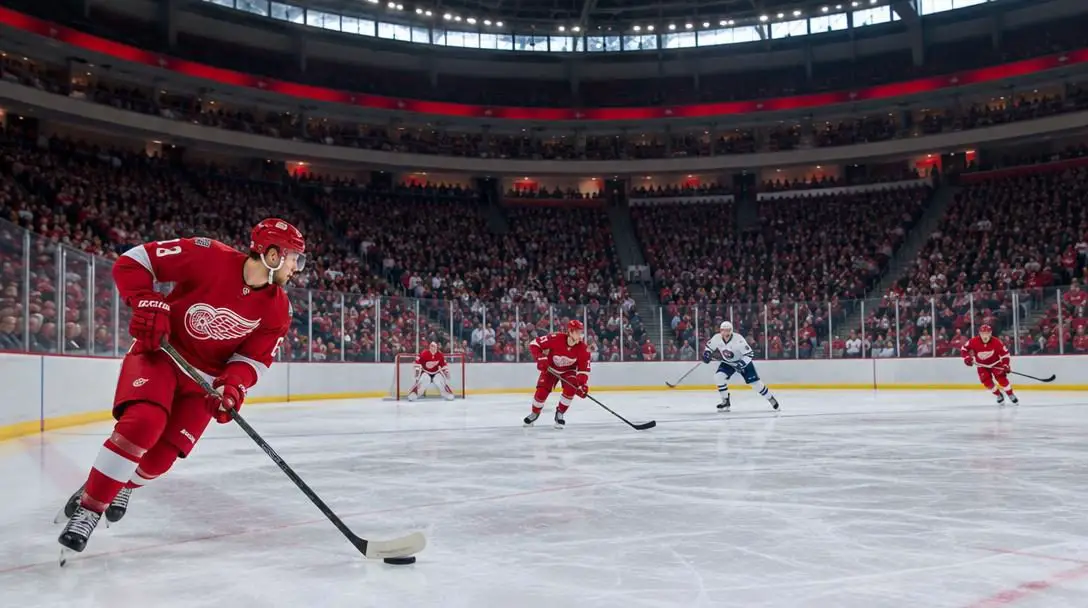
The Detroit Red Wings stand as one of the most storied and recognizable franchises in professional sports. As an Original Six member of the National Hockey League, Detroit boasts a competitive heritage spanning roughly a century of professional play. Across distinct eras of dominance, the franchise turned the Motor City into beloved Hockeytown, powered by rosters laden with generational athletes who permanently altered how their positions were played.
Narrowing down nearly a hundred years of championship runs, retired banners, and iconic moments to a handful of transcendent figures is a challenging undertaking. Decades of sustained postseason contention produced dozens of hockey legends who donned the winged wheel. While celebrated stars such as Sergei Fedorov, Pavel Datsyuk, Henrik Zetterberg, and Alex Delvecchio helped define championship squads, five specific icons established the ultimate gold standard for individual dominance, longevity, and winning pedigree in Detroit.
Key takeaways
- Detroit's Original Six history is headlined by transcendent leaders who spent the vast majority or entirety of their careers with the Red Wings.
- Gordie Howe, Nicklas Lidstrom, Steve Yzerman, Ted Lindsay, and Terry Sawchuk collected a combined 19 Stanley Cup championships with Detroit.
- Evaluating hockey icons across different decades requires balancing individual awards, franchise loyalty, positional demands, and era-specific scoring environments.
- Sustained excellence across multiple generations allowed the Red Wings to transition smoothly from post-war dominance directly into modern dynasties.
At a glance: The top Red Wings icons
The following table summarizes the service time, championships, and marquee honors earned by the five foundational pillars of Red Wings history during their tenures in Detroit.
| Player | Position | Detroit tenure | Stanley Cups | Key individual honors |
|---|---|---|---|---|
| Gordie Howe | Right Wing | 25 seasons | 4 | 6 Hart Trophies, 6 Art Ross Trophies, 21-time All-Star |
| Steve Yzerman | Center | 22 seasons | 3 | Conn Smythe, Selke, Pearson, Masterton, Art Ross (rookie year) |
| Nicklas Lidstrom | Defenseman | 20 seasons | 4 | 7 Norris Trophies, 12-time All-Star, Hall of Fame (2015) |
| Terry Sawchuk | Goaltender | 14 seasons | 3 | 3 Vezina Trophies, 5-time All-Star (first 6 years), 350 franchise wins |
| Ted Lindsay | Left Wing | 14 seasons | 4 | 1950 Art Ross Trophy, 9-time All-Star, NHL 100th Anniversary Team |
The 5 greatest Detroit Red Wings of all time
These five individuals set indelible benchmarks in personal hardware, championship victories, and enduring community stature in the Motor City.
Ted Lindsay
- Position: Left Wing
- Detroit tenure: 14 seasons (862 games)
- Detroit scoring: 728 points
- Key milestones: 4 Stanley Cups, 1950 Art Ross Trophy, 9-time NHL All-Star
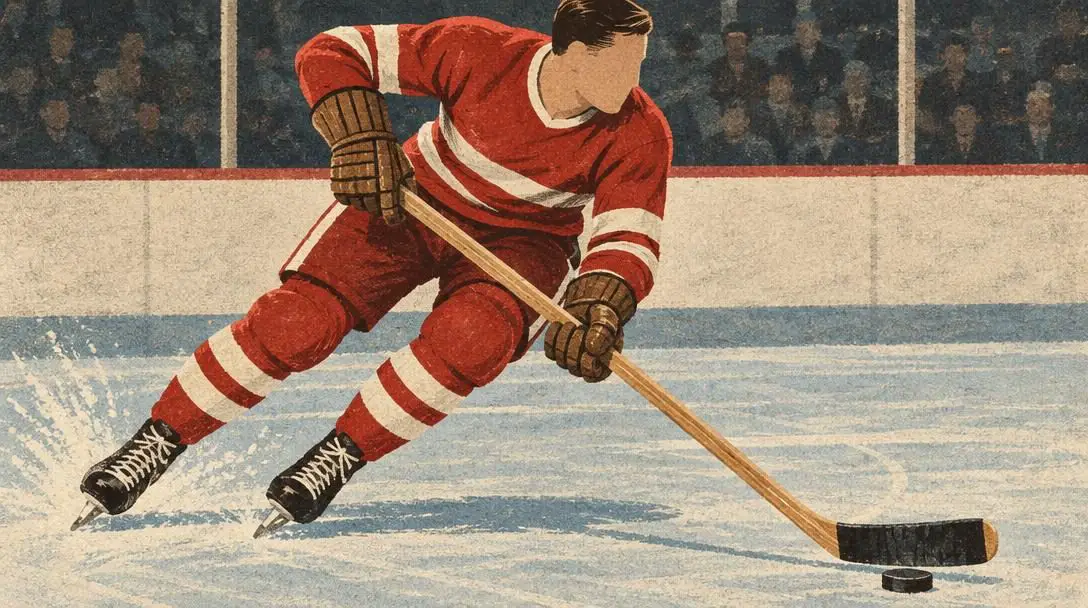
While hockey enthusiasts worldwide recognize the post-World War II dominance of Gordie Howe, casual observers may know less about his longtime teammate, Ted Lindsay. Lindsay patrolled the ice as an extraordinarily fierce left winger who spent fourteen campaigns with Detroit, alongside an additional three seasons competing for Chicago. Over his 862 regular-season games dressed in the winged wheel sweater, Lindsay registered an impressive 728 points, cementing his status as one of the premier offensive engines of the Original Six era.
Every single one of Lindsay's greatest campaigns occurred in the Motor City. Across his remarkable tenure, he captured four Stanley Cup titles with Detroit. His individual accolades matched his championship pedigree: Lindsay was selected as an NHL All-Star in nine separate seasons and secured the 1950 Art Ross Trophy as the league's overall scoring leader. His enduring influence on professional hockey was formally recognized with his inclusion on the NHL's 100th Anniversary Team. Lindsay was inducted into the Hockey Hall of Fame in 1966, and his retired jersey hangs permanently from the rafters at Little Caesars Arena.
Terry Sawchuk
- Position: Goaltender
- Detroit tenure: 14 seasons across 3 separate stints (734 appearances)
- Career franchise record: 350 wins, 2.44 goals-against average
- Key milestones: 3 Vezina Trophies, 90.4% save rate with Detroit
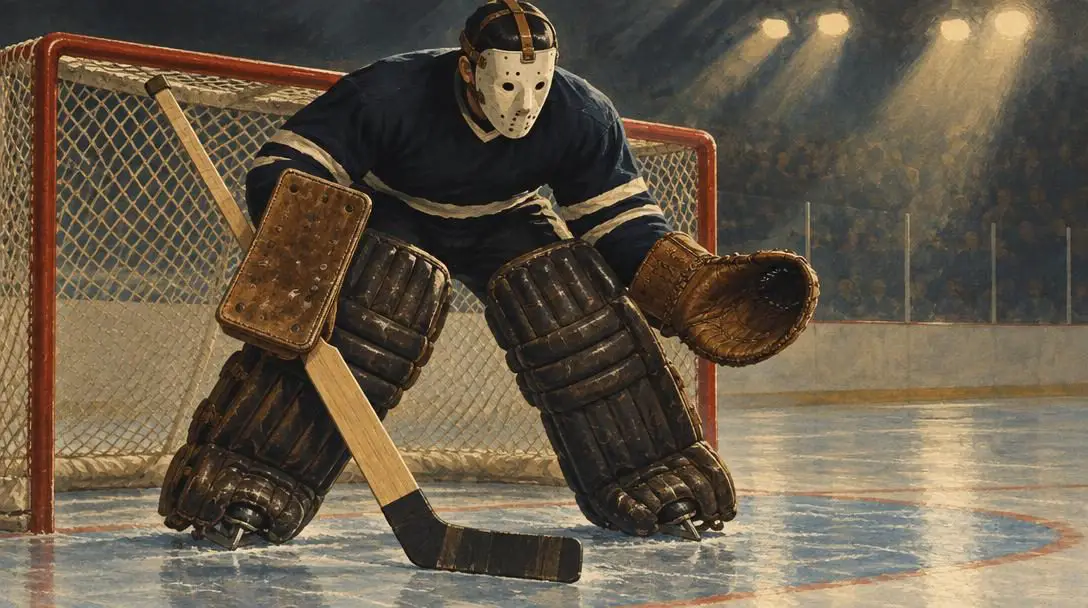
Sustaining elite performance in the crease demands immense mental fortitude, and few netminders handled relentless pressure with the intensity of Terry Sawchuk. Over a storied career, Sawchuk parted ways with the Red Wings on multiple occasions, only to return to the organization time and again. He launched his professional journey in Detroit, spending his initial six campaigns guarding the crease. That initial chapter stands among the finest goaltending runs in history: Sawchuk earned All-Star nods in five of those first six years and claimed three prestigious Vezina Trophies as the league's top goaltender.

After that opening run, Sawchuk spent two campaigns playing for the Boston Bruins before returning for his second Detroit stint, which spanned seven seasons of high-caliber play. A third one-year chapter later in his career pushed his total service time in the Motor City to fourteen seasons. Across his 734 appearances in a Red Wings sweater, Sawchuk piled up 350 victories, turned away 90.4 percent of the shots directed at his net, and recorded a stellar 2.44 goals-against average without modern protective gear.
Nicklas Lidstrom

- Position: Defenseman
- Detroit tenure: 20 seasons (1,564 games)
- Career scoring: 1,142 points
- Key milestones: 7 Norris Trophies, 4 Stanley Cups, 12-time NHL All-Star
Defensive excellence can be difficult to quantify solely through offensive statistics, but Nicklas Lidstrom mastered every square foot of ice from the blue line. Had Steve Yzerman not served as Detroit's captain for nearly his entire playing tenure, Lidstrom would have carried the captain's "C" on his sweater for far longer than he did. The brilliant Swedish blueliner spent all twenty of his NHL campaigns exclusively in Detroit, constructing one of the most decorated resumes in the history of global hockey.
Across 1,564 games, Lidstrom collected an astonishing 1,142 points. When he announced his retirement in 2012, that scoring sum ranked him sixth all-time among NHL defensemen. A twelve-time All-Star selection, Lidstrom lifted four Stanley Cups as the defensive cornerstone of Detroit's modern dynasty. Highlighting his sustained personal supremacy, he claimed seven Norris Trophies as the league's top blueliner. Lidstrom entered the Hockey Hall of Fame in 2015, and the franchise retired his iconic number six sweater shortly after he hung up his skates.
Sustaining excellence over twenty seasons with a single club remains one of the rarest feats in modern sports.
Steve Yzerman

- Position: Center
- Detroit tenure: 22 seasons (1,514 games)
- Career scoring: 692 goals, 1,063 assists (1,755 points)
- Key milestones: 3 Stanley Cups, Art Ross Trophy in rookie year, Conn Smythe Trophy
In the formative decades of professional hockey, spending an entire career with a single team was relatively common, but that pattern dissolved amid the league expansion and player movement of the 1990s and 2000s. Steve Yzerman stood as a rare exception, dedicating all twenty-two of his NHL campaigns to the Red Wings. Through exceptional perseverance, two-way commitment, and quiet leadership, Yzerman became the definitive sports hero for an entire generation of hockey fans coming of age in the 1990s.
Yzerman made an immediate mark upon arriving in the league, claiming the Art Ross Trophy in his very first season. Over the course of 1,514 regular-season games, he accumulated 692 goals and 1,063 assists. As Detroit's long-serving captain, Yzerman led the franchise to three Stanley Cup championships and amassed major individual silverware, including the Conn Smythe Trophy, the Lester B. Pearson Award, the Frank J. Selke Trophy, and the Bill Masterton Memorial Trophy. Curiously, despite his immense production and stature, Yzerman earned a spot on the official postseason All-Star team only once, during the 1999–2000 campaign.
Gordie Howe
- Position: Right Wing
- Detroit tenure: 25 seasons (1,687 games)
- Career scoring: 786 goals, 1,023 assists (1,809 points)
- Key milestones: 6 Hart Trophies, 6 Art Ross Trophies, 4 Stanley Cups, 21-time All-Star
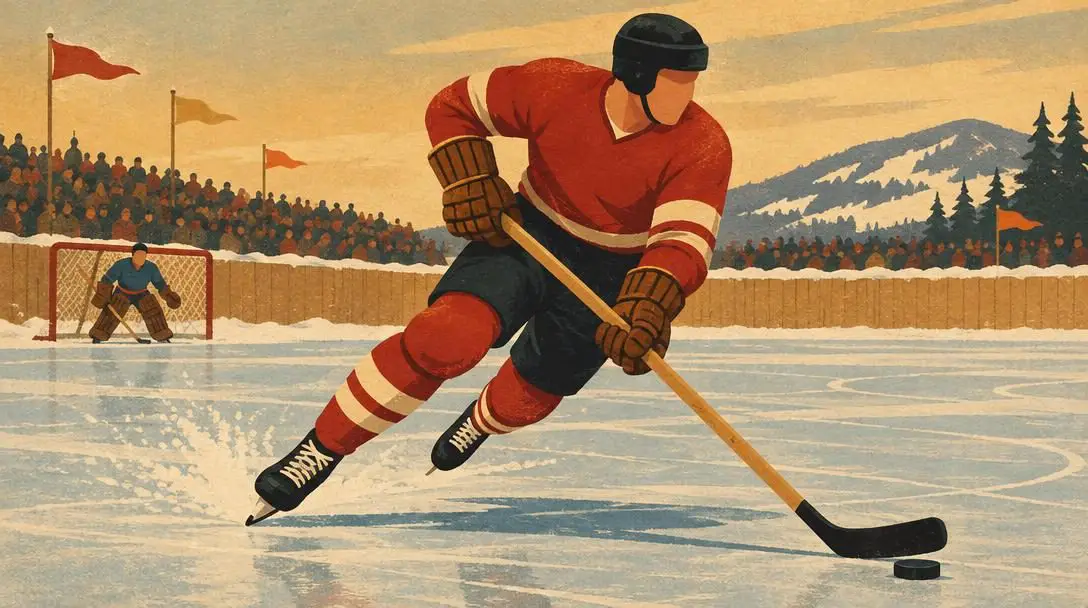
While Steve Yzerman stands as a modern icon whose legacy will always be linked with Detroit, only one man in the sport's history is universally hailed as "Mr. Hockey." Gordie Howe arrived in the Motor City at eighteen years of age, stepping onto NHL ice immediately following the conclusion of World War II. His ascent to greatness was rapid; by his third professional season, Howe had developed into an NHL All-Star. He spent a staggering quarter-century with the Red Wings organization, remaining an elite on-ice contributor into his early forties.
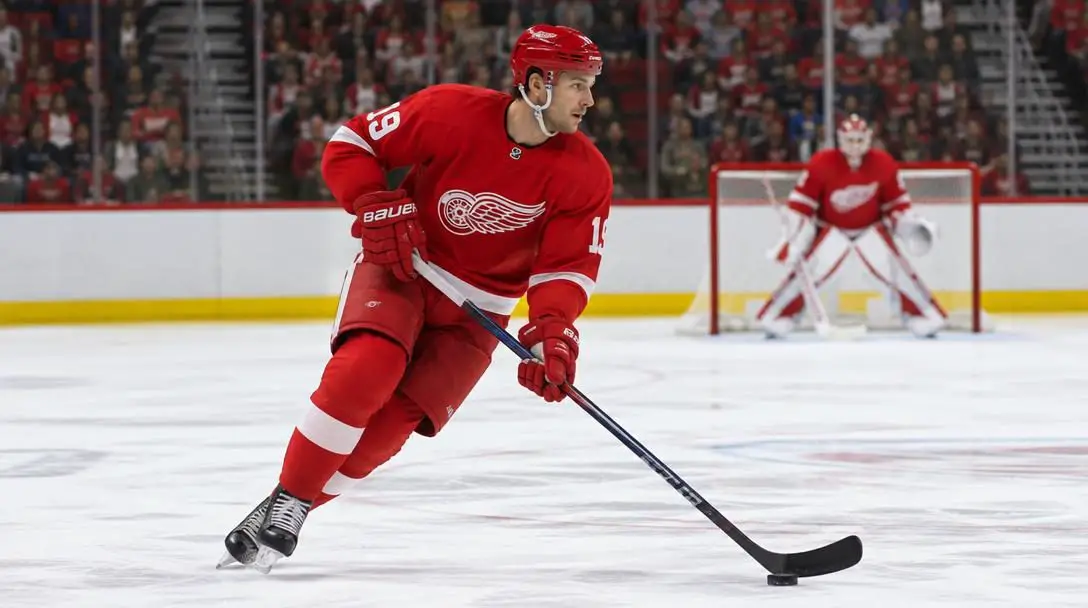
Across twenty-five seasons wearing the winged wheel—serving as Detroit's team captain for most of those years—Howe totaled 786 goals and 1,023 assists for 1,809 regular-season points in 1,687 appearances. He captured four Stanley Cup titles with Detroit while collecting six Art Ross Trophies as league scoring champion and six Hart Trophies as the league's most valuable player. A twenty-one-time All-Star and an honored member of the Hockey Hall of Fame, Howe was broadly regarded as the greatest hockey player of all time prior to the arrival of Wayne Gretzky.
Framework: How all-time franchise rankings are evaluated
Comparing athletic accomplishments across distinct generations requires an objective, multifaceted framework. When historians and analysts assemble rankings for historic teams like the Red Wings, they generally rely on five foundational pillars:
- Championship impact: Stanley Cup titles represent the ultimate standard in professional hockey. The number of championships captured, paired with an athlete's direct role in winning those titles, carries primary importance in all-time rankings.
- Individual hardware: Major seasonal awards—such as the Hart, Norris, Vezina, Art Ross, Pearson, Selke, and Masterton trophies—verify whether a player stood as the premier performer at their position relative to their direct peers.
- Longevity and team loyalty: Elite production sustained over ten, fifteen, or twenty-plus years with a single organization holds immense weight. Athletes who spent all or the vast majority of their careers in Detroit forged an indelible bond with the city.
- Positional importance: Dominant centers, lockdown defensemen, game-breaking wingers, and elite goaltenders dictate game outcomes differently. A sound ranking balances the specialized duties required by each position.
- All-Star and Hall of Fame recognition: Regular inclusion on All-Star rosters, induction into the Hockey Hall of Fame, and broader league honors, such as selection to the NHL's 100th Anniversary Team, confirm widespread peer respect.
A step-by-step approach to studying Red Wings history
For fans wishing to explore the careers of Howe, Yzerman, Lidstrom, Sawchuk, and Lindsay in greater detail, following a structured research method yields the deepest insights.
- Review archival game broadcasts: Visualizing how different eras operated is essential. Watching game broadcasts from Howe's 1950s prime illustrates the intense physical nature of the Original Six game, while 1990s playoff recordings showcase the tactical discipline of Yzerman and Lidstrom.
- Examine era-adjusted statistics: Analyze player production year over year rather than looking solely at final totals. Reviewing Sawchuk's goals-against average against his game appearances, or studying how Lindsay captured the 1950 scoring title, reveals their sustained consistency.
- Study the evolution of the rulebook: Professional hockey changed dramatically between the post-WWII era and modern expansion. Understanding shifts in equipment design, defensive tactics, and league size contextualizes the obstacles each player confronted.
- Investigate franchise milestone displays: Examining the retired numbers hanging in Little Caesars Arena provides a clean timeline of pivotal moments in franchise history.
- Analyze teammate dynamics: Legendary athletes rarely operate in a vacuum. Reviewing how Lindsay and Howe elevated one another, or how Lidstrom and Yzerman captained squads that featured Fedorov, Datsyuk, and Delvecchio, clarifies how dynasty rosters were built.
Common mistakes when comparing hockey eras
Debating all-time rosters often generates common misconceptions, particularly when weighing players separated by five or six decades. Avoiding these analytical pitfalls ensures a more accurate appreciation of historic talent:
- Ignoring era scoring environments: Measuring raw historical totals against modern scoring charts distorts historical reality. Comparing Howe's scoring totals in the low-scoring 1950s directly to modern figures without adjusting for roster size and style ignores his relative dominance over his peers.
- Judging early goaltending by modern standards: Netminders of Terry Sawchuk's era played without modern protective face masks, faced different offensive strategies, and played heavy workloads without backup rotations. Judging early save percentages against modern baselines fails to recognize that a 90.4 percent save rate was extraordinary in that era.
- Overlooking two-way and defensive contributions: Focusing entirely on offensive totals causes observers to undervalue two-way play. Yzerman won the Selke Trophy because he deliberately revamped his offensive style to become a lockdown defensive forward.
- Dismissing the value of longevity: Performing at an elite level for two decades or more is extraordinarily uncommon. A brief three-year scoring peak must be weighed fairly against the steady, twenty-year dominance exhibited by Lidstrom or Howe.
- Assuming All-Star counts provide the complete story: Postseason All-Star selections can feature historical quirks due to changing voting formats. Yzerman captured numerous premier trophies across two decades yet was selected to an official postseason All-Star team only once.
Frequently asked questions
Who is the greatest Detroit Red Wing of all time?
Gordie Howe is widely considered the greatest Red Wing in franchise history. Nicknamed "Mr. Hockey," Howe played twenty-five seasons in Detroit, winning four Stanley Cups, six Hart Trophies, and six Art Ross Trophies while producing 1,809 points across 1,687 games.
How many Stanley Cups did Nicklas Lidstrom win with Detroit?
Nicklas Lidstrom won four Stanley Cup championships during his twenty-season career with the Red Wings, serving as a defensive cornerstone for the franchise's modern championship era.
Did Steve Yzerman play for any team other than the Red Wings?
No. Steve Yzerman spent his entire twenty-two-season NHL playing career exclusively with the Detroit Red Wings, appearing in 1,514 games and leading the club to three Stanley Cup titles.
Why did Terry Sawchuk leave and rejoin the Red Wings multiple times?
Sawchuk experienced roster shifts throughout his career, including a two-season stint with the Boston Bruins after his first six years in Detroit. However, he returned for a seven-season second stint and a later one-year third stint, compiling fourteen total seasons with the club.
Which notable players just missed the top-five Red Wings ranking?
The elite group of players who narrowly missed this top-five list includes Sergei Fedorov, Pavel Datsyuk, Henrik Zetterberg, and Alex Delvecchio, all of whom played critical roles in Detroit's championship history.
The bottom line
The story of the Detroit Red Wings is written through the legacies of athletes who paired extraordinary individual talent with decades of organizational loyalty. From the relentless physical edge of Ted Lindsay and the unyielding goaltending of Terry Sawchuk to the all-around greatness of Gordie Howe, the post-war Red Wings set an unparalleled benchmark for professional hockey excellence.
Decades later, Steve Yzerman and Nicklas Lidstrom inherited that mantle, guiding Detroit through a modern resurgence that reaffirmed the city's identity as Hockeytown. Evaluating these five icons alongside honorable mentions like Sergei Fedorov, Pavel Datsyuk, Henrik Zetterberg, and Alex Delvecchio reveals why the winged wheel remains one of the most respected emblems in international sport.