5 Best Games in Oregon Football History
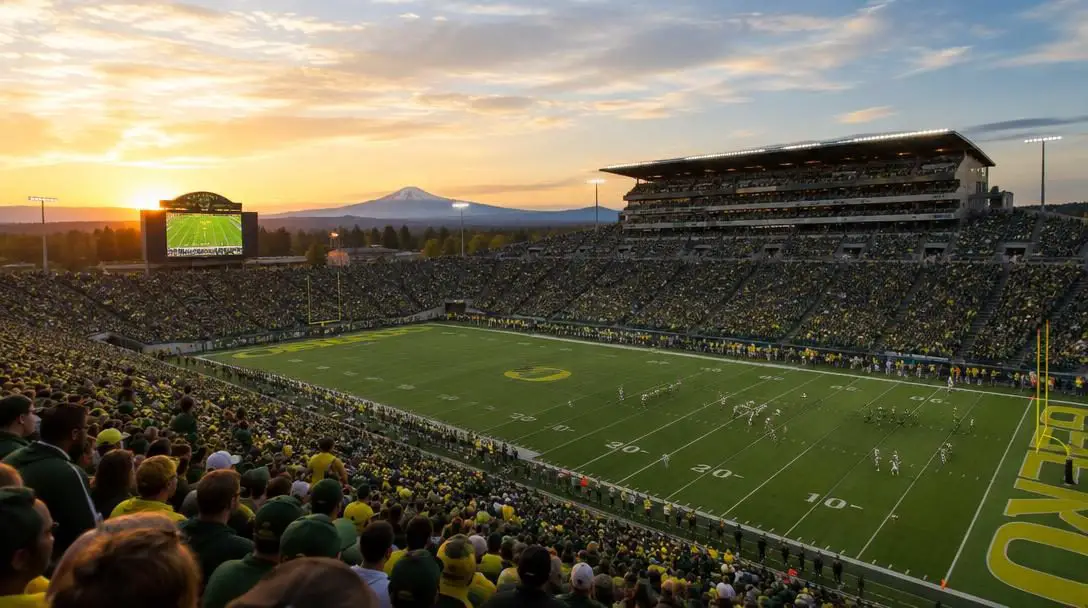
The Oregon Ducks have cultivated a storied football tradition defined by game-changing plays, relentless offensive innovation, and watershed postseason triumphs. While the program traces its origins back through decades of competitive play in the Pacific Northwest, Oregon's true golden era took shape during the 21st century. Over this stretch, the Ducks transitioned from regional contenders into an established national powerhouse capable of dominating any program in the country.
Pinpointing the absolute best games in school history requires evaluating contests that altered national perceptions, secured major bowl hardware, or vanquished college football's most storied brands on hostile ground. From historic Rose Bowl shootouts to statement road victories in the Big Ten's most imposing venues, these five iconic clashes stand as the defining high-water marks of Oregon football.
Key takeaways
- Oregon's greatest football victories established the program as a modern national power capable of toppling traditional blue-blood rivals.
- Breakthrough wins in legendary road environments like Ohio Stadium and Michigan Stadium proved the Ducks could dictate terms away from Eugene.
- High-scoring postseason triumphs, including landmark Rose Bowl and Fiesta Bowl conquests, solidified Oregon's reputation for tactical offensive brilliance.
- Decisive defensive moments and disciplined offensive line play proved just as vital as perimeter speed across all five historic matchups.
At a Glance: The 5 Greatest Oregon Football Games
| Game | Opponent | Final Score | Key Standout | Significance |
|---|---|---|---|---|
| 2002 Fiesta Bowl | #3 Colorado Buffaloes | 38–16 | Joey Harrington | Finished #2 in AP poll; proved elite national tier |
| 2015 Rose Bowl (CFP Semifinal) | #2 Florida State Seminoles | 59–20 | Darren Carrington & Tony Washington | First-ever CFP game; snapped FSU's 29-game win streak |
| 2021 Week 2 at Ohio State | #3 Ohio State Buckeyes | 35–28 | C.J. Verdell | First program win against Ohio State (0–9 previously) |
| 2007 Week 2 at Michigan | Michigan Wolverines | 39–7 | Dennis Dixon | Silenced 109,000+ fans in Ann Arbor; unveiled the modern spread |
| 2012 Rose Bowl | #10 Wisconsin Badgers | 45–38 | De'Anthony Thomas | Snapped a 95-year Rose Bowl championship drought |
Ranking the 5 Greatest Games in Ducks History
Every championship contender experiences inflection points that permanently raise expectations for their athletic program. For Oregon, these five milestone contests rewrote the school record books, humbled decorated opponents, and captured the imagination of the entire college football landscape.
2002 Fiesta Bowl
- Date: January 1, 2002
- Opponent: Colorado Buffaloes
- Final Score: Oregon 38, Colorado 16
- Key Honorees: Joey Harrington (Offensive MVP), Steve Smith (Defensive MVP)
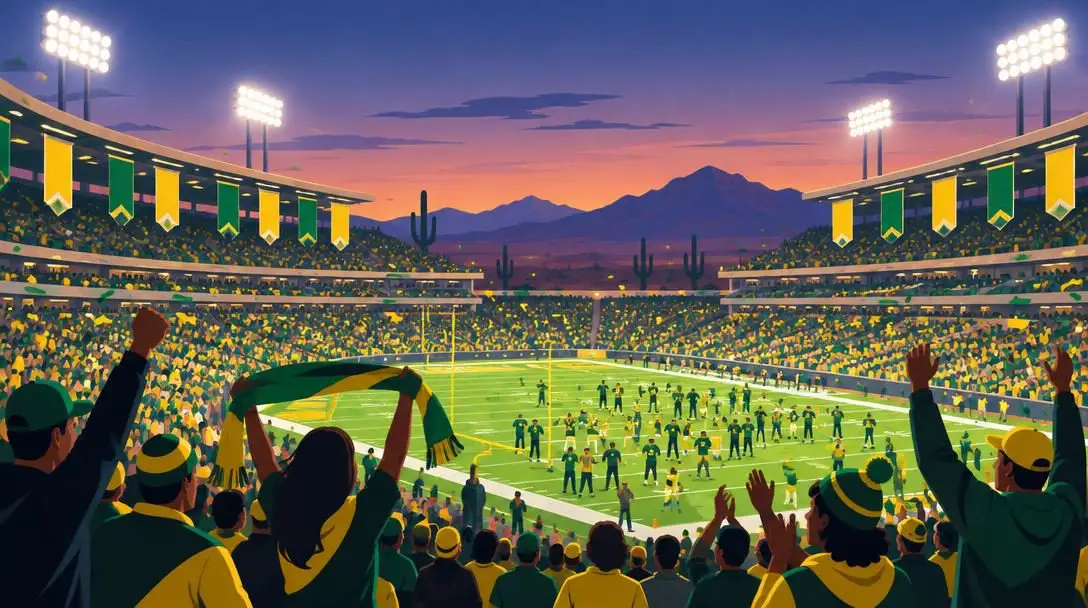
Heading into the 2002 Fiesta Bowl, the University of Oregon had a profound point to prove. The Colorado Buffaloes entered the contest ranked third in the country after capturing the Big 12 championship, while Oregon sat at fourth. Under pure human voting polls, the Ducks would have occupied a spot in the national championship game against the Miami Hurricanes. Instead, the Bowl Championship Series computer formula relegated Oregon to Tempe, Arizona, lighting a visible fire under head coach Mike Bellotti's squad.
Playing with an unmistakable chip on their shoulder, the Ducks dismantled the Buffaloes in clinical fashion. Quarterback Joey Harrington orchestrated the attack masterfully, connecting on deep strikes to secure game offensive MVP honors, while defensive back Steve Smith shut down Colorado's perimeter passing game to take home defensive MVP recognition. Oregon's 38–16 rout earned the program the number two ranking in the final Associated Press poll, asserting without question that the Ducks belonged among the true elites of the sport.
2015 Rose Bowl (College Football Playoff Semifinal)
- Date: January 1, 2015
- Opponent: Florida State Seminoles
- Final Score: Oregon 59, Florida State 20
- Key Play: Tony Washington 58-yard fumble return touchdown
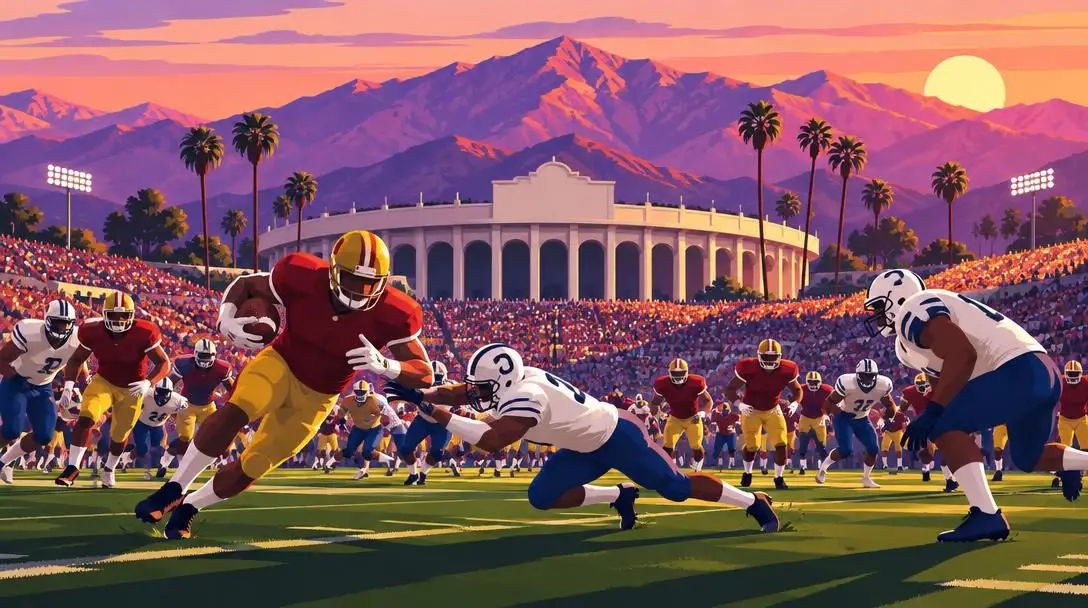
The 2014–15 college football postseason marked an unprecedented era as the Football Bowl Subdivision debuted the four-team College Football Playoff. As the Pac-12 champion, Oregon earned the second seed and drew a titanic clash in Pasadena against the reigning national champions, the Florida State Seminoles. Florida State arrived riding an undefeated record and a 29-game winning streak led by Heisman-winning quarterback Jameis Winston. Oregon brought its own Heisman winner, Marcus Mariota, setting the stage for one of the most anticipated semifinal clashes in college football history.
While the first half remained tightly contested with Oregon nursing an 18–13 lead, the Ducks blew the game wide open during a ferocious third quarter. Wide receiver Darren Carrington caught touchdown strikes of 56 and 30 yards, stretching the defense past its breaking point. Moments later, Winston slipped on a frantic rollout and lost control of the ball; Oregon linebacker Tony Washington scooped up the loose football and rumbled into the end zone. With additional touchdowns from Mariota and running back Thomas Tyner, Oregon hung 59 points on the board, ending Florida State's dynasty run and sending the Ducks into the national title game.
2021 at Ohio State
- Date: September 11, 2021
- Opponent: Ohio State Buckeyes
- Final Score: Oregon 35, Ohio State 28
- Offensive Leader: C.J. Verdell (195 scrimmage yards, 3 touchdowns)
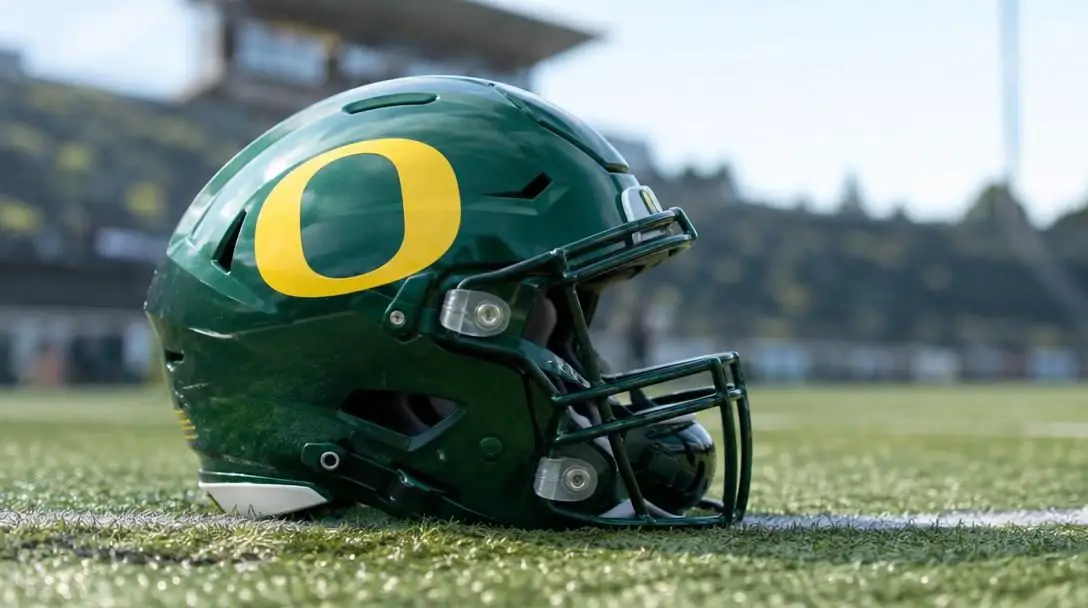
Entering week two of the 2021 regular season, few national pundits gave the eleventh-ranked Ducks a realistic chance of pulling off an upset inside Columbus. Oregon had looked unconvincing in an opening-week win against Fresno State, and the program carried an infamous 0–9 all-time record against the powerhouse Buckeyes. Facing third-ranked Ohio State at Ohio Stadium in front of over 100,000 hostile fans, the Ducks arrived with an aggressive, physical game plan that stunned the home crowd from the opening whistle.
Rather than relying on sideline trickery, Oregon dominated the line of scrimmage, utilizing wide-zone runs and devastating counter-blocking concepts to exhaust Ohio State's front seven. Tailback C.J. Verdell was unstoppable, generating 195 total yards from scrimmage and finding the end zone three times. Oregon built a commanding 14-point advantage entering the fourth quarter and executed disciplined clock management down the stretch to seal a 35–28 victory. The momentous win marked Oregon's first victory against Ohio State in program history and paved the way to a Pac-12 North division title.
2007 at Michigan
- Date: September 8, 2007
- Opponent: Michigan Wolverines
- Final Score: Oregon 39, Michigan 7
- Key Performer: Dennis Dixon (368 total yards, 4 total touchdowns)
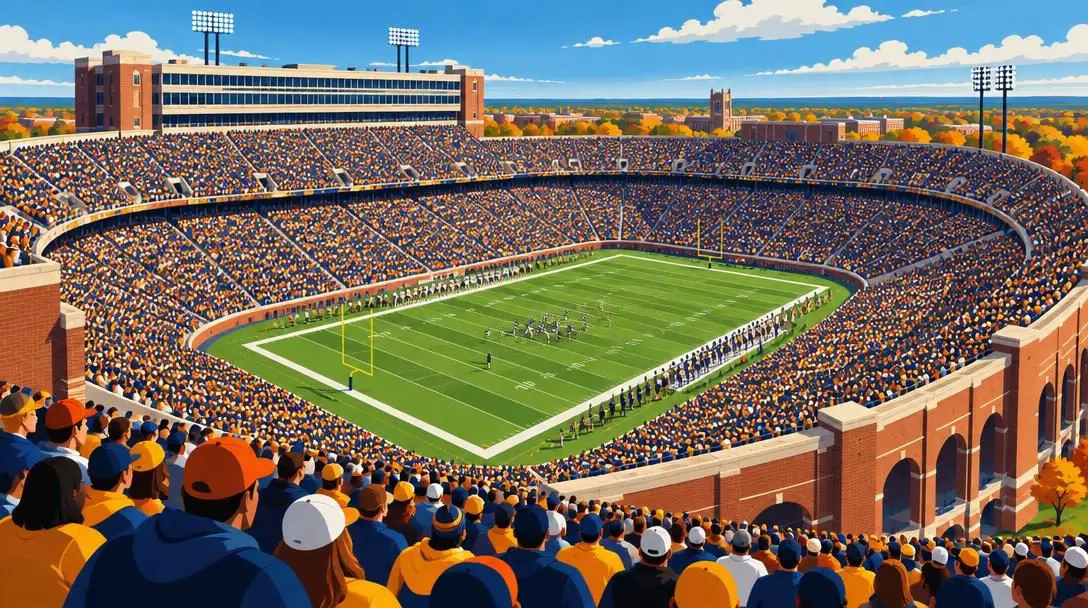
When Michigan suffered an opening-week upset against FCS powerhouse Appalachian State in 2007, college football analysts widely expected the Wolverines to bounce back with fury in their week-two home clash against Oregon. Michigan boasted future NFL draft picks across its roster and had national championship aspirations entering the season. Instead, nearly 110,000 spectators at Michigan Stadium witnessed a revolutionary demonstration of offensive scheme and execution.
Quarterback Dennis Dixon dismantled Michigan's defensive structure with exquisite option fakes, pinpoint downfield throws, and explosive keeper runs. Dixon's statue-of-liberty fake and naked bootlegs left defenders frozen in place, turning the matchup into an embarrassing 39–7 blowout. Oregon controlled every phase of the game, handing the Wolverines their worst home loss in almost four decades. The dominant showing in Ann Arbor served as a national wake-up call, showing how modernized spread mechanics could completely dismantle traditional defensive powerhouses.
2012 Rose Bowl
- Date: January 2, 2012
- Opponent: Wisconsin Badgers
- Final Score: Oregon 45, Wisconsin 38
- Historic Milestone: First Rose Bowl victory in 95 years (1917–2012)
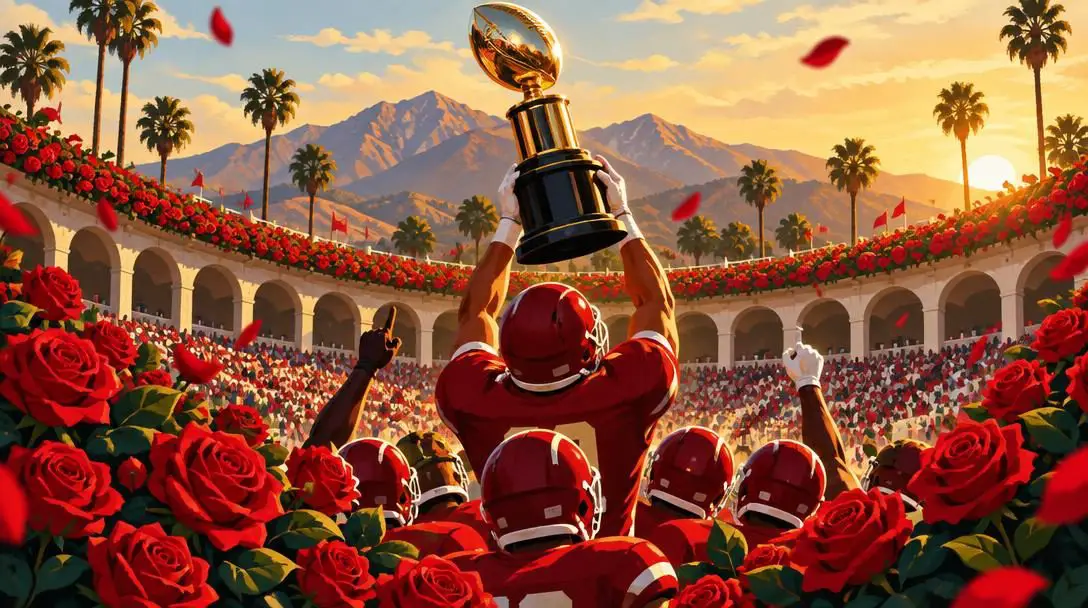
Heading into Pasadena on January 2, 2012, the Oregon Ducks had not hoisted a Rose Bowl trophy since defeating Pennsylvania in 1917. Standing in their path was Russell Wilson and the Big Ten champion Wisconsin Badgers. What unfolded over three hours was an instant classic that broke the Rose Bowl record for the most total points scored in regulation play. Both offenses traded haymakers in an electrifying first half that concluded deadlocked at 28–28.
Dynamic all-purpose weapon De'Anthony Thomas delivered one of the most memorable highlights in bowl history, exploding through the defense for a 91-yard touchdown sprint that still stands as the longest rushing score in Rose Bowl history. Trailing by three points as the fourth quarter began, Oregon quarterback Darron Thomas hit wide receiver Lavasier Tuinei for the go-ahead touchdown, followed by an insurance field goal from Alejandro Maldonado. Oregon's defense made critical stops in the dying seconds, preserving the 45–38 triumph and extinguishing a painful 95-year championship drought.
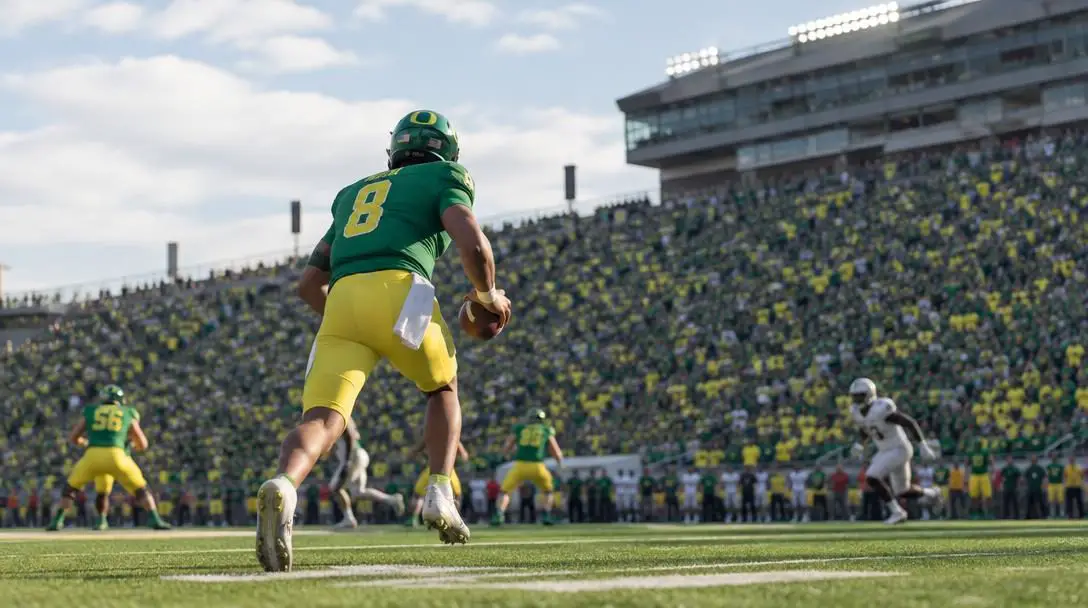
Breaking a 95-year drought in Pasadena proved that Oregon's cutting-edge style could triumph on college football's most traditional stage.
Historical Background: How Oregon Became a National Power
To fully appreciate the magnitude of these monumental games, one must understand Oregon's arduous climb up the college football hierarchy. For decades during the mid-20th century, the Ducks were viewed as a regional outpost, occasionally producing elite individual talents like Norm Van Brocklin or Dan Fouts, but rarely maintaining a consistent presence in national championship conversations. Autzen Stadium held a reputation as a difficult venue for visitors, yet national prestige remained concentrated in Southern California and traditional Midwestern powerhouses.
The dawn of the 21st century sparked a profound cultural and structural transformation. Armed with aggressive offensive philosophies, forward-thinking coaching staffs, and modernized training infrastructure, Oregon began demanding national respect. The 2002 Fiesta Bowl served as the initial proof of concept, demonstrating that Oregon could outmuscle the Big 12's finest. Over the following decade, visionary play-calling and relentless conditioning elevated the program to unprecedented heights, turning former road nightmares into statement victories.
Tactical Mechanics Behind Oregon's Signature Wins
Looking closely at Oregon's greatest triumphs reveals clear strategic commonalities. Rather than relying solely on speed or favorable bounces, the Ducks systematically exploited opponent weaknesses through precise operational principles:
- Dominating the Line of Scrimmage: While outside observers fixated on Oregon's skill positions, games like the 2021 Ohio State upset were secured in the trenches. Disciplined zone blocking and relentless physical endurance wore down elite defensive fronts over four quarters.
- Dual-Threat Quarterback Precision: From Joey Harrington and Dennis Dixon to Darron Thomas and Marcus Mariota, Oregon required signal-callers who could make split-second pre-snap reads, handle zone-read options, and punish defensive over-pursuit.
- Instant Turnover Capitalization: Big-game momentum swings frequently hinge on sudden defensive disruptions. In the 2015 Rose Bowl semifinal against Florida State, turning a costly third-quarter turnover into a defensive touchdown completely drained the opposing sideline of hope.
- Big-Play Exploitation: Oregon's offenses consistently pressured secondaries until cracks appeared. Quick-strike plays—such as De'Anthony Thomas's 91-yard run or Darren Carrington's long touchdown grabs—forced opponents out of their preferred conservative game plans.
Practical Steps for Researching Classic Oregon Games
Sports historians, prospective analysts, and devoted Ducks supporters can uncover rich insights by studying these historic clashes in full detail. Following a structured methodology helps reveal the subtle tactical battles that highlight packages often omit.
- Acquire Full-Length Broadcast Replays: Avoid viewing three-minute internet highlight clips. Seek out complete game telecasts to witness how offensive play-callers establish run setups, adjust pass protections, and manipulate field position over entire quarters.
- Break Down Red-Zone and Third-Down Metrics: Review official game books and box scores. Pay close attention to situational downs, red-zone conversion percentages, and time of possession to understand how Oregon kept opposing offenses sidelined.
- Map Decisive Momentum Shifts: Identify the exact sequence where game win probabilities tilted. Charting the third quarter of the 2015 Florida State semifinal or the early fourth quarter of the 2012 Rose Bowl demonstrates how rapidly Oregon exploited opponent mistakes.
- Analyze Scheme and Defensive Alignments: Observe how opposing defensive coordinators attempted to slow Oregon's tempo. Take note of how Dennis Dixon countered traditional Big Ten 4-3 defenses in 2007, or how Oregon used tight end motion to create mismatches against Ohio State in 2021.
- Assess the Opponent's Prestige and Ranking: Contextualize the historic weight of each contest by checking national AP rankings, winning streaks, and postseason stakes at the precise time each matchup took place.
Common Pitfalls When Evaluating Oregon Football History
Analyzing historic games requires maintaining historical context and avoiding modern retrospective biases. Reviewers frequently fall prey to several recurring misconceptions:
- Assuming High Scores Signify Poor Defensive Effort: Casual observers often look at the 45–38 final score against Wisconsin and assume defenses were nonexistent. In reality, that victory hinged on vital late-game fourth-quarter pass breakups and crucial red-zone stops.
- Overlooking the Foundational Power of the Running Game: Because Oregon pioneered fast-paced spread concepts, critics sometimes label the Ducks as a finesse, pass-first team. The 2021 win against Ohio State proved Oregon could physically impose its will on the ground, leaning on C.J. Verdell for 195 yards from scrimmage.
- Discounting Regular-Season Road Triumphs: It is easy to prioritize bowl games because they bestow physical trophies, but regular-season road wins in Ann Arbor and Columbus were fundamental in reshaping national respect for West Coast football.
- Judging Games Strictly by Final Margins: Looking only at final scores obscures the drama of contests like the 2015 CFP Semifinal against Florida State, which was a razor-thin five-point game late into the third quarter before Oregon triggered a historic scoring run.
Frequently asked questions
What was the longest touchdown run in Rose Bowl history?
Oregon all-purpose back De'Anthony Thomas holds the record for the longest rushing touchdown in Rose Bowl history with a 91-yard run against the Wisconsin Badgers on January 2, 2012.
How many times had Oregon beaten Ohio State before their 2021 meeting?
Oregon had never beaten Ohio State prior to September 11, 2021. The Ducks entered Columbus holding an 0–9 all-time record against the Buckeyes before securing their historic 35–28 victory.
Who won the MVP awards in the 2002 Fiesta Bowl?
Quarterback Joey Harrington was named the Offensive MVP for leading Oregon's high-powered attack, while defensive back Steve Smith earned Defensive MVP honors for shutting down the Colorado passing game.
Why was the 2015 Rose Bowl victory over Florida State historic?
The game served as the first semifinal in the history of the College Football Playoff format. Oregon's 59–20 victory snapped Florida State's 29-game winning streak and earned the Ducks a spot in the national championship game.
How long was Oregon's Rose Bowl championship drought before 2012?
Oregon had suffered a 95-year drought between Rose Bowl victories. The Ducks had not won the prestigious bowl game since the 1917 season, when they defeated Pennsylvania, prior to beating Wisconsin 45–38 in 2012.
The Bottom Line
The greatest games in Oregon football history illustrate the rise of an athletic program that dared to redefine the sport's conventional wisdom. By pairing revolutionary offensive concepts with relentless execution, the Ducks transformed themselves from a regional underdog into an enduring national titan. Whether routing the defending national champions in the Rose Bowl, humbling powerhouse programs in their own backyards, or breaking near-century-long championship droughts, Oregon's finest performances continue to inspire future generations of players and fans across the Pacific Northwest.