How Do The Big 4 Sports Rank in American Popularity?
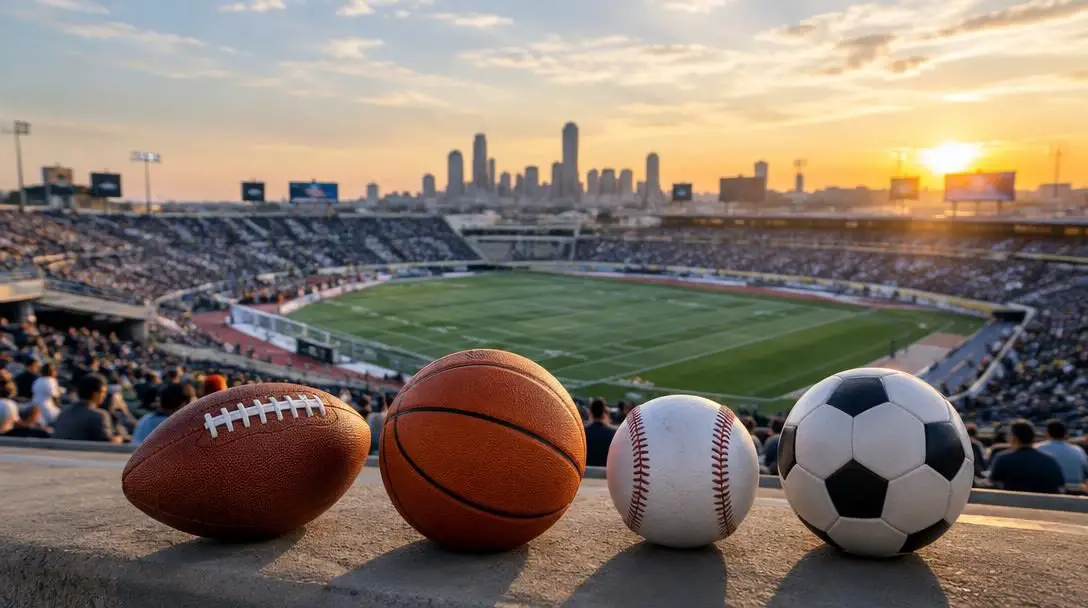
In the American sports landscape, casual supporters spend countless hours debating championship rings, legendary plays, and career statistics. Yet behind the scenes, network executives, team owners, and league commissioners evaluate an entirely different scoreboard: live television ratings, audience demographics, multi-platform engagement, and shifting cultural relevance. For nearly a century, athletic competition in the United States has been anchored by the traditional "big four" leagues, which command vast commercial footprints and captivate millions of viewers from opening day to the final seconds of their respective championship rounds.
That hierarchy, however, is far from permanent. What once captivated early-twentieth-century audiences looks remarkably different from what commands attention today, as changing media habits, generational preferences, and entertainment alternatives reshape the sporting ecosystem. By examining Nielsen ratings, fan sentiment surveys, demographic engagement, and historical broadcast figures, analysts can map precisely where each traditional major league stands today, alongside the fast-rising international contender knocking directly at the door.
Key takeaways
- Football is the undisputed heavyweight of American sports, with the Super Bowl claiming 30 of the 31 most-watched broadcasts in domestic television history.
- Basketball holds a firm grip on the second position, powered by enduring millennial loyalty from the 1990s, high appeal among Generation Z, and steady cultural visibility via ESPN and digital streaming platforms.
- Baseball has receded from its post-World War II peak of 40 percent fan preference down to under 10 percent today, challenged by regional broadcast blackouts and game duration concerns.
- Hockey retains its traditional tier-four status through passionate regional support and successful modern franchise expansions into non-traditional markets like Las Vegas and Seattle.
- Soccer firmly occupies the fifth position, drawing massive national viewership through the FIFA World Cup and widespread domestic interest in overseas competitions like the English Premier League.
At a glance: Ranking American sports popularity
| Rank | Sport | Primary domestic league | Key cultural driver | Primary audience trend |
|---|---|---|---|---|
| 1 | Football | NFL | Super Bowl spectacle & primetime broadcast dominance | Unmatched national reach across all major age demographics |
| 2 | Basketball | NBA | Star personalities, social media discourse & global flair | High resonance with younger viewers and Generation Z |
| 3 | Baseball | MLB | Historic heritage as "America's pastime" & local ballpark tradition | Substantial regional ticket sales offset by declining national TV share |
| 4 | Hockey | NHL | High-speed physical play & deep cold-weather roots | Strong regional loyalty with targeted sun-belt and western expansion |
| 5 | Soccer | MLS / English Premier League | Global tournament excitement & overseas elite competition | Expanding international appeal and massive World Cup surges |
Ranking the major American sports leagues
Determining which sport rules the modern landscape involves weighing aggregate viewership numbers against public opinion polling, streaming adoption, and general pop-culture mindshare. While the top spot remains beyond dispute, the battles across the remaining ranks reveal profound generational and behavioral changes in how Americans consume athletic competition.
Football
- National rank: 1
- Fan preference: Approximately 40% of Americans cite it as their favorite sport
- Flagship broadcast: Sunday Night Football (most-watched show on television)
- Historic viewership record: Accounts for 30 of the 31 most-watched telecasts in U.S. history
Football stands as the undisputed number one sport in the United States, and the gulf separating it from every other competitive league continues to widen. Rather than simply functioning as a popular weekend diversion, professional football represents the financial bedrock of the American television industry. Each autumn and winter, regular-season matchups regularly outperform scripted television dramas, hit sitcoms, and reality entertainment. The league's premier primetime franchise, Sunday Night Football, stands comfortably as the single most-watched recurring program across all of television, while Monday Night Football reliably commands cable ratings records week after week.
Independent research confirms this lopsided dominance, showing that roughly 40 percent of surveyed adults cite football as their primary sport. The pinnacle of this cultural obsession arrives every February with the Super Bowl, an unofficial secular national holiday that transcends sports fandom entirely. Historical broadcast data highlights the staggering scale of this phenomenon: out of the 31 most-watched broadcasts in American history, 30 are Super Bowl games. The lone broadcast capable of breaking the National Football League's historic stranglehold is the 1983 series finale of the beloved wartime comedy-drama M*A*S*H, which drew an audience of nearly 106 million viewers.
Basketball
- National rank: 2
- Key generational drivers: Millennial nostalgia and Generation Z adoption
- Primary broadcast partners: Long-term agreements with networks including ESPN
- Pivotal growth era: The 1990s international explosion
Basketball securely holds the second spot in modern American popularity, completing an impressive transformation over the past half-century. In the sport's formative era, collegiate tournament play and regional collegiate rivalries enjoyed significantly greater enthusiasm than professional teams. That dynamic flipped during the 1980s and 1990s, when the stratospheric global popularity of iconic Chicago Bulls superstar Michael Jordan elevated the National Basketball Association into a ubiquitous cultural brand. As the millennial children who watched Jordan dominate the sport matured into wage-earning adults, they preserved their loyalty and passed that enthusiasm along to their own households.

Today, basketball boasts exceptional strength among Generation Z, giving the sport one of the healthiest long-term demographic trajectories in commercial entertainment. The league thrives on high visibility fostered by extensive direct-to-consumer streaming options and a lucrative, long-term television partnership with ESPN. Unlike sports that retreat from view during their offseasons, professional basketball remains in continuous public conversation thanks to a lively 12-month ecosystem fueled by trade speculation, free-agent movement, personal fashion, and dynamic athlete personalities who actively communicate with millions of followers across digital media.
Football may command the greatest live broadcast audiences in television history, but basketball owns the ongoing daily conversation of youth culture.
Baseball

- National rank: 3
- Historical peak: Approximately 40% fan preference in the 1940s
- Current preference: Fewer than 10% identify it as their favorite sport
- Primary modern challenges: Regional broadcast blackouts and prolonged game durations
Baseball currently occupies the third position in the domestic sports pecking order, marking a dramatic change for an institution long celebrated as America's pastime. In the aftermath of World War II, baseball held the very same level of unassailable dominance that football enjoys today. During the 1940s, roughly 40 percent of the nation declared baseball to be their favorite sport to follow, making it the central pillar of post-war community recreation and civic identity.
Over subsequent decades, however, baseball suffered a gradual but steady erosion of national fan commitment. In contemporary consumer surveys, fewer than 10 percent of respondents describe the sport as their top athletic interest. Analysts trace this erosion to numerous commercial and presentation headwinds. Restrictive regional sports network blackouts have made watching local hometown franchises exceptionally complicated for cord-cutting families, while persistent consumer complaints regarding slow pacing and excessive game lengths have pushed casual viewers toward snappier alternatives. While baseball leadership has developed targeted rule adjustments and structural changes to speed up the action, reversing decades of demographic aging remains an ongoing challenge.
Hockey

- National rank: 4
- Traditional strongholds: Northeast states, Great Lakes region, and Canada
- Recent expansion cities: Las Vegas, Nevada and Seattle, Washington
- Historic status: Foundational member of the traditional "Big Four"
Hockey occupies the fourth spot among the historic quartet. As a foundational member of the legacy major leagues, the National Hockey League retains an impassioned, dedicated follower base that generates solid gate revenues and stable broadcast numbers. While the game holds uncontested status as the undisputed national sport in Canada, its relationship with audiences south of the border has traditionally been defined by geographic climate.
Historically, grassroots participation and regular television viewership in the United States concentrated heavily throughout the Northeast corridor and the upper Great Lakes region, where freezing winter temperatures permitted natural outdoor ice rinks. In recent years, league leadership worked diligently to break out of this regional pocket through aggressive expansion programs. Modern franchise launches in non-traditional winter markets, most notably Las Vegas and Seattle, have built active fan bases, sparked regional youth hockey participation, and diversified the national viewing footprint beyond its historical boundaries.
Soccer
- National rank: 5
- Primary overseas draw: The English Premier League
- Major ratings catalyst: The quadrennial FIFA World Cup
- Alternative challengers: Surpasses golf, auto racing, and tennis in team-sport metrics
Behind the traditional quartet sits a competitive tier of athletic alternatives, where motor racing, golf, tennis, and combat spectacles frequently vie for public visibility. Nonetheless, soccer has established itself as the undeniable fifth major sport in modern America. Millions of domestic viewers engage with soccer on a weekly basis, although their viewing behavior deviates from standard American sports traditions. Rather than directing their sole loyalty toward domestic teams in Major League Soccer, an enormous segment of the American fan base tunes in early on weekend mornings to watch top-flight European clubs in the English Premier League.

Furthermore, soccer demonstrates an unparalleled ability to capture the broader American cultural consciousness during the international spectacle of the FIFA World Cup. When this global tournament takes place, casual observers and non-sports fans tune in by the millions, creating massive television ratings, filling watch-party venues, and prompting nationwide discussions that rival established American sports championships.
Commercial mechanisms that drive sports popularity
The fluctuating fortunes of major professional leagues do not occur by accident. Instead, they reflect measurable shifts across commercial distribution, media consumption, and changing lifestyle patterns that favor certain athletic presentations over others.
- Broadcast accessibility and digital distribution: Leagues thrive when fans can locate live matches easily without traversing confusing paywalls or restrictive regional cable blackouts. Modern sports properties that negotiate ubiquitous streaming access build larger, younger follower pools.
- Generational preferences and media pacing: Modern audiences interact with sports via rapid-fire highlights and concise runtimes. Sports with extended stoppages, lengthy commercial interruptions, or protracted dead periods face distinct hurdles when competing for modern viewer attention.
- Star power and offseason drama: When athletes cultivate identifiable personalities outside the stadium, casual viewers remain engaged. Leagues that encourage personality, storytelling, and free-agency excitement enjoy steady relevance throughout all 52 weeks of the calendar year.
- Cultural eventization: A league achieves maximum commercial stability when its signature title game morphs into an unavoidable national gathering. Spectacles like the Super Bowl or the World Cup invite non-traditional fans to participate purely for the social experience.
How aspiring fans can navigate American sports
For newcomers seeking to follow professional American athletics, navigating multi-channel networks, intricate schedules, and divergent league calendars can feel overwhelming. Following a structured introductory process can help you find your footing without getting lost in the noise.
- Assess your seasonal and weekly schedule: Football demands focused, multi-hour viewing sessions mostly limited to autumn and winter weekends. Basketball and hockey run brisk games throughout weekday evenings from late autumn into late spring. Baseball offers a daily rhythm with games almost every evening throughout the summer months.
- Check your local broadcast market availability: Before dedicating yourself to a specific hometown franchise, review whether your regional sports network is carried on your television or streaming package to avoid blackouts.
- Sample each sport's premier championship showcase: Begin by watching marquee postseason events—the Super Bowl, the NBA Finals, the World Series, the Stanley Cup Finals, and the FIFA World Cup. These broadcasts showcase the sports at their highest athletic standard and emotional intensity.
- Adopt an individual player narrative: Learning an entirely new rulebook can be tedious. Tracking an exciting, dynamic athlete makes it simpler to understand tactical decisions, offensive schemes, and on-field emotional stakes.
Common mistakes when evaluating sports popularity
Public discussions around sports popularity often lean on outdated assumptions or surface-level statistics that fail to tell the full story. Avoiding these common analytical missteps provides a more accurate view of where the sports world is truly headed.
- Equating in-person ticket sales with media reach: A sport such as baseball sells tens of millions of tickets across a grueling 162-game schedule, but regular-season ticket volume does not translate directly into national primetime broadcast ratings.
- Projecting personal social circles onto the country: Personal affinity for a regional favorite like hockey or an international passion like soccer often obscures how the rest of the nation consumes athletic programming.
- Neglecting median audience age: Evaluating sports solely on raw viewer counts can hide underlying demographic vulnerability. A property that produces stable numbers today but relies heavily on viewers over age 60 faces severe structural risks compared to properties favored by Generation Z.
- Ignoring foreign broadcast consumption: Disregarding soccer's popularity based solely on domestic league numbers overlooks the tens of millions of American residents who track the English Premier League, UEFA competitions, and Liga MX broadcasts.
Frequently asked questions
Why is football so much more popular than other American sports?
Football benefits from a compact regular season where every single contest matters, making individual games must-watch television. The NFL has scheduled games primarily on weekend afternoons and primetime weeknights, transforming matchups into major cultural events that culminate in the Super Bowl.
Has baseball always been less popular than football?
No. Following World War II and through the 1940s, baseball reigned supreme as America's pastime, with approximately 40 percent of citizens naming it their favorite sport. It was only over recent decades that football overtook baseball to become the nation's premier spectator sport.
How does soccer challenge the traditional Big 4 leagues?
Soccer commands massive grassroots participation, immense interest among younger demographics, and strong viewership for international events like the FIFA World Cup and overseas leagues like the English Premier League, firmly locking down the fifth spot in American sports hierarchy.
Why are regional sports blackouts hurting baseball viewership?
Blackout rules restrict local fans from streaming games on digital platforms if those games air on local regional cable networks. As more American households abandon traditional cable television, younger fans find it increasingly difficult to watch hometown games, accelerating fan decline.
What role did Michael Jordan play in the rise of basketball?
During the 1990s, Michael Jordan's global stardom, cultural marketability, and dominance on the court propelled the NBA into a worldwide entertainment powerhouse. The millennials who grew up watching his career carried their viewing habits into adulthood, establishing basketball firmly in the second spot.
The bottom line
The hierarchy of American sports reflects an ever-shifting balance between tradition and modernization. While football holds a commanding, near-monopolistic grip on modern broadcast ratings, the remaining positions reflect an ongoing contest for relevance. Basketball leverages digital conversation and youth demographics to hold second place, baseball works to reclaim lost ground through pace-of-play innovations, hockey continues to broaden its regional boundaries through targeted western expansion, and soccer maintains explosive growth via overseas leagues and global spectacles. As television continues its historic transition from cable networks to streaming platforms, the leagues that master accessibility, cultivate marketable star talent, and respect viewer time will shape American leisure culture for the next generation.