5 Most Unbeatable Records in Football

For well over a century, professional football has captivated generations of supporters with extraordinary milestones, legendary players, and unforgettable performances. As athlete conditioning has advanced, tactical playbooks have grown increasingly complex, and regular-season schedules have expanded, standard league benchmarks have steadily fallen. Yet despite the relentless progression of modern athletic training, a select tier of accomplishments continues to defy the passage of time.
Certain historical feats remain untouched not because modern players lack talent, but because the foundational structure of the sport has shifted underneath them. Tactical evolutions, positional rotations, and player safety rule modifications have transformed how football is played on both sides of the ball. While single-season and single-game milestones frequently fluctuate, five extraordinary achievements stand apart as virtually unbreakable summits in football history.
Key takeaways
- Modern passing schemes and multi-back rotations make Emmitt Smith's career rushing total practically unreachable.
- Derrick Thomas remains the only defender in league history to record seven sacks within a single sixty-minute game.
- Brett Favre's ironman streak of 297 consecutive regular-season starts at quarterback demanded unprecedented resilience against severe injury.
- Rule changes to kickoff protocols have permanently locked Brian Mitchell's career return yardage record far beyond the reach of contemporary specialists.
- Jerry Rice compiled 22,895 receiving yards and 23,546 all-purpose yards by maintaining elite, game-breaking physical conditioning past the age of forty.
At a glance: Football's most durable milestones
To understand how separated these five accomplishments are from the rest of league history, it helps to examine their scope across career longevity and single-game dominance:
| Player | Record Category | Historic Benchmark | Key Career Context |
|---|---|---|---|
| Emmitt Smith | Career Rushing Yards | 18,355 yards | 15 seasons with Dallas Cowboys and Arizona Cardinals |
| Derrick Thomas | Single-Game Sacks | 7 sacks | Set on November 11, 1990 against Seattle |
| Brett Favre | Consecutive Starts by a QB | 297 starts (321 including playoffs) | 1992 to 2010 across Green Bay, NY Jets, and Minnesota |
| Brian Mitchell | Career Kick Return Yards | 14,014 yards | 607 returns across Washington, Philadelphia, and NY Giants |
| Jerry Rice | Career All-Purpose & Receiving Yards | 22,895 receiving / 23,546 all-purpose yards | Only 6 career return yards; bulk spent with San Francisco |
While standard milestones fall as conditioning and schemes advance, structural shifts in play-calling have frozen football's greatest historic totals permanently in place.
The 5 most unbeatable records in football history
Each of the following milestones represents a unique collision of elite talent, extraordinary durability, and specific era-dependent strategic schemes that will likely never align the same way again.
5. Emmitt Smith: Career Rushing Yards
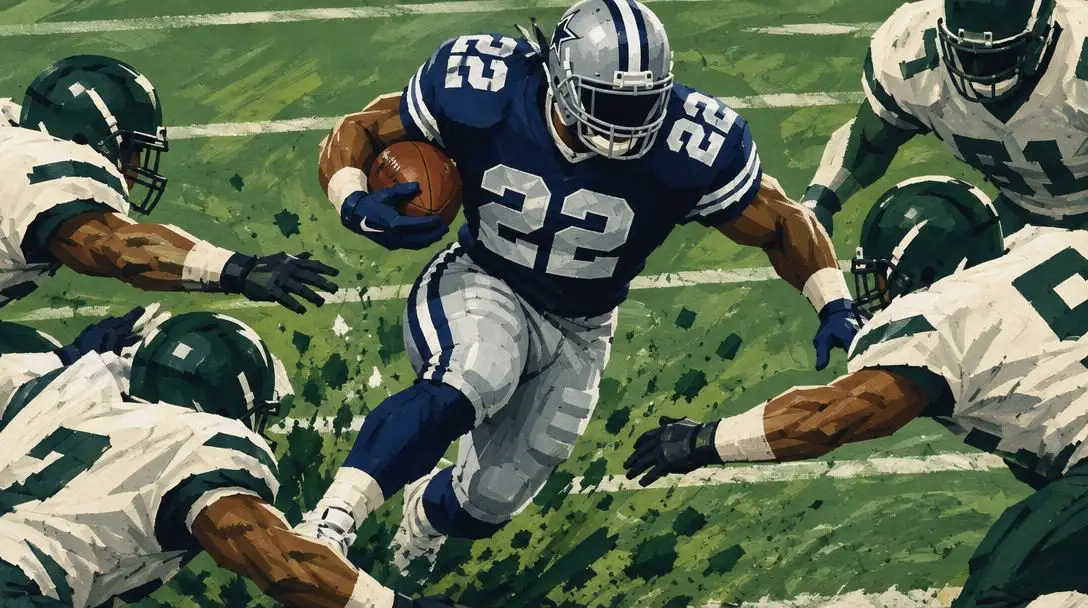
- Total rushing yards: 18,355 yards
- Teams represented: Dallas Cowboys, Arizona Cardinals
- Career duration: 15 seasons
During the 2000s, professional football transformed into an environment engineered almost entirely for airborne offenses, sending passing numbers soaring while diminishing the traditional role of the bell-cow running back. Emmitt Smith accumulated an astonishing 18,355 rushing yards during his fifteen-season tenure, spending the overwhelming majority of that time powering the Dallas Cowboys before completing his career with the Arizona Cardinals. Recognizing the irreversible shift toward passing-first offensive playbooks, Smith himself understood that his milestone would remain secure from future challengers.
Modern franchises rarely grant individual rushers the heavy carry volume necessary to challenge such a massive career total. Elite workhorse backs such as Frank Gore and Adrian Peterson maintained exceptional physical longevity and delivered memorable multi-year campaigns, yet neither runner managed to surpass the high-water mark Smith established. Because contemporary offensive coordinators distribute touches across multiple ball-carriers, matching Smith's career output over fifteen seasons has become statistically implausible.
4. Derrick Thomas: Seven Sacks in a Single Game
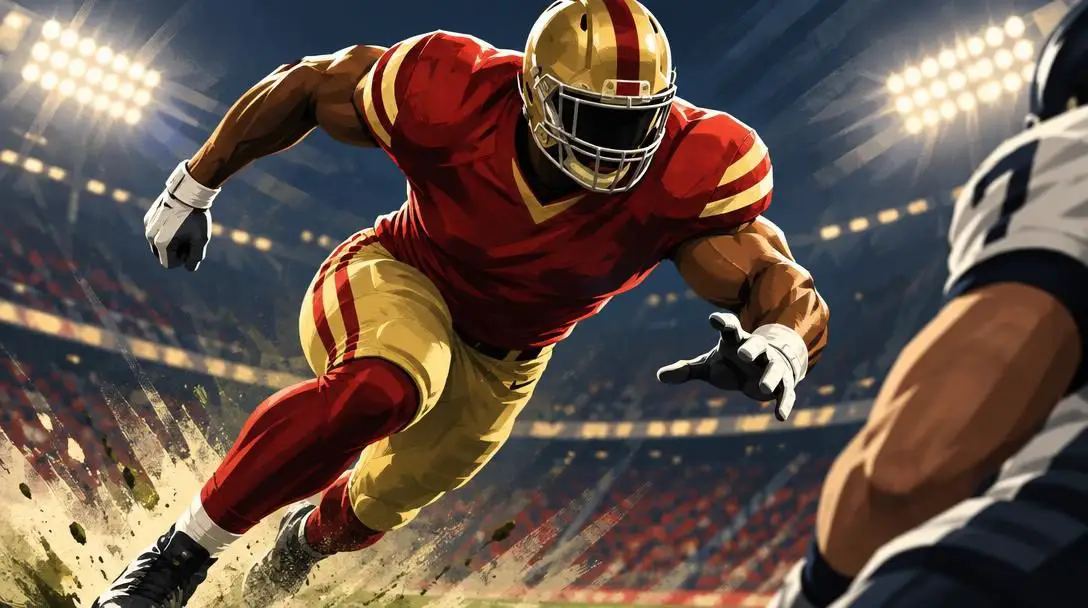
- Single-game sacks: 7 sacks
- Date achieved: November 11, 1990
- Opponent: Seattle Seahawks (Quarterback Dave Krieg)
On November 11, 1990, Kansas City Chiefs outside linebacker Derrick Thomas produced the most overwhelming single-game pass-rushing display in professional football history. Facing the Seattle Seahawks, Thomas utilized an explosive burst off the edge to terrorize quarterback Dave Krieg, dropping him seven times behind the line of scrimmage in four quarters of action. In a bizarre twist of football fate, the Chiefs still dropped the contest by a final score of 17-16, meaning Thomas's relentless pressure occurred during a tightly contested game that forced Seattle to continue dropping back to pass until the final snap.

While dominant edge rushers have periodically produced six sacks in a game—including Osi Umenyiora in 2007 and Adrian Clayborn in 2017—no defender has ever equaled or eclipsed Thomas's mark of seven. Modern pass protection schemes quickly allocate double teams, tight end chips, and running back help against any pass rusher who secures early sacks, effectively eliminating the tactical conditions that allowed Thomas to stand alone in the record book.
3. Brett Favre: Ironman Streak for Consecutive Starts
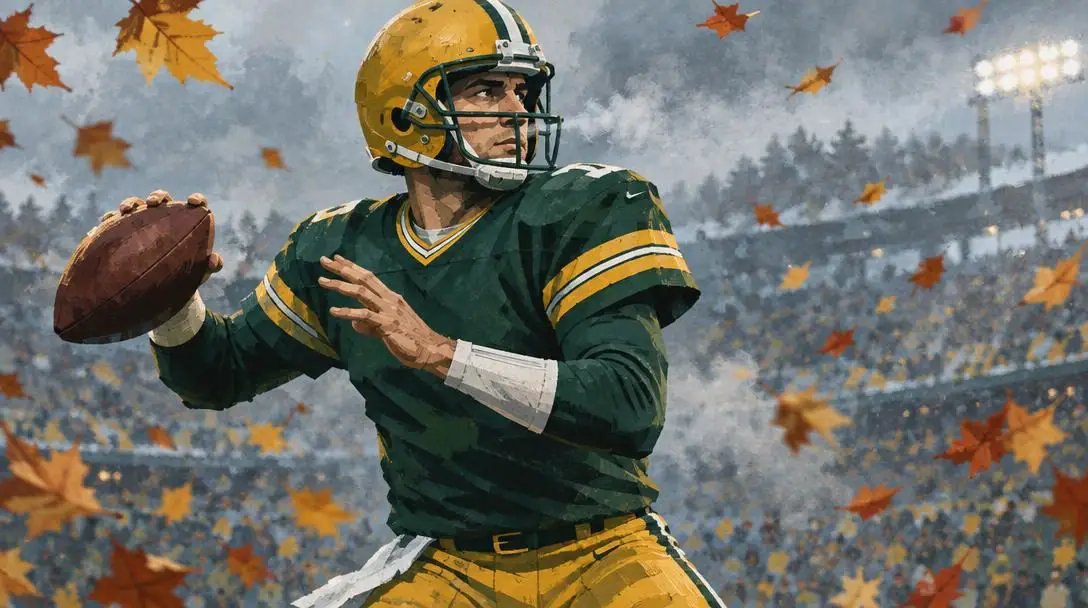
- Regular-season streak: 297 consecutive starts
- Postseason starts included: 24 playoff starts (321 total)
- Teams during streak: Green Bay Packers, New York Jets, Minnesota Vikings
Quarterback durability is widely considered the most elusive athletic feat in collision sports, which elevates Brett Favre's ironman streak to near-mythic status. Between 1992 and 2010, Favre lined up under center for 297 consecutive regular-season contests across nineteen seasons with the Green Bay Packers, New York Jets, and Minnesota Vikings. When including his 24 playoff appearances, his unbroken streak expands to an incredible 321 games.
The magnitude of Favre's durability becomes even more striking when compared against other famously resilient signal-callers. Philip Rivers engineered a celebrated 15-year career without missing a single matchup, yet he still finished 57 starts behind Favre. Tom Brady authored three of the fifteen longest starting streaks at quarterback in league history—starting continuously from 2001 until a 2008 injury, resuming from 2009 until a four-game suspension in 2016, and mounting another extensive run afterward. Yet despite Brady's unmatched longevity, Favre's unified run remains entirely unchallenged.
2. Brian Mitchell: Career Kick Return Yards
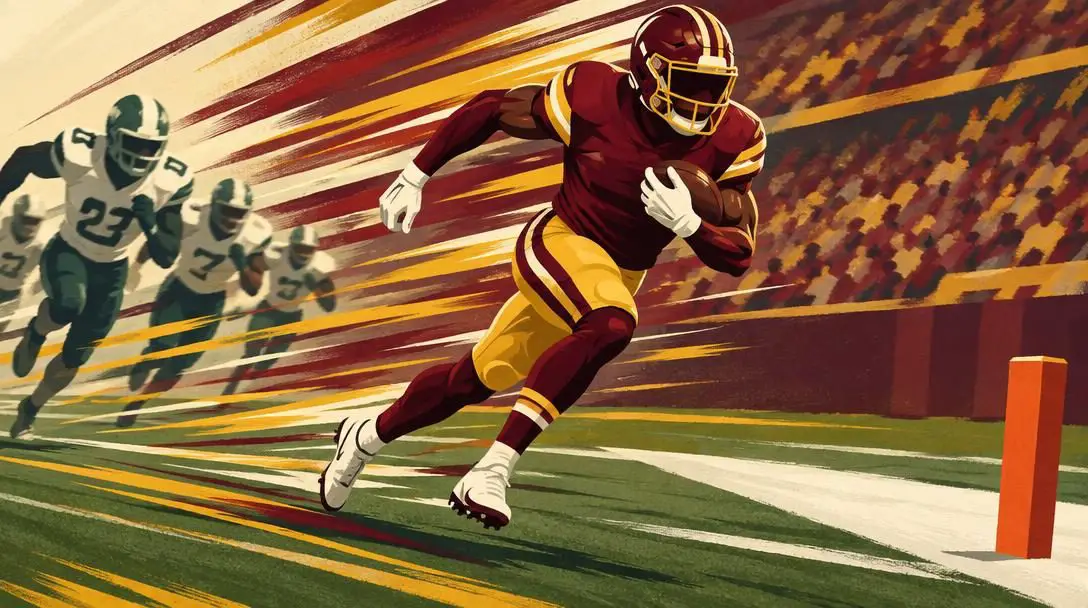
- Career kick return yards: 14,014 yards
- Total kickoffs returned: 607 returns
- Return touchdowns: 4 touchdowns
Brian Mitchell established the standard for special teams excellence long before specialists like Dante Hall and Devin Hester emerged during the 2000s. An All-Pro and Super Bowl champion, Mitchell spent the entire 1990s suiting up for Washington before playing three seasons with the Philadelphia Eagles and finishing his career with the New York Giants. Over fourteen seasons, Mitchell fielded 607 kickoffs and turned them into 14,014 yards alongside four touchdowns.
Mitchell's special teams production created an insurmountable chasm between himself and his peers. His closest competitor, Allen Rossum, retired in 2009 with a career yardage total that sits more than 2,000 yards behind Mitchell. Furthermore, this relentless return production elevated Mitchell to the number two position on the league's all-time all-purpose yardage list, placing his footprint deep within football history.
1. Jerry Rice: Career All-Purpose and Receiving Yards
- Career receiving yards: 22,895 yards
- Career all-purpose yards: 23,546 yards
- Total career return yards: 6 yards
While Brian Mitchell collected 23,330 all-purpose yards through a balanced mix of returns, carries, and catches, he was ultimately surpassed at the top of the mountain by Jerry Rice. What makes Rice's achievement unbelievable is that he captured the all-time all-purpose crown while recording a mere six return yards over his entire career. Instead, Rice amassed 645 rushing yards and an astounding 22,895 receiving yards, predominantly while starring for the San Francisco 49ers.

Rice's statistical separation from the rest of the sport is breathtaking. Aside from Mitchell, Rice holds more than 1,700 all-purpose yards over every other player in professional football history. Driven by rigorous conditioning and impeccable route-running precision, Rice continued to produce at an elite level past his 40th birthday. Because modern passing offenses frequently cycle targets among three or four receivers, a tight end, and passing-down backs, no contemporary wideout can sustain the heavy target volume required to threaten Rice's summit.
A framework for evaluating football records
When analysts, historians, and supporters evaluate whether any longstanding football milestone is vulnerable to a modern challenge, they utilize a five-step assessment process:
- Evaluate the current era and rules: Determine whether modern rules favor or suppress the specific discipline. If kicking rules reduce return frequency, return milestones instantly become unreachable.
- Calculate per-game volume requirements: Divide the record's total figure by realistic career timelines. Overcoming Emmitt Smith requires an athlete to produce more than 1,200 rushing yards every year for fifteen straight seasons.
- Factor in position longevity trends: Analyze how long modern athletes stay at their athletic peak. While Jerry Rice played wide receiver effectively into his forties, contemporary running backs rarely see heavy touch counts past their late twenties.
- Assess single-game variance: Examine the game conditions required for single-game peaks. Derrick Thomas's seven sacks required a high volume of opponent pass dropbacks while maintaining a close scoreline that prevented Seattle from leaning on the run.
- Inspect health and availability patterns: Gauge the baseline physical injury risk inherent to the position. Brett Favre's streak required surviving hundreds of sacks, severe sprains, and structural wear without missing a single weekend over nearly two decades.
Common pitfalls when comparing league eras
Debating football records across different decades requires an understanding of how playbooks and team construction have fundamentally transformed over time. Observers often make critical miscalculations when projecting modern stars against historical records:
- Assuming longer seasons guarantee broken records: While an expanded 17-game calendar provides extra quarters to accumulate statistics, the added wear increases the risk of injuries and encourages coaches to practice load management.
- Overlooking positional committees: Modern offensive coordinators use multi-back systems to keep players healthy, eliminating the individual 300-carry seasons that sustained historic rushers.
- Confusing peak dominance with career longevity: Many athletes match all-time legends across a three-to-five-year window, but players like Adrian Peterson and Frank Gore demonstrated that sustaining elite production across a second decade is extraordinarily uncommon.
- Ignoring strategic evolution: Modern offenses throw the football more frequently than past eras, but passes are spread among multiple pass catchers rather than concentrated entirely on one primary wide receiver.
- Underestimating single-game outliers: When a pass rusher secures three or four sacks in a half, onlookers often project a record-breaking day, forgetting that opposing offensive lines promptly adjust protections to neutralize hot defenders.
Frequently asked questions
Why is Emmitt Smith's rushing record considered safe from modern running backs?
Emmitt Smith accumulated 18,355 yards by carrying the ball relentlessly across fifteen seasons. Modern offensive schemes favor passing over running and utilize multi-back rotations, which deprives contemporary rushers of the career carry volume needed to chase down Smith's standard.
Who came closest to Derrick Thomas's single-game sack record?
Osi Umenyiora in 2007 and Adrian Clayborn in 2017 each recorded six sacks in a single game. However, Derrick Thomas remains the sole player in league history to drop an opposing quarterback seven times in one afternoon.
How close did Philip Rivers or Tom Brady get to Brett Favre's consecutive starts streak?
Philip Rivers started every game for 15 seasons but still finished 57 starts short of Favre's 297 regular-season games. Tom Brady built three of the fifteen longest starting streaks at quarterback in history, but injuries and a suspension interrupted his consecutive runs.
What makes Brian Mitchell's return yardage so difficult to replicate today?
Brian Mitchell accumulated 14,014 kickoff return yards over 607 returns across fourteen seasons. Modern rule changes have moved kickoff spots and altered touchback procedures to minimize high-speed collisions, drastically reducing the number of live returns modern players attempt.
How did Jerry Rice claim the all-purpose yardage record with almost no return yards?
Unlike Brian Mitchell, who compiled his yardage primarily on special teams, Jerry Rice amassed 22,895 of his 23,546 all-purpose yards through pass catching, supplemented by 645 rushing yards and just six return yards.
The bottom line
As football enters future eras defined by evolving player health initiatives, refined schematics, and shifting offensive philosophies, statistical yardsticks will continue to adjust. Passing volumes and single-season team totals will predictably rise and fall as coaches search for competitive advantages. Yet the historical monuments erected by Emmitt Smith, Derrick Thomas, Brett Favre, Brian Mitchell, and Jerry Rice remain firmly out of reach.
These milestones reflect an era of continuous individual workloads, rare physical resilience, and extraordinary athletic dominance that modern system football no longer accommodates. While future superstars will rewrite franchise records and capture championships, these five individual pinnacles stand as permanent testaments to football history.