5 Best Managers in Arsenal History
Arsenal Football Club stands as one of the most storied institutions in English football history. Established in the late nineteenth century, the North London outfit has evolved from its humble industrial beginnings into an internationally recognized sporting powerhouse. Over more than a century of top-flight competition, the club has accumulated a record haul of FA Cup trophies alongside more than a dozen league championships. Guiding this journey has been a lineage of more than two dozen permanent managers, each stepping into a demanding post where supporters, directors, and the global football community expect nothing short of competitive excellence.
The manager's role in English football has experienced profound shifts across different eras. In the early decades of the twentieth century, leaders functioned closely with club directors, balancing matchday tactics with foundational logistics, squad discipline, and physical conditioning. Over time, that role grew into complete tactical oversight, international squad recruitment, sports science coordination, and modern corporate governance. Evaluating Arsenal's greatest leaders requires understanding how each master tactician navigated the unique sporting environments, resources, and structural realities of their day.
Key takeaways
- Arsene Wenger remains Arsenal's longest-serving and statistically dominant manager, claiming three Premier League crowns and seven FA Cups across 1,235 matches.
- Herbert Chapman transformed the club into a modern powerhouse during the 1920s and 1930s, establishing tactical and organizational foundations that delivered Arsenal's first major trophies.
- George Graham returned the club to the pinnacle of domestic and continental competition in the late 1980s and early 1990s through disciplined squad building and sharp tournament efficiency.
- Tom Whittaker and George Allison preserved and extended the club's golden eras through decades of administrative insight, loyal service, and multiple First Division titles.
- Evaluating managerial greatness across eras requires balancing raw trophy counts and win percentages against evolving fixture volumes, tactical innovations, and organizational control.
The five greatest managers in Arsenal history
While celebrated figures such as Bertie Mee, Harry Bradshaw, Terry Neill, and Mikel Arteta have made defining contributions to the club, the very highest echelon is reserved for five individuals. These managers combined sustained longevity, exceptional trophy hauls, and deep strategic transformations that permanently elevated Arsenal Football Club above its domestic and European rivals.
| Manager | Tenure Span | Matches Managed | Win Rate | Key Honours |
|---|---|---|---|---|
| Arsene Wenger | 1996–2018 | 1,235 | 57.25% | 3 Premier League titles, 7 FA Cups, 7 Community Shields |
| George Graham | 1986–1995 | 460 | 48.91% | 2 First Division titles, 1 FA Cup, 2 League Cups, 1 Cup Winners' Cup |
| Herbert Chapman | 1925–1934 | 403 | 50.62% | 2 First Division titles, 1 FA Cup, 3 Charity Shields |
| Tom Whittaker | 1947–1956 | 430 | 47.21% | 2 First Division titles, 1 FA Cup, 2 Charity Shields |
| George Allison | 1934–1947 | 283 | 46.29% | 2 First Division titles, 1 FA Cup, 2 Charity Shields |
Arsene Wenger

- Matches managed: 1,235
- Total victories: 707
- Win percentage: 57.25%
- Major honours: 3 Premier Leagues, 7 FA Cups, 7 Community Shields
Arsene Wenger occupies an uncontested position at the absolute summit of Arsenal history. Prior to his arrival in North London, the French tactician completed a twelve-year professional playing career before developing his philosophical approach to management during the 1980s and 1990s at Nancy, Monaco, and Nagoya Grampus Eight in Japan. Appointed in the autumn of 1996, Wenger immediately challenged the traditional paradigms of English football by revamping squad nutrition, conditioning, global talent identification, and attacking team structure.
Wenger oversaw an astonishing 1,235 competitive matches before stepping down in 2018, securing 707 victories. His 57.25 percent win rate is the highest of any manager in club history who has directed at least 200 fixtures. Over his 22-year tenure, Wenger captured three Premier League titles, a record seven FA Cups, and seven Community Shields. Beyond the sheer volume of silverware—amassing nearly three times as many match victories as any other manager in Arsenal history—his teams were renowned for playing fluent, expressive football that redefined the club's international reputation.
George Graham

- Matches managed: 460
- Total victories: 225
- Key achievements: 2 First Division titles, 1994 European Cup Winners' Cup
- Tenure length: Nearly 10 years (1986–1995)
George Graham arrived as Arsenal manager in 1986 having already earned iconic status in North London as a player. A prominent Scottish international during the late 1960s and early 1970s, Graham had represented Aston Villa, Chelsea, and Manchester United, though the core of his playing legacy was forged in Arsenal colours. After cutting his managerial teeth with a disciplined spell at Millwall, Graham took the reins at Highbury, implementing an uncompromising culture of work rate, organization, and defensive solidity.
Graham ranks third all-time in club history for total fixtures, leading the team through 460 matches and achieving 225 victories. His tenure produced ruthless tournament efficiency and renewed domestic supremacy. Under his watch, Arsenal claimed two First Division championships in a three-year span, captured two Football League Cups, lifted the 1993 FA Cup, and reached a continental peak by claiming the 1994 UEFA Cup Winners' Cup in Copenhagen. Graham’s sides set structural standards that formed the defensive core of the club for more than a decade.
Herbert Chapman
- Matches managed: 403
- Total victories: 204
- Key achievements: 2 First Division titles, 1930 FA Cup, 3 Charity Shields
- Tenure span: 1925–1934
Herbert Chapman was the visionary architect who transformed Arsenal from an inconsistent First Division outfit into the dominant footballing power of twentieth-century England. Chapman came to the club after a nomadic playing career that spanned fourteen separate clubs—never once including Arsenal. He initiated his management career as player-manager at Northampton Town in 1907, retiring from play in 1909 before building championship-winning sides at Leeds City and Huddersfield Town. Arsenal appointed him in 1925, initiating an era of unmatched tactical and structural innovation.
Chapman oversaw 403 competitive matches, earning 204 victories before his sudden death in 1934. His impact surpassed basic match mathematics: Chapman pioneered modern tactical counter-attacking systems, championed shirt numbering, introduced floodlighting concepts, and helped craft Arsenal's brand identity. Under his leadership, the club won its first major honours, taking the 1930 FA Cup, two First Division Championships, and three Charity Shields, creating the blueprint that fueled the club's golden decade.
Herbert Chapman did not merely manage matches; he engineered the foundational tactical and organizational identity that defined Arsenal for generations.
Tom Whittaker
- Matches managed: 430
- Win percentage: 47.21%
- Key achievements: 2 First Division titles (1948, 1953), 1950 FA Cup
- Total service: Over three decades as player, trainer, and manager
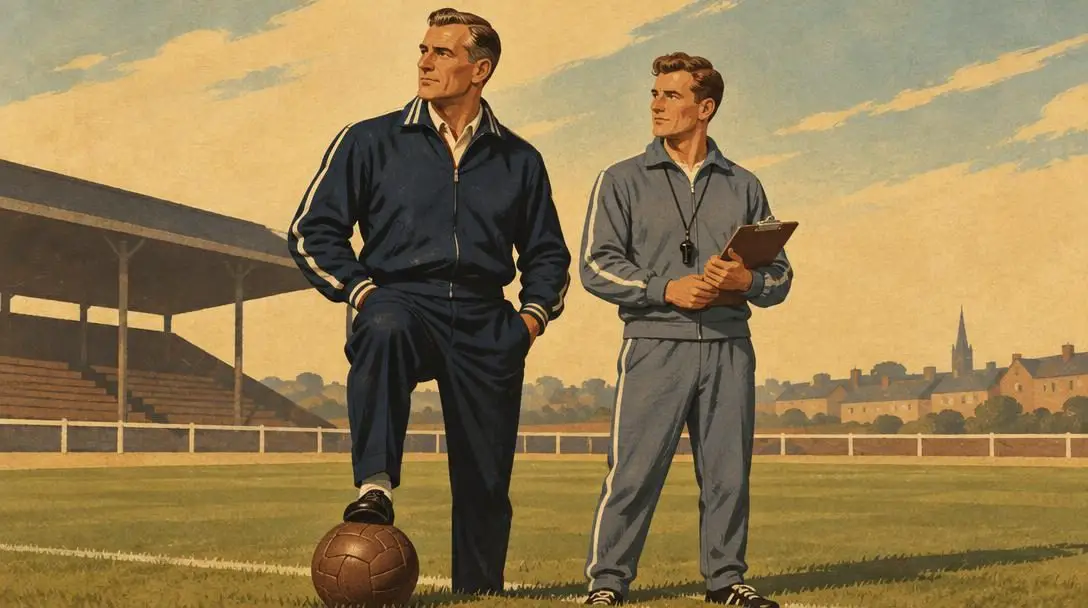
Tom Whittaker devoted virtually his entire adult life to the advancement of Arsenal Football Club. Born in Aldershot, Whittaker originally arrived at the club as an industrious wing half in 1919, making 64 competitive appearances and scoring two goals across a six-year playing span. When injury curtailed his on-pitch career, Whittaker transitioned into training, rehabilitation, and sideline coaching, serving as a trusted backroom lieutenant under both Herbert Chapman and George Allison for more than two decades.
Whittaker took over the managerial reins in 1947 and guided the squad through post-war reconstruction with remarkable poise. He ranks fourth all-time in matches managed for Arsenal, overseeing 430 fixtures and securing a 47.21 percent win rate. Whittaker translated deep institutional knowledge into silverware, steering the team to two First Division championships in 1948 and 1953, two accompanying Charity Shields, and an FA Cup triumph in 1950, cementing his place among English football's most decorated custodians.
George Allison
- Matches managed: 283
- Major trophies: 2 First Division titles, 1 FA Cup, 2 Charity Shields
- Background: Administrative executive, journalist, and club director
- Tenure span: 1934–1947
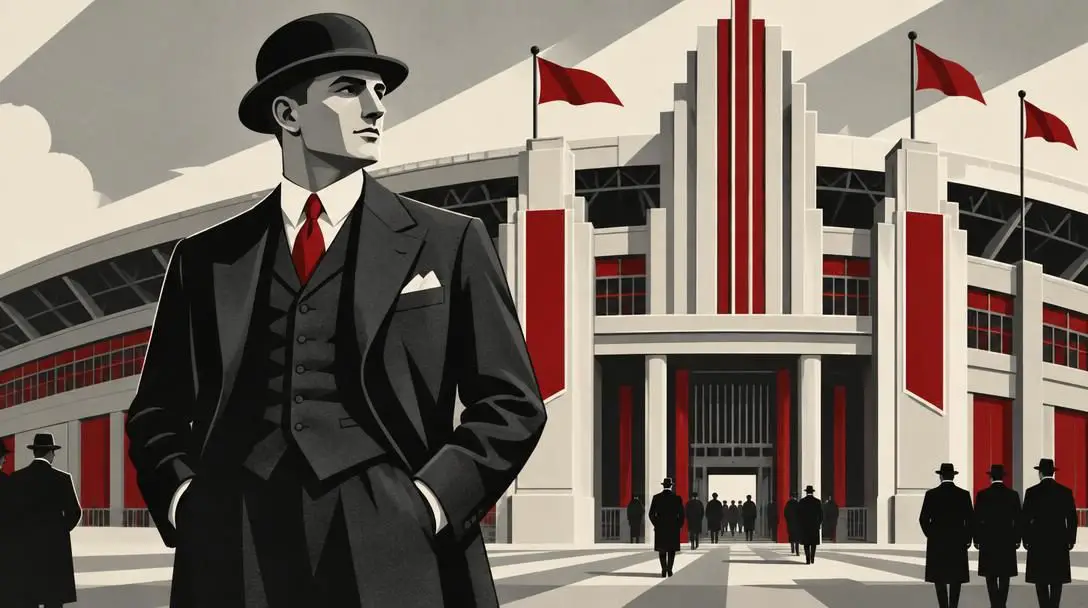
George Allison occupies a unique place in the pantheon of elite English football managers because he never played the game at a professional level. Instead, Allison entered the sport as a journalist and broadcaster before joining Arsenal's front office during the 1900s. He climbed through the club hierarchy to become a member of the board of directors. Following the sudden death of Herbert Chapman in early 1934, the club turned to Allison's executive leadership to steer the first-team program—a role that became his only managerial assignment.
Holding the post for thirteen years, Allison remains the only manager among Arsenal's top five who led the team in fewer than 300 matches. Despite the lower match tally, his trophy efficiency was staggering. Working alongside seasoned trainers, Allison provided elite administrative governance that delivered two First Division titles in 1935 and 1938, the 1936 FA Cup, and two Charity Shields. His reign proved that strategic delegation, emotional intelligence, and calm boardroom leadership could sustain on-pitch dominance.
How managerial greatness works at the elite level
Assessing managerial quality requires looking deeper than silverware alone. Championship trophies represent the end product of a synchronized machine that balances sporting science, collective psychology, and technical execution over months of grueling competition.
- Tactical identity and adaptability: A manager must design a coherent playing framework that extracts maximum value from player skill sets while adjusting to opposing schemes. Whether through Chapman's counter-attacking setups, Graham's synchronized backline, or Wenger's dynamic combination play, system clarity creates competitive consistency.
- Recruitment and roster construction: Long-term institutional strength relies on identifying talent that matches the tactical vision. Successful managers replenish aging rosters, balance youthful academy prospects with proven veterans, and maintain dressing-room equilibrium through multiple squad cycles.
- Player management and culture: Guiding professional athletes through high-pressure domestic and continental campaigns requires clear communication, psychological insight, and firm authority. Leaders must keep non-starting players motivated while keeping star performers focused on collective objectives.
- Front-office alignment: Modern and historical success both rely on close collaboration between the touchline leader, the board of directors, medical departments, and scouting operations. When institutional priorities align, clubs endure fixture congestion and unexpected setbacks without falling into crisis.
How to evaluate a football manager's historical legacy
Historians, analysts, and supporters evaluating managers across different decades can follow a structured analytical process to arrive at a fair, context-aware assessment.
- Examine total match records and volume: Gather comprehensive data on games managed, total victories, draws, and defeats across all recognized senior competitions to establish baseline reliability.
- Categorize major silverware: Differentiate between primary domestic league championships, prestigious domestic cups like the FA Cup, secondary league cups, and continental tournaments to measure the magnitude of success.
- Normalize for era fixture density: Account for the number of fixtures available in each period, noting that early twentieth-century managers played far fewer annual games than twenty-first-century managers participating in expanded European and domestic calendars.
- Assess squad building cycles: Determine whether the manager constructed multiple winning sides over time or capitalized entirely on a inherited, pre-existing core assembled by a predecessor.
- Measure systemic and tactical innovation: Evaluate whether the manager introduced operational methods, training regimes, or strategic systems that permanently altered how the club or sport operated.
Mistakes to avoid when comparing football eras
Comparing sports figures across generational divides is notoriously difficult. Observers frequently fall into analytical traps that mischaracterize historical achievement.
- Relying solely on aggregate win percentages: Short, highly successful tenures can artificially inflate win rates, whereas managers who oversee over a thousand matches absorb unavoidable rebuilding periods that lower their career percentages.
- Ignoring structural tournament shifts: Modern football presents Champions League group stages and multi-round cup fixtures that did not exist during the eras of Chapman, Allison, or Whittaker, drastically altering the distribution of available games.
- Overlooking shifting job descriptions: Early managers handled scouting, travel arrangements, equipment oversight, and ticketing logistics—duties that modern managers delegate to expansive departments of specialized executives.
- Equating financial and transfer landscapes: Resource distributions and financial rules have varied radically throughout football history; comparing modern transfer expenditure to pre-war spending misses the economic realities of each era.
Frequently asked questions
Who is the longest-serving manager in Arsenal history?
Arsene Wenger holds the record as Arsenal's longest-serving manager, presiding over 1,235 matches across an unbroken 22-year tenure from 1996 through his departure in 2018.
Which Arsenal manager has won the most trophies?
Arsene Wenger captured the most silverware in club history, winning three Premier League titles, a record seven FA Cups, and seven Community Shields for a total of seventeen major honours.
Did George Allison have a professional playing career before managing Arsenal?
No, George Allison never played professional football. He entered the sport through journalism and broadcasting before joining Arsenal's front office and board of directors, later taking over managerial duties following Herbert Chapman's death.
How many managers have led Arsenal in more than 400 competitive matches?
Only four managers in Arsenal history have reached the milestone of 400 competitive fixtures: Arsene Wenger (1,235), George Graham (460), Tom Whittaker (430), and Herbert Chapman (403).
Why is Herbert Chapman considered one of Arsenal's most important managers?
Chapman revolutionized Arsenal by bringing the club its first major honours—the 1930 FA Cup and two First Division titles—while introducing revolutionary counter-attacking tactics, shirt numbering, and modern branding concepts to English football.
The bottom line
Arsenal Football Club's standing among the elite of world football is the direct product of visionary leaders who seized moments of opportunity and built lasting competitive institutions. From Herbert Chapman’s tactical revolutions and post-war stewardship under George Allison and Tom Whittaker, to the resolute efficiency of George Graham and the transformative, two-decade dominance of Arsene Wenger, each icon reshaped what success meant at Highbury and the Emirates Stadium. As current and future managers strive to add their names to this elite list, the achievements of these five legendary custodians remain the gold standard against which all Arsenal leadership will forever be measured.