5 Best Managers in Barcelona History
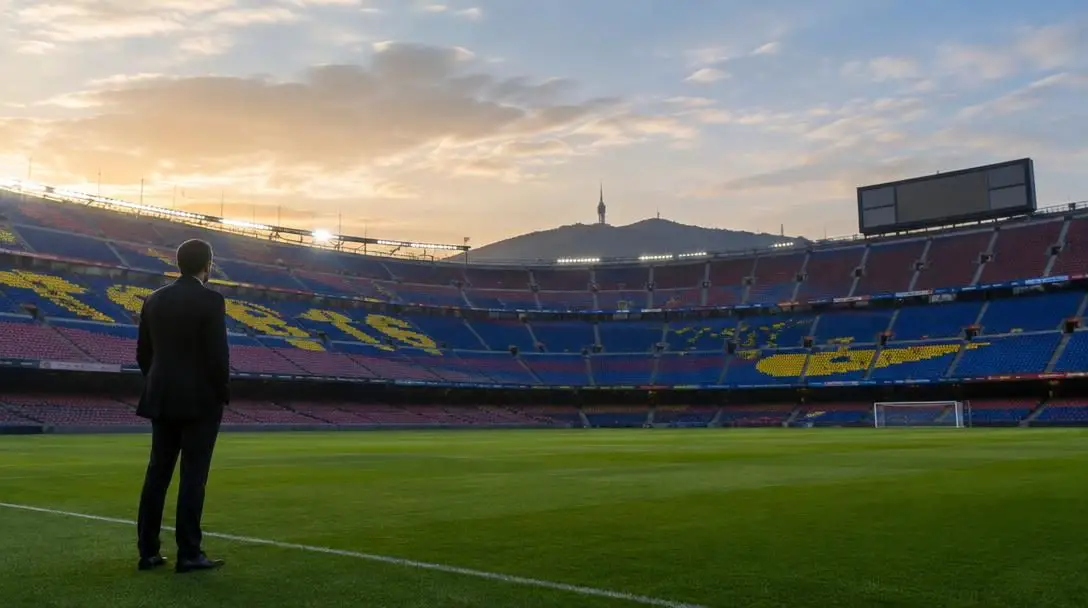
When discussing the upper echelons of European football, FC Barcelona routinely stands out as one of the sport's defining institutions. Across more than a century of existence dating back to the turn of the 20th century, the Catalan side has hosted some of the most gifted athletes to ever lace up boots. Yet behind every historic run of domestic dominance or continental silverware sits the tactical architect in the dugout. Directing Barcelona is unlike managing any other sporting franchise; it requires an alignment of relentless winning, distinct stylistic purity, and political acumen under intense global scrutiny.
With more than 70 individuals having occupied the technical area across the club's storied history, finding long-term continuity on the bench has always been rare. Barcelona has historically transitioned quickly between eras, tactical schemes, and philosophies whenever results or performances faltered. Even against that backdrop of high managerial turnover, a handful of leaders managed not only to survive the pressure but to redefine the club's trajectory permanently. While icons such as Frank Rijkaard, Enrique Fernandez, Helenio Herrera, and Louis van Gaal built trophy-laden resumes that put them on the doorstep of greatness, five individuals established benchmarks that separate them from the rest.
Key takeaways
- Pep Guardiola stands as the most decorated manager in club history, capturing 14 trophies across four seasons.
- Johan Cruyff forged the philosophical foundation of modern Barcelona while becoming the first coach to win four La Liga titles.
- Luis Enrique registered a 76.24 percent win rate, the highest mark of any manager in this top-tier group.
- Jack Greenwell provided an unprecedented decade of managerial continuity during the early formative years prior to the founding of La Liga.
- Ferdinand Daucik delivered sustained mid-century success, securing back-to-back league titles alongside three domestic cups.
The evolution of the Barcelona dugout
To understand the stature of Barcelona's greatest managers, one must trace how the technical area transformed over the decades. In the earliest iterations of association football, modern tactical coaching setups simply did not exist. Clubs routinely turned to player-managers or veteran leaders to set team sheets, conduct training drills, and maintain squad discipline during match days. Competitive football across Spain was initially contested through localized tournaments, with regional leagues like the Campionat de Catalunya serving as the primary proving grounds for top talent.
As domestic structures unified in the late 1920s with the establishment of La Liga, management developed into an official, standalone profession. The subsequent introduction of continental tournaments following World War II escalated the stakes, requiring coaches to navigate the physical and mental demands of competing on multiple fronts simultaneously. Over time, the Barcelona manager evolved from a lone tactician into the director of an expansive sporting infrastructure. Yet throughout every decade, the expectations placed on the role remained constant: play proactive, attacking football and win every trophy available.
At a glance: Barcelona's top five managers
The following table outlines the competitive records and key milestones achieved by the five greatest managers in Barcelona history:
| Manager | Tenure | Matches Managed | Win Rate | Major Silverware |
|---|---|---|---|---|
| Jack Greenwell | 1913–1923 | N/A | N/A | 4 Campionat de Catalunya, 2 Copa del Rey |
| Ferdinand Daucik | 1950–1954 | 148 | 60.14% | 2 La Liga, 3 Copa del Rey, 2 Copa Eva Duarte, 1 Latin Cup |
| Luis Enrique | 2014–2017 | 181 | 76.24% | 2 La Liga, 3 Copa del Rey, 1 UEFA Champions League |
| Johan Cruyff | 1988–1996 | 430 | 58.14% | 4 La Liga, 1 Copa del Rey, 1 European Cup, 3 Supercopa de Espana, 1 European Super Cup |
| Pep Guardiola | 2008–2012 | 247 | 72.47% | 3 La Liga, 2 UEFA Champions League, 3 Supercopa de Espana, 2 European Super Cup, 2 FIFA Club World Cup |
The five greatest managers in club history
Jack Greenwell
- Tenure: 1913–1923
- Matches as Player: 88 appearances
- Major Titles: 4 Campionat de Catalunya, 2 Copa del Rey
Before establishing himself as the primary authority on the touchline, Jack Greenwell served the club directly on the pitch, tallying 88 appearances in a Barcelona shirt. Across his final three seasons as an active player, Greenwell operated in the demanding hybrid capacity of player-manager. He officially retired as an active player in 1916, but his leadership of the squad was just beginning. Following his retirement from the pitch, he remained at the helm for an additional seven consecutive seasons.
In total, Greenwell oversaw the technical direction of the squad for an entire decade. In an environment historically defined by instability, that ten-year run represents a duration of uninterrupted authority virtually unmatched in Barcelona history. Greenwell is the only coach featured on this list without a La Liga title, an anomaly caused solely by timing: Spain's unified national league was established only after his tenure had already ended. Greenwell dominated the premier stages open to him at the time, capturing four Campionat de Catalunya championships and lifting the Copa del Rey twice.
Ferdinand Daucik
- Tenure: 1950–1954
- Matches Managed: 148 (89 wins, 40 defeats)
- Major Titles: 2 La Liga, 3 Copa del Rey, 2 Copa Eva Duarte, 1 Latin Cup
Born in Austria-Hungary, Ferdinand Daucik enjoyed a long playing career across Central Europe with clubs like KFC Komarno, 1. CsSK Bratislava, and Slavia Prague before hanging up his boots in 1942. Transitioning to the dugout, Daucik embarked on a nomadic journey that eventually saw him take on an astounding 25 distinct coaching appointments over his lifetime. His stop in Catalonia, which lasted from 1950 to 1954, produced one of the most concentrated eras of silverware in mid-century European football.
Daucik joined Barcelona after managing the Hungarian national team, and he immediately converted his tactical discipline into domestic dominance. Across 148 matches on the bench, Daucik secured 89 victories, suffering only 40 defeats along the way. His teams lifted two consecutive La Liga championships alongside three Copa del Rey trophies, supplemented by two Copa Eva Duarte titles and a Latin Cup. Though his tenure ended unceremoniously in 1954 prior to his departure for Athletic Bilbao, Daucik solidified his legacy as a ruthlessly effective tournament tactician.
Luis Enrique
- Tenure: 2014–2017
- Matches Managed: 181 (138 wins)
- Win Rate: 76.24%
- Major Titles: 2 La Liga, 3 Copa del Rey, 1 UEFA Champions League
Bringing unmatched competitive fire to the sideline, Spanish tactician Luis Enrique missed out on being the youngest coach on this list by a margin of only four months. Enrique had already built an accomplished reputation at Camp Nou as an aggressive, versatile midfielder and forward between 1996 and 2004, having famously crossed the bitter divide after playing for Real Madrid. Following his retirement as a player in 2004, Enrique stepped away from the game before returning to direct Barcelona B, later refining his managerial craft through outside stops at Roma and Celta.
When handed the senior reins in 2014, Enrique engineered an era of overwhelming attacking potency. Across 181 competitive fixtures, his side earned 138 victories, compiling an extraordinary 76.24 percent win rate that leads all managers on this list. Enrique proved virtually unstoppable in cup settings and league chases alike, delivering three Copa del Rey titles, two domestic league crowns, and the 2014–15 UEFA Champions League title during his brief three-year reign.
Luis Enrique combined structural discipline with lightning transitions, compiling a historic 76.24 percent win rate that outpaced every other top-tier coach in Barcelona history.
Johan Cruyff
- Tenure: 1988–1996
- Matches Managed: 430 (250 wins)
- Major Titles: 4 La Liga, 1 European Cup, 1 Copa del Rey, 3 Supercopa de Espana, 1 European Super Cup
Few figures have altered the DNA of an institution as comprehensively as Johan Cruyff. After spending nearly a decade starring for Ajax, the Amsterdam native brought his visionary playing style to Barcelona, scoring 48 goals across 143 appearances before playing six additional seasons elsewhere prior to his 1984 retirement. Cruyff returned to Catalonia as head coach in 1988 following a three-year managerial stint at Ajax, inheriting a club in desperate need of a clear tactical identity.
Cruyff proceeded to orchestrate the most celebrated era the club had witnessed up to that point. As the architect of the famed "Dream Team," he became the first manager in Barcelona history to win four consecutive La Liga titles. His eight-year reign yielded 250 victories across 430 matches, bringing the club its inaugural European Cup in 1992 alongside three Spanish Super Cups, a Copa del Rey, and a European Super Cup. Beyond the silverware, Cruyff's positional play and insistence on academy integration established the ideological foundation that the club continues to rely on decades later.
Pep Guardiola
- Tenure: 2008–2012
- Matches Managed: 247 (72.47% win rate)
- Total Honours: 14 major trophies
A cerebral defensive midfielder who orchestrated matches on the pitch under Johan Cruyff throughout the 1990s, Pep Guardiola finished his playing career with late-career stints at Brescia, Roma, Al-Ahli, and Dorados. Upon returning to the club, he spent the 2007–08 campaign managing Barcelona B before being promoted straight into the senior managerial hot seat. He arrived as the youngest manager among the club's all-time greats, instantly launching what is widely considered one of the finest periods of tactical football ever seen.
Guardiola held the position for four demanding seasons, directing 247 matches while maintaining a 72.47 percent win rate. His tactical innovations—centered on suffocating high presses, positional discipline, and rapid ball circulation—translated into unprecedented hardware. Guardiola collected a club-record 14 trophies during his four-year tenure, including three La Liga titles, two UEFA Champions League crowns, three Supercopa de Espana titles, two European Super Cups, and two FIFA Club World Cup championships.
How elite management functions at FC Barcelona
Guiding Barcelona to titles requires far more than merely writing eleven names on a tactical board. Operating as the head coach at Camp Nou involves harmonizing several interlocking operational pillars:
- Tactical adherence and positional play: Managers must respect the club's historic commitment to possession-based, proactive football while implementing sufficient structural safety to stop counterattacks.
- Academy integration: Maintaining a direct bridge between the senior team and the reserve side (Barcelona B) is vital. Coaches like Guardiola and Enrique excelled by evaluating academy talent firsthand and seamlessly elevating prospects into the first-team rotation.
- Periodization and physical conditioning: Navigating a standard 50-to-60-game calendar across La Liga, the Copa del Rey, and European competition demands rigorous squad rotation and athletic recovery schedules.
- Dressing room leadership: Aligning world-class egos toward a common tactical philosophy requires exceptional emotional intelligence, clear communication, and non-negotiable authority.
Evaluating managerial performance: A structured approach
Assessing the historical standing of a head coach demands a balanced framework that looks past subjective nostalgia. Analysts follow several key steps when evaluating managerial tenures:
- Analyze competition-wide win percentages: Review overall match outcomes across all domestic and continental fixtures to verify that winning habits were maintained against every tier of opponent.
- Calculate silverware efficiency ratios: Examine the volume of trophies collected relative to the number of matches or seasons managed, identifying which coaches maximized their competitive windows.
- Balance domestic consistency against knockout glory: Weigh the week-to-week endurance required to win a 38-game league campaign against the mental resilience demanded by high-stakes knockout tournaments.
- Track player progression: Determine whether key players improved their output, physical resilience, and tactical awareness under the manager's technical instruction.
- Measure stability under media pressure: Evaluate how well the coach insulated their squad from the external volatility and board politics that define modern Barcelona.
Common pitfalls when comparing historical managers
Evaluating managers across different decades is complicated by evolving rules, changing formats, and athletic advancements. Observers frequently fall victim to several common analytical mistakes:
- Overlooking era-dependent tournament formats: Criticizing early figures like Jack Greenwell for failing to win La Liga ignores the chronological reality that national leagues had not yet been created during their tenures.
- Focusing strictly on total matches managed: Contemporary football calendars feature far more matches per year than mid-20th-century seasons, artificially inflating match counts for modern managers.
- Ignoring sample size when assessing win rates: A coach boasting an elite win rate over 180 fixtures must be judged through a different analytical lens than one who sustained a strong win rate across more than 400 games.
- Discounting historical domestic cups: Diminishing tournaments like the Copa del Rey or regional championships undervalues the top competitions available to foundational tacticians like Ferdinand Daucik.
Frequently asked questions
Who is the most successful manager in Barcelona history by trophy count?
Pep Guardiola is the most decorated manager in club history, having won 14 major trophies during his four-year tenure from 2008 to 2012, including three La Liga titles and two UEFA Champions League crowns.
Which Barcelona manager holds the highest winning percentage?
Among the club's elite managers, Luis Enrique holds the top mark, winning 138 of his 181 matches in charge from 2014 to 2017 to finish with a 76.24 percent win rate.
Why did Jack Greenwell never win a La Liga title?
Jack Greenwell never won La Liga simply because Spain's unified national league was established after he had already concluded his decade-long managerial run in 1923. Instead, he won four Campionat de Catalunya titles and two Copa del Rey trophies.
How many matches did Johan Cruyff manage for Barcelona?
Johan Cruyff directed Barcelona through 430 competitive matches across an eight-year tenure from 1988 to 1996, earning 250 victories and capturing 11 major honours.
Did Ferdinand Daucik play for Barcelona before managing the club?
No, Ferdinand Daucik did not play for Barcelona. His playing career took place in Central Europe with KFC Komarno, 1. CsSK Bratislava, and Slavia Prague before he embarked on a 25-stop coaching journey that included Barcelona from 1950 to 1954.
The bottom line
The technical bench at FC Barcelona has broken dozens of world-class managers, yet for Greenwell, Daucik, Cruyff, Guardiola, and Enrique, it served as the platform for all-time greatness. Each of these five figures left a distinct blueprint behind. Greenwell demonstrated the power of foundational longevity; Daucik proved the value of ruthless domestic cup execution; Cruyff built the philosophical core of modern total football; Guardiola executed tactical perfection at a dizzying pace; and Enrique combined tactical directness with historic winning efficiency. As future managers take their place on the Camp Nou sideline, these five legacies will remain the ultimate standard of coaching excellence.