5 Best Managers in Manchester United History
Manchester United stands as one of the most prominent football institutions in England and global sport, commanding an international following built on decades of competitive excellence. Dating back to the early 20th century, the club established itself as a premier competitor, securing sustained success across nearly every decade, with the notable exceptions of temporary dry spells during the 1970s and 1980s. Over this extensive timeline, more than 20 men have served as the permanent or temporary manager of Manchester United, guiding squads through contrasting tactical movements, evolving league structures, and shifting board expectations.
While many leaders delivered silverware to Old Trafford, only a select few achieved a level of dominance that permanently reshaped the club's identity. Selecting the greatest managers requires balancing extraordinary longevity against concentrated tournament triumph. High-profile tacticians including Ole Gunnar Solskjaer, David Moyes, Louis van Gaal, and Tommy Docherty each guided the club through demanding transitional eras, yet their tenures lacked the deep trophy cabinets or high winning rates established by the club's defining icons. Examining the five best managers provides a direct window into the golden eras where Manchester United dictated the standard of English and European football.
Key takeaways
- Sir Alex Ferguson and Sir Matt Busby remain the only two managers in club history to surpass both 375 and 1,000 total matches in charge.
- Jose Mourinho registered the second-highest win percentage in club history among managers with at least 100 matches, claiming three pieces of silverware.
- Ernest Mangnall laid the initial championship foundation in the early 1900s, winning five trophies before famously moving to Manchester City.
- Ron Atkinson maintained consistency during the early 1980s by winning exactly half of his 292 fixtures and securing multiple domestic cups.
The standard of managerial greatness at Old Trafford
The role of manager at Manchester United carries unique institutional pressure. Unlike clubs that evaluate success purely on short-term cup runs, Old Trafford demands an attacking tradition paired with relentless championship contention. Several notable coaches brought considerable skill to the team but ultimately missed out on a top-five ranking. Ole Gunnar Solskjaer revitalized squad morale and secured high league finishes, Louis van Gaal delivered an FA Cup triumph, Tommy Docherty offered cup excitement during the 1970s, and David Moyes navigated an unenviable post-dynasty transition. However, their collective tenures lacked the sustained silverware and exceptional winning percentages established by the club's most celebrated tacticians.
True greatness at Old Trafford is measured by the ability to reconstruct squads across varying eras, maintain composure in domestic knockout competitions, and deliver league championships. The five managers who accomplished this feat did not merely win matches; they dictated tactical trends across English football and set benchmark winning records that modern tacticians continue to chase.
The five best managers in Manchester United history
Ernest Mangnall
- Matches managed: 373
- Total victories: 202
- Win percentage: 54.16 percent
- Major silverware: 2 First Division titles, 1 FA Cup, 2 Charity Shields
Unlike the other managers featured on this list, Ernest Mangnall did not have a career as a professional footballer. Despite this absence of on-pitch playing credentials, he became the third manager in Manchester United history and established the team as an elite, title-winning force. Prior to his arrival at Old Trafford, Mangnall spent three years at the start of the 20th century directing Burnley, refining the organizational leadership that would soon transform United.
Taking the managerial reins in the early 1900s, Mangnall guided Manchester United through its initial golden age. He ranks third all-time in matches managed for the club with 373 competitive fixtures, claiming 202 victories to yield an exceptional 54.16 percent winning rate. His disciplined setup secured two First Division championships, an FA Cup, and a pair of Charity Shields. Mangnall holds a unique distinction in local football history: after concluding his successful tenure in 1912, he departed directly for cross-town rivals Manchester City, where he served as manager for a dozen years, remaining the only man to direct both Manchester clubs.
Ron Atkinson

- Matches managed: 292
- Total victories: 146
- Win percentage: 50.00 percent
- Major silverware: 2 FA Cups, 1 Charity Shield
Before entering technical leadership, Ron Atkinson developed deep roots in the professional game. He started his athletic journey in the youth ranks with Aston Villa before spending his entire senior playing career representing Oxford United from 1959 to 1971. Transitioning into management following his retirement as a player, Atkinson earned praise across successful stints at Kettering Town, Cambridge United, and West Bromwich Albion, where his expressive style caught the attention of the Old Trafford board.
Atkinson took charge of Manchester United in 1981, holding the position for five seasons. Across 292 competitive matches, Atkinson's teams achieved victory in exactly half of their fixtures—recording 146 wins—while suffering only 67 total defeats. While the First Division title remained out of reach during his tenure, Atkinson kept the club competitive against the dominant domestic sides of the 1980s, capturing two FA Cups and a Charity Shield. Following his departure in the mid-1980s, he remained a prominent tactical figure, managing seven additional clubs throughout the 1980s and 1990s before concluding his career at the close of the century.
Jose Mourinho
- Matches managed: 144
- Total victories: 84
- Win percentage: 58.33 percent
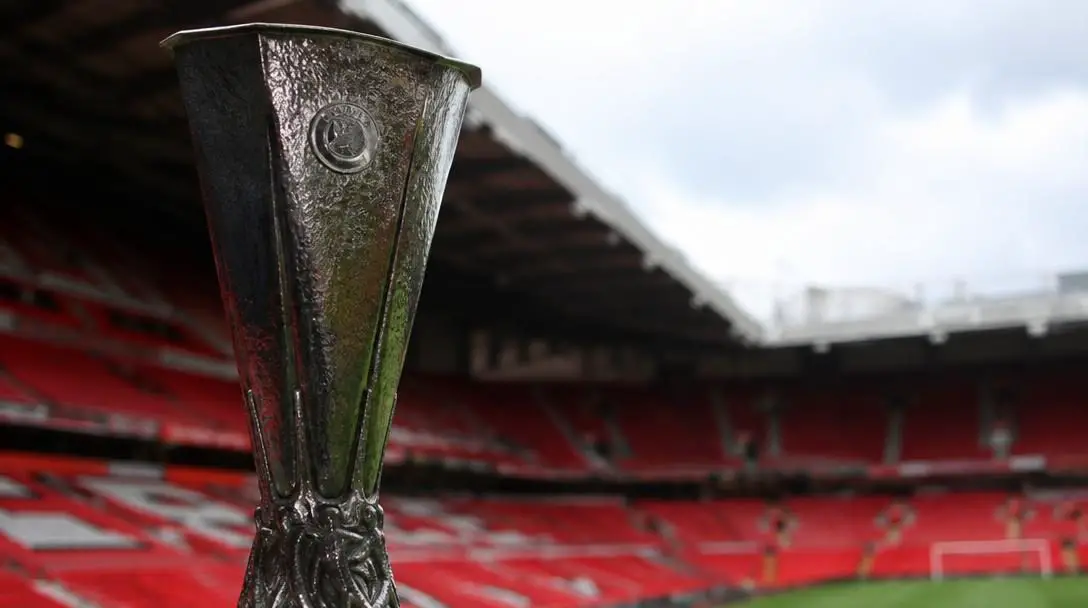
- Major silverware: 1 UEFA Europa League, 1 League Cup, 1 Community Shield
Hailing from Portugal, Jose Mourinho established an elite continental reputation before arriving at Old Trafford. Following a seven-year professional playing career, he served as manager at Benfica for a year, guided Uniao de Leiria, and rose to international fame by delivering European glory at Porto. In 2004, he moved to English football with Chelsea, followed by trophy-laden periods directing Inter Milan and Real Madrid, alongside a second spell in London. Mourinho was appointed Manchester United manager in 2016 to restore competitive pedigree following several difficult rebuilding campaigns.
Across his 144 matches in charge, Mourinho secured 84 victories, establishing a 58.33 percent winning rate that stands as the second-highest in Manchester United history among managers who oversaw at least 100 matches. Though his tenure was shorter than the multi-decade reigns of earlier club legends, his tactical preparation produced immediate tournament success. Mourinho delivered a memorable debut campaign, lifting the UEFA Europa League, the League Cup, and the FA Community Shield, providing Old Trafford with its most fruitful continental run of the modern era.
Sir Matt Busby
- Matches managed: 1,141
- Total victories: 576
- Win percentage: 50.48 percent
- Major silverware: 5 First Division titles, 2 FA Cups, 5 Charity Shields, 1 European Cup
To identify the second-greatest manager in club history, one must examine the transformative post-World War II period under Sir Matt Busby. Before guiding Manchester United, Busby enjoyed an accomplished playing career as a half-back representing both Manchester City and Liverpool, officially hanging up his boots in 1945. That very year, he accepted the managerial role at Manchester United, taking over a damaged stadium and an uncertain roster before building a dynasty that lasted through the late 1940s, the 1950s, and across the 1960s.
Only two managers in Manchester United history have overseen at least 375 matches, and both surpassed the monumental 1,000-game threshold; Busby was the first to reach that milestone. Across two managerial stints, he stood on the touchline for 1,141 competitive games, collecting 576 victories. His visionary focus on dynamic youth integration yielded five First Division league championships, two FA Cups, and five Charity Shields. Busby's crowning achievement came when he guided an inspiring squad to claim the historic 1968 European Cup, demonstrating that a rebuilt Manchester United side could conquer the pinnacle of continental sport.
Long-serving figures like Matt Busby and Alex Ferguson maintained their dominance because they rebuilt starting lineups across multiple decades.
Sir Alex Ferguson
- Matches managed: 1,500
- Total victories: 895
- Win percentage: 59.67 percent
- Major silverware: 13 Premier League titles, 5 FA Cups, 4 League Cups, 10 Community Shields, 2 UEFA Champions League titles
While many elite global institutions debate the identity of their greatest coach, Manchester United possesses an undisputed answer in Sir Alex Ferguson. Ferguson played professional football for 17 years across six Scottish clubs before launching a 14-year managerial journey that included landmark tenures at St Mirren and Aberdeen. His extraordinary domestic and European success in Scotland positioned him to take over the managerial post at Manchester United in 1986, embarking on a historic 27-year tenure that concluded with his retirement in 2013.
Ferguson's time at Old Trafford broke nearly every domestic and international managerial benchmark. He oversaw exactly 1,500 competitive matches, securing 895 victories and maintaining a winning percentage just under 60 percent across nearly three decades. His unmatched trophy haul reshaped modern English football: 13 Premier League championships, five FA Cups, four League Cups, 10 Community Shields, and two UEFA Champions League crowns. Ferguson's ruthless standards, cultural leadership, and tactical evolution maintained Manchester United as the dominant English powerhouse across the 1990s, 2000s, and early 2010s.
At a glance: Comparing Manchester United's finest managers
The statistical records of these five leaders reflect different structural eras of English football, from early 20th-century league expansions to the modern globalized game. The table below outlines how their match volumes, victories, and silverware compare across club history.
| Manager | Matches | Wins | Win Rate | League Titles | Major European Cups |
|---|---|---|---|---|---|
| Sir Alex Ferguson | 1,500 | 895 | 59.67% | 13 | 2 |
| Sir Matt Busby | 1,141 | 576 | 50.48% | 5 | 1 |
| Ernest Mangnall | 373 | 202 | 54.16% | 2 | 0 |
| Ron Atkinson | 292 | 146 | 50.00% | 0 | 0 |
| Jose Mourinho | 144 | 84 | 58.33% | 0 | 1 |
Core dynamics of managerial success at elite clubs
Analyzing what makes an elite football manager requires dissecting how tactical preparation, squad governance, and multi-year squad construction operate under high scrutiny. At an elite institution like Manchester United, long-term success requires several balancing acts:
- Roster construction and turnover: Elite leaders must continually evaluate aging stars and integrate new signings or academy prospects without sacrificing weekly league points. Busby and Ferguson established eras of sustained success because they rebuilt their starting squads multiple times across decades.
- Tactical versatility: Domestic opponents rapidly adapt to winning formations. Managers must constantly counter aggressive defensive schemes, high pressing systems, or shifting domestic officiating styles.
- Balancing domestic and European campaigns: Managing simultaneous pursuits of league hardware and continental trophies—such as the European Cup or Europa League—demands precise squad rotation to preserve player conditioning and avoid debilitating injuries.
- Winning margins and match conversion: Sustaining a win rate above 50 percent across hundreds of fixtures requires transforming potential draws into late victories while preventing brief slumps from becoming extended losing streaks.
Systematic steps for evaluating football managers
Football analysts and supporters routinely evaluate managers across distinct tactical eras. To create an objective assessment of a manager's historical standing, analysts apply the following systematic process:
- Review the baseline data: Gather total matches managed, victories, and defeats. Calculate the flat win percentage, prioritizing managers who oversaw a significant sample size (such as 100 fixtures or more) to filter out brief hot streaks.
- Catalog major silverware: Categorize trophies into primary league titles (First Division or Premier League), top-tier continental competitions (European Cup or Champions League), and domestic cup tournaments (FA Cups, League Cups, and Charity or Community Shields).
- Assess the era of competition: Contextualize records by examining the squad's condition upon arrival. Differentiate between managers who inherited polished contenders and those tasked with rebuilding underperforming rosters during extended dry spells.
- Evaluate tenure longevity: Contrast short-term cup triumph against multi-decade stability. Sustained championship contention through multiple player generations demonstrates structural excellence that brief reigns rarely match.
- Examine high-pressure milestones: Review performances in knockout finals, continental knockout stages, and decisive title matches, which ultimately solidify a coach's lasting legacy.
Common pitfalls when comparing historical eras
Assessing managerial tenures that span from the early 1900s through the modern Premier League era often introduces analytical bias. When reviewing tactical figures across over a century of football, analysts frequently encounter several common pitfalls:
- Overvaluing modern winning percentages: Contemporary managers oversee expanded European group stages and additional cup fixtures, which can alter win-loss distributions compared to early 20th-century setups where matches were primarily limited to league schedules and straight-knockout FA Cup ties.
- Ignoring competition name changes: It is easy to mistakenly separate the First Division from the Premier League, or the historic European Cup from the Champions League. These tournaments represent the identical tier of competitive achievement within their respective eras.
- Discarding short-term triumphs: While multi-year longevity is prized, ignoring shorter tenures risks overlooking significant tactical excellence. Securing continental trophies or domestic cups within a two-year window remains a major accomplishment regardless of overall tenure length.
- Equating match volume with ultimate greatness: Simply compiling a large volume of fixtures does not guarantee legendary standing if those games did not culminate in major trophies or sustained title challenges. Longevity and silverware must align.
Broadening the study of club governance
Evaluating the top five managers in Manchester United history offers a foundation for examining the wider historical evolution of English and European club governance. To build a broader understanding of managerial history, historians and analysts frequently explore several interrelated topics:
- Post-managerial transitions: Examining how clubs navigate the immediate aftermath of legendary managerial departures, such as the turbulent periods following the retirements of Busby and Ferguson, which proved challenging for successors like David Moyes.
- Cross-club rivalry comparisons: Reviewing Manchester United's managerial stability alongside other traditional English powers to assess how tactical philosophies influenced league title distribution across the decades.
- The evolution of backroom staff: Tracing the structural shift from traditional all-powerful managers who controlled all club operations to modern technical models that divide responsibilities between head coaches, recruitment specialists, and sporting directors.
- Historical cup formats: Investigating how the transition of the Charity Shield into the Community Shield, alongside the evolution of the UEFA Cup into the Europa League, influenced the perceived prestige of secondary honors over time.
Frequently asked questions
Who is the longest-serving manager in Manchester United history?
Sir Alex Ferguson is the longest-serving manager in club history, leading Manchester United for 27 years from 1986 until his retirement in 2013, overseeing an unrivaled 1,500 matches.
Which Manchester United manager holds the highest win percentage?
Among managers who oversaw at least 100 competitive fixtures, Sir Alex Ferguson holds the highest win rate at 59.67 percent, followed closely by Jose Mourinho with a 58.33 percent win rate across his 144 games.
Did any manager win trophies with both Manchester United and Manchester City?
Ernest Mangnall remains the only individual to manage both Manchester clubs. After winning two First Division titles, an FA Cup, and two Charity Shields with Manchester United, he departed for Manchester City in 1912, directing the club for 12 years.
How many managers have overseen more than 1,000 matches for Manchester United?
Only two managers have achieved this milestone: Sir Matt Busby, who oversaw 1,141 matches across two stints, and Sir Alex Ferguson, who reached 1,500 matches during his 27-year tenure.
What major honors did Jose Mourinho secure during his Old Trafford tenure?
During his tenure beginning in 2016, Jose Mourinho captured three trophies: the UEFA Europa League, the League Cup, and the FA Community Shield.
The bottom line
The history of Manchester United has been defined by visionary managers who embraced immense public expectations and built championship dynasties. From Ernest Mangnall establishing the club's inaugural title-winning framework to Sir Matt Busby inspiring a continent after post-war adversity, managerial greatness at Old Trafford is deeply tied to historical reinvention. Sir Alex Ferguson expanded those foundations into global dominance across 27 unprecedented seasons, while leaders like Ron Atkinson and Jose Mourinho proved that cup triumph and elite winning records could flourish even during competitive transitions.
Understanding these five managerial tenures highlights that true greatness in technical leadership demands more than brief tactical masterclasses. Sustained success requires building lasting cultures, adapting to evolving competitive landscapes, and consistently turning competitive pressure into major silverware.