5 Best Managers In Atletico Madrid History
Atletico Madrid occupies a unique position in European football, built upon an identity forged through relentless competition against domestic and continental giants. Unlike clubs defined merely by financial dominance, Atletico has historically demanded leaders who combine tactical clarity with immense psychological fortitude. The dugout at the Vicente Calderon and the Metropolitano has seen dozens of managers arrive, with many departing after only a few months under the intense pressure of the capital.
Yet across the decades, a select group of tacticians achieved sustained supremacy, completely transforming the club's standing in world football. The five most successful managers in Atletico Madrid history—Helenio Herrera, Quique Sanchez Flores, Luis Aragones, Radomir Antic, and Diego Simeone—did far more than collect silverware. They developed distinct playing cultures, weathered deep structural transitions, and forged deep emotional bonds with supporters that still resonate throughout the sport.
Key takeaways
- Five managers define the pinnacle of Atletico Madrid history: Helenio Herrera, Quique Sanchez Flores, Luis Aragones, Radomir Antic, and Diego Simeone.
- Diego Simeone stands as the club's winningest coach and holds the all-time record for matches managed after passing Luis Aragones in March 2023.
- Radomir Antic remains the only non-Spanish, non-Argentine manager on this list, famously securing a historic domestic double of La Liga and the Copa del Rey.
- Luis Aragones remains the club's spiritual standard-bearer, managing Atletico across seven separate stints and guiding them from the Segunda Division back to the top flight.
Comparing Atletico Madrid's Top Five Tacticians
Evaluating managers across multiple eras requires examining their silverware, their longevity, and the circumstances under which they directed the squad. The table below details how these five iconic tacticians compare across key career metrics during their time in the Spanish capital.
| Manager | Nationality | Tenure at Atletico | Major Trophies Won | Key Career Milestone |
|---|---|---|---|---|
| Helenio Herrera | Argentina | 1949–1952 | 2 La Liga, 1 Copa Eva Duarte | Consecutive La Liga titles (1950, 1951) |
| Quique Sanchez Flores | Spain | 2009–2011 | 1 UEFA Europa League, 1 UEFA Super Cup | Ending a long continental trophy drought in 2010 |
| Luis Aragones | Spain | 7 separate stints (1974–2003) | 1 La Liga, 3 Copa del Rey, 1 Intercontinental Cup, Supercopa, Segunda Division | Steering the club through seven distinct eras and promotion |
| Radomir Antic | Yugoslavia | 3 separate stints (1995–2000) | 1 La Liga, 1 Copa del Rey | Capturing the prestigious 1995–96 domestic double |
| Diego Simeone | Argentina | 2011–present | Multiple La Liga, Copa del Rey, multiple Europa Leagues, UEFA Super Cup | All-time club record holder for matches managed |
The Five Defining Leaders in Club History
Each of the top five tacticians in Atletico history entered the technical area with diverse personal philosophies, distinct playing backgrounds, and different strategic problems to solve. Their tenures demonstrate how tactical sharpness and sheer determination can reshape an entire sporting organization.
Helenio Herrera
- Nationality: Argentine
- Tenure: 1949–1952
- Major Silverware: La Liga (1949–50, 1950–51), Copa Eva Duarte (1950)
- Hall of Fame: Inducted into the Italian Football Hall of Fame
An early pioneer of professional sports coaching, Helenio Herrera spent fourteen years as a player between 1931 and 1945, representing clubs including Stade Francais, Red Star Olympique, and Charleville. Toward the conclusion of his playing days, he gained his first leadership experience managing Puteaux before returning to manage Stade Francais. A brief one-year post at Real Valladolid caught the eye of Atletico Madrid, where he took charge from 1949 to 1952.
Herrera's time in the capital established unprecedented domestic dominance. He guided Atletico to the 1950 Copa Eva Duarte and delivered back-to-back La Liga championships in 1950 and 1951. His tactical demands and rigorous psychological methods became standard across Europe. Later inducted into the Italian Football Hall of Fame, Herrera went on to manage Barcelona, Inter Milan, and Roma before retiring in 1981, leaving behind an enduring blueprint for defensive organization and physical preparation.
Quique Sanchez Flores

- Nationality: Spanish
- Tenure: 2009–2011
- Major Silverware: UEFA Europa League (2009–10), UEFA Super Cup (2010)
- Cup Run: Copa del Rey finalist (2009–10)
Madrid-born Quique Sanchez Flores built deep roots in Spanish football throughout a playing career spent primarily across ten seasons with Valencia, followed by spells with Real Madrid and Zaragoza until his retirement in 1997. Transitioning into the technical area, he developed his coaching credentials at Getafe, Valencia, and Portuguese giant Benfica before accepting the Atletico Madrid post in 2009.

While his domestic league campaigns were challenging, Sanchez Flores revitalized the club's continental reputation. In the 2009–10 campaign, he guided Atletico to victory in the UEFA Europa League and reached the final of the Copa del Rey. He followed that achievement by securing the 2010 UEFA Super Cup. Departing in 2011 for Al-Ahli, Sanchez Flores later enjoyed managerial tenures with Watford and Espanyol, with his spell in Madrid remembered for reigniting the club's European pedigree.
Luis Aragones

- Nationality: Spanish
- Tenures: 7 separate spells (final stint 2001–2003)
- Major Silverware: 1 La Liga, 3 Copa del Rey, Intercontinental Cup, Supercopa de Espana, Segunda Division
- Playing Legacy: Prolific Atletico striker from 1964 to 1974
Few individuals embody a football institution as completely as Luis Aragones. Following an early nomadic playing career across eight clubs—with his longest early stretch coming at Betis—Aragones signed with Atletico Madrid in 1964. He spent the next decade establishing himself as a prolific goalscorer. Immediately upon retiring from the pitch in 1974, Aragones moved straight into the managerial seat.
Aragones managed Atletico across seven separate stints, answering the club's call whenever leadership was needed. His comprehensive trophy cabinet features a La Liga title, three Copa del Rey crowns, the Supercopa de Espana, the Intercontinental Cup, and the Segunda Division title. His most selfless contribution came during his final run between 2001 and 2003, when he took charge of a relegated side and guided Atletico back into the Spanish top flight, restoring the pride of an entire fanbase.
Radomir Antic

- Nationality: Yugoslavian
- Tenures: 3 separate spells (1995–2000)
- Major Silverware: La Liga (1995–96), Copa del Rey (1995–96)
- Individual Accolade: Don Balon Award winner
The late Radomir Antic holds a singular place in Atletico folklore as the only tactician on this list born outside Spain or Argentina. Antic completed a 17-year playing career in 1984 after stints with Sloboda Uzice, Partizan, Fenerbahce, Real Zaragoza, and Luton Town. He developed his tactical acumen as an assistant at Partizan before coaching Zaragoza, Real Madrid, and Real Oviedo between 1988 and 1995.
Taking over Atletico in 1995 for the first of three stints, Antic engineered the historic 1995–96 campaign, winning both La Liga and the Copa del Rey. That magnificent domestic double earned him the prestigious Don Balon Award. Antic returned twice more to guide the club through challenging periods before managing Barcelona and Real Oviedo later in his career, ultimately retiring in 2015.
Diego Simeone
- Nationality: Argentine
- Tenure: 2011–present
- Record: All-time club record holder for matches managed (passed Aragones in March 2023)
- Major Silverware: Multiple La Liga titles, Copa del Rey, multiple UEFA Europa Leagues, UEFA Super Cup
Sitting firmly at the apex of modern managerial leadership, Diego Simeone has rewritten the standards of longevity at Atletico Madrid. A fierce midfielder between 1987 and 2006 for teams including Inter Milan, Lazio, and Atletico Madrid, Simeone managed six different clubs between 2006 and 2011 before returning to the Spanish capital. In March 2023, he surpassed Luis Aragones for the all-time club record in matches managed.
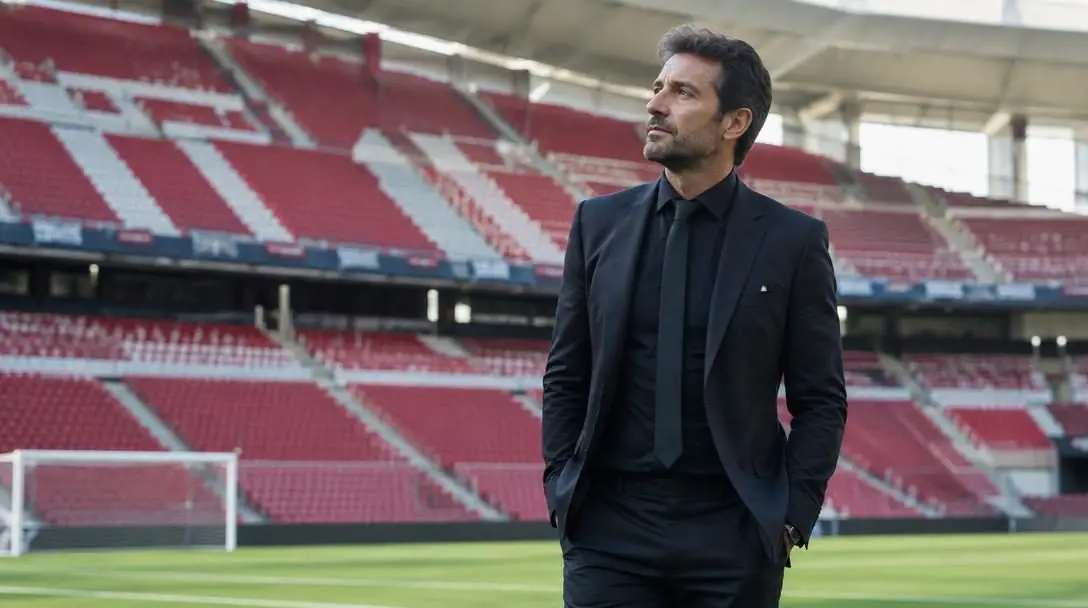
Simeone converted Atletico into a modern European powerhouse capable of consistently challenging the continent's wealthiest clubs. His honors list includes multiple La Liga championships, the Copa del Rey, multiple UEFA Europa League titles, and the UEFA Super Cup. By installing an uncompromising defensive discipline and an intense competitive spirit, Simeone created the winningest and most stable era in Atletico Madrid history.
True managerial excellence at Atletico Madrid requires more than tactical proficiency; it demands forging an emotional bond with the supporters that can withstand the relentless pressure of competing against continental giants.
Pillars of Elite Leadership in the Technical Area
The sustained achievements of these five tacticians highlight the core operational mechanisms that dictate coaching success at the highest level of European competition. Successful leadership requires synchronizing multiple elements across the club:
- Player-to-Coach Transition: High-level playing careers grant immediate credibility within the dressing room. All five managers spent years competing as professionals, with Herrera and Antic enjoying long tenures, while Aragones and Simeone achieved legendary status as players for Atletico itself.
- Tactical Identity: A manager must implement a system tailored to the squad's strengths. Whether relying on Herrera's defensive structures, Sanchez Flores's knockout efficiency, or Simeone's compact pressing blocks, clarity of purpose is essential.
- Club Culture and Emotional Alignment: Succeeding at Atletico requires a deep understanding of its working-class identity and underdog spirit. Leaders like Aragones and Simeone channeled that emotion to unite players and supporters during difficult moments.
- Roster Adaptation: True longevity requires navigating inevitable squad turnover. Managing through multiple eras—as Aragones did across seven stints and Simeone achieved over more than a decade—demands steady tactical evolution without surrendering competitive resolve.
Systematic Evaluation: How to Assess a Managerial Legacy
Comparing football managers across different eras requires an objective, structured methodology rather than relying purely on nostalgia. Analysts and supporters can evaluate managerial quality using this step-by-step framework:
- Quantify Silverware and Achievements: Catalog every title won across domestic leagues, domestic knockout cups, and European tournaments. Differentiate between single-elimination tournament runs, such as Sanchez Flores's Europa League victory, and long league campaigns, such as Herrera's back-to-back championships.
- Assess Context and Starting Conditions: Examine the roster and financial state inherited by the manager. Rebuilding a struggling side or steadying a club during second-tier relegation, as Aragones accomplished, carries immense sporting weight compared to taking over an established champion.
- Examine Longevity and Game Milestones: Track total fixtures managed and consecutive seasons served. Endurance in the dugout demonstrates board confidence and dressing-room control, exemplified by Simeone surpassing Aragones's match milestone in March 2023.
- Review Individual Accolades and Industry Recognition: Note prestigious peer awards and official honors, such as Radomir Antic claiming the Don Balon Award for his double-winning season or Helenio Herrera entering the Italian Football Hall of Fame.
- Evaluate Post-Departure Sustainability: Study the long-term impact on the club after the manager moves on. Transformative leaders leave behind professional habits, tactical structures, and institutional belief that guide subsequent squads.
Common Pitfalls in Comparative Managerial Analysis
Historical debates frequently suffer from analytical oversights that produce skewed conclusions. When assessing coaches across distinct time periods, avoid these common analytical errors:
- Ignoring Cross-Era Differences: Directly comparing managers from the 1950s with modern tacticians overlooks radical changes in tournament structures, fixture congestion, sports science, and squad sizes.
- Judging Solely on League Positions: Reducing an entire managerial tenure to domestic table finishes misses critical achievements. Quique Sanchez Flores experienced difficult league stretches, yet delivered continental trophies that restored European relevance.
- Overlooking Domestic Cup Competitions: League titles demand week-to-week consistency, but cup competitions require exceptional knockout adaptation. Antic's double and Aragones's three Copa del Rey trophies illustrate the tactical flexibility needed in elimination tournaments.
- Dismissing Rebuilding Periods: Judging a coach only by their peak trophy tallies ignores critical transitional leadership. Aragones leading Atletico out of the Segunda Division preserved the club's top-flight future during its most vulnerable modern period.
Key Areas for Further Study
The collective histories of Herrera, Sanchez Flores, Aragones, Antic, and Simeone provide a rich baseline for studying football management. Analysts looking to explore leadership dynamics further can investigate several related topics:
- Tactical Evolution Across Decades: How strategic blueprints progressed from Herrera's mid-century systems to the disciplined defensive structures implemented by Simeone in modern European football.
- The Dynamics of Multi-Stint Management: The psychological and organizational reasons clubs repeatedly return to proven leaders, using Aragones's seven spells and Antic's three appointments as prime case studies.
- Continental vs. Domestic Trade-offs: The unique squad rotations and tactical adaptations required to win European honors compared to the consistency needed for a 38-game La Liga marathon.
- Long-Term Succession Planning: The immense organizational hurdles elite clubs encounter when attempting to replace historically dominant, record-setting managers who shaped multiple generations of club culture.
Frequently asked questions
Who holds the record for the most matches managed in Atletico Madrid history?
Diego Simeone holds the all-time club record for the most matches managed. He officially surpassed the previous milestone held by Luis Aragones in March 2023.
Which manager achieved a domestic double of La Liga and the Copa del Rey for Atletico Madrid?
Radomir Antic achieved the domestic double during the 1995–96 campaign, winning both La Liga and the Copa del Rey. His accomplishment earned him the prestigious Don Balon Award.
How many separate stints did Luis Aragones have as Atletico Madrid manager?
Luis Aragones managed Atletico Madrid across seven distinct stints between 1974 and 2003, winning titles across multiple decades and guiding the team to promotion from the Segunda Division.
What major European honors did Quique Sanchez Flores secure for the club?
Quique Sanchez Flores guided Atletico Madrid to the 2009–10 UEFA Europa League championship and followed it by winning the 2010 UEFA Super Cup, while also reaching the 2009–10 Copa del Rey final.
Which historic Atletico Madrid manager was inducted into the Italian Football Hall of Fame?
Helenio Herrera was inducted into the Italian Football Hall of Fame following a celebrated career that included back-to-back La Liga titles with Atletico in 1950 and 1951, as well as tenures at Inter Milan, Roma, and Barcelona.
The Bottom Line
The story of Atletico Madrid is defined by resilience, defensive organization, and the courage to challenge established football hierarchies. From the foundational tactical principles of Helenio Herrera and the domestic dominance of Radomir Antic to the European triumphs of Quique Sanchez Flores, each leader left an essential mark on the club's identity. Above all, the enduring dedication of Luis Aragones and the record-breaking modern era of Diego Simeone prove that enduring success at Atletico requires an unbreakable emotional connection to the club's fighting culture.