5 Best Managers In Juventus History
Founded in 1897, Juventus has long stood as one of the premier football clubs in Italy, shaping the landscape of European football across more than a century of domestic and international competition. The club's remarkable collection of Serie A championships reflects not only elite on-pitch talent, but also exceptional strategic leadership from the technical area. Managing the Bianconeri carries immense expectations, where tactical consistency, trophy hauls, and week-to-week stability determine whether a manager leaves a fleeting impression or builds a generational legacy.
While numerous respected tacticians have patrolled the sidelines in Turin, only a select group managed to turn high-pressure expectations into sustained eras of triumph. By examining longevity, domestic dominance, winning efficiency, and silverware, five tacticians emerge as the defining leaders in club history: Antonio Conte, Carlo Parola, Massimiliano Allegri, Marcello Lippi, and Giovanni Trapattoni.
Key takeaways
- Giovanni Trapattoni remains the most decorated manager in Juventus history, holding all-time club records with 14 total trophies, six Serie A titles, and nearly 600 matches managed.
- Massimiliano Allegri holds the highest winning percentage (nearly 70 percent) among all managers with at least 100 fixtures, alongside a club-record four Coppa Italia titles.
- Marcello Lippi established unprecedented dominance in knockout formats and league competition, collecting 13 total trophies and four Supercoppa Italiana titles across two separate eras.
- Antonio Conte restored the club to the pinnacle of Italian football with three consecutive Serie A titles and a 67.55 percent win rate between 2011 and 2014.
- Carlo Parola bridged three separate decades on the Juventus bench, combining a distinguished playing career in Turin with three Serie A championships as manager.
At a glance: Comparing the greatest Juventus managers
Evaluating managerial tenures across distinct footballing eras requires comparing overall trophy counts, league titles, match volumes, and winning efficiency. The following comparison highlights the defining benchmarks set by these five historic tacticians.
| Manager | Tenure Eras | Serie A Titles | Total Trophies | Win Rate |
|---|---|---|---|---|
| Giovanni Trapattoni | 1976–1986, 1991–1994 | 6 | 14 | 319 total wins (~53%) |
| Marcello Lippi | 1994–1999, 2001–2004 | 5 | 13 | Just over 56% |
| Massimiliano Allegri | 2014–2019, 2021–Present | 5 | 11 | Nearly 70% |
| Antonio Conte | 2011–2014 | 3 | 5 | 67.55% |
| Carlo Parola | 1959, 1961–1962, 1974–1976 | 3 | 3 | Nearly 58% |
The five greatest managers in Juventus history
Each of the top five tacticians in Juventus history navigated distinct competitive climates, squad evolutions, and tactical philosophies. Whether rebuilding a team after years of transition or orchestrating decade-long eras of dominance, these five leaders set the gold standard for Italian football management.
Giovanni Trapattoni
- Total trophies: 14 (club record)
- Serie A championships: 6 (club record)
- Matches managed: Nearly 600 fixtures (319 victories)
- Stints in charge: 1976–1986 and 1991–1994
Giovanni Trapattoni stands as the undisputed benchmark of managerial excellence at Juventus. After spending the 1960s on the pitch for AC Milan and finishing his playing career in 1972 at Varese, Trapattoni transitioned to coaching at Milan before arriving in Turin in 1976. What followed was a historic decade-long initial spell on the bench, characterized by disciplined squad organization and ruthless consistency across both domestic and European fixtures.
Trapattoni returned for a second three-year tenure between 1991 and 1994, solidifying his place atop the club's record books. Across his two stints, he oversaw nearly 600 competitive matches—almost 200 more than his closest peer, Marcello Lippi. He converted that unprecedented volume into 319 victories and 14 major trophies, including a club-record six Serie A scudetti. Trapattoni's longevity and tactical poise established the standard against which all future Juventus coaches are measured.
Marcello Lippi

- Total trophies: 13 (second all-time)
- Serie A championships: 5
- Supercoppa Italiana titles: 4 (club record)
- Stints in charge: 1994–1999 and 2001–2004
Following an extensive playing career spent primarily with Sampdoria, alongside spells with Savona, Pistoiese, and Lucchese, Marcello Lippi refined his managerial craft at clubs like Atalanta, Napoli, and Internazionale before taking the helm at Juventus in 1994. Lippi engineered two separate, deeply transformative cycles in Turin: an initial spell from 1994 to 1999, followed by an equally formidable return from 2001 to 2004.
Lippi is one of only two managers in Juventus history to break the 300-match and 400-match milestones. Over his career in Turin, he maintained a winning percentage of just over 56 percent while collecting 13 total trophies, placing him second only to Trapattoni. In addition to securing five Serie A titles, Lippi demonstrated unmatched sharpness in single-match domestic tournaments, winning four Supercoppa Italiana crowns—twice as many as any other tactician in Juventus history.
Sustaining elite performance across multiple decades requires not just tactical brilliance, but the rare ability to rebuild winning squads as eras change.
Massimiliano Allegri

- Total trophies: 11
- Coppa Italia titles: 4 (club record)
- Win percentage: Nearly 70% (highest with 100+ matches)
- Stints in charge: 2014–2019 and 2021–Present
Massimiliano Allegri followed an unconventional path to managerial greatness. As an active player between 1984 and 2003, Allegri experienced a nomadic journey, never appearing in more than 64 matches for any single side. He entered coaching at Aglianese and worked his way through Cagliari and AC Milan before succeeding Antonio Conte at Juventus in 2014. Allegri oversaw an initial golden five-year era through 2019 before returning to the bench in 2021.
Allegri built an ultra-efficient domestic winning machine, securing five Serie A titles to tie Lippi for second all-time in club history. His legacy is especially defined by cup mastery: his four Coppa Italia titles are the most won by any manager in Juventus history. Coupled with two Supercoppa Italiana victories, Allegri has amassed 11 total trophies while producing a winning rate near 70 percent—the highest winning percentage of any manager to oversee at least 100 fixtures for the Bianconeri.
Antonio Conte
- Serie A championships: 3
- Supercoppa Italiana titles: 2
- Win percentage: 67.55% (102 victories)
- Stint in charge: 2011–2014
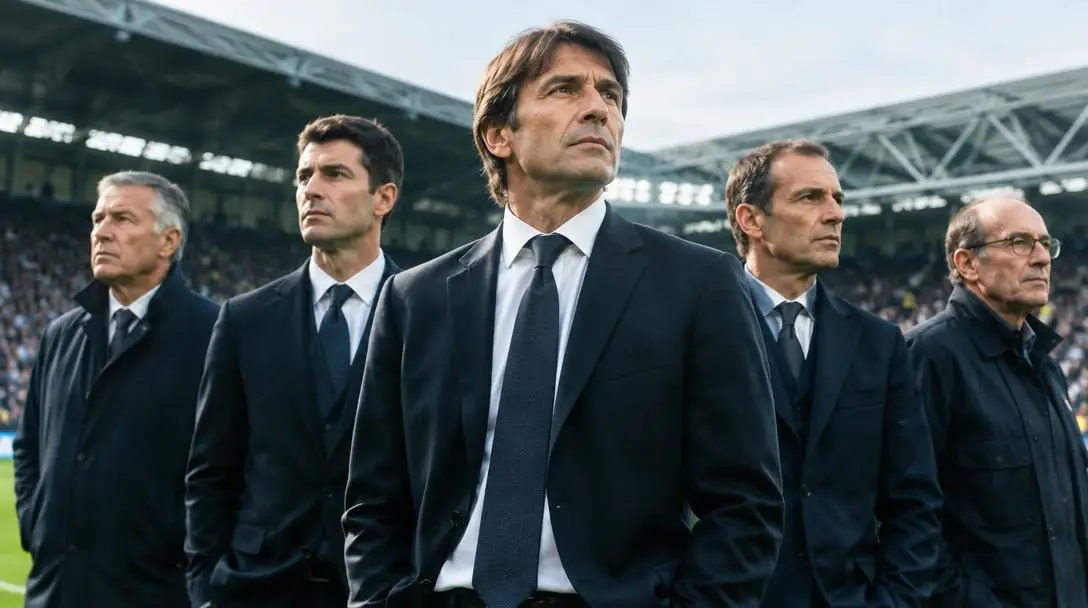
Before guiding Juventus from the dugout, Antonio Conte spent over a decade as a central player for the club throughout the 1990s and early 2000s. Retiring from playing in 2004, Conte immediately moved into management the following year, learning the ropes at clubs including Atalanta and Siena. He made his triumphant return to Turin in 2011, inheriting a squad searching for its lost identity and immediately instilling an unrelenting standard of competitive intensity.
Conte's three-season tenure revitalized the club's domestic standing. Under his guidance, Juventus captured three consecutive Serie A championships and two Supercoppa Italiana trophies. Conte registered 102 victories in just over 150 competitive fixtures, generating a blistering 67.55 percent win rate. Following his departure in 2014 to take over the Italian National Team, Conte went on to showcase his managerial acumen across Europe with Chelsea, Inter Milan, and Tottenham Hotspur.
Carlo Parola
- Serie A championships: 3
- Matches managed: Just over 200 fixtures
- Win percentage: Nearly 58%
- Stints in charge: 1959, 1961–1962, and 1974–1976
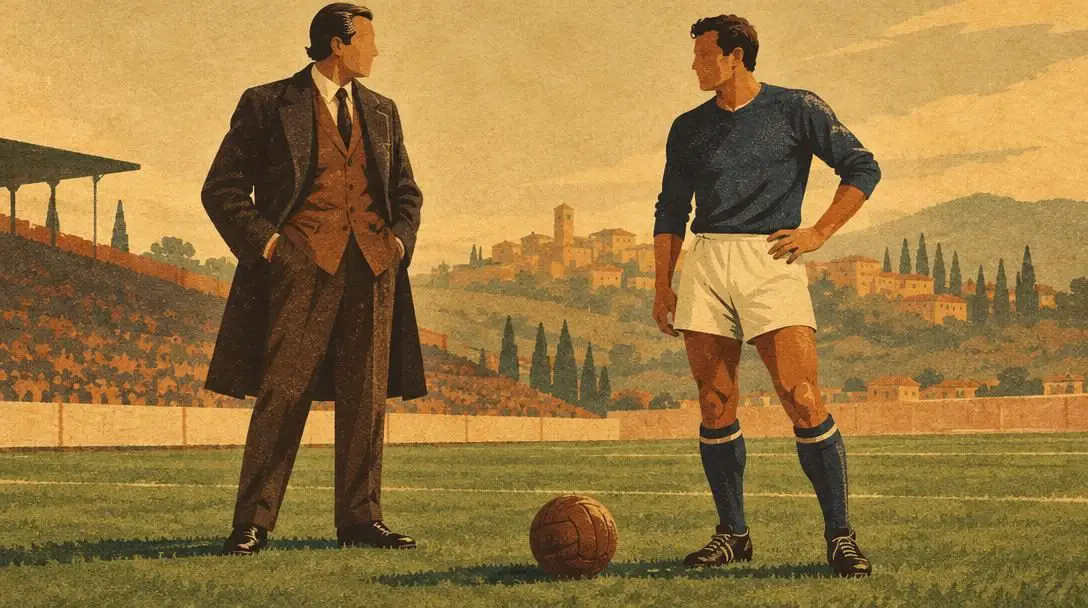
A native son of Turin, Carlo Parola remains a foundational figure in Juventus lore. Parola starred as an acrobatic defender for the Bianconeri from 1939 to 1954 before wrapping up his playing career with seven appearances for Lazio. Returning home to Juventus for his coaching career, Parola managed the club across three distinct decades, stepping into the role during critical inflection points in the club's timeline.
Parola first managed the club in 1959, stepped away and returned in 1961, and departed again in 1962. More than a decade later, he answered the call once more, steering the team from 1974 to 1976. In total, Parola commanded just over 200 matches from the sideline, winning nearly 58 percent of his games. While he managed fewer cup competitions than his modern successors, his legacy is defined by domestic championship consistency, winning three Serie A titles across his tenures.
How it works: Evaluating managerial success at an elite club
Ranking tacticians at a global club like Juventus requires more than simply reciting trophy tallies. Elite clubs operate within rigorous competitive environments where longevity, adaptability, and silverware balance against one another. To understand how managerial reputations are built, analysts evaluate four foundational metrics:
- Match longevity and volume: Surviving the high-pressure environment of Turin over hundreds of fixtures demonstrates boardroom trust and tactical evolution. Managing 200, 300, or nearly 600 fixtures requires reinventing the squad across multiple tactical eras.
- Win percentage standards: Because Juventus enters virtually every domestic fixture with expectations to dominate, elite managers must maintain winning percentages well above 50 percent, with world-class runs climbing into the high 60s over substantial sample sizes.
- Trophy balance: Sustained league supremacy over a 38-game Serie A campaign highlights week-in, week-out preparation. Meanwhile, knockout tournaments such as the Coppa Italia and Supercoppa Italiana measure single-match execution under elimination pressure.
- Multi-stint sustainability: The rare ability to return to a club years later—as accomplished by Parola, Lippi, Trapattoni, and Allegri—proves that a manager's tactical principles and leadership resonate across different player generations.
Practical steps: Building an objective managerial ranking
To evaluate and rank head coaches across different eras without bias, analysts follow a structured, step-by-step framework rooted in performance metrics and historical context:
- Establish volume thresholds: Filter candidates by setting a minimum match requirement (such as 100 matches in charge) to ensure statistical reliability and filter out short, anomalous hot streaks.
- Calculate match efficiency: Analyze the proportion of victories relative to total fixtures managed, identifying tacticians who sustained high win percentages (such as Allegri's near-70 percent mark) alongside total match milestones.
- Tally league championships: Count primary league titles (Serie A) first, as full-season campaigns serve as the ultimate barometer of squad depth, tactical adaptability, and endurance.
- Factor in domestic cup silverware: Quantify tournament trophies, including the Coppa Italia and the Supercoppa Italiana, to reward coaches who excel in high-stakes knockout settings.
- Assess multi-era continuity: Evaluate whether a manager demonstrated the capacity to rebuild squads across separate stints, verifying whether their system depended on specific generational players or enduring strategic acumen.
Common mistakes when comparing historical managers
Debating the legacies of football tacticians frequently leads to analytical missteps. When assessing the history of Juventus leadership, look out for these common errors:
- Overlooking era differences: Football in the 1960s and 1970s featured distinct tournament calendars, fewer total matches per season, and different substitution rules compared to modern football. Directly comparing raw match totals without contextual adjustments distorts historical achievements.
- Confusing win percentage with career impact: A coach boasting a remarkable winning rate over 150 matches did not necessarily accomplish more than a predecessor who navigated 400 or 600 fixtures with a slightly lower winning rate. Longevity carries its own distinct strategic difficulty.
- Assuming elite players automatically become elite coaches: While Antonio Conte and Carlo Parola starred on the pitch before leading from the sidelines, Massimiliano Allegri experienced a nomadic, lower-profile playing career before ascending to the top tier of managerial success. Playing stature does not predict sideline mastery.
- Dismissing cup competitions: Fixating entirely on Serie A scudetti overlooks the tactical sharpness required to capture silverware in knockout tournaments like the Coppa Italia and Supercoppa Italiana.
What to consider next
Analyzing the managerial hierarchy at Juventus opens avenues for further historical exploration into European football administration and strategy:
- Tactical evolution: Investigate how Giovanni Trapattoni's tactical systems in the late 1970s and 1980s paved the way for the fluid, high-tempo approaches utilized by Marcello Lippi in the 1990s and Antonio Conte in the 2010s.
- The honorable mentions: Research the strategic styles of Carlo Carcano, Renato Cesarini, Heriberto Herrera, and Dino Zoff to discover how their contributions shaped the eras preceding and following the club's most decorated runs.
- Translating success abroad: Examine how Juventus tacticians fared when venturing outside Italian football, tracing how Conte's tactical discipline translated into title-winning campaigns in England with Chelsea and across other elite European destinations.
- Record endurance: Consider the durability of the club's pinnacle records—specifically whether any modern manager will ever rival Trapattoni's 14 total trophies and nearly 600 matches, or surpass Allegri's four Coppa Italia championships.
Frequently asked questions
Who is the most successful manager in Juventus history?
Giovanni Trapattoni is the most decorated manager in Juventus history, holding the all-time club records for most total trophies (14), most Serie A championships (six), total matches managed (nearly 600), and total victories (319).
Which Juventus manager has the highest winning percentage?
Among all managers who have overseen at least 100 matches for Juventus, Massimiliano Allegri holds the highest winning percentage, winning nearly 70 percent of his fixtures across his stints with the club.
How many Serie A titles did Marcello Lippi win with Juventus?
Marcello Lippi won five Serie A championships across his two managerial stints (1994–1999 and 2001–2004), tying him with Massimiliano Allegri for second all-time behind Giovanni Trapattoni.
Which tacticians served multiple stints as Juventus manager?
Four of the top five managers in club history managed the Bianconeri across multiple separate stints: Carlo Parola (three separate eras across the 1950s, 1960s, and 1970s), Giovanni Trapattoni (1976–1986 and 1991–1994), Marcello Lippi (1994–1999 and 2001–2004), and Massimiliano Allegri (2014–2019 and 2021–Present).
Which manager holds the club record for Coppa Italia titles?
Massimiliano Allegri holds the club record for the most Coppa Italia titles won by a manager, lifting the domestic cup trophy four times during his managerial career in Turin.
The bottom line
The rich tradition of Juventus is inextricably linked to the visionary managers who commanded its sidelines. From the record-shattering longevity and 14 trophies of Giovanni Trapattoni to the tactical adaptability and cup mastery of Massimiliano Allegri, each era of Bianconeri supremacy was forged by distinct coaching philosophies. Whether measured by Antonio Conte's immediate rebuilding prowess, Marcello Lippi's domestic dominance, or Carlo Parola's multi-decade loyalty, these five tacticians set an enduring standard for managerial greatness in world football.