5 Worst Signings In Inter History
In the high-stakes environment of elite European football, building a championship squad requires a precarious balance of tactical vision, sharp scouting, and aggressive financial investment. Even storied powerhouses like Inter Milan—a club decorated with domestic championships and European trophies—have experienced catastrophic miscalculations in the transfer market. For every legendary acquisition that defined an era at the San Siro, there are signings that drained resources, disrupted squad harmony, and delivered virtually nothing on the pitch.
Player recruitment is rarely an exact science, and recruitment missteps occur for many reasons: physical breakdowns, tactical incompatibility, dressing-room friction, or the sheer weight of immense expectations. Alongside notorious dishonorable mentions often recalled by supporters—such as Jonathan, Nelson Rivas, Sulley Muntari, Gabigol, and Robbie Keane—five particular signings stand out as historic cautionary tales. Examining these deals reveals how transfer gambles can collapse and how costly those failures prove to be.
Key takeaways
- High-profile peer endorsements and highlight reels cannot replace rigorous, objective scouting of a player's temperament and tactical fit.
- Player swap arrangements carry extreme downside risk when proven foundational stars are traded away for unproven potential.
- Overlooking lingering injury histories or authorizing questionable surgical interventions can permanently derail costly squad investments.
- Short-term panic buying and paying inflated fees for players who do not fit the manager's tactical system severely limits financial flexibility.
- Effective recruitment requires structured contracts, disciplined medical auditing, and clear exit strategies to minimize balance-sheet exposure.
The anatomy of a transfer failure: five costliest missteps
Recruiting top-tier talent involves massive financial exposure through guaranteed transfer fees, agent commissions, and long-term wage commitments. When a major signing falters, the negative impact reverberates through the squad's payroll and competitive standing for multiple seasons. The following five players represent the most glaring recruitment misfires in Inter Milan history.
Vampeta
- Position: Midfielder
- Signed from: Corinthians
- Appearances / Goals: 8 appearances / 1 goal
- Tenure: 6 months
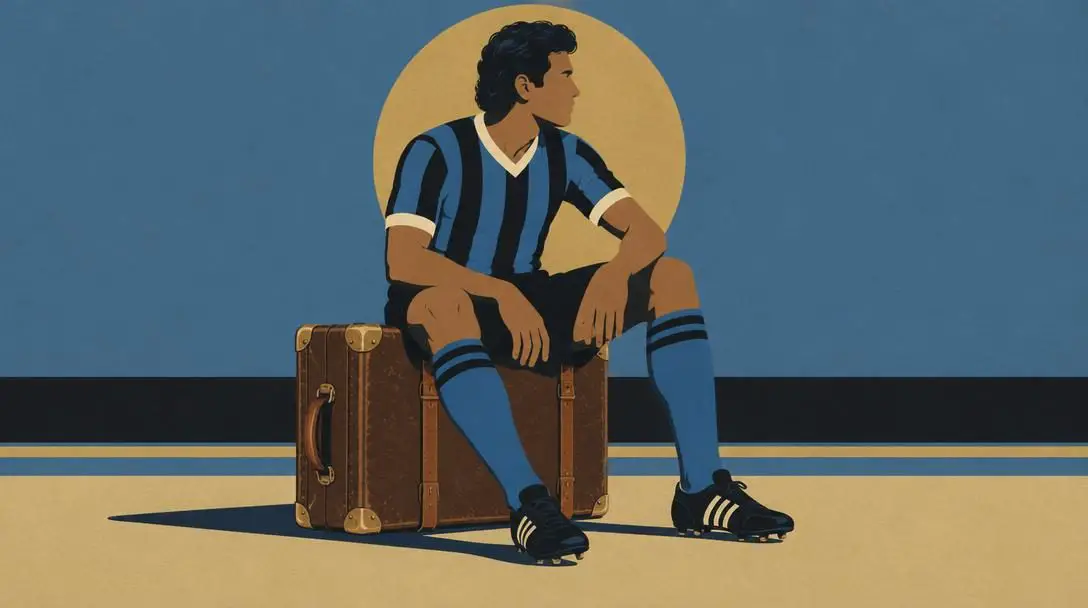
Born Marcos Andre Batista dos Santos in Brazil, the midfielder became universally known by the moniker Vampeta—a colorful portmanteau blending vampiro (vampire) and capeta (devil). Vampeta initially launched his professional journey with Vitoria before securing a move to Europe with PSV Eindhoven, where he was sent out on loan twice to gain seasoning. He eventually returned to Brazil to star for Corinthians between 1998 and 2000, establishing a reputation as a dynamic, technically proficient midfielder.
Inter decided to spend millions to acquire him, motivated in large part by an enthusiastic personal recommendation from Brazilian icon Ronaldo. However, Vampeta's transition to Italian football was an unmitigated disaster. He appeared thoroughly indifferent to tactical responsibilities, managing a meager eight appearances and a single goal across a chaotic six-month stint. His lack of commitment became undeniable when he took an unauthorized mid-season vacation back to Brazil, openly expressing his desire to exit the club. Desperate to cut their losses, Inter negotiated a deal in 2001 to send him to Paris Saint-Germain while retaining half of his economic rights. The French club fared no better, receiving just seven appearances from the midfielder before he departed European football altogether.
Francesco Coco
- Position: Left-back
- Signed from: AC Milan
- Transfer structure: Part of a €28 million swap deal including Clarence Seedorf
- Appearances: 26 matches across 5 years
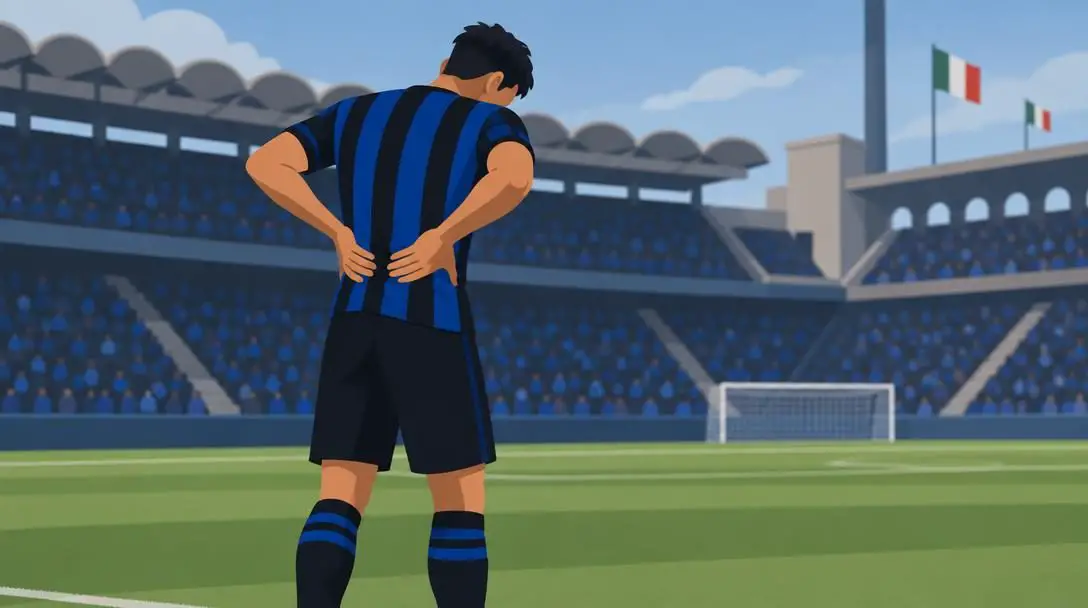
During the late 1990s and early 2000s, left-back Francesco Coco was widely heralded as one of the brightest defensive prospects in Italian football. Having come through the youth ranks at AC Milan, where he played from 1995 to 2002 alongside loan spells at Vicenza, Torino, and FC Barcelona, Coco appeared ready to dominate the flank for club and country. Inter Milan gambled heavily on his upside once he turned 25, engineering an infamous €28 million swap deal with crosstown rival AC Milan that sent Dutch midfield maestro Clarence Seedorf in the opposite direction.
The transaction quickly proved to be one of the most lopsided trades in modern football history. While Seedorf went on to anchor Milan's midfield to multiple Champions League titles, Coco spent five agonizing years on Inter's books plagued by chronic physical issues. He managed only 26 appearances for the Nerazzurri, spending stretches on loan at Livorno and Torino without ever regaining form. Coco later publicly blamed the club for pressuring him into undergoing back surgery that he felt ruined his physical longevity. The defender walked away from professional football in 2007 at just 30 years old, subsequently leaving sports behind to pursue an acting career.
Vratislav Gresko

- Position: Left-back
- Signed from: Bayer Leverkusen
- Transfer fee: Nearly €5 million
- Appearances / Goals: 41 appearances / 0 goals
Czech-born left-back Vratislav Gresko began his senior career in 1995 with Dukla Banska Bystrica before spending two seasons developing at Inter Bratislava. A subsequent tenure in the German Bundesliga with Bayer Leverkusen caught the attention of Inter's recruitment staff, leading to a four-year contract and a transfer fee approaching €5 million. Brought in to provide defensive solidity on the left side, Gresko instead developed a reputation for volatile and erratic positioning.

Over the course of 41 appearances, Gresko failed to score a goal and struggled to inspire confidence in his defensive colleagues. His tenure at the club is forever defined by a catastrophic performance in the final match of the 2001–02 Serie A season against Lazio. Inter entered the fixture poised to secure the league championship, but Gresko committed high-profile defensive errors—most notably a disastrous misjudged header that handed the opposition an easy goal. Inter collapsed, surrendering the league title on the final day. Shaken by the backlash, the club quickly cut ties with the defender, sending him to Parma to rebuild their backline.
A single defensive lapse under championship pressure can define a transfer flop for an entire generation of supporters.
Mancini

- Position: Winger / Attacker
- Signed from: AS Roma
- Transfer fee: €13 million
- Appearances / Goals: 28 appearances / 1 goal across 3 years
Known simply by his surname, Brazilian attacker Alessandro Amantino, or Mancini, broke into top-flight professional football with Atletico Mineiro in 1999. Following an impressive domestic run, he moved to Italy in 2003, spending a brief orientation period with Venezia before securing a blockbuster move to AS Roma. Across five sensational years in the capital, Mancini blossomed into a lethal attacking force, racking up 154 appearances and 40 goals while showcasing blistering pace and technical trickery.
In 2008, Inter invested €13 million to lure Mancini to Milan, anticipating that his dynamic wing play would translate seamlessly into their offensive system. Instead, the Brazilian immediately lost his sharpness and struggled to earn regular minutes in the starting lineup. Over a three-year contract, Mancini produced just one goal in 28 appearances, representing an exorbitant cost per match for a player relegated to the periphery. A loan spell with crosstown rival AC Milan failed to revitalize his form, and he eventually returned to South America to play out the remainder of his professional career far away from European spotlights.
Ricardo Quaresma

- Position: Winger
- Signed from: FC Porto
- Transfer package: €18.6 million plus midfielder Pele
- League record: 24 matches / 1 goal
Taking the top spot among Inter's most disappointing signings is Portuguese winger Ricardo Quaresma. Emerging alongside Cristiano Ronaldo in Sporting CP's celebrated academy, Quaresma's breathtaking technical skill and trademark trivela earned him a high-profile move to Barcelona between 2003 and 2004. After a difficult year in Spain, he returned to Portugal with FC Porto, re-establishing himself as one of the most dangerous wide creators in European competition.
Inter made an enormous financial commitment to sign Quaresma in the summer of 2008, constructing a transfer package worth €18.6 million that also sent young midfielder Pele to Porto. Despite arriving with immense fanfare, Quaresma's individualism, defensive neglect, and tactical stubbornness clashed sharply with the disciplined requirements of Italian football. In two seasons on Inter's books, he made only 24 league appearances and registered just one goal. An unproductive loan spell with Chelsea did nothing to revive his market value, and Inter finally offloaded him to Turkish side Besiktas in 2010, bringing an end to an extraordinarily expensive and fruitless recruitment saga.
At a glance: comparing Inter's worst transfer investments
The financial and sporting metrics behind these five transactions illustrate how drastically actual returns diverged from the club's expectations across different eras of modern football.
| Player | Previous Club | Reported Fee / Structure | Inter Appearances | Inter Goals | Primary Reason for Failure |
|---|---|---|---|---|---|
| Vampeta | Corinthians | Multi-million acquisition | 8 | 1 | Lack of professional commitment and motivation |
| Francesco Coco | AC Milan | €28M swap deal (Clarence Seedorf) | 26 | 0 | Debilitating spinal injuries and surgery complications |
| Vratislav Gresko | Bayer Leverkusen | Nearly €5 million | 41 | 0 | Defensive inconsistency and high-pressure blunders |
| Mancini | AS Roma | €13 million | 28 | 1 | Tactical marginalization and sharp form decline |
| Ricardo Quaresma | FC Porto | €18.6M plus Pele | 24 (league) | 1 | Tactical incompatibility and lack of defensive work rate |
The mechanics of elite player recruitment
Understanding how world-class football operations stumble requires looking closely at the multi-stage process of signing top talent. Transfer negotiations involve sporting directors, data analysts, technical scouts, medical boards, and player representatives, with several critical phases required to finalize any major agreement.
- Talent identification and video scouting: Clubs monitor targets across regional and international tournaments, compiling qualitative scouting reports on technical execution, tactical maturity, and athletic traits.
- Valuation modeling and asset structuring: Financial executives build pricing models based on market competition, remaining contract length, wage parameters, and the potential inclusion of player swaps or performance incentives.
- Contract negotiations and personal terms: Club leadership negotiates guaranteed transfer fees, installment timelines, agent fees, and wage packages directly with the player's management team.
- Comprehensive medical screening: Before contracts become binding, internal physicians administer extensive physical examinations, imaging scans, and joint stress tests to uncover underlying vulnerabilities.
- Squad registration and tactical integration: Once approved by national associations and international governing bodies, the coaching staff works to integrate the newcomer into daily training drills and team strategy.
Practical steps clubs take to mitigate transfer risks
To avoid repeating costly historical errors like those seen in the Coco or Quaresma transfers, forward-thinking recruitment departments rely on specific operational safeguards before sanctioning major expenditures.
First and foremost, clubs must perform deep due diligence on mentality and temperament. Relying on casual peer recommendations—as Inter did with Ronaldo's endorsement of Vampeta—bypasses the psychological evaluations required to determine whether an athlete possesses the professionalism to handle a foreign environment.
Second, organizations must conduct independent medical audits when evaluating high-value assets. Rather than relying solely on standard physicals, clubs frequently enlist external orthopedic specialists to evaluate spinal wear and chronic joint degeneration, preventing situations where major investments are wiped out by post-transfer surgeries.
Third, clubs need to audit tactical and positional adaptability. Before signing flair players like Mancini or Quaresma, recruitment analysts must ensure that the player's habits without the ball align with the manager's defensive expectations, preventing expensive acquisitions from languishing on the bench.
Finally, executives must structure performance-weighted contracts and preserve exit strategies. Using appearance bonuses, conditional buyout clauses, and well-timed loan spells—such as Inter loaning Coco to Livorno or Quaresma to Chelsea—allows clubs to limit cash exposure and create a path to recover residual value when a signing fails to materialize.
Common strategic mistakes in elite football recruitment
Analyzing these historical signings exposes recurring flaws in organizational decision-making that continue to plague elite European teams.
- Sacrificing established core performers in speculative trades: Giving up an irreplaceable midfield anchor like Clarence Seedorf to land an unproven prospect like Francesco Coco creates an immediate deficit in squad leadership that can hinder a club for years.
- Overpaying based on past peak form: Handing substantial fees—such as the €13 million spent on Mancini—to aging attackers who showed warning signs of physical deceleration in previous seasons frequently leads to rapid depreciation.
- Discounting the psychological demands of high-pressure title races: Placing full defensive faith in erratic players like Vratislav Gresko during decisive championship deciders exposes teams to fatal, unforced errors under intense scrutiny.
- Ignoring stylistic friction between player and manager: Pursuing high-flair individualists who refuse to track back or adhere to structured positioning inevitably leads to sideline friction and wasted transfer budgets.
Frequently asked questions
Why is the Francesco Coco transfer considered one of the worst in football history?
The deal was disastrous not only because Coco managed just 26 appearances across five injury-plagued seasons, but because Inter surrendered Clarence Seedorf in the swap. Seedorf went on to win two UEFA Champions League titles and become a club legend for AC Milan.
How much did Inter Milan pay to sign Ricardo Quaresma?
Inter agreed to an overall transfer package worth €18.6 million to acquire Quaresma from FC Porto, which included sending young midfielder Pele to the Portuguese club as part of the total valuation.
What mistake did Vratislav Gresko make that Inter fans remember?
On the final matchday of the 2001–02 Serie A season against Lazio, Gresko committed a catastrophic defensive mistake, mistakenly heading the ball into the path of an opponent. The error contributed to a defeat that handed the league championship to rival Juventus.
Why did Vampeta leave Inter Milan after only six months?
Vampeta struggled to adapt to Italian football, appeared indifferent to tactical discipline, and made only eight appearances. He went on an unauthorized trip back to Brazil mid-season and demanded an exit, prompting Inter to offload his contract to Paris Saint-Germain.
What honorable or dishonorable mentions are frequently cited alongside these five signings?
Supporters and analysts frequently cite Jonathan, Nelson Rivas, Sulley Muntari, Gabigol, and Robbie Keane as other notable signings who failed to live up to expectations or justify their transfer fees during their time with the club.
The bottom line
The stories of Vampeta, Francesco Coco, Vratislav Gresko, Mancini, and Ricardo Quaresma demonstrate that pure talent alone cannot guarantee success in elite European football. Recruitment failures rarely stem from bad luck alone; they are frequently the byproduct of flawed psychological scouting, risky swap structures, unaddressed medical liabilities, and tactical mismatches. By establishing rigorous due diligence, objective medical assessments, and flexible contract structures, modern football clubs can protect their investments and avoid the monumental recruitment missteps that defined Inter Milan's costliest transfer sagas.