5 Best Players In Inter History
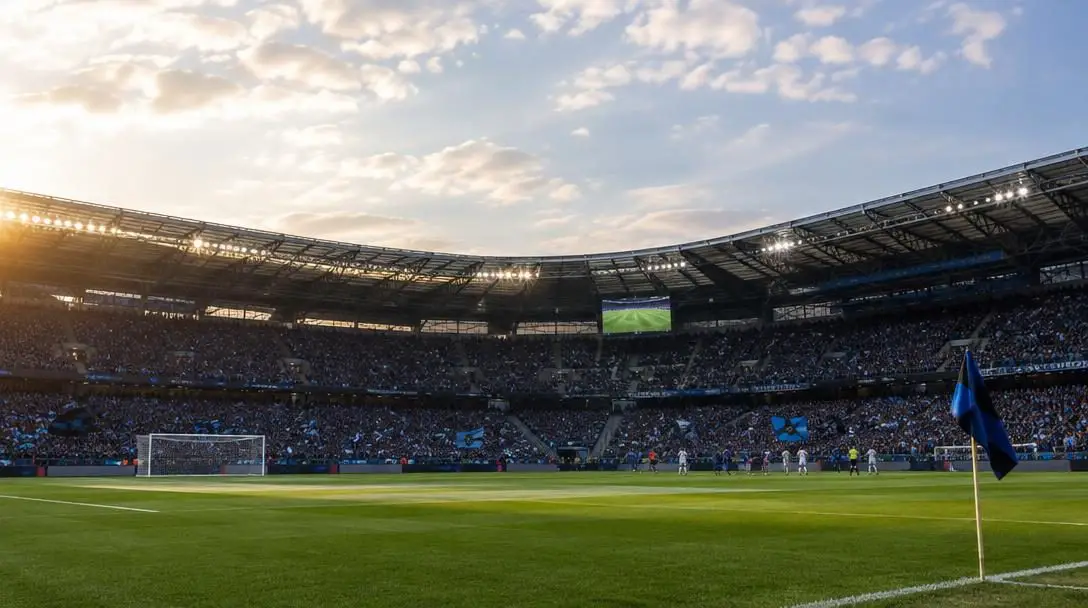
As one of the most decorated football clubs in European history, Inter Milan has served as the home for hundreds of world-class athletes across more than a century of competitive football. Choosing the absolute best from this deep talent pool requires balancing unmatched longevity, defensive reliability, scoring records, and the silverware earned during distinct eras of domestic and continental dominance.
While generational icons such as Christian Vieri, Ivan Cordoba, Julio Cesar, Samuel Eto’o, and Ronaldo produced unforgettable moments at the San Siro, they narrowly missed the ultimate ranking. The five players highlighted here represent the definitive gold standard of Inter Milan history, stretching from early league championships through the continental glory of the 1960s to the modern treble era.
Key takeaways
- Javier Zanetti ranks as Inter Milan's all-time greatest player, holding the club record for total appearances across an illustrious 19-year tenure.
- Giuseppe Meazza remains the club's all-time top goal scorer with 287 goals, an unmatched tally that earned him the naming honor for Milan's iconic stadium.
- Giacinto Facchetti spent his entire 18-season professional career exclusively with Inter Milan, revolutionizing the role of the attacking fullback.
- Alessandro Altobelli sits second on the club's all-time scoring charts with 209 goals, trailing only Meazza.
- Spanish orchestrator Luis Suarez anchored the midfield of the dominant 1960s side, having claimed the Ballon d'Or in 1960.
The five greatest players in Inter Milan history
Every era of Inter's history features standout leaders who defined their generation. When evaluating the club's all-time roster, these five individuals separate themselves through individual awards, sustained excellence, and historic trophy counts.
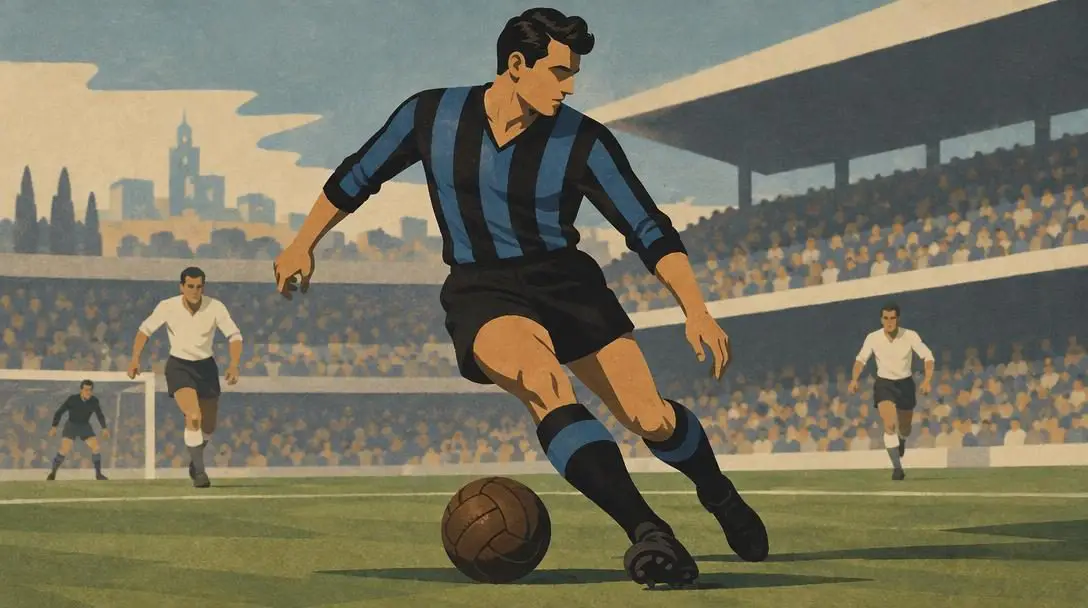
Luis Suarez
- Years at club: 1961–1970
- League matches: 250+
- Goals: 42
- Major honors: 3 Serie A titles, 2 European Cups, 2 Intercontinental Cups, 1960 Ballon d'Or
While contemporary fans might immediately think of other players sharing his name, the original Luis Suarez was an international footballing powerhouse throughout the mid-twentieth century. Born in Spain in 1935, Suarez developed through the post-World War II Fabril youth program before launching his professional journey with Deportivo La Coruna and CD Condal. After spending six successful seasons at Barcelona, Suarez made his blockbuster move to Inter Milan in 1961.
Suarez remained with the club for nine seasons, appearing in over 250 league matches and scoring 42 goals as a midfield playmaker. His vision and tactical intelligence orchestrated the attack for an Inter side that claimed three Serie A crowns in a four-year window, alongside back-to-back European Cups and Intercontinental Cups. Having collected the prestigious Ballon d’Or trophy in 1960 while finishing in the top three on three other occasions, Suarez brought unrivaled international pedigree to Milan before finishing his career with Sampdoria.
Alessandro Altobelli
- Years at club: 1977–1988
- Total matches: 466
- Total goals: 209
- Major honors: 1 Serie A title (1979–80), 2 Coppa Italia titles
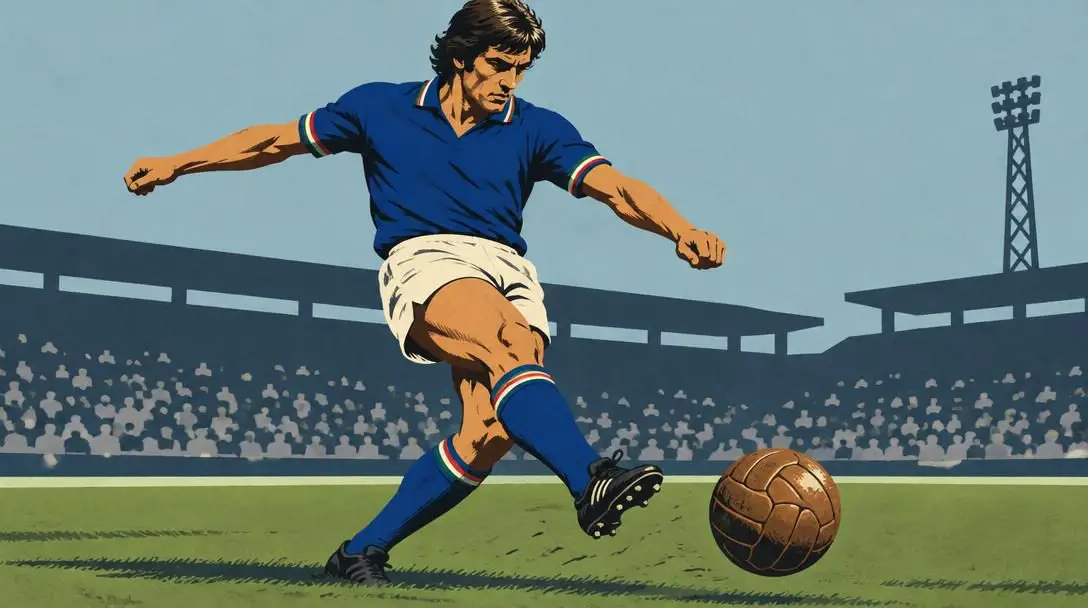
Born in Sonnino in 1955, Alessandro Altobelli established himself as one of the most prolific Italian goal scorers of his generation. Following his early professional development with Latina and a productive three-year stay with Brescia starting in 1974, Altobelli made the move to Inter Milan in 1977. He went on to lead the line for the Nerazzurri for more than a decade before wrapping up his career in the late 1980s with brief stints at Juventus and Brescia.
Altobelli's impact at the San Siro is cemented in the record books. Over his 466 competitive appearances—which puts him ninth on the club's all-time appearances list—he found the back of the net 209 times. That astonishing tally places him second in club history, behind only Giuseppe Meazza. Altobelli's ruthless finishing helped Inter secure the 1979–80 Serie A championship as well as two Coppa Italia titles, cementing his place among Italian football royalty.
Giacinto Facchetti
- Years at club: 1960–1978
- Total matches: 634
- Club distinction: Entire 18-season professional career spent at Inter
- Major honors: 4 Serie A titles, 2 European Cups, 1 Coppa Italia
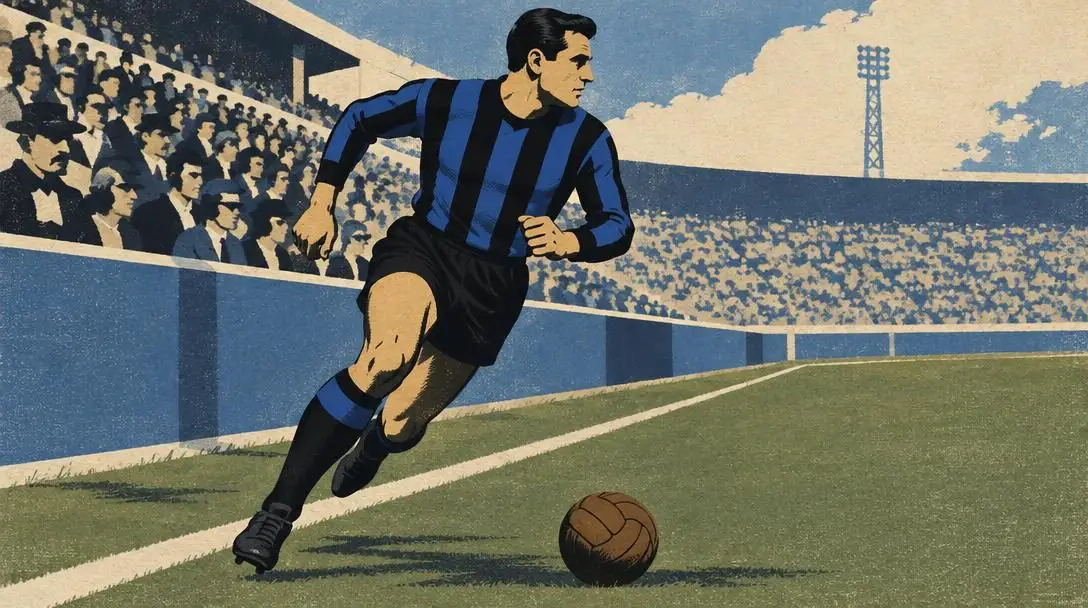
Among all the legends who have donned the blue and black stripes, Giacinto Facchetti stands out as the ultimate one-club man. Hailing from Treviglio, Facchetti emerged from the Trevigliese youth ranks and joined Inter in 1960. He made his senior debut that same year and never left, dedicating all 18 seasons of his storied professional career exclusively to Inter Milan, with his only other appearances coming for the Italian national team.
Facchetti ranks third all-time in appearances for Inter with 634 matches. Playing with an elegant, forward-surging style that transformed the role of the modern fullback, he nearly won the Ballon d'Or in 1965 after leading the club to its second Serie A title in three years. Over his nearly two decades of service, Facchetti captured four domestic league titles, one Coppa Italia, and two European Cups. His enduring impact was formally recognized with inductions into the Italian Football Hall of Fame in 2015 and the Inter Milan Hall of Fame in 2019.
True club greatness is defined not merely by talent, but by an unwavering commitment across decades of triumphs and transitions.
Giuseppe Meazza
- Years at club: 1927–1940, 1946–1947
- Total goals: 287
- Goalscoring rank: 1st all-time in Inter history
- Major honors: 3 Serie A titles, 3-time Serie A top scorer
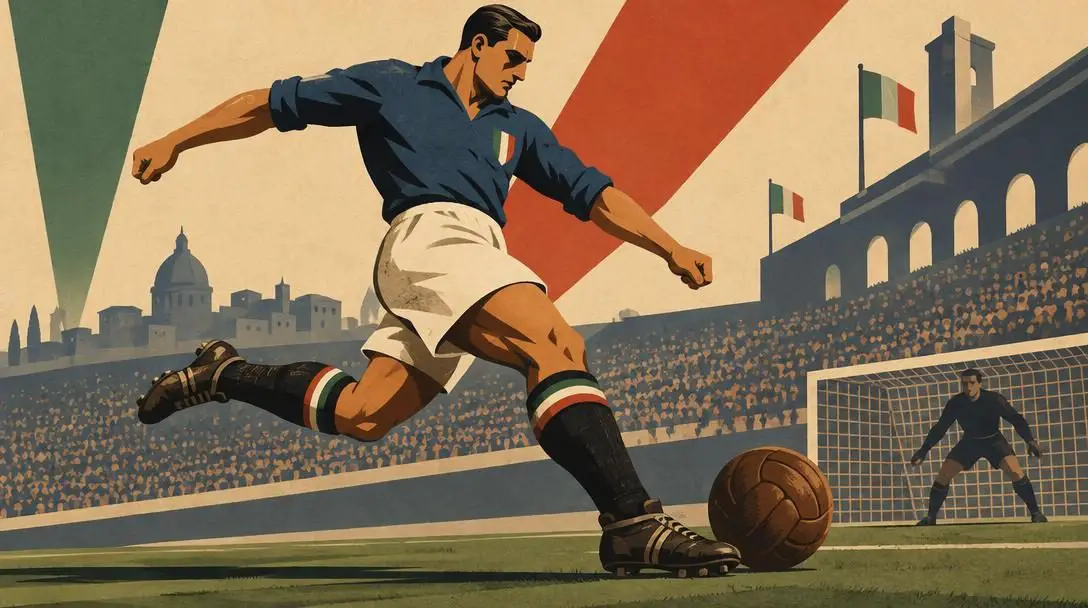
Widely regarded as the supreme Italian attacking talent of the early twentieth century, Giuseppe Meazza holds a singular place in football history. A product of the club's youth program, Meazza made his senior debut in 1927 and spearheaded the attack until 1940, later returning for a second run from 1946 to 1947. Although he played for both Milanese giants during his career, his legacy is indelibly bound to Inter Milan—a connection formalized by the naming of the shared stadium where both clubs play.
While others surpass him in raw match totals, Meazza remains unreachable at the top of the scoring charts. His 287 career goals for Inter place him an astounding 78 goals ahead of second-place Altobelli, making him one of only two men in club history to break the 200-goal barrier. Meazza fired the squad to three Serie A titles, earned league top-scorer honors across three different seasons, and was rightfully enshrined in the Inter Milan Hall of Fame in 2019.
Javier Zanetti

- Years at club: 1995–2014
- Club distinction: All-time leader in matches played
- Post-playing role: Inter Milan executive team member
- Major honors: 5 Serie A titles, 1 UEFA Champions League, Coppa Italia, Supercoppa Italiana
The only non-European on this all-time list, Argentine defensive stalwart Javier Zanetti was the beating heart of Inter Milan for two continuous decades. After starting his professional career in Argentina with Talleres and Banfield, Zanetti arrived in Italy in 1995 as the first signing of a transformative era. Over the next 19 seasons, he became synonymous with leadership, consistency, and athletic endurance at the highest level of European competition.
Zanetti stands alone as Inter Milan's all-time appearance leader, surpassing second-place Giuseppe Bergomi by more than 100 matches. As captain, he led the club through an unprecedented era of sustained modern success, including five consecutive Serie A championships, multiple Coppa Italia and Supercoppa Italiana crowns, and the coveted UEFA Champions League trophy. Following his retirement in 2014, Zanetti transitioned immediately into Inter's executive team. In 2018, his career was honored with dual inductions into both the Inter Milan Hall of Fame and the Italian Football Hall of Fame.
At a glance: Comparing Inter Milan's all-time legends
To better understand how these five iconic figures compare across different decades, positions, and statistical benchmarks, the table below highlights their career numbers and club accolades.
| Player | Era | Key Position | Inter Appearances | Inter Goals | Key Club Honors |
|---|---|---|---|---|---|
| Luis Suarez | 1961–1970 | Midfielder | 250+ (league) | 42 | 3 Serie A, 2 European Cups, 2 Intercontinental Cups |
| Alessandro Altobelli | 1977–1988 | Forward | 466 | 209 | 1 Serie A, 2 Coppa Italia |
| Giacinto Facchetti | 1960–1978 | Fullback | 634 | Unspecified | 4 Serie A, 2 European Cups, 1 Coppa Italia |
| Giuseppe Meazza | 1927–1940, 1946–1947 | Forward | Unspecified | 287 | 3 Serie A, 3x Capocannoniere |
| Javier Zanetti | 1995–2014 | Fullback / Midfielder | All-time leader (700+) | Unspecified | 5 Serie A, 1 Champions League, Coppa Italia |
Methodology: How historical player evaluation works
Comparing athletes across different eras requires an analytical approach that looks past simple highlight reels. Because competition formats, tactical setups, and physical conditioning have shifted dramatically since the 1920s, historians and analysts evaluate several primary criteria to build a balanced ranking.
- Longevity and appearance milestones: Spending over a decade with a single elite club demonstrates elite fitness, professional discipline, and tactical adaptability across managerial changes. Figures like Zanetti and Facchetti each dedicated nearly two decades to the first team.
- Peak offensive production: Scoring goals remains the hardest task on the pitch. Giuseppe Meazza's unmatched tally of 287 strikes and Altobelli's 209 goals set a standard of finishing that modern attackers still chase.
- Team silverware and tournament impact: Great players lift their teams to championships. Domestic league titles like Serie A combined with major international trophies—such as the European Cup, Intercontinental Cup, and Champions League—demonstrate that individual excellence translated to collective victory.
- Contemporary individual accolades: How a player was rated by their peers and journalists offers valuable historical context. Major markers include Ballon d'Or voting finishes (exemplified by Suarez and Facchetti), league top-scorer awards, and official Hall of Fame inductions.
A step-by-step guide to researching club history
For football fans and researchers who want to construct their own historical player rankings, following an organized process prevents common analytical errors and keeps debates grounded in factual records.
- Compile raw career statistics: Gather basic career markers for every candidate, noting total matches played, goals scored, competitive debut dates, and overall seasons active with the club.
- Catalogue team trophies: Construct a complete ledger of all team honors won during the player's tenure. Group these into domestic championships (Serie A), domestic cups (Coppa Italia, Supercoppa Italiana), and continental trophies (European Cup, Champions League).
- Document individual awards: Track individual recognition received during their active career, such as domestic golden boots, international tournament honors, Ballon d'Or placements, and subsequent hall of fame inductions.
- Weigh performance against contemporary peers: Contextualize the athlete's output against the tactical realities of their era. A dominant forward who led the league in scoring three times, such as Giuseppe Meazza, holds massive weight even with fewer total matches played than modern professionals.
- Balance defensive contributors with offensive stars: Avoid over-rewarding goal scorers at the expense of defensive stalwarts. Evaluate fullbacks like Facchetti and Zanetti using durability, leadership, defensive reliability, and trophy impact.
Common mistakes when ranking football legends
When compiling all-time rankings for storied clubs, analysts frequently fall into traps that skew historical reality. Keeping these common pitfalls in mind leads to a more nuanced evaluation.
- Falling victim to recency bias: Modern broadcasts and social media favor players active over the last twenty years. However, discounting pre-war legends like Giuseppe Meazza ignores the foundational figures who built the club's prestige.
- Prioritizing global fame over club service: Global superstars such as Ronaldo or Samuel Eto’o produced breathtaking football, but their Inter tenures were relatively short compared to the decades-long service put in by Zanetti or Facchetti.
- Overlooking name collisions: Failing to differentiate between historical figures and modern stars with identical names, such as confusing the 1960 Ballon d’Or winner Luis Suarez with modern strikers who share the same name.
- Ignoring off-pitch legacy and leadership: Measuring an athlete exclusively by their playing statistics ignores intangible qualities like captaincy, one-club loyalty, and executive service that maintain organizational stability.
Expanding your study of Inter Milan's heritage
Examining these five iconic players provides a doorway into the broader history of Italian and European football. Supporters looking to expand their knowledge can explore several connected topics:
- The honorable mentions: Delve into the specific contributions of stars who narrowly missed the top five, including Christian Vieri, Ivan Cordoba, Julio Cesar, Samuel Eto’o, and Ronaldo, studying how their stints coincided with major European and domestic runs.
- The Giuseppe Meazza Stadium: Research the history of the San Siro stadium and how its official renaming in honor of Giuseppe Meazza reflects the shared footballing identity of Milan.
- The Inter Milan Hall of Fame: Explore the yearly induction classes since the hall's founding, charting how the club celebrates legendary goalkeepers, defenders, midfielders, and forwards from every era.
- Executive transitions: Study how legendary players continue to shape football operations after their retirement, exemplified by Javier Zanetti moving directly from team captain into the club's front office.
Frequently asked questions
Who is the all-time leading goal scorer for Inter Milan?
Giuseppe Meazza is the all-time leading scorer in Inter Milan history with 287 goals, putting him 78 goals ahead of second-place Alessandro Altobelli.
Which player has made the most appearances for Inter Milan?
Javier Zanetti holds the club record for appearances, playing over 700 competitive matches across 19 seasons from 1995 to 2014, leading second-place Giuseppe Bergomi by more than 100 games.
Has any Inter Milan player won the Ballon d'Or?
Luis Suarez won the Ballon d'Or in 1960 and placed in the top three on three other occasions. In addition, Giacinto Facchetti narrowly missed winning the award in 1965.
Why is Inter Milan's stadium named after Giuseppe Meazza?
The stadium is named in honor of Giuseppe Meazza due to his legendary status in Italian football, having scored 287 goals for Inter Milan and played for both Inter and AC Milan during his career.
Did Giacinto Facchetti ever play for another professional club?
No. Facchetti spent his entire 18-season professional career exclusively with Inter Milan, making 634 appearances, with his only other appearances coming for the Italian national team.
The bottom line
The history of Inter Milan is written through the dedication and brilliance of extraordinary athletes across different generations. While many world-class talents have represented the club, Luis Suarez, Alessandro Altobelli, Giacinto Facchetti, Giuseppe Meazza, and Javier Zanetti embody the ultimate standard of Nerazzurri excellence. Through world-record goal tallies, timeless loyalty, midfield mastery, and unmatched longevity, these five legends forged the legacy that continues to define the club today.