5 Best Managers in Liverpool History
Liverpool Football Club stands as an enduring pillar of global football heritage, built upon decades of fierce domestic competition and unforgettable European triumphs. Since the inception of the English Premier League in the early 1990s, the club has remained an almost permanent fixture near the summit of the table, yet its historical supremacy stretches back well over a century. What sets Liverpool apart from many of its contemporary European peers is an extraordinary tradition of stability on the touchline, employing just over twenty full-time managers across its entire competitive existence.
Because managerial turnover at Anfield has historically been an exception rather than the rule, every appointment has carried profound institutional consequence. Selecting the greatest managers in club history requires balancing sheer trophy counts against the eras in which they competed, the structural foundations they established, and the tactical legacy they left behind. While revered figures such as Rafael Benitez, Joe Fagan, Tom Watson, and Roy Evans contributed decisively to the club's folklore, five legendary figures distinguish themselves as the absolute benchmark of managerial excellence on Merseyside.
Key takeaways
- Bob Paisley remains the most decorated manager in Liverpool history, securing 20 total club trophies, including six top-flight English league titles.
- Kenny Dalglish holds the highest winning percentage in club history at 60.91%, having triumphed both as a player and during a historic spell as player-manager.
- Bill Shankly established the modern foundation of Liverpool Football Club, overseeing an unmatched 783 fixtures across a transformative 15-year tenure.
- Jurgen Klopp revitalized the club in the modern era, becoming the only German manager in Liverpool history and winning the Premier League, FA Cup, and UEFA Champions League.
- Gerard Houllier modernized the club's training infrastructure and tactical discipline at the turn of the century, capturing six trophies during his six seasons at the helm.
The legendary tacticians who defined Liverpool's golden eras
Assessing the legacy of Liverpool's managerial pantheon requires evaluating different competitive landscapes, from the muddy pitches of mid-century British football to the high-pressing, data-driven demands of modern European campaigns. The following five managers represent the pinnacle of strategic ingenuity, squad development, and competitive endurance in the storied history of Liverpool Football Club.
Bob Paisley
- Total matches managed: 535
- Career win percentage: 57.57%
- Total club silverware: 20 trophies
- Top-flight league titles: 6
Holding the premier position in club annals, Bob Paisley spent an astonishing portion of his adult life serving Liverpool across virtually every footballing capacity. His journey began on the pitch, moving to Anfield after an initial two-year spell with Bishop Auckland. Paisley dedicated fifteen years of active service to the squad as a reliable defender and midfielder, tallying 253 appearances in the famous red shirt. After stepping away from football briefly upon retirement, Paisley returned to Anfield to serve as an assistant manager for over a decade under Bill Shankly. In that capacity, he studied the nuances of tactical preparation, man-management, and European strategy from the legendary Boot Room before reluctantly accepting the senior managerial mantle.
Paisley’s managerial decade was defined by unmatched competitive efficiency. Over the course of 535 competitive matches, his teams recorded 308 victories and endured a mere 96 defeats, yielding a 57.57% win percentage that stands fourth in club history. Beyond the sheer frequency of victory, Paisley collected silverware at a rate never matched before or since in British sport. Under his understated guidance, Liverpool amassed 20 total club honours, highlighted by six English top-flight league championships—a mark that shares the all-time national record for the most top-tier league titles won by an individual manager in England.
Kenny Dalglish
- Career win percentage: 60.91%
- Tenures at Liverpool: 1985–1991, 2011–2012
- Key honours: 3 First Division titles, 4 FA Charity/Community Shields
Before establishing himself as an elite tactician, Kenny Dalglish was widely revered as one of the finest attacking footballers ever to play the sport. The Scottish international began his senior playing days with Celtic, scoring 111 goals in over 200 matches before securing a high-profile transfer to Merseyside in 1977. Dalglish went on to make 355 appearances for Liverpool through 1990, establishing a deep spiritual connection with the supporters. In 1985, he took on the daunting dual role of player-manager, balancing on-field goalscoring responsibilities with senior tactical decisions and locker-room leadership.
Dalglish flourished under that immense pressure, delivering dominant domestic campaigns throughout the late 1980s. When he initially resigned in 1991, he had firmly stamped his managerial footprint across English football, subsequently going on to lead Blackburn Rovers and Newcastle United before returning to Liverpool for an emotional second stint in the 2011-12 season. Statistically, Dalglish sits at the summit of Liverpool managerial history with a career win percentage of 60.91%, outranking the club's late 19th-century managerial pioneers William Edward Barclay and John McKenna. His managerial trophy haul includes three First Division league titles and four FA Charity/Community Shields.
Jurgen Klopp
- Club appointment: 2015 (21st manager in club history)
- Key achievements: Premier League, FA Cup, UEFA Champions League
- First seven years win rate: Over 60%
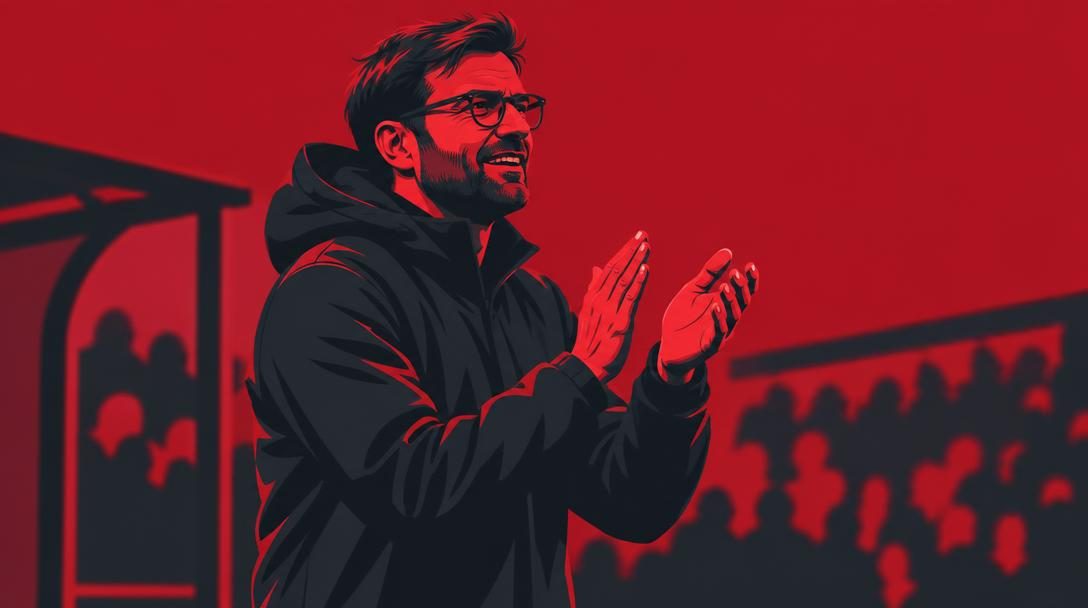
As the youngest manager featured among the top five, Jurgen Klopp took charge of a club seeking to reclaim its standing among European royalty. Klopp’s playing days were spent almost entirely in Germany with Mainz 05, where he made 325 appearances as a defender and forward while scoring more than 50 goals. Upon retiring from active play in 2001, he transitioned seamlessly into coaching, managing Mainz 05 for seven seasons before spending an identical seven-year stint transforming Borussia Dortmund into a European heavyweight.
In 2015, Liverpool appointed Klopp as the 21st manager in team history, executing a recruitment strategy guided heavily by data modeling and advanced analytics. As the only German manager ever appointed by Liverpool, Klopp installed an energetic, front-foot tactical philosophy built around collective counter-pressing and relentless forward momentum. Across his first seven years on Merseyside, Klopp sustained a win rate exceeding 60%, ranking him third all-time in club history. Crucially, his teams captured the English Premier League title, the FA Cup, and the UEFA Champions League, making him one of only four managers in Liverpool history to secure that elite triumvirate of major trophies.
Klopp combined sophisticated data modeling with an emotional tactical intensity, returning Liverpool to the absolute summit of domestic and continental football.
Bill Shankly
- Total matches managed: 783
- Career victories: 407
- Total club honours: 11 honours
- League titles: 3 First Division championships
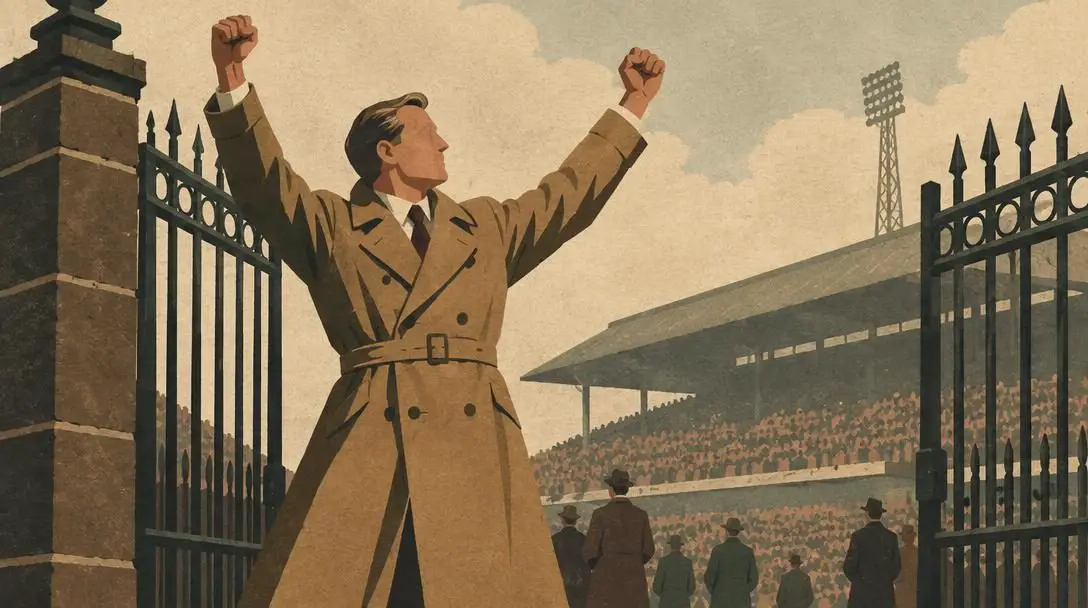
Universally regarded as the spiritual father of modern Liverpool, Bill Shankly constructed the psychological and structural framework that turned a second-tier squad into an international powerhouse. A dedicated right-half during his playing career, Shankly spent nearly his entire playing tenure with Preston North End, amassing nearly 300 appearances before hanging up his boots in 1949. Shankly gained valuable managerial seasoning at Carlisle United, Grimsby Town, Workington, and Huddersfield Town before being appointed Liverpool manager, embarking on a foundational 15-year reign.
Shankly was responsible for converting Liverpool into a disciplined collective unit, establishing the legendary Anfield Boot Room and turning the home ground into an intimidating fortress. Over an astonishing 783 matches—the largest managerial total in club history—Shankly guided his teams to 407 victories and 198 draws. While his win percentage reflects the extended rebuilding phase of his early years, his ultimate haul of 11 club honours, including three First Division league championships and two FA Cups, places him second only to Paisley in total trophies won.
Gerard Houllier

- Tenure at Liverpool: 1998–2004
- Career win percentage: 52.12%
- Silverware won: 6 total honours (including FA Cup and EFL Cup)
Arriving at Anfield in 1998, Gerard Houllier oversaw the delicate cultural transition required to move Liverpool into the professional modern era. A native of France, Houllier’s active playing days were anchored at Le Touquet during the 1970s. After transitioning into coaching, he developed a sterling reputation across French football, directing Le Touquet, Lens, and Paris Saint-Germain while playing an instrumental role in mentoring youth talents within the French national setup, including spells overseeing the Under-18, Under-20, and senior national squads.
During his six-year reign on Merseyside, Houllier dismantled outdated dietary habits and training regimens, instilling continental sports science and tactical discipline into the squad. Although an English top-flight league championship ultimately eluded his teams, Houllier registered a solid 52.12% win rate and re-established Liverpool as a feared knockout tournament side. He led the club to six honours, capturing both the FA Cup and the EFL Cup, proving that contemporary European training methodologies could flourish within the historic confines of Anfield.
At a glance: Liverpool's finest tacticians compared
Comparing these five iconic leaders reveals the varied paths through which managerial greatness has been forged at Anfield, ranging from the domestic dominance of the 1970s and 1980s to the modern global era.
| Manager | Tenure Length | Matches Managed | Win Percentage | Major Silverware Highlights |
|---|---|---|---|---|
| Bob Paisley | 10 years | 535 | 57.57% | 20 trophies (6 League titles) |
| Kenny Dalglish | 7 seasons (2 stints) | N/A | 60.91% | 3 League titles, 4 Charity Shields |
| Jurgen Klopp | 7+ years (recorded) | N/A | Over 60% | Premier League, Champions League, FA Cup |
| Bill Shankly | 15 years | 783 | 51.98% | 11 honours (3 League titles, 2 FA Cups) |
| Gerard Houllier | 6 years | N/A | 52.12% | 6 honours (FA Cup, EFL Cup) |
The core pillars of elite football management
Leading an institution of Liverpool's stature requires mastering multiple tactical, operational, and organizational disciplines simultaneously. The finest tacticians succeed because they effectively manage several overlapping layers of responsibility:
- Tactical Blueprint: Establishing a distinct on-pitch philosophy that defines defensive pressing schemes, transitional balance, possession frameworks, and offensive spacing.
- Roster Dynamics and Recruitment: Partnering with internal scouting networks and modern analytics units to acquire players capable of executing the manager's tactical identity within designated club budgets.
- In-Game Modifications: Accurately reading match momentum from the dugout and applying precise tactical tweaks, structural reorganizations, and substitutions under severe time pressure.
- Player Management: Cultivating personal motivation across a multi-national locker room while keeping squad rotation players invested across demanding domestic and international campaigns.
- Long-Term Vision: Aligning youth academy development with the technical requirements of the first team to guarantee sustainable playing continuity across multiple seasons.
How to evaluate a managerial legacy step by step
When historians, pundits, and supporters evaluate whether a football manager merits inclusion among the historic elite, they apply a structured evaluation process that separates short-term winning runs from lasting greatness.
- Review Total Silverware: Calculate the raw collection of major trophies won, giving significant weight to top-flight league titles and primary continental championships like the UEFA Champions League.
- Analyze Match Outcomes: Determine the overall win percentage by comparing total victories against total fixtures to measure match-to-match reliability.
- Measure Longevity and Game Volume: Assess whether high performance was maintained across hundreds of competitive fixtures over five, ten, or fifteen seasons.
- Examine Inherited Roster Context: Scrutinize the baseline condition of the club upon the manager’s arrival, differentiating between maintaining an existing championship roster and orchestrating an extensive squad rebuild.
- Assess Tactical Adaptation: Evaluate how effectively the manager altered their strategic systems in response to rule adjustments, evolving opponent counter-tactics, and aging personnel.
Common analytical traps when comparing football eras
Comparing football managers who worked decades apart presents distinct analytical hazards. When evaluating managerial histories across the 20th and 21st centuries, watch out for these recurring pitfalls:
- Ignoring Differences in Match Frequency: Modern managers operate within congested fixture schedules featuring expanded international tournaments, whereas managers of past eras faced fewer total games per season.
- Relying Exclusively on Win Percentages: Managers overseeing complete squad renovations over hundreds of fixtures will naturally absorb lower win rates than those managing shorter, concentrated peaks.
- Equating All Trophies as Equal: Treating one-off single-match honours like domestic super cups as equivalent to 38-match league campaigns distorts the true historical hierarchy.
- Overlooking Background Infrastructure: Contemporary tacticians lean heavily on sports science, nutritionists, and advanced data scientists, whereas mid-century coaches handled coaching, scouting, and physical therapy with minimal support staff.
- Neglecting Player-Manager Complexities: Failing to recognize the rare psychological balance required to lead tactical briefings while actively competing on the pitch undercuts achievements like Dalglish's late-1980s tenure.
Frequently asked questions
Who is the most decorated manager in Liverpool history?
Bob Paisley holds the record for the most honours won by any Liverpool manager, securing 20 total club trophies during his decade-long tenure, including six top-flight English league championships.
Which Liverpool manager holds the highest career win percentage?
Kenny Dalglish holds the highest career win percentage in club history at 60.91%, edging out early club leaders William Edward Barclay and John McKenna.
How many matches did Bill Shankly manage for Liverpool?
Bill Shankly stood in the Liverpool dugout for 783 competitive fixtures over his 15-year reign, recording 407 victories and establishing the highest match total in club history.
Did Jurgen Klopp win all major domestic and European trophies at Liverpool?
Jurgen Klopp became one of only four managers in Liverpool history to capture the English Premier League, the FA Cup, and the UEFA Champions League during his tenure.
What major silverware did Gerard Houllier win at Anfield?
Gerard Houllier captured six total club honours during his six seasons at Liverpool, highlighted by triumphs in the FA Cup and the EFL Cup.
The bottom line
The history of Liverpool Football Club demonstrates that sustained sporting excellence relies far more on structural continuity and decisive leadership than transient transfer spending. From Bill Shankly laying the modern foundations to Bob Paisley and Kenny Dalglish establishing domestic dominance, and through the modernized eras steered by Gerard Houllier and Jurgen Klopp, each tactician left an indelible imprint on the club. Any future manager tasked with leading Liverpool will inevitably be judged against these towering figures who defined what it means to lead from the Anfield dugout.