5 Best Managers In Real Madrid History
Real Madrid is an institution defined by its pursuit of silverware, maintaining an elite standard across more than a century of play. Throughout this storied existence, the club has collected a vast list of trophies and boasts the distinction of never being relegated from La Liga. Because it is recognized globally as both an immensely popular and extraordinarily valuable sporting entity, the baseline expectations placed upon its leadership are uniquely unforgiving.
These intense demands mean that the managerial dugout at the club has seen remarkable turnover. Real Madrid has gone through quite a few managers over the years, as even minor drops in form can result in a change of leadership. Nevertheless, a select group of tacticians has risen above the pressure, turning high expectations into sustained triumph. Over the decades, these elite figures have secured dozens of honours among them, writing their names permanently into the history of the sport.
Key takeaways
- Miguel Munoz remains the most decorated coach in club history, winning nine La Liga championships across a record 595 matches.
- Carlo Ancelotti posted an exceptional 74.79 percent win rate while securing top domestic, European, and world titles.
- Zinedine Zidane set a modern benchmark by claiming three consecutive UEFA Champions League trophies during his tenure.
- Vincent del Bosque balanced tournament poise with squad stability to claim two continental titles and two league crowns over 233 matches.
- Leo Beenhakker established domestic dominance in the late 1980s, securing three consecutive league titles and 107 match victories.
The high stakes of leading Real Madrid
Selecting the finest tacticians in the history of Real Madrid requires acknowledging the extraordinary talent that narrowly missed out on the upper echelon. Notable figures who just missed the cut include Luis Molowny, Jose Villalonga, Miljan Miljanic, and Luis Carniglia. Each contributed significantly to the trophy cabinet, yet the club's finest leaders established an unrivaled legacy of triumph in the Spanish capital through sustained excellence under extreme scrutiny.
The standard of excellence at Real Madrid is demonstrated through the individual achievements, trophies, and records accumulated by its greatest head coaches. Surviving on the touchline requires balancing player egos, satisfying an expectant fan base, and delivering silverware on an annual schedule.
At a glance: Real Madrid's greatest managers
| Manager | Tenures | Matches Managed | Key Honours | Win Rate |
|---|---|---|---|---|
| Miguel Munoz | 1959, 1960–1974 | 595 | 9 La Liga, 2 European Cups, 2 Copa del Rey | 59.16% (352 wins) |
| Vincent del Bosque | 1994, 1996, 1999–2003 | 233 | 2 Champions League, 2 La Liga, 1 Intercontinental Cup | 54.51% |
| Leo Beenhakker | 1986–1989, 1992 | 169 | 3 La Liga, 1 Copa del Rey, 2 Supercopa de Espana | 63.31% (107 wins) |
| Zinedine Zidane | 2016–2018, 2019–2021 | Not specified | 3 Champions League, 1 La Liga, 2 Club World Cups | Over 69% |
| Carlo Ancelotti | 2013–2015, 2021–present | Not specified | Champions League, Copa del Rey, Club World Cup | 74.79% |
The 5 best managers in Real Madrid history
Carlo Ancelotti

- Tenures: 2013–2015, 2021–present
- Win rate: 74.79%
- Major honours: UEFA Champions League, Copa del Rey, UEFA Super Cup, FIFA World Cup
Before stepping onto the touchline, Carlo Ancelotti enjoyed a fine career as a midfielder, splitting his playing time between Parma, Roma, and AC Milan. After retiring as an active player in 1992, he transitioned directly into coaching, initially serving as an assistant with the Italian National Team before taking over Reggiana in 1995. Following several stints throughout Europe, Ancelotti joined Real Madrid from Paris Saint-Germain to begin his first tenure, which spanned from 2013 to 2015, before he returned to the post in 2021.
During his time at the helm, Ancelotti recorded a 74.79% winning rate. He guided the team to a prestigious UEFA Champions League title alongside victories in the Copa del Rey, the UEFA Super Cup, and the FIFA World Cup before departing for Bayern Munich. His calm temperament and tactical balance made him an instant success in the high-pressure environment of the capital, showing a masterclass in man-management across different decades.
Leo Beenhakker

- Tenures: 1986–1989, 1992
- Matches managed: 169 (107 victories)
- Major honours: 3 La Liga titles, 1 Copa del Rey, 2 Supercopa de Espanas
The Dutchman Leo Beenhakker holds one of the lengthiest managerial resumes in football history. Following the conclusion of his playing days in the early 1960s, Beenhakker spent the subsequent decades directing several clubs, including notable tenures with Ajax and Volendam. He arrived in Madrid to manage the club from 1986 to 1989, later returning for a second stint in 1992.
Beenhakker's tactical acumen yielded immediate results. Across his time in charge, he achieved the fourth-highest total of all-time matches managed for Real Madrid with 169 games, guiding his squads to 107 victories. Under his leadership, the club won La Liga on three occasions, alongside two Supercopa de Espanas and a Copa del Rey. Following his memorable accomplishments in Spain, Beenhakker continued his career by managing Ajax and many other clubs prior to his retirement in 2009.

Zinedine Zidane
- Tenures: 2016–2018, 2019–2021
- Win rate: Over 69%
- Major honours: 3 UEFA Champions Leagues, 1 La Liga, 2 FIFA Club World Cups
Zinedine Zidane first captivated audiences during his fantastic playing days representing Bordeaux, Juventus, and Real Madrid throughout the 1990s and 2000s, while also serving as a central staple of the French National Team. Following his retirement from playing in 2006, Zidane stepped away from the game for several years. In 2013, he re-entered the sport as an assistant with Real Madrid and subsequently took charge of the club's B squad from 2014 to 2016.
Zidane was elevated to lead the top squad across two separate eras: from 2016 to 2018, and again from 2019 to 2021. His teams dominated continental play, demonstrating absolute authority in the UEFA Champions League by capturing the title three times. Beyond European dominance, Zidane secured La Liga and the Supercopa de Espana once each, alongside two UEFA Super Cup titles and two FIFA Club World Cup crowns, while maintaining an overall winning record of more than 69 percent.
Vincent del Bosque

- Tenures: Caretaker in 1990s; permanent 1999–2003
- Matches managed: 233
- Major honours: 2 UEFA Champions Leagues, 2 La Liga titles, 1 Intercontinental Cup
Revered as a defensive mastermind during his playing tenure with Real Madrid from 1968 to 1984, Vincent del Bosque returned to the organization he knew and loved after stepping off the pitch. He initially served the club as a caretaker during the 1990s, offering steady guidance whenever called upon. At the end of that decade, del Bosque was entrusted with the top squad permanently, holding the role until 2003.
While his 54.51% win rate is not the highest percentage among this group, del Bosque made up for it with immense efficiency in major tournaments, securing several honours. He guided the squad to two La Liga titles and two UEFA Champions League victories, while also adding the Supercopa de Espana, the UEFA Super Cup, and the Intercontinental Cup to the club's trophy room. Accumulating 233 matches on the sideline, del Bosque stands second all-time in Madrid managerial appearances.
Miguel Munoz
- Tenures: 1959, 1960–1974
- Matches managed: 595 (352 wins)
- Major honours: 9 La Liga titles, 2 European Cups, 2 Copa del Rey titles
Occupying the top spot on the list is Miguel Munoz, who, much like del Bosque, spent the majority of his playing career inside the club. Between 1948 and 1958, Munoz scored 23 goals for the team, stepping directly into management following his retirement. Although his initial period as manager did not last a full year, he returned to take charge of the team from 1960 until 1974 after a brief time with Plus Ultra.
No other coach in the history of the club has matched a tenure of that extraordinary length. Munoz remains far and away the most decorated manager in Real Madrid history. Under his watch, the club won La Liga nine times, along with a pair of Copa del Rey trophies and two UEFA Champions League titles. Demonstrating endurance that surpasses all others, Munoz oversaw more than twice as many fixtures as anyone else featured here, standing on the touchline for 595 matches and winning 352 of them.
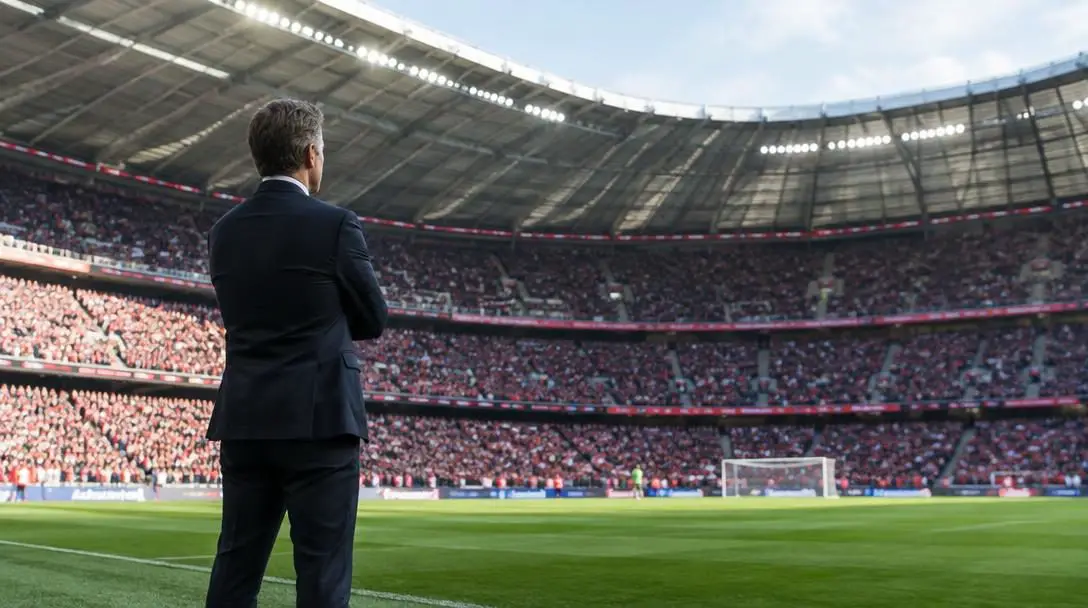
A select group of tacticians has risen above the pressure, turning high expectations into sustained triumph.
How elite football management works
Understanding why these particular managers succeeded requires examining the moving parts of managing an elite football squad. Directing a global club is not merely a matter of drawing formations on a chalkboard; it requires orchestrating several complex domains simultaneously:
- Player motivation and man-management: Top squads are composed of high-profile international figures. Leaders like Ancelotti, Zidane, and del Bosque relied heavily on personal respect and calm communication to keep dressing rooms unified throughout arduous campaigns.
- Tactical versatility: Facing diverse opposition across domestic leagues and European tournaments demands adaptable systems. Managers must configure their teams to break down defensive blocks while retaining structure against counterattacks.
- Squad rotation and conditioning: With campaigns extending across La Liga, domestic cups, and international competitions, coaches must carefully manage match loads, player fatigue, and injury crises to keep the core squad sharp for decisive matches.
- Organizational synergy: Successful managers must align with club directors, youth development systems, and medical staffs to ensure that incoming talent, reserve players, and team strategies work toward common objectives.
Practical steps for evaluating a manager's legacy
Assessing the historical footprint of a football coach requires a balanced approach rather than looking exclusively at one metric. Anyone looking to rank or analyze managerial tenures can follow these practical analytical steps:
- Measure trophy volume against context: Count major honours, including domestic championships such as La Liga and premier continental tournaments like the UEFA Champions League. Consider the difficulty of the competitions and the strength of domestic rivals during that era.
- Evaluate longevity and consistency: Examine total games managed alongside win percentages. A manager like Miguel Munoz, who directed 595 matches, demonstrates an ability to adapt across multiple generations of players, which carries weight alongside raw efficiency.
- Assess high-stakes performance: Review records in knockout tournaments and cup finals. Success in decisive games—such as the UEFA Champions League or the Intercontinental Cup—demonstrates tactical preparation under extreme pressure.
- Analyze squad development: Determine whether the coach promoted players from within, as demonstrated by clubs leveraging their B squads, or integrated new signings effectively to sustain winning cycles across multiple seasons.
Common mistakes when comparing eras
Comparing coaches across multiple decades presents unique challenges. Analysts and supporters often fall into common traps when reviewing managerial histories:
- Relying solely on win percentages: A high win rate over a short tenure does not always equal sustained greatness. For example, Vincent del Bosque's 54.51% win rate is lower than modern figures, yet his collection of two Champions League crowns and two La Liga titles over 233 matches proves his undeniable historical impact.
- Ignoring changes in tournament structures: The formats of international and domestic competitions have evolved over time. The modern UEFA Champions League requires navigating different group and knockout stages compared to the European tournaments overseen by past managers like Munoz.
- Overlooking resource disparities: Historical squads did not operate with modern sports science, data analytics, or deep reserve benches. Expecting coaches from the 1960s to manage player fitness in the same manner as twenty-first-century managers ignores historical context.
- Dismissing rebuilding phases: Coaches who step in during transitional periods often absorb lower winning rates while restructuring the team, whereas managers inheriting established title-winning rosters can register high win rates immediately.
What to consider next in managerial history
The history of football management is dynamic, with every new season reshaping records and historical standing. When tracking the evolution of managerial records at Real Madrid moving forward, keep two key dimensions in mind.
First, watch how modern tenures compare to historic benchmarks. The longevity established by Miguel Munoz across his fourteen-year run from 1960 to 1974 remains an extraordinary standard in modern sport, where coaching tenures are increasingly short. Observing whether future managers can approach his total of 595 matches provides an intriguing look at modern club patience.
Additionally, monitor how active managers alter their statistical standing upon returning to the club. Multiple managers on this list—including Ancelotti, Zidane, and Beenhakker—served more than one stint in the Spanish capital. Second tenures present unique challenges, requiring coaches to rebuild squads while preserving the winning pedigree established during their initial runs. Evaluating these evolving chapters will continue to define who holds the highest honors in the history of the sport.
Frequently asked questions
Who is the most successful manager in Real Madrid history?
Miguel Munoz is the most decorated coach in club history, having led Real Madrid to nine La Liga championships, two European Cups, and two Copa del Rey trophies across 595 matches between 1960 and 1974.
Which manager has the highest winning percentage at Real Madrid?
Among the club's elite historical leaders, Carlo Ancelotti recorded a standout winning rate of 74.79 percent, higher than figures posted by legends such as Zinedine Zidane and Vincent del Bosque.
How many Champions League titles did Zinedine Zidane win with the club?
Zinedine Zidane won three UEFA Champions League titles as head coach of Real Madrid, leading the team during an era of unprecedented modern dominance in European knockout competition.
Did any of Real Madrid's top managers also play for the club?
Yes. Miguel Munoz, Vincent del Bosque, and Zinedine Zidane all enjoyed prominent playing careers with Real Madrid before transitioning into coaching and leading the senior team.
Who was the longest-serving manager in Real Madrid history?
Miguel Munoz holds the record for longevity, directing the first team for fourteen consecutive years from 1960 to 1974 and managing a club-record 595 matches.
The bottom line
Leading Real Madrid requires surviving in one of the most demanding tactical arenas in world football. While dozens of celebrated coaches have taken the reins, managers like Miguel Munoz, Vincent del Bosque, Leo Beenhakker, Zinedine Zidane, and Carlo Ancelotti set themselves apart by turning immense pressure into sustained domestic and continental silverware. Their collective achievements form the foundation of the club's enduring legacy as a global football powerhouse.