Best NCAA Basketball Coaches of the 2000s
The 2000s represented a transformative era for NCAA men's basketball, defined by profound structural shifts, evolving eligibility mandates, and tactical reinvention. Prior to this period, elite prep prospects frequently leaped directly from high school to the professional ranks, a trend epitomized by LeBron James bypassing the college game entirely. The implementation of an eligibility rule requiring athletes to attend college for at least one year before turning professional altered the collegiate ecosystem, funneling a steady stream of elite, pro-ready talent directly onto campus rosters.
This dynamic presented head coaches with both an unmatched talent infusion and a steep management challenge. Tacticians had to integrate dominant freshmen who were accustomed to commanding every possession into balanced, team-first systems without sacrificing chemistry. Against the backdrop of single-elimination postseason pressure and relentless conference schedules, five head coaches separated themselves from the rest of the field through championships, consistent winning percentages, and program stability.
Key takeaways
- Eligibility rule changes in the 2000s directed elite prep stars into collegiate rosters, forcing coaches to balance one-and-done talent with veteran foundations.
- Billy Donovan and Roy Williams emerged as the decade's only multi-time national champions, with Donovan securing back-to-back titles at Florida and Williams capturing two at North Carolina.
- Tom Izzo and Mike Krzyzewski set the standard for decade-long consistency, maintaining remarkably low loss ceilings and never missing the NCAA Tournament field.
- Jim Boeheim secured Syracuse's long-sought national crown in 2003 by successfully pairing generational freshman Carmelo Anthony with an established roster.
The Changing Landscape of College Basketball in the 2000s
Collegiate basketball underwent a massive operational pivot during the 2000s. In previous eras, programs could rely on multi-year development tracks, nurturing players across three or four seasons before expecting them to compete for national championships. When top high school players were mandated to spend at least one year at the collegiate level, coaching staffs suddenly had to accelerate their teaching curves. Elite freshmen arrived on campus with immense scoring capabilities but limited experience operating within complex collegiate offensive and defensive schemes.
Programs that thrived during this transitional decade learned to blend star recruits into broader tactical identities. Coaches had to navigate heightened roster turnover, manage the emotional turbulence of early NBA draft departures, and maintain locker room cohesion between short-term phenoms and long-term upperclassmen. The pressure was magnified by the unforgiving nature of March Madness, where a single poor shooting night or tactical lapse ended a season instantly.
The Top Five Head Coaches of the Decade
While many programs achieved fleeting postseason success, only a handful of leaders demonstrated the ability to reload, adapt, and contend annually. The following five head coaches defined the decade through national titles, conference supremacy, and unmatched competitive standards.
Jim Boeheim
- Program: Syracuse
- National Championships in the Decade: 1 (2003)
- Decade High-Water Mark: 5-loss title season in 2003
- Tournament Consistency: 6 NCAA Tournament appearances, 2 Sweet 16s
Jim Boeheim entered the 2000s with a formidable coaching legacy at Syracuse that began back in 1976. Despite decades of high-level success, a national championship had eluded him, with his closest previous brush coming in a 1987 national championship loss to Indiana. Boeheim overcame early decade turbulence by landing blue-chip recruit Carmelo Anthony, whose dynamic scoring transformed the Orangemen into an offensive juggernaut.
The 2003 campaign culminated in Boeheim's first national championship, a historic run in which Syracuse suffered just five defeats all season. Beyond that breakthrough title, Boeheim guided Syracuse to five additional NCAA Tournament appearances during the decade, including two trips to the Sweet 16. Boeheim maintained an exceptionally high competitive floor, never dropping more than 14 games in any season throughout the 2000s and proving that his system could weather fluctuating roster dynamics.
Tom Izzo

- Program: Michigan State
- National Championships in the Decade: 1 (2000)
- Final Four Appearances: 3 (2000, plus two additional trips)
- Conference Dominance: 3 Big Ten regular-season championships
Taking over the Michigan State program in 1995 from Jud Heathcote, who led the Spartans for nearly two decades, Tom Izzo initially faced a daunting rebuilding task. After missing the NCAA Tournament in his first two seasons, Izzo established a punishing, rebounding-focused culture that culminated in a late-1990s Final Four trip. He capitalized immediately as the new millennium began, capturing the 2000 NCAA Championship to inaugurate the decade.
Izzo sustained that momentum across the entire ten-year span, qualifying for the NCAA Tournament in every single season of the 2000s. Alongside his national championship, Izzo made two additional trips to the Final Four and secured three Big Ten regular-season crowns. Izzo established Michigan State as a benchmark for durability, never suffering more than 13 losses in a single campaign and never finishing below seventh place in the Big Ten conference standings.
Mike Krzyzewski

- Program: Duke
- National Championships in the Decade: 1 (2001)
- Conference Achievements: 4 ACC championships, 15-1 league mark in 2000
- Postseason Record: 2 Final Fours, 4 Sweet 16 appearances
Already considered one of the sport's greatest leaders prior to the 2000s, Mike Krzyzewski continued to execute at the highest echelon throughout the decade. Coming off a near-championship finish in 1999, Coach K began the decade by piloting Duke to an exceptional 15-1 regular-season record in the ACC and a Sweet 16 berth. He matched that momentum the following season, winning the 2001 NCAA Championship to capture his third national title with the Blue Devils.
What distinguished Krzyzewski throughout the 2000s was his unmatched floor. Duke experienced only one season in the entire decade in which the team lost more than seven games, and that squad still comfortably secured an NCAA Tournament bid. Coach K's resume across the 2000s included two Final Four runs, four Sweet 16 finishes, and four ACC tournament titles, maintaining Duke's status as a perennial national title contender.
Roy Williams

- Programs: Kansas, North Carolina
- National Championships in the Decade: 2 (2005, 2009)
- Conference Championships: 6 regular-season titles across Big 12 and ACC
- Deep Postseason Runs: 4 Final Fours, 1 Elite Eight
Roy Williams proved his tactical genius across two distinct blue-blood programs during the 2000s. After succeeding Larry Brown at Kansas following the Jayhawks' 1988 national title, Williams maintained Kansas as an elite contender, earning two trips to the Final Four in the early 2000s and reaching the national title game in 2003. He then accepted the head coaching role at his alma mater, North Carolina, orchestrating a rapid turnaround.
In just his second season in Chapel Hill, Williams posted a 33-4 record and secured his first career national championship in 2005. He capped off the decade with another national championship in 2009, while adding an additional Final Four appearance and an Elite Eight run to his ledger. With six regular-season conference crowns split between the Big 12 and the ACC, Williams demonstrated an elite ability to win high-caliber games in any environment.
Billy Donovan

- Program: Florida
- National Championships in the Decade: 2 (2006, 2007)
- Championship Game Berths: 3 (2000, 2006, 2007)
- Previous Experience: Assistant at Kentucky, Head Coach at Marshall (35-20)
Billy Donovan enjoyed a meteoric rise through the collegiate coaching ranks. After serving as an assistant at Kentucky and spending two seasons as head coach at Marshall with a 35-20 record, Donovan took the helm at Florida in 1996. Despite enduring losing campaigns in his first two years, Donovan reached the Sweet 16 in 1999 and advanced to the NCAA Championship Game in 2000, where Florida fell to Michigan State.
That initial run established Florida as a national powerhouse. Donovan transformed the Gators into a perennial March Madness contender, reaching the pinnacle of the sport in 2006 by capturing the school's first NCAA Championship. Donovan then achieved the extraordinary feat of repeating as national champions in 2007, solidifying his program as the only back-to-back title winner of the decade.
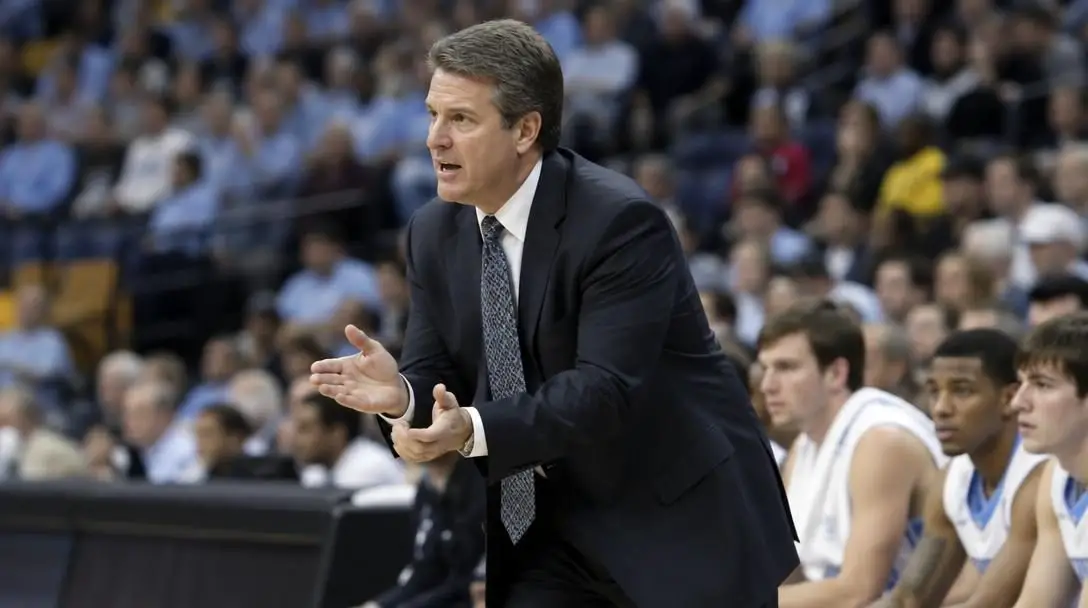
Navigating the single-elimination tournament required balancing elite star power with experienced program culture to survive March's razor-thin margins.
Decade at a Glance: Elite Coaching Resumes
Assessing historic performance across an entire decade requires looking at peak achievements alongside week-to-week regular-season excellence. The table below outlines how the decade's top five tacticians compared in national titles, Final Four appearances, and league dominance.
| Head Coach | Primary Program(s) | NCAA Titles (2000s) | Final Fours (2000s) | Key Decade Accomplishment |
|---|---|---|---|---|
| Billy Donovan | Florida | 2 | 3 | Back-to-back national championships in 2006 and 2007 |
| Roy Williams | Kansas, North Carolina | 2 | 4 | Two national titles (2005, 2009) and six conference crowns |
| Mike Krzyzewski | Duke | 1 | 2 | 2001 NCAA title and only one season with over 7 losses |
| Tom Izzo | Michigan State | 1 | 3 | 2000 NCAA title and perfect 10-for-10 tournament qualification |
| Jim Boeheim | Syracuse | 1 | 1 | Captured first career national title in 2003 with 5-loss season |
The Tactical Foundations of 2000s Coaching Excellence
Sustained dominance during this era required more than assembling talented rosters. The top head coaches succeeded because they implemented reliable schemes, mastered personnel integration, and handled tournament adversity better than their peers.
- Unwavering System Identity: Programs needed a structural trademark that held firm regardless of lineup changes, such as Syracuse's signature 2-3 zone defense or Michigan State's relentless offensive rebounding and transition defense.
- Cohesion Between Stars and Veterans: Elite coaches prevented friction between one-and-done prospects and experienced multi-year players, ensuring freshmen absorbed defensive assignments while upperclassmen shared offensive touches.
- Rapid In-Game Tournament Adjustments: The NCAA Tournament pits teams against unfamiliar out-of-conference schemes on short rest, demanding quick scouting execution and immediate second-half tactical shifts.
- Enduring the Conference Grind: Surviving the winter schedules of rugged leagues like the ACC and Big Ten demanded physical endurance and high emotional composure on hostile opposing courts.
Step-by-Step Guide to Evaluating Historic Coaching Eras
Sports historians and analysts evaluate coaching eras through a balanced framework rather than relying purely on subjective memory. When analyzing the accomplishments of coaches across a specific decade, use the following analytical steps:
- Calculate National Championship Totals: Start with the sport's highest achievement by tallying NCAA Tournament titles won strictly within the designated ten-year window.
- Measure Deep Postseason Penetration: Total the appearances in the Final Four, Elite Eight, and Sweet 16 to evaluate whether a program consistently contended when the bracket narrowed.
- Examine Regular-Season Conference Trophies: Assess weekly league dominance by checking regular-season championships in power conferences, which reflect consistency against familiar competition.
- Determine the Program's Loss Floor: Analyze the coach's worst seasons within the decade to see how low the floor fell during rebuilding or injury-plagued years.
- Weigh Rebuilding Context and Transitions: Factor in the state of the program at the start of the decade, crediting coaches who engineered swift turnarounds or maintained excellence across multiple institutions.
Common Pitfalls When Assessing Decade Legacies
Evaluating collegiate sports over arbitrary ten-year increments can lead to flawed conclusions if analysts fail to account for context. Watch out for these frequent mistakes when studying 2000s college basketball:
- Ignoring Structural Rule Changes: Evaluating late-2000s teams without considering the one-year college requirement creates an unfair comparison against early-decade rosters built entirely on multi-year development.
- Letting Career Totals Cloud Decade Windows: Crediting coaches for titles or milestones secured in the 1980s, 1990s, or 2010s distorts evaluations that should focus exclusively on 2000 to 2009.
- Over-Indexing Single Tournament Runs: Elevating a coach based on one unexpected championship while ignoring repeated missed tournaments over the remaining nine years creates an inaccurate picture of program strength.
- Overlooking Succession Challenges: Failing to appreciate the difficulty of replacing legendary figures, such as Izzo following Heathcote or Williams succeeding Brown, overlooks how hard it is to maintain established blue-blood standards.
Frequently asked questions
Which college basketball coach won the most national championships in the 2000s?
Billy Donovan and Roy Williams tied for the most national titles in the 2000s, each winning two. Donovan won back-to-back championships with Florida in 2006 and 2007, while Williams won titles with North Carolina in 2005 and 2009.
How did NBA eligibility rules change college basketball rosters in the 2000s?
After players like LeBron James jumped straight from high school to the pros, a rule was enacted requiring prospects to attend college for at least one year before entering the NBA draft. This directed elite high school talent to college rosters, requiring coaches to quickly incorporate immediate professional prospects into team systems.
Which head coach had the lowest loss total across the decade?
Mike Krzyzewski maintained an exceptionally low loss ceiling at Duke, experiencing only one single season throughout the entire decade in which his team finished with more than seven losses.
Did Tom Izzo reach the NCAA Tournament in every season of the 2000s?
Yes, Tom Izzo led Michigan State to the NCAA Tournament in all ten seasons of the 2000s, capturing the national championship in 2000 and reaching two additional Final Fours.
What was Jim Boeheim's biggest accomplishment during the 2000s?
Jim Boeheim's crowning achievement was winning the 2003 NCAA Championship with Syracuse, the first national title of his head coaching career, finishing the season with only five total losses.
The bottom line
The 2000s established a modern paradigm for NCAA men's basketball, bridging the traditional era of multi-year player continuity and the modern era of rapid roster turnover driven by pro-ready talent. Leading a collegiate basketball program required a blend of recruiting adaptability, tactical clarity, and tournament composure. Coaches had to establish an uncompromising defensive and philosophical culture while integrating dynamic young scorers who operated under intense media and professional scrutiny.
Billy Donovan, Roy Williams, Mike Krzyzewski, Tom Izzo, and Jim Boeheim separated themselves by pairing regular-season conference dominance with deep March runs. Whether through Donovan's back-to-back titles at Florida, Williams's success across two powerhouse programs, Krzyzewski's single-digit loss baselines, Izzo's postseason consistency, or Boeheim's championship breakthrough, these tacticians established the gold standard of collegiate coaching during an unforgettable decade.