5 Best Players in Barcelona History
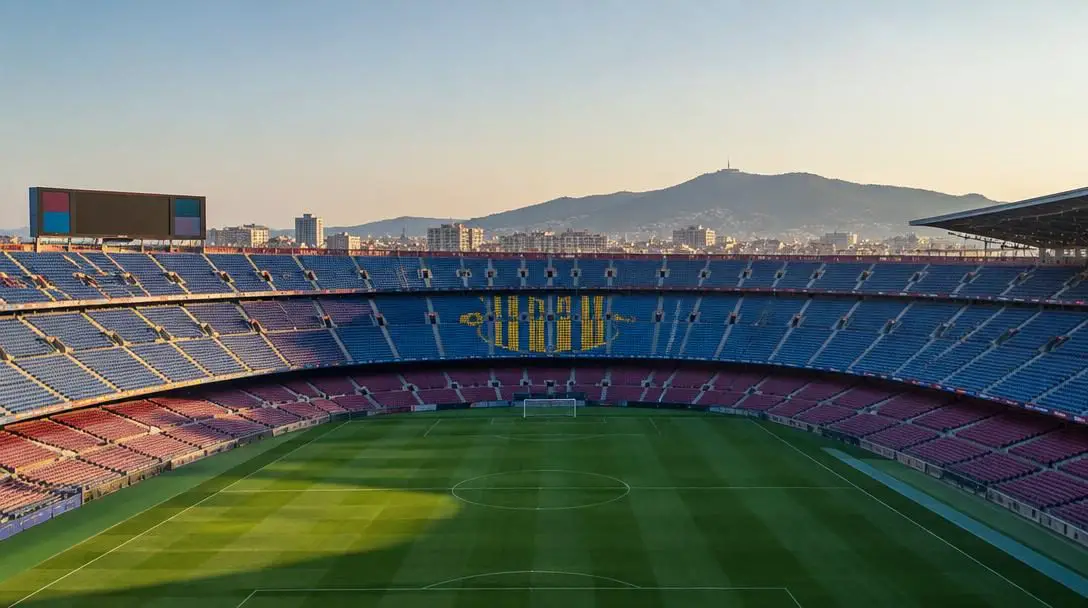
Few sporting institutions in global football carry the historic weight and international reverence of FC Barcelona. While domestic rival Real Madrid may hold the record for the most La Liga championships, Barcelona stands right alongside them at the summit of world football in terms of prestige, philosophical identity, and cultural impact. Often known simply as Barca, the club has drawn an enormous worldwide following thanks to the magnificent talents who have donned the famous shirt across distinct tactical eras.
Throughout the club's illustrious timeline, roughly 1,000 men have represented Barcelona at the Camp Nou, bringing diverse international backgrounds and stylistic flair to Catalonia. Selecting the finest five figures from more than a century of excellence is a monumental challenge. Before counting down the absolute elite, several immortal club icons deserve recognition for narrowly missing the cut, including defensive titans Gerard Pique and Carles Puyol, attacking wizard Ronaldinho, Dutch visionary Johan Cruyff, and legendary goalscorer Cesar Rodriguez. When weighing longevity, trophy hauls, individual honors, and statistical dominance, five players elevated themselves above the rest.
Key takeaways
- Lionel Messi reigns supreme as the greatest player in Barcelona history, holding club records for appearances and scoring an astonishing 672 goals.
- Midfield masters Xavi and Andres Iniesta orchestrated Barcelona's golden era, combining for eight UEFA Champions League trophies and over 1,400 senior appearances.
- Sergio Busquets served as the tactical fulcrum of the team for over 700 matches, securing more than a dozen domestic league and cup titles.
- Luis Suarez proved to be one of the most prolific goalscorers in modern history, netting 198 goals in just 283 matches during a trophy-laden six-year stint.
- Homegrown talent from the club's youth setup forms the backbone of Barcelona's historic success, representing four of the top five all-time greats.
Comparing Barcelona's legendary top five
The greatest players in Barcelona's history represent different positions on the pitch, from deep-lying defensive anchors to generational playmakers and lethal strikers. Evaluating their individual achievements and contributions side by side illustrates the extraordinary standards required to reach the pinnacle of the club's record books.
| Player | Primary Position | Total Appearances | Club Scoring Record | Key Accolades & Trophies |
|---|---|---|---|---|
| Sergio Busquets | Defensive Midfielder | Over 700 matches | Over 10 goals | 3 UEFA Champions Leagues, Bravo Award |
| Luis Suarez | Striker | 283 matches | 198 goals (3rd all-time) | 1 UEFA Champions League, 4 La Liga titles |
| Andres Iniesta | Central Midfielder | 679 matches | Decisive midfield play | 4 UEFA Champions Leagues, 9 La Liga titles |
| Xavi | Central Midfielder | 779 matches | Tempo-controlling midfield play | 4 UEFA Champions Leagues, 8 La Liga titles |
| Lionel Messi | Forward | All-time appearance leader | 672 goals (1st all-time) | 10 La Liga titles, 7 Ballon d'Or awards |
The five greatest players in Barcelona history
These five icons defined eras of unprecedented dominance, lifting domestic championships and European crowns while demonstrating masterclasses in technical ability, vision, and tactical discipline.
Sergio Busquets
- Youth arrival: 2005
- First team debut: 2007
- Club appearances: Over 700 matches
- European trophies: 3 UEFA Champions League titles
Sergio Busquets spent his early youth career moving across several developmental organizations before entering the Barcelona youth setup as a teenager in 2005. Just two years later, he made his professional debut, kicking off a tenure that saw him anchor the senior midfield for well over a decade. In 2022, Busquets crossed over 700 appearances, cementing his place as third on the club's all-time appearances list.
Operating primarily as a defensive midfielder, Busquets rarely ventured forward into the scoring spotlight, yet he still registered over 10 total goals for the club. His true genius resided in positional discipline, reading passing lanes, resisting opposing pressure, and distributing the ball efficiently to attacking teammates. Over his decorated run, Busquets was part of more than a dozen La Liga and Copa del Rey championship squads, won three UEFA Champions League titles, and collected prestigious personal recognition including the Bravo Award and La Liga's Breakthrough Player Award.
Luis Suarez
- Country of origin: Uruguay
- Matches played: 283 matches
- Total goals: 198 goals
- Club tenure: 2014 to 2020
One of only two non-Spanish athletes to crack the top five, Uruguayan marksman Luis Suarez arrived at Camp Nou in 2014 after establishing a world-class reputation across Europe, including matching 110 appearances each for Ajax and Liverpool. Over the course of his six-year stay in Catalonia, Suarez developed into one of the most lethal and prolific goalscorers in the history of the sport.
Suarez required just 283 competitive matches to rack up 198 goals in all competitions, an electric scoring pace that propelled him to third on Barcelona's all-time scoring leaderboard. During this prolific six-year campaign, Suarez captured four La Liga titles, four Copa del Rey trophies, two Spanish Super Cups, and a UEFA Champions League title. The four-time La Liga Player of the Month left the club in 2020, continuing his top-flight career with Atletico Madrid before returning to South America with Nacional and Gremio.
Andres Iniesta

- Youth arrival: Age 13
- First team debut: 2001
- Club appearances: 679 matches
- Domestic league crowns: 9 La Liga titles
Entering Barcelona's youth academy at just 13 years of age, Andres Iniesta developed a brand of midfield playmaking built on grace, agility, and exceptional spatial awareness. Iniesta made his professional debut in 2001, joined the primary first-team squad in 2002, and remained an essential core member of the club for 16 consecutive seasons. By the conclusion of his Camp Nou career, Iniesta had recorded 679 appearances, a tally higher than all but three players in Barcelona's history.
While never measured purely by goalscoring output, Iniesta controlled the rhythm of the biggest matches in European football. He played a foundational role on teams that secured nine La Liga championships and four UEFA Champions League trophies. Recognized globally as one of the best midfielders of his generation, Iniesta earned La Liga's Best Midfielder award five times and finished among the top three in Ballon d'Or voting on two separate occasions.
Evaluating sheer longevity, unmatched statistical impact, individual accolades, and team honors reveals the players who transformed Camp Nou into the center of world football.
Xavi
- Full name: Xavier Hernandez Creus
- Senior debut: 1998
- Club appearances: 779 matches
- Major honors: 4 UEFA Champions League titles
Born Xavier Hernandez Creus in Terrassa, Spain, the world came to know the diminutive orchestrator simply as Xavi. Widely regarded as one of the greatest central midfielders in the history of European football, Xavi spent more than a decade rising through the youth ranks and featured for the B-squad in the late 1990s before earning his first-team debut in 1998. He went on to compile 779 official matches for Barcelona, which stands as the second-highest match total in club history.
Xavi was the tactical heartbeat of Barcelona's possession-oriented style, dictating match tempo with unparalleled passing vision and composure under pressure. His contributions delivered eight La Liga championships, three Copa del Rey trophies, and four UEFA Champions League victories. On an individual level, Xavi earned La Liga Midfielder of the Year honours three times and was named the overall Spanish Player of the Year in 2005.
Lionel Messi
- Country of origin: Argentina
- Tenure: 2000 to 2021
- Club goals: 672 goals
- World player awards: 7 Ballon d'Or titles
Unquestionably sitting in the top spot is Argentine maestro Lionel Messi, widely acclaimed by observers across the globe as the greatest football player in history. Messi joined the Barcelona youth ranks as a boy in 2000, earned promotion to the senior squad in 2004, and dedicated 17 historic seasons to the first team before departing for Paris Saint-Germain in 2021.
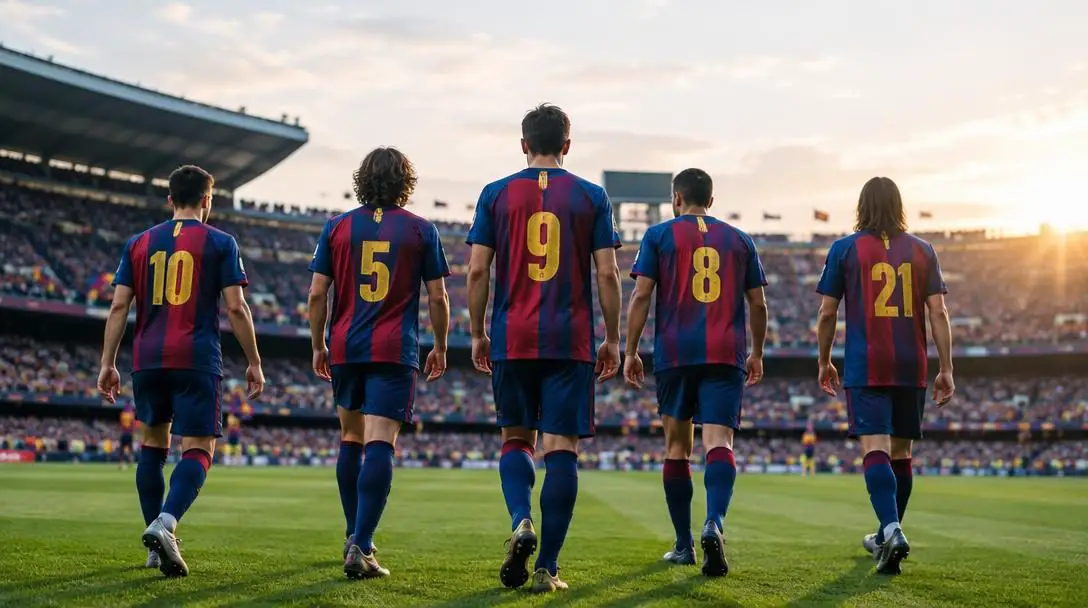
Messi holds virtually every meaningful individual record in the Barcelona archives, including total appearances and total goals. He scored an astounding 672 goals in a Barcelona kit, placing him 440 goals ahead of every other player in the club's history. Behind Messi's genius, Barcelona collected 10 La Liga championships alongside dozens of other trophies. During his spell with the Catalan giants, Messi claimed the prestigious Ballon d'Or as the world's top player a remarkable seven times, crafting an athletic legacy that remains unparalleled.
How historical player rankings are calculated
Determining the greatest footballers in a club whose origins span well over a century requires examining multiple performance dimensions rather than looking at a single metric. Analysts, historians, and supporters evaluate legends through several foundational standards:
- Longevity and appearance durability: Sustained output over a decade or more demonstrates a player's ability to thrive despite tactical shifts, roster turnover, and managerial changes. Figures like Messi, Xavi, Busquets, and Iniesta each played in well over 600 competitive fixtures.
- Trophy accumulation: True football greatness is reflected in collective silverware. Lifting domestic league titles in La Liga, cup silverware like the Copa del Rey and Super Cups, and continental crowns in the UEFA Champions League highlights an athlete's ability to deliver under pressure.
- Peak scoring efficiency: For attacking players, historic scoring rates carry substantial weight. Luis Suarez scoring 198 goals in only 283 matches demonstrates a level of goalscoring efficiency matched by very few forwards in the history of the sport.
- Tactical positional influence: Deep midfielders and defensive anchors do not generate the flashy scoring numbers of forwards. Evaluators place equal emphasis on ball circulation, spatial awareness, defensive interventions, and match tempo when analyzing players like Busquets, Iniesta, and Xavi.
- Elite individual accolades: International recognitions, such as the Ballon d'Or, domestic player of the year honors, and positional awards, demonstrate that a player stood above their global peers during their active years.
A step-by-step approach to evaluating club icons
If you are building your own historical sports rankings, assessing team rosters, or researching sports history, using a structured and consistent framework eliminates personal bias. Follow these actionable steps to build an objective comparison:
- Establish your core ranking criteria: Decide from the outset how you will weigh match appearances, total goals scored, trophies won, and individual honours to keep evaluations consistent across positions.
- Measure career durability and appearances: Review how many total matches an athlete played for the club. High numbers like Xavi's 779 or Iniesta's 679 demonstrate reliability, physical conditioning, and long-term trust from coaches.
- Analyze trophies across different tournament tiers: Compare domestic league titles like La Liga, knockout cups such as the Copa del Rey, and continental championships like the UEFA Champions League to judge success on all stages.
- Contextualize roles based on position: Avoid judging defensive specialists or midfield controllers by striker statistics. Weigh Busquets' defensive coverage and tactical intelligence alongside Suarez's goal conversion rates.
- Incorporate individual peer recognition: Examine how often the player was recognized by global and domestic panels, including Ballon d'Or podium finishes, breakthrough player honors, and league positional awards.
Common mistakes when comparing football legends
Comparing players from different eras, tactical systems, and pitch assignments often produces flawed debates if critical context is omitted. Watch out for these frequent analytical traps:
- Over-relying on raw scoring volume: Assuming that forwards are inherently greater than midfielders or defenders ignores the foundational work done in the center of the pitch. Andres Iniesta and Sergio Busquets were central to Barcelona's success despite scoring limited goals.
- Confusing match volume with performance quality: Logging a high appearance count is impressive, but true club legends pair durability with decisive contributions in tournament finals and high-stakes matches.
- Overlooking European competition: Focusing exclusively on domestic league success ignores the ultimate benchmark of continental competition. Triumphs in the UEFA Champions League are crucial for measuring a player against the world's best.
- Dismissing shorter, high-impact tenures: While decade-long careers are laudable, explosive contributions over a shorter timeline deserve credit. Luis Suarez spent six seasons at Barcelona, yet his 198 goals firmly cemented his place in history.
Broadening your football research
To deepen your understanding of how FC Barcelona achieved its historic status and how these iconic players shaped modern football tactics, consider exploring several related areas of study:
- Youth development models: Research the progression of homegrown academy players like Messi, Iniesta, Xavi, and Busquets, analyzing how Barcelona's youth infrastructure developed elite talent over successive generations.
- Tactical evolution across eras: Study how Barcelona shifted its game model over time, moving from the possession-heavy midfield control orchestrated by Xavi and Iniesta to the high-octane attacking trident featuring Messi and Suarez.
- Rivalry dynamics: Compare Barcelona's all-time records, philosophies, and trophies with their primary domestic rival, Real Madrid, to explore how contrasting identities drove both clubs to international dominance.
- Late-career transitions: Trace the paths legendary figures take after leaving Barcelona, such as Messi's move to Paris Saint-Germain or Suarez's stops at Atletico Madrid, Nacional, and Gremio.
Frequently asked questions
Who is the all-time leading goalscorer in Barcelona history?
Lionel Messi is Barcelona's all-time top goalscorer with 672 goals in competitive matches, putting him an extraordinary 440 goals ahead of any other player in the club's history.
Which player has made the most appearances for FC Barcelona?
Lionel Messi holds the club record for overall appearances, with midfield maestro Xavi sitting in second place with 779 matches, and Sergio Busquets in third with over 700 appearances.
How many UEFA Champions League titles did Xavi and Andres Iniesta win?
Both Xavi and Andres Iniesta won four UEFA Champions League titles during their historic tenures with Barcelona, serving as the playmaking spine for the club's European triumphs.
How many goals did Luis Suarez score for Barcelona?
Luis Suarez scored 198 goals in 283 competitive matches over his six-year career at Barcelona, making him the third-highest goalscorer in the club's history.
Which players narrowly missed out on Barcelona's top five?
Prominent legends who came close to the top five include defenders Gerard Pique and Carles Puyol, Brazilian forward Ronaldinho, Dutch icon Johan Cruyff, and historic goalscorer Cesar Rodriguez.
The bottom line
The history of FC Barcelona is defined by brilliant football minds and breathtaking athletes who altered the standards of the world's most popular sport. While approximately 1,000 players have represented the club at the Camp Nou, the contributions of Sergio Busquets, Luis Suarez, Andres Iniesta, Xavi, and Lionel Messi remain unmatched in trophies, longevity, and stylistic beauty. Whether controlling the midfield tempo or shattering European scoring records, these five legends established a benchmark of sporting excellence that will inspire future generations of footballers worldwide.