5 Best Players In Everton History
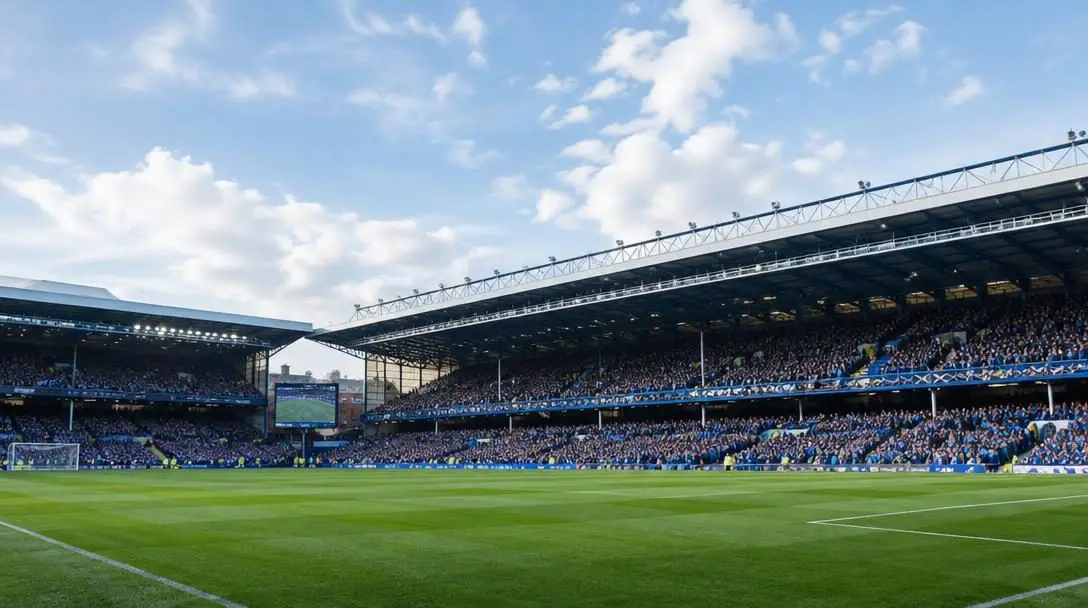
Everton Football Club stands as one of the oldest and most historically significant sporting institutions in England. Founded in 1878, the Merseyside club was an original founding member of the Football League, the historic competition that laid the groundwork for the modern English Premier League. Across more than a century of top-flight competition, the club has constructed a storied legacy highlighted by league championships, domestic cup triumphs, and an identity woven into the sporting culture of Liverpool.
Throughout this expansive timeline, hundreds of footballers have worn the royal blue shirt, but a select few defined entire eras of domestic dominance. From the high-scoring fixtures of the interwar period to the resolute defensive structures of the 1960s and the silver-laden campaigns of the 1980s, the greatest players in Everton history earned their status through silverware, exceptional loyalty, on-pitch leadership, and unmatched statistical records.
Key takeaways
- Dixie Dean remains Everton’s supreme icon, highlighted by his 386 club goals and an unbroken English top-flight record of 60 league goals in a single season.
- Goalkeeper Neville Southall stands as the club's ultimate appearance king, having represented Everton in 751 matches across nearly two decades.
- The dominant 1980s era is prominently represented by club captain Kevin Ratcliffe and prolific Scottish forward Graeme Sharp.
- Brian Labone epitomized loyalty as a revered one-club central defender who captained Everton to multiple First Division titles.
At a glance: Everton’s top five footballers
| Rank | Player | Position | Everton Tenure | Appearances / Goals | Primary Club Honors |
|---|---|---|---|---|---|
| 1 | Dixie Dean | Forward | 1925–1937 | 386 Goals | 2 First Division titles, 1 FA Cup |
| 2 | Graeme Sharp | Forward | 1980–1991 | 159 Goals | 2 First Division titles, 4 Charity Shields |
| 3 | Neville Southall | Goalkeeper | 1981–1998 | 751 Appearances | 2 First Division titles, 3 Charity Shields |
| 4 | Brian Labone | Defender | 1958–1971 | 2nd all-time appearances | 2 First Division titles, 1 FA Cup, 2 Charity Shields |
| 5 | Kevin Ratcliffe | Defender | 1980–1992 | 494 Appearances / 2 Goals | 2 First Division titles, 1 FA Cup, 4 Charity Shields |
The 5 best players in Everton history
Evaluating the elite contributors in Everton’s archive requires balancing silverware, individual output, and enduring connection to supporters. While legendary contributors like Alan Ball, Kevin Sheedy, Bob Latchford, Leighton Baines, and Gary Lineker left substantial marks, the following five figures represent the pinnacle of achievement in club history.
Kevin Ratcliffe
- Position: Central defender
- Everton Career: 1980–1992
- Club Appearances: 494 matches (5th all-time)
- Major Silverware: 2 First Division titles, 1 FA Cup, 4 FA Charity Shields
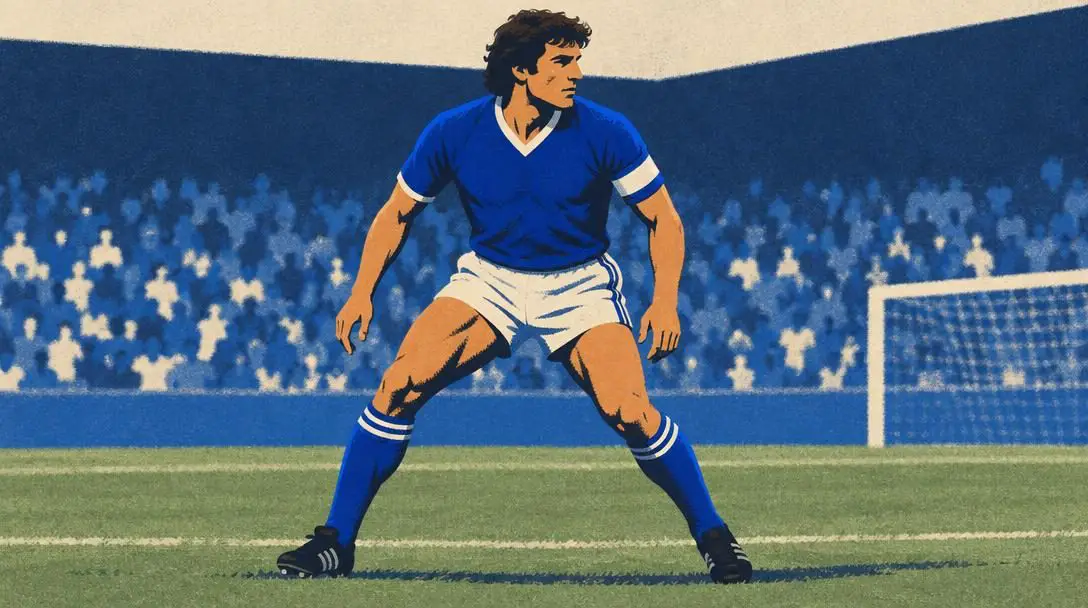
Welsh defender Kevin Ratcliffe spent the vast majority of his professional career serving as the defensive cornerstone of Everton’s backline. Emerging from the Everton youth system, Ratcliffe earned his senior debut in 1980 and quickly established himself as a central figure during the club's most prosperous modern era. Over a 12-year stay on Merseyside, his speed, positioning, and leadership earned him the captain's armband during a period of immense success.
Ratcliffe stands fifth on the club's all-time appearance list with 494 outings. While his primary responsibility was stifling opposing center-forwards, he added two goals to his ledger while marshalling the defense. Under his on-pitch captaincy, Everton lifted the Football League First Division championship twice in three years and claimed the FA Cup in the 1983–84 campaign. Ratcliffe also led the squad through four straight FA Charity Shield triumphs between 1984 and 1987. After departing Goodison Park in 1992, he finished his playing days with Dundee, Cardiff City, and Chester City before retiring in 1995 to embark on a managerial career.
Brian Labone
- Position: Central defender
- Everton Career: 1958–1971
- All-Time Standing: Second in career appearances
- Major Silverware: 2 First Division titles, 1 FA Cup, 2 FA Charity Shields
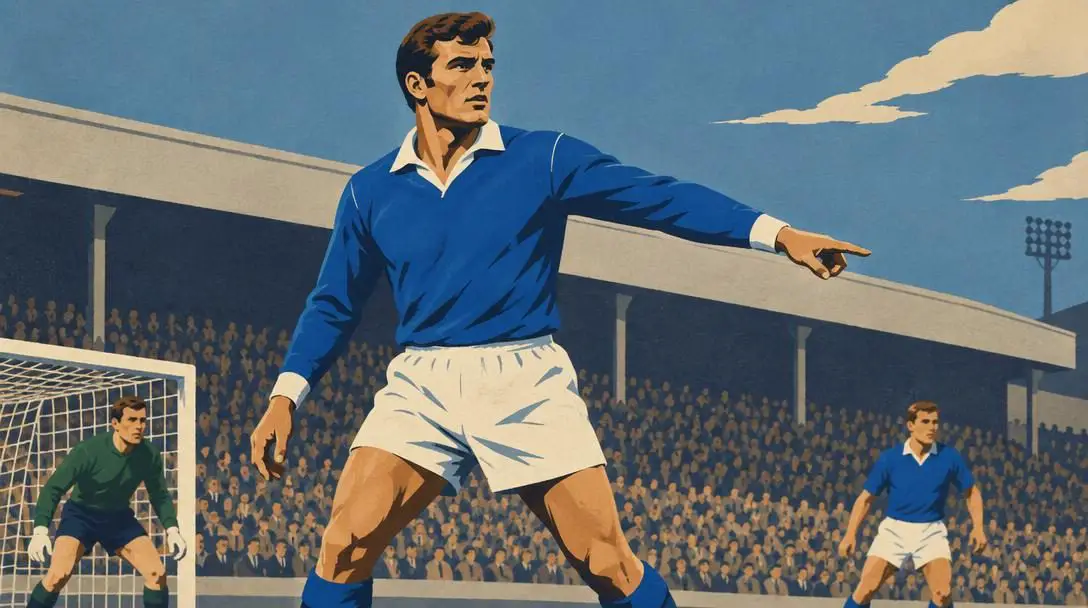
In an era where long-term loyalty was a hallmark of the English game, Brian Labone stood apart as the quintessential one-club man. A native of Liverpool, Labone walked away from college opportunities at the age of 17 to commit his sporting life to Everton, making his senior debut the following year in 1958. His top-flight career spanned 13 seasons, concluding in 1971 when a serious injury forced his retirement following several seasons where he had weighed stepping away.
Labone's immaculate reading of the game anchored Everton to two Football League First Division championships across two separate decades, first in 1962–63 and again in 1969–70. He added an FA Cup winner's medal and two FA Charity Shield victories to his collection, retiring behind only Neville Southall on the club's all-time appearances leaderboard. Labone was named to Everton's official all-time team in 2004. Following his death in 2006, the football community remembered him as one of the most authoritative and fair-minded center-halves to play the game.
Neville Southall
- Position: Goalkeeper
- Everton Career: 1981–1998
- Club Appearances: 751 matches (Club record)
- Major Silverware: 2 First Division titles, 3 FA Charity Shields
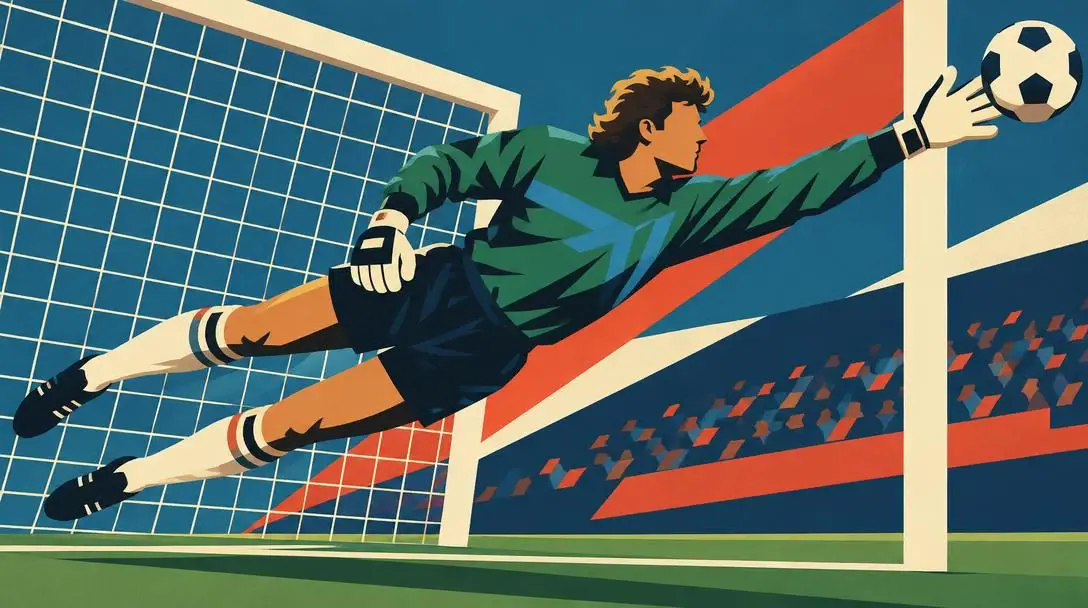
Legendary Welsh shot-stopper Neville Southall represents the standard against which all Everton goalkeepers are measured. Southall took a non-traditional route to top-flight stardom, beginning his football journey in 1973 with Llandudno Town before working through lower-league and non-league sides including Bangor City, Conwy United, Winsford United, and Bury. Everton secured his registration in 1981, initiating a transformative 17-year tenure.
Southall is Everton's undisputed appearance record-holder, amassing 751 senior appearances—finishing nearly 200 matches ahead of Brian Labone. Renowned for his reflexes and commanding presence in the penalty box, Southall helped Everton secure two First Division championships in 1985 and 1987. His personal performance levels earned widespread national recognition: he was voted into the First Division Team of the Year in four consecutive seasons, claimed three Charity Shields, and was subsequently inducted into the Hall of Fame for his historic contributions in goal.
A peerless presence between the posts, Southall established an appearance benchmark that remains nearly 200 matches clear of any challenger in club history.
Graeme Sharp
- Position: Center-forward
- Everton Career: 1980–1991
- Club Goals: 159 goals (2nd all-time)
- Major Silverware: 2 First Division titles, 4 FA Charity Shields
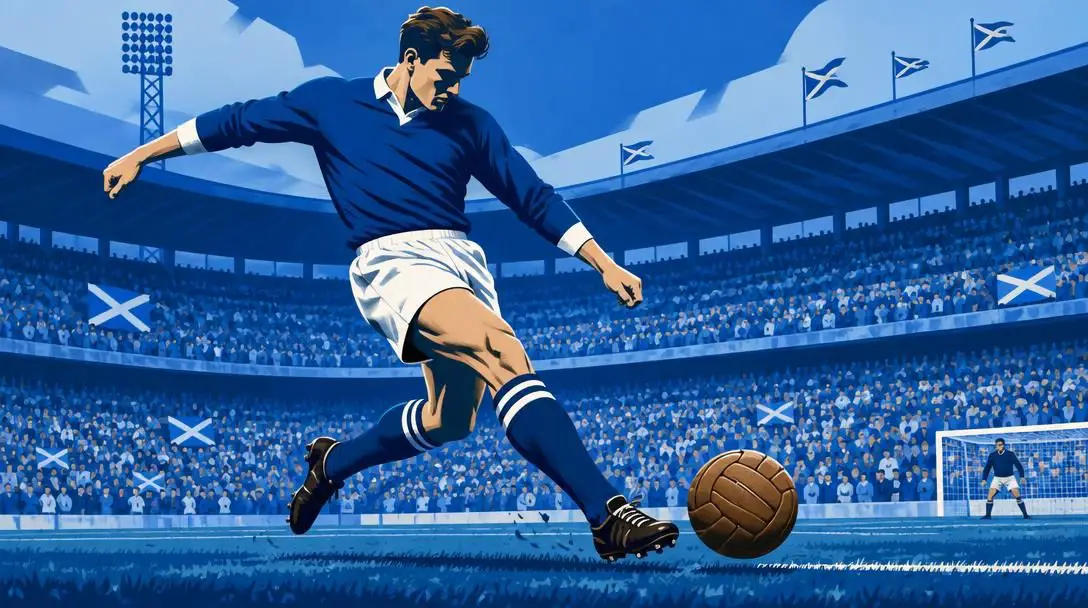
Scottish striker Graeme Sharp served as the primary attacking spearhead during the club's dominant run throughout the 1980s. Sharp initiated his senior career north of the border with Dumbarton in 1978, spending two campaigns there before Everton recognized his dynamic penalty-box instincts and signed him in 1980. He remained on Merseyside for just over a decade, establishing himself as a reliable goalscorer and an exceptional link-up forward.
Sharp holds second place on Everton’s all-time goalscoring chart, finding the back of the net 159 times in competitive play. He collected two First Division championship medals, lifted the FA Charity Shield four times, and secured a spot in the First Division Team of the Year for the 1987–88 season. Sharp finished as Everton’s leading goalscorer in four separate campaigns, underscoring his clinical finishing against elite opposition. After leaving Everton, he spent six seasons with Oldham Athletic before concluding his playing days and stepping into management at Bangor City prior to his 1997 retirement.
Dixie Dean
- Position: Center-forward
- Everton Career: 1925–1937
- Club Goals: 386 goals (1st all-time)
- Major Silverware: 2 First Division titles, 1 FA Cup
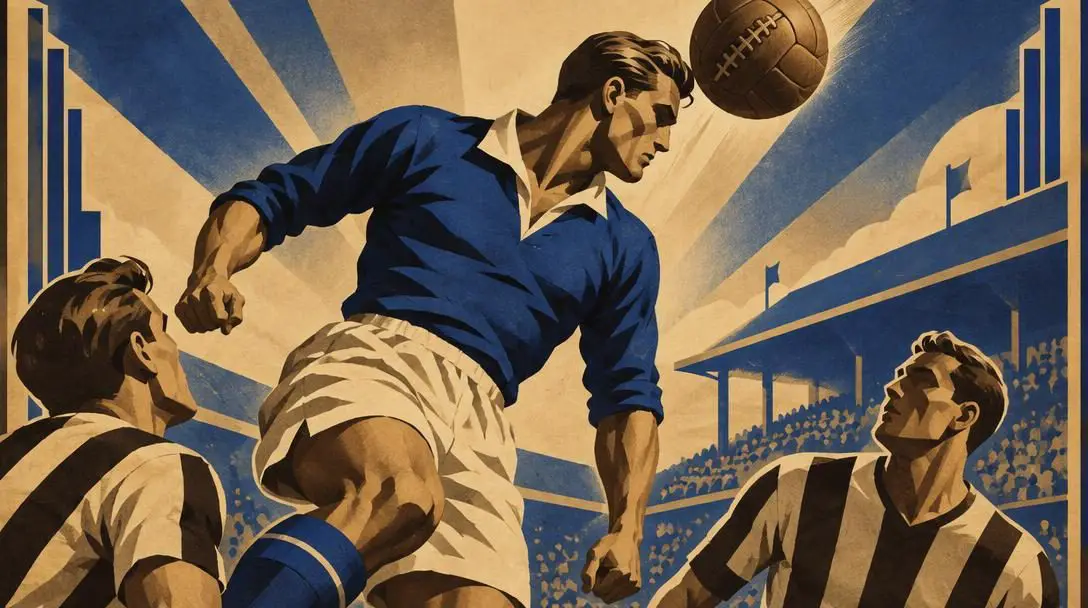
The undisputed greatest player in Everton history is Dixie Dean, the most prolific goalscorer English football has ever known. Born in Birkenhead in 1907, Dean began his career with Tranmere Rovers in 1923 before moving across the River Mersey to sign with Everton in 1925. Over the course of the following 12 years, Dean constructed a goalscoring legacy that defines the historical identity of the club, memorialized by the statue honoring him outside Goodison Park.
Dean registered a remarkable 386 goals during his 12 years at Everton, placing him 227 goals ahead of second-placed Graeme Sharp. His aerial ability and predatory box instincts carried Everton to First Division championships in 1928 and 1932, alongside an FA Cup triumph in 1933. In 2002, Dean was recognized as an inaugural inductee into the English Football Hall of Fame. His most famous milestone remains completely untouched: scoring 60 league goals in a single English top-flight season during the 1927–28 campaign.
Core criteria for ranking historic club legends
Selecting the finest footballers from a club with more than a century of competitive fixtures requires balancing individual numbers against era-specific conditions. Historians, analysts, and supporters evaluate several overlapping components to determine historical rankings:
- Longevity and Match Totals: Sustained physical durability and the ability to stay productive across changing tactical styles and managerial regimes separate standard players from club icons. Southall’s 751 matches and Labone’s 13 consecutive seasons demonstrate exceptional reliability over long periods.
- Trophy Returns: Elite individual play must translate into tangible club silverware. Performances in title-deciding league fixtures, FA Cup finals, and Charity Shield matches carry immense weight when assessing a player's lasting footprint.
- Individual Output: For attacking players, raw scoring records serve as fundamental metrics. Dixie Dean’s 386 goals and Graeme Sharp’s 159 goals established standards that have endured for generations.
- Peer and Industry Recognition: Selections to divisional Teams of the Year, inductions into the English Football Hall of Fame, and placements on all-time club rosters validate a player's standing among his direct peers and sporting authorities.
- Cultural Significance: Greatness extends beyond the match sheet. Brian Labone’s lifelong devotion as a one-club servant and the permanent bronze monument dedicated to Dixie Dean outside Goodison Park reflect deep emotional resonance with the fan base.
Step-by-step process for evaluating football legends
Sportswriters, researchers, and supporters seeking to assemble balanced player rankings across broad historical spans can follow this structured, five-step framework:
- Compile comprehensive statistical profiles: Gather verified figures for career appearances, clean sheets, goals scored, and overall seasons of service to establish an objective statistical baseline.
- Catalog team silverware: List all major trophies secured during the player’s tenure, distinguishing whether the individual acted as an everyday starter, team captain, or rotational squad member.
- Contextualize the playing era: Account for the distinct tactical setups, equipment differences, and scoring climates of the era, distinguishing interwar attacking environments from modern tactical systems.
- Review contemporary peer honors: Examine end-of-season awards, national hall-of-fame inductions, and divisional best-eleven selections to verify how opponents and contemporary observers viewed the player.
- Synthesize the final tier list: Integrate longevity, peak statistical dominance, leadership contributions, and trophy counts to generate a balanced assessment that separates elite icons from honorable mentions.
Common mistakes when comparing players across football eras
Generational comparisons in football present analytical hurdles. Avoiding these common mistakes helps preserve analytical rigor when reviewing historical squads:
- Overvaluing modern broadcast availability: Favoring recent players simply because their highlights exist in high definition risks overlooking generational icons like Dean or Labone, whose dominant achievements occurred before modern sports broadcasting.
- Comparing cross-era scoring tallies without context: Goal rates in the 1920s and 1930s differed sharply from the organized defensive structures of the 1960s and 1980s. Evaluating a striker's output relative to his contemporary peers provides a much clearer picture than raw cross-era comparisons.
- Using offensive metrics to judge defensive contributors: Applying scoring rates or attacking benchmarks to stoppers like Kevin Ratcliffe or Brian Labone misrepresents their worth. Defensive icons must be judged on goals prevented, organizational leadership, and positional discipline.
- Disregarding team trophy balance: Elevating impressive individual stats accumulated on mid-table rosters over the steady leadership of players who drove their teams to league championships can distort historical value.
Honorable mentions and historical context
While Ratcliffe, Labone, Southall, Sharp, and Dean form the upper echelon, several other prominent names shaped Everton’s historical pedigree. World Cup winner Alan Ball, dead-ball specialist Kevin Sheedy, physical target man Bob Latchford, long-serving left-back Leighton Baines, and prolific English forward Gary Lineker all produced brilliant moments in royal blue.
Understanding these players also demands understanding the managerial tactics that empowered them. Everton’s championship runs in the late 1920s, early 1930s, mid-1960s, and mid-1980s coincided with significant tactical revolutions in English football. By examining how individual skill aligned with collective team strategy across these distinct decades, enthusiasts can appreciate how Everton repeatedly reached the summit of the English game.
Frequently asked questions
Who is the all-time leading goalscorer in Everton history?
Dixie Dean is Everton’s all-time leading scorer with 386 goals in competitive matches, a mark that sits 227 goals higher than second-placed Graeme Sharp.
Which player has made the most appearances for Everton?
Welsh goalkeeper Neville Southall holds the club appearance record with 751 senior matches, leading second-placed Brian Labone by nearly 200 fixtures.
What is Dixie Dean’s most famous English football record?
Dean scored 60 league goals during the 1927–28 Football League First Division season, an individual scoring record in the English top flight that has never been broken.
Why is Brian Labone referred to as a one-club man?
Brian Labone bypassed college at age 17 to sign with Everton and spent his entire 13-season professional career with the club from 1958 until injury forced his retirement in 1971.
How many league titles did Kevin Ratcliffe win with Everton?
Kevin Ratcliffe captained and anchored the defense during two Football League First Division championship seasons, winning the league title twice in a three-year span during the 1980s.
The bottom line
The history of Everton Football Club has been shaped by iconic figures who dominated their respective eras. From the legendary goalscoring feats of Dixie Dean and Graeme Sharp to the defensive grit of Kevin Ratcliffe and Brian Labone, alongside the goalkeeping excellence of Neville Southall, these five players represent the club's finest traditions. Their collective trophies, enduring appearance tallies, and unbreakable records remain foundational pillars of English football history.