5 Best Players In Newcastle United History
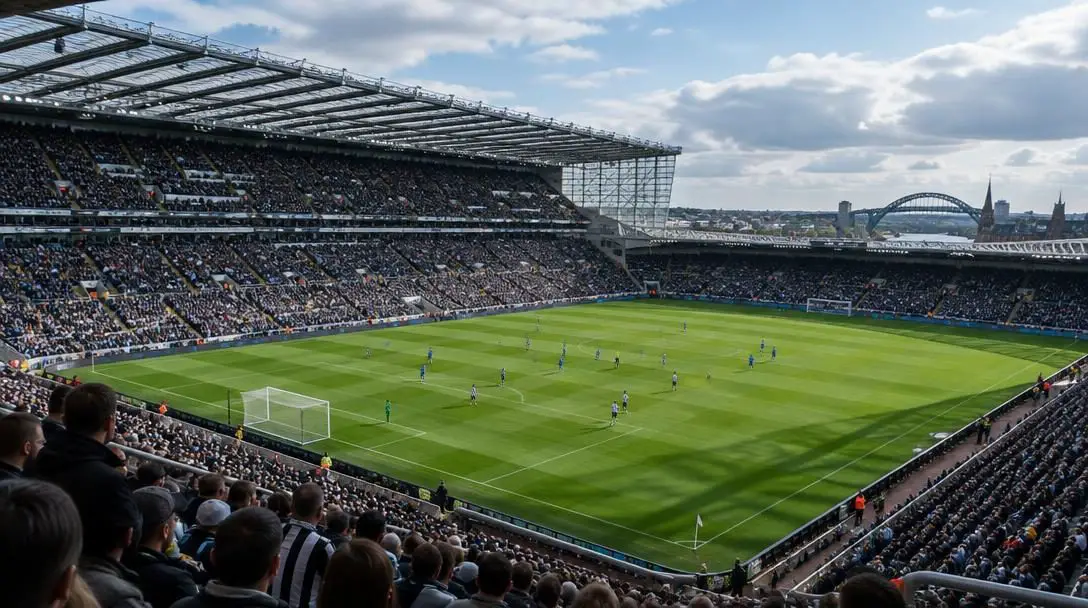
Ever since its founding in 1892, Newcastle United has occupied a revered position within English football. Formed in the late nineteenth century, the Tyneside club rapidly expanded into an influential powerhouse, spending almost every season of its existence competing in the top division of English football. This sustained presence in top-flight competition fostered an illustrious sporting heritage marked by dominant league reigns, legendary domestic cup runs, and generations of world-class footballers wearing the club's iconic black-and-white stripes.
Assessing the greatest players to represent Newcastle United requires looking across more than a century of changing competitive environments. From the structured championship dynasties of the early Edwardian era and post-war FA Cup triumphs to modern Premier League resurgences, the club's pinnacle performers are remembered for setting enduring individual records, securing historic silverware, and leaving an unforgettable impression on the culture of St James' Park.
Key takeaways
- Alan Shearer stands as Newcastle United's all-time leading scorer with 206 goals in 405 appearances.
- Goalkeeper Jimmy Lawrence retains the all-time club appearance record, having featured in 496 matches over an 18-year span.
- Jackie Milburn spearheaded an era of dominance in the 1950s, netting 200 goals and lifting the FA Cup three times in five seasons.
- Kevin Keegan arrived as a two-time Ballon d'Or recipient, winning major individual honors as a player before later managing the club to a First Division title.
- Paul Gascoigne developed through the youth system to capture the 1985 FA Youth Cup and become one of English football's most gifted playmakers.
Honoring Newcastle United's standout contributors across eras
Attempting to single out only five names from a club founded in 1892 inevitably leaves aside several foundational contributors who helped shape Newcastle United's rich legacy. Before detailing the top five figures, several standout performers across multiple positions deserve recognition for their long-standing service, defensive prowess, and attacking output:
- Frank Hudspeth: A steadfast defender who anchored Newcastle across critical early campaigns during the club's formative top-flight years.
- Bill McCracken: An influential early twentieth-century defender revered for his extraordinary tactical intelligence and defensive organization on the pitch.
- Len White: A prolific forward whose goal-scoring reliability and clinical finishing left an enduring mark on the club's all-time record books.
- Frank Clark: A dependable servant in defense who featured prominently during memorable domestic campaigns in the mid-twentieth century.
- Shay Given: A modern-era goalkeeper celebrated for his unmatched shot-stopping reliability between the posts across many challenging seasons.
The 5 best players in Newcastle United history
The definitive top five players represent distinct chapters in Newcastle United's history, spanning from turn-of-the-century league championships to the modern Premier League era. These icons combine record-breaking longevity, exceptional technical brilliance, and unforgettable trophy-winning campaigns.
| Player | Primary Role | Key Milestone or Record | Major Honors with Club |
|---|---|---|---|
| Jimmy Lawrence | Goalkeeper | 496 all-time appearances | 3 Football League titles, 1910 FA Cup |
| Paul Gascoigne | Midfielder | Young Player of the Year | 1985 FA Youth Cup |
| Kevin Keegan | Forward | Back-to-back North-East FWA Player of the Year | First Division title (as manager) |
| Jackie Milburn | Forward | 200 goals scored in 397 appearances | 3 FA Cups (1951, 1952, 1955) |
| Alan Shearer | Striker | 206 goals scored (all-time club record) | 2 FA Cup Finals, Hall of Fame inductee |
5. Jimmy Lawrence
- Position: Goalkeeper
- Appearances: 496 matches (all-time club record)
- Tenure Length: 18 years
- Major Silverware: 3 League titles in 5 years, 1910 FA Cup
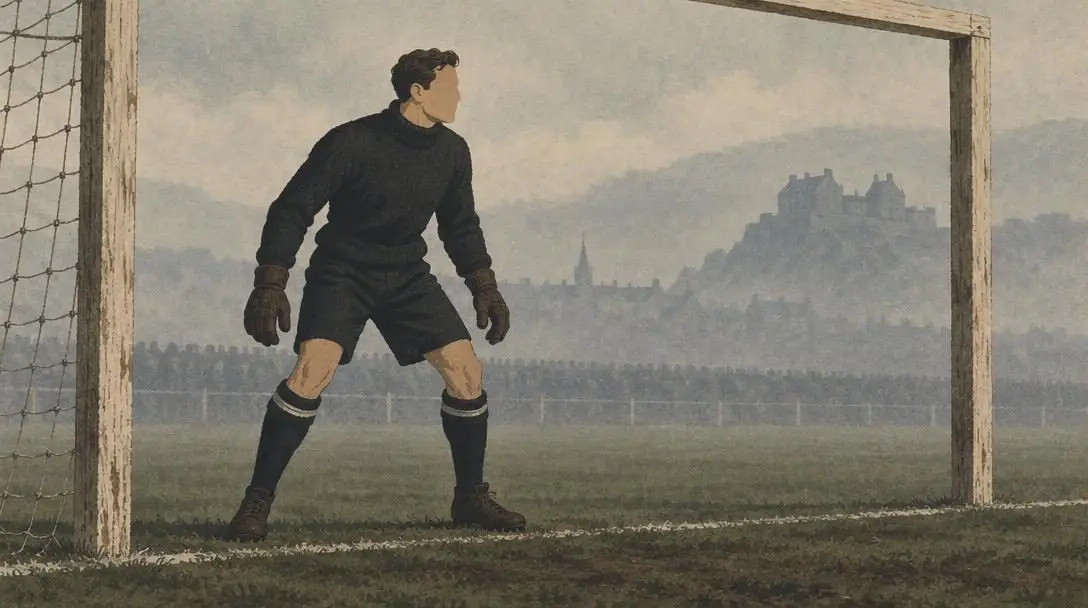
While many celebrated figures in modern football folklore featured in recent decades, Jimmy Lawrence anchored Newcastle United during its earliest golden era. Born in Scotland in 1879, Lawrence launched his professional career around the turn of the twentieth century with Patrick Athletic. After brief tenures featuring for Patrick Athletic, Glasgow Perthshire, and Hibernian, the Scottish shot-stopper secured a transfer south of the border to Newcastle United, where he spent the final 18 years of his playing days serving as the undisputed first-choice goalkeeper.
Lawrence set an unmatched benchmark for endurance that remains untouched to this day. His 496 appearances represent the absolute club record for total matches played, sitting clear of the second-highest appearance maker by a full 24 games. Between the posts, Lawrence served as the defensive foundation for one of the greatest dynasties in English football, helping the Magpies capture the Football League championship three times in five seasons, alongside winning the 1910 FA Cup. While personal accolades were not routinely distributed in his era, his longevity, consistency, and collection of winners' medals establish him among the finest goalkeepers to ever grace the English game.
4. Paul Gascoigne

- Position: Midfielder
- Senior Debut: 1985
- Youth Honors: 1985 FA Youth Cup
- Senior Honors: Young Player of the Year, First Division Team of the Year (twice)
Few players have ever captured the imagination of supporters quite like Paul Gascoigne. Widely recognized as one of the most naturally gifted midfielders in the history of the sport, Gascoigne first linked up with Newcastle United at the age of 13 when he joined the club's youth setup in 1980. His ascent through the ranks culminated in a triumphant 1985 FA Youth Cup victory, followed promptly by his senior first-team debut that same year.
Gascoigne spent three vibrant seasons in Newcastle's senior midfield before moving to Tottenham Hotspur, later playing for European and British institutions such as Lazio, Rangers, and Everton prior to his official retirement in 2004. Although personal struggles affected parts of his later career, his time at St James' Park was characterized by sheer technical mastery, close control, and irrepressible attacking flair. While he does not feature at the top of Newcastle's all-time charts for appearances or goals, his impact was validated by his peers and pundits alike: Gascoigne was named Young Player of the Year and earned selection to the First Division Team of the Year on two separate occasions during his first-team tenure.
3. Kevin Keegan

- Position: Forward / Attacker
- Arrival Year: 1982
- Prior Accolades: Two-time Ballon d'Or winner (1978, 1979)
- Newcastle Accolades: Players' Player of the Year, FWA North-East Player of the Year (1983, 1984)
Born in Armthorpe in 1951, Kevin Keegan began his footballing journey in the youth setup at Scunthorpe United, making his senior debut in 1968 before embarking on an extraordinary career with Liverpool, German side Hamburger SV, and Southampton. Before arriving on Tyneside in 1982, Keegan had already established himself as a giant of world football, winning back-to-back Ballon d'Or awards in 1978 and 1979. His signing electrified Newcastle, injecting world-class pedigree directly into the squad.
While Keegan did not hoist team silverware as a player at Newcastle, his individual performances revitalized the club. His peerless leadership and attacking dynamism saw him voted the Players' Player of the Year by his fellow professionals, alongside capturing back-to-back North-East FWA Player of the Year awards in 1983 and 1984. Keegan's profound bond with the club extended into the dugout after his retirement from the pitch; returning to manage Newcastle United, he guided the side to a celebrated First Division title, solidifying an iconic dual legacy as both star player and transformative manager.
2. Jackie Milburn
- Position: Forward
- Newcastle Goals: 200 goals in 397 appearances
- Major Silverware: 3 FA Cups (1951, 1952, 1955)
- Hall of Fame: Inducted into English Football Hall of Fame (2006)
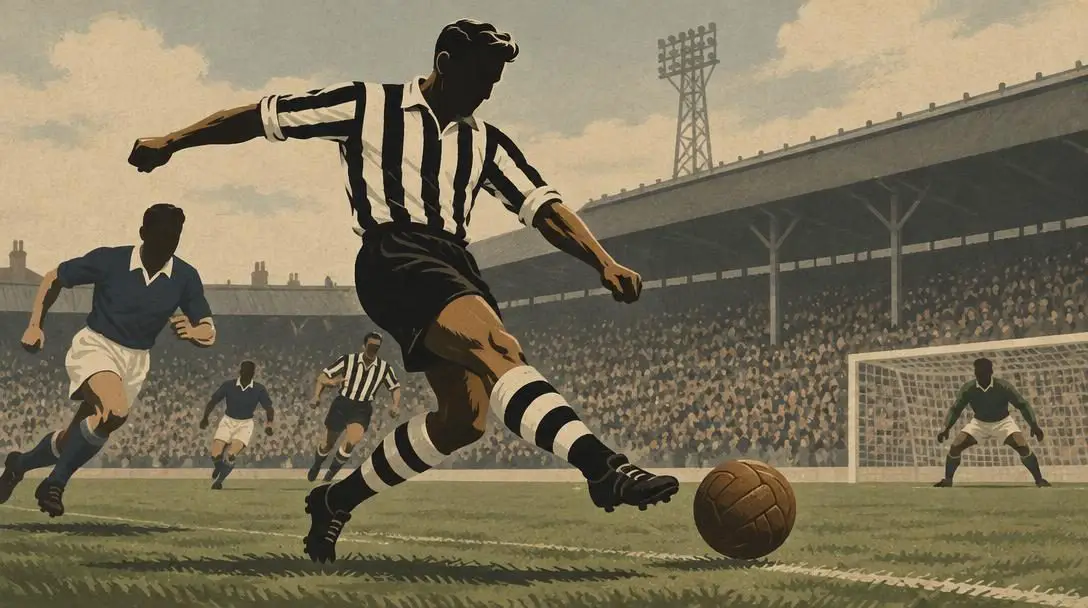
Born in Ashington, Jackie Milburn joined Newcastle United during the wartime period in 1943, going on to spend 14 seasons leading the club's attack. Known affectionately as "Wor Jackie," Milburn became the definitive local hero of post-war English football, spearheading Newcastle's golden cup era during the early 1950s. After leaving Newcastle in 1957, Milburn enjoyed a three-year stint with Linfield before concluding his playing days at Yiewsley in 1962.
Milburn's legacy is defined by his devastating speed, clinical finishing, and remarkable ability to rise to the occasion in domestic showpieces. Under his attacking leadership, Newcastle United captured three FA Cup trophies in a span of just five seasons (1951, 1952, and 1955). Across 397 appearances in the black-and-white shirt, Milburn struck exactly 200 goals, establishing a total that stood as the club record for decades. His lasting contribution to the identity of North East sport received national commemoration in 2006 when he was formally inducted into the English Football Hall of Fame.
Jackie Milburn's remarkable return of 200 goals and three FA Cup triumphs cemented his status as the definitive local sporting hero of post-war English football.
1. Alan Shearer

- Position: Striker
- Newcastle Goals: 206 goals in 405 matches (all-time club record)
- Scoring Rate: 0.51 goals per game
- Hall of Fame: Inducted into English Football Hall of Fame (2004)
Taking the premier spot in Newcastle United history is Newcastle upon Tyne native Alan Shearer. Shearer launched his professional journey on the south coast with Southampton in 1988 before completing an exceptional four-year stint with Blackburn Rovers. In 1996, the hometown hero returned to St James' Park, dedicating the final ten years of his elite playing career to his boyhood club. Even after hanging up his boots, Shearer's loyalty remained steadfast, stepping into the dugout to manage the team on an interim basis in 2009.
Shearer cemented his status as the club's greatest player by becoming Newcastle United's all-time leading goalscorer. Finding the back of the net 206 times across 405 matches, he surpassed Jackie Milburn's previous benchmark by six goals while maintaining an elite strike rate of 0.51 goals per game. During his decade on Tyneside, Shearer propelled the team to consecutive FA Cup finals in the late 1990s, earned repeated selections to the PFA Team of the Year, and secured induction into the English Football Hall of Fame in 2004, standing unchallenged as Newcastle's ultimate modern icon.

How historical player rankings are evaluated
Ranking footballers across more than a century of play requires balancing disparate tactical eras, changes in physical preparation, and shifting competition formats. Evaluating these legacies objectively relies on examining distinct analytical components:
- Era-Specific Context: The tactical landscape of Jimmy Lawrence's football in the early 1900s bears little resemblance to the high-tempo conditions Alan Shearer navigated in the Premier League. The true measure of greatness lies in how decisively a player dominated against the peers of their own era.
- Longevity versus Peak Brilliance: Some icons provide unyielding consistency across a decade or more, establishing untouchable appearance and scoring totals like Lawrence and Shearer. Conversely, players such as Paul Gascoigne and Kevin Keegan earned their places through world-class peaks, technical dominance, and seismic cultural impact over shorter tenures.
- Major Honors and Decisive Finals: Tangible silverware remains a cornerstone of sporting legacy. Anchoring three league championship campaigns or delivering multiple FA Cup victories demonstrates a player's capability to perform under the highest stakes.
- Peer Recognition and Institutional Honors: Industry honors, such as the Ballon d'Or, Players' Player of the Year, FWA recognitions, and inductions into the English Football Hall of Fame, provide unbiased confirmation of a player's elite standing from contemporaries and historians.
Practical steps for researching historic football careers
Supporters and sports historians seeking to study the full careers of legacy footballers can employ a structured research process to uncover deep historical context beyond surface-level statistics:
- Audit Appearance and Scoring Milestones: Begin by collecting raw statistical benchmarks, comparing absolute totals such as Jimmy Lawrence's 496 games or Alan Shearer's 206 goals against career duration to understand longevity and durability.
- Map Multi-Club Career Trajectories: Trace where players developed and where they peaked across different clubs. Tracking Kevin Keegan's journey from Scunthorpe to Liverpool, Hamburger SV, Southampton, and Newcastle highlights how international experience enriched the club, just as following Gascoigne through Tottenham, Lazio, Rangers, and Everton illustrates his overall career breadth.
- Connect Player Eras to Major Trophies: Identify specific trophy windows in the club's history. Researching the early twentieth-century league championships or the 1951 to 1955 FA Cup run directly contextualizes the silver-winning contributions of foundational stars like Lawrence and Milburn.
- Evaluate Regional and National Honors: Cross-reference players against institutional recognitions, such as PFA Team of the Year selections or inductions into the English Football Hall of Fame (which includes both Milburn and Shearer), to determine their national standing.
Common analytical pitfalls when comparing football eras
When sports enthusiasts analyze athletes across different decades, it is easy to fall into misleading assumptions. Avoiding these common analytical missteps ensures a more accurate appreciation of historic careers:
- Overlooking Differences in Individual Awards: Judging early twenty-century players solely by modern award collections creates a false narrative. As demonstrated by Jimmy Lawrence, individual trophies were rarely awarded in the early 1900s despite his dominant domestic title collection.
- Relying Exclusively on Appearance Numbers: Prioritizing total match appearances can cause observers to overlook high-impact performers who stayed for shorter windows. Neither Paul Gascoigne nor Kevin Keegan lead the club in matches, yet both transformed Newcastle's national standing and attacking quality.
- Ignoring Overall Scoring Efficiency: Focusing only on aggregate goals can obscure remarkable scoring rates. Comparing Milburn's 200 goals in 397 matches with Shearer's 206 goals in 405 matches highlights that both strikers operated with virtually identical, elite efficiency over long periods.
- Dismissing Managerial Contributions: A player's impact on a club often extends beyond their playing retirement. Both Kevin Keegan (who delivered a First Division title as manager) and Alan Shearer (who served as interim manager in 2009) returned to serve the institution from the dugout.
Broadening your study of football history
Expanding your understanding of Newcastle United's historical journey opens fascinating avenues into the broader evolution of the English sport. One natural progression is examining how on-pitch responsibilities changed across tactical eras, from the goalkeeping and defensive coordination perfected by Jimmy Lawrence and Bill McCracken to the dynamic attacking partnerships seen during Jackie Milburn's FA Cup triumphs in the 1950s.
Another valuable path involves reviewing the criteria used by the English Football Hall of Fame to honor inductees. Exploring why iconic competitors like Alan Shearer and Jackie Milburn earned early inclusion provides clear perspective on the balance between individual consistency, team success, and enduring cultural impact in the story of English football.
Frequently asked questions
Who is the all-time top goalscorer in Newcastle United history?
Alan Shearer holds the all-time club record with 206 goals scored in 405 matches, surpassing Jackie Milburn's long-standing tally of 200 goals.
Which player holds the record for the most appearances for Newcastle United?
Goalkeeper Jimmy Lawrence holds the all-time appearance record, playing 496 matches for the club over an 18-year period between 1904 and 1922, surpassing his nearest challenger by 24 matches.
How many FA Cups did Jackie Milburn win with Newcastle United?
Jackie Milburn won three FA Cup trophies with Newcastle United in a span of five seasons, lifting the prestigious domestic cup in 1951, 1952, and 1955.
Did Kevin Keegan win any trophies as a player or manager at Newcastle?
While Kevin Keegan did not win club silverware as a player for Newcastle United, he later returned as manager and guided the club to a First Division title.
What youth honors did Paul Gascoigne achieve with Newcastle United?
Paul Gascoigne joined the Newcastle youth program at age 13 in 1980 and helped the club win the FA Youth Cup in 1985 before breaking into the senior squad.
The bottom line
From the enduring goalkeeping mastery of Jimmy Lawrence to the lethal, record-setting marksmanship of Alan Shearer, Newcastle United's history has been shaped by extraordinary individual talent. Whether lifting league championships at the dawn of the twentieth century, capturing FA Cups during the post-war era, or electrifying the Premier League, these five players represent the standard of excellence that defines the club's black-and-white heritage.