5 Best Players in Oregon Ducks Basketball History
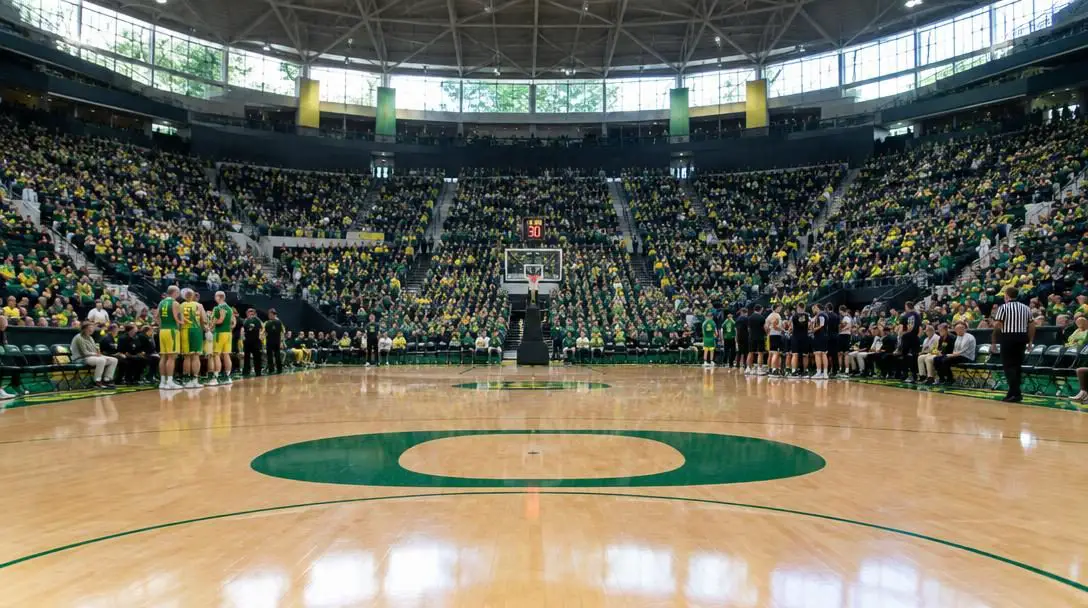
When sports enthusiasts discuss collegiate basketball powerhouses along the Pacific coast, conversations almost instinctively gravitate toward the storied tradition of the UCLA Bruins. Yet the foundational history of college basketball belongs uniquely to the University of Oregon. In 1939, the Ducks etched their name into history by capturing the inaugural NCAA men’s basketball tournament title, establishing a historic benchmark long before the tournament blossomed into the national cultural phenomenon known today.
Following that groundbreaking milestone, the Ducks experienced a severe championship drought that lasted nearly eight decades before the team finally returned to the Final Four. Despite extended stretches away from college basketball’s grandest stage, the Eugene campus served as the proving ground for a remarkable lineage of dynamic guards and versatile wings. Spanning different conference iterations—from the Pac-8 and Pac-10 to the modern Pac-12—these standout athletes carried the program on their shoulders, shattering school records and leaving an undeniable mark on the sport.
Key takeaways
- Ron Lee reigns as the program’s greatest player and all-time leading scorer, amassing 2,085 points across four consecutive first-team All-Pac-8 seasons.
- Both Terrell Brandon and Luke Ridnour secured Pac-10 Player of the Year honors before engineering long, prosperous careers as first-round NBA draft selections.
- Four-year home-state stars Luke Jackson and Payton Pritchard delivered sustained collegiate greatness, earning All-American honors and top-four scoring ranks in Oregon history.
- Evaluating historical Ducks basketball players requires balancing collegiate accumulation against modern, early NBA draft departures across distinct conference eras.
At a glance: Oregon’s legendary five
| Player | Collegiate era | Conference honors | NBA draft selection | Key career achievements |
|---|---|---|---|---|
| Terrell Brandon | 2 seasons | 1991 Pac-10 Player of the Year, 2x First-Team All-Pac-10 | 11th overall, 1991 (Cleveland Cavaliers) | Single-season program scoring record (745 points); 2x NBA All-Star |
| Luke Ridnour | 3 seasons | 2003 Pac-10 Player of the Year, 2x First-Team All-Pac-10, Pac-10 Freshman of the Year | 14th overall, 2003 (Seattle SuperSonics) | Averaged nearly 20 points as a junior; 12-season NBA career across 5 franchises |
| Payton Pritchard | 4 seasons | First-Team All-Pac-12, All-American, Bob Cousy & Lute Olson Awards | 26th overall, 2020 (Boston Celtics) | 4th on all-time school scoring list; four-year starter; NBA rotation regular |
| Luke Jackson | 4 seasons | 2004 All-American, 2x First-Team All-Pac-10 | 10th overall, 2004 (Cleveland Cavaliers) | 1,970 career points; averaged 21.2 points and 7.2 rebounds as a senior |
| Ron Lee | 4 seasons | 1976 Pac-8 Player of the Year, 4x First-Team All-Pac-8 | 10th overall, 1976 (Phoenix Suns) | Program all-time scoring leader (2,085 points); led NBA in steals (1977-78) |
The five greatest players in Oregon Ducks history
Determining the premier performers in Oregon basketball history involves weighing explosive short-term dominance against four-year consistency, national accolades, and professional longevity. These five individuals represent the gold standard of Ducks basketball.
5. Terrell Brandon
- Hometown: Portland, Oregon
- Collegiate tenure: 2 seasons
- Single-season scoring record: 745 points
- NBA draft position: 11th overall (1991)
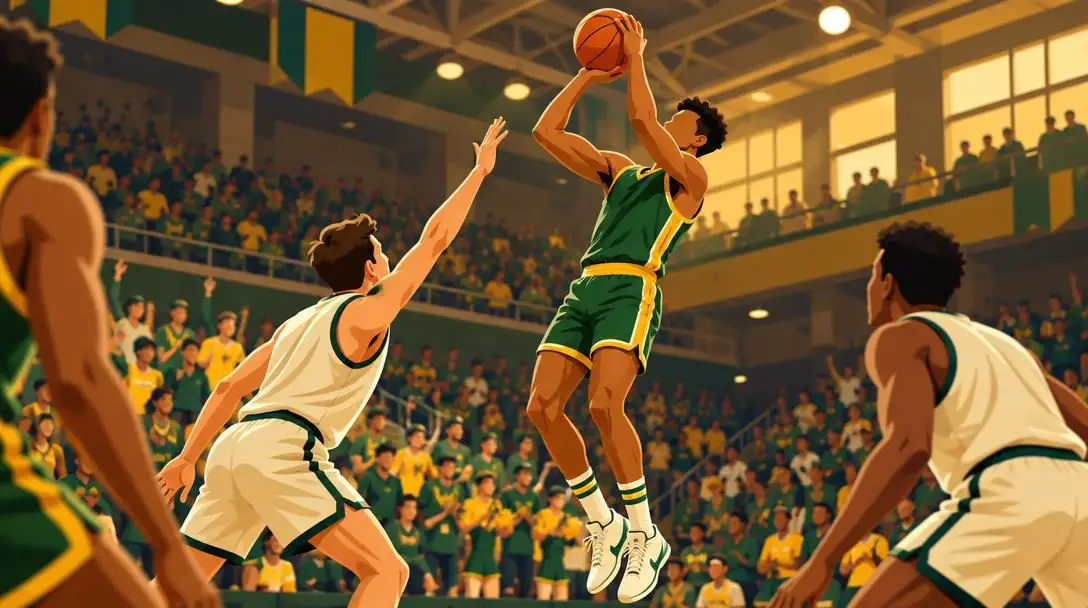
Hailing from nearby Portland, Terrell Brandon made an immediate, seismic impression during his brief two-year collegiate career in Eugene. Rather than needing an adjustment period, Brandon played at an elite level from his opening game, capturing first-team All-Pac-10 honors in both campaigns he spent wearing the green and yellow.
His sophomore campaign in 1991 stands among the finest individual seasons in West Coast collegiate basketball history. Brandon secured the prestigious Pac-10 Player of the Year award while establishing an Oregon single-season scoring record with 745 points. His blend of perimeter shot creation, lightning-quick speed, and composure under pressure established him as an unstoppable scoring threat against top-tier conference opposition.
Brandon elected to bypass his remaining collegiate eligibility, declaring for the professional ranks where the Cleveland Cavaliers selected him with the 11th overall pick in the 1991 NBA Draft. Although chronic injury concerns limited his overall durability, Brandon blossomed into an elite floor general, securing consecutive NBA All-Star nods in 1996 and 1997. Over his 11 seasons at the professional level, he registered career averages of 13.8 points and 6.1 assists per game, demonstrating that his electrifying college production was no fluke.
4. Luke Ridnour
- Hometown: Blaine, Washington
- Collegiate tenure: 3 seasons
- Conference honors: 2003 Pac-10 Player of the Year
- NBA career longevity: 12 seasons (2003–2015)
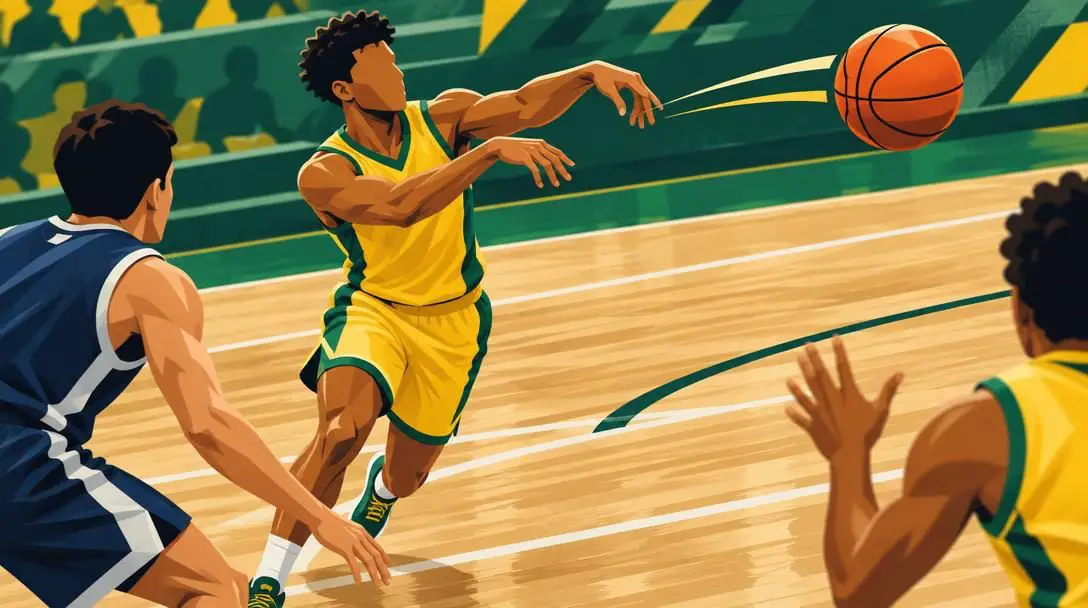
Arriving in Eugene from Blaine, Washington as a decorated high school All-American, Luke Ridnour instantly elevated the Ducks' offensive dynamism. In his debut collegiate season, Ridnour orchestrated the backcourt with exceptional poise, producing 7.4 points per contest and taking home the honors as the Pac-10 Freshman of the Year.
Ridnour’s development accelerated over the subsequent two seasons. By his junior year, he had morphed into an offensive juggernaut, scoring at an elite clip of nearly 20 points per game while directing the offense with pinpoint distribution. His mastery of tempo and long-range shooting earned him two career selections to the first-team All-Pac-10 roster and culminated in his selection as the 2003 Pac-10 Player of the Year.
After cementing his collegiate legacy, Ridnour declared early for the 2003 NBA Draft, where his regional neighbor, the Seattle SuperSonics, selected him with the 14th overall pick. Ridnour carved out an enduring professional career, playing across 12 NBA seasons for five separate franchises before concluding his playing days in 2015 with the Orlando Magic. Over his lengthy NBA tenure, Ridnour finished with steady career marks of 9.3 points, 4.5 assists, and 2.3 rebounds across hundreds of regular season contests.

3. Payton Pritchard

- Hometown: West Linn, Oregon
- Collegiate tenure: 4 seasons (all as a starter)
- Program scoring rank: 4th all-time
- National honors: Bob Cousy Award, Lute Olson Award
A native son from West Linn, Oregon, Payton Pritchard authored one of the most complete and durable four-year careers in modern college basketball history. Uniquely suited to the collegiate game, Pritchard claimed an entrenched starting spot the moment he stepped foot on campus, holding that primary role across all four years of his college journey.
Pritchard reached his zenith during his senior campaign, ascending into the ranks of college basketball’s most formidable competitors. He posted extraordinary averages of 20.5 points and 5.5 assists per contest, carrying the offensive burden while showcasing unmatched stamina. His final year in Eugene earned him first-team All-Pac-12 recognition, consensus All-American honors, and two of the country’s most revered national individual awards: the Bob Cousy Award, given to the nation’s top point guard, and the Lute Olson Award, presented to the nation’s most outstanding Division I player.
Pritchard exited the college game ranked fourth on Oregon’s all-time scoring list. The Boston Celtics selected him with the 26th overall pick in the 2020 NBA Draft. As a rookie in Boston, he secured regular minutes, averaging 7.7 points per game. Although his playing time fluctuated in his sophomore year, Pritchard remained an invaluable, highly dependable perimeter shooter within Boston’s primary rotation.
Four full years as an entrenched starter elevated Payton Pritchard into the rarest air in modern college basketball history.
2. Luke Jackson
- Hometown: Creswell, Oregon
- Collegiate tenure: 4 seasons
- Career scoring total: 1,970 points
- National recognition: 2004 All-American
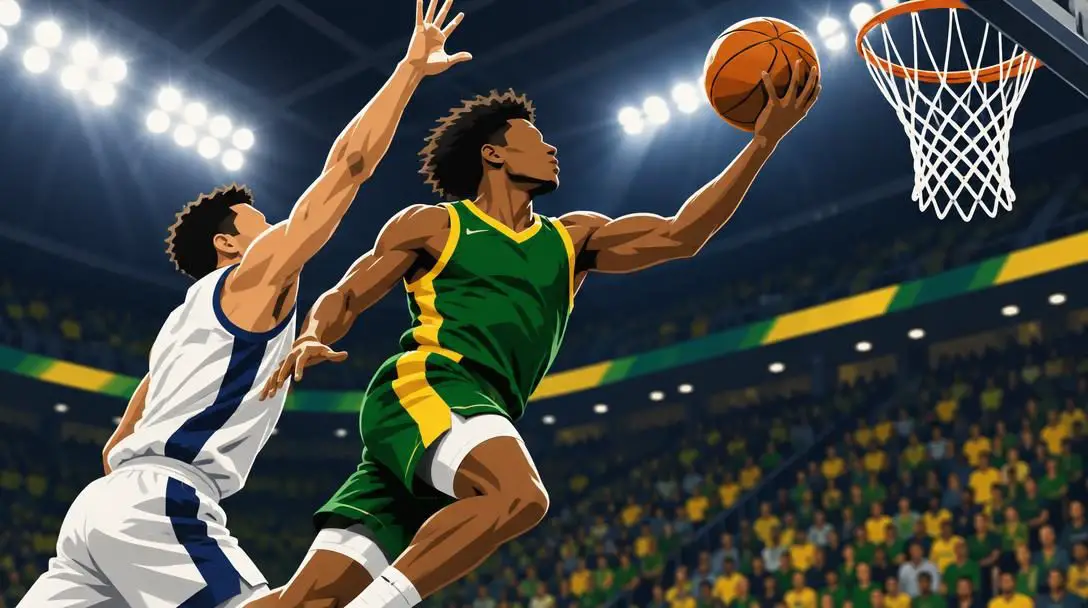
Staying close to home, Creswell native Luke Jackson provided the Oregon program with an athletic, versatile wing who embodied the competitive spirit of Pacific Northwest basketball. Jackson spent four complete seasons in Eugene, steadily refining his playmaking and scoring abilities until he was one of the most dominant two-way players in the country.
His 2003-04 senior season was nothing short of an offensive clinic. Jackson demonstrated an all-around floor game, averaging 21.2 points and grabbing 7.2 rebounds per game while handling severe defensive pressure night after night. By the end of his collegiate journey, Jackson had compiled an astounding 1,970 points, collected two first-team All-Pac-10 honors, and secured prestigious consensus All-American accolades in 2004.
Jackson entered the professional game with towering expectations after the Cleveland Cavaliers chose him with the 10th overall pick in the 2004 NBA Draft. Regrettably, his NBA career was hindered by injuries and inconsistent opportunities. Jackson remained in Cleveland for two seasons before brief stints with the Los Angeles Clippers, Toronto Raptors, and Miami Heat, ultimately competing in 73 career NBA games through 2008 before continuing his basketball journey in European professional leagues.
1. Ron Lee
- Collegiate tenure: 4 seasons
- Program scoring record: 2,085 career points
- All-Conference status: 4x First-Team All-Pac-8
- NBA accomplishment: 1977-78 NBA steals leader
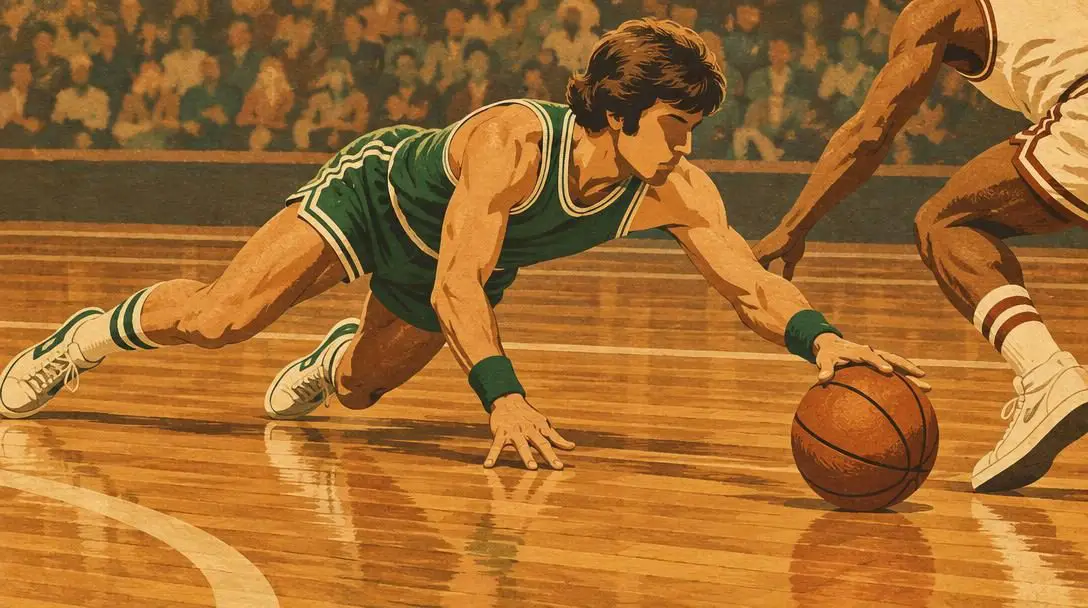
Standing unchallenged atop the mountain of Oregon Ducks basketball history is Ron Lee, known affectionately to generations of fans as the standard of program excellence. An ironclad four-year starter, Lee established an Oregon record that has withstood decades of elite competition by totaling 2,085 career points.
What sets Lee apart from every other great scorer in program annals was his relentless year-to-year consistency. He averaged better than 18 points per game in each of his four competitive campaigns in Eugene. His sustained excellence garnered him first-team All-Pac-8 honors in all four seasons—a nearly unprecedented sweep of conference accolades that was crowned in 1976 when he was chosen as the Pac-8 Player of the Year.
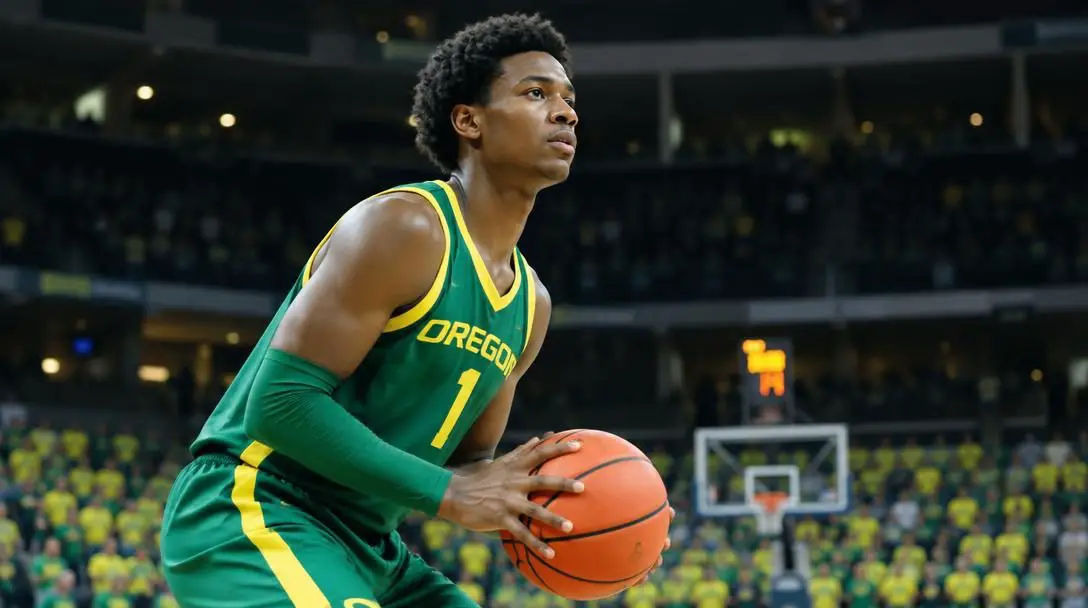
Selected 10th overall in the 1976 NBA Draft by the Phoenix Suns, Lee translated his high-octane motor directly to the pros. In his second season (1977-78), he led the entire NBA in steals, showcasing the tenacious on-ball defense that defined his game. Lee continued his NBA career with the Jazz, Hawks, and Pistons before wrapping up his American professional career in 1982 with career averages of 7.3 points and 3.8 assists per game, after which he prolonged his career overseas in Europe.
How historical player evaluation works
Evaluating collegiate basketball icons across distinct generations requires an objective, multifaceted framework. Without clear evaluation standards, comparisons between modern four-year contributors and historic stars become skewed by recency bias or altered playing styles.
To accurately balance legacies like those of Ron Lee, Luke Jackson, and Payton Pritchard, basketball historians examine five foundational pillars:
- Collegiate production and statistical volume: Foundational counting statistics, including overall career points, rebounds, and assists, must be analyzed alongside season-by-season scoring averages to gauge game-by-game impact.
- Conference supremacy: Official all-conference selections serve as a direct measurement of how an athlete performed against their direct regional contemporaries across the Pac-8, Pac-10, or Pac-12.
- National accolades: High-prestige recognitions, including consensus All-American honors or positional trophies like the Bob Cousy Award, demonstrate that an athlete operated among the elite echelon of collegiate players nationwide.
- Durability and tenure: Multi-year starters who accumulate milestones over a full four-year collegiate stay present a distinct legacy argument compared to players whose stints lasted only two or three seasons.
- Draft pedigree: First-round selection in the NBA Draft provides external, professional validation of a player’s physical traits, athletic profile, and college execution.
Practical steps for researching historical college basketball players
Tracking the statistical milestones and individual accomplishments of collegiate basketball rosters requires a methodical approach. Researchers, sports journalists, and dedicated fans can utilize the following structured process to gather credible historical information.
- Examine official university media guides and athletic record archives to confirm program-specific career, single-season, and single-game records.
- Verify the historical conference alignment of the era in question (Pac-8, Pac-10, or Pac-12) to contextualize all-conference awards and seasonal Player of the Year honors accurately.
- Cross-reference national awards databases to confirm individual hardware, including national player of the year designations or positional honors like the Bob Cousy Award.
- Audit professional draft records, noting original draft selection numbers, acquiring franchises, and subsequent international transitions to European leagues.
- Contrast raw career totals against per-game scoring averages to account for differences between four-year collegiate stalwarts and early NBA draft entries.
Common mistakes when comparing players across eras
Analytical errors frequently emerge when modern observers evaluate college athletes who played decades apart. Avoiding common pitfalls ensures that historical perspectives remain balanced and accurate.
- Overvaluing NBA careers when assessing college dominance: A disappointing or brief professional career does not diminish collegiate greatness. Luke Jackson’s 73-game NBA tenure has no bearing on his 1,970 career collegiate points and All-American legacy.
- Overlooking the shift in collegiate tenure: Comparing career totals between players from the 1970s and 2000s without noting tenure creates distortions, as contemporary stars frequently leave for the draft after their sophomore or junior seasons.
- Confusing conference iterations: Treating the Pac-8, Pac-10, and Pac-12 as identical competitive environments ignores changes in membership size, travel demands, and scheduling balance.
- Dismissing pre-modern statistical production: Assuming that scoring records achieved prior to modern spacing or stylistic trends were easier to attain disregards the physical demands and defensive schemes faced by legends like Ron Lee.
- Judging individuals solely on postseason team success: College basketball tournaments are single-elimination formats; evaluating players solely on whether their teams reached the Final Four discounts exceptional individual contributors like Terrell Brandon.
Frequently asked questions
Who is the all-time leading scorer in Oregon Ducks basketball history?
Ron Lee holds the all-time scoring record for the Oregon Ducks men's basketball program, having scored 2,085 career points across his four collegiate seasons from 1972 to 1976.
Which Oregon Ducks basketball player won the Bob Cousy Award?
Payton Pritchard won the prestigious Bob Cousy Award following his senior season in 2020, an honor recognizing him as the top point guard in men’s collegiate Division I basketball.
Who holds the record for the most points scored in a single season for Oregon?
Terrell Brandon holds the Oregon single-season scoring record, racking up 745 total points during his standout 1990-91 sophomore campaign before entering the NBA Draft.
Did any of Oregon's top five players become an NBA All-Star?
Yes. Terrell Brandon earned two NBA All-Star selections, receiving the honor in consecutive seasons in 1996 and 1997 while playing point guard for the Cleveland Cavaliers.
Which Oregon player led the NBA in steals?
Ron Lee led the entire NBA in total steals during the 1977-78 season while competing for the Phoenix Suns, demonstrating his elite perimeter defense at the professional level.
The bottom line
The history of Oregon Ducks basketball is a narrative of individual brilliance bridging lengthy eras of national contention. From Ron Lee’s scoring consistency in the mid-1970s to Terrell Brandon’s explosive 1991 campaign, Luke Ridnour’s point guard vision in the early 2000s, and the gritty, four-year leadership of homegrown heroes Luke Jackson and Payton Pritchard, these five athletes forged an enduring identity for Oregon basketball.
As the college basketball landscape shifts with evolving player movement and shorter campus tenures, the monumental career milestones set by these five legends stand as a testament to the heights achievable in the green and yellow uniform.