5 Best Players in Oregon Ducks Football History
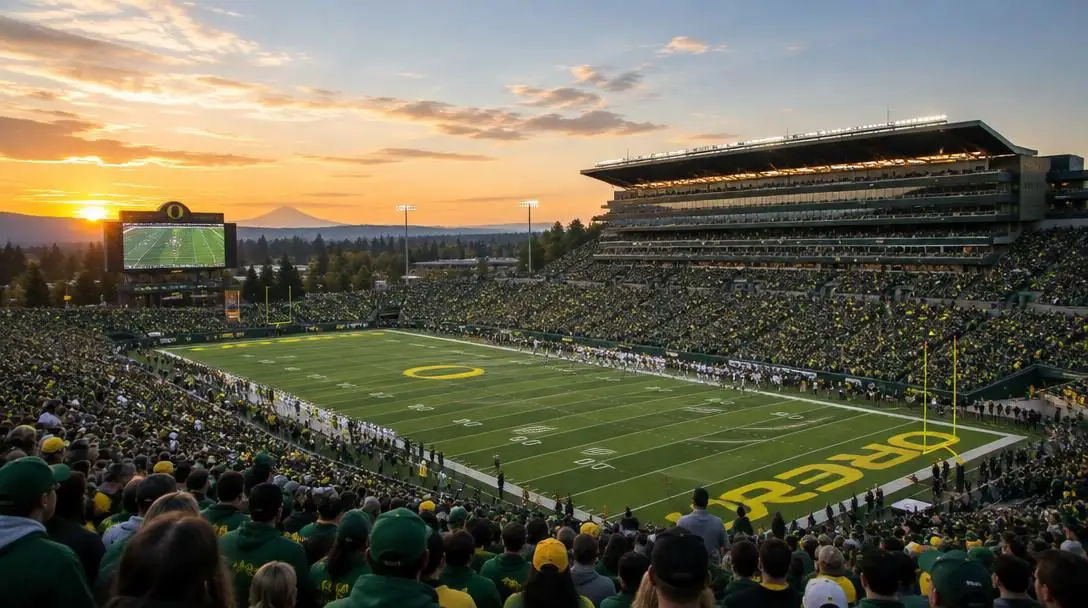
College football has witnessed many traditional powerhouses dominate regional and national headlines across generations, but very few programs have charted an upward ascent quite like the Oregon Ducks. Although the university maintains a proud football lineage that extends deep into the history of the NCAA, Oregon spent much of the twentieth century searching for national consistency on the gridiron. That dynamic began to shift profoundly during the mid-1990s, when the Ducks established a competitive identity that would permanently disrupt the college football hierarchy.
Through sustained administrative backing and transformative contributions from prominent alumnus Phil Knight of Nike, Eugene quickly became an epicenter of athletic innovation. State-of-the-art facilities, cutting-edge uniforms, and innovative, fast-paced play transformed the Ducks into one of the sport's premier brands in the twenty-first century. While dozens of phenomenal athletes have donned the green and yellow, five legendary figures stand above the rest for the caliber of their individual dominance, their trophy hardware, and their lasting legacy in establishing Oregon as an undisputed national titan.
Key takeaways
- Marcus Mariota remains the gold standard in school history as Oregon's only Heisman Trophy winner.
- Joey Harrington and Dennis Dixon quarterbacked transformative eras that elevated the Ducks into perennial national championship contenders.
- Trench dominance from Outland Trophy winner Penei Sewell and Morris Trophy winner Haloti Ngata proved Oregon could match anyone physically.
- Collegiate greatness is measured by school and conference achievements rather than professional NFL longevity.
The mid-1990s revolution and honorable mentions
To understand the greatness of Oregon's elite players, one must appreciate the context of the program's modernization. Before the Ducks became a regular fixture in major bowl games and national title chases, the team had to build credibility step by step. As resources poured into Eugene, the program evolved from a scrappy regional competitor into an offensive juggernaut renowned for tempo, spatial awareness, and elite recruiting prowess.
Narrowing down the greatest athletes in school history requires leaving off multiple franchise icons who helped build the program's reputation. Several standout contributors put together legendary collegiate careers that narrowly missed the final top-five ranking:
- Jonathan Stewart: An explosive running back whose punishing style powered the Ducks' dynamic backfield.
- Ifo Ekpre-Olomu: A lockdown defensive back who served as the cornerstone of the Ducks' secondary during major bowl runs.
- Max Unger: A versatile and reliable offensive line leader who set a physical tone in the trenches.
- Gary Zimmerman: A dominant offensive lineman who set the early standard for Oregon front-line blocking.
- DeForest Buckner: A towering, game-wrecking defensive lineman who dominated Pac-12 offensive lines.
- Kayvon Thibodeaux: An edge rusher whose explosive pass-rushing ability continued Oregon's modern defensive excellence.
- LaMichael James: A record-breaking running back whose electric speed personified the high-octane Ducks rushing attack.
The 5 best players in Oregon Ducks football history
The following athletes defined their respective eras, secured major conference and national awards, and delivered signature moments that permanently changed the expectations of Oregon football.
| Player | Position | Key Honors & Milestones | NFL Draft Selection |
|---|---|---|---|
| Marcus Mariota | Quarterback | Heisman Trophy winner, 105 Pass TDs, CFP Title Game appearance | 2015 Round 1, Pick 2 (Titans) |
| Dennis Dixon | Quarterback | 2007 Pac-10 Offensive Player of the Year, 50 total TDs | 2008 Round 5, Pick 156 (Steelers) |
| Haloti Ngata | Defensive Line | 2005 Morris Trophy winner, Consensus All-American | 2006 Round 1, Pick 12 (Ravens) |
| Penei Sewell | Offensive Tackle | Outland Trophy winner, Morris Trophy winner, Consensus All-American | 2021 Round 1, Pick 7 (Lions) |
| Joey Harrington | Quarterback | 2001 Heisman finalist (4th), Fiesta Bowl victory, 59 Pass TDs | 2002 Round 1, Pick 3 (Lions) |
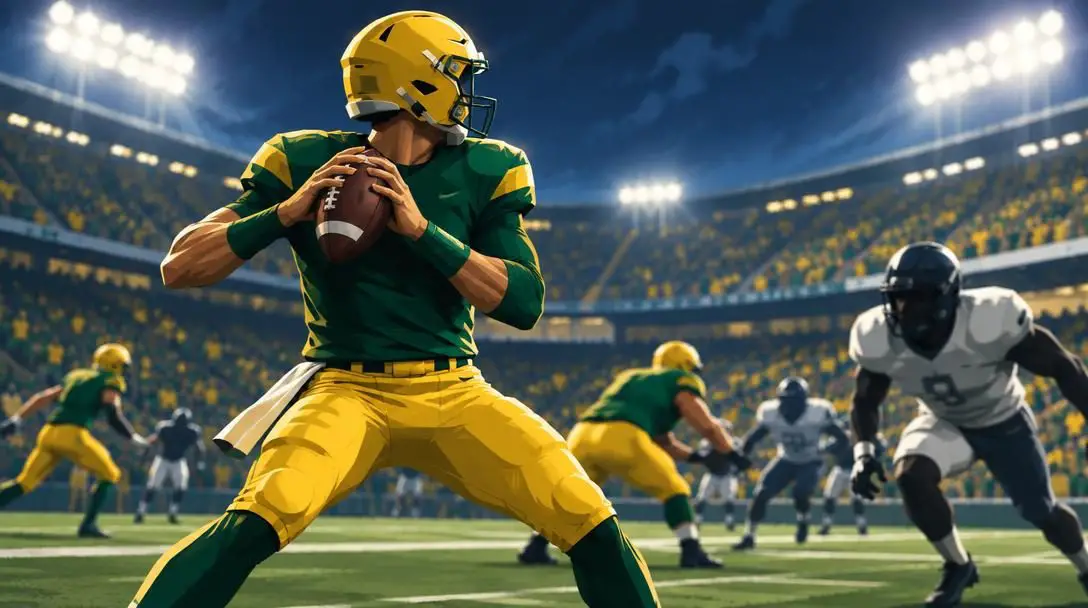
Joey Harrington
- Position: Quarterback
- Hometown: Portland, Oregon
- Career Passing Stats: 6,911 yards, 59 touchdowns
- NFL Draft: Pick 3 overall, 2002 (Detroit Lions)
A native of Portland, Joey Harrington stepped onto campus with massive expectations and developed into one of the most critical transitional figures in Oregon football history. Harrington began seeing game action during his sophomore year with the Ducks. By his junior campaign, he had established himself as one of the elite passers in the Pac-10 conference. Known for his unflappable poise, leadership, and clutch playmaking late in games, Harrington spearheaded Oregon's rise into national prominence.
Harrington’s final collegiate campaign in 2001 permanently cemented his legacy in Eugene. He concluded his senior season with a sparkling 27-to-6 touchdown-to- Chris interception ratio, finishing fourth in the Heisman Trophy voting. Across his collegiate career, Harrington accumulated 6,911 passing yards and 59 touchdowns. His college journey was punctuated by a historic, lopsided victory in the Fiesta Bowl that elevated Oregon into the top tier of national rankings.
Following his time in Eugene, Harrington entered the 2002 NFL Draft projected as a franchise quarterback, and the Detroit Lions selected him with the third overall pick. He spent four seasons with the Lions before continuing his professional career with stints playing for the Miami Dolphins, Atlanta Falcons, and New Orleans Saints. Harrington officially concluded his professional career in 2008, totaling 79 passing touchdowns and 85 interceptions in the NFL.
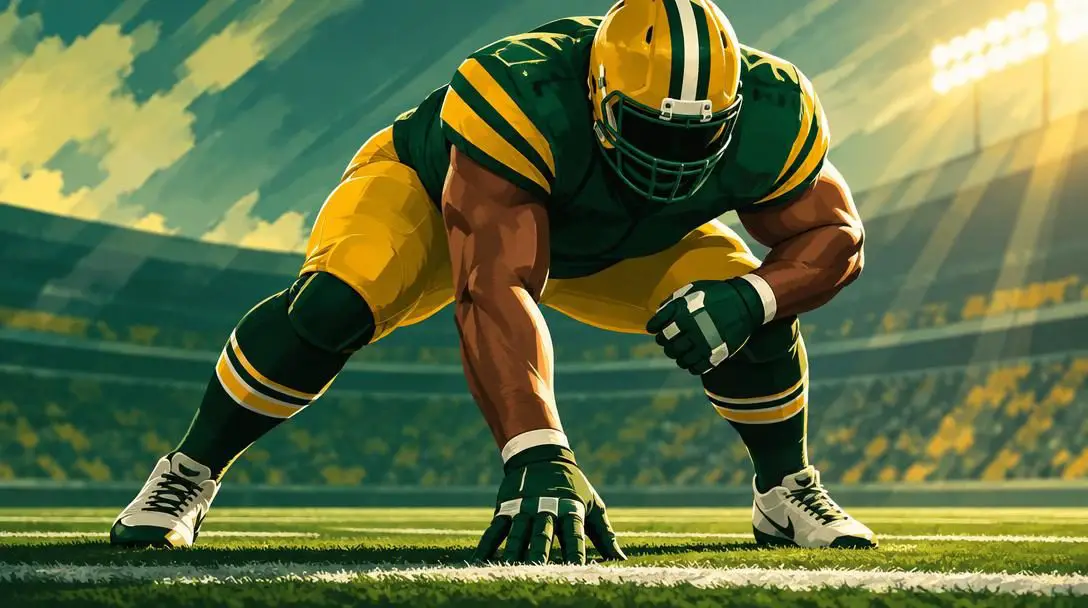
Penei Sewell
- Position: Offensive Tackle
- Hometown: St. George, Utah
- Collegiate Honors: Outland Trophy, Morris Trophy, Consensus All-American
- NFL Draft: Pick 7 overall, 2021 (Detroit Lions)
Hailing from St. George, Utah, Penei Sewell arrived on campus as a can't-miss offensive line prospect pursued by every major college football power across the country. Oregon won his recruitment in 2018, and Sewell stepped directly into the starting lineup as a true freshman. From his very first snap, he showcased an extraordinary blend of lateral agility, raw power, balance, and technical discipline along the line of scrimmage.
During the 2019 season, Sewell constructed one of the most dominant individual campaigns ever produced by an offensive lineman in modern college football history. He earned consensus All-American recognition while sweeping both the prestigious Outland Trophy and the Pac-12's Morris Trophy. Sewell subsequently opted out of the 2020 season, which was significantly disrupted by the COVID-19 pandemic, to begin his preparations for the professional ranks.
The Detroit Lions selected Sewell with the seventh overall pick in the 2021 NFL Draft, making him another top-ten Duck drafted by the franchise. Sewell transitioned immediately to professional competition, starting as a rookie and earning a spot on the NFL All-Rookie Team. His play quickly established him as a premier cornerstone along the offensive line in Detroit.
Haloti Ngata
- Position: Defensive Tackle
- Hometown: Salt Lake City, Utah
- Collegiate Honors: 2005 Morris Trophy winner, All-American, All-Pac-10
- NFL Draft: Pick 12 overall, 2006 (Baltimore Ravens)
Arriving in Eugene from Salt Lake City, Haloti Ngata brought an imposing combination of sheer strength, size, and nimble footwork to the interior of Oregon's defensive front. Over three seasons as a starter for the Ducks, Ngata proved virtually unblockable for opposing interior linemen. He routinely disrupted rushing attacks, pushed the pocket right back into opposing quarterbacks, and regularly used his wingspan to block kicks on special teams.
Ngata earned All-Pac-10 and All-American honors during his tenure, culminating in his selection as the recipient of the Morris Trophy in 2005 as the best interior lineman in the Pac-10. Although he was deeply connected to the Oregon football program, Ngata opted to enter the NFL Draft early due to his mother's illness and the critical need to provide financial support for his family.
The Baltimore Ravens selected Ngata with the 12th overall pick in the 2006 NFL Draft. In Baltimore, he spent nine dominant seasons anchoring one of the most fearsome defenses in NFL history. Ngata became a five-time All-Pro selection and captured a Super Bowl championship with the Ravens before finishing his career with a three-year stint playing for the Detroit Lions.
Dennis Dixon
- Position: Quarterback
- Collegiate Honors: 2007 Pac-10 Offensive Player of the Year, 2-time All-Pac-10
- College Statistics: 5,100+ passing yards, 38 pass TDs, 1,208 rushing yards, 12 rush TDs
- NFL Draft: Round 5, Pick 156, 2008 (Pittsburgh Steelers)
Serving as the electric spark plug for one of the most exciting eras in program history, Dennis Dixon revolutionized how Oregon executed tempo and option offense. Dixon was widely recognized as one of the most elusive and dazzling dual-threat quarterbacks of his generation. He operated Oregon's high-octane offensive scheme with crisp decision-making and blistering open-field speed.
Over the course of his collegiate career, Dixon surpassed 5,100 passing yards and tossed 38 touchdowns while punishing opposing defenses with his legs for 1,208 rushing yards and 12 rushing scores. A two-time All-Pac-10 honoree, Dixon reached the peak of his college career in 2007. That season, he captured Pac-10 Offensive Player of the Year honors while directing an unstoppable offense that vaulted Oregon squarely into the national championship conversation.
Dixon is the only member of this top five who was not selected in the first round of the NFL Draft. The Pittsburgh Steelers chose him in the fifth round of the 2008 NFL Draft with the 156th overall pick. Dixon spent four seasons with Pittsburgh, earning a championship ring as part of their roster through the 2011 season. Between 2012 and 2014, he spent time on practice squads with four different organizations before concluding his playing career with one touchdown and two interceptions in the NFL.
While several Ducks stars enjoyed varying levels of professional longevity, their historical standing rests primarily on what they accomplished while wearing the green and yellow in Eugene.
Marcus Mariota
- Position: Quarterback
- Collegiate Honors: 2014 Heisman Trophy winner, Consensus All-American
- College Statistics: 10,796 pass yards, 105 pass TDs, 14 INTs; 2,237 rush yards, 29 rush TDs
- NFL Draft: Pick 2 overall, 2015 (Tennessee Titans)
Standing unchallenged at the very pinnacle of Oregon Ducks history is Marcus Mariota, the university's lone Heisman Trophy winner. A three-year starter from 2012 to 2014, Mariota ran the Oregon offense with legendary precision, rare athletic grace, and explosive scoring capability. Over his career, he amassed 10,796 passing yards and 105 passing touchdowns against an astonishingly low total of just 14 interceptions. On the ground, he added 2,237 rushing yards and 29 rushing touchdowns.
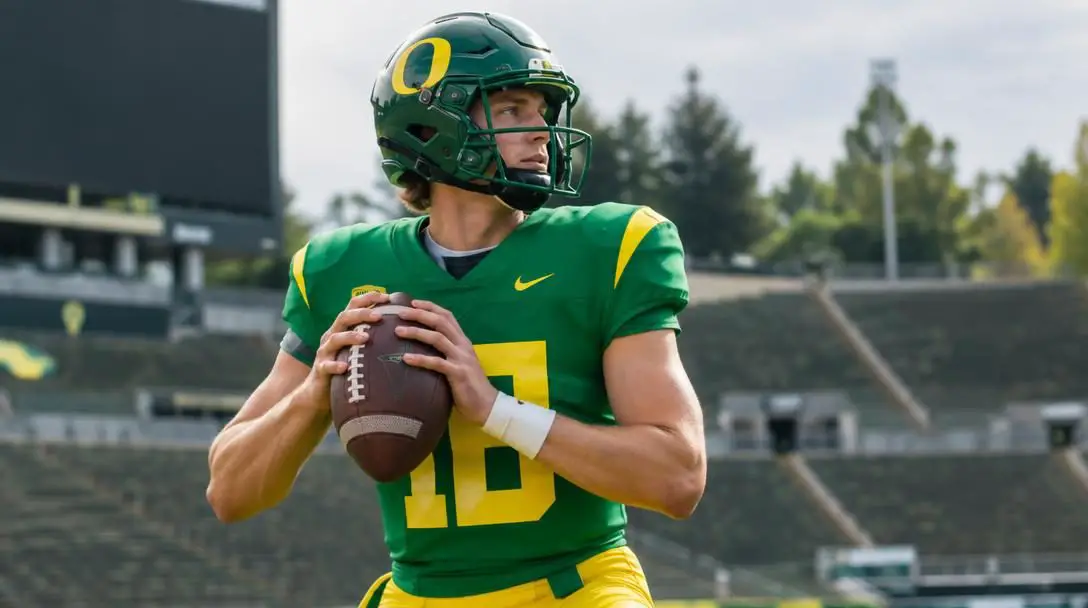
Mariota completed a historic sweep of national honors during his Heisman-winning 2014 campaign. He directed the Ducks through the inaugural College Football Playoff, securing a semifinal triumph and leading the program into the national championship game. His calm demeanor, extraordinary touchdown-to-turnover ratio, and comprehensive mastery of the offense made him the definitive standard for collegiate quarterbacks nationwide.
The Tennessee Titans made Mariota the second overall pick in the 2015 NFL Draft, right behind Jameis Winston. Mariota operated as Tennessee's starting quarterback for five seasons through 2019. He then moved on to the Las Vegas Raiders to serve as the primary backup to Derek Carr, before earning an opportunity to start under center for the Atlanta Falcons.
How college stardom differs from NFL longevity
When compiling all-time rankings for any major university, it is crucial to separate collegiate production from professional longevity. A player's college legacy is defined entirely by what they achieved on campus, the trophies they brought home, and how they elevated their teammates against conference rivals.
Several underlying factors explain why collegiate brilliance does not always mirror an extended NFL career:
- Scheme fit: College playbooks often rely on unique tempo, space, and read-option mechanics that do not directly translate into traditional professional offensive systems.
- Roster environment: Early draft picks inevitably land with struggling franchises that frequently lack offensive line protection, skilled playmakers, or coaching continuity.
- Longevity vs. dominance: A college career spans only three to five years, meaning an athlete can secure legendary status by delivering two or three truly exceptional seasons.
Practical steps for evaluating all-time college greats
Historians, analysts, and passionate fans rely on established criteria when measuring the impact of legends from different decades. Anyone looking to rank college football greats can follow these practical steps:
- Examine peak production: Evaluate raw statistics relative to the player's specific era, examining passing efficiency, total yardage, defensive stops, and turnover rates.
- Assess national and conference awards: Look at major individual hardware, such as the Heisman, Outland, or Morris trophies, as well as consensus All-American selections.
- Measure team achievements: Review conference championships, major bowl wins, and whether the team reached national championship contention during the player's starting tenure.
- Analyze program impact: Consider how the player shifted national recruiting visibility, elevated the school's brand, and established a winning culture.
Common mistakes in assessing program legends
Debating historical sports rankings often leads to common analytical traps. Avoiding these common misconceptions helps ensure evaluations remain objective and historically sound:
- Confusing NFL success with college greatness: Dismissing an elite college performer because they had a modest or short-lived pro career fails to respect what they accomplished for their university.
- Overvaluing pure counting stats: Focusing strictly on career totals can unfairly penalize dominant stars who departed early for the draft or dealt with shortened seasons.
- Ignoring positional context: Comparing offensive tackles or interior defenders directly against quarterbacks based purely on media attention downplays the vital work done in the trenches.
- Overlooking era differences: Evaluating 1990s offensive numbers through the lens of modern, high-scoring, hurry-up offenses distorts historical achievements.
Frequently asked questions
Who is the only Heisman Trophy winner in Oregon Ducks football history?
Marcus Mariota is the only player in Oregon history to win the Heisman Trophy, capturing the award following his historic 2014 season.
Which top Oregon player was not drafted in the first round of the NFL Draft?
Dennis Dixon is the only player among the top five who was not chosen in the first round; the Pittsburgh Steelers selected him in the fifth round of the 2008 draft.
What major hardware did Penei Sewell win while playing for Oregon?
During the 2019 season, Penei Sewell earned consensus All-American honors and won both the Outland Trophy and the Morris Trophy.
Why did Haloti Ngata leave Oregon early for the NFL Draft?
Ngata departed early following his 2005 campaign due to his mother's illness and the need to earn professional income to financially support his family.
Which NFL team drafted both Joey Harrington and Penei Sewell in the top ten?
The Detroit Lions selected Joey Harrington third overall in 2002 and selected Penei Sewell seventh overall in 2021.
The bottom line
The rise of Oregon Ducks football from a regional contender into a perennial national powerhouse was forged by visionary leadership, state-of-the-art facilities, and unmatched talent on the field. From the gritty poise of Joey Harrington and the dynamic playmaking of Dennis Dixon to the trench dominance of Haloti Ngata and Penei Sewell, each player on this list helped reshape the ceiling of what Oregon football could achieve.
Crowning it all is Marcus Mariota, whose poise and historic playmaking delivered the program its first Heisman Trophy and an appearance in the inaugural College Football Playoff National Championship. As future generations of Ducks step onto the turf in Eugene, these five icons remain the definitive benchmarks against which every future Oregon star will be measured.