Best 7th Round Picks in NFL History
The annual NFL Draft represents one of the most unpredictable exercises in professional sports. Front offices, general managers, and scouting departments dedicate thousands of hours to evaluating prospects through game film, physical measurements, medical evaluations, and interviews. Despite these exhaustive efforts, determining how a collegiate player will translate to the professional level remains an inexact science. The unpredictability of the draft is highlighted by drastic differences in outcomes across rounds. High-profile prospects selected at the very top of the board, such as Jamarcus Russell who was chosen with the first overall pick, can struggle to meet expectations. Conversely, historical anomalies like Tom Brady, who was taken deep in the process in the sixth round, prove that franchise-altering talent can be discovered long after the spotlight fades.
While casual football fans often tune out after the initial rounds conclude, the later phases of the draft carry immense weight for roster construction. The draft moved to a seven-round format in 1994 and has remained at that length ever since. In previous decades, the event extended much further, featuring as many as 20 rounds before the modern era contracted the process due to league expansion and an increased number of franchises. Today, the seventh round serves as the final opportunity for clubs to claim exclusive negotiating rights to incoming talent before the chaotic free-for-all of undrafted free agency begins. Over the course of league history, several players selected in this final round have outperformed expectations to become franchise cornerstones, record-holders, and members of the Pro Football Hall of Fame.
Key takeaways
- The modern seven-round NFL Draft format was established in 1994, compressing a process that previously spanned as many as 20 rounds.
- Historically overlooked prospects from small collegiate programs frequently slip to the final round due to limited national exposure.
- Hall of Fame inductees like Shannon Sharpe, Larry Wilson, and Rayfield Wright demonstrate that elite athletic traits matter more than draft positioning.
- Seventh-round picks offer massive surplus value against the salary cap when they secure starting roles on four-year rookie contracts.
Honorable mentions who outperformed their draft status
Before reviewing the top selections to emerge from this round, it is important to acknowledge the exceptional contributors who narrowly missed the top tier. These players carved out long, impactful careers and proved that late-round selections could become consistent starters and playmakers at the highest level:
- Donald Driver: Developed into an exceptional, long-term weapon in the passing game after entering the league with little fanfare.
- Marques Colston: Quickly established himself as a reliable, high-volume target who provided immediate and sustained offensive production.
- Julian Edelman: Emerged as a critical postseason weapon, reliable target, and championship contributor.
- Ryan Fitzpatrick: Crafted an extensive career as a starting and backup quarterback across multiple franchises, earning a reputation for veteran leadership and aggressive play.
- Jake Scott: A defensive back who made significant contributions in the secondary and on championship-level teams.
- Bo Jackson: An extraordinary multi-sport athlete whose draft circumstance led to a seventh-round selection, yielding electric highlights and dynamic rushing ability.
- Jim Ringo: An anchor on the offensive line who helped pave the way for dominant offensive units during his era.
- Joe Schmidt: A foundational defensive force who revolutionized middle linebacker play on his path to professional football immortality.
Top 5 seventh-round picks in NFL history
Finding a perennial Pro Bowler or a member of the Pro Football Hall of Fame in the final round of the draft is the ultimate scouting triumph. The following five players represent the pinnacle of late-round drafting, overcoming low draft capital to reshape league history.
| Player | Draft Year | Selecting Franchise | Overall Pick | Primary Accolades |
|---|---|---|---|---|
| Harold Carmichael | 1971 | Philadelphia Eagles | 161 | 4x Pro Bowl, 2x All-Pro, 1980 Man of the Year |
| Rayfield Wright | 1967 | Dallas Cowboys | 182 | 6x All-Pro, 2x Super Bowl Champion, Hall of Fame |
| Gary Anderson | 1982 | Buffalo Bills | 171 | 3x All-Pro, 2x All-Decade Team, 1998 perfect season |
| Larry Wilson | 1960 | St. Louis Cardinals | 74 | 7x All-Pro, 52 Interceptions, Hall of Fame |
| Shannon Sharpe | 1990 | Denver Broncos | 192 | 8x Pro Bowl, 5x All-Pro, 10,000+ receiving yards |
Harold Carmichael
- Collegiate Program: Southern University
- Overall Pick: 161 (1971)
- Career Receiving Yards: 8,985
- Career Touchdowns: 79
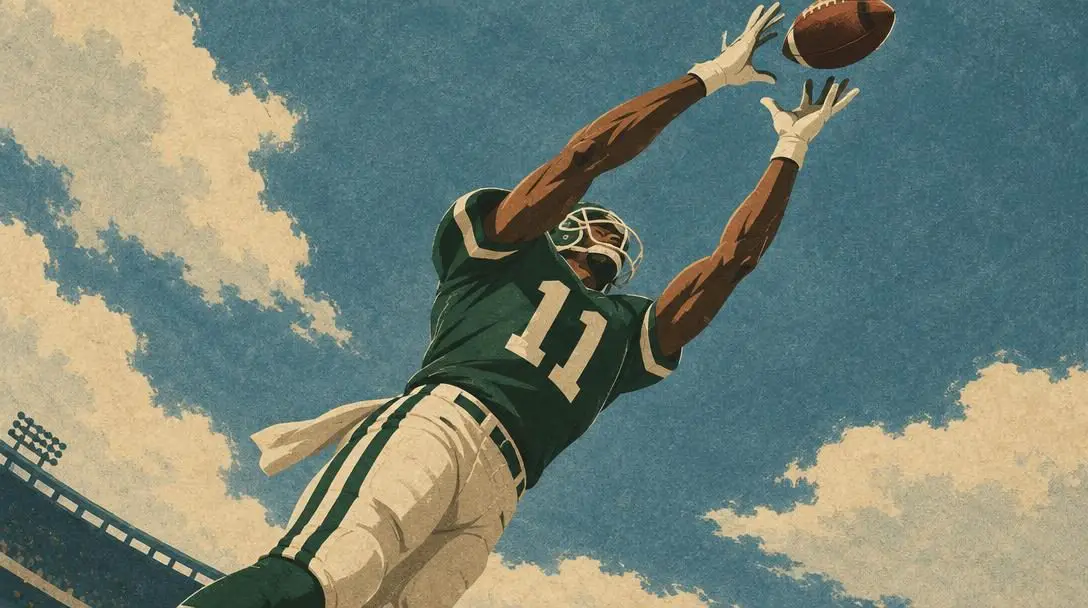
Harold Carmichael entered the professional ranks in 1971 from Southern University as a uniquely gifted athlete. Standing at an imposing 6’8”, Carmichael was an exceptionally tall wide receiver, but evaluators viewed him as a raw talent who needed significant refinement to succeed against professional defensive backs. The Philadelphia Eagles recognized the potential of his rare frame and used the 161st overall pick in the seventh round to secure his rights.
The decision paid massive dividends for Philadelphia. Carmichael quickly adapted to the professional game, utilizing his height and catch radius to dominate opposing secondaries. In 1973, he led the NFL in receiving yards, cementing his status as one of the game's premier deep threats. Over the course of more than a decade with the Eagles, Carmichael earned selection to four Pro Bowls and was named an All-Pro twice. Beyond his on-field production, he earned recognition for his character and community impact by winning the 1980 NFL Man of the Year Award. By the time he concluded his career in 1984 with the New York Jets and Dallas Cowboys, Carmichael had amassed 8,985 receiving yards and 79 touchdowns.
Rayfield Wright
- Collegiate Program: Fort Valley State
- Overall Pick: 182 (1967)
- All-Pro Honors: 6 seasons (3 First-Team)
- Championships: 2 Super Bowl titles
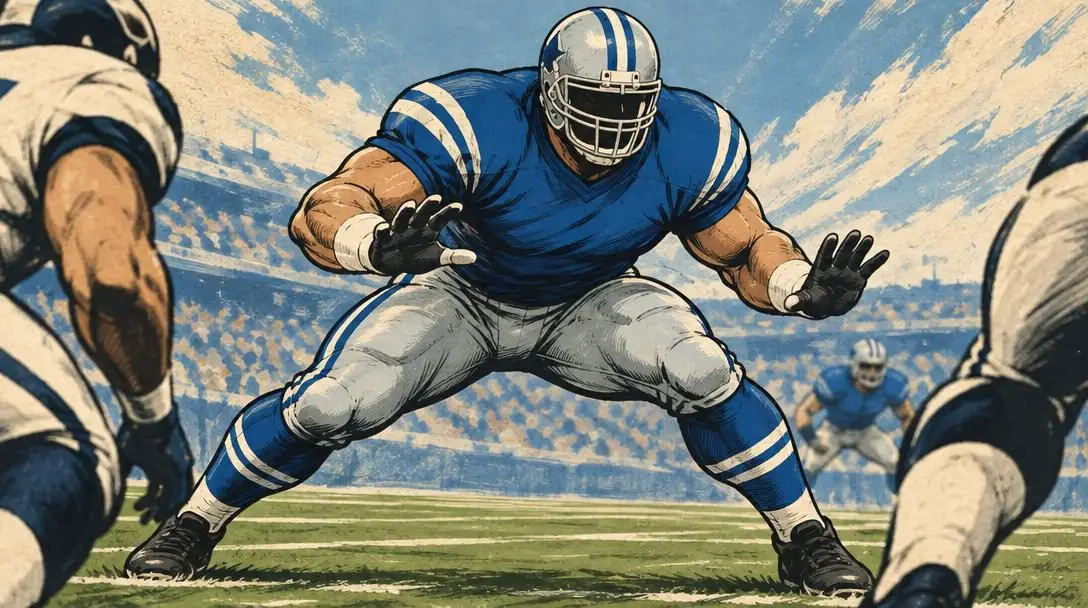
Rayfield Wright was a dominant physical presence during the 1960s at Fort Valley State. Standing 6’6” and weighing 270 pounds, he earned the nickname “The Big Cat” because he moved with astonishing agility, foot speed, and grace for an athlete of his size. However, because Fort Valley State did not compete at the Division-I level during his collegiate tenure, Wright was evaluated by far fewer scouts and received limited national attention leading up to the draft. The Dallas Cowboys ultimately drafted him with the 182nd overall pick in the seventh round.
Wright became one of the greatest late-round success stories in franchise history. He transitioned into an anchor for the Cowboys' offensive line, handling elite edge rushers and opening lanes for the ground attack. Wright was named an All-Pro across six different seasons, earning First-Team honors in three of them. His blocking helped Dallas secure two Super Bowl rings, cementing his legacy in the franchise’s Ring of Honor and ultimately earning him enshrinement into the Pro Football Hall of Fame.
Gary Anderson
- Collegiate Program: Syracuse
- Overall Pick: 171 (1982)
- Career Longevity: 20+ years across 6 franchises
- Key Milestone: 35-for-35 field goals in 1998
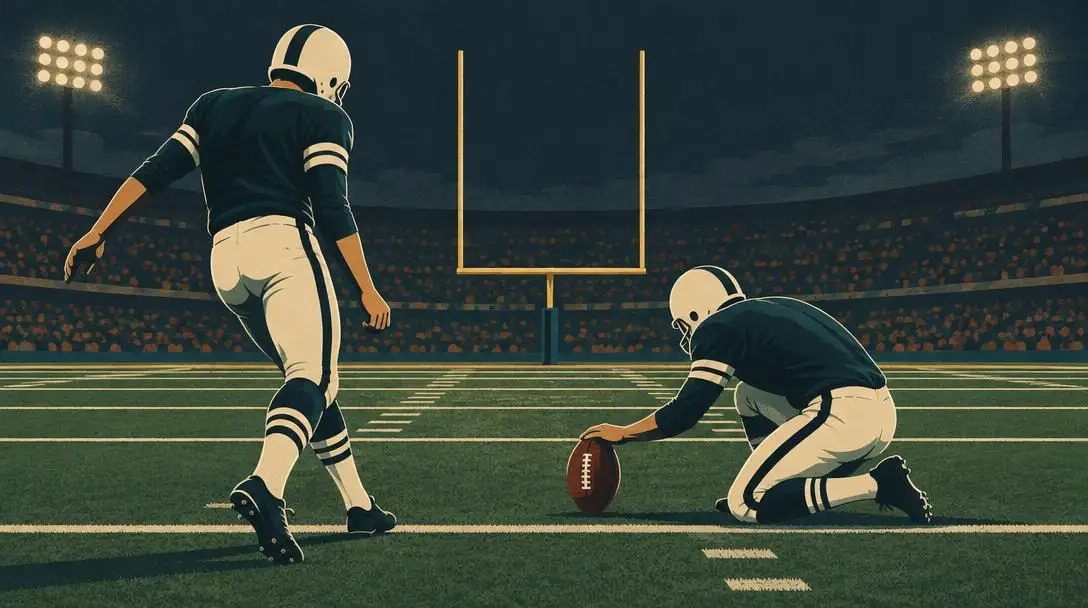
The seventh round has traditionally served as the primary window where teams address special teams by drafting kickers and punters. Gary Anderson, a native of South Africa who played collegiately at Syracuse, entered the professional ranks when the Buffalo Bills drafted him with the 171st overall pick in 1982. Anderson did not make his mark in Buffalo, however; he began his active NFL journey in 1984 as a member of the Pittsburgh Steelers.
Anderson embarked on a remarkable career that spanned more than 20 years and included tenures with six different franchises. Over two decades of high-pressure kicking, he was named an All-Pro three times and earned selections to two separate NFL All-Decade Teams. His premier season arrived in 1998, when he achieved regular-season perfection by converting all 35 of his field goal attempts. Although his season is frequently remembered for a critical miss in that year's NFC Championship Game, Anderson's sustained longevity and accuracy established him as one of the most accomplished specialists to ever emerge from the final round of the draft.
Larry Wilson
- Collegiate Program: Utah
- Overall Pick: 74 (1960)
- Career Interceptions: 52
- All-Pro Honors: 7 selections (6 First-Team)
Larry Wilson’s draft positioning reflects a very different era in professional football. In the 1960 NFL Draft, the league featured fewer franchises, meaning that when the St. Louis Cardinals selected Wilson in the seventh round, he was the 74th overall selection. Wilson was also recognized for his talent by the rival American Football League, where he was chosen as a first-round selection in the AFL Draft. Wilson elected to sign with the Cardinals, where he spent his entire legendary career roaming the defensive backfield.
Wilson revolutionized safety play through his fierce tackling, anticipation, and ball skills, ultimately intercepting 52 passes throughout his career. He was recognized as an All-Pro seven times, with six of those selections landing him on the First Team. His standard of play was honored with placements on two All-Decade Teams, and his legacy stood the test of time through his selection to both the 75th and 100th NFL Anniversary All-Time Teams, solidifying his stature in the Pro Football Hall of Fame.
Franchise-altering talent can be discovered long after the initial spotlight fades.
Shannon Sharpe
- Collegiate Program: Savannah State
- Overall Pick: 192 (1990)
- Pro Bowl Selections: 8
- Career Receiving Yards: 10,000+
Modern sports fans may recognize Shannon Sharpe primarily as an outspoken sports television analyst, but his football foundation was built as one of the most dominant tight ends the game has ever seen. Sharpe came into the draft after playing at Savannah State, a small-school program that left scouts questioning how his athleticism and hybrid size would fit into traditional offensive schemes. The Denver Broncos took a chance on his playmaking ability, selecting him with the 192nd overall pick in the seventh round.
Sharpe transformed the tight end position by operating as a dynamic receiver who could split out wide, run sophisticated routes, and exploit mismatches against linebackers and safeties. Although he spent two seasons playing for the Baltimore Ravens, the bulk of his career was defined by his dominance in Denver. Sharpe earned eight Pro Bowl selections and was named a First-Team or Second-Team All-Pro five times. He set the single-game tight end record for receiving yards by recording 214 yards in a single contest. Over his career, Sharpe hauled in 62 touchdowns and eclipsed 10,000 receiving yards, proving to be the gold standard of late-round drafting.
Evolution of the NFL Draft format
Understanding the value of seventh-round selections requires looking at how the draft's structure has changed over the decades. In the mid-twentieth century, the draft was an endurance trial featuring up to 20 rounds. With fewer teams competing, a player selected in the seventh round in 1960 came off the board inside the top 80 picks. As the NFL absorbed AFL teams and added expansion franchises throughout the modern era, the overall talent pool deepened, requiring front offices to streamline their draft boards.
By 1994, the NFL standardized the event into the seven-round format used today. This adjustment fundamentally altered late-round evaluations. Modern seventh-round picks stretch beyond number 200, which historically would have fallen into the eighth, ninth, or tenth rounds. Modern teams must navigate deeper scouting reports, more specialized medical evaluations, and detailed athletic metrics to find players capable of earning a spot on a standard 53-man active roster.
How late-round scouting and evaluation works
Identifying starting-caliber talent at the end of the draft involves an entirely different evaluation process than selecting players in the first round. By day three of the draft, most prospects possess noticeable flaws, limited collegiate competition, or raw athletic profiles that require patient development. Front offices employ specialized approaches to uncover viable prospects:
- Regional scouting emphasis: Area scouts play a critical role in championing players from small-school programs like Savannah State or Fort Valley State, where lower national visibility allows talent to slip through the cracks.
- Identifying elite single traits: Rather than searching for complete, polished players, teams often target single standout traits. Whether it is Harold Carmichael's 6’8” frame or Rayfield Wright’s rare mobility for a 270-pound lineman, elite physical tools give coaches a foundation to develop.
- Special teams capability: Seventh-round picks must typically contribute immediately on kick coverage, punt protection, or return units to earn a roster spot while they refine their primary offensive or defensive skills.
- Draft board prioritization versus priority free agency: In the final round, front offices evaluate which priority targets are unlikely to sign with them as undrafted free agents due to competing contract offers or unfavorable depth charts, prompting the team to use a draft pick to secure exclusive rights.
Practical steps for evaluating late-round prospects
Draft rooms that consistently find contributors late on day three follow a methodical framework. Organizations that excel in the seventh round generally rely on the following evaluation steps:
- Establish clear roster roles: Teams determine whether a prospect is being drafted to compete for a starting job, provide sub-package depth, serve as a specialist, or develop on the practice squad.
- Isolate developmental obstacles: Scouts examine why a player fell down the board. A player overlooked due to small-school competition or an unrefined technique is often a better developmental risk than one with clear athletic limitations.
- Analyze scheme fit and mismatch potential: Evaluators look for hybrid skill sets that collegiate schemes underutilized. Players like Shannon Sharpe thrived because forward-thinking coaching staffs created personnel mismatches that had not been tapped in college.
- Confirm positional value: The late rounds present an ideal opportunity to address low-premium positions that rarely warrant early capital, such as kickers and punters like Gary Anderson, without sacrificing early-round assets.
Common mistakes teams make in the seventh round
Drafting late carries a low investment risk, but poor process can waste valuable draft assets. Common mistakes made by NFL decision-makers include:
- Drafting for immediate need over upside: Reaching for a player who plays a position of need but lacks athletic upside often results in a player who is cut before the regular season begins.
- Ignoring positional redundancy: Drafting prospects who duplicate the skill sets of established bottom-of-the-roster players without offering special teams value reduces their chances of surviving final cuts.
- Chasing raw measurables without football acumen: Selecting players solely for straight-line speed or size without an underlying feel for the game often leads to prospects who struggle to digest complex professional playbooks.
- Failing to secure priority free agents: Using late selections on players who could easily be signed after the draft instead of locking down targets with competitive free-agent markets undermines the value of the pick.
Frequently asked questions
When did the NFL Draft permanently switch to seven rounds?
The NFL standardized its draft to seven rounds in 1994. In earlier decades, the draft extended much further, featuring up to 20 rounds before the modern era contracted the format to accommodate league expansion.
Why did a seventh-round pick in 1960 have a lower overall pick number than today?
In 1960, the NFL featured far fewer franchises than it does today. As a result, when the St. Louis Cardinals selected Larry Wilson in the seventh round, he was the 74th overall selection, whereas modern seventh-round picks routinely occur after pick 200.
Can a seventh-round pick make the Pro Football Hall of Fame?
Yes. Multiple seventh-round picks have achieved enshrinement in the Pro Football Hall of Fame, including offensive tackle Rayfield Wright, safety Larry Wilson, and tight end Shannon Sharpe.
Why do small-school players frequently fall to the seventh round?
Collegiate athletes from smaller schools, such as Savannah State or Fort Valley State, often face limited national television exposure and are evaluated by fewer scouts, allowing elite athletes to slide down draft boards despite high athletic potential.
Why do teams often draft specialists like kickers in the seventh round?
Specialists rarely warrant high draft capital in the opening rounds. The seventh round offers front offices an ideal window to secure elite kicking talent, such as Gary Anderson, while avoiding the bidding wars of undrafted free agency.
The bottom line
Evaluating historical late-round draft picks provides crucial context for modern team-building strategies. As the NFL continues to prioritize salary cap management, players performing on cost-controlled four-year rookie contracts represent massive surplus value for their clubs. When an organization uncovers a foundational starter, perennial All-Pro, or Pro Football Hall of Fame talent like Shannon Sharpe or Rayfield Wright in the seventh round, it gains the roster flexibility needed to compete for championships over sustained windows.