5 Worst NFL Draft Picks Ever
Evaluating which selections qualify as the most disappointing or damaging in the history of the NFL Draft is inherently subjective. Football analysts, scouts, and executives regularly weigh multiple variables when reviewing draft missteps, ranging from the sheer capital spent on a top-ten selection to the financial fallout, locker-room disruptions, and caliber of generational talent bypassed in the process. Because every franchise operates under unique organizational cultures, immediate roster needs, and long-term blueprints, determining a single definitive draft disaster remains one of sports' most enduring debates.
The annual NFL Draft has functioned as the gateway from college football to the professional ranks for generations. Scouting departments dedicate immense resources toward evaluating collegiate prospects in the hopes of securing a franchise cornerstone. Despite years of film study, physical testing, and psychiatric interviews, talent projection remains an imprecise science. While late-round selections sometimes blossom into Pro Football Hall of Fame inductees, top picks can struggle to adapt to professional demands and exit the league in just a few seasons. When early investments fail, the ripple effects can set an organization back for half a decade.
Key takeaways
- High-profile draft blunders carry disproportionate damage because early draft capital also costs teams the chance to draft nearby elite prospects.
- Front offices often stumble by prioritizing raw physical metrics over mental processing speed, work ethic, and character stability.
- Roster turnover and premature personnel moves, such as trading established veterans to accommodate untested rookies, compound draft mistakes.
- A disciplined scouting process requires multidisciplinary consensus across coaching, medical, background, and analytical departments to mitigate selection risk.
At a glance: High-profile draft selections under scrutiny
The following table outlines several of the most scrutinized draft decisions in professional football history, illustrating the original selection, draft position, and the elite talent passed over at the time.
| Player(s) | Draft Year | Selection Slot | Drafting Team | Notable Talent Bypassed |
|---|---|---|---|---|
| Baker Mayfield & Sam Darnold | 2018 | Pick 1 & Pick 3 | Cleveland Browns & New York Jets | Josh Allen, Quenton Nelson, Bradley Chubb |
| Tony Mandarich | 1989 | Pick 2 | Green Bay Packers | Barry Sanders, Derrick Thomas, Deion Sanders |
| Lawrence Phillips | 1996 | Pick 6 | St. Louis Rams | Eddie George, Tim Biakabutuka |
| Ryan Leaf | 1998 | Pick 2 | San Diego Chargers | Charles Woodson |
| JaMarcus Russell | 2007 | Pick 1 | Oakland Raiders | Brady Quinn (Sugar Bowl rival), elite defensive talent |
Five of the most scrutinized draft decisions in NFL history
While assigning an indisputable ranking to draft blunders is impossible, several high-profile selections over the past four decades serve as case studies in missed potential, organizational miscalculation, and costly roster disruption.
Baker Mayfield and Sam Darnold
- Draft year: 2018
- Draft positions: Pick 1 (Mayfield) and Pick 3 (Darnold)
- Original teams: Cleveland Browns and New York Jets
- Subsequent status: Teammates and backups for the Carolina Panthers
The 2018 NFL Draft was viewed as an extraordinary quarterback showcase. Holding the first overall pick, the Cleveland Browns opted for 2017 Heisman Trophy winner Baker Mayfield. After the New York Giants took running back Saquon Barkley at number two, the New York Jets used the third overall pick to select USC standout Sam Darnold. Both young passers were heavily favored by evaluators to anchor their respective franchises for a decade, while contemporary critics argued that the Buffalo Bills took a dangerous reach by selecting Wyoming quarterback Josh Allen at pick seven.
Within just a few seasons, both Mayfield and Darnold had parted ways with the teams that drafted them, eventually crossing paths as teammates and reserve quarterbacks for the Carolina Panthers. Meanwhile, Josh Allen established himself as one of the league's elite dual-threat passers. In prioritizing Mayfield and Darnold, the Browns and Jets also bypassed standout talents like Denzel Ward, Bradley Chubb, and perennial All-Pro offensive lineman Quenton Nelson.
Tony Mandarich
- Draft year: 1989
- Draft position: Pick 2
- Drafting team: Green Bay Packers
- College program: Michigan State
The top five selections of the 1989 draft represent one of the greatest collections of football talent ever assembled. Four of those five prospects earned enshrinement into the Pro Football Hall of Fame: first-overall quarterback Troy Aikman, third-pick running back Barry Sanders, fourth-pick pass rusher Derrick Thomas, and fifth-pick defensive back Deion Sanders. The lone exception in that legendary group was Michigan State offensive tackle Tony Mandarich, chosen second overall by the Green Bay Packers.
Dubbed "The Incredible Bulk" on the cover of Sports Illustrated, Mandarich arrived with immense hype surrounding his unprecedented blend of size, power, and speed. However, his physical dominance failed to translate against NFL pass rushers. Mandarich lasted only four seasons in Green Bay before being released. Following an extended hiatus from professional football, he mounted an admirable second act as a capable starter for the Indianapolis Colts, but his original top-two draft billing remains an infamous outlier.
Even with thorough evaluations, projecting future performance is an imprecise science.
Lawrence Phillips
- Draft year: 1996
- Draft position: Pick 6
- Drafting team: St. Louis Rams
- Career output: 35 games across three franchises
The 1996 draft opened with an extraordinary run of foundational talent. The first three picks became perennial Pro Bowl contributors, while fourth overall pick Jonathan Ogden earned a bronze bust in Canton. In need of an offensive centerpiece at pick six, the St. Louis Rams ignored collegiate stars Tim Biakabutuka of Michigan and Eddie George of Ohio State to select dynamic Nebraska running back Lawrence Phillips.
The selection triggered an immediate organizational shift: the Rams traded away established star running back Jerome Bettis to clear a path for the rookie. Phillips, however, was unable to overcome extensive off-the-field personal issues, which included staying out drinking until the morning of scheduled game days. His tenure in St. Louis collapsed in less than two full seasons. Across brief stops with the Rams, Miami Dolphins, and San Francisco 49ers, Phillips played in just 35 career games, leaving the Rams with long-term regrets over the personnel sacrifices made to acquire him.
Ryan Leaf
- Draft year: 1998
- Draft position: Pick 2
- Drafting team: San Diego Chargers
- NFL career record: 4-17 as a starter
Prior to the 1998 NFL Draft, debate raged across front offices and national media regarding whether the Indianapolis Colts should choose Tennessee's Peyton Manning or Washington State's Ryan Leaf with the first overall pick. Indianapolis ultimately chose Manning, leaving the San Diego Chargers to secure Leaf at pick number two. The disparity in their career arcs became one of the most stark contrasts in sports history.
Leaf struggled immediately with the emotional and operational rigors of the professional game. Confrontations with local media, volatile locker room moments, and inconsistent on-field execution plagued his tenure. Over three turbulent seasons in San Diego and an 0-3 starting stint with the Dallas Cowboys in 2001, Leaf threw just 14 touchdowns against 36 interceptions, compiling a 4-17 starting record. By 2002, Leaf was completely out of the NFL, while the Chargers missed the opportunity to draft Michigan cornerback and Heisman Trophy winner Charles Woodson, who went fourth overall.
JaMarcus Russell
- Draft year: 2007
- Draft position: Pick 1
- Drafting team: Oakland Raiders
- Career statistics: 18 touchdowns, 23 interceptions, 18 losses in 25 starts
Entering the 2007 draft, LSU standout JaMarcus Russell was heralded for possessing rare physical tools. Following a dominant Sugar Bowl performance against Notre Dame quarterback Brady Quinn, Russell captivated scouts with his towering size, mobility, and cannon-like arm strength. Intrigued by his raw physical ceiling, the Oakland Raiders selected him with the first overall pick.
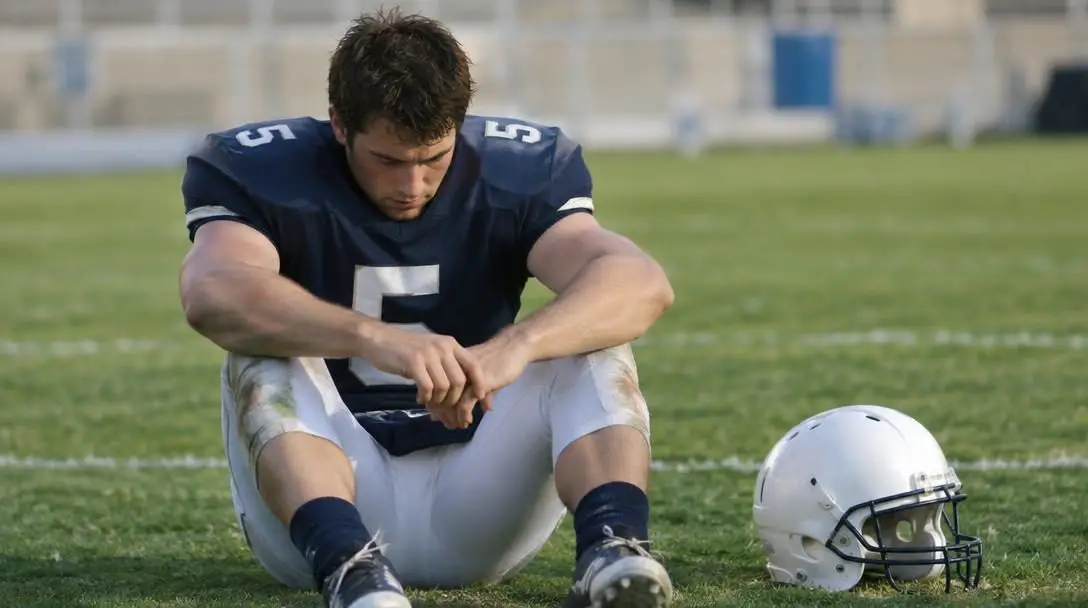
However, Russell struggled immensely with the preparation required of an NFL starting quarterback. Reports routinely cited chronic difficulties with playbook retention, practice discipline, and conditioning. Russell lasted only three seasons in Oakland before his release following the 2009 campaign. In 25 professional starts, he suffered 18 losses, throwing 18 touchdowns and 23 interceptions. Despite intermittent workout reports and comeback attempts during the 2010s, Russell never took another snap in an NFL regular-season game.
The mechanics of the prospect evaluation pipeline
Understanding why top prospects fail requires examining the multi-phase vetting system NFL franchises use leading up to the draft. Front offices deploy several analytical filters to minimize uncertainty and forecast how collegiate performance translates to professional competition.
- Film evaluation and performance charting: Area scouts dissect hundreds of hours of game footage to study technical execution, footwork, balance, and decision-making against top collegiate competition.
- Standardized physical and athletic testing: The NFL Scouting Combine and on-campus pro days capture precise measurements, testing top-end speed, agility, vertical explosion, and strength repetitions against positional thresholds.
- Medical and orthopedic screenings: Team physicians examine prior surgical histories, review MRI scans, check ligament laxity, and determine whether pre-existing physical wear presents an early career-ending risk.
- Psychological and character evaluations: Front offices utilize cognitive assessments, interview collegiate staff members, conduct deep background reviews, and run formal interviews to gauge work habits and resilience.
- Draft board formulation: Decision-makers synthesize data from every department into a unified ranking board, grading prospects on projected value and scheme fit before setting selection strategy.
How modern front offices mitigate draft risk
Because missing on high-round selections creates severe competitive setbacks, modern NFL franchises apply structured strategies to insulate themselves from draft-day errors.
- Establish multidisciplinary consensus: Front offices structure draft boards by integrating scouting grades, coaching scheme preferences, analytics projections, and medical reports, ensuring no single voice overrides collective evaluation.
- Diversify draft capital: Teams frequently trade backward from high selections to gather multiple middle-round picks, spreading risk across multiple prospects rather than gambling on a single player.
- Conduct investigative background inquiries: Organizations deploy dedicated investigative staff to examine prospective picks' off-field habits, peer circles, financial discipline, and personal reliability well before draft weekend.
- Match personnel with coaching schemes: Decision-makers prioritize prospects who fit existing tactical systems, avoiding the trap of forcing young athletes to unlearn fundamental habits to match unfamiliar playbooks.
- Deploy dedicated rookie integration support: Franchises surround young players with life-skills directors, personal financial counselors, and player-development mentors to help them manage the transition to newfound wealth and autonomy.
Common traps and pitfalls in talent evaluation
Despite modern technology and extensive data modeling, talent evaluators continue to fall victim to predictable evaluation biases during the pre-draft process.
- Overvaluing raw physical metrics: Scouts often fall in love with rare physical traits—such as supreme throwing velocity or blazing 40-yard dash times—while overlooking inadequate processing speed and poor on-field awareness.
- Dismissing documented character concerns: Front offices occasionally convince themselves that professional culture and veteran leadership will fix persistent discipline or motivational issues observed in college.
- Yielding to external public and media narratives: Front offices sometimes allow outside media rankings, fan sentiment, or draft hype to cloud their internal evaluations and force popular picks.
- Ignoring positional opportunity cost: Spending premium draft capital on volatile skill positions while ignoring elite foundational talent along the offensive and defensive lines frequently stunts long-term team building.
- Rushing developmental quarterbacks into action: Throwing young passers into games before they master the playbook or behind compromised offensive lines destroys self-confidence and accelerates poor mechanical habits.
Frequently asked questions
Why do early draft picks face far more scrutiny when they fail?
Top selections represent substantial investments of organizational capital, fan expectations, and starting roster roles. When an early selection fails, the damage is amplified not only by their lost production, but by the generational, franchise-altering talent selected immediately afterward that the team missed out on.
What makes Tony Mandarich's draft selection uniquely notorious?
Mandarich stands out because four of the other players selected in the top five of the 1989 draft—Troy Aikman, Barry Sanders, Derrick Thomas, and Deion Sanders—became iconic Pro Football Hall of Fame members, leaving Mandarich as the lone outlier in an otherwise legendary class.
How did drafting Lawrence Phillips affect the St. Louis Rams' roster?
To clear a starting role for Phillips in 1996, the Rams traded away established star running back Jerome Bettis. Phillips lasted less than two seasons in St. Louis due to chronic off-field issues, meaning the franchise surrendered a proven star for a prospect who played just 35 career NFL games.
Why did JaMarcus Russell struggle to succeed with the Oakland Raiders?
Despite elite arm strength and physical size, Russell struggled significantly with professional preparation, failing to build consistent practice routines, conditioning habits, and playbook study discipline. His career ended after just three seasons, 25 starts, and 18 losses.
How did the debate between Peyton Manning and Ryan Leaf conclude?
Heading into 1998, evaluators fiercely debated which quarterback to pick first overall. Indianapolis chose Manning, who went on to a legendary career, while San Diego took Leaf at pick two. Leaf struggled with poor performance and off-field friction, throwing 36 interceptions to 14 touchdowns before leaving the NFL after 2001.
The bottom line
Assessing draft prospects will always remain an imperfect science balanced between physical potential and mental adaptability. While front offices continue to refine psychological testing, biometric tracking, and tactical scheme design, the unpredictable human elements of professional sports ensure that surprises and disappointments will forever be part of the draft. Ultimately, successful franchises are defined not by an unblemished draft record, but by their organizational stability, disciplined risk management, and the support systems they build to help young talent realize its potential.