5 Best WrestleMania Main Events
Every spring, sports entertainment reaches its absolute zenith with WrestleMania, universally billed as The Grandest Stage of Them All. As the undisputed centerpiece of the professional wrestling calendar, the event draws millions of viewers globally, delivering the climax to storylines that have simmered across months or even years. While an entire pay-per-view card can feature memorable bouts and title defenses, the final match of the night carries a sacred responsibility. Closing WrestleMania places competitors under unmatched scrutiny, demanding a performance that blends elite physical conditioning, pitch-perfect ring psychology, and long-term narrative payoff.
Across four decades of marquee clashes, only a select group of main events have transcended standard athletic theater to become cultural landmarks. These transcendent showdowns succeeded not merely on the strength of famous names, but because every punch, reversal, kick-out, and crowd reaction aligned to create timeless drama. Whether contested under the open sky of a baseball stadium or inside the hallowed walls of a legendary indoor arena, the finest headliners established standards of excellence that continue to define the industry today.
Key takeaways
- WrestleMania main events represent the narrative and athletic culmination of the professional wrestling calendar.
- Historic venues such as the Houston Astrodome and Madison Square Garden have provided monumental backdrops that amplify crowd energy and ring drama.
- Classic matches often rely on high-stakes stipulations, including retirement clauses, No Disqualification rules, and historic championship triple threats.
- A legendary main event hinges on storytelling, emotional investment, and in-ring psychology rather than mechanical perfection alone.
The Anatomy of an Iconic WrestleMania Closer
Understanding why certain matches endure while others fade from memory requires looking beyond basic move execution. A WrestleMania main event operates as the structural anchor of the entire broadcast. When bookers and performers construct the final contest, they balance immense expectations, physical fatigue from hours of preceding matches, and the shifting temperament of tens of thousands of live attendees.
Several vital ingredients must align for a headliner to achieve greatness:
- Narrative stakes: Whether contested over a world championship, an undefeated streak, or a bitter personal grudge, the audience must believe that the outcome alters the careers of both combatants forever.
- Pacing and structure: Great main events rarely start at full throttle; they deliberately build momentum, escalating from feeling-out phases to dramatic counter-wrestling, signature offenses, and heart-stopping near-falls.
- Audience engagement: The live crowd functions as an active participant whose roar, collective gasps, and synchronized chants dictate the dramatic pulse of the encounter.
- Enduring resolution: An all-time great match delivers a decisive, resonant finish—whether through a heroic coronation, a tragic retirement, or a shocking narrative twist that reframes the entire wrestling landscape.
At a Glance: The Top 5 WrestleMania Headliners
| Rank | Matchup | Event | Venue | Stakes / Stipulation |
|---|---|---|---|---|
| 5 | Brock Lesnar vs. Kurt Angle | WrestleMania XIX | Safeco Field (Seattle) | WWE Championship |
| 4 | Chris Benoit vs. Shawn Michaels vs. Triple H | WrestleMania XX | Madison Square Garden (New York City) | World Heavyweight Championship (Triple Threat) |
| 3 | Batista vs. Randy Orton vs. Daniel Bryan | WrestleMania XXX | Mercedes-Benz Superdome (New Orleans) | WWE World Heavyweight Championship (Triple Threat) |
| 2 | The Undertaker vs. Shawn Michaels | WrestleMania XXVI | University of Phoenix Stadium (Glendale) | Streak vs. Career (No Countout, No Disqualification) |
| 1 | Stone Cold Steve Austin vs. The Rock | WrestleMania X-Seven | Houston Astrodome (Houston) | WWF Championship (No Disqualification) |
Ranking the 5 Best WrestleMania Main Events of All Time
Evaluating the very best headliners in the history of the spectacle demands weighing athleticism, dramatic tension, narrative execution, and the lasting legacy of the contest. The following five matches stand out as the undisputed pinnacle of WrestleMania main-event storytelling.
Brock Lesnar vs. Kurt Angle (WrestleMania XIX)
- Event: WrestleMania XIX
- Venue: Safeco Field in Seattle
- Championship: WWE Championship
- Key Highlight: Lesnar's recovery after a missed shooting star press
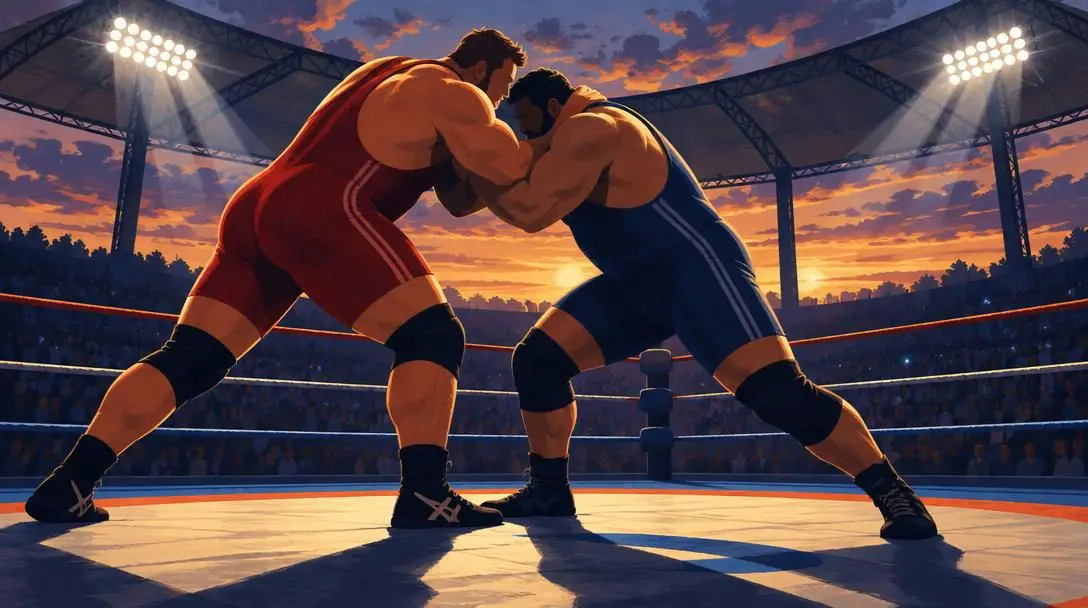
Contested outdoors under the massive canopy of Seattle's Safeco Field, WrestleMania XIX boasted an exceptionally deep card. The lineup included a celebrated clash between Stone Cold Steve Austin and The Rock serving as the penultimate match. Closing out the evening was an extraordinary collision between defending champion Kurt Angle and the explosive challenger Brock Lesnar, heralded as The Next Big Thing. Both men brought legitimate elite amateur wrestling backgrounds to the squared circle, resulting in an athletic showcase that blended pure power with world-class mat technique.
The match escalated through suplexes, submission reversals, and punishing power maneuvers, keeping the stadium crowd in suspense. The showdown earned historical notoriety for a terrifying moment when Lesnar ascended the turnbuckle to attempt an ambitious shooting star press. Coming up short on the rotation, Lesnar landed heavily on his head and neck. In a testament to sheer toughness and ring presence, the two competitors improvised swiftly. Lesnar shook off the severe blow to deliver a decisive third F-5, capturing the WWE Championship and launching an acclaimed series of matches between the two throughout 2003.
Chris Benoit vs. Shawn Michaels vs. Triple H (WrestleMania XX)
- Event: WrestleMania XX
- Venue: Madison Square Garden in New York City
- Championship: World Heavyweight Championship
- Historic Milestone: First WrestleMania main event to conclude via submission
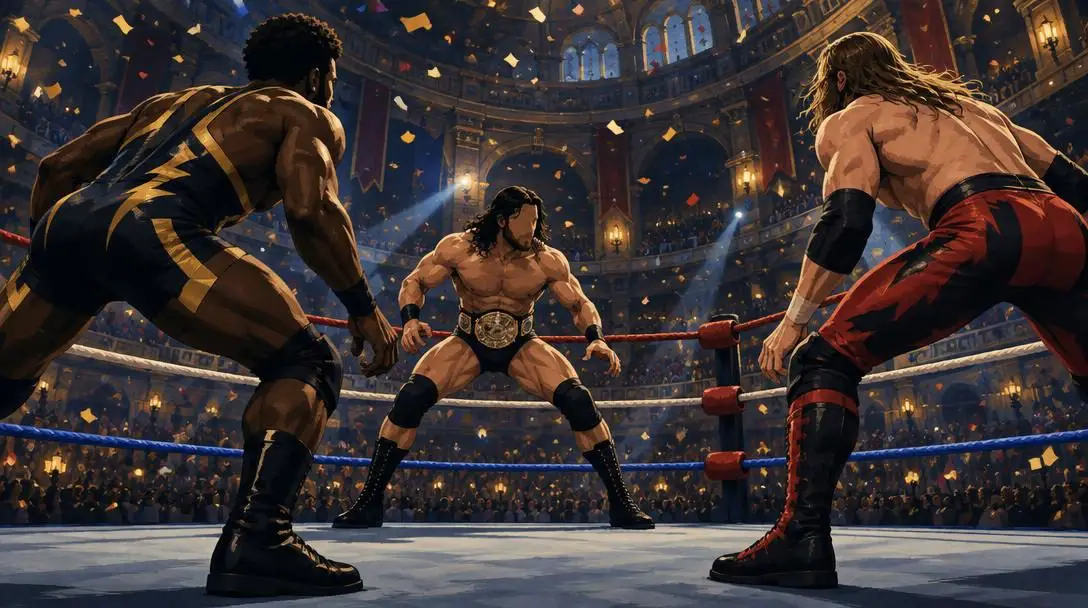
Staged inside the legendary confines of Madison Square Garden for the third time in event history, WrestleMania XX was a landmark evening. The undercard set an extraordinarily high bar: John Cena claimed the United States Championship against the Big Show to open the broadcast, while Eddie Guerrero retained his WWE Championship against Kurt Angle. The main event brought together bitter rivals Triple H, Shawn Michaels, and Royal Rumble winner Chris Benoit in a three-way war for the World Heavyweight Championship.
Triple threat matches frequently suffer from disjointed pacing, but this encounter perfected the format through relentless action, bloody drama, and exquisite choreography. Prior to this historic twentieth installment, no WrestleMania main event had ever ended with a submission. That record shattered when Benoit countered Triple H's signature Pedigree attempt into the Crippler Crossface, forcing the champion to tap out in the center of the ring. The post-match celebration, which saw Benoit joined by fellow champion Guerrero amidst cascading confetti, represented an emotional culmination for veterans who had spent decades climbing to the summit of the industry.
Batista vs. Randy Orton vs. Daniel Bryan (WrestleMania XXX)
- Event: WrestleMania XXX
- Venue: Mercedes-Benz Superdome in New Orleans
- Championship: WWE World Heavyweight Championship
- Defining Arc: Bryan's two-match gauntlet to overcome the authority
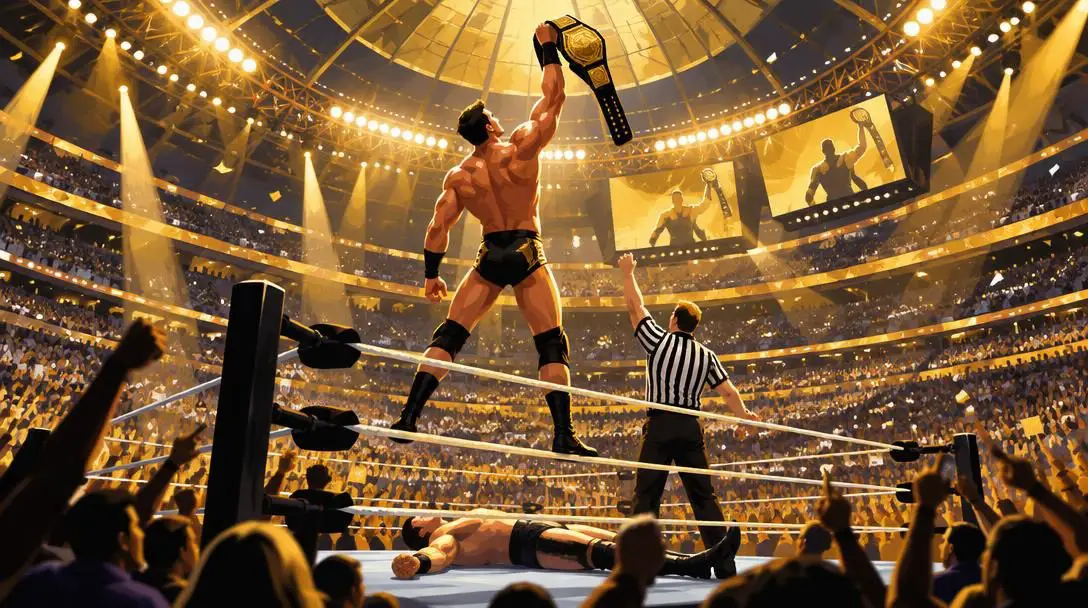
Ten years after the triumph at Madison Square Garden, the Mercedes-Benz Superdome in New Orleans hosted another three-man showcase that captured the cultural zeitgeist. Originally, the headliner was slated to feature Royal Rumble winner Batista challenging WWE World Heavyweight Champion Randy Orton in a traditional singles bout. However, an uncontrollable groundswell of fan passion for Daniel Bryan forced management to alter its trajectory. Bryan was forced to defeat Triple H in the opening contest of the evening just to earn entry into the final title fight.
Entering the main event with an injured shoulder from his earlier match, Bryan faced overwhelming physical odds against two former world champions who temporarily united to eliminate him. The contest culminated in a breathtaking sequence: after Batista leveled Orton with his finisher, an injured Bryan re-entered the fray, hit his running knee, and locked Batista in the Yes! Lock. The match reached an indelible climax as commentator Michael Cole pleaded on the air for Batista to submit. Batista's tap out triggered a deafening roar from over 75,000 fans, cementing Bryan's championship coronation as one of the ultimate underdog victories in entertainment history.
The Undertaker vs. Shawn Michaels (WrestleMania XXVI)
- Event: WrestleMania XXVI
- Venue: University of Phoenix Stadium in Glendale
- Stipulation: Streak vs. Career
- Finishing Sequence: Three Tombstone Piledrivers to seal the retirement
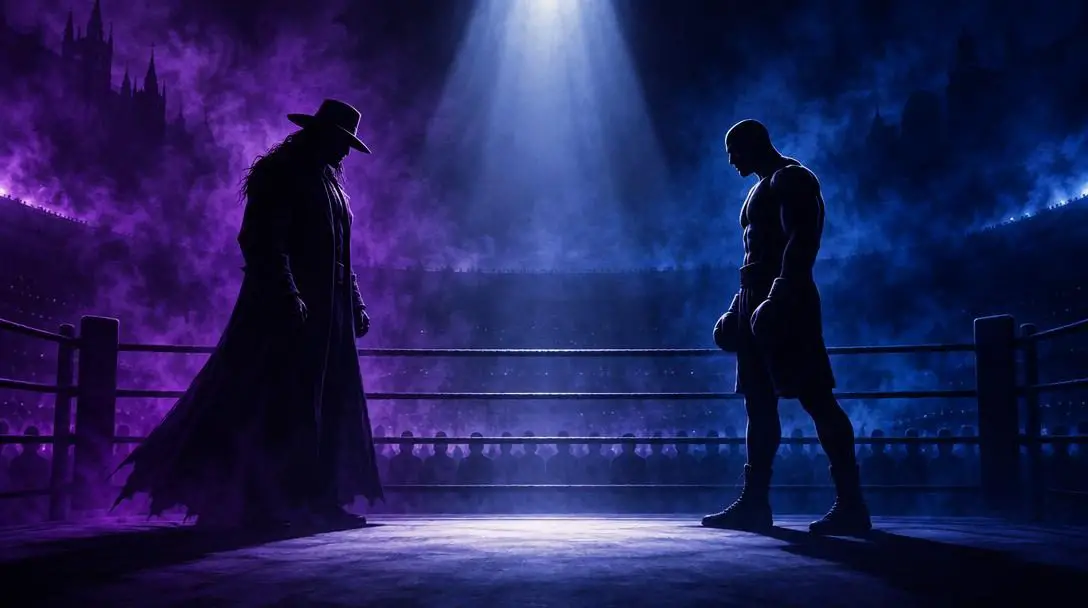
Retirement matches carry enormous emotional stakes, and few have ever carried the psychological gravity of Shawn Michaels putting his storied career on the line against The Undertaker's legendary, then-unbroken WrestleMania streak. Following their acclaimed encounter a year earlier, Michaels became consumed by his obsession to defeat The Phenom, eventually wagering his very livelihood to secure a rematch under No Disqualification, No Countout rules.
The resulting bout was a masterclass in physical storytelling. Michaels unleashed every weapon in his arsenal, repeatedly kicking out of devastating maneuvers and defiantly demanding that his opponent give him everything he had. The Undertaker required three punishing Tombstone Piledrivers, including a thunderous jumping variation, to finally keep Michaels down for the three-count. After the final bell, The Undertaker extended a show of respect before exiting, allowing Michaels to stand alone in the ring to receive a prolonged standing ovation from the appreciative crowd as he brought the final sanctioned match of his full-time career to a poignant close.
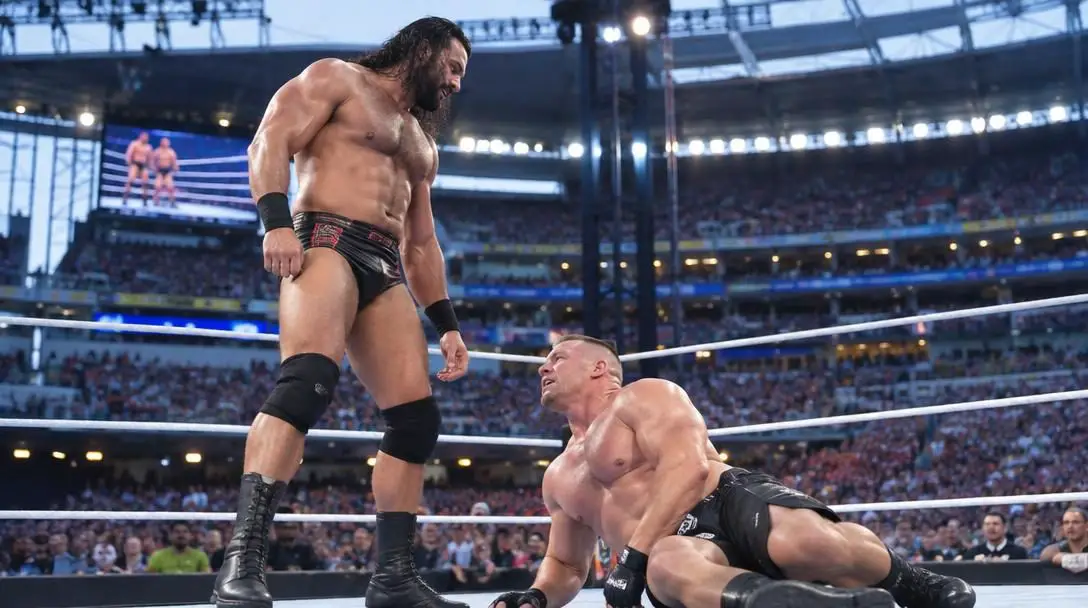
A legendary main event hinges on storytelling, emotional investment, and in-ring psychology rather than mechanical perfection alone.
Stone Cold Steve Austin vs. The Rock (WrestleMania X-Seven)
- Event: WrestleMania X-Seven
- Venue: Houston Astrodome in Houston
- Championship: WWF Championship
- Stipulation: No Disqualification match
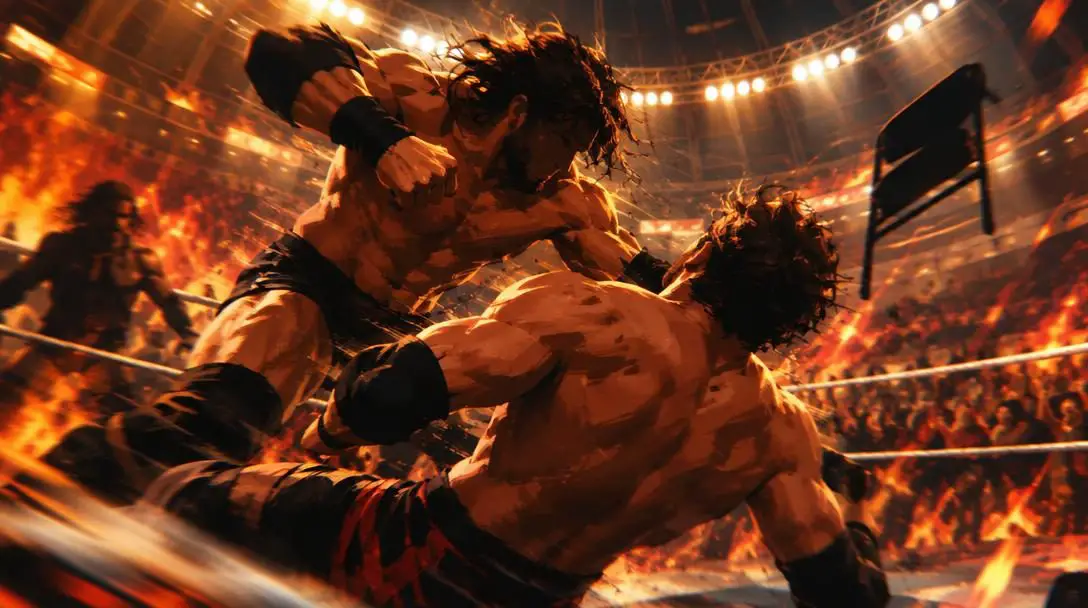
Widely regarded by wrestling critics, historians, and fans as the greatest pay-per-view ever staged, WrestleMania X-Seven required a transcendent finale to match the quality of its undercard. Inside the packed Houston Astrodome, Stone Cold Steve Austin challenged reigning champion The Rock in a No Disqualification match that represented the collision of the two biggest stars of the Attitude Era. The atmosphere crackled with unprecedented electricity as both men tore into each other in a brutal, fast-paced brawl that spilled across the ringside area.
The contest pushed both icons to their physical breaking points, trading signature maneuvers and surviving devastating chair shots. Just as the match seemed destined for a traditional finish, the drama took an earth-shattering turn when longtime antagonist Vince McMahon interfered. Instead of fighting McMahon, Austin shocked the wrestling world by accepting a steel chair from his hated rival, brutally assaulting The Rock to secure the WWF Championship. Austin's stunning heel turn capped nearly thirty minutes of breathless ring work, closing an era of unmatched commercial prosperity with an unforgettable plot twist.
How to Host a Classic WrestleMania Watch-Along
Revisiting these legendary encounters provides an excellent masterclass in the evolution of television production, crowd dynamics, and storytelling. For fans organizing a dedicated watch party or retrospection session, following these structured steps maximizes the viewing experience.
- Establish your viewing order: Choose whether to progress chronologically from WrestleMania X-Seven to WrestleMania XXX to witness the technological and stylistic evolution of the brand, or start directly with the top-ranked match to experience peak intensity immediately.
- Screen the pre-match video packages: Never skip the official broadcast hype packages. WWE's production team specializes in cinematic recaps that establish the months of narrative tension, especially crucial for understanding the emotional weight behind matches like Undertaker against Michaels.
- Examine the broader card context: Review the results and storylines from earlier on each card. Recognizing that Daniel Bryan had to wrestle Triple H earlier in the evening at WrestleMania XXX, or that Steve Austin and The Rock had a legendary bout earlier on the WrestleMania XIX card, enhances your appreciation of the main event's fatigue and pacing.
- Focus on the commentary: Listen closely to the broadcast announcers. Announcing teams such as Jim Ross and Paul Heyman at WrestleMania X-Seven, or Michael Cole at WrestleMania XXX, provide the vocal soundtrack that frames near-falls and guides viewers through dramatic crescendos.
- Analyze the ring psychology: Pay attention to how the competitors sell injuries, interact with the crowd, and use facial expressions during pivotal moments rather than tracking move counts alone.
Common Pitfalls When Evaluating Historic Matches
When analyzing or ranking famous wrestling headliners, enthusiasts often encounter recurring biases that distort objective appreciation. Avoiding these common traps ensures a more balanced perspective on wrestling history.
- Overvaluing mechanical perfection: Fixating on execution mistakes can blind a viewer to a match's dramatic brilliance. Brock Lesnar's missed shooting star press at WrestleMania XIX was a terrifying error, yet the composure of both competitors and the electric finish preserved the bout's classic status.
- Neglecting crowd reaction: Evaluating a match solely through clinical athletic criteria misses the soul of the performance. The roaring fan participation in New Orleans was what transformed Daniel Bryan's championship win into an emotional masterpiece.
- Applying modern athletic standards retroactively: Expecting performers from the early 2000s to utilize modern aerial maneuvers overlooks the grounded, high-impact storytelling that defined that era.
- Equating big names with match quality: Pairing two marquee superstars does not automatically guarantee an engaging contest; without proper pacing, structural stakes, and narrative payoff, even star-studded matches can fall flat.
Frequently asked questions
Which WrestleMania main event was the first to finish with a submission?
The triple-threat match at WrestleMania XX between Chris Benoit, Shawn Michaels, and Triple H made history as the first WrestleMania main event to end via submission, concluding when Triple H tapped out to the Crippler Crossface.
Why did Daniel Bryan wrestle twice at WrestleMania XXX?
Due to overwhelming fan demand for Daniel Bryan to be included in the world title picture, a storyline stipulation required him to defeat Triple H in the opening contest of WrestleMania XXX to earn his spot in the triple-threat main event against Batista and Randy Orton.
What happened during Brock Lesnar's shooting star press at WrestleMania XIX?
Brock Lesnar attempted a high-risk shooting star press from the top rope against Kurt Angle but under-rotated, landing awkwardly on his head and neck. Despite suffering a severe concussion, Lesnar recovered and executed an F-5 to win the WWE Championship.
What was the stipulation in the WrestleMania XXVI match between The Undertaker and Shawn Michaels?
The match carried a Streak vs. Career stipulation with No Disqualifications and No Countouts. If Shawn Michaels lost the match, he was forced to retire from active in-ring competition, which he did following his defeat.
How did Stone Cold Steve Austin turn heel at WrestleMania X-Seven?
During his No Disqualification match against The Rock, Austin shockingly aligned himself with his longtime rival, WWE Chairman Vince McMahon. McMahon provided Austin with a steel chair, which Austin used to batter The Rock and secure the WWF Championship.
The Bottom Line
The main event of WrestleMania represents the ultimate intersection of athletic performance, long-term dramatic pacing, and spectacle. While dozens of matches have closed the showcase since its inception, encounters like Austin vs. Rock at WrestleMania X-Seven and Undertaker vs. Michaels at WrestleMania XXVI endure because they captured genuine emotional weight. By examining the narrative stakes, crowd dynamics, and undercard storytelling of these five marquee battles, fans can fully appreciate why these headliners remain the gold standard against which all future WrestleMania finales are measured.