5 Classic Boxing Matches In Which Tactics Won The Day
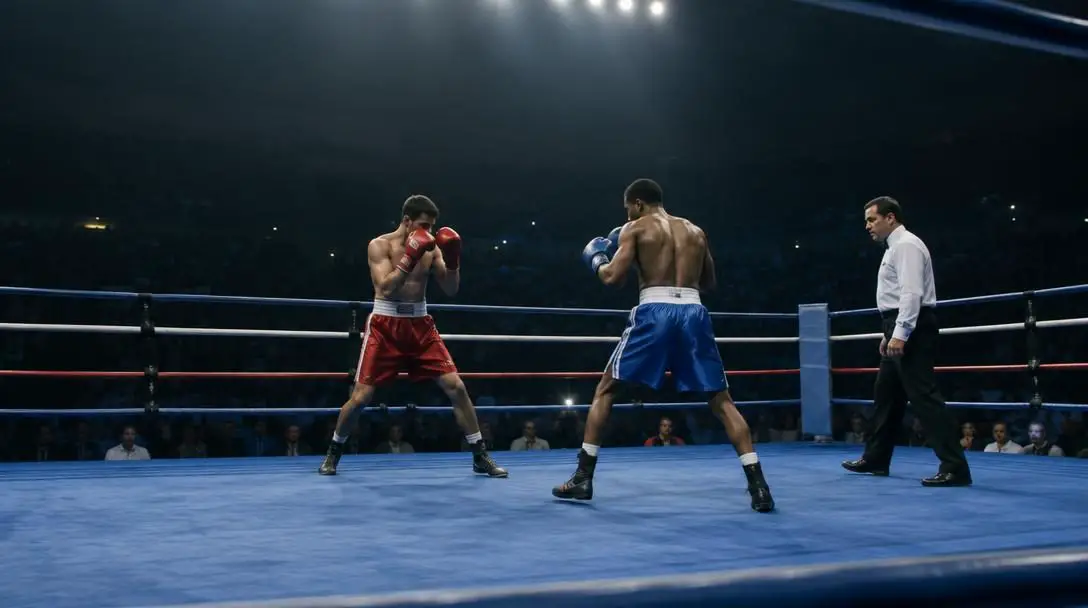
Boxing is widely celebrated as the sweet science because true championship excellence demands far more than raw physical aggression, swinging wild punches, or chasing an immediate knockout. While concussive punching power, blistering hand speed, and physical toughness remain valuable tools in any fighter's arsenal, the discipline is fundamentally anchored in mental fortitude, technical poise, and strategic planning. A fighter must possess the psychological strength to endure extreme adversity, withstand pressure under bright lights, and maintain composure when hurt or exhausted.
More importantly, technical boxing relies on calculating risks and recognizing the precise moments to unleash offense while keeping defensive vulnerabilities to an absolute minimum. Throughout the history of prizefighting, numerous competitors have constructed legendary careers not by relying on brute force alone, but by entering the ring fundamentally and technically sound. When elite power punchers and heavy favorites assume their physical gifts guarantee an easy evening, a disciplined technician armed with superior preparation can dismantle expectations and topple dominant champions.
Key takeaways
- Strategic game plans frequently dismantle heavy betting favorites who rely solely on raw punching power and aggression.
- Controlling distance, pacing energy expenditure, and disrupting rhythm are essential technical pillars of championship boxing.
- Defensive mastery functions as an offensive weapon by creating high-percentage counterpunching opportunities.
- Rigorous preparation—including stylistic sparring and contingency planning—allows underdogs to adapt when ring dynamics change.
At a glance: Five tactical masterpieces
When physical advantages clash with superior fight plans, disciplined underdogs can neutralize terrifying power punchers. The following bouts highlight how technical execution rewrote championship history.
| Bout | Year & Location | Betting Context | Decisive Strategy | Result |
|---|---|---|---|---|
| Evander Holyfield v. Mike Tyson | 1996 (Las Vegas, Nevada) | Tyson favored 25-to-1 | Center-ring physical authority, slipping power punches, and sharp counterpunches | Holyfield TKO 11 |
| Leon Spinks v. Muhammad Ali | 1978 (Las Vegas, Nevada) | Ali heavily favored | Relentless work rate, constant movement, and breaking the champion's cadence | Spinks Split Decision (15 rounds) |
| Hasim Rahman v. Lennox Lewis | 2001 (Brakpan, South Africa) | Lewis favored 20-to-1 | Acclimatization, weathering early power punches, and exploiting champion fatigue | Rahman KO 5 |
| Randy Turpin v. Sugar Ray Robinson | 1951 (London, England) | Robinson heavily favored | Nonstop pressure, exceptional stamina, and denying space for combination punching | Turpin Unanimous Decision (15 rounds) |
| Sonny Liston v. Cassius Clay | 1964 (Miami Beach, Florida) | Liston heavily favored | Superior foot speed, elusive upper-body defense, and precise countering | Clay RTD / TKO 7 (Quit on stool) |
Five classic bouts defined by superior tactics
Every opponent possesses distinct habits, physical dimensions, and mechanical tendencies that can be exploited by an astute technician. These five classic contests demonstrate how underdogs dismantled heavy favorites by formulating the right approach and remaining disciplined under fire.
Evander Holyfield v. Mike Tyson (1996)
- Date: November 9, 1996
- Location: Las Vegas, Nevada
- Betting odds: Tyson favored 25-to-1
- Official stoppage: Round 11 via technical knockout
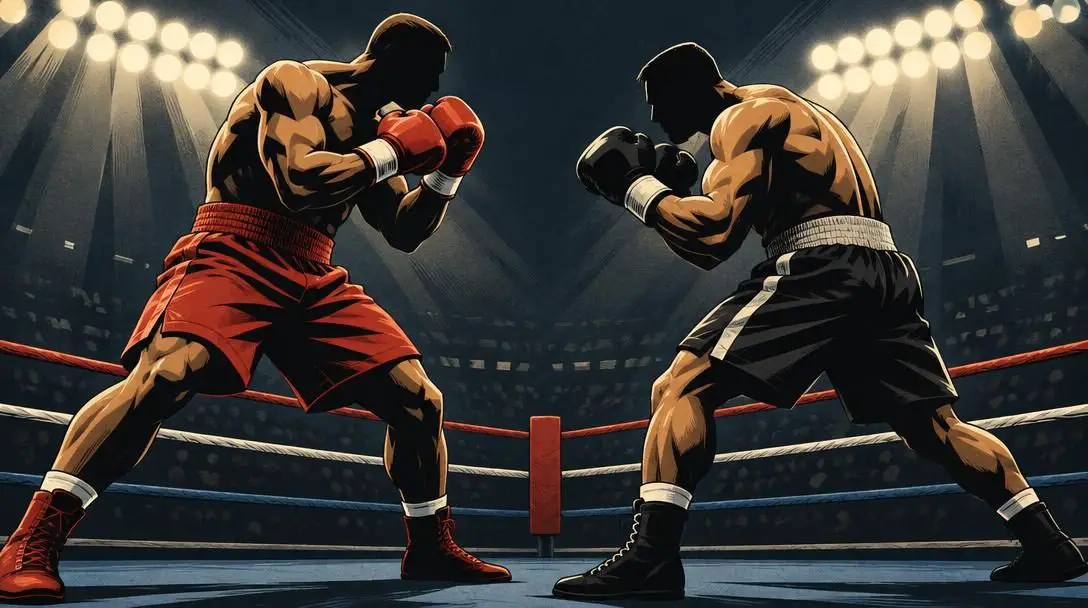
After years of intense public anticipation regarding whether they would ever share a ring, Evander Holyfield and Mike Tyson finally clashed in Las Vegas, Nevada on November 9, 1996. The betting market heavily discounted Holyfield's chances, installing Tyson as a staggering 25-to-1 favorite. Tyson had recently recaptured heavyweight dominance through a sequence of rapid, devastating knockouts, leading many observers to believe Holyfield would be easily overwhelmed. Tyson may not have taken the challenge as seriously as he should have, whereas Holyfield entered the squared circle exceptionally conditioned both mentally and physically.
Holyfield devised an exacting blueprint to neutralize Tyson's explosive combination punching. From the opening bell, Tyson aggressively attempted to land his trademark haymakers, but Holyfield's disciplined defense proved decisive. Instead of retreating or allowing himself to be bullied against the ropes, Holyfield stood his ground, meeting Tyson in the center of the ring to assert physical authority. Holyfield repeatedly blocked, slipped, and parried Tyson's heaviest blows, answering with punishing counterpunches that disrupted Tyson's rhythm. By refusing to concede territory, Holyfield forced Tyson into a grueling physical contest that steadily depleted the champion's stamina.
As the bout progressed into the deep rounds, Tyson's legs began to betray him, and his knees visibly buckled under accumulated counterpunches. By the 11th round, Tyson was dazed, exhausted, and vulnerable to incoming fire. Holyfield stepped forward with crisp, punishing combinations that left the champion defenseless, prompting referee Mitch Halpern to intervene and award Holyfield an iconic technical knockout victory.
Leon Spinks v. Muhammad Ali (1978)
- Date: February 1978
- Location: Las Vegas, Nevada
- Contender experience: 7 professional bouts (1976 Olympic gold medalist)
- Result: Spinks via 15-round split decision
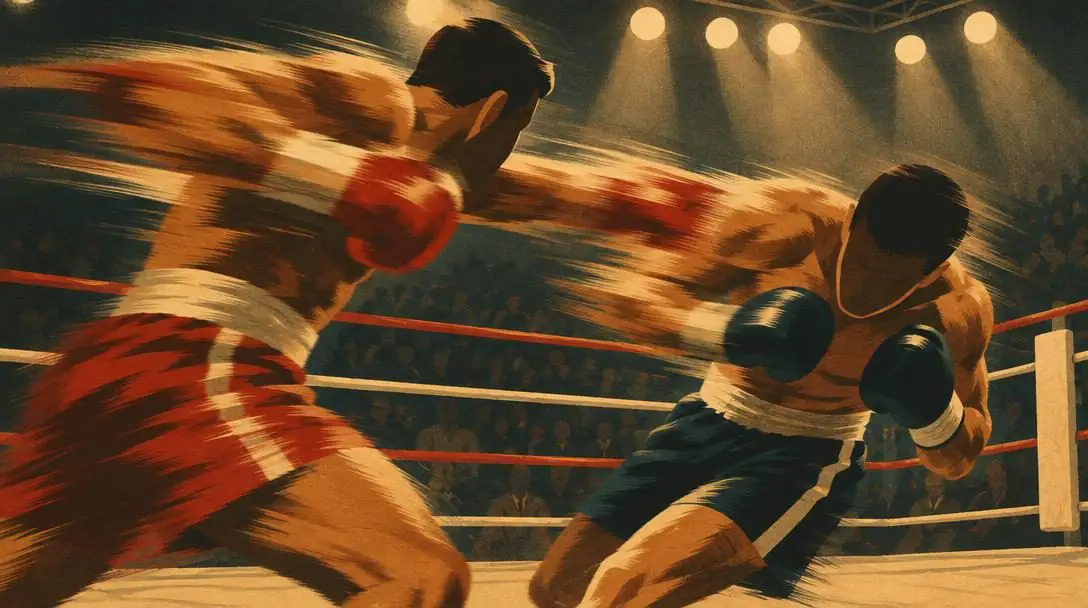
Entering their February 1978 heavyweight title match in Las Vegas, legendary champion Muhammad Ali was regarded as an insurmountable favorite against an energetic young challenger named Leon Spinks. While Spinks had captured an Olympic gold medal at the 1976 Games, he had competed in merely seven professional contests prior to challenging for the world championship. The event took place in a smaller venue because promoters and boxing insiders treated the bout as little more than a routine exhibition and formality for Ali.
Rather than freezing under the aura of a global sports icon, Spinks leaned into the active habits and relentless pace he had perfected in the amateur ranks. Recognizing that Ali was an experienced, dangerous heavy hitter who excelled at manipulating static opponents and conserving energy along the ropes, Spinks refused to let the champion dictate the tempo. Spinks maintained constant upper-body movement, sustained a torrential punch output, and forced Ali to work across every minute of every round.

Ali struggled to find resting periods against the relentless pressure. Spinks pressed the action relentlessly through all 15 rounds, capping the historic 15th round with a ferocious offensive flurry. When the scorecards were tabulated, Spinks shocked the world by securing a split-decision victory. Although Ali would later win a direct rematch to split their career series 1-1, Spinks demonstrated that unmatched conditioning and continuous offensive output can overturn decades of championship ring craft.
Hasim Rahman v. Lennox Lewis (2001)

- Date: Early 2001
- Location: Brakpan, South Africa
- Betting odds: Lewis favored 20-to-1
- Result: Rahman via knockout in Round 5
By early 2001, unified heavyweight champion Lennox Lewis sat atop the boxing landscape, having defeated elite contenders and gathered nearly every major world title in his division. That dominance brought Lewis to Brakpan, South Africa, for a title defense against American challenger Hasim Rahman. Lewis was widely projected to cruise toward an effortless victory, entering the ring as an overwhelming 20-to-1 betting favorite against a challenger who possessed a shorter stature and weighed considerably less than the imposing champion.
Rahman recognized that physical traits alone would not dictate the outcome. Arriving early to acclimate to South Africa's high altitude, Rahman entered the ring in pristine physical condition, whereas Lewis arrived late and struggled to adapt to the thin air. When the fight began, Lewis hunted for an early knockout, loading up on heavy power punches to intimidate the challenger. Rahman showed extraordinary composure, absorbing the initial storm without giving ground or panicking.
Lewis expended a vast reservoir of energy in his quest for an early stoppage. When Rahman refused to fold, the champion found himself winded and flat-footed against an opponent who grew stronger with every exchange. Rahman's disciplined flurries, active jab, and superior stamina tilted momentum entirely. In the fifth round, Rahman cornered the visibly fatigued champion against the ropes, finding an opening to deliver a clean, devastating right hand that knocked Lewis out cold to capture the unified world heavyweight championship.
Randy Turpin v. Sugar Ray Robinson (1951)
- Date: September 1951
- Weight division: World Middleweight Championship
- Challenger origin: Great Britain
- Result: Turpin via 15-round unanimous decision
In September 1951, the boxing world was rocked by one of the greatest upsets in sporting history when middleweight champion Sugar Ray Robinson squared off against British challenger Randy Turpin. Robinson was widely regarded as the pound-for-pound standard of boxing excellence and was finishing an extensive, triumphant European exhibition tour. Turpin was viewed by the international sporting press as little more than a final, routine stop on Robinson's victory lap.
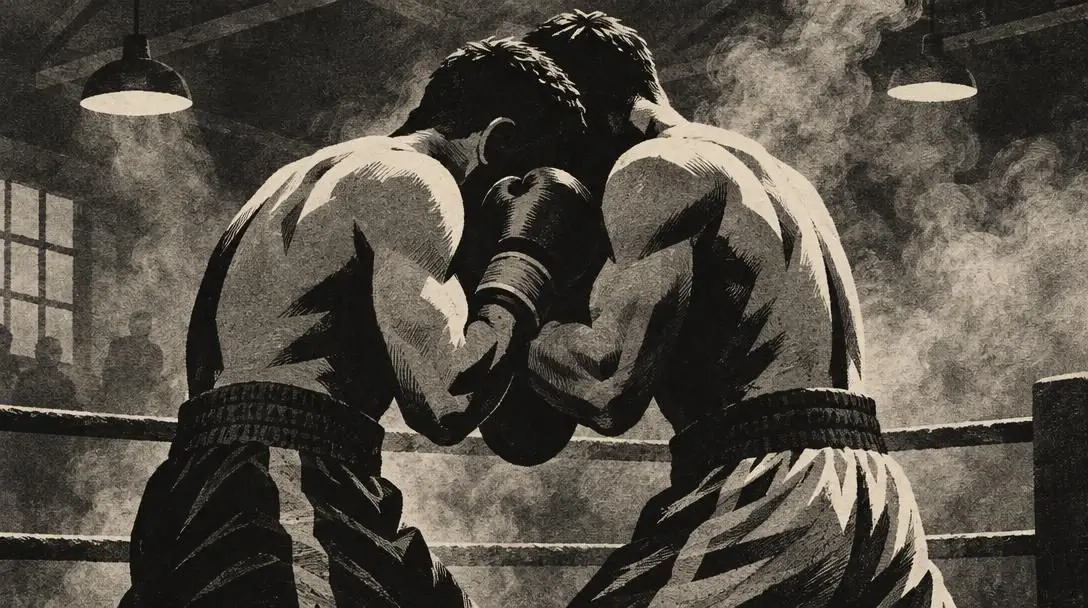
Both men were fierce competitors and capable brawlers, but Turpin arrived with an ingenious tactical blueprint. Robinson was a master of rhythm, combination punching, and elegant lateral footwork. Turpin neutralized these attributes by deploying raw physical strength, an awkward crouching stance, and relentless infighting. By crowding Robinson constantly, Turpin denied the champion the spatial separation required to unleash his trademark fluid combinations.
Turpin engaged Robinson across 15 brutal, nonstop rounds. Whenever Robinson tried to reset his feet, Turpin forced him into physical clinches, scored with short hooks to the body, and broke the champion's cadence. Turpin's superior punch selection and unwavering stamina carried him across the finish line to claim a unanimous decision victory. Robinson showed supreme grace in defeat, offering no excuses and stating: "I have no alibis. I was beaten by a better man."
Sonny Liston v. Cassius Clay (1964)
- Date: February 1964
- Location: Miami Beach, Florida
- Challenger's prior record: Undefeated at 19-0 with 15 knockouts
- Result: Clay via RTD / TKO in Round 7 (Liston quit on stool)
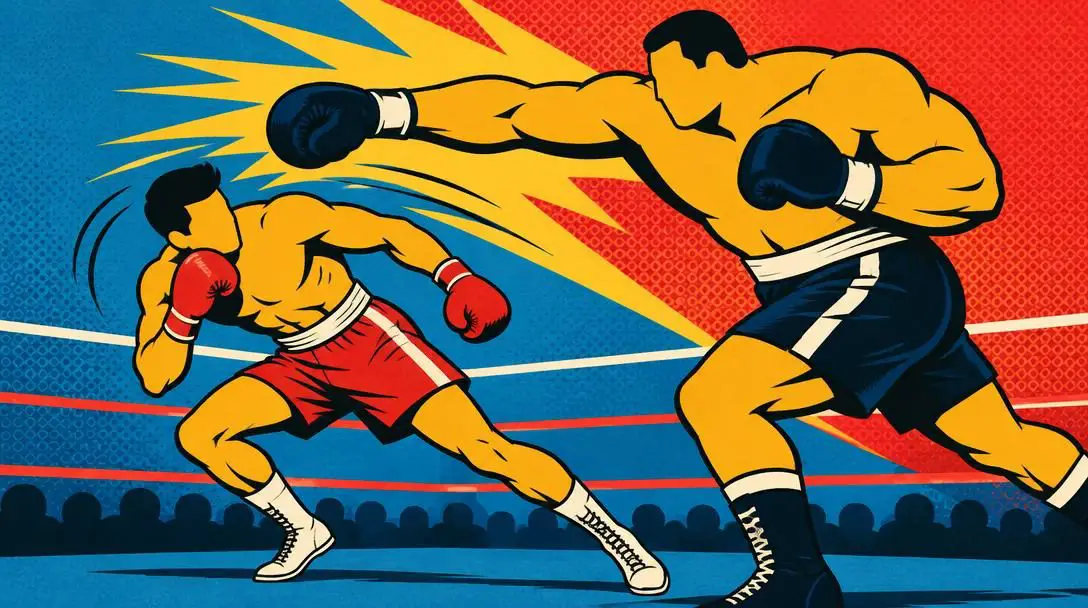
Before converting to Islam and adopting the name Muhammad Ali, the charismatic young contender Cassius Clay was viewed as a brash upstart stepping into grave danger. Clay was an Olympic gold medalist who had amassed an undefeated professional record of 19-0 with 15 knockouts, but oddsmakers made him a long-shot betting underdog against world heavyweight champion Sonny Liston in February 1964 at Miami Beach, Florida. Liston was widely considered an invincible force of nature, possessing terrifying power, an enormous reach, and an aura that caused opponents to freeze.
Liston charged forward from the opening bell seeking an early knockout blow. Instead of trading punches or getting pinned on the ropes, Clay unveiled a revolutionary display of tactical boxing. Utilizing extraordinary foot speed, Clay circled away from Liston's devastating left jab and heavy hooks. Clay utilized elusive head movement to make the champion miss repeatedly, causing Liston to punch empty air and expend tremendous amounts of physical energy.
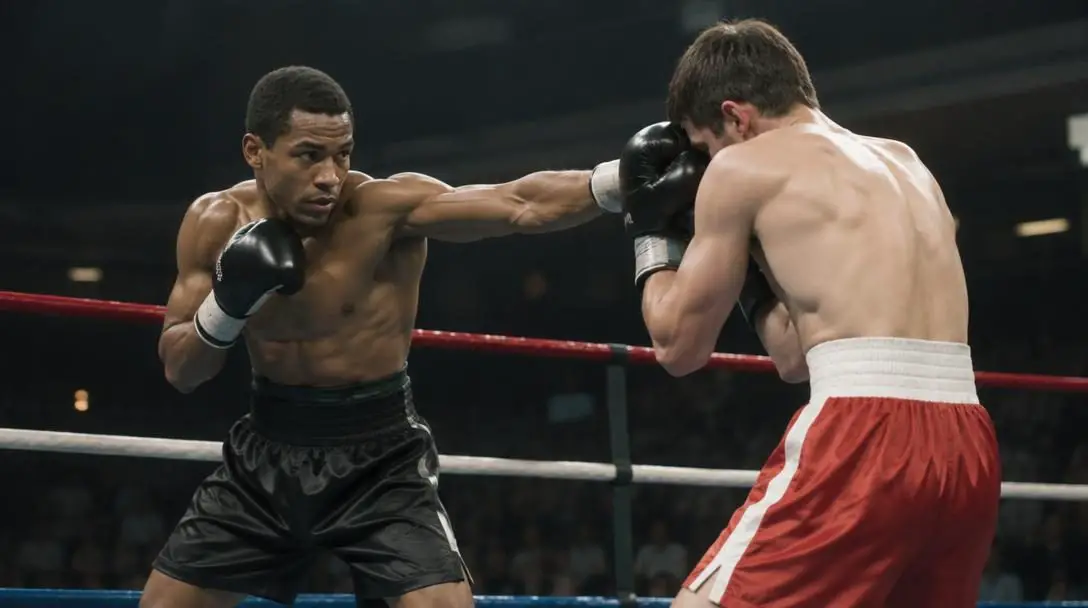
As Liston grew visibly tired and discouraged, Clay made him pay with rapid, pinpoint jabs and blistering straight right hands. Clay systematically sliced open and swelled Liston's face, demonstrating impeccable ring vision. Exhausted, physically battered, and unable to trap his elusive challenger, Liston quit on his stool before the start of the seventh round. Clay's tactical brilliance proved that superior ring generalship, speed, and spatial awareness can disarm raw punching power.
Tactical boxing relies on calculating risks and recognizing the precise moments to unleash offense while keeping defensive vulnerabilities to an absolute minimum.
The strategic mechanics of the sweet science
To understand how an underdog topples an elite champion, one must examine the core strategic pillars that govern prizefighting. Boxing tactics represent the calculated application of technique to exploit an opponent's physical and psychological tendencies.
Controlling distance remains the foundational battle in every bout. Range management allows an outside fighter to land jabs and straight power shots while staying completely out of harm's way, just as Cassius Clay accomplished against Sonny Liston. Conversely, inside fighters attempt to smother reach advantages, slip under incoming shots, and work the body in close quarters.
Prizefighting is also an intense battle of energy conservation. A fighter who punches at an unsustainable pace or throws wild power shots without establishing position will exhaust their shoulders and legs. By absorbing or slipping early attacks, a poised counterpuncher forces an aggressive favorite to empty their energy reserves, setting up decisive stoppages in the middle and late rounds.
Defense is not merely a method of passive protection; it functions as an offensive springboard. When a technician slips or blocks a heavy hook, the opponent is thrown momentarily off balance. That fraction of a second creates an opening for a sharp, high-percentage counter strike before the attacker can recover their defensive guard.
How championship fight camps build winning game plans
Formulating a high-level fight strategy requires months of methodical preparation, video analysis, and grueling physical conditioning. Trainers and fighters follow a structured preparation sequence to translate tactical concepts into instinctual reactions under bright lights.
- Analyze opponent film and biometric habits: Coaches thoroughly study past fights to map the opponent's preferred combinations, defensive vulnerabilities, ring habits, and telltale physical cues when fatigued or under distress.
- Recruit stylistic sparring partners: Fight camps recruit sparring partners who closely replicate the rival's height, stance, reach, offensive tempo, and punching tendencies to condition physical reactions to real-world visuals.
- Tailor conditioning to tactical demands: If the fight strategy requires high-volume output across 12 or 15 championship rounds, roadwork and bag intervals are designed for rapid recovery between intense flurries.
- Formulate primary and contingency plans: Camp leaders establish a foundational strategy (Plan A) alongside adaptable backup plans (Plan B and Plan C) should the opponent switch stances, alter their distance, or score an early knockdown.
- Refine corner communication: The corner establishes concise, calm communication protocols so the fighter receives clear, actionable adjustments during the 60-second break between rounds rather than chaotic noise.
Common strategic errors inside the squared circle
Even seasoned champions can suffer sudden defeats when they deviate from sound tactical principles. Inside the ring, disciplined opposition will ruthlessly capitalize on any of the following recurring blunders:
- Underestimating an underdog's chin and conditioning: Power punchers often assume a routine knockout will happen early, leading them to expend excessive energy early and leaving them completely drained when the opponent survives.
- Abandoning fundamentals due to frustration: When an attacker's primary combinations are blocked or slipped, emotional fighters frequently abandon their jab, throwing telegraphed, single power punches that invite devastating counters.
- Ceding control of ring geography: Failing to control the center of the ring allows mobile technicians to circle comfortably or lets infighters trap opponents against the ropes where defensive mobility disappears.
- Failing to alter tempo and rhythm: Moving at a constant, predictable speed allows an astute opponent to time their defensive parries and set up intercepting counterpunches.
Frequently asked questions
Why is boxing referred to as the sweet science?
Boxing earned the moniker because it rewards scientific calculation, ring intelligence, and technical precision over wild aggression. Success requires an understanding of leverage, footwork angles, reaction timing, and energy management under physical duress.
How did Evander Holyfield neutralize Mike Tyson's explosive power?
Holyfield stood firm in the center of the ring rather than retreating to the ropes, using head movement and an active guard to slip Tyson's hooks. By countering immediately and establishing physical authority in clinches, Holyfield sapped Tyson's legs and stamina.
What major tactical mistake did Lennox Lewis make against Hasim Rahman?
Lewis underestimated Rahman's conditioning and failed to properly acclimate to the high altitude in South Africa. He expended excessive energy searching for an early knockout and was left exhausted and vulnerable against the ropes in round five.
How did Leon Spinks defeat Muhammad Ali with only seven professional fights?
Spinks leveraged his elite amateur conditioning to maintain an unrelenting punch volume across all 15 rounds. By refusing to let Ali rest against the ropes or settle into his preferred cadence, Spinks outworked the veteran champion to win a split decision.
Why couldn't Sonny Liston land cleanly on Cassius Clay in 1964?
Clay used superior foot speed, backward movement, and upper-body agility to remain just beyond Liston's reach. Liston continually overcommitted on power punches, hitting empty air and draining his stamina until he was forced to retire on his stool.
The bottom line
Championship boxing will always celebrate explosive power and dramatic knockouts, but the historical record proves that brains, preparation, and tactical execution consistently triumph over brute force. Whether meeting a feared puncher in the center of the ring like Evander Holyfield, exhausting a champion with continuous movement like Leon Spinks, or making a heavy hitter swing at thin air like Cassius Clay, master technicians understand that every fight is a physical chess match. By studying how classic underdogs exploited technical flaws and controlled ring geography, sports enthusiasts can appreciate the profound mental artistry behind the world's most demanding combat sport.