5 Classic Games In Bayern Munich History
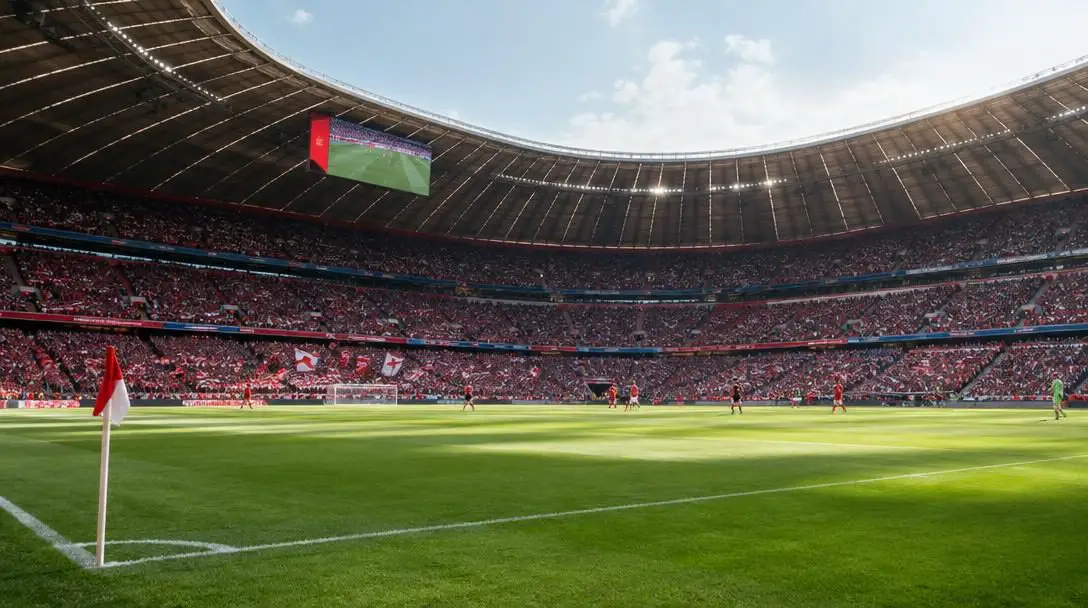
Bayern Munich stands undisputed as the most decorated club in German football history, holding more domestic trophies and honoring more legendary footballers than any other club in the nation. Founded over a century ago, the Bavarian powerhouse has navigated distinct eras of rebuilding, strategic reinvention, and overwhelming continental dominance. While every historic club experiences agonizing setbacks, Bayern Munich’s reputation has been carved out by matches where the squad utterly dismantled elite rivals or overcame tremendous adversity on the biggest stages.
The club's rise from regional competition in the mid-twentieth century to the summit of modern European football reflects an relentless pursuit of dominance. Across decades of battles in the German leagues and the European Cup and UEFA Champions League, the team has produced landmark contests that redirected football history. Analyzing these defining matches provides a thorough roadmap of how Bayern established its championship mentality and global standing.
Key takeaways
- Bayern Munich's modern top-flight era began with a crushing 8-0 playoff win over Tennis Borussia Berlin to secure Bundesliga promotion in 1965.
- Prolific striker Gerd Müller fueled historic performances, including four goals in an 11-1 rout of Borussia Dortmund and a brace in the 1974 European Cup final replay.
- The club captured its first European Cup in 1974 after a 4-0 replay blowout against Atlético Madrid and broke a 25-year title drought by winning the 2001 final against Valencia on penalties.
- A historic 7-0 aggregate demolition of Barcelona in the 2012-13 Champions League semifinals highlighted one of the most ruthless European campaigns ever mounted.
At a glance: Five landmark Bayern Munich matches
To understand the breadth of Bayern's competitive legacy, it helps to examine these five monumental fixtures side by side across their respective eras and tournaments.
| Fixture | Year | Competition | Key Opponent | Final Result |
|---|---|---|---|---|
| Bundesliga Promotion Playoff | 1965 | Regionalliga Promotion Round | Tennis Borussia Berlin | 8-0 victory |
| Record Domestic Blowout | 1971 | Bundesliga | Borussia Dortmund | 11-1 victory |
| European Cup Final Replay | 1974 | European Cup | Atlético Madrid | 4-0 victory |
| Champions League Shootout | 2001 | UEFA Champions League | Valencia | 1-1 (5-4 on penalties) |
| European Semifinal Demolition | 2013 | UEFA Champions League | Barcelona | 7-0 on aggregate (4-0, 3-0) |
Five classic games that defined Bayern Munich's dominance
The 1965 Bundesliga promotion playoff against Tennis Borussia Berlin
- Year: 1965
- Competition: Regionalliga Süd Promotion Round
- Decisive result: 8-0 victory
- Promotion group rivals: Alemannia Aachen, 1. FC Saarbrücken, Tennis Borussia Berlin
When the modern Bundesliga debuted in 1963, Bayern Munich was conspicuously excluded from the initial cohort of top-flight teams. Confined to the secondary tier of German football, the Regionalliga Süd, the club faced the challenge of earning its place through grueling league competition and high-stakes postseason playoffs. During the regular regional season, Bayern demonstrated ruthless offensive mastery, racking up 55 points across 36 matches while netting 146 goals and conceding only 32, which yielded a staggering +114 goal differential.
Advancing into the promotion bracket alongside Alemannia Aachen, 1. FC Saarbrücken, and Tennis Borussia Berlin, the team refused to leave qualification to chance. In their decisive confrontation against Tennis Borussia Berlin, Bayern stormed to an emphatic 8-0 victory. This landslide win shattered the gates of German football's top division, securing the club's permanent elevation to the Bundesliga and inaugurating the modern era of Bavarian football.
The historic 11-1 victory over Borussia Dortmund (1971)
- Match date: November 1971
- Competition: Bundesliga (1971-72 season)
- Final score: 11-1
- Key individual performance: Gerd Müller (4 goals)
The 1971-72 Bundesliga campaign remains one of the most dominant individual seasons in club history. Bayern rolled through the domestic league calendar with minimal disruption, suffering only three defeats across the entire year. The club claimed the championship shield with 55 points, winning 24 matches in total while compiling an extraordinary +63 goal differential.
The undisputed centerpiece of this title run unfolded in November 1971, when Bayern hosted traditional rival Borussia Dortmund. Prolific goalscorer Gerd Müller ignited the scoring barrage early, netting in the 11th minute before adding three additional goals to finish with four individual tallies. Several other Bayern players registered multi-goal outings as the home attack cut Dortmund apart. Although Dieter Weinkauff scored a consolation goal for Dortmund, it did nothing to slow the onslaught. The final 11-1 scoreline stands as the most lopsided result in the rivalry's history and triggered a tailspin that contributed to Dortmund's eventual relegation.
Bayern dismantled their fiercest domestic challenger with an 11-1 display of precision that shattered league scoring records.
The 1974 European Cup final replay against Atlético Madrid
- Venue: Brussels
- Competition: European Cup
- Final replay score: 4-0
- Goalscorers: Uli Hoeneß (28', 82'), Gerd Müller (56', 69')
Prior to its rebranding as the UEFA Champions League, the European Cup represented the absolute pinnacle of continental club football. Bayern's arduous march to the 1974 final required eliminating Åtvidaberg in the opening stage before outlasting Dynamo Dresden, CSKA, and Újpesti. Their final hurdle was Spanish champions Atlético Madrid, who advanced to the title match after dispatching Celtic in the semifinals.
The first meeting in Brussels concluded in a grinding 1-1 stalemate after both regulation and extra time. Because penalty shootouts were not yet deployed to decide European Cup finals, tournament rules mandated a complete replay two days later. In front of a crowd that reached only around half the capacity of the opening match, Bayern took absolute command. Uli Hoeneß opened the scoring in the 28th minute, followed by a second-half brace from Gerd Müller in the 56th and 69th minutes. Hoeneß capped off the afternoon with an 82nd-minute strike to seal an uncontested 4-0 triumph, securing Bayern's first continental crown and beginning their era of three consecutive European titles.
The 2001 UEFA Champions League final against Valencia
- Competition: UEFA Champions League (2000-01)
- Regulation result: 1-1 (Stefan Effenberg 50' penalty)
- Shootout result: 5-4 victory
- Deciding moment: Thomas Linke converting the final penalty
Bayern entered the 2000-01 Champions League determined to reverse years of continental heartbreak, having not lifted the trophy since 1976. The squad opened its campaign by topping a group consisting of Paris Saint-Germain, Rosenborg, and Helsingborg with 11 points. The knockout stages demanded tactical perfection: Bayern systematically defeated reigning champions Manchester United 3-1 on aggregate in the quarterfinals—anchored by an opening 1-0 away victory—and matched that exact scoreline in the semifinals against Real Madrid with another 1-0 triumph on Spanish soil.
The final against Valencia evolved into a nerve-shredding, highly tactical contest in which every goal during regular play came via the penalty spot. After falling behind early, Bayern found their lifeline when team captain Stefan Effenberg buried an equalizing spot-kick in the 50th minute. With extra time concluding at 1-1, the championship came down to a dramatic penalty shootout. Bayern held their nerve through heavy psychological pressure, clinching the shootout 5-4 when defender Thomas Linke scored the winning kick, finally ending a 25-year title drought.
The 7-0 aggregate demolition of Barcelona (2012-13)
- Round: Champions League Semifinals
- Aggregate score: 7-0 (4-0 home, 3-0 away)
- Prior knockout rounds: Arsenal (away goals), Juventus (4-0 aggregate)
- Eventual final: 2-1 victory over Borussia Dortmund at Wembley
The 2012-13 European season saw Bayern Munich unleash arguably the most complete campaign in tournament history. After collecting 13 points to win a group featuring Valencia, BATE Borisov, and Lille via a tiebreaker, Bayern navigated the knockout rounds with ruthless efficiency. They edged past Arsenal on away goals in the round of 16, then shut out Juventus in consecutive 2-0 victories to advance 4-0 on aggregate into the semifinals.
Facing a Barcelona team widely hailed as the standard-bearer of world football, Bayern dismantled the Catalan giants across two astonishing legs. In the opening match in Munich, Bayern stunned the continent with a 4-0 victory built on high pressing and overwhelming physical power. Any speculation about a Barcelona comeback on Spanish soil was rapidly eliminated in the second leg, where Bayern produced another flawless clean sheet, winning 3-0 to seal a 7-0 aggregate sweep. Bayern subsequently advanced to the final at Wembley Stadium, where they defeated domestic rival Borussia Dortmund 2-1 to claim the continental treble.
How competition formats functioned across different eras
Evaluating these classic matches accurately requires an understanding of how league and tournament regulations operated across distinct decades of football history:
- Regional domestic structures: In 1965, West German football relied on five geographic Regionalligen directly beneath the Bundesliga. Winning a regional title did not grant automatic promotion; teams had to survive a grueling round-robin playoff against other regional champions to earn top-flight status.
- European final replay regulations: Prior to the universal adoption of penalty shootouts in major finals, matches level after extra time were settled by staging an entire second match 48 hours later, placing immense demands on squad conditioning and physical recovery.
- Two-point league tables: In the 1971-72 Bundesliga season, teams received two points for a win and one for a draw. Bayern’s 55-point tally across 34 games was therefore an astonishing standard of consistency that would equate to over 80 points under modern scoring rules.
- Knockout tiebreakers and away goals: In the 2012-13 campaign, European knockout ties were decided over two home-and-away legs. Away goals operated as the primary tiebreaker for aggregate draws, which proved decisive in Bayern's narrow round-of-16 progression past Arsenal.
How to locate and watch archival Bayern Munich footage
If you want to experience these historic games as they originally aired, following a methodical process will lead you to complete broadcasts rather than short highlight clips.
- Identify the exact fixture and competition: Determine the exact date, tournament name, and stage of the match you are seeking, such as the May 1974 European Cup Final Replay or the November 1971 clash with Dortmund.
- Check official club media archives: Visit Bayern Munich’s proprietary streaming platforms and media libraries, which frequently upload remastered, feature-length historical matches for members.
- Access governing body broadcast libraries: Explore official UEFA video archives, which store complete television broadcasts of classic European Cup and Champions League knockout ties, including the 2001 final against Valencia and the 2013 games against Barcelona.
- Verify full lineups and commentary: Confirm the broadcast's authenticity by cross-referencing starting squads and goalscorers with official match reports to avoid fan compilations or modern reenactments.
Common analytical traps when reviewing classic matches
Modern viewers analyzing historical football often make critical interpretive errors when watching archived footage from bygone eras:
- Judging pacing through modern physical standards: Playing conditions in the 1960s and 1970s featured heavy leather balls, unheated pitches, and less forgiving footwear, making comparisons to modern high-tempo transition play fundamentally flawed.
- Ignoring historic refereeing standards: Physical contact was officiated much more leniently in 1971 and 1974. Strikers like Gerd Müller operated under intense defensive tackling that would draw immediate cautions under modern rules.
- Fixating entirely on final scorelines: While an 11-1 or 8-0 blowout stands out on paper, analyzing how passing triangles, pressing traps, and defensive structures created those goals reveals far more about the team's tactical philosophy.
- Overlooking two-legged and replay dynamics: Forgetting that the 1974 European Cup final consisted of an initial 1-1 draw followed by a separate 4-0 replay can lead to confusion when assessing historical tournament statistics.
Where to explore Bayern Munich history next
These five milestone matches are merely entry points into a century-long football institution. Dedicated supporters looking to deepen their historical perspective should consider exploring several related aspects of the club’s heritage:
- The DFB-Pokal triumphs: Bayern’s domestic cup history features numerous dramatic extra-time victories and comeback finals that match the tactical drama of their league campaigns.
- The evolution of the Dortmund rivalry: The transition from the 11-1 blowout in 1971 to the tight 2-1 Champions League final at Wembley in 2013 reflects how domestic rivalries mature over decades.
- Tactical evolution under legendary managers: Examining the strategic shifts between the attacking freedom of the mid-1970s, the defensive rigidity of the early 2000s, and the complete pressing system of the 2013 treble winners highlights how coaching philosophies transformed European football.
- Individual scoring milestones: Tracking the all-time scoring sheets of icons such as Gerd Müller, Uli Hoeneß, and Stefan Effenberg contextualizes how individual consistency drove Bayern through era-defining campaigns.
Frequently asked questions
Why wasn't Bayern Munich a founding member of the Bundesliga in 1963?
When the Bundesliga was established in 1963, selection criteria restricted multiple teams from the same city, which kept Bayern in the second-tier Regionalliga Süd until they earned promotion by winning the playoff bracket in 1965.
How did Bayern Munich win the 1974 European Cup without a penalty shootout?
In 1974, UEFA regulations did not use penalty shootouts to resolve drawn finals. After Bayern and Atlético Madrid tied 1-1 after extra time, a full replay was staged two days later, which Bayern won 4-0.
How many goals did Gerd Müller score in the 11-1 win against Borussia Dortmund?
Gerd Müller scored four goals during the match, opening the scoring in the 11th minute and adding three more as Bayern rolled to the biggest win in the fixture's history.
Who scored the winning penalty in the 2001 Champions League final?
Defender Thomas Linke converted the decisive seventh-round penalty kick to seal a 5-4 shootout victory over Valencia after the match finished 1-1 in regular and extra time.
What was the aggregate score between Bayern Munich and Barcelona in 2013?
Bayern defeated Barcelona 7-0 on aggregate in the Champions League semifinals, winning 4-0 at home in Munich before claiming a 3-0 victory in the second leg in Spain.
The bottom line
Bayern Munich's transition from regional contender to European powerhouse was not an accident of history; it was constructed through decisive, overwhelming performances in critical moments. From the 8-0 statement win that earned Bundesliga entry in 1965 to the ruthless 7-0 aggregate dismissal of Barcelona in 2013, these five matches reflect a persistent culture of excellence. Whether dismantling domestic rivals or holding their composure in European penalty shootouts, the Bavarians consistently elevated their game when the stakes were highest, cementing an unshakeable legacy in world football.