5 Classic Games In Everton History
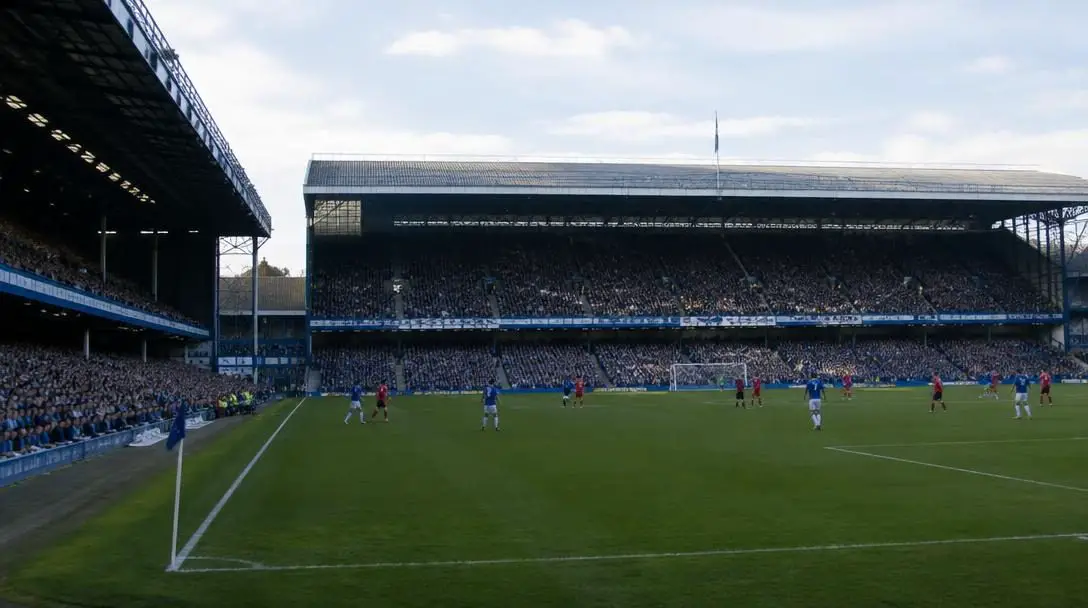
Everton Football Club stands as one of the foundational cornerstones of organized world football, tracing its origins back to the late 1870s. Across more than a century of domestic league battles, high-stakes cup ties, and continental tournaments, the club has established a proud heritage characterized by defensive grit, attacking flair, and deep community roots.
Because the club's story stretches across multiple eras—from the founding of the Football League to modern Premier League drama—condensing such a vast timeline into a handful of defining moments is a challenge. Yet five classic matches stand above the rest. These iconic fixtures capture historic derby triumphs, modern goalscoring clinics, European silverware, and the sudden emergence of a generational English talent.
Key takeaways
- Andy King's 1978 strike ended a frustrating 15-game derby winless drought against cross-city rivals Liverpool.
- Everton captured continental silverware by defeating Austrian side Rapid Wien 3-1 in the 1985 European Cup Winners' Cup final.
- A 16-year-old Wayne Rooney announced his arrival to world football in October 2002 by halting Arsenal's unbeaten run with a 90th-minute stunner.
- Modern Premier League highlights include a commanding 3-0 derby clean sheet in 2006 and a ruthless 7-1 demolition of Sunderland in 2007.
At a glance: Five classic Everton fixtures
| Date | Opponent | Competition | Final score | Key decisive moment |
|---|---|---|---|---|
| October 28, 1978 | Liverpool | First Division | 1-0 | Andy King scores in the 58th minute to halt a 15-match winless streak. |
| May 15, 1985 | Rapid Wien | European Cup Winners' Cup | 3-1 | Kevin Sheedy responds within 60 seconds of Rapid Wien's goal to seal European glory. |
| October 19, 2002 | Arsenal | Premier League | 2-1 | Wayne Rooney curls home a dramatic 90th-minute winner from long range. |
| September 9, 2006 | Liverpool | Premier League | 3-0 | Andrew Johnson nets a brace alongside Tim Cahill to complete a derby shutout. |
| November 24, 2007 | Sunderland | Premier League | 7-1 | Braces from Yakubu and Cahill lead an attacking clinic before 38,594 fans. |
Five landmark matches in Everton history
October 28, 1978: Ending the Merseyside Derby drought
- Date: October 28, 1978
- Competition: Football League First Division
- Final score: Everton 1, Liverpool 0
- Match winner: Andy King (58')
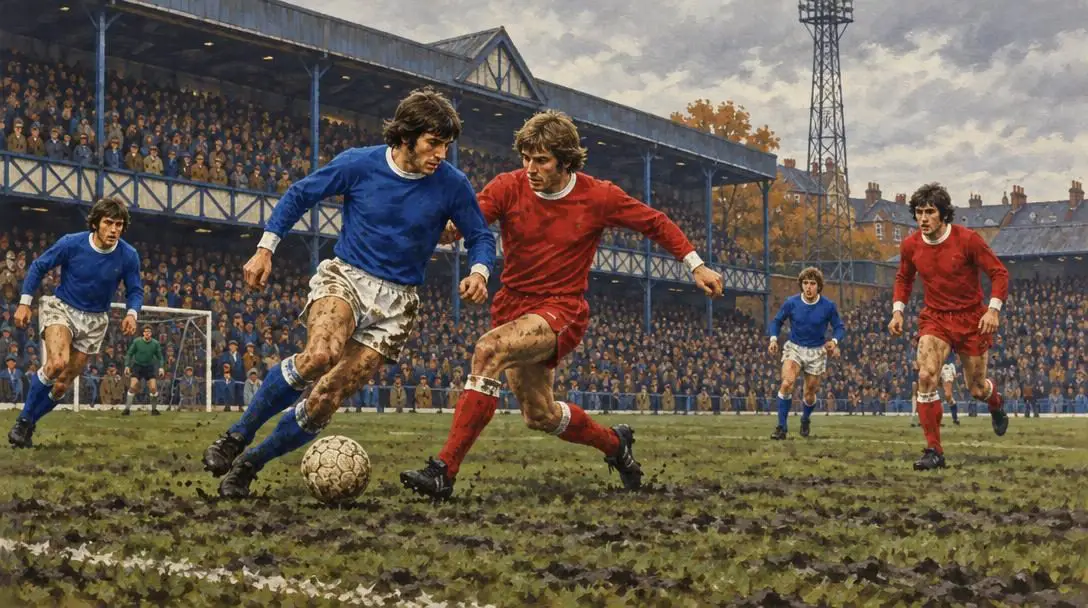
The Merseyside Derby has long served as the centerpiece fixture of Everton's calendar, pitting the club against cross-city rivals Liverpool in a clash that dates back to the late 19th century. Following a narrow 1-0 win in November 1971, however, Everton entered a prolonged and agonizing dry spell. Over the next seven years, the club went 15 consecutive derby matches without a single victory, enduring eight defeats and seven draws—six of which ended in frustrating 0-0 stalemates.
That painful run finally came to an end on an electric October afternoon at Goodison Park. Both clubs entered the contest near the top of the First Division table, heightening the tension. After a scoreless first half characterized by intense physical commitments, the breakthrough came in the 58th minute when midfielder Andy King struck past the Liverpool defense. King's goal stood as the lone tally of the afternoon. While Liverpool would regroup and eventually claim the First Division championship that season, Everton's hard-nosed display restored local pride and shattered a seven-year psychological barrier.
May 15, 1985: European Cup Winners' Cup triumph
- Venue: Italy
- Attendance: Over 38,000
- Aggregate path to final: 13 goals scored, 1 conceded
- Final score: Everton 3, Rapid Wien 1
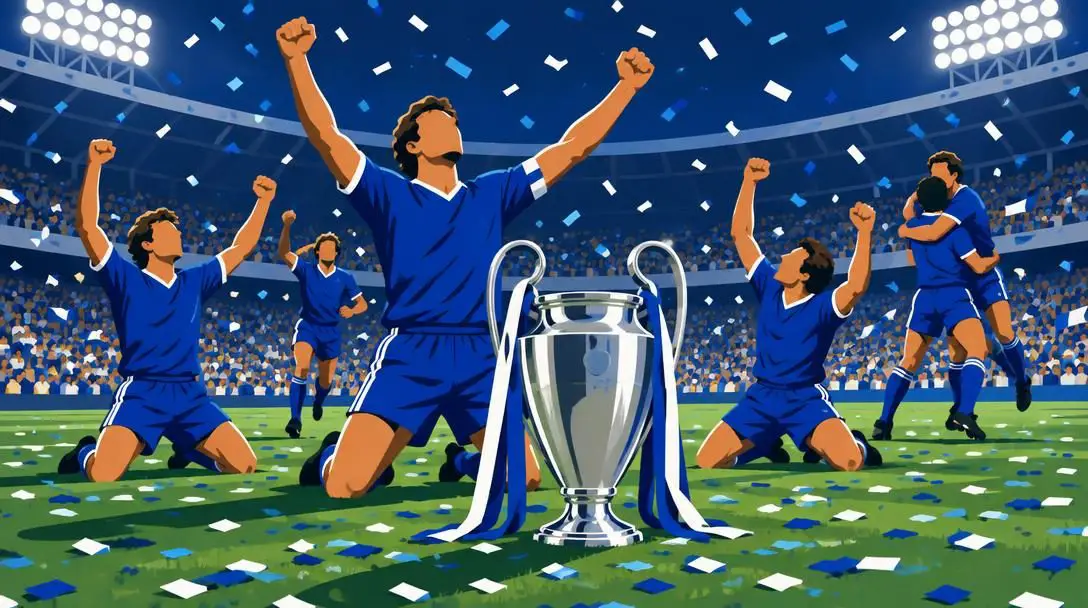
Prior to the establishment of the modern UEFA Champions League format, the European Cup Winners' Cup represented European football's highest domestic cup competition honor. Everton's run through the 1984-85 edition remains a pinnacle of continental efficiency. The campaign began with a disciplined 1-0 aggregate triumph over UCD in the first round before the squad hit full attacking stride, dismissing Internacional Slovnaft Bratislava 4-0 on aggregate and sweeping past Fortuna Sittard 5-0 in the quarterfinals. After a grueling, scoreless first leg in the semifinals, Everton asserted their class with a 3-1 second-leg victory to earn a place in the title match.
The final took place in Italy before a crowd of more than 38,000, matching Everton against Austrian powerhouse Rapid Wien. Following a tense, goalless opening 45 minutes, Everton exploded into life after the interval. Andrew Gray found the net in the 57th minute to open the scoring, and Trevor Steven doubled the margin in the 72nd minute. Rapid Wien gave themselves brief hope when Hans Krankl scored in the 85th minute, bringing the score to 2-1. However, Everton's response was ruthlessly immediate: Kevin Sheedy scored just one minute later to seal the 3-1 triumph and lift the European silverware.
October 19, 2002: Wayne Rooney halts Arsenal's streak
- Date: October 19, 2002
- Opponent: Arsenal (Defending Premier League Champions)
- Final score: Everton 2, Arsenal 1
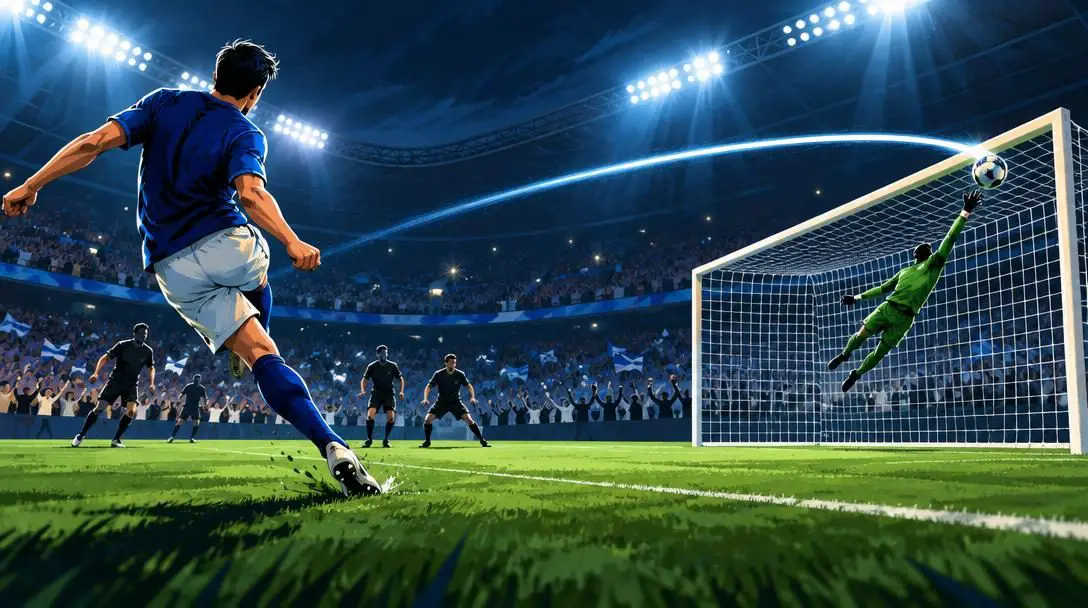
- Deciding moment: Wayne Rooney goal (90')
Every legendary sports figure enjoys a signature breakthrough match, and for 16-year-old Wayne Rooney, that moment unfolded on a crisp autumn afternoon at Goodison Park. Defending champions Arsenal entered the contest riding a formidable unbeaten run, while Everton had endured an uneven start to their 2002-03 campaign with three wins, two draws, and four defeats. Arsenal appeared primed to dictate terms when Freddie Ljungberg opened the scoring in the eighth minute.
Everton responded with grit. Tomasz Radzinski netted an equalizer in the 22nd minute, setting up a punishing, end-to-end battle that saw the referee brandish four yellow cards. As the match drifted toward full time locked at 1-1, manager Walter Smith's teenage substitute took center stage. In the 90th minute, Rooney gathered possession outside the penalty area, turned, and whipped an exquisite long-range strike off the underside of the crossbar and past England goalkeeper David Seaman. The goal snapped Arsenal's historic unbeaten run and instantly launched Rooney into global sporting consciousness.
A single moment of creative brilliance can instantly shatter years of competitive frustration and fundamentally alter a club's trajectory.
September 9, 2006: A 3-0 Merseyside Derby masterclass
- Venue: Goodison Park
- Attendance: Over 40,000
- Final score: Everton 3, Liverpool 0
- Goalscorers: Tim Cahill, Andrew Johnson (2)
Early in the 2006-07 Premier League campaign, Everton welcomed Liverpool to Goodison Park with both clubs occupying strong positions near the top of the table. Everton had set their sights on securing European qualification via the UEFA Cup, while Liverpool targeted another top-four finish for Champions League football. When the whistle blew before a packed house of more than 40,000 supporters, Everton completely dismantled their visitors.
The home side executed their game plan with flawless discipline, smothering Liverpool's attack while striking with clinical efficiency on the counter. Midfielder Tim Cahill lit the spark by scoring the opening goal in the first half, followed shortly by Andrew Johnson capitalizing on defensive errors to double the lead before the interval. In the second half, Everton refused to sit deep, continuing to apply pressure until Johnson registered his second goal of the afternoon. The comprehensive 3-0 clean sheet remains one of the most emphatic Merseyside Derby scorelines of the modern era.
November 24, 2007: The 7-1 demolition of Sunderland
- Date: November 24, 2007
- Attendance: 38,594
- Final score: Everton 7, Sunderland 1
- Multi-goal scorers: Yakubu Aiyegbeni (2), Tim Cahill (2)
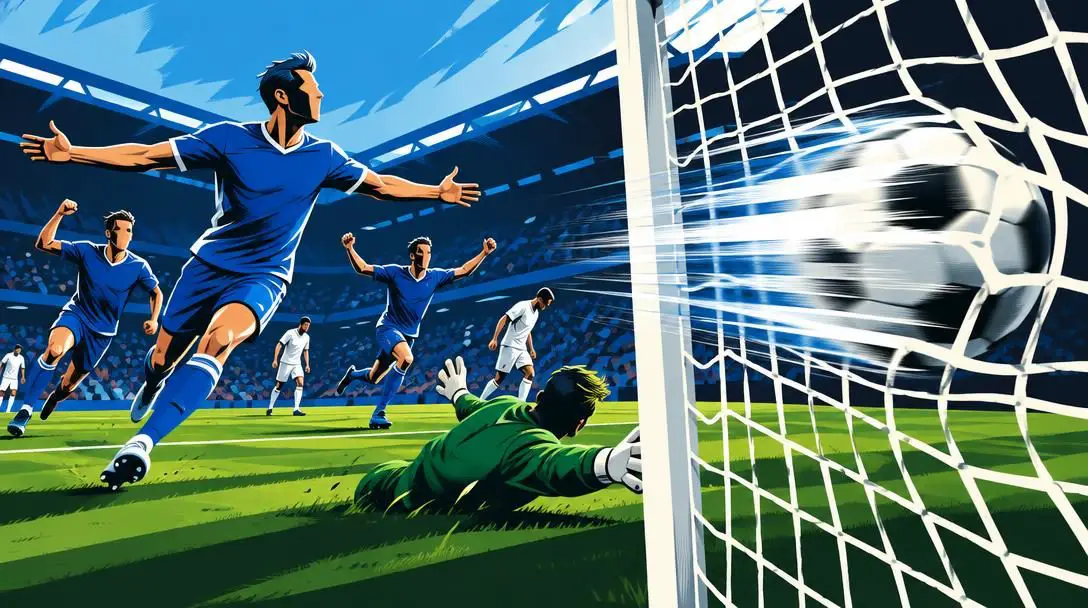
During the 2007-08 Premier League season, Everton spent much of the campaign challenging the traditional elite, eventually finishing in fifth place behind only Liverpool and Arsenal. The high-water mark of that campaign occurred in late November, when Roy Keane's Sunderland arrived at Goodison Park before an expectant crowd of 38,594 spectators. What followed was one of the most ruthless attacking performances in club history.
Striker Yakubu Aiyegbeni opened the floodgates in the 12th minute, and Tim Cahill doubled the advantage five minutes later. Steven Pienaar soon added a third to make it 3-0. While Sunderland pulled a goal back just before halftime through Dwight Yorke, Everton completely took over the second period. Rather than protecting their lead, the home side accelerated. Yakubu and Cahill each bagged their second goals of the match, while Andy Johnson and Leon Osman added strikes of their own to close out an astonishing 7-1 rout.
How historic matches shape Everton's modern identity
Landmark football fixtures do not exist merely as nostalgic memories; they function as cultural foundations that dictate how a club, its players, and its supporters perceive themselves over successive generations. For Everton, these five games established key standards that continue to reverberate across the institution:
- Setting competitive standards: Lopsided triumphs such as the 7-1 Sunderland victory and the 3-0 derby clean sheet created a lasting blueprint for the intensity, direct finishing, and pressing required of any squad representing the Royal Blue jersey.
- Overcoming psychological hurdles: Andy King's 1978 winner proved that even decade-long winless streaks against traditional rivals can be broken with tactical discipline and physical determination, resetting expectations between the two Merseyside clubs.
- Cementing international pedigree: The triumphant 1984-85 European Cup Winners' Cup run permanently established Everton's reputation as a continental powerhouse capable of sweeping top-tier European opposition on neutral soil.
- Validating academy development: Wayne Rooney's dramatic emergence against Arsenal underscored the transformative power of elite youth development, showing that homegrown talent can instantly shift the trajectory of a season.
A step-by-step framework for analyzing classic football matches
For supporters and sports analysts looking to explore classic fixtures from football's archival vaults, following a systematic review process reveals critical tactical details that highlight reels often leave out.
- Review the season table and form guide: Before watching archival footage or reading historical reports, inspect the league standings leading into the match. Understanding that Arsenal was defending a massive unbeaten run in 2002, or that Everton and Liverpool entered their 1978 and 2006 clashes as top-four contenders, provides essential context.
- Track tactical frameworks across eras: Observe how formation structures and player duties differed by era. Notice how Everton utilized dynamic dual forwards like Yakubu and Johnson during the mid-2000s, compared to the rigid backline discipline that conceded only one goal across the early rounds of the 1984-85 European campaign.
- Locate authentic archival materials: Consult original matchday programs, regional newspaper accounts, and unedited radio or television broadcasts. Contemporary coverage reveals the real-time fan sentiment and media expectations surrounding games like the 1978 King derby winner.
- Identify momentum-shifting sequences: Pinpoint the subtle moments that turned the tide of the fixture, such as Kevin Sheedy's lightning-fast reply within sixty seconds of Rapid Wien's goal in 1985, or the four disciplinary yellow cards that disrupted Arsenal's rhythm in 2002.
Common mistakes when evaluating historic matches
Revisiting past football eras requires an objective lens. Modern viewers frequently misinterpret historical matches by projecting contemporary standards onto different tactical environments.
- Ignoring past tournament structures: Measuring pre-1990s continental achievements against the modern Champions League ignores historical realities. The European Cup Winners' Cup was a premier continental honor, reserved exclusively for domestic cup winners and played under unforgiving, unseeded knockout rules.
- Overlooking defensive contributions in favor of scorelines: While high-scoring games like the 7-1 rout of Sunderland capture headlines, campaigns like the 1984-85 European run were built on clean sheets against clubs like Internacional Slovnaft Bratislava and Fortuna Sittard, as well as a tight 1-0 aggregate battle against UCD.
- Judging vintage match pacing through modern athletic metrics: Spectators reviewing late-1970s footage often misunderstand the deliberate, physical tempo of First Division play. The 1978 derby required sustained physical attrition and strategic patience on heavy playing surfaces.
- Focusing strictly on the final scoreline: Looking exclusively at a score sheet hides critical match context, such as the intense back-and-forth defensive struggle that kept Everton level with Arsenal prior to Rooney's 90th-minute winner.
Frequently asked questions
How many matches did Everton go without beating Liverpool prior to the 1978 victory?
Everton went 15 consecutive Merseyside Derby matches without a win between November 1971 and October 1978. That drought included eight Liverpool victories and seven draws, six of which were goalless 0-0 ties.
Who scored Everton's goals in the 1985 European Cup Winners' Cup final?
Andrew Gray opened the scoring in the 57th minute, Trevor Steven added a second in the 72nd minute, and Kevin Sheedy secured the 3-1 victory with a goal in the 86th minute, just one minute after Rapid Wien had scored.
What was the significance of Wayne Rooney's goal against Arsenal in 2002?
Beyond being the winning strike in a 2-1 victory, Rooney's 90th-minute curling effort snapped Arsenal's historic unbeaten run and announced the 16-year-old forward as one of world football's brightest young stars.
Which players scored multiple goals in Everton's 7-1 win over Sunderland?
Both Yakubu Aiyegbeni and Tim Cahill scored two goals apiece during the 7-1 win on November 24, 2007. Single goals were added by Steven Pienaar, Andy Johnson, and Leon Osman.
Where did Everton finish in the Premier League during the 2007-08 season?
Everton finished the 2007-08 Premier League campaign in fifth place, sitting directly behind powerhouse clubs Arsenal and Liverpool.
The bottom line
From the tension of Andy King's 1978 derby winner to the pure euphoria of Kevin Sheedy's European clincher in Italy, Everton's finest matches capture what makes the sport enduring. These classic games serve as timeless reminders of the passion, technical skill, and resilience that have defined the club for generations of supporters at Goodison Park and across the globe.