5 Classic Games In Juventus History
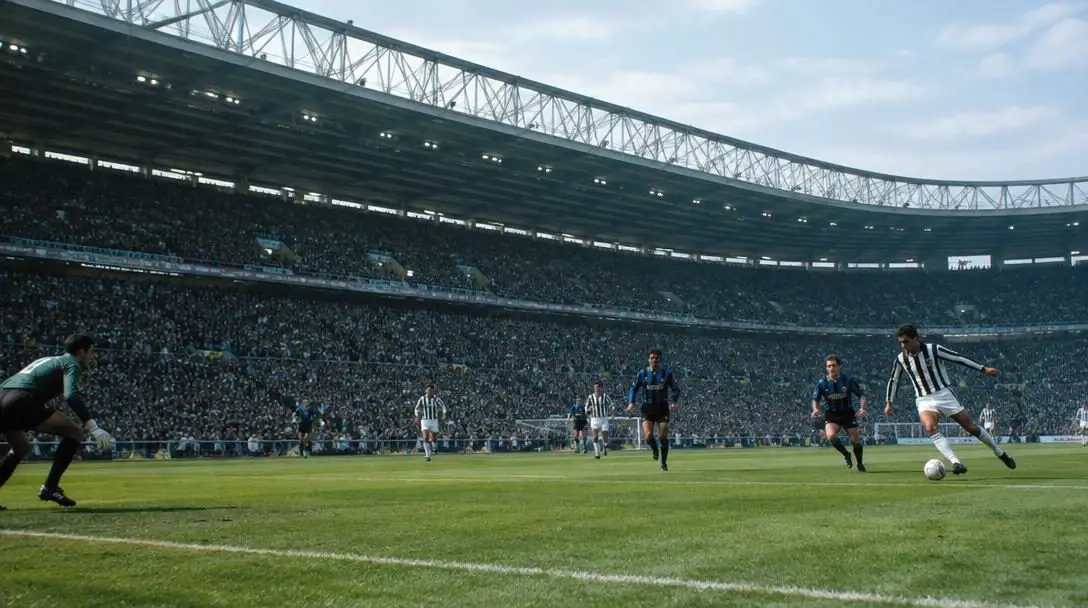
Juventus stands among the most storied clubs in world football, defined by generations of world-class talent and an extensive collection of domestic and international silverware. Clad in their iconic black and white stripes, the Italian giants have navigated decades of high-stakes competition, etching their name into the sport through tactical discipline, grit, and unforgettable individual performances.
To truly understand the identity and heritage of the Turin club, supporters and neutral observers look to the marquee matches that altered the course of European and Italian football. From gritty continental finals and thrilling second-leg comebacks to record-shattering goal displays, these five classic fixtures capture the peak moments across distinct eras of Juventus history.
Key takeaways
- Juventus captured its first European Cup crown in 1985 with a hard-fought 1-0 win against Liverpool.
- A thrilling 3-1 home victory against Real Madrid in the 2003 Champions League semifinals overturned a first-leg deficit to secure a 4-3 aggregate triumph.
- The club's largest recorded margin of victory occurred in the 1926-27 Coppa Italia with a 15-0 rout of Cento.
- Omar Sivori delivered a historic six-goal masterclass in a 9-1 thrashing of arch-rivals Inter in 1961.
- The 1995-96 campaign marked the club's pinnacle in the modern Champions League era, sealed by a flawless penalty shootout over Ajax.
At a glance: Five legendary Juventus matches
The defining fixtures in the history of Juventus span nearly a century of Italian and European football, highlighting historic rivalries, dominant scoring feats, and dramatic knockout battles.
| Fixture | Year | Competition | Opponent | Final Score |
|---|---|---|---|---|
| First European Cup Triumph | 1985 | European Cup | Liverpool | 1-0 |
| Champions League Semifinal Comeback | 2003 | UEFA Champions League | Real Madrid | 3-1 (4-3 agg.) |
| Record Margin of Victory | 1926-27 | Coppa Italia | Cento | 15-0 |
| Derby d'Italia Rout | 1961 | Italian Domestic Play | Inter | 9-1 |
| Modern Champions League Title | 1995-96 | UEFA Champions League | Ajax | 1-1 (4-2 pen.) |
Chronicles of five iconic Juventus performances
Each of the following encounters represents a distinct milestone in the club's narrative, showcasing decisive tactical setups, prolific scoring runs, and high-pressure tournament triumphs.
1985 European Cup Final: Juventus vs. Liverpool
- Competition: European Cup
- Opponent: Liverpool
- Result: 1-0
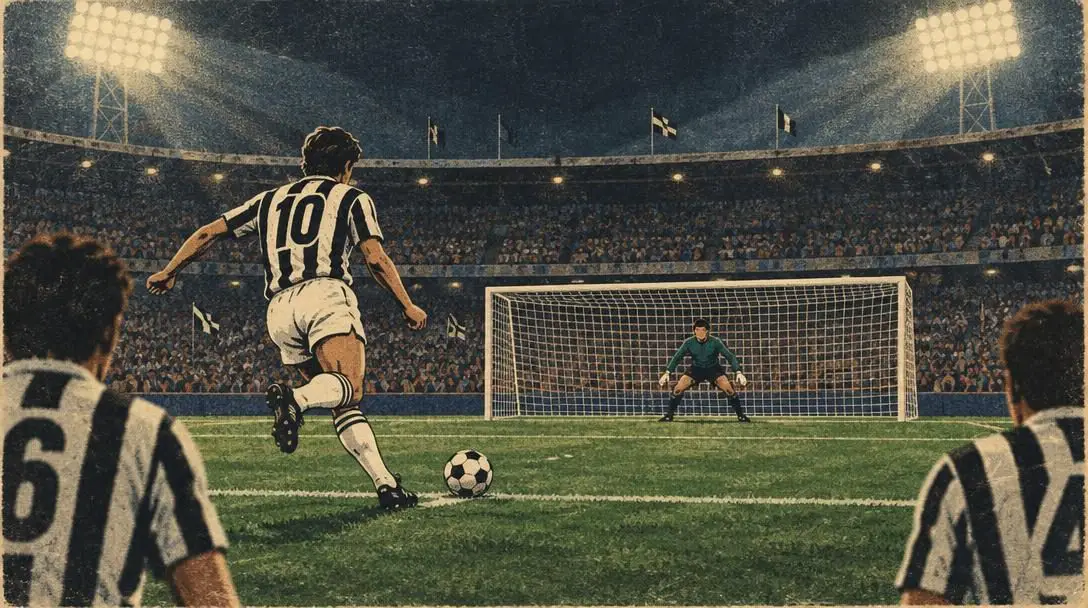
- Decisive Moment: Michel Platini penalty kick
Prior to the tournament's modern transformation into the Champions League, the European Cup served as the pinnacle of continental club football. Entering the 1985 campaign, Juventus had never lifted the coveted trophy despite their domestic dominance. The team mounted an impressive path through the competition, navigating a preliminary round win over Ilves before pushing past Grasshopper, Sparta Praha, and Bordeaux to reach the final. Their opponents in the showcase match were Liverpool, who stood as one of the most formidable powers in European football at the time.
The championship match proved to be an intense, fiercely contested struggle in which neither side could break the deadlock across the opening 45 minutes. The breakthrough arrived in the second half when Juventus earned a penalty kick. French playmaker Michel Platini stepped up to take the spot-kick, calmly slotting it home to give the Italian side a 1-0 advantage. For the remaining half-hour, Liverpool mounted relentless attacking waves to find an equalizer. The disciplined Juventus backline resisted every advance, preserving the clean sheet and securing the club's first European Cup title.
2003 Champions League Semifinal: Juventus vs. Real Madrid
- Competition: UEFA Champions League
- Opponent: Real Madrid
- Result: 3-1 (4-3 aggregate)
- Goalscorers: Trezeguet, Del Piero, Nedved
High-stakes drama in knockout football is not limited strictly to title deciders; intermediate rounds frequently produce matches that live just as long in sporting memory. During the 2002-03 European season, Juventus survived a daunting group phase against Valencia, Roma, and Deportivo de la Coruna before eliminating Barcelona after extra time in an electric quarterfinal. In the semifinals, the club drew Real Madrid, the reigning tournament champions.
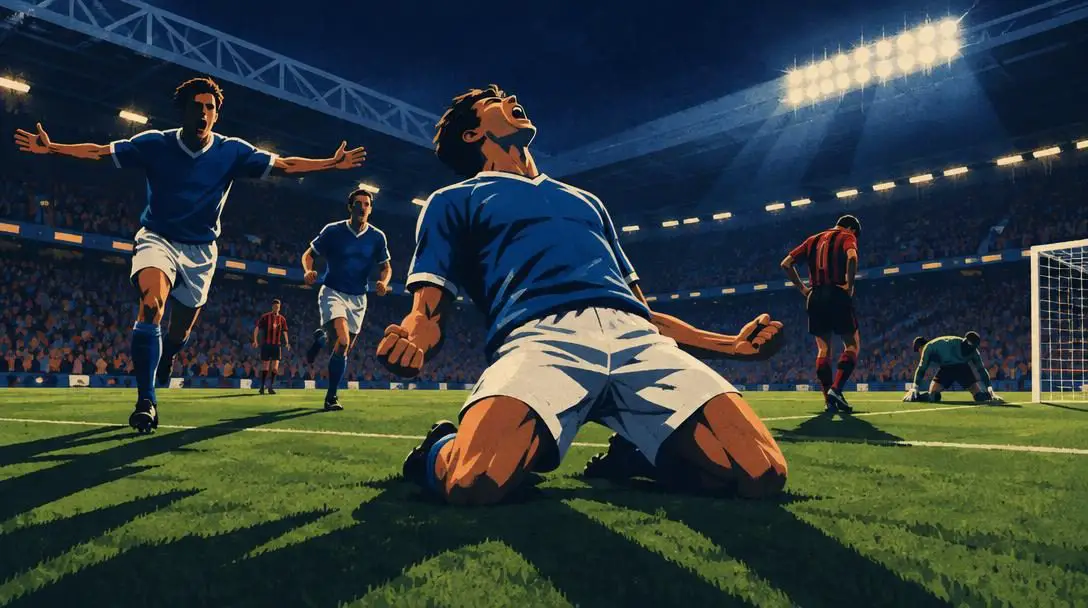
Juventus faced an uphill battle after suffering a 2-1 defeat in Spain during the opening leg. Returning home for the decisive second leg in Turin, the team delivered an emphatic showing. Striker David Trezeguet opened the scoring in the 12th minute to level the aggregate score. Just before the interval, Alessandro Del Piero doubled the lead with a clinical strike in the 43rd minute. Pavel Nedved later added a sensational third goal, handing the hosts a commanding two-goal aggregate buffer. Although former Juventus star Zinedine Zidane pulled one back for Real Madrid in the 89th minute, Juventus held on for a 3-1 victory (4-3 on aggregate) to reach the final against domestic rival Milan.
High-intensity knockout rounds often produce superior football and deeper emotional resonance than the finals that follow.
1926-27 Coppa Italia: Juventus vs. Cento
- Competition: Coppa Italia (Second Round)
- Opponent: Cento
- Result: 15-0
- Top Scorer: Enrico Savio (5 goals)
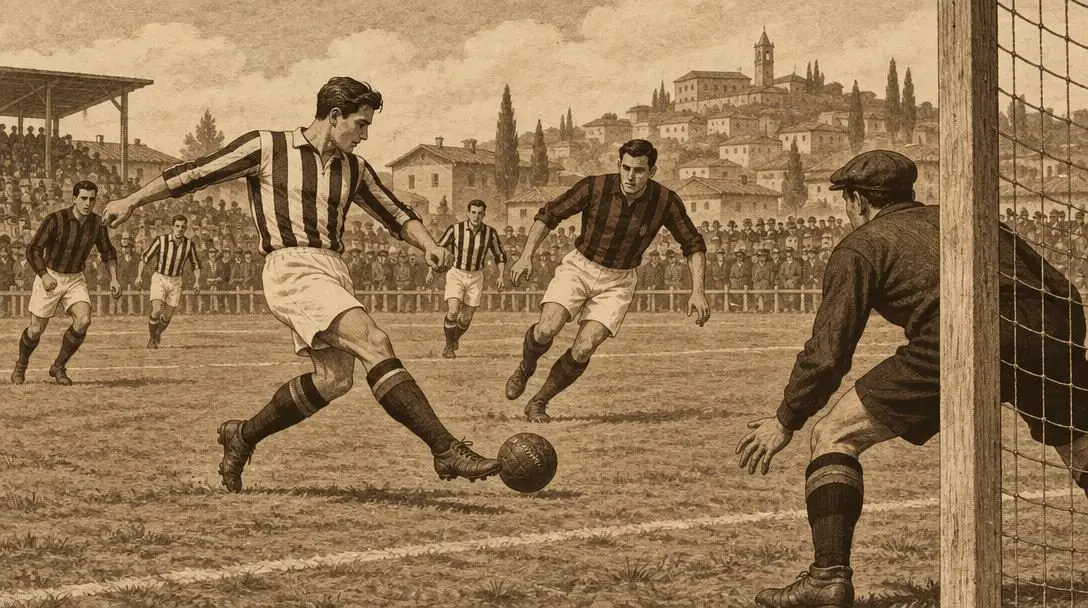
The Coppa Italia had a turbulent beginning following its establishment in 1922, when Vado claimed the inaugural crown. No subsequent champion was officially crowned until 1936, as early editions suffered from scheduling problems and cancellations brought on by a lack of broader interest. Despite being part of an abandoned tournament, the 1926-27 Coppa Italia remains a permanent chapter in the club's record books as the backdrop for the largest single-match victory in Juventus history.
After receiving a bye through the opening round, Juventus met Cento in the second round in what remains the only competitive encounter between the two clubs. What unfolded was an unrelenting 15-0 demolition. Virginio Rosetta set the tempo early, registering a hat-trick with the game's first three goals. Forward Eugenio Rossi matched that feat with three goals of his own, while Enrico Savio led all players on the pitch with an astounding five-goal haul. Although tournament organizers never concluded the competition, the match remains the club's absolute high-water mark for offensive production.
1961 Derby d'Italia: Juventus vs. Inter
- Competition: Italian Domestic Play
- Opponent: Inter
- Result: 9-1
- Star Performer: Omar Sivori (6 goals)
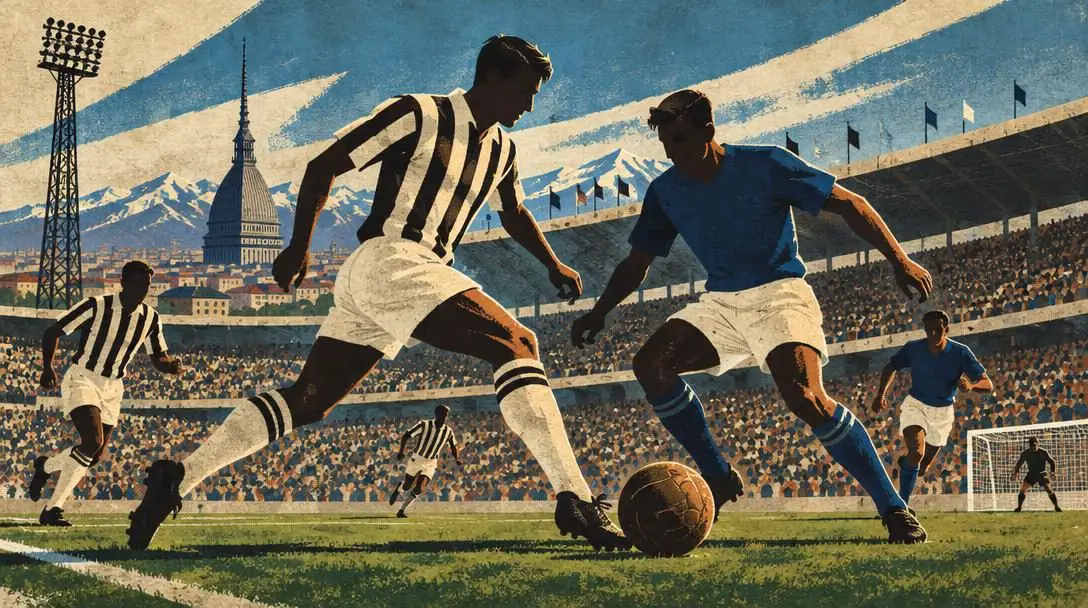
While matches against minor opposition highlight offensive efficiency, high-scoring performances against historic rivals carry far greater weight. The rivalry between Juventus and Inter stands as one of the most intense fixtures in Italian sports. In the spring of 1961, the matchup in Turin turned into an overwhelming demonstration of attacking football by the home team.
Juventus grabbed control of the game within minutes thanks to forward Omar Sivori, who unleashed a rapid hat-trick between the 11th and 17th minutes. Sivori continued to dissect the Inter defense, eventually pushing the scoreline to 7-0 with two more tallies, accompanied by a goal from Bruno Nicole and an own goal by Francesco Riefolo. Although Sandro Mazzola managed to pull one goal back for Inter, Juventus refused to ease up. Sivori capped off an iconic performance with an 88th-minute strike to complete a double hat-trick—six goals by a single player—closing out an emphatic 9-1 victory.
1996 Champions League Final: Juventus vs. Ajax
- Competition: UEFA Champions League
- Opponent: Ajax
- Result: 1-1 (4-2 penalty shootout)
- Key Stat: Four converted penalties out of four
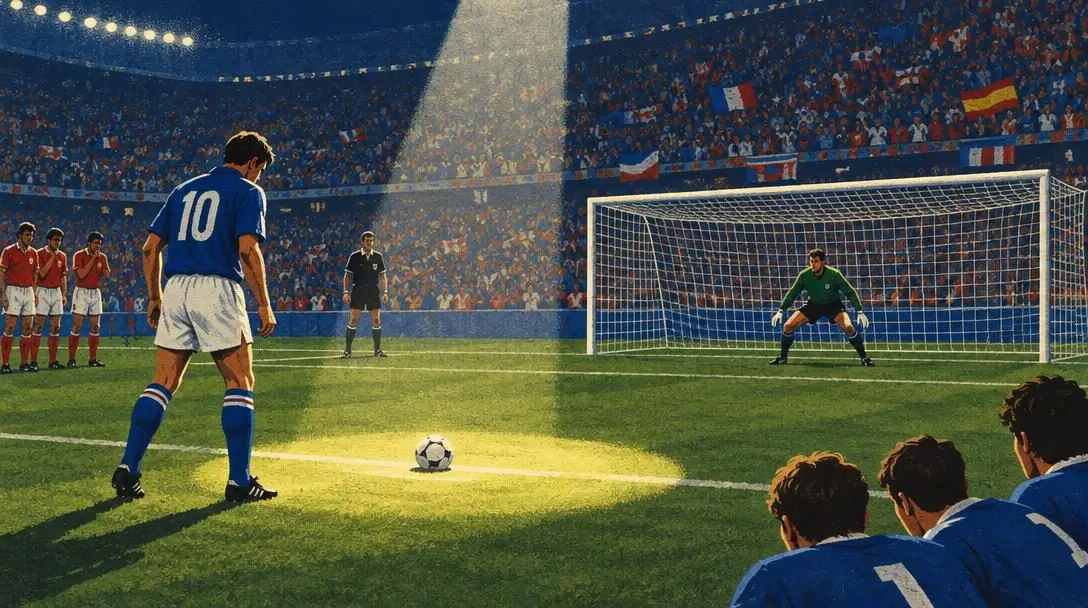
Following the rebranding of the European Cup into the UEFA Champions League, Juventus captured the trophy under the modern format during the 1995-96 season. After progressing past a group featuring Borussia Dortmund, Steaua Bucuresti, and Rangers, the Italian side navigated difficult knockout ties. They overturned a first-leg deficit against Real Madrid in the quarterfinals with a 2-0 home win (2-1 on aggregate) and survived a spirited semifinal rally by French side Nantes to book a ticket to the final against defending champions Ajax.
The final was a tactical duel between two European powerhouses. Juventus opened the scoring early in the 12th minute, but Ajax answered with an equalizer in the 41st minute. The deadlock remained through the second half and a tense 30-minute extra-time period, sending the championship to a penalty shootout. The Juventus penalty takers exhibited absolute composure under pressure, converting all four of their spot-kick attempts to defeat the Dutch champions and claim the Champions League crown.
Understanding cup competition formats and tie mechanics
Appreciating the strategic choices made by managers in classic fixtures requires a firm grasp of tournament formats. Knockout football differs significantly from standard league campaigns where results accumulate over a season:
- The two-leg aggregate format: Rounds prior to the final in continental tournaments are typically played over home-and-away legs. Advancement is determined by the cumulative scoreline across 180 minutes. Overcoming an away loss by securing a multi-goal victory at home—as seen against Real Madrid in 2003—is a core strategic dynamic of European ties.
- Neutral single-match finals: Championship fixtures are staged as single-elimination matches. Because teams cannot recover from defensive lapses in a return leg, finals typically feature disciplined, conservative defensive strategies, resulting in low-scoring affairs like the 1-0 final in 1985.
- Extra time and penalty shootouts: When aggregate scores or neutral finals conclude in a tie after 90 minutes, teams contest 30 minutes of extra time. If parity persists, a penalty shootout decides the champion. Success demands elite individual focus, reflected in Juventus converting every penalty taken during the 1996 final.
How to analyze historic matches from the Juventus archives
Reviewing historical football matches requires a structured methodology to appreciate the tactical contexts of bygone eras. Use this step-by-step approach when studying classic fixtures:
- Identify the competition stage: Establish whether the match is a standalone final, an aggregate knockout leg, or an early cup fixture to understand the tactical mindset of both squads.
- Review the starting lineups and key matchups: Examine the personnel deployed, noting historical icons like Michel Platini, Omar Sivori, or Alessandro Del Piero, to see how individual matchups dictated play.
- Map out the goal timeline: Note the exact minutes when scoring occurred to track momentum shifts, observing how early strikes early in a half dismantle defensive game plans.
- Watch extended match footage: Seek out extended highlights or full replays rather than short goal compilations to assess defensive structures, refereeing interpretations, and the physicality of the era.
- Evaluate era-specific contexts: Account for differences in tournament formats, substitutions, and playing conditions across distinct decades of football history.
Common misconceptions when reviewing football history
Casual observers often misjudge historical fixtures by viewing them through the lens of modern football norms. Keep the following distinctions in mind when reviewing past games:
- Believing only final matches matter: Many assume that trophy-lifting matches are inherently the greatest games. However, tense semifinal showdowns—like the 2003 clash with Real Madrid—often feature higher levels of drama, tactical quality, and emotional resonance.
- Conflating the European Cup and modern Champions League: The European Cup operated as a straight knockout competition prior to the group-stage format changes of the 1990s. Comparing records across these two periods requires acknowledging different tournament structures.
- Discounting abandoned or incomplete tournaments: Early domestic cup competitions, such as the 1926-27 Coppa Italia, are often forgotten because they were interrupted. Despite this, individual match records and lopsided results remain fully valid in official historical records.
- Underestimating the momentum of early goals: Lopsided scores like the 9-1 win against Inter in 1961 lead some to believe the losing team was weak. In reality, a quick succession of early goals frequently causes high-caliber teams to unravel tactically.
Frequently asked questions
Who scored the winning goal in Juventus's first European Cup victory?
French playmaker Michel Platini scored the decisive goal from a second-half penalty kick to secure a 1-0 win against Liverpool in the 1985 European Cup final.
What is the largest margin of victory ever recorded by Juventus?
The club's largest win is a 15-0 victory against Cento during the second round of the 1926-27 Coppa Italia, highlighted by five goals from Enrico Savio.
How many goals did Omar Sivori score against Inter in 1961?
Omar Sivori scored six goals—completing a double hat-trick—during Juventus's 9-1 victory over Inter in Turin in 1961.
How did Juventus win the 1995-96 Champions League final?
After finishing tied 1-1 against Ajax through regular and extra time, Juventus won the championship in a penalty shootout by converting all four of their spot-kick attempts.
Did Juventus win the Champions League trophy in 2003?
No. While Juventus defeated Real Madrid 3-1 in the semifinals to advance 4-3 on aggregate, they ultimately lost to AC Milan in a penalty shootout in the final.
The bottom line
The historical greatness of Juventus is cemented by iconic matches spanning nearly a century of European and Italian competition. Whether persevering through tight continental finals, staging second-leg comebacks against world giants, or routing rivals in domestic derbies, these historic games define the heritage, resilience, and high competitive standard of the black and white stripes.