5 Worst Moments For Real Madrid Fans

Real Madrid is widely regarded as one of the most successful football clubs in the history of European sports. The club established its international dominance early on when it captured the first five consecutive titles of the European Cup, defeating four different clubs during that opening era of continental competition. Following that historic run of dominance which concluded with a win in 1960, it took the club 40 years before it would reclaim the prestigious title. Because the institution was built on relentless success and European trophies, its fanbase has developed standards that are unusually high compared to most other sporting organizations.
For a club of this magnitude, merely competing or achieving a podium finish in domestic competitions is rarely viewed as sufficient. The demands placed upon managers, star players, and board executives mean that ordinary slumps are interpreted as profound crises. While the history of the club contains incredible triumphs, it also features periods of intense athletic pain, shocking tactical humiliations, and investments that failed completely. To fully grasp why certain losses or seasons stand out as traumatic milestones, one must recognize that defeat for Real Madrid is never treated as a normal part of sports, but rather as an existential shock.
Key takeaways
- Unforgiving expectations at Real Madrid mean domestic podium finishes and ordinary rebuilding periods are frequently viewed as profound organizational failures.
- Lopsided tactical defeats against continental rivals, such as a 5-0 loss to Milan in 1989 and an identical rout by Barcelona in 2010, remain enduring historical scars.
- Record financial outlays do not eliminate sporting risk, as demonstrated by the injury-riddled and unproductive tenure of Eden Hazard between 2019 and 2024.
- Prolonged campaigns can unravel across all competitions simultaneously, illustrated by 18 total losses in 2018-19 and an unthinkable sixth-place league finish in 1995-96.
The Weight of Relentless Expectations in the Spanish Capital
To evaluate the low points of Real Madrid, one must first recognize the sheer scale of the institution. The club does not exist in an athletic environment where second place is celebrated as progress. Having won the opening five editions of the European Cup between 1956 and 1960 against four different finalists, the club set a benchmark that no rival could realistically replicate. However, that magnificent dawn cast an immense shadow over subsequent generations. When the European Cup remained out of reach across the ensuing four decades, every slip on the domestic or European stage took on heightened psychological weight.
Defeat for Real Madrid is never treated as a normal part of sports, but rather as an existential shock.
Whenever tactical blueprints fall apart or expensive roster decisions disintegrate, the reaction from supporters and the media is swift and uncompromising. Boardrooms face immediate pressure, managers find their job security evaporating within weeks, and world-class footballers suddenly discover that past achievements offer little protection against the scrutiny of the Santiago Bernabeu.
Five Traumatic Milestones That Shook Real Madrid
Across decades of competition, a handful of specific disasters have come to symbolize the darkest chapters in Real Madrid history. Whether occurring over a single evening of tactical dismantling or unfolding across a grueling ten-month season, these five episodes represent the absolute nadir of the club's modern experience.
| Disaster | Year / Period | Primary Competition | Key Opponent or Factor | Critical Consequence |
|---|---|---|---|---|
| European Cup Semifinal Rout | 1989 | European Cup | Milan | 5-0 second-leg thrashing; eliminated 6-1 on aggregate |
| Eden Hazard Transfer Collapse | 2019–2024 | All Competitions | Chronic injuries and fitness issues | Over a full calendar year without scoring a single goal |
| Complete Campaign Meltdown | 2018–19 | La Liga, Copa del Rey, UCL | Real Betis, Barcelona, Ajax | 18 overall losses; empty trophy cabinet across major honors |
| Camp Nou Clasico Humiliation | 2010 | La Liga | Barcelona | 5-0 league defeat; title race swung by four points |
| Fall Outside the Top Five | 1995–96 | La Liga | League-wide domestic struggles | Sixth-place finish despite a late four-game winning streak |
The 1989 European Cup Semifinals
During the lengthy title drought following their 1960 European Cup victory, Real Madrid came close on several occasions to breaking through. One of the most painful near-misses occurred in the semifinals of the 1989 European Cup when Real Madrid was drawn against Italian powerhouse Milan. Following the first leg in Madrid, the tie remained competitive and balanced, as both sides settled for a 1-1 draw. Real Madrid had reasons to remain optimistic about advancing to the showcase event, but the return fixture in Italy quickly turned into an absolute disaster on the pitch.
Milan took control of the match in rapid fashion. Carlo Ancelotti broke through first with a goal in the 18th minute, followed shortly after by Franklin Rijkaard in the 25th minute. Just before the interval, Ruud Gullit scored to give Milan an insurmountable 3-0 advantage at halftime. Rather than mounting a spirited response after the break, Real Madrid came out completely flat in the second half. Milan capitalized again, finding the net in the 49th and 59th minutes to seal a devastating 5-0 defeat. Milan carried that overwhelming momentum into the final, where they shut out Steaua Bucuresti to claim the European Cup title, leaving Madrid supporters to ponder an agonizing continental collapse.
Eden Hazard
- Contract Duration: Signed in 2019 through summer 2024
- Estimated Valuation: €100 million to €146.1 million
- Prior League Scoring: 36 goals in 147 matches (Lille); 85 goals (Chelsea)
- Low Watermark: Over a full calendar year without netting a single goal
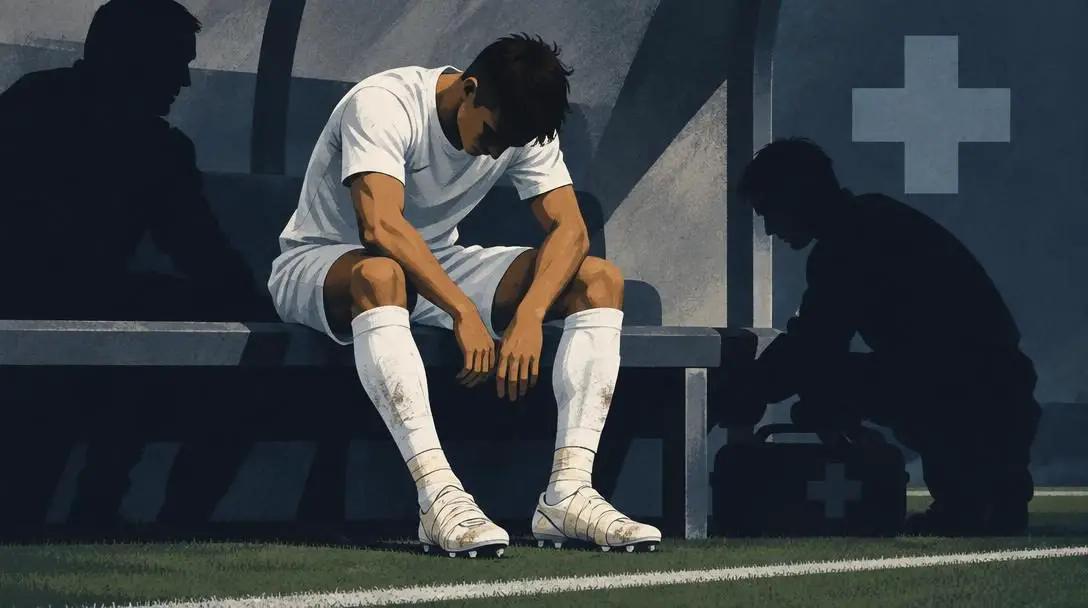
When Real Madrid secured the signing of Eden Hazard in 2019, the move was widely expected to be one of the crowning transfers in the modern era of the club. Hazard had built a world-class reputation in French and English football. He had established his quality with Lille, scoring 36 goals in 147 league matches, before elevating his game to elite heights at Chelsea, where he scored 85 times in league play. Madrid invested heavily in this pedigree, committing to a contract running through the summer of 2024 with a financial valuation between €100 million and €146.1 million.
Despite the immense financial outlay and fanfare, the acquisition failed completely to deliver value. Hazard appeared disinterested from the very start, arriving to training camp out of shape. A relentless string of injuries severely restricted his playing time and prevented him from maintaining any competitive form. The downturn reached an extreme low when Hazard endured a stretch of more than a full calendar year without netting a single goal. Although Real Madrid managed to sustain its winning tradition during these years, it did so largely without Hazard contributing on the field, cementing the Belgian as the costliest sporting misstep in club history.
The Collapse of the 2018-19 Campaign
The 2018-19 season developed into a nightmare where virtually anything that could go wrong did go wrong for the squad. The campaign began on steady ground, with the team remaining unbeaten across the first five matches in league competition. However, form deteriorated immediately as Madrid lost four of its next five outings. That downward trend continued throughout the season, ultimately concluding with 21 wins, five draws, and 12 losses in La Liga. While finishing third in the standings might seem respectable on paper to an outsider, an enormous gap separated Madrid from the top two teams in the table.
The campaign became historically bleak as the overall loss count rose across all competitions. Real Madrid had managed to avoid losing more than 17 total matches in a single campaign for over two decades. That mark fell during the final week of La Liga play against Real Betis, who handed Madrid a 2-0 shutout defeat to push the club to 18 total losses. Adding to the domestic disappointment, Madrid was eliminated in the Copa del Rey semifinals by rivals Barcelona and suffered an unceremonious exit from the UEFA Champions League at the hands of Ajax.
The 2010-11 El Clasico Humiliation
Entering the 13th week of the 2010-11 La Liga season, Real Madrid looked ready to coast toward the league championship. Through the opening 12 matches, the club had not suffered a single loss, claiming 10 victories alongside draws against Mallorca and Levante. That momentum evaporated when they met Barcelona for the season's first El Clasico fixture. Real Madrid started the match entirely flat, allowing Barcelona to seize control and capitalize on every defensive vulnerability.
Barcelona took the lead in the 10th minute through a goal by Xavi, and Pedro doubled the deficit only eight minutes later. If fans hoped for tactical adjustments following the break, the second half proved even worse. David Villa scored two goals in a span of three minutes, and Jeffren Suarez added a late goal to push the scoreline to an embarrassing 5-0. To complete the nightmare, defender Sergio Ramos was shown a red card during stoppage time. Barcelona went on to capture the La Liga crown by four points, and this lopsided defeat was widely recognized as the defining match of that championship race.
Falling Outside the Top Five in 1995-96
General football knowledge dictates that an elite powerhouse like Real Madrid is virtually guaranteed to finish among the top five clubs in Spain's top division. Yet the 1995-96 campaign demonstrated that even the most historic institutions can experience catastrophic league drops. Madrid struggled through the 42-match season, managing just 20 wins alongside 10 draws and a dozen defeats, ultimately landing in an unfamiliar sixth place.
The severity of the struggle was made clearer by how the team reached that standing. Far from experiencing bad luck at the final hurdle, Madrid was forced to battle desperately through the closing weeks of the calendar. It required an urgent four-match winning streak at the very end of the schedule just to climb back up to sixth, highlighting how close the club had drifted toward an even deeper crisis and missing out entirely on European qualification spots.
Structural Dynamics: How Football Crises Develop and Unfold
Catastrophic results and dysfunctional seasons at high-profile football clubs rarely happen by accident. Instead, they are typically produced by specific structural problems that intersect at the worst possible moments:
- Tactical imbalances occur when a team faces an opponent whose tactical system exposes gaps in transition defense, as seen when Milan overran Madrid in 1989 and Barcelona controlled space in 2010.
- Poor physical conditioning and persistent injury trouble can neutralize marquee signings, leaving costly assets unable to build match sharpness or justify their transfer figures.
- Loss of dressing room momentum often turns a brief stretch of bad form into an extended slide, causing clubs to drop points against beatable opposition.
- Compounding pressure accumulates during high-stakes fixtures, leading to mental lapses, tactical breakdown, and disciplinary problems such as late red cards.
How Supporters Can Process Devastating Setbacks
Supporting a high-profile club means confronting unexpected humiliations alongside glorious victories. When following a club through a crisis, supporters can manage the emotional fallout through several practical steps:
- Evaluate the performance through a complete match context rather than relying solely on the final scoreline or highlight clips.
- Recognize the cyclical nature of competitive athletics, acknowledging that long-term dominances are inevitably followed by transitional rebuilding phases.
- Separate individual errors by players from broader tactical instructions delivered by the manager.
- Maintain perspective regarding club legacy, keeping in mind that previous dry spells and setbacks eventually gave way to subsequent championship eras.
- Step away from reactive commentary immediately following heavy defeats to avoid getting swept up in panic.
Pitfalls to Avoid When Analyzing Modern Club Crises
When analyzing a club's worst moments, fans, journalists, and pundits frequently fall into cognitive traps that distort what actually happened on the pitch:
- Overreacting to individual scorelines: Declaring an entire generation of players obsolete based on 90 bad minutes ignores the broader sample size of performance.
- Assuming massive transfer fees guarantee elite output: Disregarding fitness levels, stylistic fit, and personal drive leads to misplaced faith in expensive acquisitions.
- Ignoring early warning signs in league play: Overlooking unconvincing draws or sudden drops in form leaves clubs unprepared when an elite opponent administers a heavy loss.
- Treating third-place finishes as acceptable: Failing to examine the actual points gap separating the club from the top of the table masks deep domestic deficiencies.
- Blaming match officials or bad luck: Pointing to external factors prevents honest acknowledgement of structural tactical flaws displayed during major fixtures.
Key Factors for Evaluating Squad Transitions and Rebuilding
As football clubs work through severe setbacks, observers should monitor specific structural factors to determine whether a downturn is temporary or indicative of a longer slump. First, examine the financial impact of underperforming contracts, assessing how quickly a club can move on from large wages to rebuild its roster.
Second, track the resilience of the squad in domestic league matches following an embarrassing knockout defeat in European competition. Third, watch the willingness of leadership to adjust tactical philosophies rather than repeating systems that have been decisively dismantled by rivals. Finally, consider the timeline required for recovery, as club history shows that European droughts can span decades, while single poor seasons can sometimes be corrected in subsequent years.
Frequently asked questions
Why did the 1989 European Cup semifinal against Milan sting so deeply?
After securing a 1-1 draw in the first leg, Real Madrid had high hopes of advancing to their first European Cup final since their early era of dominance. Instead, Milan scored three times before halftime and added two more in the second half, handing Madrid a traumatic 5-0 loss and leaving them in an extended title drought.
What made Eden Hazard's transfer such an immense disappointment?
Real Madrid invested between €100 million and €146.1 million for Hazard, who had scored 85 league goals for Chelsea and 36 for Lille. However, he arrived out of shape, suffered recurring injuries, and went more than a calendar year without a goal, contributing virtually nothing to the club's success through his 2024 contract.
How historically bad was Real Madrid's 2018-19 season?
Real Madrid lost four of five matches early in the year and finished third in La Liga with 12 league defeats. A final-day 2-0 defeat to Real Betis pushed their total losses to 18 across all competitions—a threshold the club had successfully avoided for more than two decades—alongside early cup exits against Barcelona and Ajax.
What was the sporting impact of the 5-0 Clasico loss in 2010?
Real Madrid entered the match unbeaten through 12 league games, but Barcelona dismantled them with goals from Xavi, Pedro, Villa, and Jeffren, capped by a Sergio Ramos red card. The match established Barcelona's psychological edge and proved decisive, as Barcelona went on to capture the league crown by just four points.
How did Real Madrid finish sixth in the 1995-96 campaign?
Across a 42-match domestic season, Madrid managed only 20 wins, 10 draws, and 12 defeats. The club struggled for consistency throughout the campaign and required an urgent four-match winning streak at the very end just to claw their way back into sixth place.
The bottom line
The history of Real Madrid confirms that extraordinary success and devastating failure are two sides of the same coin. An institution that measures itself solely by silverware will inevitably experience its lowest moments as existential crises. Whether suffering a 5-0 drubbing on European soil, falling victim to a nine-figure transfer bust, or plunging to sixth place domestically, the club's most painful chapters serve as stark reminders that no football powerhouse is immune to disaster. Yet, by understanding the tactical failures, roster miscalculations, and systemic pressures behind these collapses, supporters can view past and future crises with clear-eyed athletic perspective.