5 Classic Games In Real Madrid History
Real Madrid stands among the most decorated and celebrated football clubs in the world, with a heritage defined by continental triumphs, domestic dominance, and iconic individual rivalries. Over more than a century of competitive football, the club has taken part in matches that transformed regional tournaments into enduring legends and set new benchmarks for European excellence.
From the founding era of Spanish cup football in the early twentieth century to dramatic Champions League finals in modern stadiums, certain matches remain essential viewing and study for any sports enthusiast. Understanding these iconic fixtures provides valuable insight into how tactics, knockout pressure, and superstar performances have shaped the history of football.
Key takeaways
- Real Madrid established its early winning pedigree in 1905 by defeating Athletic Bilbao to claim its first-ever Copa del Rey title.
- A historic 11-1 victory over Barcelona in the 1943 Copa del Generalisimo semifinals ignited one of the sport's fiercest rivalries.
- The club navigated heavyweight European contenders in 2002 and 2014 to secure defining UEFA Champions League triumphs.
- The 2012 regular-season El Clasico highlighted an extraordinary individual duel, with Cristiano Ronaldo and Lionel Messi scoring all four goals in a 2-2 draw.
At a glance: Five legendary Real Madrid fixtures
| Match | Competition | Opponent | Key Decider / Scorer | Final Result |
|---|---|---|---|---|
| 1905 Copa del Rey Final | Copa del Rey | Athletic Bilbao | Manuel Prast (70') | 1-0 (Win) |
| 1943 Copa del Generalisimo Semifinal | Copa del Generalisimo | Barcelona | Barinaga (4 goals), Pruden (3 goals) | 11-1 (11-4 aggregate Win) |
| 2002 Champions League Semifinal | UEFA Champions League | Barcelona | First-leg road win and early second-leg lead | 1-1 (3-1 aggregate Win) |
| 2012 La Liga Week 7 Clash | La Liga | Barcelona | Cristiano Ronaldo (23', 66') | 2-2 (Draw) |
| 2014 Champions League Final | UEFA Champions League | Atletico Madrid | Sergio Ramos (93') | 4-1 after extra time (Win) |
Five iconic fixtures that shaped Real Madrid history
1905 Copa del Rey Final
- Opponent: Athletic Bilbao
- Deciding Goal: Manuel Prast (70th minute)
- Key Milestone: First Copa del Rey trophy in club history
- Defensive Record: Zero goals conceded throughout the entire tournament
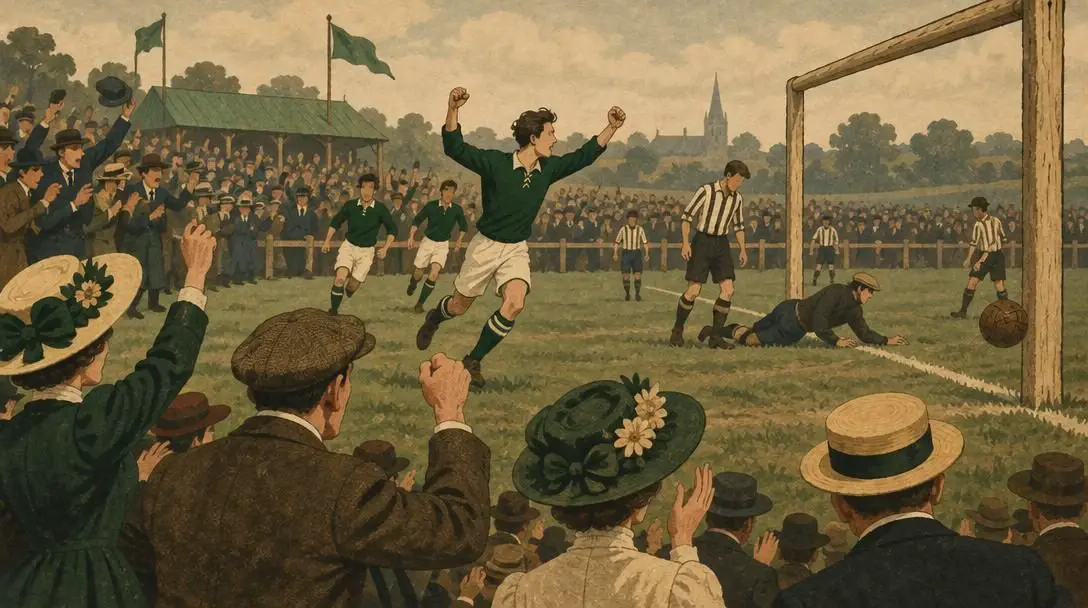
The Copa del Rey was established in 1903, quickly becoming the premier testing ground for clubs across Spain. Real Madrid nearly captured the inaugural championship but suffered a narrow defeat to Athletic Bilbao. When Bilbao retained the trophy in 1904, they entered the 1905 edition chasing three consecutive titles to open the tournament's history. Determined to reverse their fortunes, Real Madrid launched a campaign built on relentless defensive organization.
Madrid reached the championship game by shutting out Moncloa FC and San Sebastian Recreation Club in succession. The final match set up a dramatic rematch against Bilbao. Real Madrid's defensive front held firm for over an hour before forward Manuel Prast found the back of the net in the 70th minute. That solitary strike stood as the winner, sealing a 1-0 shutout and delivering Real Madrid its foundational national silverware.
1943 Copa del Generalisimo Semifinal
- Opponent: Barcelona
- Second-Leg Score: 11-1
- Leading Scorers: Barinaga (4 goals), Pruden (3 goals)
- First-Leg Deficit Overcome: 0-3
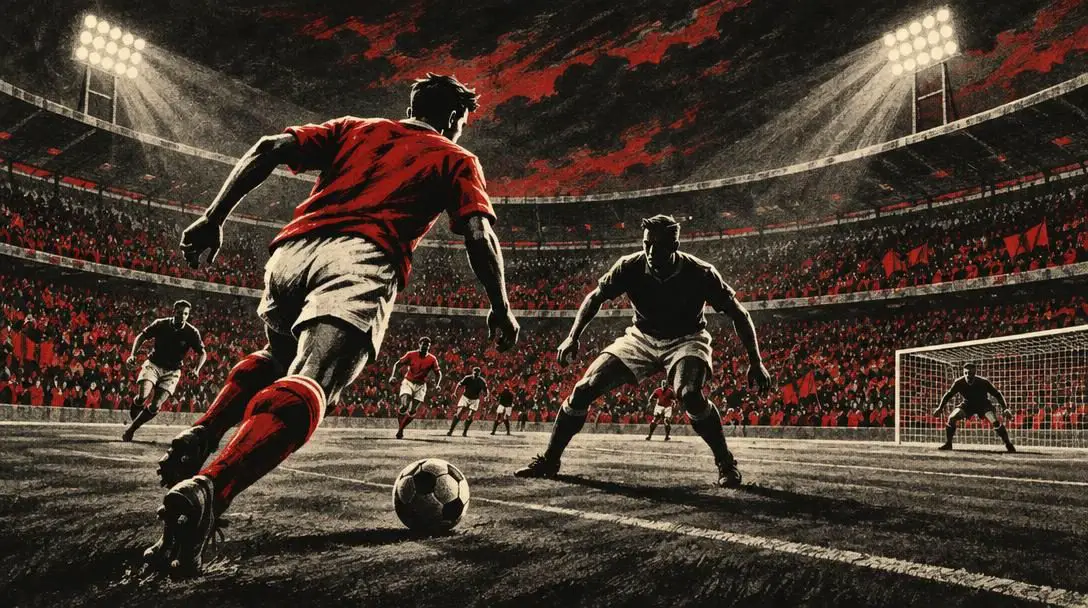
Double-digit scorelines are extraordinarily rare at the top tier of competitive football, which makes Real Madrid's second-leg triumph over Barcelona in the 1943 Copa del Generalisimo one of the most remarkable results in domestic history. Real Madrid's tournament run had already required considerable grit, having defeated UD Salamanca 6-1 in the opening round, survived a tiebreaker against Espanol in the round of 16, and outscored Xerez CF 6-4 on aggregate.
In the first leg of the semifinal, Barcelona established a commanding 3-0 advantage on their home ground. However, the return fixture in Madrid produced an overwhelming offensive display. Striker Pruden delivered a hattrick, while teammate Barinaga found the net four times as Real Madrid routed Barcelona 11-1 to advance on aggregate. The high-tension showdown sparked intense drama between the two clubs and cemented the cultural foundation of their fierce competitive rivalry, although Real Madrid would ultimately finish as runners-up after falling 1-0 to Athletic de Bilbao in the championship match.
2002 UEFA Champions League Semifinal
- Opponent: Barcelona
- First-Leg Score: 2-0 (Away)
- Second-Leg Score: 1-1 (Home)
- Path Through Group Stages: Panathinaikos, Sparta Prague, and Porto
The 2001–2002 continental campaign tested Real Madrid against elite European opposition at every stage. During the group phase, Madrid dominated a challenging field containing Panathinaikos, Sparta Prague, and Porto, advancing comfortably with five victories and a draw. The quarterfinal stage presented another stern challenge in Bayern Munich, where Real Madrid overturned an opening deficit by winning the second leg 2-0 to advance 3-2 on aggregate.
The resulting semifinal paired Real Madrid against Barcelona in their first-ever Champions League encounter. Madrid seized total command by winning 2-0 on the road in the opening leg. Returning home for the second leg, Madrid scored just before halftime to build a 1-0 lead and virtually extinguish Barcelona's hopes of a comeback. Although Barcelona answered with an equalizer in the 49th minute, Real Madrid managed the remaining match time effectively to close out the aggregate win and move on to lift the Champions League trophy in the final.
2012 La Liga El Clasico
- Opponent: Barcelona
- Final Score: 2-2
- Goalscorers: Cristiano Ronaldo (23', 66'), Lionel Messi (31', 61')
- Competition Week: Matchday 7
While knockout ties offer immediate trophies, regular-season league encounters can provide athletic drama of equal caliber. In week seven of the 2012 La Liga season, Real Madrid traveled to face Barcelona in a matchup that showcased the peak of the individual rivalry between Cristiano Ronaldo and Lionel Messi, widely recognized as the two preeminent footballers of their generation.
The game developed into a direct duel between both superstars. Ronaldo initiated the scoring in the 23rd minute with a clinical finish, but Messi struck back in the 31st minute and doubled his tally with a 61st-minute effort to grant Barcelona the advantage. Madrid's talisman responded five minutes later, netting his second goal in the 66th minute to level the score at 2-2. By splitting all four goals between them, the two icons delivered one of the most compelling individual stalemates in modern football history.
The 2012 showdown in week seven proved that even a regular-season stalemate can provide world-class drama when two iconic rivals match each other goal for goal.
2014 UEFA Champions League Final
- Opponent: Atletico Madrid
- Full-Time Score: 1-1
- Extra-Time Final Score: 4-1
- Equalizing Goal: Sergio Ramos (93rd minute)
The 2013–2014 continental season appeared destined for Madrid from an early stage. Both Real Madrid and city rival Atletico Madrid topped their respective groups with 16 points out of a possible 18. Real Madrid navigated a group featuring Galatasaray, Juventus, and Copenhagen before conquering three consecutive German teams in the knockout phase: dispatching Schalke 04 in the round of 16, Borussia Dortmund in the quarterfinals, and Bayern Munich in the semifinals. Atletico Madrid earned their place in the final by defeating Milan, Barcelona, and Chelsea.
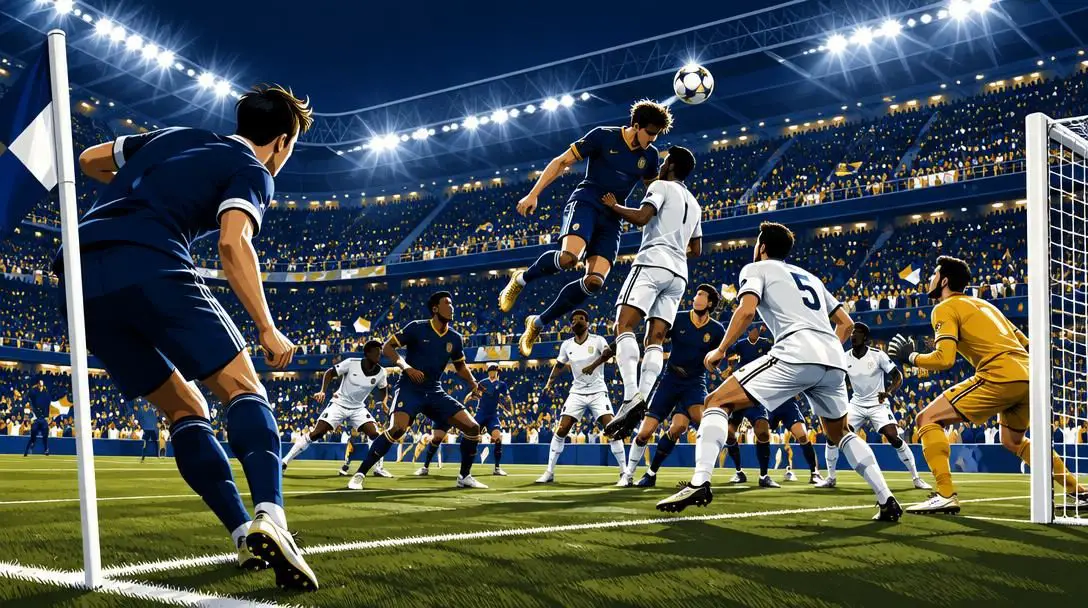
The final clash proved grueling. Atletico Madrid broke the deadlock in the 36th minute and successfully protected their 1-0 advantage into stoppage time. In the 93rd minute, defender Sergio Ramos rose above the defense to head home a dramatic equalizer, breaking Atletico's resistance and forcing extra time. Carrying total momentum into the additional 30 minutes, Real Madrid struck three more times to claim a decisive 4-1 victory, ending an intense pursuit of their tenth continental championship.
Understanding tournament frameworks in European football
To fully appreciate how historical matches earned their reputation, it is helpful to understand the distinct tournament models that govern European football. Real Madrid's defining fixtures fall across three primary competitive structures, each posing unique physical and strategic challenges for players and managers alike.
The earliest form of high-stakes play in Spain centered on single-elimination cup competitions like the Copa del Rey and Copa del Generalisimo. In these tournaments, every fixture carried immediate finality. Surviving an early round required total concentration, as seen when Madrid faced regional sides like UD Salamanca, Espanol, and Xerez CF before reaching showpiece finals. A single defensive error could dismantle an entire season's campaign.
Modern continental football, by contrast, relies heavily on multi-phase formats. In the UEFA Champions League, clubs must first establish consistency across six group matches against diverse continental opposition, such as Panathinaikos, Sparta Prague, Porto, Galatasaray, Juventus, and Copenhagen. Only the strongest clubs advance into two-legged aggregate rounds, where home-and-away balance becomes critical, before concluding in a single-match neutral final.
How to analyze classic football fixtures
Reviewing historical football matches involves much more than inspecting the final score. Observers and analysts follow a structured approach to understand the tactical, psychological, and contextual factors that produced classic outcomes.
- Examine the tournament stage: Determine whether the match occurred during a round-robin group phase, a two-legged knockout tie, or a championship final to understand the exact stakes facing each side.
- Track the precise minute of every goal: Map out when goals occurred to evaluate momentum. Identifying shifts—such as Ronaldo's 23rd-minute strike answered by Messi in the 31st, or Sergio Ramos scoring in the 93rd minute—reveals how teams reacted under mounting time pressure.
- Assess aggregate context in two-legged ties: When reviewing knockout matches, compare the opening leg to the return game. Real Madrid's 11-1 victory over Barcelona in 1943 or their 2-0 road win at Camp Nou in 2002 can only be understood by reviewing the two-match scoreline.
- Identify individual tactical match-winners: Highlight the specific players who made decisive contributions, whether through defensive discipline and shutouts or prolific multi-goal displays such as Barinaga's four goals in 1943.
- Review the long-term aftermath: Determine whether the victory propelled the team to historic silverware, as in the 1905, 2002, and 2014 finals, or served as a stepping stone in an escalating historical rivalry.
Common misconceptions when studying football archives
Historical football records can easily be misinterpreted without sufficient context. Modern readers often encounter several recurring misunderstandings when exploring matches played decades ago:
- Assuming high-scoring victories guaranteed trophies: Many supporters assume an overwhelming win like the 11-1 blowout against Barcelona automatically concluded with silverware, overlooking the 1-0 loss to Athletic de Bilbao in the subsequent final.
- Confusing two-legged aggregate scores with single matches: Knockout tournament scorelines combine results from home and away matches. Treating a 3-2 aggregate score against Bayern Munich as a single high-scoring match ignores the tactical reality of managing a tie across 180 minutes.
- Undervaluing low-scoring defensive victories: Modern fans often focus on high-scoring thrillers, but defensive shutouts are equally decisive. Real Madrid's 1905 Copa del Rey victory was built on conceding zero goals across the entire tournament against Moncloa FC, San Sebastian Recreation Club, and Athletic Bilbao.
- Judging regular-season draws as low-impact games: While league draws award only one point to each side, fixtures like the 2-2 duel in 2012 demonstrated peak technical mastery, with four goals evenly shared by two of the sport's greatest competitors.
Frequently asked questions
Who scored the winning goal in Real Madrid's first Copa del Rey title?
Manuel Prast scored the decisive goal in the 70th minute of the 1905 final against Athletic Bilbao, earning Real Madrid a 1-0 shutout victory and its first major trophy.
What was the final score between Real Madrid and Barcelona in the 1943 cup semifinal?
After losing the first leg 3-0, Real Madrid won the second leg 11-1 in the Copa del Generalisimo semifinal, advancing to the final with an 11-4 aggregate score.
Who scored the goals in the 2012 El Clasico 2-2 draw?
All four goals were scored by Cristiano Ronaldo and Lionel Messi. Ronaldo scored in the 23rd and 66th minutes for Real Madrid, while Messi scored in the 31st and 61st minutes for Barcelona.
How did Real Madrid force extra time in the 2014 Champions League Final?
Atletico Madrid held a 1-0 lead from the 36th minute until Sergio Ramos scored an equalizing header in the 93rd minute of stoppage time, sending the match into extra time where Real Madrid scored three more goals to win 4-1.
Which teams did Real Madrid beat in the 2014 knockout rounds before the final?
Real Madrid eliminated three German clubs in consecutive knockout rounds: Schalke 04 in the round of 16, Borussia Dortmund in the quarterfinals, and Bayern Munich in the semifinals.
The bottom line
The history of Real Madrid is built on iconic moments that span more than a century of competitive football. From the resolute defensive shutout engineered by Manuel Prast and company in 1905 to the high-stakes heroics of Sergio Ramos in Lisbon in 2014, these five matches reflect the club's defining traits: tactical resilience, offensive explosiveness, and an unwavering ability to perform under peak tournament pressure. By examining these classic fixtures, supporters and sports historians gain a deeper understanding of how modern football evolved into the global spectacle it is today.