5 Greatest AMA Racers of All Time
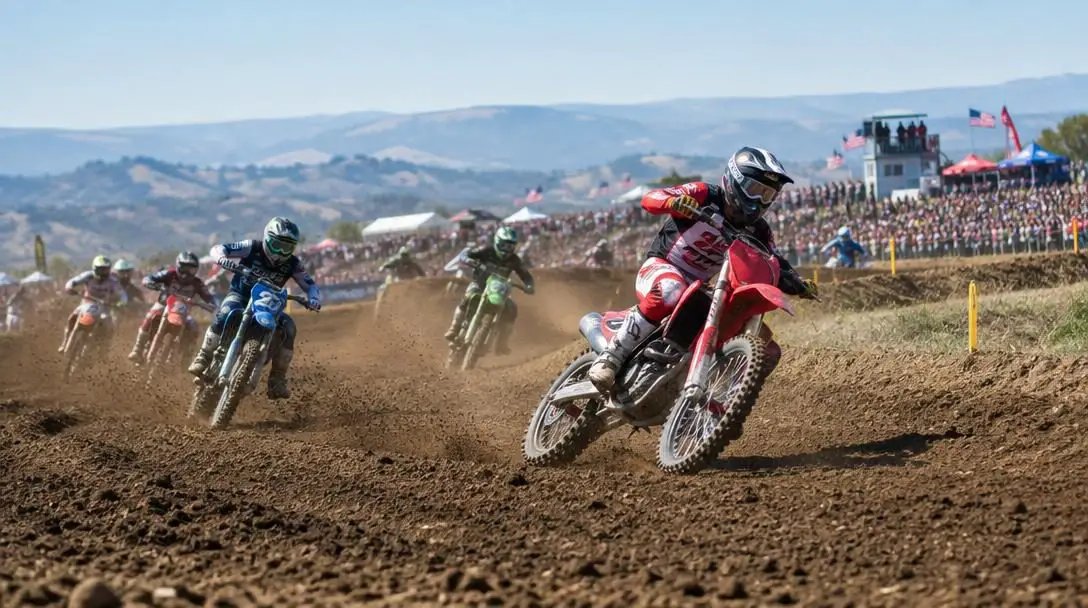
Since the American Motocross Association established an organized national championship circuit in 1972, professional motocross in the United States has evolved from a grassroots collection of regional competitions into one of the most grueling, technically sophisticated motorsport disciplines on earth. The physical demands placed on riders are extraordinary, requiring an unusual blend of cardiovascular endurance, pinpoint bike control, tactical racecraft, and fearless decision-making under intense pressure.
While hundreds of talented competitors have lined up behind the starting gate over the past half-century, only a small fraternity of elite riders have managed to dominate across multiple eras, engine classes, and disciplines. From early trailblazers of the two-stroke era to modern four-stroke icons, ranking the greatest racers in AMA history showcases the athletes who fundamentally transformed how motocross is contested and won.
Key takeaways
- The AMA Motocross Championship transformed American dirt bike racing from informal regional scrambles into a premier global professional circuit starting in 1972.
- Ricky Carmichael stands as the undisputed greatest racer in AMA history, capturing 15 total national championships across outdoor motocross and stadium supercross.
- Unflinching consistency and physical preparation became the defining competitive standard through champions like Ryan Dungey, who missed the top 10 only twice across eight years.
- Modern motocross requires mastery of shifting track dynamics, vehicle setup, and high-intensity stamina across the sport's demanding two-moto weekend format.
The Evolution of American Motocross
Before 1972, competitive motocross in the United States lacked a unified national blueprint. Racers contested localized events, fairground exhibitions, and one-off invitational meetings, often against touring European stars who brought over decades of established Grand Prix experience. The launch of the official AMA Motocross Championships changed everything by providing a standardized calendar, official point standings, and a true test of season-long excellence across disparate geographical terrains.
Alongside the formalization of the series came a dizzying pace of mechanical innovation. Early competitors wrestled air-cooled, twin-shock machines that possessed limited suspension travel and produced unpredictable handling over rough ground. Over subsequent decades, manufacturers engineered radical improvements: liquid cooling to combat engine fade, lightweight aluminum and composite frame geometry, and long-travel single-shock rear suspension systems capable of absorbing massive structural loads.
Tracks evolved in tandem with motorcycle hardware. Natural-terrain courses with gentle elevation changes gave way to engineered stadiums and purpose-built outdoor venues featuring rhythm lanes, massive triple jumps, deep braking ruts, and brutal sand whoops. Surviving and winning on these modern layouts demanded unprecedented levels of athletic conditioning, paving the way for the sport's five most dominant figures.
Ranking the 5 Greatest AMA Racers of All Time
Evaluating motocross greatness requires balancing peak dominance against career longevity, adaptability between outdoor motocross and indoor supercross, and the ability to perform when championship pressure reaches its boiling point. The five riders highlighted below represent the absolute pinnacle of achievement under the AMA banner.
| Racer | Era of Peak Dominance | Key Championships & Milestone Feats | Distinguishing Career Quality |
|---|---|---|---|
| Ricky Johnson | 1980s | 1984, 1986, 1987 AMA 250 titles; 22 total AMA titles | Relentless aggression and successful multi-discipline versatility |
| Bob Hannah | Late 1970s–1980s | 1976 125cc title; 1978–1979 back-to-back 250cc titles; 27 wins | Ferocious determination and pioneer of American global parity |
| Eli Tomac | 2010s–Present | Won 250cc debut pro race; podium in over half career starts | Unmatched late-moto closing speed and historic endurance |
| Ryan Dungey | Late 2000s–2010s | 7 AMA championships; 2012 all-podium season; 70+ combined 450 wins | Unprecedented consistency and virtually mistake-free racing |
| Ricky Carmichael | Late 1990s–2000s | 15 AMA titles (7 MX 450, 5 SX 450, 3 125/250); X Games gold medals | Unmatched peak dominance and revolutionary fitness conditioning |
Ricky Johnson
- Total AMA Titles: 22 titles
- Key Championships: 1984, 1986, and 1987 AMA 250 crowns
- Post-Motocross Career: NASCAR Craftsman Truck Series, Stadium Super Trucks
- Final Retirement: Following the 2021 motorsport season
As one of the true foundational legends of American professional motocross, Ricky Johnson exerted absolute authority over the sport during the 1980s, especially through the second half of that decade. Johnson combined an ultra-aggressive riding posture with immaculate technical precision, capturing the premier AMA 250 national championships in 1984, 1986, and 1987. His charisma and hard-charging track presence helped propel American motocross into mainstream popular culture during an era of unprecedented spectator expansion.
What sets Johnson apart from many traditional dirt bike racers is his remarkable longevity and cross-platform driving capability. After stepping away from two-wheeled competition, he proved his vehicle control on four wheels, racing competitively in the late 1990s in NASCAR's Craftsman Truck Series as well as the off-road Stadium Super Trucks series. With 22 total AMA titles under his belt and a career that officially extended across various motorsports until his retirement after the 2021 season, Johnson remains a towering figure in off-road history.
Bob Hannah
- Career Wins: 27 career victories
- Major Titles: 1976 125cc National; 1978 and 1979 250cc Nationals
- Career Span: 15 professional seasons (retired in 1989 at age 33)
- Honors: Motorsports Hall of Fame inductee
Few riders have left an emotional and cultural imprint on motorcycling quite like Bob Hannah. Emerging in the late 1970s, Hannah became the fiery vanguard of an American generation that proved riders from the United States could not only match but thoroughly conquer the world's best international competitors. Outspoken, unapologetic, and completely fearless, he captured the 1976 AMA National 125cc championship before taking back-to-back AMA National 250cc titles in 1978 and 1979.
Hannah amassed 27 career wins across 15 years as a professional competitor, battling through the grueling physical toll of two-stroke machinery on primitive tracks. Even as younger rivals surfaced during the late 1980s, Hannah's grit kept him competitive until he slipped toward the back of the pack in 1989, ultimately choosing to hang up his boots at age 33. His enshrined place in the Motorsports Hall of Fame reflects a legacy built on raw determination and trail-blazing speed.
Eli Tomac
- Debut Milestone: Won premier 250cc debut race (first in AMA history)
- Podium Rate: Achieves a podium finish in at least half of career starts
- Distinctive Strength: Exceptional late-moto endurance and sprint capability
- Current Status: Active competitor pursuing all-time record totals
Following an amateur career of virtually peerless domination, Eli Tomac arrived in the professional ranks with massive expectations and validated them instantly. At his very first professional race in the 250cc division, Tomac climbed to the top step of the podium, becoming the first rider in AMA history to win on debut. That opening statement was the launchpad for a legendary career defined by blistering speed and superhuman late-race stamina.
Tomac has rewritten record books thanks to a riding style that seems to defy the laws of physical exhaustion. Where other racers experience arm pump, fatigue, and declining lap times in the final ten minutes of a moto, Tomac is famous for setting his personal fastest laps of the race on deteriorating circuits just before taking the checkered flag. With a career consistency that yields a podium finish in at least 50 percent of his starts even during challenging seasons, Tomac continues to close in on the most coveted records in American motorcycling.
Ryan Dungey
- Championship Count: 7 major AMA championships across MX and SX
- Career 450 Wins: Nearly 40 Motocross wins; 34 Supercross wins
- Peak Season: 2012 (finished on the podium in every single race entered)
- Accolades: Back-to-back ESPY Awards for Best Male Action Sports Athlete (2015, 2016)
Hailing from Belle Plaine, Minnesota, Ryan Dungey redefined what it meant to be a professional motorcycle racer through pristine mechanics, calculated aggression, and unmatched preparation. Dungey earned titles across every major motocross and supercross division, ultimately claiming seven AMA championships. His hallmark was error-free execution: he launched into his premier career maintaining an astonishing average finishing position of 2.38 in AMA competition.
By 2012, Dungey accomplished a benchmark rarely seen in modern professional sports by finishing on the podium at every single race event on his schedule. Over an eight-year stretch, he finished outside the top 10 in only two total races—a statistic that defies the chaotic, crash-prone reality of 40-rider gate drops. After claiming consecutive ESPY Awards in 2015 and 2016, he stunned the racing community by retiring in his 20s while at the peak of his powers, though his enduring love for racing lured him back for an impressive competitive return in 2022.
Dungey proved that absolute consistency and mistake-free racecraft can overcome raw, reckless speed across a grueling championship season.
Ricky Carmichael
- Total Championships: 15 AMA titles (7 Motocross 450, 5 Supercross 450, 3 125/250)
- Cross-Discipline Feats: Multiple X Games gold medals; top-10 NASCAR Xfinity finish (2010)
- Legacy Nickname: Widely regarded as the Wayne Gretzky of motocross
- Fitness Impact: Revolutionized athletic conditioning standards for modern riders
While arguments over podium rankings can persist indefinitely, the top spot in American motocross history is undisputed: Ricky Carmichael stands alone as the greatest of all time. With a dominant record that mirrors Wayne Gretzky's impact on hockey, Carmichael fundamentally elevated the expectations for professional motocross athletes. Before Carmichael, racers relied heavily on natural flair; after Carmichael introduced his punishing training regimens, elite cardiovascular fitness became an absolute prerequisite for title contention.
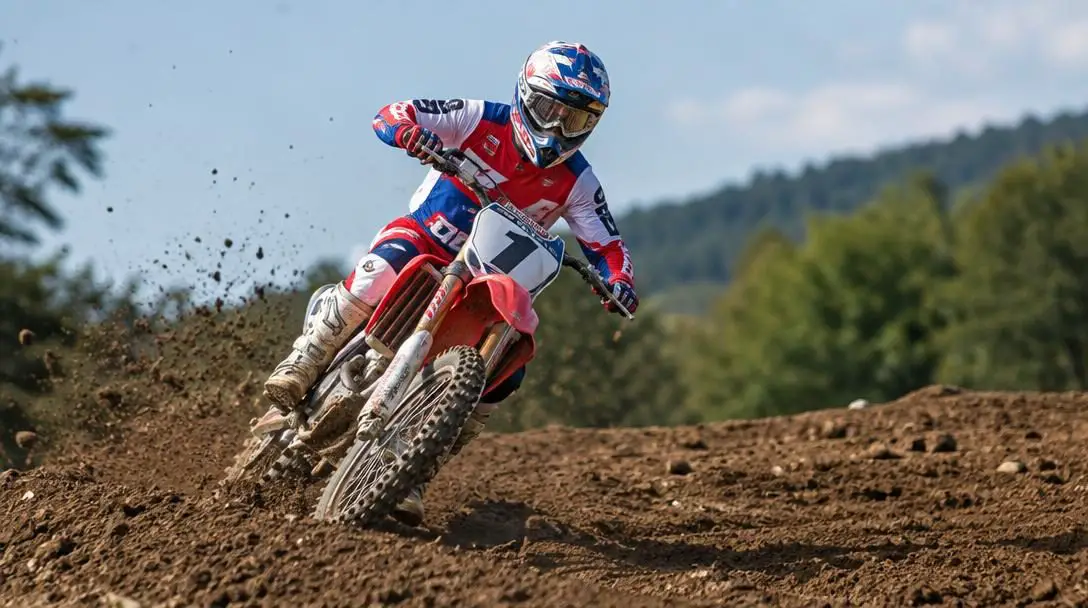
Carmichael's hardware speaks for itself: three titles in the 125/250cc ranks, five 450cc Supercross championships, and a staggering seven 450cc outdoor Motocross titles. His athletic versatility was just as striking, earning multiple gold medals at the X Games and transitioning successfully to stock car racing, where he secured a top-10 finish in the NASCAR Xfinity Series in 2010. His era established a benchmark for untouchable peak performance that may never be matched.
How Professional Motocross Works: Format, Classes, and Racecraft
Appreciating the accomplishments of riders like Carmichael, Dungey, and Hannah requires an understanding of how an AMA outdoor motocross national operates. Unlike disciplines where a single feature race determines the outcome, motocross tests competitors across multiple grueling segments under constantly deteriorating environmental conditions.
- The Two-Moto Format: Every outdoor national is decided over two separate races, known as motos. In each moto, riders battle for approximately 30 minutes plus two additional laps, resulting in nearly 70 minutes of intense, high-heart-rate competition per event.
- Championship Scoring: Points are awarded according to finishing order in each individual moto. The rider who registers the best combined score across both motos earns the overall event victory, with points accumulated from week to week deciding the season championship.
- Displacement Classes: The series separates riders into two distinct engine categories: the smaller, high-revving 125cc two-stroke/250cc four-stroke division and the premier 250cc two-stroke/450cc four-stroke class. The smaller class serves as a proving ground for young talent before they step up to heavier, more demanding premier machinery.
- The Starting Gate: Up to 40 racers line up elbow-to-elbow along a metal drop-gate. When the gate falls, riders accelerate simultaneously toward an abrupt first corner. Earning the holeshot—crossing into the first turn in first place—gives a racer clean air and prevents costly mid-pack pileups.
- Track Deterioration: As dozens of high-powered machines tear through the dirt lap after lap, the racing surface develops brutal square-edge bumps, deep braking ruts, and unstable berms. Winning requires reading these surface changes in real time and modifying racing lines on every lap.
Practical Steps: How to Progress in Competitive Motocross
Reaching the upper echelons of competitive motorcycling demands a structured, multi-year path combining bike setup, physical conditioning, and race-day psychology. Aspiring racers must build their development methodically to minimize injury risk and maximize speed.
- Master Foundational Motorcycle Control: Prioritize fundamental balance, smooth throttle and clutch modulation, and effective brake control while standing on the footpegs before attempting advanced jumps or high speeds.
- Compete in Local and Regional Events: Enter entry-level amateur races to experience live gate drops, crowded first-turn dynamics, and the psychological stress of riding near aggressive opponents.
- Build Sport-Specific Physical Fitness: Complement track sessions with off-bike training such as road cycling, rowing, running, and functional core workouts to build the sustained cardiovascular engine needed for long motos.
- Dial In Bike Setup and Maintenance: Learn how clicker settings, tire pressures, race sag, and handlebar positions influence cornering balance, while maintaining engine components to avoid mechanical DNFs (Did Not Finish).
- Study Advanced Track Lines: Walk tracks before races and observe faster competitors between sessions to spot alternate lines, smooth transitions around braking ruts, and wide-sweeping berms that preserve momentum.
- Work Toward Amateur National Qualifiers: Enter recognized amateur regional qualifiers to earn gate positions at prestigious national amateur championships, which serve as the primary scouting grounds for professional factory teams.
Common Mistakes in Motocross Training and Racing
Riders often hit performance plateaus or suffer avoidable setbacks due to technical errors in technique or conditioning. Addressing these frequent pitfalls early is critical for long-term progression.
- Relying on Upper-Body Grip Over Leg Squeezing: Holding on primarily with your hands and arms rapidly triggers arm pump, a painful condition where forearm blood flow is restricted. Clamping the frame tightly with knees and boots relieves upper-body strain and stabilizes the chassis.
- Sitting Down Prematurely in Corners: Sitting down before reaching the apex of a turn or before the motorcycle has settled into a rut upsets the suspension and causes the front wheel to knife or push wide. Riders should remain standing until initiating the turn.
- Overriding Equipment Beyond Skill Limits: Trying to match the pace of faster riders or attempting large obstacle doubles before mastering basic corner entry leads to catastrophic crashes and lost seat time due to injury.
- Failing to Adjust Suspension as Tracks Break Down: Running identical suspension compression and rebound damping on a smooth morning practice track and a deeply rutted afternoon race track causes harsh chassis deflection and instability.
- Neglecting Proper Race-Day Hydration: Dehydration severely slows neural reaction times and impairs peripheral vision, leading to poor tactical choices and late-moto mental lapses when fatigue peaks.
What to Consider Next: Exploring Motocross History and Current Series
Whether you are an aspiring amateur competitor or a motorsport enthusiast fascinated by the athletic feats of dirt bike racing, there are several ways to deepen your connection to the sport. Exploring historical broadcasts from the 1970s and 1980s reveals how heroes like Bob Hannah and Ricky Johnson laid the technical foundations of modern bike setup and riding posture.
Following the modern AMA Supercross (stadium) and Pro Motocross (outdoor) championships allows fans to watch stars like Eli Tomac continue challenging all-time records against a deep field of international talent. For those interested in participating firsthand, connecting with local sanctioned riding clubs, enrolling in certified motocross performance schools, and investing in high-quality personal protective equipment provide the safest and most structured gateway into the sport.
Frequently asked questions
Why is Ricky Carmichael considered the greatest racer in AMA history?
Ricky Carmichael earned the status of greatest of all time by winning 15 total AMA championships across supercross and outdoor motocross, including seven premier 450cc outdoor titles. He also revolutionized the sport by introducing elite physical training programs that transformed motocross into an endurance discipline.
What made Ryan Dungey's racing record so historically unique?
Ryan Dungey was renowned for unprecedented consistency and mistake-free riding. During an eight-year span, he finished outside the top 10 in only two races, maintained an average finishing spot of 2.38 early in his career, and podiumed in every single race he entered during the 2012 season.
How does the two-moto outdoor format decide a weekend winner?
An AMA outdoor motocross event features two individual races, or motos, each lasting approximately 30 minutes plus two laps. Riders earn points in each moto based on their finishing position, and the competitor with the best overall combined score from both motos wins the event.
What historic milestone did Eli Tomac achieve in his professional debut?
In his first-ever professional race in the 250cc class, Eli Tomac took the victory, becoming the first rider in AMA motocross history to win on professional debut.
Did Ricky Johnson race other motorsports after motocross?
Yes. Ricky Johnson demonstrated exceptional four-wheeled driving talent by competing in NASCAR's Craftsman Truck Series and Stadium Super Trucks during the late 1990s and beyond, eventually retiring from motorsport following the 2021 season.
The Bottom Line
The AMA Motocross Championship has spent over fifty years serving as the ultimate proving ground for off-road motorcycling talent. While thousands of riders have tested their mettle against the track, figures like Ricky Johnson, Bob Hannah, Eli Tomac, Ryan Dungey, and Ricky Carmichael elevated the sport through unmatched grit, revolutionary athletic preparation, and sustained dominance. Their collective achievements continue to define the standard of excellence for every young racer lining up at the gate today.