5 Greatest Chicago Bears Linebackers Of All Time
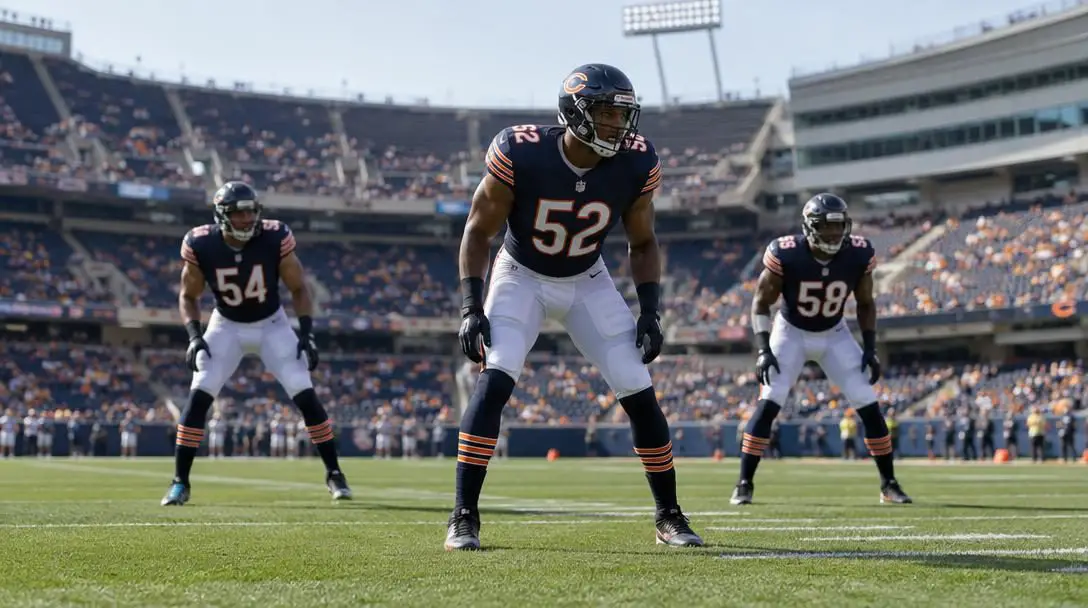
Every NFL franchise develops a signature identity over generations of competition. While the Green Bay Packers are renowned for legendary quarterback play and the Dallas Cowboys are celebrated for dominant offensive lines, the Chicago Bears are universally recognized as the standard-bearer for elite linebacker play. Dating back to before the dawn of the "Monsters of the Midway," the franchise has forged an enduring reputation for punishing, hard-nosed defense that dictates the tempo of the gridiron.
A remarkable fraternity of Chicago linebackers has earned enshrinement in the Pro Football Hall of Fame in Canton, transforming the position into the ultimate source of organizational pride. Examining the greatest defensive leaders to wear navy and orange showcases five iconic figures who defined their respective eras, alongside an exceptional group of franchise contributors.
Key takeaways
- Dick Butkus stands as the definitive standard for Chicago linebackers, earning All-Pro recognition in nearly every campaign of his Hall of Fame career.
- The Bears linebacker tradition spans eras, ranging from 1950s champions Bill George and Joe Fortunato to modern defensive powerhouse Brian Urlacher.
- Mike Singletary anchored the iconic 1980s defense, capturing two NFL Defensive Player of the Year awards before his own Canton enshrinement.
- Evaluating defensive greats across distinct decades requires balancing raw statistics with scheme responsibilities, individual accolades, and longevity.
At a Glance: The Greatest Linebackers in Bears History
Over the decades, Chicago has fielded linebackers who collected championships, individual honors, and All-Decade designations. The following table highlights how the top five legends compare across key accomplishments.
| Player | Career Era | All-Pro Honors | Pro Bowls | Hall of Fame Induction |
|---|---|---|---|---|
| Joe Fortunato | 1950s–1960s | 4 (1962–1965) | 5 | Not Inducted |
| Bill George | 1951–1965 (Bears) | 8 (First-Team) | 8 | Class of 1974 |
| Brian Urlacher | 2000–2012 | 5 | Multiple | Hall of Fame Member |
| Mike Singletary | 1981–1992 | 8 | Multiple | Class of 1998 |
| Dick Butkus | 1965–1973 | All-Pro in 8 of 9 seasons | Multiple | Class of 1979 |
Recognizing the Honorable Mentions
Before counting down the top five players, several outstanding defenders helped establish and preserve Chicago's reputation as a dominant defensive powerhouse. These contributors played crucial roles across different competitive windows:
- Lance Briggs: A long-tenured weakside fixture who formed a legendary tandem with Brian Urlacher throughout the 2000s.
- Wilber Marshall: An explosive outside enforcer who served as an indispensable piece of the celebrated 1985 championship unit.
- Khalil Mack: A dynamic edge-rushing force who revitalized the defense and disrupted opposing pass protections during his tenure in Chicago.
- Doug Buffone: A fierce, reliable defender who gave over a decade of gritty service to the franchise through the 1960s and 1970s.
- Otis Wilson: A hard-hitting presence on the outside who brought speed and intimidation to the 1980s defensive front.
- Ron Rivera: A key linebacker and disciplined contributor during the championship peak of the mid-1980s who later became an NFL head coach.
- Roquan Smith: An active, sideline-to-sideline tackler who carried the lineage of high-volume Chicago inside linebackers into the modern era.
The 5 Greatest Chicago Bears Linebackers of All Time
Joe Fortunato
- Draft Selection: Seventh round
- Colleges Attended: VMI and Mississippi State
- Career Era: 1950s–1960s
- Key Accolades: 5 Pro Bowls, 4 All-Pro honors, 1950s All-Decade Team
Joe Fortunato spent his entire professional playing career in Chicago, spanning just over a decade during the 1950s and 1960s. After completing his collegiate career across both VMI and Mississippi State, Fortunato entered the professional ranks as an unheralded seventh-round draft choice. Despite humble expectations, he quickly outplayed his draft position to become a fixture on a ferocious defensive unit.
Throughout his time in Chicago, Fortunato earned five Pro Bowl berths and secured four consecutive All-Pro honors between 1962 and 1965. His steady, disciplined play at the second level was rewarded with selection to the NFL's 1950s All-Decade Team. A severe knee injury sustained in 1967 brought his playing career to a premature conclusion. Although he has not been enshrined in the Pro Football Hall of Fame despite a decorated resume, Fortunato remained with the organization as an assistant coach before concluding his football career in 1969.
Bill George
- Draft Selection: Second round (1951)
- College Attended: Wake Forest
- NFL Accolades: 8-time First-Team All-Pro, 8 Pro Bowls
- Hall of Fame Induction: Class of 1974
Sharing the field with Fortunato throughout the 1950s and early 1960s was Bill George, one of the most transformative figures in football history. Selected in the second round of the 1951 NFL Draft out of Wake Forest, George anchored the Chicago defense for nearly all of his 15 professional seasons before finishing his career with the Los Angeles Rams in 1966.
George was instrumental in bringing an NFL Championship to Chicago, serving as the defensive commander who revolutionized middle linebacker play by dropping off the defensive line into passing lanes. Over his storied tenure, he earned eight Pro Bowl selections and was named a First-Team All-Pro eight times. Alongside Fortunato, George earned a coveted spot on the 1950s All-Decade Team. In 1974, his monumental achievements were recognized with enshrinement into the Pro Football Hall of Fame, and the Bears organization permanently honored his impact by retiring his uniform number 61.
Brian Urlacher
- Draft Selection: 9th overall (2000)
- College Attended: New Mexico
- Career Production: 1,361 tackles, 41.5 sacks, 22 interceptions
- Major Honors: 2000 Rookie of the Year, 2005 Defensive Player of the Year
Brian Urlacher represents the gold standard of modern linebacker play in Chicago, standing as the only member of the top five to play past 1992. Selected ninth overall out of New Mexico in the 2000 NFL Draft, Urlacher was an immediate sensation, claiming the NFL Defensive Rookie of the Year award. Five seasons later, his sideline-to-sideline range and tactical instincts earned him the prestigious 2005 NFL Defensive Player of the Year honor.
Across 13 seasons, spent entirely with the Bears, Urlacher transformed the middle linebacker role within the team's scheme. His rare combination of size and safety-level speed allowed him to drop deep into pass coverage while still aggressively meeting ball carriers at the line of scrimmage. A five-time All-Pro selection and member of the 2000s All-Decade Team, Urlacher retired with 1,361 total tackles, 41.5 sacks, and 22 interceptions, standing as the central figure of 21st-century Chicago football.
Mike Singletary
- Draft Selection: Second round (1981)
- College Attended: Baylor
- Career Production: 1,489 tackles, 19 sacks
- Hall of Fame Induction: Class of 1998 (Pro), 1995 (College)
Nicknamed "Samurai" for his intense focus and wide-eyed stare across the line of scrimmage, Mike Singletary served as the heart and tactical orchestrator of the legendary 1980s Bears defenses. Drafted in the second round out of Baylor in 1981, Singletary quickly made his mark by earning a spot on the NFL All-Rookie Team and rapidly ascended alongside contemporaries like Lawrence Taylor to the peak of the sport.
Singletary captured the NFL Defensive Player of the Year award twice, amassed eight All-Pro honors, and registered 1,489 career tackles alongside 19 sacks. Beyond his physical tackling, he was renowned for deciphering offensive formations and putting teammates into optimal positions to make plays. The 1990 NFL Man of the Year entered the College Football Hall of Fame in 1995 before receiving his Pro Football Hall of Fame induction in 1998. While younger audiences may know him from his subsequent head coaching career, his playing legacy remains that of a premier defensive commander.
Dick Butkus
- Draft Selection: 3rd overall (1965)
- Hometown: Chicago, Illinois
- Jersey Number: 51 (Retired by the Bears)
- Hall of Fame Induction: Class of 1979
Universally recognized as the ultimate embodiment of Chicago Bears football, Dick Butkus leads the franchise's storied linebacker hierarchy. A homegrown Chicago native, Butkus remained in his hometown after the franchise drafted him third overall in 1965, spending his entire nine-year career with the Bears through 1973. From his first snap, he played with an unmatched level of ferocity, instinct, and physical dominance that set the standard for the position.
Butkus achieved unprecedented consistency, earning All-Pro recognition in every single season of his career except for his final, injury-shortened year. His brilliance transcended his era, resulting in selections to two separate NFL All-Decade Teams. The Bears retired his iconic jersey number 51, and his legendary impact was immortalized with enshrinement into the Pro Football Hall of Fame in 1979. He remains the standard against which every middle linebacker in professional football history is judged.
Dick Butkus established a standard of relentless physicality and tactical brilliance that came to define not just Chicago football, but the linebacker position itself.
Historical Evolution of the Chicago Linebacker Tradition
The reverence surrounding linebackers in Chicago stems directly from the foundational roots of professional football. In the formative decades of the sport, the Bears established a culture rooted in stout interior line play and punishing defense. As schemes matured and the "Monsters of the Midway" rose to national prominence, franchise leadership emphasized having a vocal, dominant general at the second level of the defense.
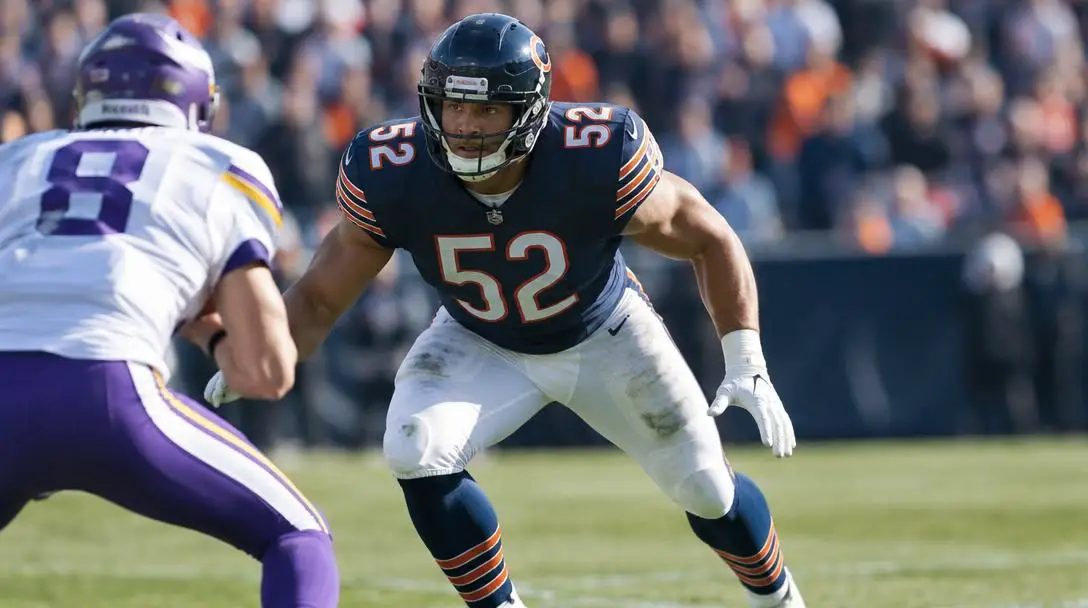
Chicago linebackers were never expected to be mere tacklers. Instead, the franchise demanded that its middle linebackers serve as both the emotional leader and tactical heartbeat of the team. This unbroken tradition passed smoothly across generations: Bill George set the blueprint in the 1950s, Dick Butkus elevated it to legendary status in the 1960s, Mike Singletary directed the historic units of the 1980s, and Brian Urlacher adapted the role for the pass-heavy 2000s. Each generation felt a direct obligation to uphold the standard set by their predecessors.
Essential Mechanics: How Elite Linebackers Command the Defense
To fully appreciate the historical impact of these players, it helps to break down the complex set of on-field responsibilities demanded of high-level linebackers. Operating as the crucial link between defensive linemen and the secondary, linebackers must execute several tasks on every snap:
- Defending the Rushing Attack: Reading offensive blocking concepts instantly, identifying open running lanes, disengaging from offensive linemen, and executing sound, physical tackles to prevent positive yardage.
- Operating in Pass Coverage: Fluidly transitioning from run-read steps into pass coverage, matching up in man-to-man assignments against tight ends and running backs, or sinking into zone landmarks to congest passing windows.
- Blitzing and Quarterback Pressure: Timing blitzes through interior gaps or attacking off the edge with speed and leverage to disrupt the pocket and create negative plays.
- Directing On-Field Communication: Acting as the defensive play-caller by deciphering pre-snap motions, adjusting front alignments, and relaying checks to ensure proper assignment execution.
Methodical Steps for Evaluating Historic Linebackers
Comparing athletic greatness across different eras requires an objective framework. Enthusiasts and sports historians can apply the following structured process when evaluating legendary linebackers:
- Review Peak Individual Accolades: Examine the frequency of First-Team All-Pro selections, Pro Bowl invitations, and major awards such as Rookie of the Year or Defensive Player of the Year to gauge how dominant the player was relative to their active peers.
- Examine All-Decade and Hall of Fame Recognition: Check whether the defender was named to an official NFL All-Decade Team or enshrined in the Pro Football Hall of Fame in Canton, representing widespread historical consensus.
- Measure Longevity and Reliability: Assess how many seasons the linebacker sustained elite play and whether they remained an indispensable anchor for their defensive unit over an extended span.
- Contextualize Statistical Production: Inspect career totals for tackles, sacks, and turnovers, taking into account that official tracking rules and schedule lengths varied across different NFL eras.
- Gauge Franchise Legacy and Cultural Impact: Consider whether the player spent their career with one franchise, captained championship defenses, or earned singular honors such as having their jersey number retired.
Analytical Pitfalls in Historical Football Comparisons
Evaluating players across six decades of changing league dynamics comes with analytical traps. Avoiding these common mistakes produces a far more balanced historical appraisal:
- Over-relying on Modern Statistical Metrics: Official sack totals were not tracked during the primes of early legends, and tackle tracking methods have shifted over time. Raw numbers do not tell the whole story.
- Dismissing Era-Specific Football Context: Earlier eras featured shorter schedules, less advanced protective equipment, and different rules governing pass coverage and physical contact. Penalizing older stars for shorter careers overlooks the context of their time.
- Letting Post-Playing Careers Cloud On-Field Legacy: Some icons become visible head coaches, analysts, or public figures later in life. Historical rankings must focus strictly on on-field playing contributions rather than subsequent media prominence.
- Equating High Draft Capital with Total Value: Assuming first-round selections are inherently greater than late-round picks ignores incredible development stories, such as seventh-round picks who blossomed into perennial All-Pro stars.
Exploring Further: Schemes, Archives, and Modern Linebackers
For football fans eager to deepen their appreciation of Chicago's rich defensive lineage, several avenues provide valuable insight into this storied tradition:
- Study Defensive Scheme Evolution: Examine how Chicago shifted from the base 5-2 and 4-3 alignments of the 1950s and 1960s to Buddy Ryan's aggressive 46 defense in the 1980s, followed by the deep middle coverage demands of the 2000s Tampa 2.
- Review Historical Game Footage: Watch archival broadcasts and highlights to see the closing speed of Butkus, the disciplined gap control of George, the pre-snap adjustments of Singletary, and the turf-covering range of Urlacher.
- Monitor Emerging Bears Defenders: Follow modern Bears rosters to observe how newly acquired linebackers carry the responsibility of wearing the navy and orange, continuing a century-old lineage of defensive excellence.
Frequently asked questions
Who is widely considered the greatest linebacker in Chicago Bears history?
Dick Butkus is widely regarded as the greatest linebacker in franchise history and one of the finest defenders in NFL history. A Chicago native drafted third overall in 1965, he was an All-Pro in eight of his nine seasons and earned enshrinement in Canton in 1979.
How many of the top five Bears linebackers are in the Pro Football Hall of Fame?
Four of the top five linebackers are members of the Pro Football Hall of Fame: Bill George (1974), Dick Butkus (1979), Mike Singletary (1998), and Brian Urlacher. Joe Fortunato had an exceptional career that included five Pro Bowls and four All-Pro honors, but he has not been inducted into Canton.
Which jersey numbers have the Bears retired for their historic linebackers?
The Chicago Bears permanently retired jersey number 61 in honor of Bill George and jersey number 51 in honor of Dick Butkus, commemorating their profound contributions to franchise history.
What unique defensive honor did Brian Urlacher achieve during his career?
Brian Urlacher won the NFL Defensive Rookie of the Year award in 2000 and went on to claim the NFL Defensive Player of the Year award in 2005, serving as the modern centerpiece of Chicago's defense over 13 seasons.
Why did Bill George and Joe Fortunato share a unique connection?
Bill George and Joe Fortunato shared the Chicago defense throughout the 1950s and 1960s. Both players earned selection to the NFL's 1950s All-Decade Team and helped secure an NFL Championship for the organization.
The bottom line
The identity of the Chicago Bears is inextricably linked to the linebacker position. From the tactical innovations introduced by Bill George and the ferocious standard established by Dick Butkus, to the intense field leadership of Mike Singletary and the modern athletic excellence of Brian Urlacher, Chicago has continuously set the benchmark for defensive leadership. Backed by decorated veterans like Joe Fortunato and a deep roster of honorable mentions, the franchise's linebacker fraternity remains one of the most storied traditions in all of professional sports.