5 Greatest Chicago Bears
As the second oldest franchise in the National Football League behind only the Arizona Cardinals, the Chicago Bears hold one of the most storied legacies in North American professional sports. Spanning more than a century of gridiron competition, the franchise has stood at the epicenter of professional football's evolution since the formation of the league. From early offensive innovations in the opening decades of the twentieth century to the cultivation of a ferocious, bone-jarring defensive identity and transcendent backfield talent, Chicago has consistently shaped how the game is played and remembered.
Narrowing down over a hundred years of football heritage to just five legendary figures is an arduous challenge that sports historians and passionate fans continue to debate. Sifting through dozens of Hall of Fame inductees requires balancing championship hardware, individual awards, era-defining dominance, and the enduring cultural imprint left on the franchise. While dozens of gridiron greats have donned the navy and orange, five foundational icons stand head and shoulders above the rest.
Key takeaways
- Walter Payton stands as the ultimate franchise icon, pairing an MVP campaign and Super Bowl XX title with a lasting off-field philanthropic legacy.
- Defensive dominance and ground-game brilliance define Chicago's history, punctuated by hometown hero Dick Butkus and dynamic rusher Gale Sayers.
- Early aerial pioneer Sid Luckman revolutionized modern offense, securing four NFL Championships during his Hall of Fame tenure.
- Mike Ditka achieved immortal status in the Windy City by winning titles as both a dominant tight end and later as the head coach of Super Bowl XX.
Honorable Mentions Across a Century of Excellence
Before counting down the top five players in franchise history, proper recognition belongs to the decorated icons who narrowly missed the list. The Bears' defensive identity throughout modern football history was forged by generational talents who terrorized opposing offenses across multiple championship eras. Linebackers such as Brian Urlacher, Mike Singletary, and Lance Briggs anchored defenses that routinely dictated the pace of NFL seasons, while Bill George helped establish the position's storied lineage decades earlier.
Along the defensive trenches, few units in football lore match the destructive force of Chicago's defensive lines. Powerhouse defenders Dan Hampton, Steve McMichael, and Richard Dent formed an impenetrable wall that punished quarterbacks and neutralized running attacks throughout the 1980s. Each of these players left an indelible mark on franchise lore, serving as the benchmark against which modern Chicago defenders continue to be measured.
The 5 Greatest Chicago Bears in Franchise History
The following five players represent the pinnacle of individual achievement, team success, and cultural significance across multiple eras of professional football.
5. Mike Ditka
- Draft Position: 5th overall pick (1961)
- Position: Tight End / Head Coach
- Key Honors: NFL Champion, 4-time All-Pro, Super Bowl XX Champion (Coach)
While modern generations frequently recognize Mike Ditka for his fiery persona on television broadcasts or his trademark sweater vest on the sideline, his foundational contribution to the sport began between the lines. Selected fifth overall in the 1961 NFL Draft, Ditka transformed the tight end position from an auxiliary blocking role into a devastating, game-breaking offensive weapon during his initial six seasons in Chicago.
During his playing tenure with the Bears, Ditka secured an NFL Championship and earned four All-Pro selections, punishing defenders with his physical brand of football. After concluding his playing career with stints playing for the Philadelphia Eagles and Dallas Cowboys, he transitioned seamlessly into coaching. Following nearly a decade on the Dallas coaching staff, Ditka returned to Chicago as head coach, ultimately steering one of the greatest rosters ever assembled to a dominant victory in Super Bowl XX.
4. Sid Luckman
- Draft Position: 2nd overall pick (1939)
- Position: Quarterback
- Key Honors: 4-time NFL Champion, 6-time All-Pro, Jersey #42 retired
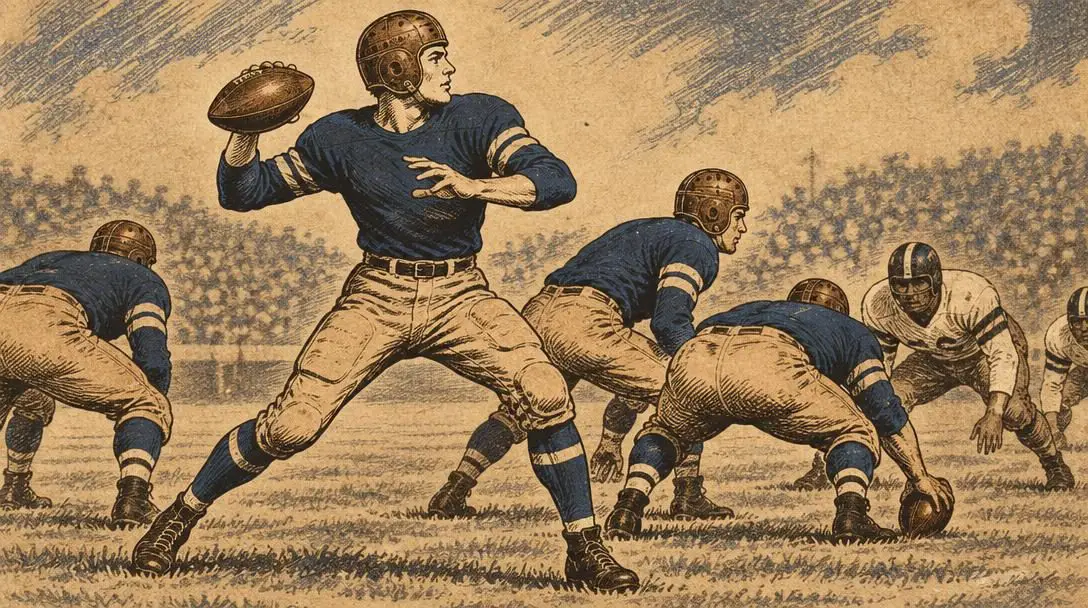
During the first half of the twentieth century, football was primarily a brutal contest fought between the tackles, but Sid Luckman completely altered the trajectory of the sport. Drafted second overall out of Columbia in 1939, Luckman spent his entire career in Chicago executing the innovative T-formation offense, tormenting defenses with downfield aerial strikes that were unheard of during his era.
Luckman guided the Bears to four NFL Championships, leading the league in passing three separate times and earning six All-Pro honors. Over his legendary career, Luckman compiled 137 touchdown passes and nearly 15,000 passing yards—staggering production for an era that relied almost exclusively on running plays. His jersey number 42 was subsequently retired by the organization, commemorating the man who proved that passing the football could win championships at the highest level.
3. Gale Sayers
- Draft Position: 4th overall pick (1965)
- Nickname: The Kansas Comet
- Key Honors: 5-time All-Pro, 2-time NFL Rushing Leader, Jersey #40 retired
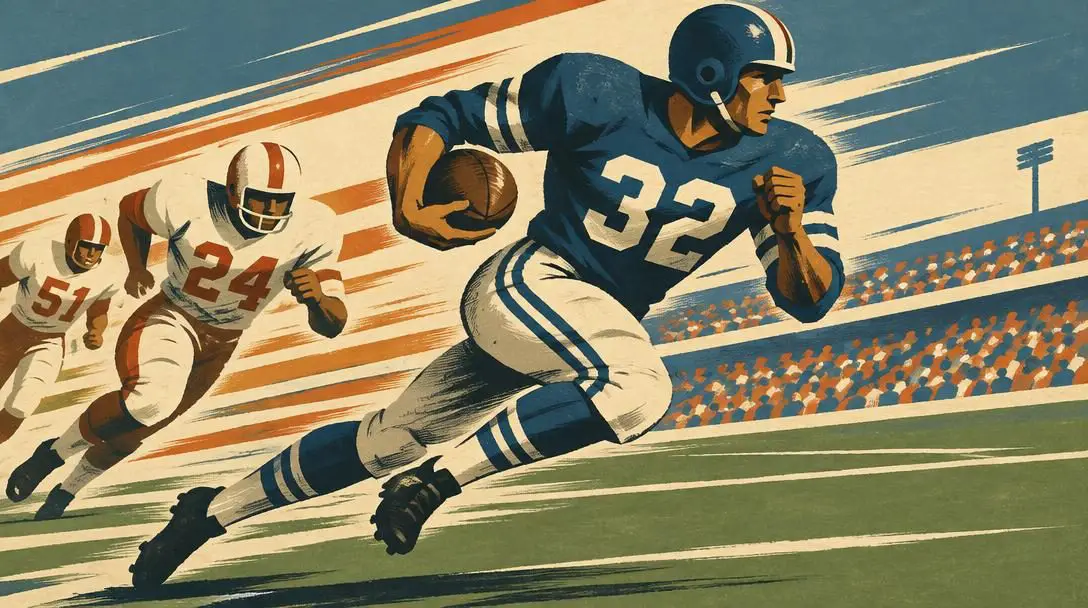
Few athletes in sports history have displayed the blinding acceleration and open-field vision of Gale Sayers. Selected fourth overall out of the University of Kansas, the "Kansas Comet" took the football world by storm upon arriving in Chicago. Though knee injuries shortened his career to just seven seasons, Sayers's peak performance remains among the most electric stretches ever witnessed on a football field.
Sayers captured two league rushing titles, set a then-rookie record by scoring 22 total touchdowns, and remains one of only three players in league history to score six touchdowns in a single game. A five-time All-Pro selection, Sayers saw his number 40 jersey deservedly retired by the Bears and earned a permanent spot on the prestigious NFL 100th Anniversary All-Time Team, immortalizing his transcendent playmaking ability.
Sayers proved that sheer dominance and unmatchable peak performance can leave a greater historical imprint than mere longevity.
2. Dick Butkus
- Draft Position: 3rd overall pick (1965)
- Position: Middle Linebacker
- Key Honors: 8-time All-Pro, 2-time NFL Defensive Player of the Year, Jersey #51 retired
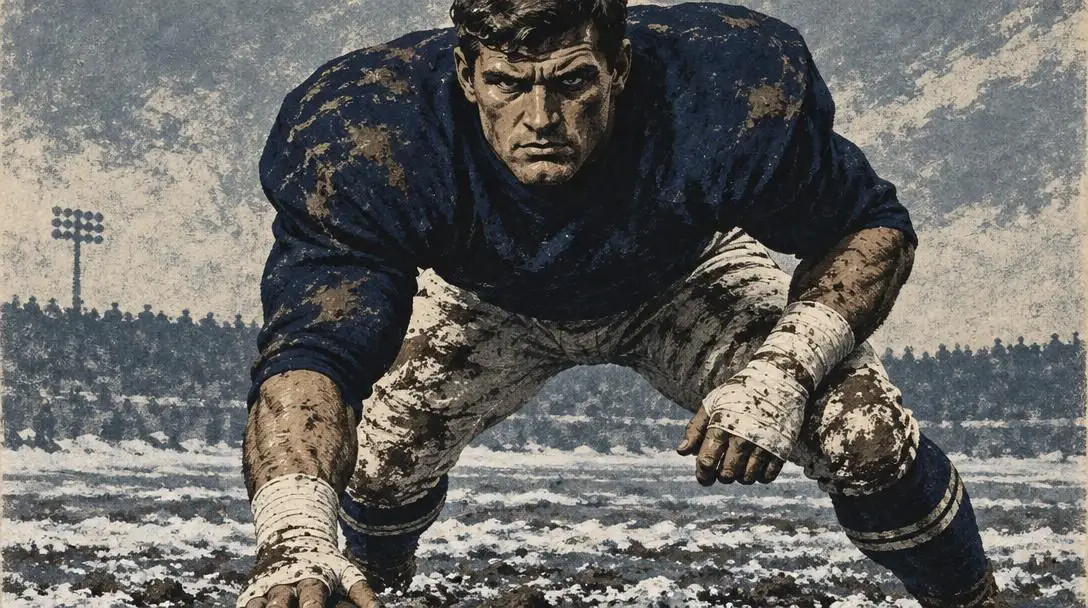
The quintessential embodiment of Chicago football, Dick Butkus became a local legend before ever stepping onto an NFL field. Raised in Chicago and an alumnus of the University of Illinois, Butkus was selected third overall in the 1965 NFL Draft—joining the Bears in the exact same first round that produced Gale Sayers. Over the next nine seasons, Butkus established the gold standard for what it meant to play middle linebacker.
Possessing unmatched ferocity and instincts, Butkus was selected to the Pro Bowl in every single season of his career except his last. He garnered eight All-Pro honors and was named the NFL Defensive Player of the Year on two separate occasions. An intimidating presence who struck fear into opposing ball carriers, Butkus had his number 51 retired by the team and earned first-ballot entry into the Pro Football Hall of Fame.
1. Walter Payton
- Draft Position: 1st round selection (1975)
- Nickname: Sweetness
- Key Honors: 1977 NFL MVP, Super Bowl XX Champion, 8-time All-Pro
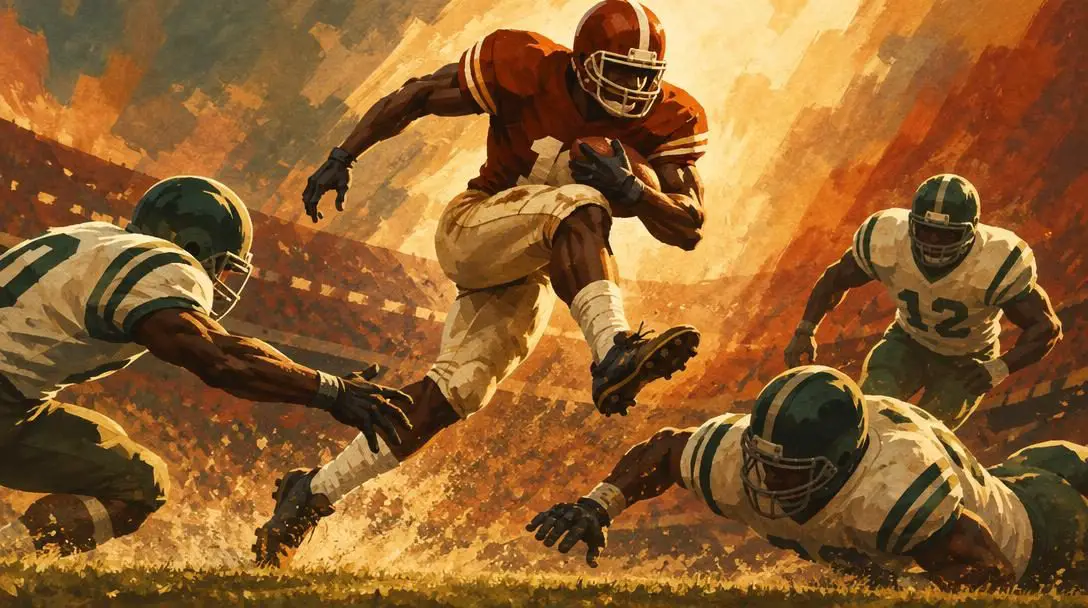
Widely celebrated not only as the greatest player in franchise history but as one of the finest football players to ever live, Walter Payton defined an entire era of the NFL. Known affectionately as "Sweetness" for his graceful running style off the field and relentless, punishing power between the hashes, Payton spent all thirteen of his professional seasons in Chicago, carrying the franchise on his shoulders through rebuilding years and championship triumphs alike.
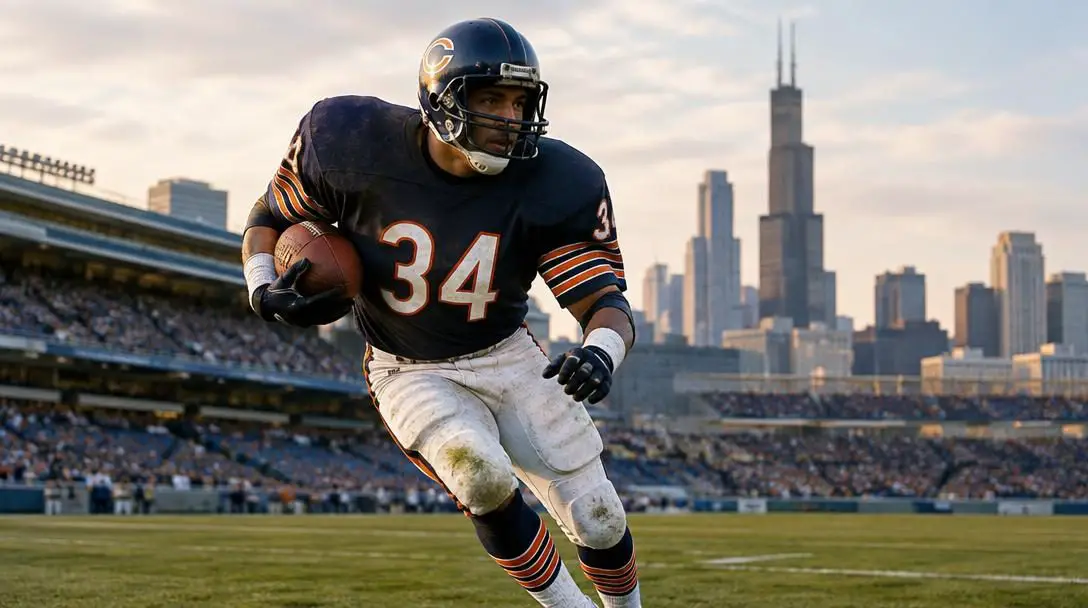
Payton accumulated eight All-Pro selections, earned the 1977 NFL Most Valuable Player award, and retired with a then-record 16,726 career rushing yards. He reached the absolute pinnacle of team success in 1985 as the offensive centerpiece of the Super Bowl XX championship squad. Beyond his statistical supremacy, Payton's extraordinary commitment to community work led the NFL to rename its highest character honor the Walter Payton NFL Man of the Year Award, cementing his legacy as a titan both on and off the field.
At a Glance: The Bears' Top Five Icons
| Player | Era / Draft Year | Primary Position | Signature Franchise Honor | Retired Number |
|---|---|---|---|---|
| Mike Ditka | 1961 Draft (5th overall) | Tight End / Coach | 1963 NFL Champion / Super Bowl XX Coach | 89 |
| Sid Luckman | 1939 Draft (2nd overall) | Quarterback | 4-Time NFL Champion | 42 |
| Gale Sayers | 1965 Draft (4th overall) | Running Back | NFL 100th Anniversary All-Time Team | 40 |
| Dick Butkus | 1965 Draft (3rd overall) | Middle Linebacker | 2-Time Defensive Player of the Year | 51 |
| Walter Payton | 1975 Draft (1st round) | Running Back | 1977 NFL MVP / Super Bowl XX Champion | 34 |
How Historical Player Evaluation Works
Ranking sports icons across more than a century of athletic competition requires a nuanced evaluation process. The sport has shifted drastically since its early twentieth-century origins, meaning that evaluating legends cannot rely solely on raw, unadjusted statistics. To fairly grade players from different eras, historians examine multiple overlapping layers of excellence:
- Era-Adjusted Production: Early football relied primarily on conservative ground schemes and field position. Quarterbacks like Sid Luckman must be evaluated by comparing their aerial yards and touchdown rates against their direct peers rather than against modern passing schemes.
- Individual Dominance: Earning first-team All-Pro nods and winning premier league awards—such as Walter Payton's 1977 MVP or Dick Butkus's two Defensive Player of the Year awards—proves that a player was recognized as the preeminent force at their position during their playing days.
- Championship Pedigree: While championships require a complete team effort, leading a team to titles—such as Luckman's four championships or Ditka's dual success as player and coach—adds significant weight when breaking ties among all-time greats.
- Institutional Immortality: Concrete recognition from the franchise, including retired numbers and first-ballot Hall of Fame selections, highlights an enduring standard that transcends the era in which the athlete competed.
Practical Steps for Building and Defending All-Time Franchise Rankings
Whether debating with fellow fans or compiling a comprehensive historical index, structuring a defensible sports ranking requires methodical analysis. Follow these actionable steps to build an objective and well-supported historical top-five list:
- Establish clear selection criteria: Define before you begin how much weight you will allocate to career longevity, peak statistical seasons, championships, and individual awards.
- Account for historical franchise context: Acknowledge that the Bears are the second oldest team in the NFL. Avoid focusing solely on the modern Super Bowl era by studying pre-merger championship eras.
- Balance peak brilliance against career longevity: Weigh the impact of short, dominant stretches against long-tenured consistency. For instance, Gale Sayers's seven seasons yielded five All-Pro honors, justifying a high rank alongside durable careers like Walter Payton's 13 seasons.
- Evaluate non-traditional organizational roles: Factor in multidimensional careers like that of Mike Ditka, who influenced the organization as both a championship-winning player and a championship-winning head coach.
- Ground arguments in primary achievements: Rely on verifiable milestones—such as retired jersey numbers, record-setting performances, and first-ballot Hall of Fame status—to support every ranking decision.
Common Analytical Pitfalls to Avoid
When analyzing historical sports franchises, enthusiasts often fall into analytical traps that skew their evaluations. Keeping these common mistakes in mind will help you maintain an objective perspective:
- Overlooking early-era pioneers: It is easy to discount athletes from the 1930s or 1940s like Sid Luckman simply because their games were not recorded in color. Dismissing these pioneers ignores how they changed schematic concepts for generations to come.
- Equating longevity directly with greatness: Playing twelve or fifteen seasons does not automatically make an athlete superior to someone whose career was cut short by injury after delivering historic, record-setting peaks.
- Ignoring off-field and cultural impact: Restricting player evaluations strictly to game-day statistics ignores the wider footprint left by icons like Walter Payton, whose community efforts set the gold standard for the entire NFL.
- Underestimating defensive contributions: High-scoring offensive stars naturally produce recognizable highlights, but Chicago's cultural identity was built on bone-crushing defense. Forgetting defenders like Butkus, Urlacher, Singletary, and Dent distorts the soul of the franchise.
What to Explore Next in Bears History
Deepening your appreciation of the Chicago Bears involves looking beyond individual highlight packages to examine how these legends intersected with broader football history. If you want to expand your knowledge, consider diving into these historical topics next:
- Study the 1985 Bears defense: Explore how coordinator Buddy Ryan and head coach Mike Ditka built an all-time great defense around Richard Dent, Dan Hampton, Steve McMichael, and Mike Singletary to dominate Super Bowl XX.
- Trace the evolution of the linebacker position: Research how Bill George invented the modern middle linebacker role, passing the torch to Dick Butkus, who was later followed by Mike Singletary and Brian Urlacher.
- Review the NFL 100th Anniversary All-Time Team: Examine the full historical roster to see how Chicago icons like Gale Sayers, Dick Butkus, and Walter Payton compare to legends from other historic franchises.
- Follow the Walter Payton Man of the Year Award: Learn about how the annual honor continues to highlight modern NFL players who dedicate their time, resources, and platforms to community philanthropy.
Frequently asked questions
Who is widely considered the greatest player in Chicago Bears history?
Walter Payton is almost universally regarded as the greatest Chicago Bear of all time. Across his 13-season career, Payton won the 1977 MVP, captured Super Bowl XX, earned eight All-Pro nods, and retired as the NFL's all-time leading rusher with 16,726 career yards.
Why is Sid Luckman ranked so highly despite playing decades ago?
Sid Luckman revolutionized the quarterback position in the 1940s by operating the T-formation offense. He won four NFL Championships, led the league in passing three times, and threw for 137 touchdowns during an era when football was almost entirely dominated by running plays.
Why does Gale Sayers make the top five despite playing only seven seasons?
Despite knee injuries cutting his career short, Gale Sayers produced an unmatched peak. He earned five All-Pro honors in seven seasons, led the league in rushing twice, set a rookie record with 22 touchdowns, and was chosen for the NFL 100th Anniversary All-Time Team.
Did Mike Ditka make the list as a head coach or as a player?
Ditka's inclusion rests on both achievements. He was a dominant tight end who earned four All-Pro selections and won the 1963 NFL Championship with Chicago, before later returning to coach the franchise to its historic Super Bowl XX victory.
The bottom line
The Chicago Bears represent more than a century of gridiron resilience, tactical innovation, and athletic dominance. From the forward-passing breakthroughs orchestrated by Sid Luckman in the early twentieth century to the punishing linebacking brilliance of Dick Butkus and the unmatched grace of Walter Payton, the franchise has consistently produced icons who changed professional football forever. Evaluating these historic careers reminds sports enthusiasts that true greatness is measured not merely by numbers on a stat sheet, but by championships won, defensive grit, and an enduring standard of excellence that spans generations.