5 Greatest Quarterbacks in Chicago Bears History
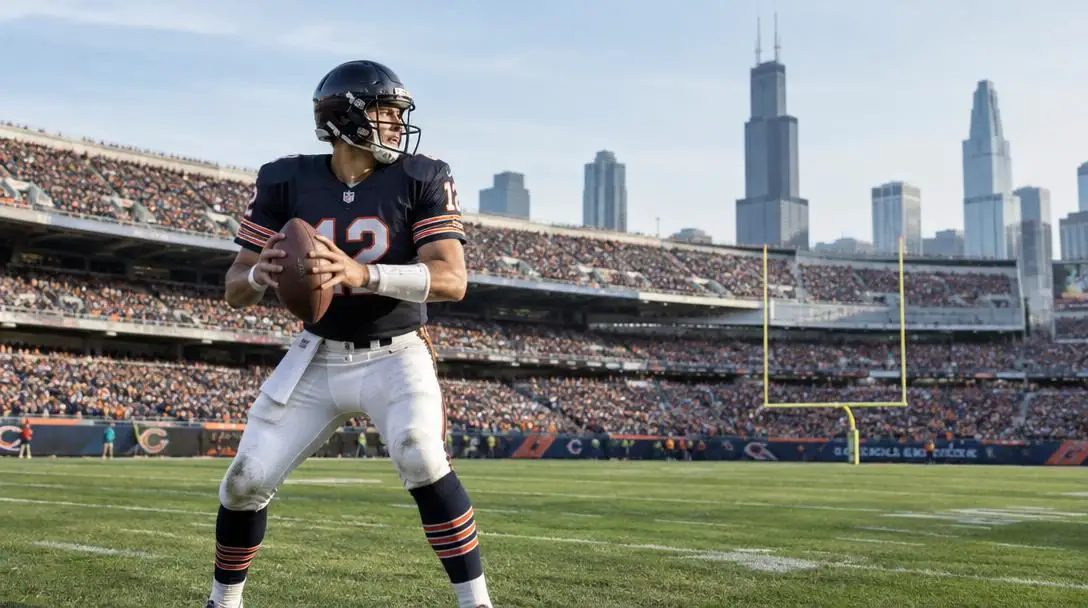
When football historians and sports fans examine the National Football League franchises that have struggled to develop consistent, long-term stability at the quarterback position, the conversation almost inevitably focuses on the NFC North. Outside of the Green Bay Packers, organizations across the division have historically weathered turbulent stretches under center. More than any other franchise in the region, the Chicago Bears have lived through an enduring, decades-long search for a definitive franchise signal-caller.
For most of its celebrated existence, Chicago's football identity has been defined by suffocating defensive units, punishing line play, and Hall of Fame running backs. The organization has spent more than half a century attempting to recapture the championship passing standard it established during the middle of the twentieth century. Even with those prolonged struggles, several accomplished passers have left indelible marks on the franchise record book. Evaluating the best quarterbacks in Bears history offers a clear view into how offensive schemes, passing tactics, and roster building have evolved across different eras of professional football.
Key takeaways
- Sid Luckman remains the unmatched benchmark in franchise history, winning four NFL championships and earning Pro Football Hall of Fame enshrinement.
- Jay Cutler stands as Chicago's all-time volume passing leader, accumulating more than 23,000 yards and 154 touchdowns during his tenure.
- Jim McMahon anchored the celebrated 1980s era, compiling a remarkable 46-15 starting record while leading the franchise during its most dominant decade.
- Evaluating historical Chicago signal-callers requires balancing raw modern volume against era-specific efficiency, multi-role duties, and overall winning percentage.
The 5 greatest quarterbacks in Chicago Bears history
Ranking the best quarterbacks to ever wear a Bears uniform requires evaluating players across fundamentally different football eras. From the early evolution of the modern T-formation offense to the high-volume passing schemes of the twenty-first century, these five signal-callers delivered the most significant contributions in team history.
5. Ed Brown
- Draft selection: 1952 draft out of the University of San Francisco
- Starting record: 39-25-2
- Career passing stats: 9,698 yards, 63 touchdowns, 88 interceptions
- Accolades: Two-time Pro Bowl selection
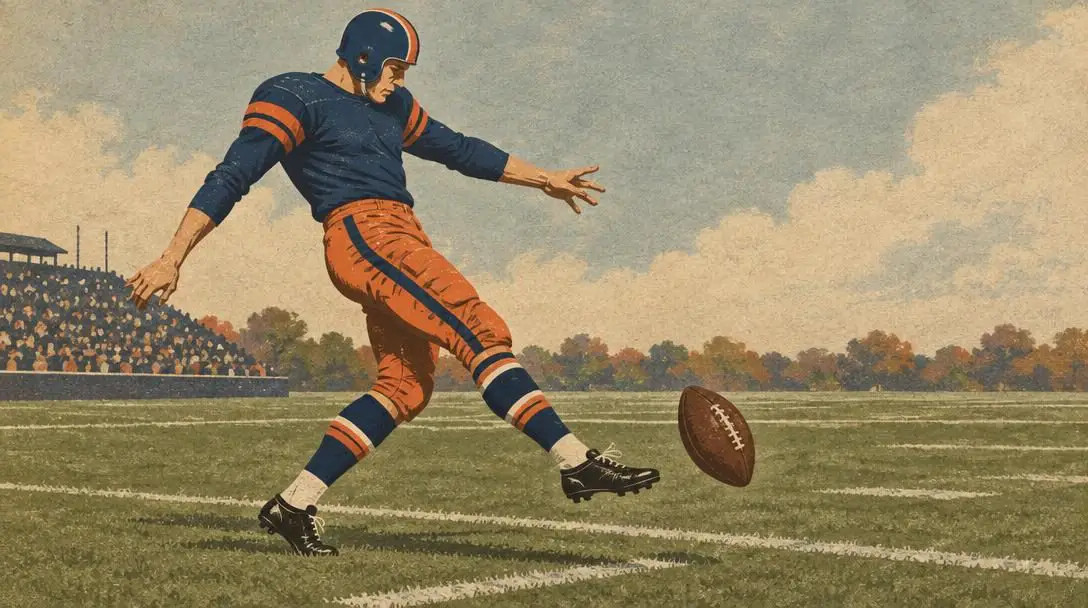
Because his career unfolded during the 1950s, many modern football fans are unfamiliar with Ed Brown, and even seasoned historians occasionally overlook his versatile contributions. Selected by Chicago in the 1952 draft out of the University of San Francisco, Brown did not take his first snaps in the NFL until he reached age 26 due to personal commitments and his unique path to professional football. Once he arrived, he quickly earned the trust of the coaching staff and secured the full-time starting job in his second campaign with the organization.
Over the course of eight seasons in Chicago, Brown proved to be a dependable leader under center. Beyond running the offense, Brown provided tremendous utility on special teams by serving as the club's primary punter. In an era when passing offenses faced strict defensive rules, Brown guided the team to a solid 39-25-2 record as a starter. He accumulated 9,698 passing yards and 63 touchdowns while earning two Pro Bowl selections. Brown was also an athletic threat when plays broke down, rushing for 841 yards and 10 touchdowns during his Bears career.
4. Jim Harbaugh
- Draft selection: First round (1987) out of Michigan
- Starting record: 35-30
- Career passing stats: 11,567 yards, 50 touchdowns, 56 interceptions
- Primary starter breakthrough: 10-4 record in 1990
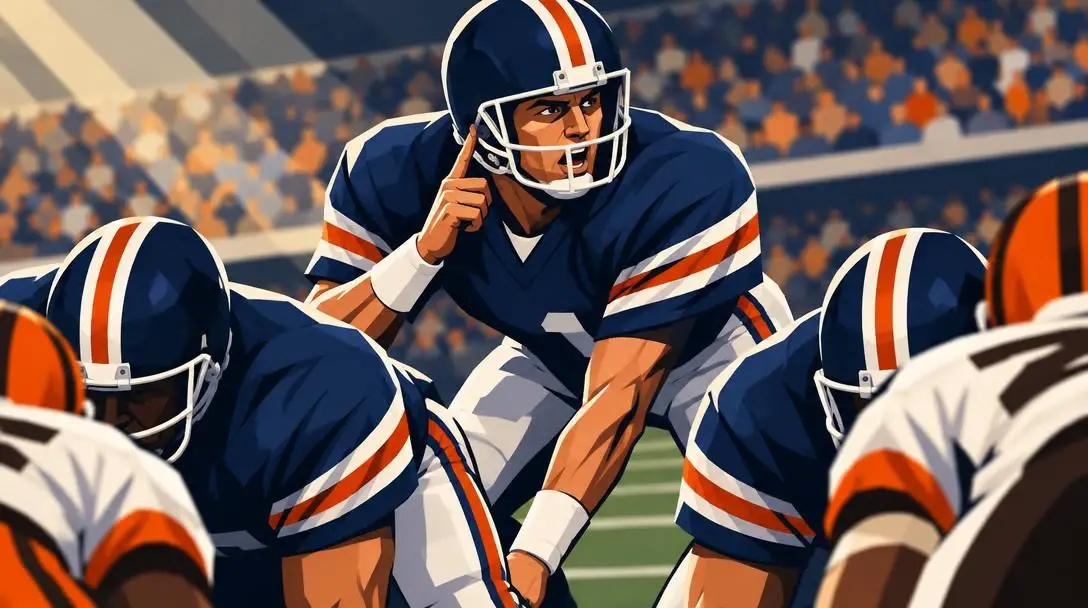
To contemporary football audiences, Jim Harbaugh is best known as a championship-caliber head coach who has led top-tier collegiate and professional programs, including Stanford, the San Francisco 49ers, and the University of Michigan. However, before embarking on his high-profile coaching career, Harbaugh spent well over a decade competing on the field as a resilient starting quarterback in the National Football League.
Chicago selected Harbaugh in the first round of the 1987 draft out of Michigan, intending for him to serve as the long-term successor to Jim McMahon. Harbaugh spent his early professional seasons learning the offense from the sideline as a backup. By 1990, the organization entrusted him with the full-time starting role, and he rewarded that decision by guiding the Bears to a 10-4 record in his first full campaign as the primary starter. Throughout his tenure in Chicago, which proved to be his longest stop with any NFL team, Harbaugh won 35 of his 65 starts, producing 11,567 passing yards, 50 touchdown passes, and 56 interceptions while establishing a reputation for grit and competitive fire.
3. Jay Cutler
- Acquisition: Blockbuster trade in 2009 from the Denver Broncos
- Starting record: 51-51
- Career passing stats: Over 23,000 yards, 154 touchdowns, 109 interceptions
- Franchise rank: All-time leader in passing yards and passing touchdowns
Following decades of persistent turnover and inconsistency under center throughout the 1990s and 2000s, Chicago sought a permanent solution ahead of the 2009 campaign. The front office executed a monumental trade with the Denver Broncos, sending starting quarterback Kyle Orton and a package of premium draft picks westward to acquire Jay Cutler, who had originally entered the league as a first-round selection out of Vanderbilt.
Although Cutler never earned a Pro Bowl selection while representing Chicago and compiled an even 51-51 record as a starter, he provided the organization with an explosive passing threat capable of regularly challenging defenses downfield. Over his eight seasons with the franchise, Cutler completely rewrote the team's passing ledger. He departed Chicago as the most prolific volume passer in team history, accumulating over 23,000 passing yards and 154 passing touchdowns against 109 interceptions, giving the club stability it had lacked for a generation.
2. Jim McMahon
- Draft selection: Fifth overall pick (1982) out of BYU
- Starting record: 46-15
- Career passing stats: 67 touchdowns, 46 interceptions
- Accolades: One-time Pro Bowl selection
The 1980s represent the golden era of modern Chicago Bears football, highlighted by an iconic roster, dominant defensive play, and an uncompromising attitude. While national observers often focus on the team's historic defense, the offense relied on the fiery leadership and poise of Jim McMahon. Selected fifth overall out of Brigham Young University in the 1982 draft, McMahon instantly brought an edge to the huddle that matched the team's defensive mentality.
McMahon operated as the starter through the 1988 season, compiling an exceptional 46-15 record in games he started for the franchise. His run in Chicago was ultimately cut short by severe shoulder injuries and an eventual coaching regime change, limiting him to a single Pro Bowl honor during his time with the team. Nevertheless, his efficiency and command were undeniable: he threw 67 touchdown passes against just 46 interceptions and provided the calm game management required to let the roster's suffocating defense dictate terms to opponents.
McMahon recorded a remarkable 46-15 record as a starter in Chicago, proving that his style and mentality fit precisely what the team needed to succeed.
1. Sid Luckman
- Draft selection: Second overall pick (1939) out of Columbia
- Career tenure: 1939 to 1950 (quarterbacks coach from 1954 to 1969)
- Championships: Four NFL Championships (1940, 1941, 1943, 1946)
- Honors: 1943 NFL MVP, six-time All-Pro, Pro Football Hall of Fame
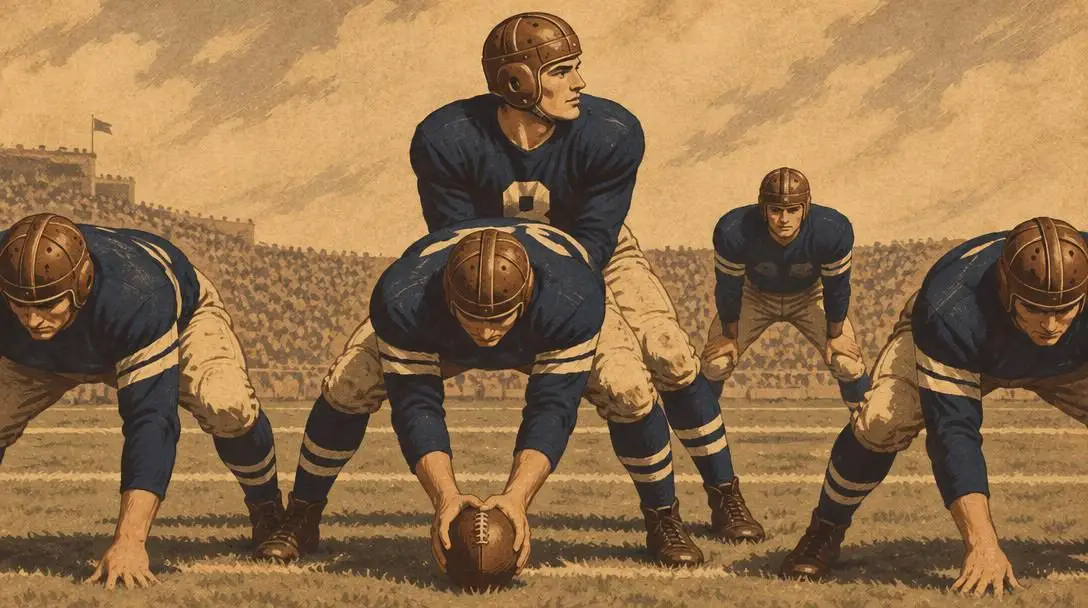
Sid Luckman occupies a singular place in Chicago Bears history. More than seven decades after his playing career concluded, he stands as the only full-time Bears quarterback enshrined in the Pro Football Hall of Fame. Drafted second overall out of Columbia in 1939, Luckman transformed professional football by orchestrating the innovative T-formation offense developed by the franchise, turning what had been a ground-dominated sport into a vertical passing attack.
Across his twelve seasons under center from 1939 to 1950, Luckman established unprecedented team success, leading Chicago to four NFL championships in 1940, 1941, 1943, and 1946. He captured the NFL Most Valuable Player award in 1943 and earned six All-Pro selections throughout his storied career. Luckman's commitment to the franchise extended well beyond his playing days, as he returned to serve as the Bears' quarterbacks coach from 1954 to 1969. His legacy remains the unmatched standard against which every subsequent Chicago passer is measured.
At a glance: comparing Chicago's top 5 quarterbacks
Because these signal-callers competed across vastly different decades, direct statistical comparisons require careful examination of their winning percentages, volume numbers, and career achievements.
| Quarterback | Draft / Origin | Starting Record | Key Passing Totals | Major Honors |
|---|---|---|---|---|
| Sid Luckman | Columbia (2nd overall, 1939) | Era-defining starter (1939–1950) | Pioneered T-formation passing | Hall of Fame, 1943 MVP, 4 NFL Titles, 6 All-Pro |
| Jim McMahon | BYU (5th overall, 1982) | 46-15 | 67 TD, 46 INT | 1 Pro Bowl selection |
| Jay Cutler | Trade via Denver (Vanderbilt) | 51-51 | 23,000+ yards, 154 TD, 109 INT | Franchise all-time yardage and TD leader |
| Jim Harbaugh | Michigan (1st round, 1987) | 35-30 | 11,567 yards, 50 TD, 56 INT | Guided 1990 team to 10-4 start |
| Ed Brown | USF (1952 draft) | 39-25-2 | 9,698 yards, 63 TD, 88 INT | 2 Pro Bowls, 841 rushing yards, primary punter |
Key factors in historical quarterback evaluation
Comparing football players across multiple generations presents distinct challenges. Analyzing Chicago's quarterback lineage requires evaluating several era-specific criteria that explain why raw statistics do not always tell the complete story.
Era-specific passing volume must be considered when evaluating pioneers like Sid Luckman and Ed Brown. During the 1940s and 1950s, teams committed heavily to running the football, attempting only a fraction of the pass attempts seen in today's game. Comparing total yardage from those eras directly to modern figures creates a distorted impression of a passer's true offensive effectiveness.
Touchdown-to-interception ratios also looked drastically different in early football eras. Before modern rule changes curbed defensive contact, pass coverage was exceptionally physical, making turnovers far more frequent. Passers such as Ed Brown and Jim Harbaugh regularly threw nearly as many interceptions as touchdowns, a balance that aligned with the league standards of their respective playing days.
Starting record and leadership carry substantial weight in historical discussions. For passers like Jim McMahon, an elite winning percentage reflects an ability to operate within the broader roster structure. McMahon's 46-15 record illustrates how his execution maximized the strengths of Chicago's defense and rushing attack.
Longevity and volume milestones are remarkably rare in Chicago's franchise history. Jay Cutler's ability to remain the starter long enough to surpass 23,000 yards and 150 touchdowns sets him apart statistically simply because few other quarterbacks sustained a starting role in Chicago for eight consecutive seasons.
Step-by-step: how to rank historical NFL quarterbacks fairly
When analysts and enthusiasts assemble all-time positional rankings, applying a structured, disciplined methodology prevents modern bias from skewing the results.
- Review the draft pedigree and entry path: Examine how the player arrived at the organization. High selections such as Sid Luckman (second overall in 1939) and Jim McMahon (fifth overall in 1982) entered with franchise expectations, whereas Jay Cutler arrived via a high-stakes veteran trade involving Kyle Orton and early-round draft picks.
- Contextualize the team's offensive system: Determine what tactical scheme the quarterback operated. Sid Luckman's mastery of the revolutionary T-formation offense altered the tactical landscape of the NFL, whereas other quarterbacks ran conservative systems designed to avoid mistakes.
- Account for dual roles and athletic versatility: Identify additional responsibilities beyond standard passing downs. Ed Brown served as the team's starting punter while contributing 841 rushing yards and 10 rushing scores, showcasing an era when players filled diverse roles across special teams and offense.
- Examine starting winning percentage: Isolate games started by the quarterback rather than evaluating broad team records. Jim McMahon's 46 wins in 61 regular-season starts demonstrate exceptional effectiveness in closing out competitive contests.
- Assess postseason success and championship hardware: High-stakes results ultimately establish true historical separation. Sid Luckman winning four NFL championships between 1940 and 1946 sets an elite bar that no other Chicago signal-caller has matched.
Common mistakes when ranking Chicago signal-callers
Because the franchise's quarterback history features unique timelines and defensive dominance, observers frequently make analytical errors when evaluating historical performances:
- Relying exclusively on modern passing yardage: Prioritizing total yardage unfairly elevates twenty-first-century passers while minimizing early legends. While Jay Cutler easily leads the franchise with over 23,000 yards, he lacked the championship titles achieved by Sid Luckman in the 1940s.
- Attributing wins solely to defensive dominance: Observers frequently credit Jim McMahon's 46-15 record entirely to Chicago's legendary defense. While the defense was historically dominant, McMahon's decision-making (67 touchdowns to 46 interceptions) and poise were essential to sustaining those victories.
- Judging older interception numbers by modern rules: Criticizing Ed Brown for throwing 88 interceptions against 63 touchdowns ignores the realities of 1950s passing rules, which heavily favored defensive backs and made higher turnover totals routine.
- Ignoring post-playing contributions to the franchise: Historical evaluations often overlook long-term organizational value. Sid Luckman not only guided the offense to four championships as a player from 1939 to 1950, but he also served as the club's quarterbacks coach from 1954 to 1969.
Key considerations for deeper franchise study
Studying Chicago's quarterback history reveals broader insights into NFL team building, strategic philosophy, and the difficulty of finding enduring stability under center. When exploring this topic further, keep several related trends in mind:
Diverse roster acquisition strategies: The franchise has attempted to resolve its quarterback position through multiple avenues. These methods include investing premium first-round draft picks on prospects like Jim McMahon and Jim Harbaugh, developing multi-talented prospects like Ed Brown, and executing major trades, such as the 2009 deal that sent Kyle Orton and multiple draft selections to Denver for Jay Cutler.
Evolution of the T-formation: Reviewing the offensive revolution led by Sid Luckman provides crucial historical context for how modern passing offenses emerged. The principles mastered by Luckman during the 1940s laid the foundation for vertical passing attacks across professional football.
The impact of injuries and coaching changes: Abrupt transitions in organizational leadership frequently disrupt quarterback development. Jim McMahon's tenure in Chicago ended after 1988 largely due to severe shoulder injuries combined with an impending coaching regime transition, underscoring how fragile quarterback continuity can be.
Dual-threat utility: Mobility has consistently aided Chicago's most effective passers. From Ed Brown's 10 career rushing scores to Jim Harbaugh's physical running style, athletic signal-callers have frequently provided crucial supplementary value on the ground.
Frequently asked questions
Who is the only Chicago Bears quarterback in the Pro Football Hall of Fame?
Sid Luckman is the only full-time Chicago Bears quarterback enshrined in the Pro Football Hall of Fame. He led the franchise from 1939 to 1950, winning four NFL championships and earning the league's Most Valuable Player award in 1943.
Who holds the Chicago Bears franchise record for career passing yards and touchdowns?
Jay Cutler holds the franchise records for both passing categories. During his tenure from 2009 through 2016, Cutler accumulated over 23,000 passing yards and 154 passing touchdowns across his 102 career starts with the team.
What was Jim McMahon's record as a starting quarterback in Chicago?
Jim McMahon compiled a starting record of 46-15 with the Chicago Bears between 1982 and 1988, throwing 67 touchdown passes against 46 interceptions while earning a Pro Bowl selection.
What positions did Ed Brown play for the Chicago Bears?
In addition to serving as the team's starting quarterback from the 1950s onward, Ed Brown served as the Bears' primary punter. He earned two Pro Bowl selections and contributed 841 rushing yards and 10 rushing touchdowns on the ground.
What did the Bears trade to acquire Jay Cutler in 2009?
Prior to the 2009 season, the Chicago Bears acquired Jay Cutler from the Denver Broncos in exchange for starting quarterback Kyle Orton and several high draft selections.
The bottom line
The Chicago Bears' long-standing search for consistent, franchise-altering play at the quarterback position has been one of the most persistent storylines in professional sports. For generations, the club's celebrated triumphs have been fueled primarily by physical defenses, dominant offensive lines, and iconic running backs, leaving the passing game in a supporting role for much of the franchise's century-long history.
Despite this reputation, the franchise has witnessed extraordinary individual peaks under center. From Sid Luckman's pioneering mastery of the T-formation to Jim McMahon's gritty leadership in the 1980s and Jay Cutler's prolific modern passing production, these five signal-callers demonstrated that exceptional quarterback play has indeed graced the lakefront. Understanding their distinct contributions provides a richer appreciation of both Chicago Bears history and the broader evolution of the quarterback position across the National Football League.