5 Greatest Women’s Tennis Players of All Time: A Retrospective

Throughout the history of women’s tennis, shifts in racket technology, physical training regimens, and global competition have continually redefined athletic excellence. Across different eras, a select group of champions achieved an extraordinary level of dominance, turning major tournament appearances into near-certain victories. Evaluating greatness across disparate generations presents unique challenges, as court surfaces, tournament structures, and competitive depth evolved dramatically over the decades.
Before examining the upper echelon of the sport, it is essential to recognize legendary figures who narrowly missed a top-five ranking: Billie Jean King, Venus Williams, Monica Seles, Martina Hingis, and Kim Clijsters. Each of these champions profoundly transformed women’s tennis through athleticism, technical innovation, and tactical brilliance. However, the five athletes examined below sustained an unrivaled standard of peak performance, establishing statistical benchmarks that remain the pinnacle of tennis history.
Key takeaways
- Serena Williams tops the all-time ranking with 23 Grand Slam singles titles, 14 major doubles crowns, and unmatched longevity in the modern era.
- Martina Navratilova holds the all-time women’s records for career singles titles with 167 and total professional match wins with 1,442.
- Steffi Graf amassed 22 major singles titles and 107 total tournament victories, representing the third-highest tournament win tally in history.
- Chris Evert set an unmatched standard of consistency, reaching a record 34 Grand Slam finals while capturing 157 career singles titles.
- Margaret Court won an unprecedented 11 Australian Open singles championships and remains the all-time leader in combined major titles across singles and doubles.
At a glance: comparing tennis legends across eras
Direct comparisons between historic eras require examining multiple performance indicators, including Grand Slam singles championships, overall tournament victories, doubles success, and career prize money. While financial compensation reflects the commercial growth of modern sports, title tallies illustrate pure competitive supremacy across changing competitive landscapes.
| Player | Grand Slam Singles Titles | Total Career Singles Titles | Major Doubles Accolades | Career Prize Money |
|---|---|---|---|---|
| Margaret Court | 24 | Noted for 11 Australian Open titles | 12 Australian Open doubles and mixed titles | Pre-modern compensation |
| Chris Evert | 18 | 157 | 2 Grand Slam doubles titles | Nearly $9 million |
| Steffi Graf | 22 | 107 | 1 Wimbledon doubles title | $21.89 million |
| Martina Navratilova | 18 | 167 | Multiple Grand Slam doubles titles | $21.6 million |
| Serena Williams | 23 | 73 | 14 Grand Slam doubles titles | $94.8 million |
The 5 greatest women’s tennis players of all time
Each of the following five athletes represents the absolute summit of professional tennis. Their careers demonstrate how sustained mastery, technical discipline, and versatility across grass, clay, and hard courts set them apart from all other competitors in history.
Margaret Court
- First Grand Slam Singles Win: 1960 Australian Open
- Australian Open Singles Titles: 11
- Other Major Singles Titles: 3 Wimbledon, 5 French Open, 5 US Open
- Home Grand Slam Doubles Success: 12 Australian Open doubles and mixed doubles titles
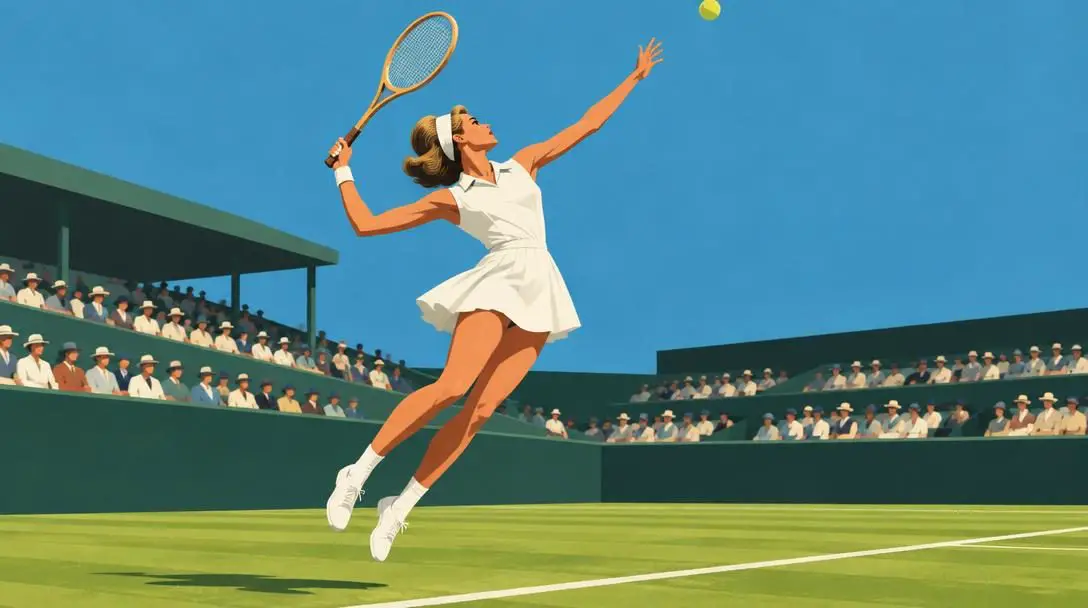
Australian trailblazer Margaret Court launched her professional career in 1960 by winning the Australian Open, an event she would command like no other player in history. Over her illustrious playing career, Court captured 11 Australian Open singles championships—a record that sits four titles clear of any other competitor in the annals of tennis. Her international resume proved equally formidable, featuring five French Open championships, three Wimbledon crowns, and five US Open titles, showcasing an ability to triumph across every major tournament surface.
Court was also an exceptional doubles and mixed doubles player, collecting a combined 12 titles in those categories at the Australian Open alone. While analysts frequently note the structural differences and varying international travel patterns of her competitive era, Court operated at a physical and technical standard far superior to her contemporaries. Her sheer volume of major championships established the statistical foundation against which all subsequent generations have been measured.
Chris Evert
- Turned Professional: 1972
- Grand Slam Singles Titles: 18
- Career Professional Titles: 157
- Hall of Fame Induction: 1995
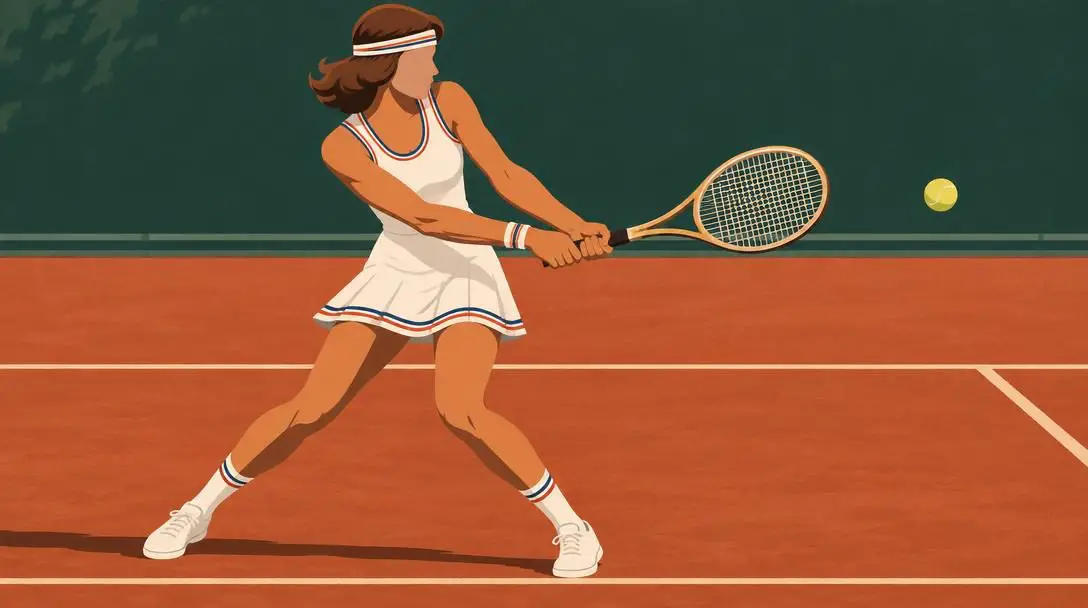
Following Court’s dominant reign, Chris Evert emerged as the primary standard-bearer for women’s professional tennis during the 1970s and 1980s. Turning professional in 1972, Evert secured her first major singles crowns just two years later in 1974, winning both the French Open on clay and Wimbledon on grass. Evert built her legendary career on unwavering baseline precision, psychological focus, and exceptional competitive consistency, ultimately amassing 18 Grand Slam singles championships, two major doubles titles, and 157 professional tournament victories.

Perhaps Evert’s most staggering achievement is her record of reaching 34 Grand Slam singles finals, an all-time benchmark that highlights her near-automatic presence on championship weekends. Over her career, she accumulated nearly $9 million in official prize money during an era of expanding commercial visibility for women’s athletics. In recognition of her extraordinary contributions and peerless sportsmanship, Evert was formally inducted into the International Tennis Hall of Fame in 1995.
Steffi Graf
- Turned Professional: 1982
- First Grand Slam Singles Win: 1987 French Open
- Career Professional Titles: 107
- Career Prize Money: $21.89 million
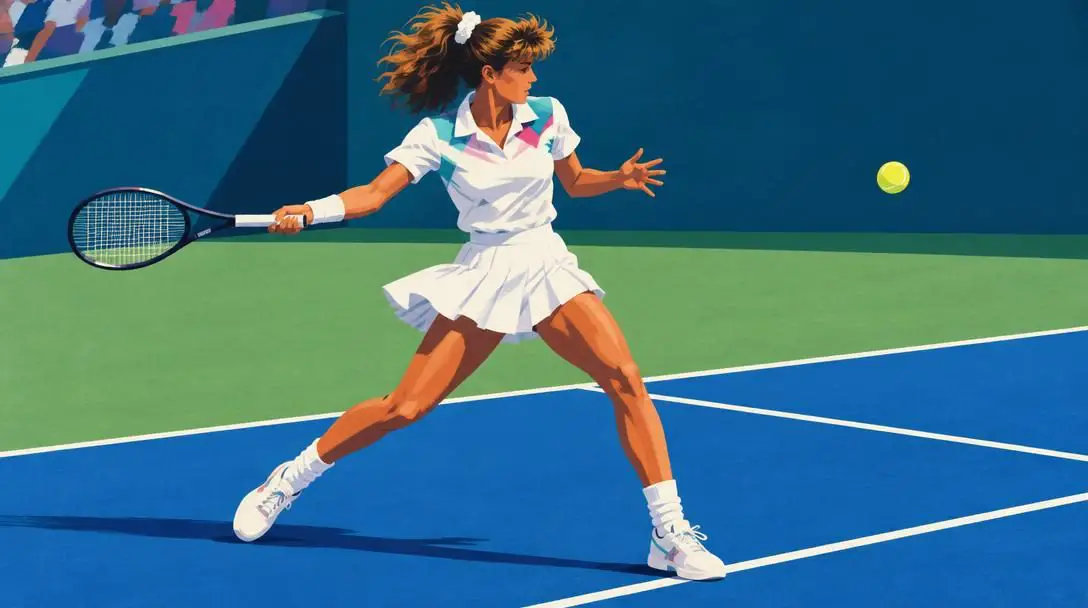
Hailing from Germany, Steffi Graf arrived on the professional circuit in 1982 as a teenage prodigy during a transitional period that featured established icons like Chris Evert and Martina Navratilova. Graf secured her breakthrough major victory at the 1987 French Open, initiating an era of unmatched athletic dominance powered by her devastating forehand, exquisite footwork, and precise slice backhand. She accumulated 22 Grand Slam singles championships over her career, maintaining an elite winning percentage across clay, grass, and hard courts alike.
Graf concluded her playing career with 107 total singles tournament titles, ranking as the third-highest total in tennis history. In addition to her singles dominance, she demonstrated fine doubles skill, notably winning the Wimbledon doubles championship in 1988. While modern financial surges have pushed her outside the current top 10 on the career prize money leaderboard, Graf accumulated an impressive $21.89 million in tournament earnings while dominating one of the most physically demanding periods in the sport’s history.
Martina Navratilova

- First Major Singles Title: 1978 Wimbledon
- Career Singles Titles: 167 (all-time record)
- Career Match Wins: 1,442 (all-time record)
- Wimbledon Singles Titles: 9 (all-time record)
For several decades, Martina Navratilova represented the consensus benchmark for all-around tennis greatness. Navratilova revolutionized the women’s game by introducing rigorous physical conditioning, explosive serve-and-volley tactics, and relentless attacking aggression. After rising steadily through the professional ranks, she secured her first major singles title at Wimbledon in 1978. That grass-court triumph marked the beginning of historic dominance at the All England Club, where Navratilova won an unprecedented nine Wimbledon singles championships.
Beyond grass courts, Navratilova claimed nine additional Grand Slam singles titles across the remaining major tournaments, including four US Open crowns. Her career statistics remain breathtaking: she holds the all-time women’s records for career professional singles titles with 167 and individual match victories with 1,442, alongside $21.6 million in tournament prize earnings. Combined with a prolific doubles career, Navratilova mastered every tactical facet of the sport across three distinct decades.
Navratilova transformed women’s tennis through unprecedented athletic conditioning and relentless offensive tactics, setting all-time records with 167 singles titles and 1,442 match wins.
Serena Williams

- Professional Debut: 1995
- First Grand Slam Singles Title: 1999 US Open
- Grand Slam Singles Titles: 23
- Career Prize Money: $94.8 million (all-time record)
Standing at the absolute apex of women’s tennis is Serena Williams, whose career bridged more than a quarter-century of top-tier professional competition. Making her debut in 1995, Williams competed against generations of elite players until her retirement in late 2022. Her major breakthrough arrived at the 1999 US Open, where she captured her maiden Grand Slam singles trophy as a teenager. Williams combined unmatched serve power, lethal groundstrokes, and legendary mental resilience to capture 23 Grand Slam singles championships in the modern professional era.

Williams demonstrated complete mastery across all court surfaces, winning multiple singles titles at every Grand Slam venue, highlighted by seven Wimbledon championships and seven Australian Open crowns. Alongside her individual supremacy, she captured 14 Grand Slam doubles titles. Her unmatched success in an intensely competitive, fully professionalized global era generated a record-setting $94.8 million in career prize money, solidifying her status as the greatest player in tennis history.
How historical player evaluation works
Evaluating tennis champions across multiple generations requires examining an array of objective criteria rather than relying on any single statistic. Historians and analysts rely on five core pillars to balance the shifts in competitive eras, equipment standards, and tournament logistics:
- Grand Slam Singles Titles: The four major tournaments—the Australian Open, French Open, Wimbledon, and the US Open—remain the supreme benchmark for historical excellence and individual championship prestige.
- Overall Tournament Titles: Dominance across the full calendar year is reflected in career tournament victories, illustrated by Navratilova’s 167 titles and Evert’s 157 championships.
- Versatility Across Surfaces: True greatness requires mastering diverse playing conditions, including red clay, traditional grass, and modern hard courts, exemplified by Serena Williams winning multiple titles at every major.
- Doubles Success: While singles remains the central focus, supplementary dominance in doubles and mixed doubles highlights complete court vision, net proficiency, and endurance, as demonstrated by Court, Navratilova, and Williams.
- Longevity and Match Totals: Sustaining elite performance over ten to twenty years, racking up hundreds of match wins, and reaching deep tournament rounds consistently—such as Evert’s 34 major finals appearances—separates transcendent players from short-lived phenoms.
Practical steps for researching historic tennis eras
Gaining an accurate understanding of women’s tennis history requires a methodical approach to analyzing historical records, player matchups, and generational transitions. Follow these structured steps to evaluate historic careers objectively:
- Review Grand Slam Records by Decade: Trace how individual champions defined specific eras, beginning with Court in the 1960s, moving through Evert and Navratilova in the 1970s and 1980s, Graf spanning the late 1980s and 1990s, and Williams anchoring the late 1990s through the early 2020s.
- Analyze Career Milestones and Longevity: Measure the duration between an athlete’s first major title and their final championship. Assessing Serena Williams’ title span from 1999 to 2017 within a career stretching to 2022 offers valuable perspective on sustained elite conditioning.
- Study Rivalries Head-to-Head: Compare players who competed directly against one another. Examining the overlapping careers of Evert, Navratilova, and Graf illustrates how physical styles shifted and how generational supremacy changed hands.
- Evaluate Doubles Accolades Alongside Singles: Avoid treating singles in complete isolation. Assess how players like Margaret Court and Serena Williams paired singles dominance with grueling championship runs in doubles competitions.
Common mistakes in historical tennis comparisons
Cross-era comparisons frequently fall victim to flawed assumptions and surface-level analysis. When contrasting legends from the 1960s with 21st-century stars, sports historians watch for several recurring errors:
- Using Prize Money as a Measure of Dominance: Comparing Serena Williams’ $94.8 million to Steffi Graf’s $21.89 million or Chris Evert’s nearly $9 million reflects the sport’s financial inflation and corporate broadcasting growth rather than superior on-court mastery.
- Ignoring Tournament Participation Factors: Discounting Margaret Court’s 11 Australian Open titles due to travel dynamics of the 1960s overlooks the fact that she defeated the best available talent of her generation and won extensively abroad.
- Overlooking Grand Slam Runner-Up Finishes: Focusing solely on trophy victories obscures historic tournament consistency. Chris Evert’s 34 major final appearances demonstrate an extraordinary ability to reach the final match of a major championship.
- Disregarding Doubles Accomplishments: Ignoring team competitions dismisses major components of athletic legacy, such as Navratilova’s massive match totals and Court’s 12 Australian Open doubles and mixed doubles crowns.
What to consider next when studying the sport
Expanding your study of tennis history reveals further dimensions of how the women’s professional tour transformed into a premier global sport. Key areas for further exploration include:
- The Impact of Just-Missed Legends: Researching the achievements of Billie Jean King, Venus Williams, Monica Seles, Martina Hingis, and Kim Clijsters reveals how their technical innovations pushed the top five champions to higher competitive levels.
- Tournament Parity Across Eras: Analyzing how full professionalization, deeper international player development, and modern sports science have affected the frequency of repeat champions over the last two decades.
- The Longevity of Major Records: Evaluating whether monumental milestones—such as Martina Navratilova’s 167 singles titles, Margaret Court’s 11 Australian Open titles, or Serena Williams’ 23 modern Grand Slam singles trophies—can ever be matched by future competitors.
Frequently asked questions
Who holds the record for the most total professional singles titles in women’s tennis?
Martina Navratilova holds the all-time women’s record with 167 professional singles championships, alongside an unmatched total of 1,442 career match victories.
How many Grand Slam singles finals did Chris Evert reach during her career?
Chris Evert reached an all-time record 34 Grand Slam singles finals, capturing 18 major championships and finishing as the runner-up in 16 others.
Why does Serena Williams rank above Margaret Court despite having 23 singles majors to Court’s 24?
Serena Williams competed in an intensely competitive, fully professionalized global era. Williams earned multiple titles across all four major tournaments and amassed 14 Grand Slam doubles titles against modern worldwide depth.
Which tournament did Margaret Court dominate more than any other player in history?
Margaret Court dominated the Australian Open, winning 11 singles championships—four more than any other player in tennis history—alongside 12 combined doubles and mixed doubles titles at the event.
How much career prize money did Steffi Graf earn compared to Serena Williams?
Steffi Graf accumulated $21.89 million in prize money during her career, while Serena Williams earned a record-setting $94.8 million, reflecting the massive commercial expansion of modern tennis.
The bottom line
Evaluating the greatest women’s tennis players of all time requires balancing raw title totals against competitive depth, surface versatility, and historical longevity. While pioneers like Margaret Court and baseline tacticians like Chris Evert set unprecedented standards of tournament consistency, athletes like Martina Navratilova and Steffi Graf introduced new dimensions of athletic power, fitness, and surface versatility. Standing atop them all, Serena Williams dominated a modern, globally developed sporting landscape for over two decades, setting a gold standard of championship excellence that defines modern tennis greatness.