5 Longest Home Runs of the Statcast Era

For more than a century of professional baseball, determining the exact distance of a towering home run was an exercise in creative speculation. Whenever a generational slugger launched a baseball completely out of a stadium or deep into the upper deck, spectators, sportswriters, and broadcasters relied on visual estimates, landmarks, and anecdotal eyewitness accounts. These educated guesses gave rise to colorful folklore about legendary hitters crushing balls well over 500 or 600 feet, but those measurements lacked scientific rigor because stadium architecture routinely intercepted the ball mid-flight.
The implementation of Major League Baseball's Statcast tracking platform across all thirty ballparks in 2015 permanently transformed the conversation. By replacing human estimation with state-of-the-art optical cameras and radar tracking, the league established an objective standard for batted-ball physics. While this verified measurement system debunked mythical 600-foot tales, it demonstrated that elite modern hitters can drive baseballs extraordinary distances under authentic, scientifically monitored playing conditions.
Key takeaways
- Nomar Mazara holds the standalone Statcast record with a verified 505-foot home run hit in June 2019.
- Only three home runs have crossed the 500-foot threshold since optical and radar tracking became standard in 2015.
- Giancarlo Stanton and C.J. Cron share the second-longest mark in tracking history with matching 504-foot drives at Coors Field.
- Statcast measures initial physical variables like exit velocity and launch angle before calculating a projected landing distance unimpeded to ground level.
- High-altitude venues, particularly Coors Field in Denver, feature prominently among the longest home runs due to reduced aerodynamic drag.
The Evolution of Distance Tracking in Major League Baseball
Before the arrival of modern tracking systems, calculating home run distance was fundamentally flawed. Ballparks feature varying architectural layouts with multi-tiered grandstands, towering scoreboards, concourse overhangs, and exterior walls. When a batted ball struck a bleacher seat in the second deck four hundred feet from home plate, observers had no reliable method to determine where the ball would have landed had its flight continued downward to the field surface. Historic "tape-measure" approximations frequently measured a direct straight line from the plate to the landing point, completely disregarding elevation disparities and gravity-induced parabolic curves.
Major League Baseball addressed this technological gap in 2015 by installing Statcast across all thirty ballparks. The network relies on synchronized high-resolution optical cameras and Doppler radar equipment capable of tracking the ball and players across every inch of the diamond. Rather than waiting for a ball to land, the system records the precise instant of impact, capturing critical initial parameters within milliseconds. These metrics eliminated guesswork, establishing a verified historical archive of extreme power displays.
Statcast replaced decades of visual guesswork with verified aerodynamic tracking, revealing the true physical limits of modern power hitting.
The Five Deepest Distance Marks in the Statcast Era
Since data collection began in 2015, thousands of home runs have been tracked, yet only an elite group of sluggers has reached the upper tier of the record books. The distance leaderboard clusters tightly around five distinct milestones, ranging from 495 feet up to the all-time peak of 505 feet.
| Rank | Player(s) | Distance | Exit Velocity | Venue | Date |
|---|---|---|---|---|---|
| 1 | Nomar Mazara | 505 feet | 109.7 mph | Globe Life Park in Arlington | June 2019 |
| 2 (tie) | Giancarlo Stanton | 504 feet | 115.8 mph | Coors Field | August 2016 |
| 2 (tie) | C.J. Cron | 504 feet | Unspecified | Coors Field | September 2022 |
| 3 | Christian Yelich | 499 feet | Unspecified | Coors Field | September 2022 |
| 4 (tie) | Judge, Sano, Sanchez | 496 feet | Various | Yankee Stadium, Target Field, Coors Field | 2017, 2019, 2022 |
| 5 (tie) | Judge, Gallo, Acuña Jr., Sano, McMahon | 495 feet | Various | Multiple Ballparks | 2017 to 2022 |
Nomar Mazara: 505 Feet

- Distance: 505 feet
- Exit Velocity: 109.7 mph
- Team: Texas Rangers
- Date: June 2019
Standing alone atop the Statcast leaderboard is Nomar Mazara, who established the active distance record while playing for the Texas Rangers. In June 2019, Mazara faced Chicago White Sox starting pitcher Reynaldo Lopez in a scoreless contest. Stepping up to the plate in the bottom of the first inning, Mazara jumped on an early offering, launching an astonishing two-run blast that shattered the 0-0 tie.
The ball separated from Mazara's bat with an exit velocity of 109.7 miles per hour, soaring high into the right-field seats at Globe Life Park in Arlington. Statcast calculated the projected distance at exactly 505 feet, marking Mazara's tenth home run of the 2019 campaign. More than half a decade later, Mazara remains the only player in tracking history to reach the 505-foot plateau.
Giancarlo Stanton and C.J. Cron: 504 Feet
- Distance: 504 feet
- Venue: Coors Field
- Stanton Exit Velocity: 115.8 mph
- Years: 2016 (Stanton) and 2022 (Cron)
The 500-foot barrier has been conquered on only three occasions under Statcast monitoring, with Giancarlo Stanton and C.J. Cron sharing the second spot on the podium at 504 feet. Both monumental drives occurred in the high-altitude environment of Denver, Colorado.
Giancarlo Stanton set the standard on August 6, 2016, while representing the Miami Marlins against the Colorado Rockies. In the fifth inning of a competitive matchup, Stanton connected with a pitch that yielded a blistering 115.8 mph exit velocity. The ball carried deep into the outfield grandstands, handing Miami a 3-2 advantage and demonstrating the raw physical power that has defined Stanton's career.
Six years later, in September 2022, Colorado Rockies first baseman C.J. Cron equaled Stanton's mark. Facing the Arizona Diamondbacks down the left-field line, Cron turned on an inside pitch with authority. Although both teams were eliminated from postseason contention and attendance was sparse, Cron's 504-foot blast provided one of the defining highlights of the Major League season.

Christian Yelich: 499 Feet

- Distance: 499 feet
- Team: Milwaukee Brewers
- Opposing Pitcher: Chad Kuhl
- Date: September 2022
Falling just one foot shy of the 500-foot milestone, Milwaukee Brewers outfielder Christian Yelich launched a 499-foot home run in September 2022 at Coors Field. Facing Rockies right-hander Chad Kuhl, Yelich drove an early pitch deep into the outfield concourse to establish an early offensive spark for Milwaukee as the team fought to remain in the postseason chase.
The towering shot served as Yelich's twelfth home run of the 2022 season. Although that campaign was statistically challenging for the former National League Most Valuable Player, the 499-foot drive stood out as the longest home run of his professional career by an enormous margin, illustrating how elevation and optimal mechanics can combine for historic results.
The 496-Foot Trio: Aaron Judge, Miguel Sano, and Jesus Sanchez
Three hitters share fourth position on the leaderboard, having produced verified blasts of exactly 496 feet. This tier blends sustained elite power profiles with atmospheric opportunism across different seasons.
Aaron Judge claimed his first appearance on this tier late in the 2017 season. Facing the Toronto Blue Jays, the New York Yankees slugger launched a 496-foot home run that served as his thirty-third homer of that historic rookie campaign. The blast highlighted Judge's unique ability to combine towering height with horizontal distance in standard sea-level air.
Minnesota Twins slugger Miguel Sano matched the 496-foot achievement during the closing weeks of the 2019 regular season. Facing the Chicago White Sox, Sano generated a soaring blast that represented his thirtieth home run of that year. Completing the trio, Miami Marlins outfielder Jesus Sanchez capitalized on the favorable atmospheric conditions at Coors Field in 2022, connecting on a 496-foot home run during a 7-1 loss to the Rockies.
The 495-Foot Quintet: Judge, Gallo, Acuña Jr., Sano, and McMahon
The fifth tier represents the most competitive distance milestone in modern baseball, featuring five distinct power hitters who drove a baseball precisely 495 feet. Remarkably, two hitters in this grouping also registered appearances at higher positions on the leaderboard.
Aaron Judge set the benchmark for this tier in June 2017 when he struck a 495-foot drive off Baltimore Orioles pitcher Logan Verrett, producing the very first 495-foot blast captured by Statcast. Texas Rangers slugger Joey Gallo became the second member of the club in July 2018, connecting on a dramatic game-tying drive in the bottom of the ninth inning against Cleveland that pushed the contest into extra innings.
Atlanta Braves star Ronald Acuña Jr. joined the group in September 2020 by hammering a 495-foot shot against the Boston Red Sox. One season later in 2021, Minnesota's Miguel Sano recorded his second leaderboard appearance by launching a 495-foot drive, also against Boston. Finally, in August 2022, Colorado Rockies infielder Ryan McMahon completed the quintet by driving a pitch 495 feet against the St. Louis Cardinals.
How Statcast Calculates Projected Trajectory
Understanding how Statcast computes these distances requires examining the mathematical and aerodynamic modeling deployed at every ballpark. The platform does not simply draw a flat line from home plate to where a seat caught the ball. Instead, it measures initial inputs and calculates an uninterrupted flight model down to field level.
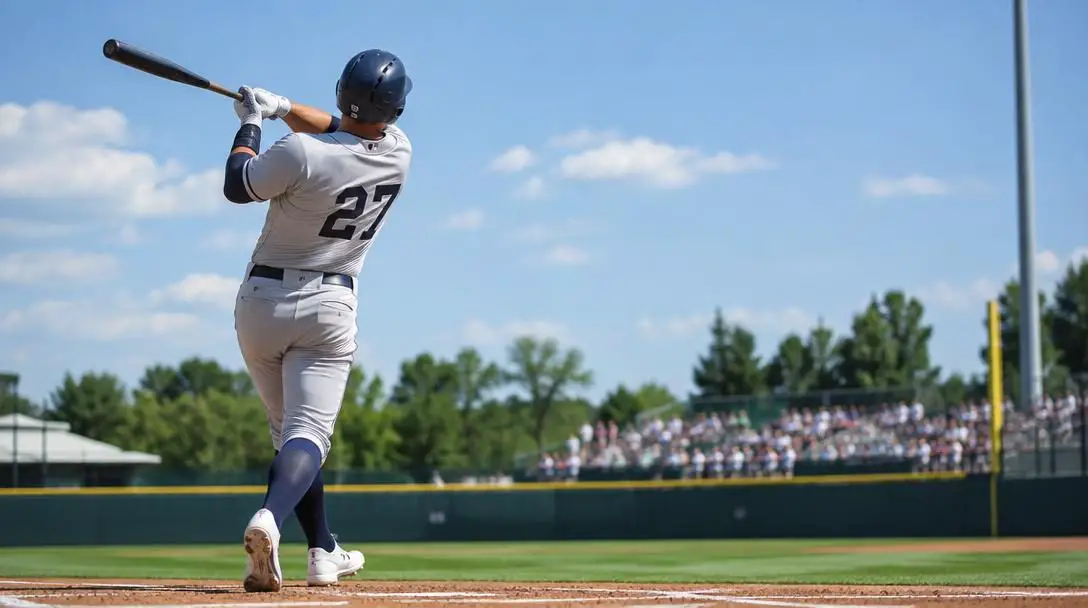
The instant wood meets leather, the tracking system records two foundational metrics:
- Exit Velocity: The speed of the baseball immediately upon separating from the bat, measured in miles per hour. Extreme exit speed is mandatory to reach historic distances; Giancarlo Stanton generated 115.8 mph on his 504-foot shot, while Nomar Mazara registered 109.7 mph on his 505-foot record.
- Launch Angle: The vertical departure angle of the ball relative to the ground. A ball struck below 20 degrees produces a sharp line drive that encounters outfield seating too quickly, whereas an angle above 40 degrees creates a towering fly ball that bleeds kinetic energy in vertical ascent.
Once these primary parameters are secured, the system tracks the baseball's flight path through the air. Because nearly all 490-plus-foot home runs collide with seats, luxury boxes, or stadium structural beams, Statcast utilizes aerodynamic modeling to project where the ball would have traveled if it had fallen unimpeded back to the flat surface level of the playing field. This projection accounts for the ball's observed trajectory, air density, and the elevation of the venue.
How to Analyze Home Run Distance Data
Evaluating whether a long home run is a true measurement outlier or the byproduct of specific atmospheric conditions requires a structured analytical process. Observers can assess any batted-ball metric by following these five practical steps:
- Check the exit velocity: Confirm that the ball departed the bat with high kinetic force. As a baseline, balls leaving the bat under 105 miles per hour rarely possess the required energy to approach 490 feet, regardless of atmospheric conditions.
- Examine the launch angle: Verify whether the ball depart within the optimal launch window. Peak home run distances typically require a launch angle between 25 and 32 degrees to balance hang time with horizontal forward carry.
- Identify the venue elevation: Note the stadium where the blast took place. Venues located at significant altitude, such as Coors Field in Denver, feature lower air density and less aerodynamic drag, allowing identical swings to carry substantially farther than at sea level.
- Review projected versus actual landing: Differentiate between the physical point of impact and the modeled distance. A ball that strikes an upper-deck façade 420 feet away often carries a projected distance exceeding 495 feet because its downward arc was interrupted dozens of feet above ground level.
- Compare player baseline trends: Cross-reference the individual drive against the hitter's broader track record. Elite power hitters like Aaron Judge and Miguel Sano appear multiple times across distance leaderboards because their physical swing mechanics routinely produce elite exit velocities.
Common Pitfalls in Distance Analysis
Interpreting modern batted-ball tracking requires avoiding common analytical traps that stem from pre-Statcast estimation habits.
- Confusing projected distance with tape-measure distance: Historical tape-measure estimates calculated the straight line between home plate and the seat where the ball landed, ignoring the elevation difference of the upper deck. Modern Statcast numbers project the entire parabolic trajectory down to playing-field level.
- Overlooking environmental factors: Stating that every 495-foot home run requires identical muscular force is incorrect. A drive hit in thin mountain air or sweltering summer heat encounters less drag than a baseball struck in dense, cool sea-level air.
- Assuming high exit velocity guarantees extreme distance: A hitter can strike a pitch with a massive exit velocity of 115 miles per hour, but if the launch angle is 15 degrees, the ball will hit an outfield wall or lower-deck seat before completing its maximum possible parabolic flight.
- Equating distance with game leverage: Massive home runs frequently occur in low-stakes situations. C.J. Cron's 504-foot drive took place before an empty stadium late in a lost season, and Jesus Sanchez struck his 496-foot homer during a 7-1 loss, demonstrating that physical power is entirely separate from game leverage.
Future Frontiers in Power Tracking
As Statcast technology advances, analytical tools continue to peel back deeper layers of baseball physics. Recent tracking enhancements monitor bat speed, contact point positioning, and swing plane efficiency. Correlating dynamic bat velocity with exit speed provides deeper clarity on how hitters like Stanton and Mazara generate historic force.
Simultaneously, environmental controls across Major League facilities continue to evolve. Numerous ballparks now employ humidors to store baseballs under regulated moisture and temperature settings, directly counteracting the excessive travel distances historically recorded in dry, high-altitude stadiums. Monitoring how venue storage standards develop will remain essential when comparing modern blasts to earlier Statcast campaigns.
The 500-foot mark remains one of the most elusive achievements in professional athletics. With only Nomar Mazara, Giancarlo Stanton, and C.J. Cron officially surpassing that threshold over a decade of scientific tracking, the barrier stands as the gold standard of raw power.
Frequently asked questions
What is the longest verified home run in the Statcast era?
The longest verified home run recorded by Statcast belongs to Nomar Mazara, who hit a 505-foot home run for the Texas Rangers against the Chicago White Sox in June 2019.
How does Statcast calculate distance if a ball hits the seats?
Statcast uses optical cameras and radar to track initial exit velocity, launch angle, and real-time flight path before using aerodynamic modeling to project where the ball would have landed unimpeded at ground level.
Why do so many top-tier home runs happen at Coors Field?
Coors Field in Denver sits at a high elevation where the air is thinner. This reduced atmospheric density creates less aerodynamic drag on the baseball, allowing well-struck balls to carry farther than at sea-level parks.
How many players have hit a 500-foot home run under Statcast tracking?
Only three players have officially surpassed the 500-foot barrier since 2015: Nomar Mazara at 505 feet, and Giancarlo Stanton and C.J. Cron, who are tied at 504 feet.
Did players in earlier eras actually hit 600-foot home runs?
Those historical 600-foot claims were visual estimates and stadium folklore rather than scientifically verified measurements. Modern optical tracking has confirmed that true 500-foot home runs are exceptionally rare, casting severe doubt on past 600-foot tales.
The bottom line
The transition from speculative tape-measure estimates to Statcast's radar-verified calculations brought scientific truth to baseball's most celebrated spectacle. By evaluating exit velocity, launch angle, and atmospheric conditions, modern tracking has demonstrated that hitting a baseball 500 feet requires a near-flawless combination of raw human power and optimal flight mechanics.
While historic legends will always hold a cherished place in baseball folklore, verified data confirms that Nomar Mazara's 505-foot drive, Stanton and Cron's 504-foot blasts, and the 495-plus-foot achievements of sluggers like Aaron Judge represent the true outer boundary of modern athletic achievement.