5 Longest Tennis Matches In Professional History
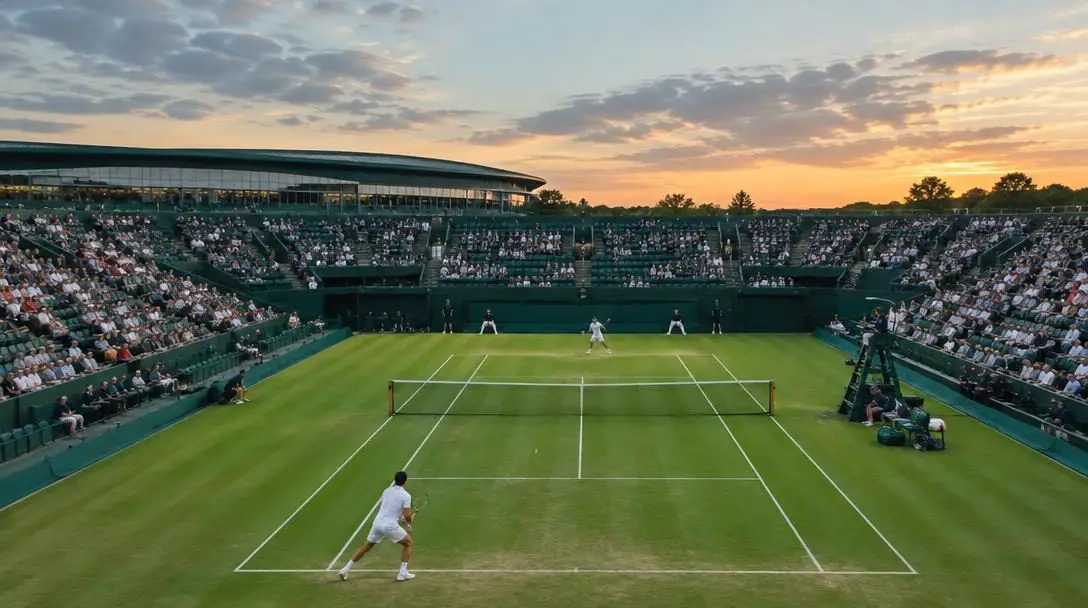
Unlike timed sports where a ticking game clock dictates precisely when the final buzzer sounds, traditional professional tennis operates without a timer. A spectator might purchase a ticket expecting an entire afternoon of dramatic rallies, only to see the contest wrap up in roughly thirty minutes. Conversely, certain extraordinary encounters unfold across multiple sessions, spilling across calendar days and pushing past the six-hour mark to test the absolute boundaries of athletic endurance.
While an average professional tour match typically concludes within two to three hours, encounters stretching past six hours represent historic anomalies that disrupt entire tournament draws. Only two contests in the history of professional tennis have ever crossed the staggering seven-hour threshold. Played out across Grand Slam championships and international Davis Cup ties, these iconic marathon battles produced dramatic scorelines, pushed players into severe physical distress, and changed the administrative fabric of the sport.
Key takeaways
- The 2010 Wimbledon duel between John Isner and Nicolas Mahut remains the longest tennis match ever played, lasting 11 hours and 5 minutes over three days.
- Only two matches in professional tennis history have exceeded seven hours, with the 2013 Davis Cup doubles rubber between the Czech Republic and Switzerland reaching 7 hours and 1 minute.
- Extreme marathon matches were historically enabled by advantage set rules requiring a competitor to win the deciding set by at least two clear games without a standard tiebreak.
- Victors of prolonged Grand Slam marathons frequently suffer immediate physical fallout, often losing decisively in their very next tournament appearance due to intense exhaustion.
- Modern rule reforms, particularly the adoption of standardized deciding-set tiebreaks across major events, have made future six-to-eleven-hour marathons virtually impossible.
At a glance: The longest matches in tennis history
Before examining the individual duels in detail, the table below outlines the essential details of the five longest professional matches ever recorded, spanning Grand Slam singles, Davis Cup singles, and Davis Cup doubles competition.
| Rank | Matchup | Event & Year | Total Duration | Final Set Score |
|---|---|---|---|---|
| 1 | John Isner vs. Nicolas Mahut | Wimbledon, 2010 | 11 hours, 5 minutes | 70–68 |
| 2 | Tomas Berdych & Lukas Rosol vs. Stan Wawrinka & Marco Chiudinelli | Davis Cup, 2013 | 7 hours, 1 minute | 24–22 |
| 3 | Leonardo Mayer vs. Joao Souza | Davis Cup, 2015 | 6 hours, 43 minutes | 15–13 |
| 4 | Kevin Anderson vs. John Isner | Wimbledon, 2018 | 6 hours, 36 minutes | 26–24 |
| 5 | Fabrice Santoro vs. Arnaud Clement | French Open, 2004 | 6 hours, 33 minutes | 16–14 |
The 5 longest matches in professional tennis history
The record books of professional tennis showcase five iconic contests where competitive resilience, tournament regulations, and elite serving collided to generate historic run times.
Fabrice Santoro vs. Arnaud Clement (French Open, 2004)
- Duration: 6 hours, 33 minutes
- Tournament: French Open (2004)
- Surface: Clay
- Final set score: 16–14
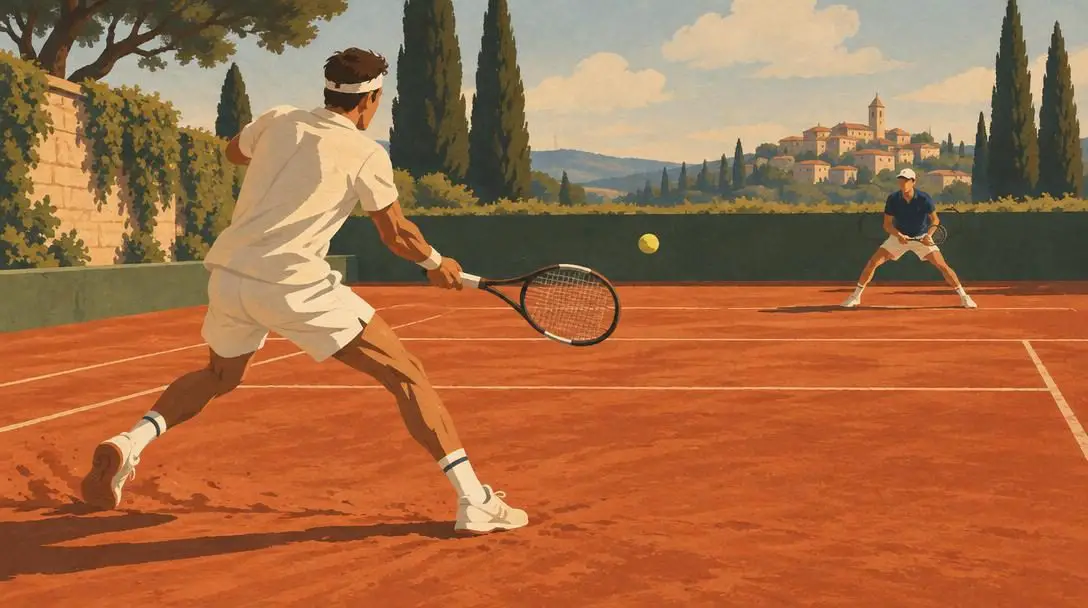
Standing as the sole entry among the top five that did not occur on the grass courts of Wimbledon or during an international Davis Cup tie, this clash unfolded on the slow red clay of Roland Garros at the 2004 French Open. Lasting 6 hours and 33 minutes, the all-French encounter between Fabrice Santoro and Arnaud Clement became an epic baseline struggle that required two separate days to resolve.
Santoro built a commanding early lead by capturing the first two sets, creating the impression that the opening-round match would reach a swift conclusion. Clement refused to yield, battling back through punishing rallies to level the score and force a fifth set. The deciding frame became a war of attrition, with Santoro eventually prevailing 16–14 in an extended tiebreaker finish. Despite the physical toll of this historical encounter, Santoro recovered sufficiently to win his second-round match before finally exiting the tournament in the third round against Olivier Mutis.
John Isner vs. Kevin Anderson (Wimbledon, 2018)
- Duration: 6 hours, 36 minutes
- Tournament: Wimbledon (2018)
- Round: Semifinals
- Final set score: 26–24
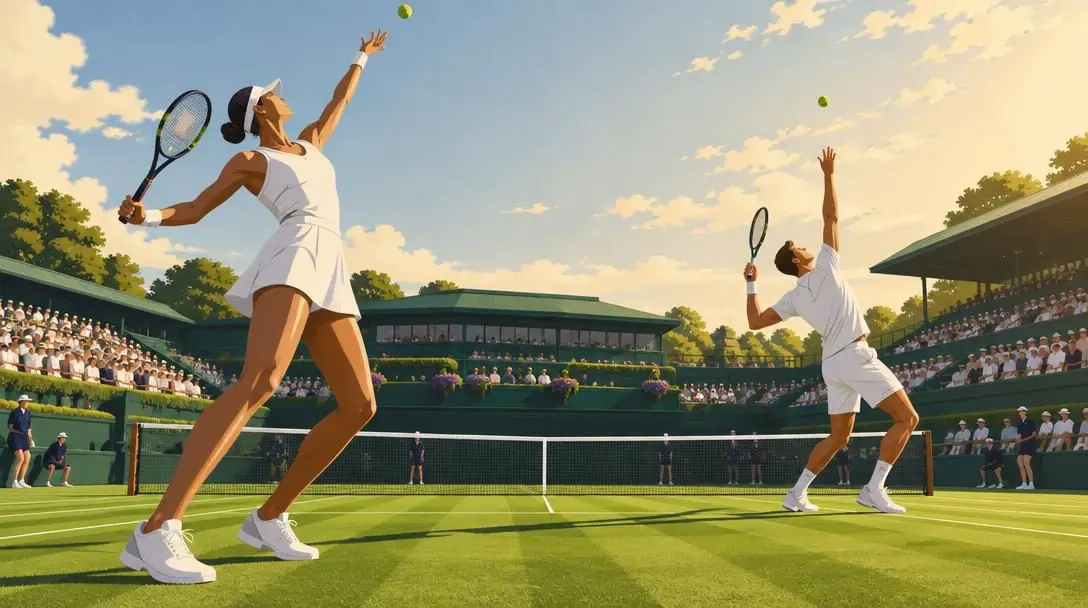
Unlike the other historic marathons that unfolded during opening rounds, this meeting arrived at the business end of a Grand Slam tournament during the 2018 Wimbledon semifinals. American ninth seed John Isner faced off against South African eighth seed Kevin Anderson. Because Isner was already renowned for participating in the longest match ever played, his presence in another extended duel drew intense global scrutiny.
With a coveted spot in the Wimbledon final at stake, the two colossal servers waged an unforgiving duel for 6 hours and 36 minutes. Anderson took the opening set 7–6, but Isner wrested back momentum by capturing consecutive tiebreakers, taking the second and third frames by identical 6–7 scorelines. Anderson answered in the fourth set to push the semifinal into an open-ended decider. Neither player could break the other's massive delivery until Anderson finally broke through to secure the fifth set 26–24. However, the extreme physical expenditure left Anderson thoroughly compromised for the championship match, where he fell in straight sets to Novak Djokovic.
Leonardo Mayer vs. Joao Souza (Davis Cup, 2015)
- Duration: 6 hours, 43 minutes
- Tournament: Davis Cup (2015)
- Teams: Argentina vs. Brazil
- Final set score: 15–13
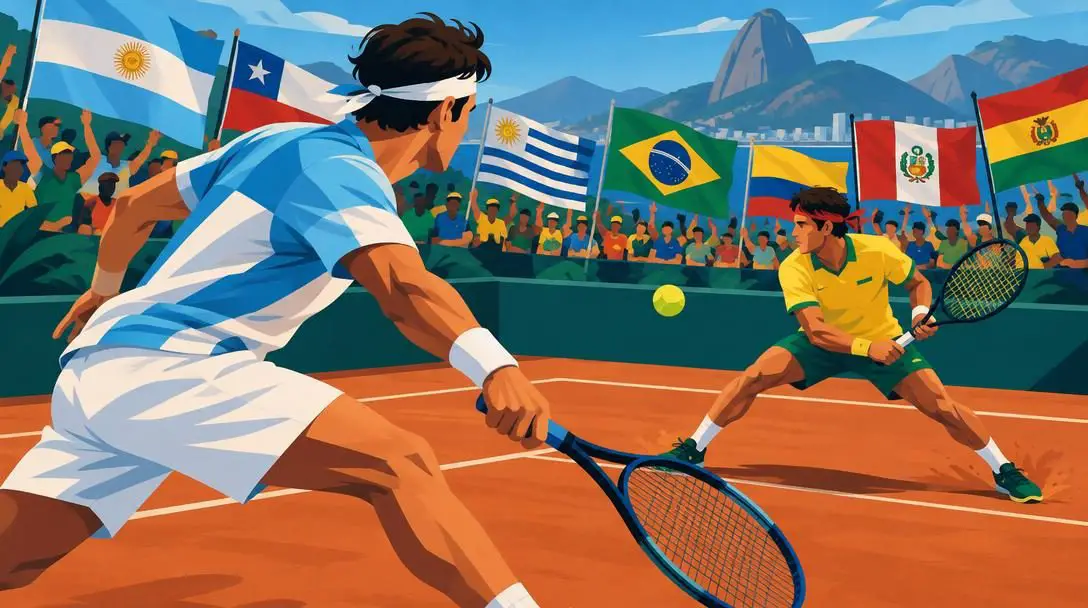
The 2015 Davis Cup season was defined by notable upsets, eventually concluding with an unseeded Great Britain squad capturing the championship trophy. However, the opening round produced an unforgettable South American confrontation between historic rivals Argentina and Brazil that lasted 6 hours and 43 minutes.
Representing Argentina, Leonardo Mayer squared off in singles action against Brazil's Joao Souza. Mayer claimed the first two frames to establish a comfortable cushion, but Souza mounted a fierce comeback by winning the subsequent two sets to level the rubber. Both competitors pushed past traditional limits of fatigue in the deciding fifth set. Mayer eventually sealed the victory with a 15–13 tiebreaker triumph, securing a vital point that propelled Argentina into the second round, where their tournament run ultimately ended against Serbia.
Tomas Berdych & Lukas Rosol vs. Stan Wawrinka & Marco Chiudinelli (Davis Cup, 2013)
- Duration: 7 hours, 1 minute
- Tournament: Davis Cup (2013)
- Teams: Czech Republic vs. Switzerland
- Final set score: 24–22
Entering the 2013 Davis Cup campaign as the second seed behind Spain, the Czech Republic suddenly saw their title pathway broaden when Spain suffered an unexpected opening-round defeat against Canada. Yet the Czech squad nearly saw their own aspirations evaporate during a grueling first-round doubles tie against Switzerland.
The Czech pairing of Tomas Berdych and Lukas Rosol battled Switzerland's Stan Wawrinka and Marco Chiudinelli in an extraordinary doubles encounter that shattered the seven-hour barrier. The two teams split the opening four sets in an evenly matched contest of booming serves and sharp net play. The fifth set evolved into a historic standoff that ran for dozens of games. Berdych and Rosol finally closed out the rubber 24–22 after 7 hours and 1 minute of relentless tennis. The victory proved pivotal to their championship campaign, as the Czech Republic went on to defeat Serbia in the finals to lift the Davis Cup trophy.
John Isner vs. Nicolas Mahut (Wimbledon, 2010)
- Duration: 11 hours, 5 minutes
- Tournament: Wimbledon (2010)
- Court: Court 18
- Final set score: 70–68
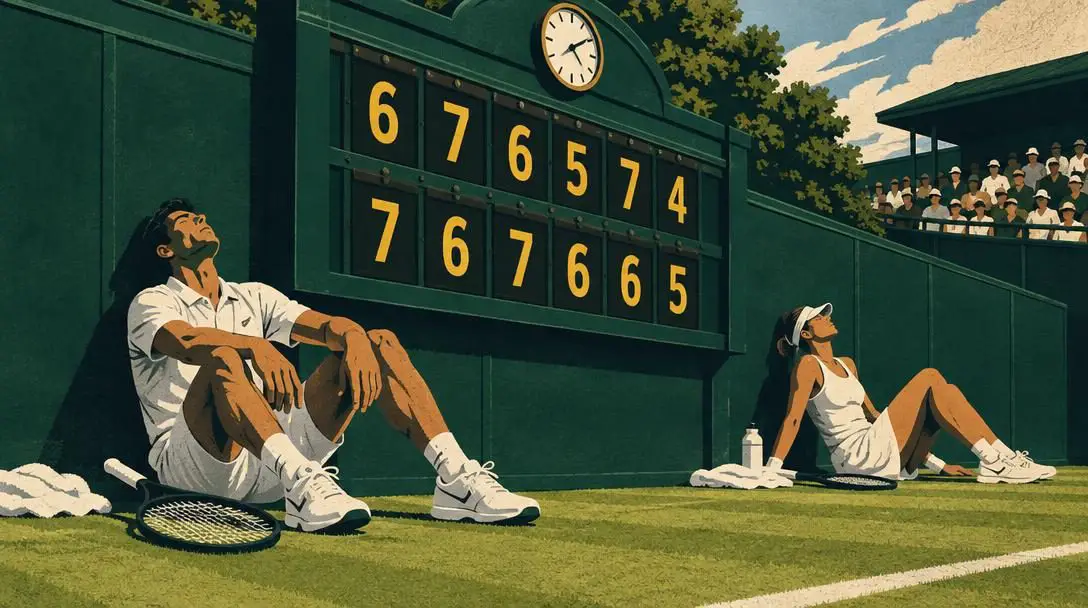
American powerhouse John Isner cemented his name in sports history by engaging in the longest tennis match ever recorded. Clashing with French qualifier Nicolas Mahut in the first round of Wimbledon in 2010, the pair staged an encounter that obliterated every standing endurance record in the sport.
Staged over three consecutive days on Wimbledon's Court 18, the match logged an unimaginable total running time of 11 hours and 5 minutes. The contest was repeatedly suspended due to fading daylight, as Court 18 lacked artificial lighting. Because the showdown occurred in the opening round, its immense length created a logistical nightmare for tournament organizers, delaying subsequent rounds of the draw and leaving spectators transfixed. Isner eventually triumphed with a jaw-dropping fifth-set scoreline of 70–68.
The fifth set alone consumed 8 hours and 11 minutes—a duration that exceeds every other entire match in professional tennis history. The physical toll on Isner was immense; exhausted from the three-day marathon, he was eliminated in the second round in just 74 minutes by Thiemo de Bakker without hitting a single ace.
The final set alone spanned eight hours and eleven minutes, eclipsing the total running time of every other completed match in tennis history.
Why marathon matches occur in professional tennis
Understanding how a sporting event can run past the six- or eleven-hour mark requires an examination of the scoring regulations, player attributes, and environmental conditions unique to traditional tennis.
- Advantage set regulations: Historically, Grand Slam tournaments and the Davis Cup dictated that a deciding final set could not be resolved by an ordinary tiebreak. Competitors were required to play on until one player achieved a margin of at least two clear games, allowing sets to extend indefinitely.
- Dominant serving on fast courts: When elite servers compete on rapid surfaces—such as the grass of the All England Club—holding serve is dramatically easier than breaking serve. When neither athlete can find an opening on return, games accumulate quickly without altering the score's equilibrium.
- Multi-day weather and light interruptions: Natural elements frequently stretch match run times. When darkness falls on unlit outer courts or rain interrupts play, athletes are forced to pause, cool down, and resume competition the following afternoon, turning a single match into a multi-day ordeal.
- Exceptional cardiovascular conditioning: Modern professionals undergo rigorous training that allows them to produce explosive energy repeatedly over hundreds of points, sustaining high-level play long after physical exhaustion has set in.
Practical steps for surviving an extended tennis duel
Navigating an extended multi-set tennis encounter requires exceptional mental discipline and strict physical management. Players follow precise routines on and off the court to survive extreme endurance challenges:
- Maintain continuous hydration and fueling: Ingest targeted electrolytes and complex carbohydrates during every changeover to ward off cramping and physiological collapse.
- Manage structured physical recovery during stoppages: When matches are suspended overnight, immediately initiate cold-water therapy, light stretching, nutritional replenishment, and sleep to prepare for the following day's action.
- Conserve energy on opponent service games: Identify when an opponent's serve is untouchable and conserve energy, sharpening focus for occasional lapses or high-leverage break opportunities.
- Focus strictly on isolated points: Discard thoughts regarding the overall match time, past missed chances, or potential finish lines, treating every individual point as a self-contained contest.
- Utilize permitted medical assessments: Take advantage of changeovers and medical timeouts to treat localized muscle tightness, blistering, or joint strain before minor discomfort escalates into a match-ending injury.
Mistakes players and spectators make in prolonged matches
When matches venture into uncharted chronological territory, competitors and viewers alike frequently commit critical errors in pacing and judgment:
- Rushing for early winners out of frustration: Fatigued players frequently abandon tactical point construction, going for low-percentage winners that produce unforced errors and gift easy games to the opponent.
- Delaying hydration until cramps occur: Waiting for dehydration symptoms or muscle spasms before consuming fluids makes it nearly impossible to restore physiological balance while actively competing.
- Assuming the match will conclude quickly: Spectators, broadcasters, and event organizers often assume that an extended final set must end within the next few games, leaving them unprepared for multi-hour extensions or overnight delays.
- Skipping immediate post-match recovery: Flushed with adrenaline after a historic win, athletes who neglect immediate physical therapy, ice baths, and nutritional replenishment leave themselves vulnerable to swift defeat in the following round.
Frequently asked questions
What is the single longest tennis match ever played?
The longest tennis match in professional history took place at Wimbledon in 2010 between John Isner and Nicolas Mahut, lasting 11 hours and 5 minutes over three days, with Isner winning the fifth set 70–68.
Can a tennis match still last eleven hours today?
No. Major tennis governing bodies, including all four Grand Slam tournaments, have instituted deciding-set tiebreaks (such as the first-to-10-points tiebreak at 6–6), preventing final sets from continuing indefinitely.
Why did John Isner play in multiple historic marathon matches?
John Isner possessed one of the most powerful serves in tennis history alongside a relatively limited return game, which frequently resulted in few service breaks and dozens of consecutive held service games on fast surfaces.
What was the longest doubles match in tennis history?
The longest doubles match occurred during the 2013 Davis Cup opening round, where Tomas Berdych and Lukas Rosol of the Czech Republic defeated Switzerland's Stan Wawrinka and Marco Chiudinelli in 7 hours and 1 minute.
How did extended matches affect the rest of a tournament?
Marathon contests delayed subsequent matches on outer courts, forced tournament organizers to reschedule matches, created broadcast disruptions, and left victorious players thoroughly exhausted for their next appearances.
The bottom line
The spectacle of professional tennis players battling for six, seven, or eleven hours represents one of the most remarkable chapters in modern sports lore. While these marathon duels produced unmatched athletic drama and tested human limits, they also highlighted the severe logistical challenges and physical costs of open-ended scoring formats. With major tournaments now utilizing final-set tiebreaks to protect athlete well-being and preserve tournament schedules, the historic marks set by Isner, Mahut, Anderson, and their peers will likely stand unbroken forever.