5 Surprising Facts About The Orioles
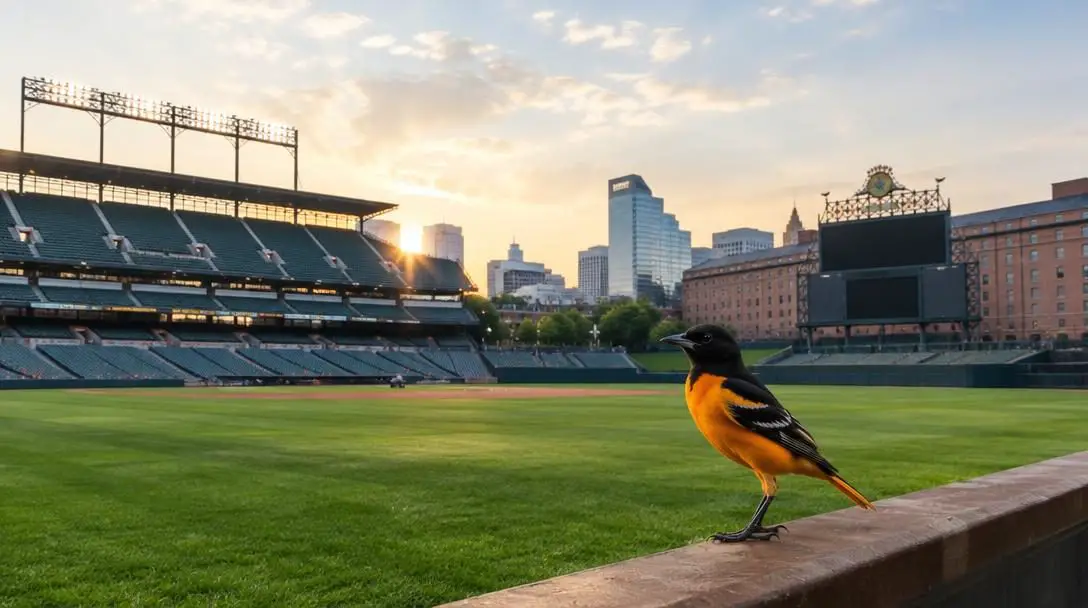
The Baltimore Orioles hold a unique position in professional baseball history. To many casual sports fans, the club is synonymous with the ballpark construction boom of the 1990s, kicked off by the historic opening and enduring charm of Oriole Park at Camden Yards. That architectural milestone redefined modern stadium aesthetics and led many to associate the team primarily with modern sports culture.
Yet beneath that contemporary veneer lies one of the oldest and most geographically traveled organizations in Major League Baseball. Tracing its lineage across three distinct American cities and more than a century of play, the franchise has endured staggering slumps, produced celebrated icons, and assembled teams that rank among the most dominant in the annals of the game.
Key takeaways
- The Baltimore Orioles began professional life as the original Milwaukee Brewers in the 1870s before relocating to St. Louis and eventually Maryland.
- Baltimore joins the New York Yankees as the only two franchises in Major League history to achieve consecutive seasons with at least 108 regular season victories.
- The club endures the fourth-longest pennant drought in baseball, having not reached the Fall Classic since winning the 1983 World Series.
- While Cal Ripken Jr. holds most franchise offensive marks, George Sisler, Brady Anderson, and Chris Davis retain surprising shares of team records.
- In 1988, Baltimore established an unmatched Major League record by dropping 21 consecutive games to open the regular season.
Five surprising facts from Baltimore Orioles history
Original Milwaukee Brewers
- Franchise roots: 1870s minor league club
- First American League campaign: 1901
- St. Louis relocation: 1902 (competing as the Browns)
- Arrival in Baltimore: 1954 season
Modern sports fans universally associate the Milwaukee Brewers with the National League club founded as the Seattle Pilots in 1969 before moving to Wisconsin in 1970. However, the Baltimore Orioles were the original Milwaukee Brewers. The team started playing in the 1870s as a minor league operation in Milwaukee and became a charter member of the American League during its debut 1901 major league season.
That initial stay in Milwaukee was short-lived. Following the 1901 season, the franchise moved to Missouri to compete as the St. Louis Browns for more than fifty years. After long-time owner Bill Veeck was forced to sell the struggling club, an ownership syndicate led by the Miles-Krieger-Hoffberger group purchased the team. They transferred operations to Maryland in time for the 1954 season, renaming the roster the Baltimore Orioles.
Consecutive 108-Win Regular Seasons
- Record campaigns: 109 wins (1969) and 108 wins (1970)
- Historic peer: New York Yankees (achieved three times)
- Postseason result: 1970 World Series victory over Cincinnati
Winning 108 games in a single major league regular season is an extraordinarily rare athletic feat. Through the end of the 2022 season, Major League Baseball history recorded only 13 total team seasons reaching that plateau, established by the 1906 Chicago Cubs when they set the all-time benchmark of 116 wins. While storied franchises like the Los Angeles Dodgers and Pittsburgh Pirates have each crossed the 108-win threshold once, only two organizations have ever accomplished it multiple times.
The New York Yankees achieved the milestone three times, while the Orioles accomplished it twice. Even more remarkably, Baltimore registered its historic seasons in back-to-back campaigns, winning 109 games in 1969 and 108 games in 1970. Both campaigns carried the Orioles into the World Series, ultimately securing the 1970 world championship in a five-game triumph over the Cincinnati Reds.
Only two clubs in baseball history have won 108 or more regular season games multiple times: the New York Yankees and the Baltimore Orioles.
The Long-Standing Pennant Drought
- Last World Series appearance: 1983
- Championship victory: Defeated the Philadelphia Phillies
- Drought standing: Second longest in the American League
During the late 1960s, 1970s, and early 1980s, the Orioles were perennial title contenders. That golden era culminated in the 1983 World Series, when Baltimore defeated the Philadelphia Phillies to capture the franchise's third world championship. Since that October triumph, however, the team has not returned to the Fall Classic, creating an active league pennant drought that ranks among the longest in modern sports.

Baltimore currently holds the fourth-longest pennant drought across all of Major League Baseball and the second-longest in the American League. The only junior circuit club enduring a longer absence is the Seattle Mariners, who have never won an American League pennant. In the National League, only the Pittsburgh Pirates (whose last pennant arrived in 1979) and the modern Milwaukee Brewers (who last reached the World Series in 1982 while in the American League) carry longer stretches without a league title.
Cal Ripken Jr.
- Career franchise games: 3,001 appearances
- Milestone categories led: Hits, doubles, home runs, RBIs, walks
- Career strikeout total: 1,305 (franchise co-leader)
Widely regarded as the greatest player in franchise history, Hall of Famer Cal Ripken Jr. rewrote baseball history with his consecutive games played streak. That unmatched durability allowed Ripken to dominate Baltimore's cumulative offensive leaderboards. Over a career spanning 3,001 games exclusively in an Orioles uniform, Ripken collected more hits, doubles, home runs, runs batted in, and bases on balls than any player in franchise history.
Despite that dominance, a few club marks remain outside his grasp. Outfielder Brady Anderson holds the franchise record for times hit by a pitch, absorbing 148 during his tenure. The club record for career triples belongs to George Sisler, who hit 145 triples during the organization's St. Louis Browns era. Most surprisingly, Ripken shares the franchise strikeout record with slugger Chris Davis at 1,305 strikeouts. While Ripken accumulated that total across 3,001 career games, Davis matched it in just 1,151 games.
The 1988 Season-Opening Losing Skid
- Opening record: 21 consecutive losses
- Initial record tied: 14 straight losses (tied by 1997 Chicago Cubs)
- Standings deficit: 16 games behind first place
- Streak-breaking contest: 4-2 victory against Minnesota
The start of the 1988 American League campaign produced the darkest regular season chapter in Baltimore history. The Orioles dropped their first 14 games of the year, establishing a record for the worst start to a season in Major League history that would only ever be matched by the 1997 Chicago Cubs. Yet the agony did not conclude at 14 games; the skid continued to compound throughout the opening month.
The losing streak ultimately reached 21 consecutive games before Baltimore finally secured a victory. By the time the streak ended with a 4-2 road win against the Minnesota Twins, the Orioles sat an insurmountable 16 games out of first place before May had even arrived, permanently cementing the 1988 squad in baseball record books for early-season futility.
Understanding how franchise continuity and record books operate
Navigating the statistical leaderboards of a century-old sports team requires understanding organizational continuity in Major League Baseball. Franchise records do not reset when an ownership group relocates a team to a new market or changes the club name. Instead, all statistical accomplishments remain permanently tied to the legal corporate entity that operates the team.
Because the modern Baltimore Orioles represent the exact same continuous business enterprise that competed as the St. Louis Browns from 1902 to 1953 and the Milwaukee Brewers in 1901, every milestone achieved during those eras remains on Baltimore's official ledger. This legal structure explains why pre-World War II stars like George Sisler still occupy top positions on modern Orioles franchise leaderboards.

Similarly, evaluating droughts requires understanding the distinction between division titles and league pennants. A pennant reflects an American League or National League championship, which directly punches a ticket to the World Series. Tracking a pennant drought measures the exact span of time since a franchise last represented its respective league on baseball's biggest stage.
Comparing notable franchise offensive records at a glance
Because the Orioles organization spans different eras, cities, and competitive landscapes, franchise leaderboards showcase a fascinating mix of legendary Hall of Famers, dead-ball era standouts, and modern power hitters.
| Player | Primary Franchise Era | Statistical Category | Franchise Total | Historical Context |
|---|---|---|---|---|
| George Sisler | St. Louis Browns | Triples | 145 | All-time franchise record established before relocation to Baltimore |
| Brady Anderson | Baltimore Orioles | Hit by Pitch | 148 | Franchise career record for plunkings absorbed |
| Cal Ripken Jr. | Baltimore Orioles | Strikeouts | 1,305 | Shared franchise record accumulated over 3,001 career games |
| Chris Davis | Baltimore Orioles | Strikeouts | 1,305 | Shared franchise record reached in only 1,151 career games |
Practical steps for researching Baltimore Orioles history
Uncovering the complete timeline of the Orioles franchise requires a structured research methodology that accounts for team movements, name changes, and statistical tracking conventions.
- Trace the franchise lineage across three cities: Ensure your research includes the 1901 Milwaukee Brewers season and the 1902 to 1953 St. Louis Browns campaigns rather than starting solely at the 1954 Baltimore relocation.
- Differentiate between the historical and modern Brewers: Keep the original 1901 American League Brewers separate from the modern Milwaukee Brewers franchise, which originated as the Seattle Pilots in 1969.
- Examine the Bill Veeck sale and relocation: Study how owner Bill Veeck's forced sale led to the purchase by the Miles-Krieger-Hoffberger group, enabling the franchise's move to Memorial Stadium in Maryland for the 1954 campaign.
- Analyze the back-to-back 108-win peak: Review box scores and standings from the 1969 campaign (109 wins) and 1970 campaign (108 wins) to assess how Baltimore reached consecutive World Series and defeated Cincinnati for the 1970 crown.
- Review the 1988 opening game logs: Examine game-by-game results from April 1988 to understand how the club dropped 21 consecutive games before earning a 4-2 win against the Minnesota Twins.
Common historical misconceptions and pitfalls to avoid
Due to the team's long journey and modern popularity, several myths persist among fans and commentators when discussing the Orioles' historical record.
- Assuming Camden Yards marks the team's origin: While Oriole Park sparked a national stadium design renaissance in the early 1990s, the franchise dates back to 1901 in the major leagues and the 1870s in minor league baseball.
- Confusing the two distinct Milwaukee franchises: Baseball followers often confuse the original 1901 Milwaukee team that became the Orioles with the current Milwaukee franchise that relocated from Seattle in 1970.
- Overlooking George Sisler's franchise records: Overlooking the St. Louis Browns era causes many analysts to miss George Sisler's franchise-leading 145 triples, mistakenly attributing the record to a Baltimore-era player.
- Equating Ripken and Davis's strikeout rates: While both players share the club record with 1,305 strikeouts, Chris Davis reached that figure in less than half the career games Ripken played (1,151 games compared to Ripken's 3,001).
- Believing the 1988 skid ended at 14 games: While Baltimore's 0-14 start set the initial record later matched by the 1997 Cubs, the Orioles continued losing another seven straight games before securing their first win.
Frequently asked questions
What was the original name of the Baltimore Orioles franchise?
The franchise originally competed as the Milwaukee Brewers during the 1870s as a minor league club and during the American League's inaugural 1901 season. The team then moved to Missouri as the St. Louis Browns before relocating to Baltimore for the 1954 season.
When did the Orioles last win an American League pennant?
The Orioles last won the American League pennant in 1983. That team advanced to the World Series and defeated the Philadelphia Phillies to capture the third world championship title in franchise history.
Which team broke Baltimore's historic 21-game losing streak in 1988?
The Orioles ended their record-setting 21-game losing streak by defeating the Minnesota Twins by a score of 4-2 on the road, earning their first victory of the 1988 regular season.
Why do St. Louis Browns statistics count toward modern Baltimore records?
Major League Baseball tracks team history by continuous corporate business entities rather than cities. Because the Baltimore Orioles are the exact continuous franchise that played as the St. Louis Browns, all Browns statistics belong to Baltimore.
Who shares the Orioles franchise career strikeout record with Cal Ripken Jr.?
First baseman and slugger Chris Davis shares the record with Cal Ripken Jr. at 1,305 strikeouts. However, Davis accumulated those strikeouts in just 1,151 games, whereas Ripken played in 3,001 games.
The bottom line
The Baltimore Orioles possess a multi-layered identity that stretches far beyond the brick facade of Camden Yards. From their turn-of-the-century origins in Milwaukee and five decades in St. Louis to the powerhouse championship rosters of 1970 and 1983, the club's trajectory embodies the unpredictable nature of major league sports.
Whether examining dominant regular season records that rival the New York Yankees or studying the profound adversity of the 1988 opening skid, the Orioles' historical footprint offers a compelling case study in how longevity, franchise relocation, and individual durability shape baseball history across generations.