5 Manliest Hockey Players of All Time
Professional ice hockey occupies a unique position in global athletics, demanding extraordinary stamina, technical precision, and fearless physical collision. Unlike other mainstream sports where fighting leads to immediate ejections and outside legal intervention, hockey has long managed bare-knuckle bouts within internal regulatory frameworks and time-honored traditions.
Across more than a century of play in the National Hockey League, certain competitors built reputations that went far beyond basic athletic competence. These players defined pure grit, combining raw muscular strength, relentless competitiveness, and an unyielding commitment to standing up for their teams in the most punishing situations.
Key takeaways
- Hockey stands apart from other major sports by historically handling regulated on-ice fights through game penalties rather than external legal actions.
- Legendary figures such as Gordie Howe and Tim Horton proved that extreme physical toughness could coexist with elite professional endurance and high-end scoring ability.
- The traditional role of the enforcer creates on-ice operating room for scoring playmakers, protects teammates from intimidation, and shifts arena momentum.
- Historical toughness carries genuine hazards, as evidenced by earlier eras where medical treatment and player self-care lagged behind athletic bravado.
- Evaluating player toughness accurately requires studying scoring output, equipment limitations, and the nuanced tactical code of on-ice enforcement.
Profiles of Ice Hockey's Toughest Icons
Physical power on the ice has manifested in various ways throughout the sport's history, ranging from enduring offensive stars who never backed down from a brawl to dedicated modern enforcers who protect their teammates against opposing giants. Here are five of the most formidable competitors ever to strap on skates.
Gordie Howe
- Primary team: Detroit Red Wings
- Career length: Played professionally into his 50s
- Signature feat: Gordie Howe hat trick (goal, assist, fight)
- Year of passing: 2016
If not for Wayne Gretzky, Gordie Howe would stand as the unanimous selection for the greatest hockey player of all time. Known as an absolute icon in Detroit after spending a quarter century with the Red Wings, Howe commanded unmatched respect across the entire league. His legacy in the region is so profound that an international bridge connecting the United States and Canada bears his name.
Howe combined peerless offensive ability with ruthless physical strength. His trademark feat—the famous Gordie Howe hat trick—requires a player to score a goal, record an assist, and drop the gloves for a fight in a single contest. Howe first achieved this milestone in 1953 and matched it the following season. His extraordinary longevity allowed him to compete in professional hockey into his 50s before he passed away in 2016, setting the gold standard for enduring toughness in the sport.
Tim Horton
- Primary franchise: Toronto Maple Leafs
- Career duration: 24 NHL seasons across four franchises
- Commercial legacy: Namesake of popular coffee and donut chain
- Age at demise: 44 years old
While millions of people across North America recognize his name from the widespread coffee and donut business, Tim Horton was first and foremost an imposing physical force on the blueline. Competing across 24 seasons in the NHL, Horton spent the bulk of his career from 1952 to 1970 anchoring the Toronto Maple Leafs before finishing his tenure across four separate franchises.
Built with the brute, functional strength commonly associated with a Canadian lumberjack, Horton routinely overpowered opposing forwards along the boards. Opponents feared his immense upper-body power and crushing defensive presence. Although his life was tragically cut short at the age of 44, his reputation as one of the hardest men to ever patrol the ice remains secure alongside his commercial baking legacy.
Howie Morenz
- Hometown: Mitchell, Ontario
- Off-ice pursuits: Ukulele player and gambling enthusiast
- Family milestone: Father of three children by age 31
- Career-ending incident: Broken leg against Chicago
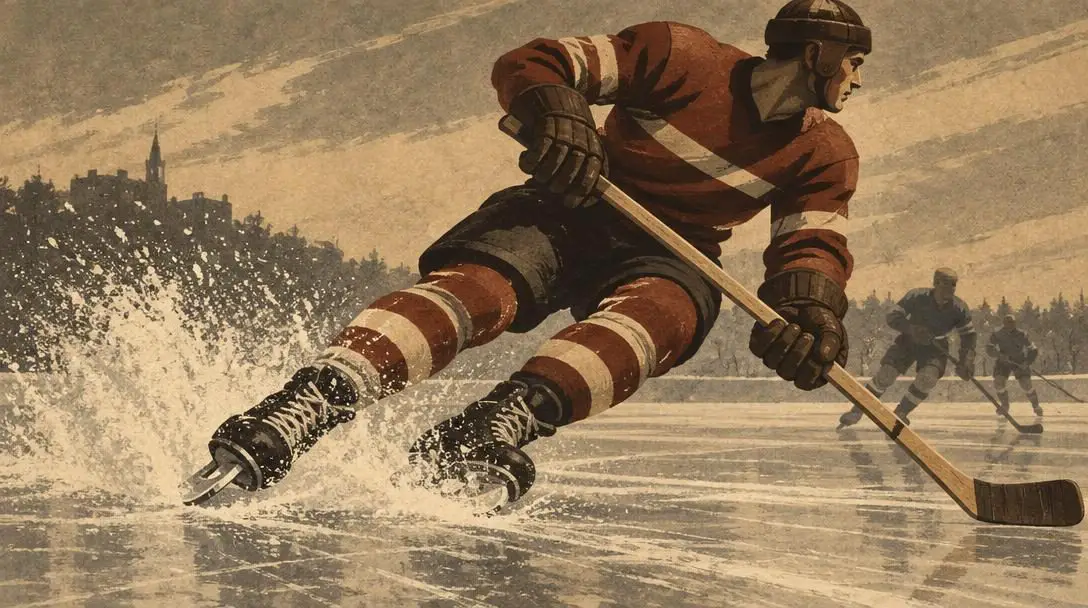
A native of Mitchell, Ontario, Howie Morenz was widely regarded as one of the premier hockey talents of his generation. Carrying an intense, menacing countenance that looked more suited to debt collection than athletic competition, Morenz lived a colorful life off the ice that included playing the ukulele and placing bets, all while raising three children by age 31.
On the ice, Morenz terrified defenders with blistering skating speed and an uncanny ability to pop right back up after taking violent, high-speed collisions. However, that rapid pace eventually led to catastrophe. During an aggressive race for a loose puck against Chicago, Morenz lost his footing and suffered a fractured leg on the ice. While convalescing in his hospital room, his stubborn refusal to ask for assistance to reach the restroom led him to walk on his fractured limb, triggering a fatal coronary embolism.
Lanny McDonald
- Hall of Fame induction: 1992
- Scoring production: Over 500 goals and 500 assists
- Major recognition: 1983 Bill Masterton Award recipient
- Iconic aesthetic: Prominent mustache that aged from red to white
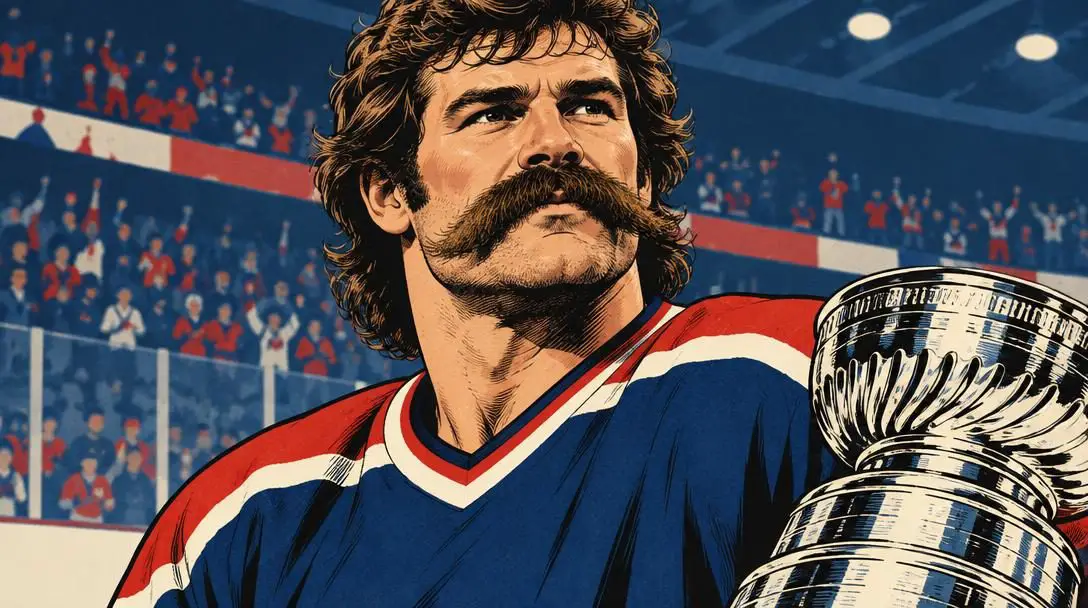
Possessing one of the most recognizable facial hair profiles in sports history, Lanny McDonald paired a rugged, lumberjack aesthetic with world-class hockey craftsmanship. McDonald sported a massive, bristling mustache throughout his playing career that he proudly retained in retirement, watching it transition gracefully from fiery red to snowy white over the years.
Beyond his formidable appearance, McDonald was a legitimate scoring machine who was inducted into the Hockey Hall of Fame in 1992 after compiling over 500 goals and 500 assists. In 1983, he earned the Bill Masterton Award, an honor presented to the player who best exemplifies perseverance, sportsmanship, and dedication to the league, highlighting that real toughness embodies character and durability alongside raw grit.
Ryan Reaves
- Primary specialty: Premier modern NHL enforcer
- Civic involvement: Water conservation commercials in Las Vegas
- Core reputation: Willingness to fight any opponent's toughest skater
In an era where pure physical intimidation has grown increasingly rare, Ryan Reaves has carved out a storied career as one of the premier enforcers in NHL history. Having suited up for multiple franchises, Reaves consistently accepts the dangerous assignment of trading punches with the largest and most ferocious fighters on opposing rosters whenever tension peaks.
Teammates view Reaves as an indispensable protective big brother who never hesitates to finish physical confrontations started by opponents. His imposing persona even carried over into community initiatives, leading to local television commercials where he humorously enforced municipal water conservation guidelines for residents in Las Vegas.
At a Glance: Comparing Hockey's Legends of Toughness
The athletes highlighted here each approached the physical demands of professional hockey from distinct eras, positions, and tactical roles. Reviewing their career backgrounds demonstrates how physical dominance intersects with on-ice productivity.
| Player | Primary Era | Notable Team | Key Offensive Benchmark | Distinguishing Trait |
|---|---|---|---|---|
| Gordie Howe | 1940s–1980s | Detroit Red Wings | Quarter-century of scoring dominance | Played into his 50s; signature hat trick |
| Tim Horton | 1950s–1970s | Toronto Maple Leafs | 24 seasons of steady blueline play | Immense lumberjack power; donut brand namesake |
| Howie Morenz | 1920s–1930s | Montreal / Generation Great | Blazing offensive rush generator | High-speed tenacity; played the ukulele |
| Lanny McDonald | 1970s–1980s | Toronto / Calgary | 500+ goals and 500+ assists | Hall of Fame mustache; 1983 Masterton Award |
| Ryan Reaves | 2010s–Present | Multiple NHL franchises | Specialized physical role | Modern enforcer; water conservation ad star |
Physical power in professional hockey is not simply about trading punches, but commanding ice territory so that skill players can operate without fear.
The Mechanics of Physical Play and the Enforcer Dynamic
Physicality in hockey is not a random byproduct of frustration; it is a tactical mechanism designed to influence the flow and emotional rhythm of the game. When wielded effectively, aggressive body checks and defensive intimidation serve clear tactical functions.
- Space creation: Defending players instinctively hesitate when retrieving pucks along the boards if an aggressive, bruising forward is closing in. That hesitation opens up passing lanes and loose rebounds for offensive teammates.
- Roster protection: Highly skilled goal-scorers are frequent targets of aggressive checks, illegal stick work, and physical intimidation. A dedicated physical presence ensures that opposing antagonists face an immediate response if they target star teammates.
- Momentum shifts: When a squad falls behind on the scoreboard or looks sluggish during play, a thunderous legal check or a decisive fight can immediately inject energy into the bench and awaken a home crowd.
- The unwritten code: Players adhere to established expectations regarding accountability. When an athlete delivers an illegal check or crashes into a goaltender, internal league culture dictates answering the challenge directly on the ice.
How to Research Historic Hockey Eras and Legends
Fans wishing to explore historic hockey toughness and develop an informed perspective on past eras can follow a clear, systematic approach to researching these legendary competitors.
- Review career statistics across distinct eras: Examine both scoring totals and penalty minutes for legendary stars like Gordie Howe and Lanny McDonald to understand how point production held up against persistent physical wear.
- Examine archived game broadcasts: Study historical footage from the mid-twentieth century to observe how players like Tim Horton defended against rushes with minimal protective equipment.
- Investigate league awards and criteria: Look into formal recognitions such as the Bill Masterton Memorial Trophy to understand how the NHL historically recognized dedication, perseverance, and sportsmanship.
- Explore franchise histories: Read comprehensive club archives from historic organizations like the Detroit Red Wings and Toronto Maple Leafs to see how regional communities embraced rugged players as cultural heroes.
- Track the development of safety gear: Compare the leather gloves, unhelmeted play, and wooden sticks of earlier generations against modern protective composite technologies to understand the physical risks taken by vintage skaters.
Common Pitfalls When Evaluating Hockey Toughness
Modern commentators and casual fans frequently misinterpret the role of historical toughness due to shifting media narratives and contemporary rule sets. Avoiding common assumptions leads to a far more balanced view of hockey history.
- Assuming tough players lack technical skill: A frequent mistake is presuming that physically imposing competitors could not score. Howe and McDonald were generational offensive talents who produced hundreds of goals while playing an uncompromising physical brand of hockey.
- Ignoring changing protective equipment: Judging vintage hits using modern standards overlooks the fact that earlier stars played without helmets, modern shoulder caps, or specialized padding, making their durability all the more remarkable.
- Dismissing modern enforcers as one-dimensional: While earlier eras allowed pure fighters who struggled to skate, contemporary players like Ryan Reaves must skate at professional speeds and execute structured defensive assignments to remain on a roster.
- Overlooking the human cost of physical punishment: Chronic injuries, fractures, and the untimely passing of athletes like Howie Morenz show that historical toughness came with immense personal risk that modern medicine seeks to mitigate.
Frequently asked questions
What is a Gordie Howe hat trick?
A Gordie Howe hat trick occurs when an individual player records a goal, tallies an assist, and gets into a fight within a single hockey game. Howe accomplished this signature feat for the first time in 1953 and completed it again the next season.
Did Tim Horton really start the famous coffee and donut company?
Yes. Before his untimely death at age 44, the longtime Toronto Maple Leafs blueliner was the namesake and co-founder of the popular coffee and donut chain that grew into an iconic brand across North America.
Why did Howie Morenz suffer a fatal complication after breaking his leg?
After breaking his leg on the ice in a collision against Chicago, Morenz refused assistance to use the restroom while staying in his hospital room. Walking on the fractured limb contributed to a fatal coronary embolism.
What criteria is required to win the Bill Masterton Award?
The Bill Masterton Award is presented annually to the NHL player who best exemplifies the combined qualities of perseverance, sportsmanship, and dedication to ice hockey, an honor earned by Lanny McDonald in 1983.
What is Ryan Reaves primarily known for in the NHL?
Ryan Reaves is recognized as one of the premier modern enforcers in hockey, renowned for stepping up to fight opponents' biggest players, protecting teammates on the ice, and acting as a locker-room leader across several franchises.
The Bottom Line
The history of ice hockey is inextricably bound to the physical bravery of its greatest competitors. Athletes such as Gordie Howe, Tim Horton, Howie Morenz, Lanny McDonald, and Ryan Reaves demonstrated that standing one's ground requires far more than physical strength alone. True toughness blends endurance, team loyalty, high-end athletic skill, and the willingness to absorb punishment for the benefit of the roster. As equipment, safety rules, and tactical systems continue to advance, the storied resilience of these five icons continues to shape how fans and players understand the character of the sport.