5 Mediocre Footballers Who Achieved Greatness Late in Their Careers

The sporting world remains captivated by the football wunderkind. Global media outlets, talent scouts, and supporters routinely invest countless hours tracking teenage prodigies who appear ready to alter the fortunes of an entire franchise overnight. Yet this relentless fixation on immediate brilliance often obscures the demanding reality of professional athletics, where development is rarely smooth or instantaneous.
For the vast majority of competitors, reaching the elite tier requires enduring years of grueling toil across lower-tier leagues, dealing with demanding physical workloads, tactical resets, and an absence of public recognition. A select group of footballers, however, discover their true form well into their twenties and thirties. By converting years of accumulated experience into remarkable high-level output, these late bloomers prove that athletic and professional maturity does not always peak in youth.
Key takeaways
- Elite progression in professional football is rarely linear, with many players requiring years of competitive seasoning before hitting their absolute peak.
- Tactical awareness, spatial intelligence, and psychological resilience frequently develop much later in an athlete's career than raw physical speed.
- Finding the correct club tactical system can instantly unlock the latent potential of players previously deemed surplus to requirements.
- Career longevity requires proactive physical maintenance and the humility to embrace unglamorous developmental leagues.
At a glance: Five late-blooming football stars
While many prospects peak in their early twenties, the following five players demonstrated that patience and systemic compatibility can lead to world-class status much later in a competitive career.
| Player | Key formative clubs or leagues | Breakthrough club | Signature late-career achievement |
|---|---|---|---|
| Teddy Sheringham | Millwall, Nottingham Forest | Tottenham Hotspur & Manchester United | Key contributor to the 1998–99 Treble; played until age 42 |
| Gareth McAuley | NIFL Premiership, EFL League Two, Championship | West Bromwich Albion | Top goal-scoring season at age 37; 12 international caps in 2016 |
| Jamie Vardy | FC Halifax Town, Fleetwood Town | Leicester City | Oldest player to win the Premier League Golden Boot (2020) |
| Antonio Di Natale | Empoli | Udinese | Scored 191 goals in 385 appearances after age 26 |
| Kevin De Bruyne | Chelsea (limited appearances) | VfL Wolfsburg & Manchester City | 2015 Footballer of the Year in Germany; global playmaker status |
Profiles of late-career football greatness
The trajectories of these five athletes illustrate how persistent application, tactical growth, and finding the right operational environment can turn a solid or turbulent playing record into an extraordinary sporting legacy.
Teddy Sheringham

- First major move: Joined Tottenham Hotspur at age 27
- Pinnacle campaign: 1998–99 Treble-winning season with Manchester United
- Retirement age: 2008 at 42 years old
Teddy Sheringham built a commendable reputation during his early campaigns with Millwall and Nottingham Forest, yet his ascent to true stardom took time. It was not until his transfer to Tottenham Hotspur at the age of 27 that his career began to rise toward the sport's highest tier. Even with his increased profile in North London, collective silverware initially eluded him.
A high-profile transfer to Manchester United fundamentally altered his historical standing. Sheringham emerged as an indispensable contributor during the Red Devils' historic 1998–99 Treble-winning campaign. Rather than treating this monumental achievement as a swansong, he maintained exceptional competitive form for nearly a decade afterward. His eventual retirement in 2008 at the age of 42 cemented his standing as an enduring model of longevity and refined tactical intellect.
Gareth McAuley
- Development tiers: NIFL Premiership, EFL League Two, EFL Championship
- Top scoring year: Achieved at age 37 with West Bromwich Albion
- International high-water mark: 12 appearances for Northern Ireland in 2016
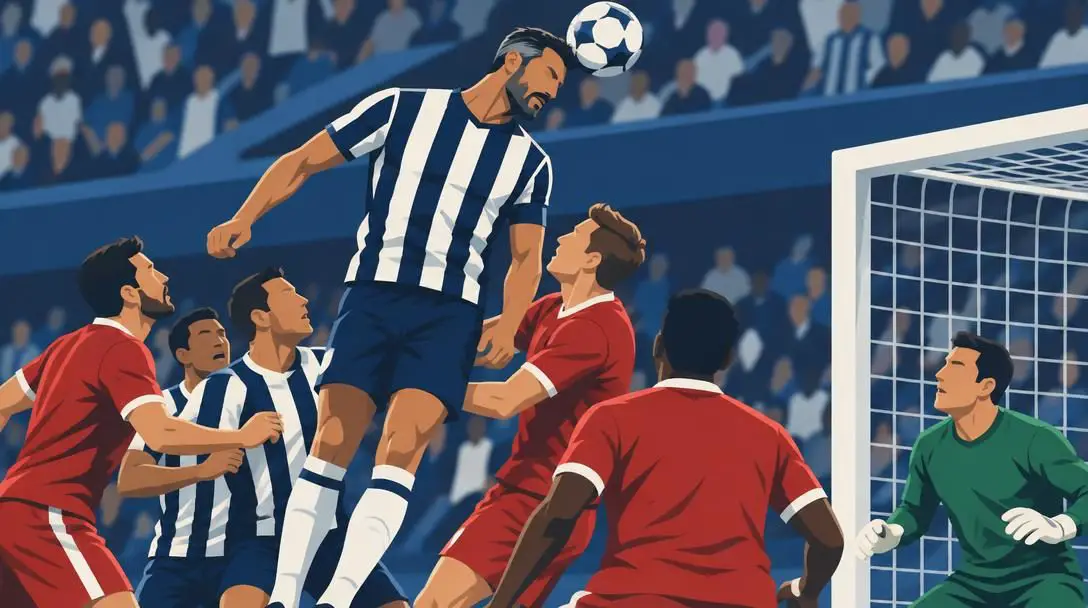
Gareth McAuley spent more than a decade operating across lower competitive ladders, refining his defensive craft in the NIFL Premiership, EFL League Two, and the Championship. Without the luxuries of top-tier youth training, he developed into a resilient, aerial defender capable of managing demanding forward lines through positioning and toughness.
His eventual arrival in the Premier League with West Bromwich Albion served as the starting point for his most productive playing stretch. Instead of slowing down during his mid-thirties, McAuley recorded his top goal-scoring campaign at 37 years old. His late-career surge was mirrored internationally, highlighted by 12 appearances for Northern Ireland in 2016—the most prolific single-year cap tally of his international career.

Jamie Vardy

- Lower-tier origins: FC Halifax Town and Fleetwood Town
- Leicester City arrival: Joined squad in 2012
- Historic individual honor: Oldest Premier League Golden Boot winner (2020)
Few developmental narratives in modern sport rival the steady climb of Jamie Vardy. Having spent the formative years of his athletic career navigating non-league fixtures with FC Halifax Town and Fleetwood Town, Vardy earned a transfer to Leicester City in 2012. The adjustment to elite competitive demands was gradual rather than instant, requiring several seasons of collective refinement.
By 2015, Vardy's devastating directness and high-pressing discipline earned him a debut with the England national team. He continued to refine his timing and finishing under pressure, culminating in 2020 when he became the oldest footballer to claim the Premier League Golden Boot. His trajectory serves as an enduring case study in how intense determination and smart attacking lines can dismantle defensive schemes.
When late bloomers break out, they demonstrate that mastery is often the compounding result of perseverance, tactical awareness, and professional resilience.
Antonio Di Natale

- Initial tenure: 9 seasons with Empoli
- Defining transfer: Joined Udinese in 2004
- Club scoring record: 191 goals across 385 appearances for Udinese
Antonio Di Natale dedicated nine consistent seasons to Empoli, playing a critical role in helping the squad achieve promotion to Serie A. While respected within Italian football circles, he was largely viewed as an accomplished regional attacker rather than an elite international forward. Consequently, his 2004 transfer to Udinese drew modest attention outside of domestic followers.
That move initiated one of the most prolific late-career chapters in European football history. Operating with refined spatial intelligence and clinical finishing inside the penalty area, Di Natale scored 191 goals in 385 appearances for Udinese. His relentless output during his late twenties and throughout his thirties permanently shifted how football analysts view forward longevity.
Kevin De Bruyne

- Early league test: Made only 3 Premier League appearances for Chelsea
- Bundesliga breakout: Named Germany's Footballer of the Year in 2015
- Elite status: Playmaking cornerstone for Manchester City
Even generational playmakers can encounter early stumbling blocks when developmental timing and club objectives clash. Kevin De Bruyne's initial foray into the Premier League was brief and frustrating, resulting in just three appearances for Chelsea before he sought a fresh start in the Bundesliga with VfL Wolfsburg.
Freed from tactical constraints and given regular creative ownership, De Bruyne transformed his game, earning Germany's Footballer of the Year honors in 2015. His subsequent return to the Premier League with Manchester City validated his persistence; he emerged as one of the world's most dominant midfield conductors, demonstrating how a change in environment can uncover world-class vision.
The reality of modern football development
Understanding why certain athletes only realize elite status late in their careers requires examining the systemic pressures of contemporary football development. The conventional academy model places immense pressure on prospects to demonstrate immediate tactical maturity and physical readiness. Young athletes are subjected to rigorous scouting, strict physical regimens, and substantial psychological strain before their personal approaches to the game fully crystallize.
When an adolescent prospect fails to establish themselves quickly within a top-tier roster, clubs frequently discard them or loan them out. However, athletic progression is rarely a uniform process:
- Physical speed versus tactical positioning: While raw straight-line speed frequently peaks in an athlete's early twenties, spatial perception, tempo management, and defensive anticipation often peak much later.
- Lower-league physical education: Spending developmental campaigns in the NIFL Premiership, EFL League Two, or non-league divisions forces players to adapt to physical styles without elite infrastructure.
- Mental conditioning: Players who endure the uncertainty of lower-tier competition often cultivate the psychological resilience necessary to handle high-stakes pressure later on.
How late-career athletic breakthroughs work
A late breakthrough is rarely the result of sudden good fortune. It is usually the compounding product of several distinct athletic and professional factors converging at the right time.
As players accumulate competitive minutes, they develop deep spatial intelligence and tactical economy. Rather than expending stamina chasing every phase of play, veteran competitors anticipate where the ball will arrive, conserving their physical reserves for decisive actions.
Equally critical is systemic alignment. Many footballers endure mediocre stretches simply because their personal style conflicts with the manager's tactical preferences. When a player transitions to a club that actively accommodates their running lines or delivery, their productivity can surge dramatically.
Finally, modern recovery practices allow athletes to maintain physical baselines far longer than prior generations. Dedicated conditioning, nutritional discipline, and targeted recovery extend the physical window, giving players time for their intellectual grasp of the game to fully mature.
Practical blueprint for long-term career growth
The progression models established by late-blooming footballers offer useful strategies for professionals in any demanding discipline. Building sustained success requires structured habits over early shortcuts.
- Master fundamental mechanics: Prioritize daily refinement of core competencies rather than seeking instant public recognition.
- Embrace demanding assignments: Use junior, unglamorous, or lower-tier roles to gain active operating experience and responsibility that elite organizations rarely grant early on.
- Audit your structural fit: Objectively assess whether your current workplace culture or tactical framework accentuates your particular strengths.
- Prioritize physical and mental endurance: Build sustainable recovery and stress-management habits to prevent burnout during critical developmental years.
- Exercise strategic patience: Recognize that complex decision-making skills often require years of iteration before yielding elite results.
Strategic traps and common mistakes to avoid
Athletes and working professionals attempting to build momentum later in their careers often fall victim to counterproductive mindset traps. Being aware of these pitfalls helps protect personal morale and direction:
- Equating delayed breakthroughs with lack of talent: Assuming that early struggles indicate low potential leads many individuals to quit right before their foundational skills coalesce.
- Pursuing vanity affiliations: Choosing to sit on the sidelines of a prestigious organization instead of taking active responsibility at a lower tier stunts professional growth.
- Refusing to evolve operational habits: Relying exclusively on raw athleticism or early-career methods causes physical breakdown or operational stagnation as demands evolve.
- Harboring professional bitterness: Holding grudges against early managers or organizations consumes mental energy that is better invested in skill development.
Frequently asked questions
Why do some footballers peak much later than others?
Football requires both physical capability and tactical decision-making. While raw physical traits like sprinting speed peak early, reading defensive structures, positioning, and emotional control often require hundreds of competitive matches to fully develop.
Who is the oldest player to win the Premier League Golden Boot?
Jamie Vardy earned this distinction in 2020 with Leicester City, securing the top-scorer award years after beginning his journey in non-league football with squads like FC Halifax Town and Fleetwood Town.
Did Teddy Sheringham win major trophies after turning 30?
Yes. After joining Tottenham Hotspur at age 27, Sheringham moved to Manchester United, where he served as a key contributor during their famous 1998–99 Treble-winning season, ultimately playing top-flight football until age 42.
How did Kevin De Bruyne turn his career around after Chelsea?
After receiving only three Premier League appearances at Chelsea, De Bruyne moved to VfL Wolfsburg in the Bundesliga, winning Germany's Footballer of the Year award in 2015 before returning to England to star for Manchester City.
Can lower-league experience benefit a player's long-term development?
Yes. Competing in leagues like the Championship, EFL League Two, or non-league tiers forces players to adapt to physically demanding environments, develop spatial awareness, and cultivate mental toughness without relying on elite academy comforts.
The bottom line
The journeys of Teddy Sheringham, Gareth McAuley, Jamie Vardy, Antonio Di Natale, and Kevin De Bruyne prove that greatness in professional sports does not require a flawless, explosive beginning. Elite performance is frequently the product of steady skill accumulation, tactical adaptability, and situational persistence. By remaining committed through unglamorous stages, seeking out environments that reward specific capabilities, and adapting methods over time, sustained achievement remains entirely attainable at every phase of a career.