5 Most Successful NCAA Hockey Teams
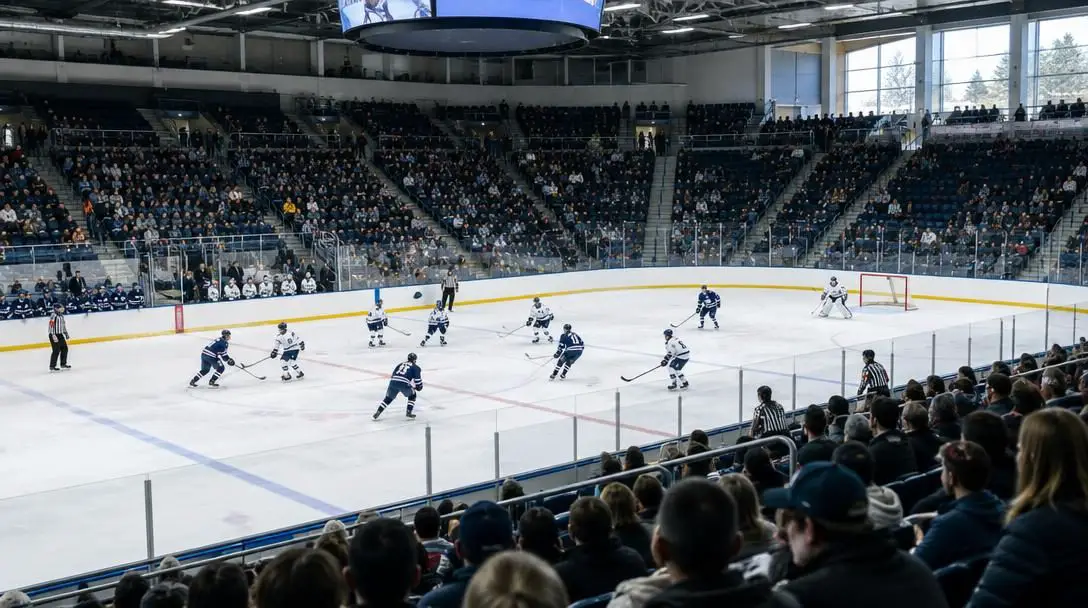
In professional sports leagues like the National Hockey League, constructing an enduring dynasty is an uphill battle. The NHL enforces hard salary caps, draft structures, and unrestricted free agency specifically to maintain competitive parity across the league. In collegiate hockey, however, the playing field operates under a completely different set of rules. Without collective bargaining agreements or salary restrictions dictating roster construction, institutions that build an elite foundation often remain at the summit for generations.
A distinguished cluster of collegiate programs has mastered this sustained dominance across different eras. These flagship institutions are measured by their repeated invitations to the national postseason tournament, their regular appearances in the Frozen Four, their collections of national championship hardware, and their proven track record of feeding high-caliber talent into the NHL and the Hockey Hall of Fame.
Key takeaways
- Unlike professional leagues that mandate parity via salary caps, collegiate hockey allows established powerhouses to sustain generational dominance.
- Minnesota, Michigan, North Dakota, Denver, and Boston College represent the historical standard in NCAA Division I men's ice hockey.
- A program's prestige is defined not just by championship banners, but by consistent Frozen Four berths and elite professional player development.
- Perennial contenders must master the delicate balance of recruiting top talent while weathering roster departures when stars sign early NHL contracts.
The Anatomy of College Hockey Dynasties
The gap separating good college hockey programs from historic powerhouses comes down to institutional consistency. While any squad can assemble a roster capable of a single Cinderella run through the single-elimination NCAA Tournament bracket, historic programs contend year in and year out. They survive coaching transitions, sweeping conference realignments, and the regular departure of underclassmen to the professional ranks.
While the top tier remains exceptionally exclusive, several other programs have crafted remarkable resumes that placed them right on the doorstep of the top five. Powerhouses such as Boston University, Wisconsin, Minnesota-Duluth, and Michigan State have all produced championship rosters, legendary coaches, and indelible tournament moments that helped shape collegiate hockey history.
Without salary restrictions dictating roster construction, collegiate programs that establish a winning culture can sustain national dominance for generations.
To evaluate which programs truly represent the gold standard, analysts look at deep postseason participation, trophy cases, and the sustained quality of alumni who transition into the professional ranks.
| Program | Inaugural Varsity Era | Key Championship Eras | Frozen Four Benchmark | Notable Alumni |
|---|---|---|---|---|
| Minnesota | 1921 | Five national titles across multiple eras | Well over 20 appearances | Phil Kessel, Neal Broten, Alex Goligoski |
| Michigan | Early varsity era | Nine national titles (1948–1998) | More than two dozen appearances | Dylan Larkin, Jack Johnson, Andrew Cogliano |
| North Dakota | Mid-1940s | Multiple national titles across several decades | More than 20 appearances | Jonathan Toews, Zach Parise, Ed Belfour |
| Denver | 1949 | Titles in 1950s–1960s, 2000s, 2017, 2022 | Dominant 1960s and early 1970s presence | Glenn Anderson, Craig Patrick, Paul Stastny |
| Boston College | Early collegiate era | 1949, plus 2001–2012 dynasty | Frequent postseason contender | Brian Leetch, Joe Mullen, Johnny Gaudreau |
The 5 Most Successful NCAA Hockey Teams
These five premier college hockey teams have set the standard for on-ice performance, tournament longevity, and professional player development over nearly a century of play.
Minnesota
- First Season: 1921
- National Championships: 5
- Frozen Four Appearances: Well over 20
- Conference Milestone: Most Big Ten titles in NCAA history
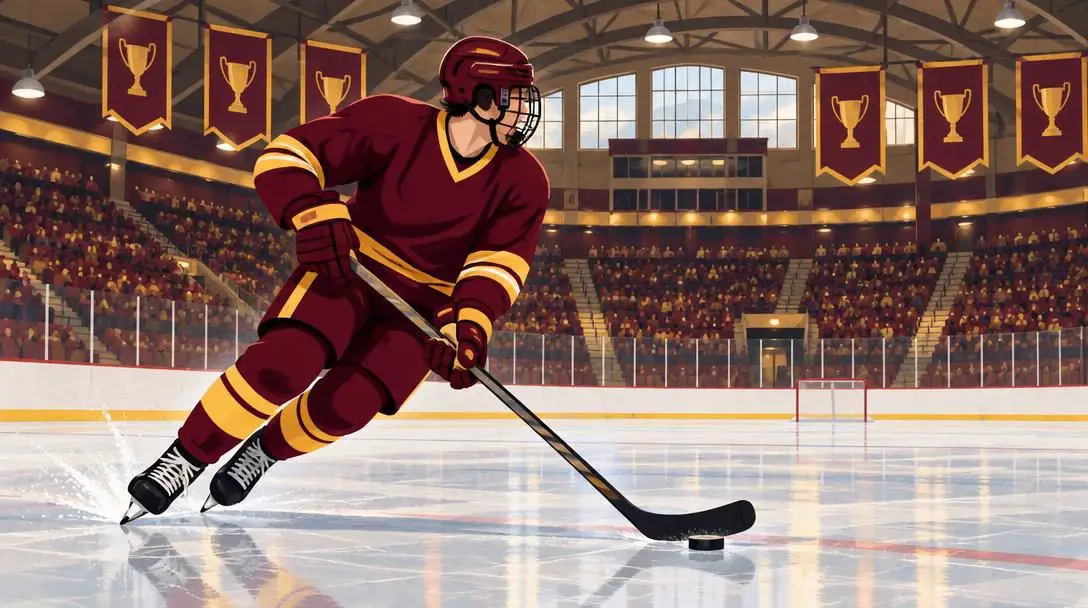
The University of Minnesota Golden Gophers stand as the ultimate picture of collegiate hockey longevity and overall achievement. Launching its varsity hockey program in 1921, Minnesota has spent more than a full century operating as a premier national contender. Over that historic span, the Golden Gophers have accumulated more total wins than any other program in the history of NCAA hockey. Their regional supremacy is equally unquestioned, punctuated by holding the record for the most Big Ten conference titles.
Beginning in the early 1970s, the Golden Gophers transformed into an absolute postseason staple. While their trophy showcase features five national championships, the true breadth of their dominance is reflected in reaching the Frozen Four well over twenty times. That sustained standard was never clearer than during their remarkable run between 1986 and 1989, when Minnesota advanced to the Frozen Four in four consecutive seasons. The program's alumni roster reads like a roll call of hockey royalty, boasting NHL stars such as Phil Kessel, Alex Goligoski, and Neal Broten.
Michigan
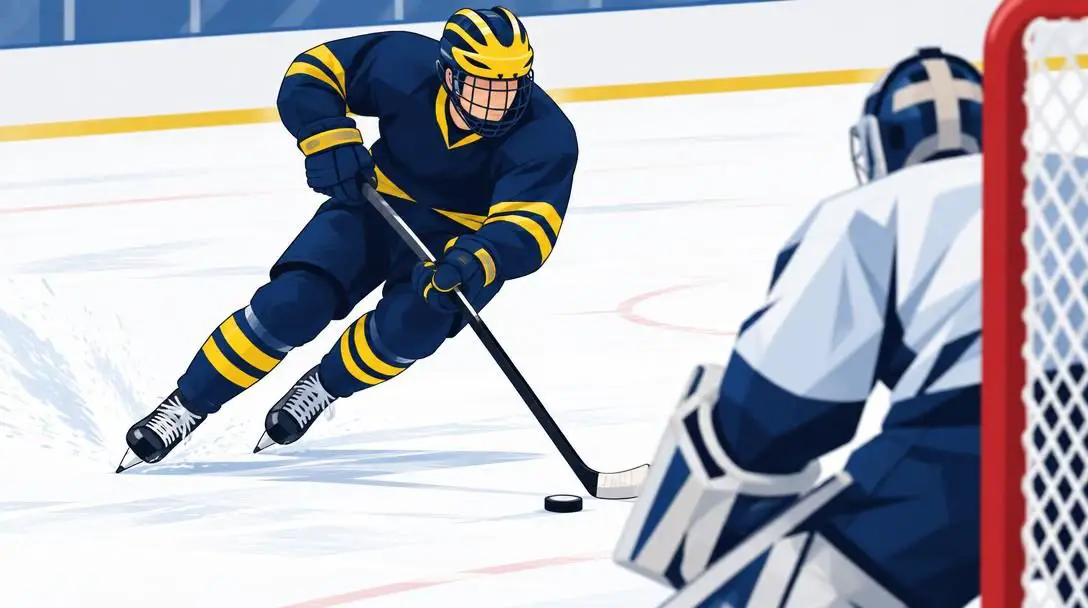
- Championship Count: 9 national titles (1948–1998)
- Frozen Four Record: More than two dozen appearances
- Alumni Accolades: Multiple first-round and #1 overall NHL picks
While general sports enthusiasts often equate the University of Michigan with football lore, the Wolverines possess an equally profound legacy on the ice. Much like their football counterparts, Michigan hockey captured its most recent national championship in the late 1990s, yet the program remains an annual force in the national title hunt.
Between 1948 and 1998, Michigan amassed nine national championships, anchored by more than two dozen trips to the Frozen Four. This extensive track record spans multiple coaching eras, proving that the program's foundation transcends any individual staff. The Wolverines have consistently served as a premier springboard to the professional ranks, developing elite talent such as Detroit Red Wings captain Dylan Larkin, veteran forwards Andrew Cogliano and Mike Knuble, and former number-one overall draft selection Jack Johnson.
North Dakota

- Program Debut: Mid-1940s
- Frozen Four Bids: More than 20 appearances
- Championship History: Multiple NCAA titles
In college football circles, the letters "ND" immediately bring Notre Dame to mind, but in the realm of college hockey, that abbreviation belongs exclusively to North Dakota. The Fighting Hawks launched their program in the mid-1940s and waste no time establishing themselves as a premier destination for top-tier hockey talent.
Boasting more than twenty appearances in the Frozen Four, North Dakota routinely dominates regular-season competition to earn high seeds in the national tournament. The program has translated those high seeds into multiple national championships, solidifying its place among college hockey's elite. Their campus culture has also nurtured exceptional NHL talent. North Dakota alumni include Hockey Hall of Famer Ed Belfour, 1980 Olympic gold medalist Dave Christian, Jason Blake, and modern NHL superstars including Zach Parise, T.J. Oshie, and three-time Stanley Cup champion Jonathan Toews.
Denver
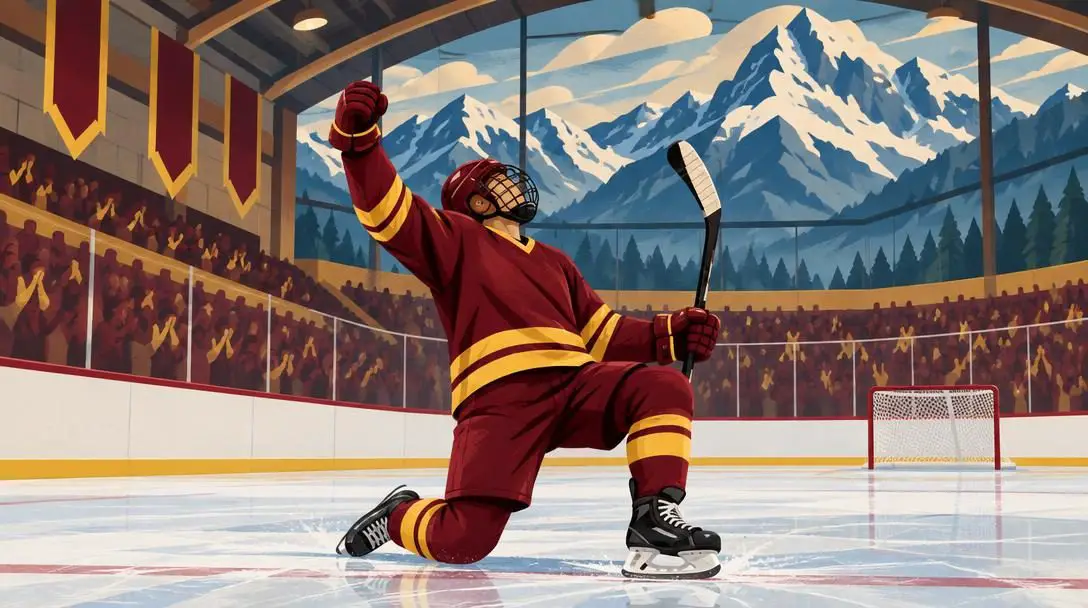
- First Varsity Season: 1949
- Breakout Era: Championship within first decade; dominant 1960s
- Modern Titles: 2000s (two titles), 2017, and 2022
The University of Denver Pioneers established their reputation as an absolute powerhouse almost immediately after stepping onto varsity ice. After beginning play in 1949, Denver captured its first NCAA title within a single decade. The Pioneers maintained that momentum to control college hockey throughout the 1960s, followed by regular appearances in the Frozen Four during the early 1970s.
Following that initial golden age, the program entered an extended lull that spanned the late 1970s through the early 2000s, operating as a sleeping giant. Denver reversed course with a modern resurgence, capturing back-to-back NCAA Tournament championships in the 2000s, followed by additional national titles in 2017 and 2022. Beyond hoisting championship trophies across distinct eras, Denver has produced exceptional NHL contributors such as Paul Stastny and Tyler Bozak, as well as Hockey Hall of Fame inductees Glenn Anderson and Craig Patrick.
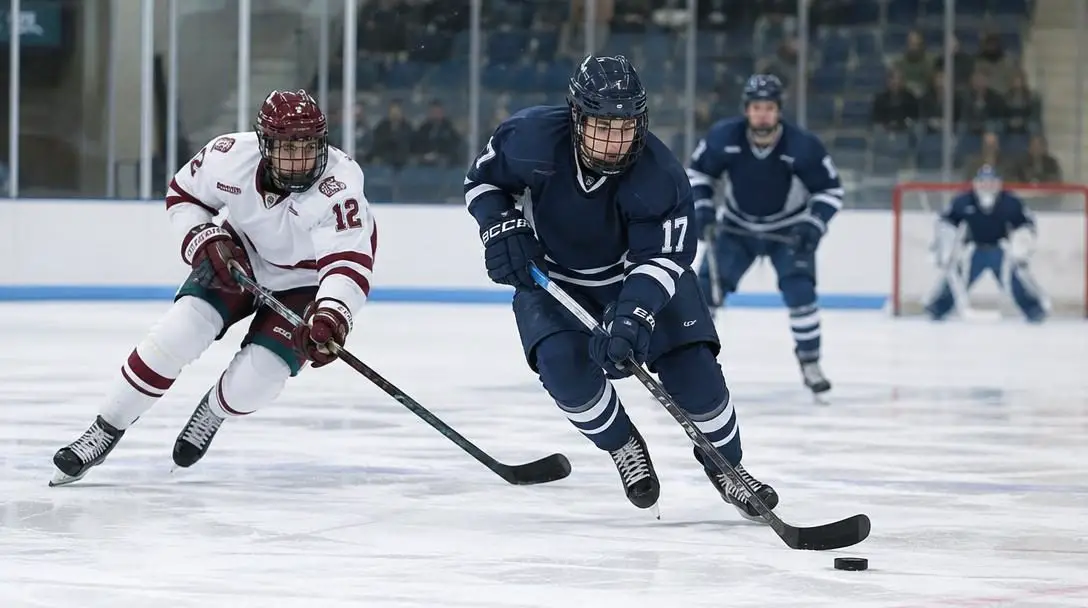
Boston College

- First NCAA Title: 1949
- Golden Era: Four national titles during 2001–2012 dynasty
- Postseason Profile: Qualified for NCAA Tournament in majority of seasons
The Boston College Eagles serve as a prime model of sustained excellence across multiple eras. While the program's championship banners arrived in distinct waves, their competitive baseline has remained steady. Boston College earned its first national championship in 1949, setting an early standard before embarking on an astonishing modern dynasty between 2001 and 2012.
Across its storied history, Boston College has secured spots in the NCAA Tournament more often than not, keeping the Eagles perpetually in the national title conversation. Beyond campus trophies, Chestnut Hill has functioned as an elite pipeline to the professional ranks. Boston College has produced Hockey Hall of Fame inductees Brian Leetch and Joe Mullen, along with dynamic NHL stars such as Johnny Gaudreau, Bill Guerin, and Brian Boyle.
How Elite College Hockey Programs Operate
Sustaining an elite college hockey program requires a sophisticated organizational framework. Because collegiate sports prohibit trading players or signing multi-million-dollar free agents to address roster deficiencies, coaching staffs must master a distinct set of operational challenges.
- Roster Development and Talent Acquisition: Elite programs recruit across North American junior leagues, high school circuits, and international pools. They seek players who can contribute immediately as freshmen while possessing the physical and mental ceiling necessary to develop into professional prospects.
- Navigating Professional Depletion: The biggest challenge facing top programs is roster turnover. When standout underclassmen sign professional NHL contracts ahead of schedule, coaching staffs must have incoming talent ready to plug immediate lineup vacancies without enduring rebuilding seasons.
- Navigating Grueling Conference Schedules: Competing in demanding conferences such as the Big Ten or Hockey East forces programs to endure high-pressure matchups every weekend. Performance across these grueling schedules builds tournament resumes and sharpens teams for national competition.
- Peaking for Single-Elimination Tournaments: Unlike the NHL's seven-game playoff series, the NCAA Tournament features a single-elimination format. Successful programs design their conditioning and tactical systems so that their rosters play their best hockey in March and April.
Common Mistakes When Evaluating College Hockey Powerhouses
Evaluating the prestige of college hockey teams requires looking past the surface. Fans and commentators coming from professional sports backgrounds often make several fundamental errors when assessing these programs.
- Judging Programs Solely by Championship Counts: Counting banners alone ignores overall competitive health. Programs like Minnesota and Boston College have proven their elite status by repeatedly earning tournament bids, securing conference titles, and making dozens of Frozen Four trips, even during years when they did not win the final game.
- Ignoring Early Historical Eras: Overlooking mid-century achievements distorts a program's true identity. The dynasties established by Michigan between 1948 and 1998, and Denver throughout the 1950s and 1960s, built the nationwide brands, state-of-the-art facilities, and traditions that attract top recruits today.
- Overlooking Alumni Transitions: Evaluating a collegiate team exclusively by campus trophies ignores its player development track record. A program's true caliber is deeply tied to its ability to prepare athletes for long careers in the NHL and induction into the Hockey Hall of Fame.
- Assuming Past Dominance Guarantees Immediate Wins: Historic brands are not immune to down cycles. Denver's championship drought from the late 1970s to the early 2000s illustrates that even the sport's greatest powerhouses can spend decades rebuilding before climbing back to the top.
How to Follow NCAA Hockey Like an Insider
For sports fans looking to dive into collegiate hockey and track the sport's premier programs throughout the winter and spring, following a structured process offers the best experience.
- Track Historic Rivalries: Start by prioritizing marquee matchups between traditional blue-bloods like Minnesota, Michigan, Denver, North Dakota, and Boston College, which regularly deliver high-intensity, playoff-style hockey.
- Monitor Postseason Selection Criteria: Track non-conference results early in the year and conference play down the stretch to see how weekly outcomes impact national rankings, tournament seeding, and at-large bids.
- Follow Future NHL Talent: Identify top collegiate underclassmen who have already been drafted by NHL clubs or are projected as high draft picks to evaluate their development before they turn professional.
- Watch the Frozen Four: Clear your schedule for the national semifinals and championship game in April, where the remaining contenders battle on neutral ice in one of the most electric events in amateur sports.
Frequently asked questions
Which NCAA hockey program has won the most national championships?
The University of Michigan captured nine national championships between 1948 and 1998, establishing one of the most prolific title records in collegiate hockey history.
What program has recorded the most total wins in college hockey history?
The University of Minnesota Golden Gophers have accumulated more total victories than any other program in NCAA history, alongside claiming the most Big Ten titles over their century of competition.
How many times did Denver win the NCAA title during its modern resurgence?
After an extended championship lull that began in the late 1970s, Denver captured two NCAA titles in the 2000s, followed by national championships in 2017 and 2022.
Which notable NHL stars played their college hockey at North Dakota?
North Dakota alumni include Hockey Hall of Famer Ed Belfour, 1980 Olympic gold medalist Dave Christian, Jason Blake, and prominent modern NHL stars Zach Parise, Jonathan Toews, and T.J. Oshie.
What programs were considered just outside the top five?
Programs that just missed inclusion among the top five historic powerhouses include Boston University, Wisconsin, Minnesota-Duluth, and Michigan State.
The bottom line
The hierarchy of NCAA Division I hockey reflects decades of sustained excellence, unmatched player development, and remarkable postseason resilience. While hundreds of athletic programs compete across the college landscape, Minnesota, Michigan, North Dakota, Denver, and Boston College remain the five pillars of the sport. Their combined trophy cases, endless Frozen Four appearances, and long lists of NHL stars and Hockey Hall of Famers set a standard that every aspiring program continues to chase.